

ProductPRODUCT
Featured products
Contact Us
- ABB
- TC625 3BSE002224R1
- AF100 Coaxial Modem
- Sweden (SE)
- 216 x 63 x 153 mm
- 0.7 kg
- Xiamen, China
- New & In Stock
- T/T, PayPal, Western Union
- 1 Year
- 1-3 Working Days
- DHL, UPS, TNT, FedEx and EMS.
- 24-Hour Service
- COO
- 5
Our advantage

Global Logistics
We have a 10-year logistics and express cooperation agreement, so our products can be shipped to any place in the world.

Brand new and original
Our products are imported in bulk from the place of origin. Because of the cooperative relationship, our products are all original and 100% new.

24-hour service
We provide 7*24 hours service to our customers. We will be there whenever you need us.

Price advantage
All our products are priced very favorably because we have our own warehouse and supply.
| Company Information | |||
| [email protected] | |||
| Mobile | +8615980777398 | ||
| +8615980777398 | |||
| 15980777398 |
Product Overview
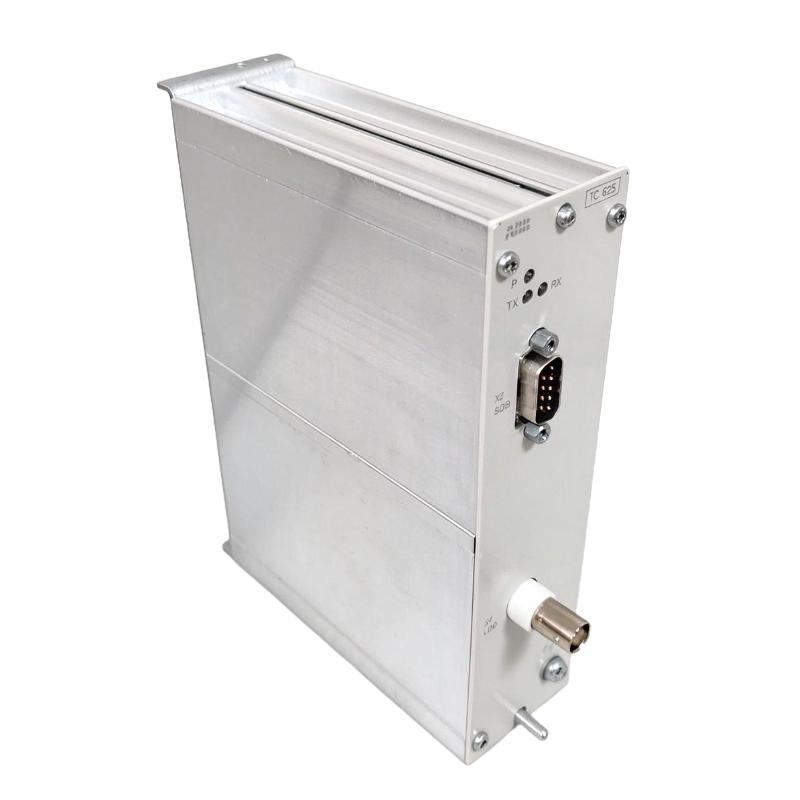
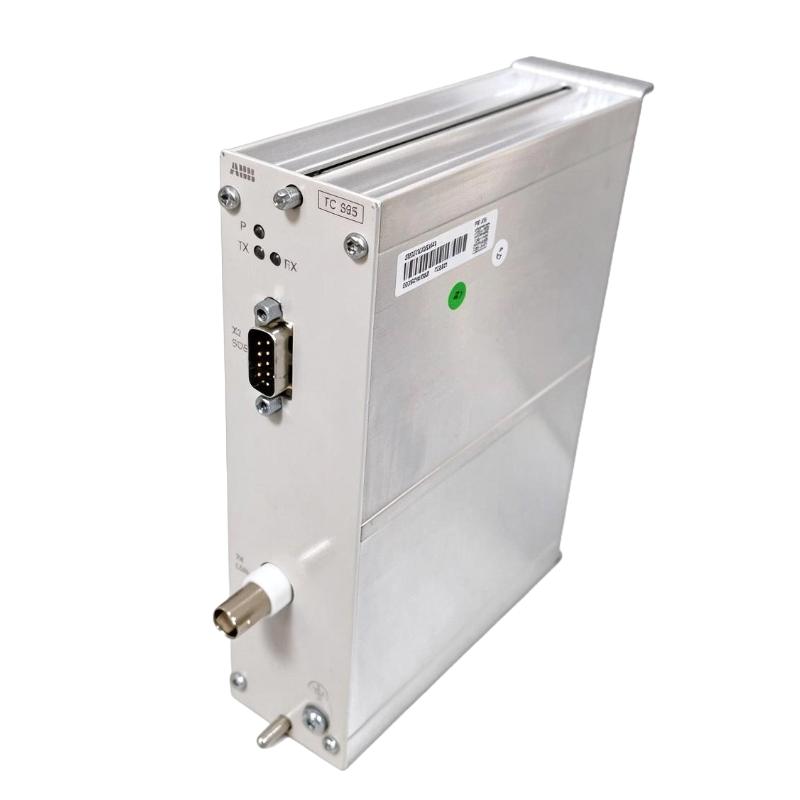
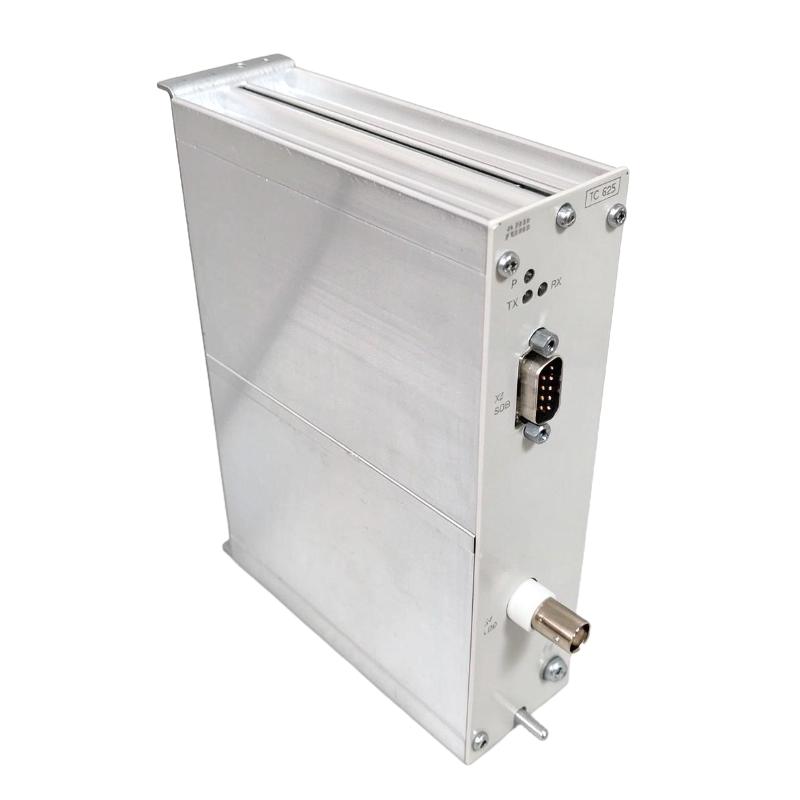
The ABB TC625 3BSE002224R1 AF100 Coaxial Modem is an industrial communication module designed for ABB Advant Fieldbus 100 (AF100) networks. It provides a coaxial bus connection for compatible communication interfaces used in distributed control systems (DCS), helping transfer control data and status information between connected components of an industrial automation network.
In industrial process control, reliable communication between controllers and remote input/output equipment is essential. Controllers must exchange process information with field-level devices and distributed subsystems so that the control application can respond to changing operating conditions. Communication hardware such as the TC625 provides the physical interface needed to connect compatible equipment to the network.
The TC625 is specifically associated with the ABB AF100 communication architecture. It is designed to work with compatible interfaces such as the CI520, CI522, and CI526. The module implements the transceiver and modem function for one AF100 coaxial bus connection.
This product is particularly relevant to maintenance and spare-parts procurement for existing ABB Advant automation installations. When replacing a communication module, engineers should verify the full part number, connected interface, cable type, network topology, and redundancy arrangement before installation.
As a legacy industrial communication component, the TC625 should be evaluated according to the requirements of the existing system rather than treated as a universal Ethernet or serial modem. Its intended use is tied to the AF100 network and the compatible ABB hardware configuration.
Technical Specifications
| Parameter | Specification |
|---|---|
| Brand | ABB |
| Model | TC625 |
| Part Number | 3BSE002224R1 |
| Product Type | AF100 Coaxial Modem |
| Product Family | ABB Advant / AF100 |
| Communication Network | Advant Fieldbus 100 |
| Primary Function | Coaxial fieldbus communication |
| Transmission Medium | Coaxial cable |
| Compatible Communication Interfaces | CI520, CI522, CI526 |
| Local Electrical Interface | 9-pin D-sub interface, according to product documentation |
| Coaxial Interface | BNC connector |
| Power Supply | Verify the required supply against the module label and system documentation |
| Network Redundancy | Two TC625 units are required when implementing redundant coaxial bus cables |
| Dimensions | 216 × 63 × 153 mm |
| Weight | 0.7 kg |
| Typical Application | ABB Advant DCS communication and legacy AF100 network maintenance |
Note: Verify the electrical supply requirements, connector pinout, mounting dimensions, and exact hardware revision against the documentation for the installed unit before commissioning.
Function and Working Principle
The ABB TC625 operates as a communication interface between compatible ABB control-system hardware and an AF100 coaxial bus. It provides the physical transmission function needed to exchange information across the designated network medium.
1. AF100 Coaxial Bus Communication
AF100 is an industrial fieldbus used in ABB Advant control-system architectures. It supports communication between compatible automation-system components, allowing process information and control data to move between distributed parts of the system.
The TC625 provides the coaxial connection required by the applicable AF100 network configuration. This makes it different from a general-purpose modem intended for telephone lines or an ordinary Ethernet network interface.
2. Signal Transmission and Reception
The TC625 performs a transceiver/modem function for one coaxial bus. It supports the transmission and reception of communication signals between the connected interface and the AF100 network.
Reliable communication depends on the complete network installation. The modem must be connected to compatible equipment using the specified cable type, connectors, and network arrangement.
3. Controller and Remote I/O Communication
Industrial control systems often distribute I/O equipment across multiple cabinets or process areas. Controllers need access to the input and output information generated by these distributed components.
Within a compatible ABB architecture, the TC625 can provide the coaxial communication path between an AF100 interface and the bus. The complete control system remains responsible for processing input values, executing control logic, and issuing output commands.
4. Redundant Bus Arrangements
Some process-control installations use redundant communication paths to improve availability. According to the AF100 architecture, a redundant coaxial cable arrangement requires two TC625 modems, one for each bus path.
Redundancy must be designed and configured across the complete system. Installing two modems alone does not guarantee uninterrupted operation; compatible interfaces, cabling, configuration, and the system’s redundancy strategy must also be in place.
Role in Industrial Control Systems
The TC625 supports communication infrastructure in ABB Advant automation systems. It does not independently perform PLC logic, regulate a motor, or replace a DCS controller. Its role is to provide the required AF100 coaxial communication function.
1. ABB Advant DCS Integration
Distributed control systems coordinate process equipment through controllers, communication interfaces, remote I/O, and operator systems. The TC625 can be part of an existing Advant installation where the AF100 coaxial bus is used.
When integrating or replacing the module, the installed controller and interface configuration should be checked first. The supported network architecture determines the correct connection and configuration procedure.
2. Remote I/O Communication
Remote I/O systems allow field signals to be collected and controlled at locations separate from the main controller. A suitable AF100 network connection enables these remote components to exchange data with the wider control system.
The TC625 contributes to this communication path when used with the compatible interface and cabling arrangement.
3. Process Data Exchange
Process-control applications depend on timely communication of sensor values, equipment status, alarms, and control commands. A properly functioning AF100 network supports the movement of this information between connected system components.
The TC625’s contribution is at the communication layer. Overall performance also depends on controller configuration, bus loading, cable condition, and the design of the complete automation system.
4. Legacy System Maintenance
Many industrial facilities retain established control platforms because replacing a complete DCS can involve substantial engineering, validation, downtime, and commissioning work.
For these facilities, identifying and sourcing the correct TC625 module can help maintain the existing AF100 communication infrastructure. Exact part-number verification is particularly important when the system contains hardware from different revisions or generations.
Industrial Applications
The ABB TC625 is primarily associated with existing ABB Advant installations that use AF100 coaxial communication. Typical applications include the following.
1. Power Generation
Power plants use distributed control systems to monitor and control equipment throughout generation and auxiliary processes. In an existing ABB Advant installation, the TC625 may provide the coaxial communication connection required by compatible AF100 network equipment.
Its suitability depends on the plant’s installed control architecture and the specific interface connected to the modem.
2. Petrochemical and Chemical Processing
Chemical and petrochemical facilities use control systems to coordinate process measurements, equipment status, and control commands across plant areas.
Where an established ABB system uses the AF100 coaxial bus, the TC625 may be required to maintain the original communications arrangement during servicing or module replacement.
3. Manufacturing Plants
Industrial manufacturing systems may include distributed control cabinets, remote I/O stations, and centralized process supervision. The TC625 can support communication within compatible legacy ABB networks used to coordinate these system components.
4. Water and Wastewater Facilities
Water-treatment and wastewater installations may use distributed automation to monitor pumps, valves, flow measurements, and treatment processes. If the existing installation uses a compatible ABB Advant AF100 architecture, the TC625 may form part of its communication infrastructure.
It should not be selected for a new network solely because the application involves industrial communications. The required protocol and physical interface must match.
5. Legacy DCS Upgrade and Repair Projects
During a phased control-system upgrade, some facilities retain parts of the original communication infrastructure while modernizing other equipment.
The TC625 may be relevant when the AF100 coaxial network must remain operational. Engineers should determine whether the project requires an exact replacement, a network redesign, or migration to a newer communication architecture.
Installation and System Integration
Correct installation is essential for dependable communication and safe maintenance of the control system.
1. Verify the Exact Module
Check the module label for model TC625 and part number 3BSE002224R1. Confirm the hardware revision and the requirements of the connected AF100 interface.
Do not assume that another ABB modem or communication module is interchangeable merely because it has a similar appearance or connector arrangement.
2. Confirm Interface Compatibility
The TC625 is documented for use with compatible AF100 interfaces, including CI520, CI522, and CI526. Confirm the actual interface model and its hardware configuration before connecting the modem.
The communication architecture, interface settings, and installation requirements should be consistent with the existing system design.
3. Inspect Coaxial Cabling and Connectors
Inspect the coaxial cable for physical damage, connector looseness, shielding problems, or incorrect termination. The cable type and connection method must match the applicable AF100 installation requirements.
Poor connections or unsuitable cable arrangements can cause intermittent communication, data errors, or loss of an entire bus segment.
4. Check Network Topology and Termination
Before energizing the system, verify the network topology and any required termination components. Incorrect termination or an improperly connected bus may affect signal integrity.
Where redundant cabling is used, confirm that both communication paths follow the intended system design and that the required TC625 modules are installed.
5. Verify the Electrical Supply
Check the required power supply and connector arrangement using the module label and applicable system documentation. Do not assume a supply voltage or pin assignment based solely on the product family.
Before handling the module or its wiring, follow the facility’s isolation and lockout procedures.
6. Commission and Test Communication
After installation, check the module’s available status indicators and verify that the connected interface recognizes the communication path. Test communication across the relevant bus segment and confirm that the control system reports normal operation.
Record the module location, cable connections, interface identification, and any relevant system configuration information for future maintenance.
Compatible System Components
The TC625 is intended for use within a compatible AF100 communication architecture.
| Component | Function | Integration Considerations |
|---|---|---|
| ABB CI520 | AF100 communication interface | Verify the installed version and connection requirements |
| ABB CI522 | AF100 communication interface | Confirm compatibility with the existing Advant configuration |
| ABB CI526 | AF100 communication interface | Follow the applicable interface documentation |
| AF100 coaxial cable | Physical network transmission medium | Use the specified cable type, connectors, and installation practices |
| Compatible ABB controller | Executes control logic and manages system operation | Confirm that the controller architecture supports the installed AF100 interface |
| Remote I/O equipment | Collects field signals and controls outputs | Verify the system’s supported communication arrangement |
| Bus termination components | Maintain the required electrical characteristics of the bus | Install according to the AF100 network design |
| Second TC625 modem | Provides the additional modem needed for a redundant coaxial bus arrangement | Required when the system design calls for redundant coaxial paths |
Compatibility depends on the complete system configuration. The table identifies relevant component categories and interfaces; it does not mean that every component is supplied with the TC625.
Alternative Models and Replacement Considerations
When replacing the TC625, the most important requirement is compatibility with the installed AF100 network. A different communication module may use another transmission medium, protocol, or interface arrangement and therefore cannot automatically serve as a direct substitute.
| Alternative or Related Component | Replacement Considerations |
|---|---|
| ABB TC625, same part number | Preferred starting point for an exact replacement, subject to revision and condition checks |
| ABB TC513 AF100 modem | A related AF100 modem model, but its interface and network requirements must be checked before substitution |
| ABB TC630 AF100 optical modem | Uses an optical transmission arrangement rather than the TC625’s coaxial medium; not a direct physical substitute |
| ABB CI520 interface | A related AF100 communication interface, not a replacement for the coaxial modem itself |
| ABB CI522 interface | A related interface component; verify the role of each module in the existing network |
| ABB CI526 interface | Another compatible interface family member documented for TC625 connections; not a direct modem replacement |
Before selecting a replacement, compare:
- Complete part number and hardware revision.
- AF100 interface compatibility.
- Coaxial connector and cable requirements.
- Network topology and termination.
- Redundant-bus requirements.
- Power supply and wiring arrangements.
- Mounting and physical dimensions.
- Status indicators and diagnostic procedures.
- Availability of the relevant system documentation.
Replacing a modem with a different communication technology may require changes to cabling, interfaces, system configuration, and commissioning procedures.
Key Advantages
Dedicated AF100 Communication Function
The TC625 is designed for the ABB AF100 coaxial bus architecture, making it relevant to installations that depend on this specific industrial communication network.
Compatibility With Established ABB Interfaces
Its documented use with CI520, CI522, and CI526 interfaces supports maintenance planning for compatible Advant systems.
Support for Coaxial Network Infrastructure
The module provides the modem and transceiver function required for an AF100 coaxial bus connection.
Redundant Network Design Support
A second TC625 can be used where the system design requires redundant coaxial bus paths. This supports the implementation of a redundant communication architecture when the rest of the system is configured accordingly.
Useful for Legacy System Maintenance
The module can be important for maintaining existing automation equipment where replacing the entire control platform is not immediately practical.
Compact Industrial Communication Hardware
With supplied dimensions of 216 × 63 × 153 mm and a weight of 0.7 kg, the TC625 can be cataloged and handled as a relatively compact communication component. Confirm the exact mounting arrangement before installation.
Technical FAQs
1. What is the ABB TC625 3BSE002224R1?
It is an AF100 coaxial modem used in compatible ABB Advant industrial control systems. It provides the modem and transceiver function needed to connect a supported communication interface to the AF100 coaxial bus.
2. Which communication interfaces work with the TC625?
The AF100 documentation identifies the CI520, CI522, and CI526 interfaces as compatible connection partners. Confirm the exact interface version and system configuration before installation.
3. What type of cable does the TC625 use?
It uses coaxial cable for the AF100 bus connection. The cable type, connector, routing, and termination must comply with the installed system’s documentation.
4. Does one TC625 support redundant coaxial cables by itself?
No. The documented AF100 arrangement requires two TC625 modems when redundant coaxial bus cables are installed. The overall system must also support and be configured for redundancy.
5. Is the TC625 an Ethernet modem?
No. The TC625 is designed for ABB’s AF100 coaxial fieldbus architecture. It should not be treated as a standard Ethernet modem or a universal network converter.
6. What are the dimensions and weight of the TC625?
The supplied listing dimensions are 216 × 63 × 153 mm, and the listed weight is 0.7 kg. Verify the physical dimensions and whether the weight refers to the bare module or a packaged unit before shipping or cabinet planning.
7. What should be checked before replacing a TC625?
Confirm the part number, interface model, network cable type, bus topology, termination, power requirements, and redundancy arrangement. Also inspect the existing module and cable connections before removing the equipment.
8. Can a TC630 replace a TC625?
Not as a direct plug-in replacement without redesign or additional compatible hardware. The TC630 is associated with an optical transmission arrangement, while the TC625 provides a coaxial bus connection. The required network media and interfaces differ.
9. What can cause AF100 communication problems?
Possible causes include damaged coaxial cable, loose connectors, incorrect termination, interface incompatibility, power problems, or a network configuration error. Troubleshooting should follow the AF100 system documentation and the plant’s maintenance procedures.
10. Is the TC625 suitable for a new automation network?
It is primarily relevant where an existing ABB AF100 architecture must be maintained. For a new project, select communication hardware according to the intended control platform, supported protocols, lifecycle requirements, and long-term maintenance strategy.
Procurement and Maintenance Recommendations
When sourcing the ABB TC625 3BSE002224R1, verify the full model and part number against the installed equipment. Confirm the module’s physical condition, connector condition, status indicators, and availability of suitable functional testing.
For legacy AF100 systems, keep a record of the connected interface model, cable type, termination arrangement, and redundancy configuration. This information can reduce troubleshooting time and help prevent errors during module replacement.
If purchasing used or surplus equipment, request clear photographs of the nameplate and connectors. Confirm the unit’s condition, warranty terms, and return policy before ordering. Check whether the listed dimensions and weight refer to the module itself or the packaged shipment.
For maintenance, inspect the coaxial cable and connectors, monitor communication status, and investigate repeated bus faults rather than repeatedly resetting the system. Follow the applicable ABB documentation and site procedures when working on powered control equipment.
Conclusion
The ABB TC625 3BSE002224R1 AF100 Coaxial Modem is a dedicated communication component for compatible ABB Advant Fieldbus 100 installations. It provides the coaxial modem and transceiver function needed to connect supported interfaces such as CI520, CI522, and CI526 to the AF100 bus.
With supplied dimensions of 216 × 63 × 153 mm and a weight of 0.7 kg, it is a compact component for industrial communication maintenance and replacement applications. Correct interface matching, cable selection, termination, and redundancy planning are essential to dependable operation. For existing AF100 networks, verifying the complete part number and system configuration is the most reliable starting point for procurement and maintenance.