

ProductPRODUCT
Featured products

Contact Us
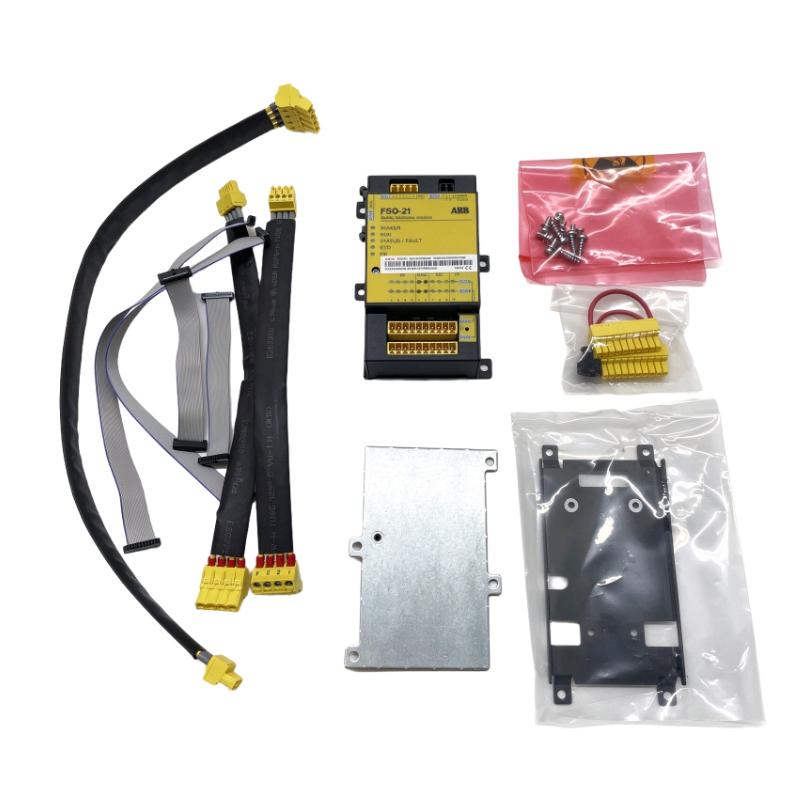
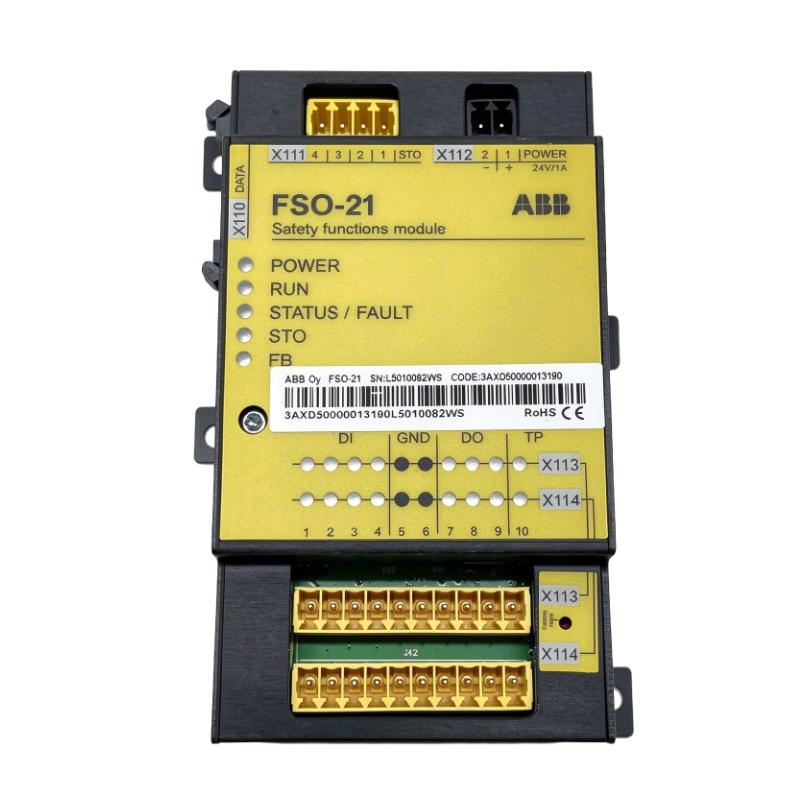
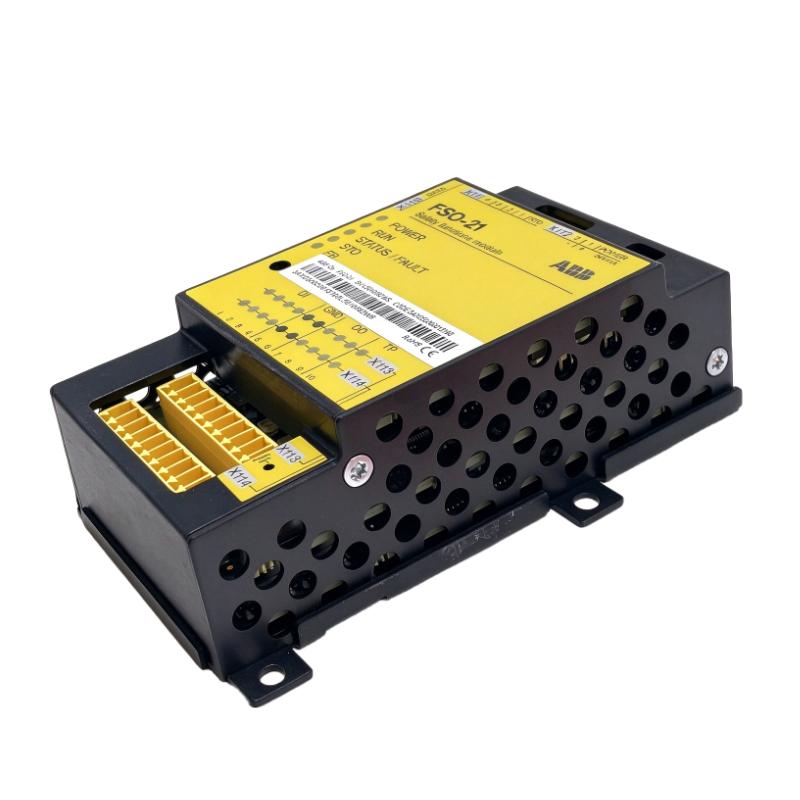
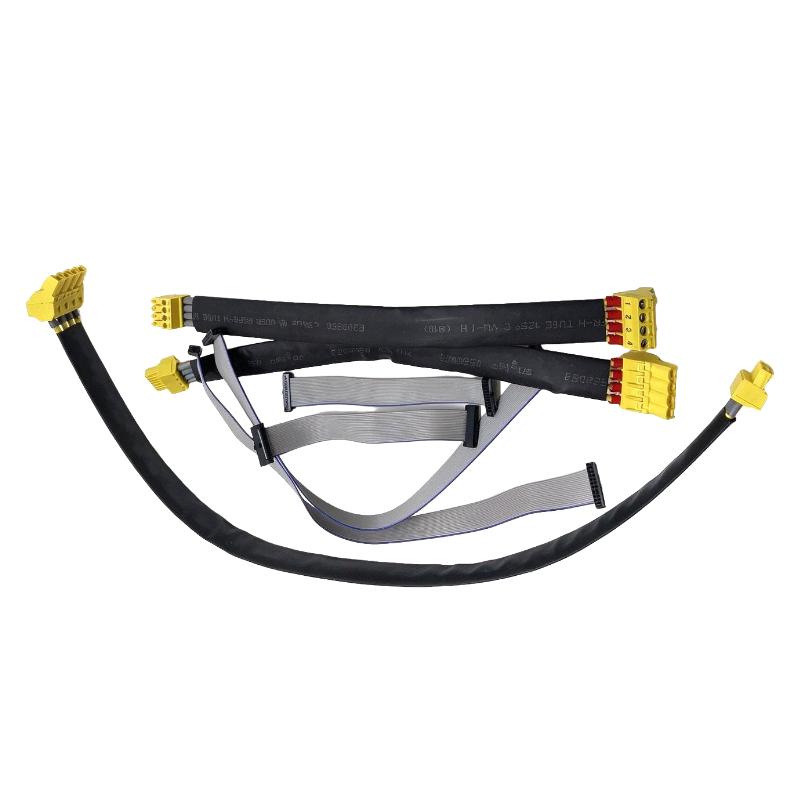
- ABB
- FSO-21 3AXD50000013190
- Safety Function Module
- Sweden (SE)
- 111 × 38 × 76 mm
- 0.98 kg
- Xiamen, China
- New & In Stock
- T/T, PayPal, Western Union
- 1 Year
- 1-3 Working Days
- DHL, UPS, TNT, FedEx and EMS.
- 24-Hour Service
- COO
- 4
Our advantage

Global Logistics
We have a 10-year logistics and express cooperation agreement, so our products can be shipped to any place in the world.

Brand new and original
Our products are imported in bulk from the place of origin. Because of the cooperative relationship, our products are all original and 100% new.

24-hour service
We provide 7*24 hours service to our customers. We will be there whenever you need us.

Price advantage
All our products are priced very favorably because we have our own warehouse and supply.
| Company Information | |||
| [email protected] | |||
| Mobile | +8615980777398 | ||
| +8615980777398 | |||
| 15980777398 |
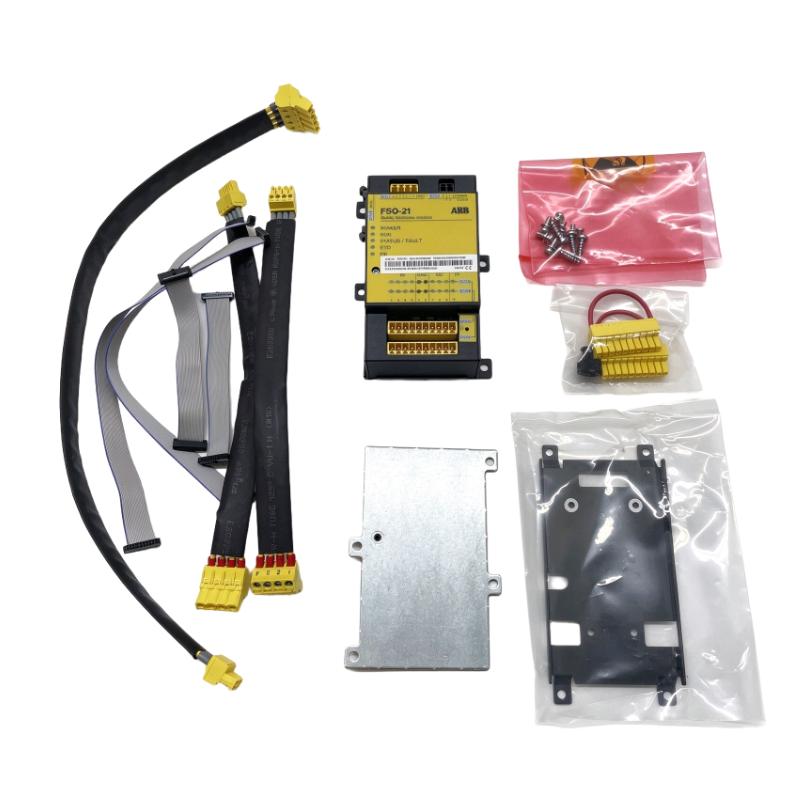
Product Overview
The ABB FSO-21 3AXD50000013190 Safety Function Module is an optional functional safety component designed for compatible ABB drive systems. It provides additional safety functions and diagnostic capabilities that help engineers implement safety-related motor-control strategies in industrial machinery and automated production equipment.
In modern industrial automation, drives do more than regulate motor speed and torque. They may also need to support controlled stopping, prevention of unexpected startup, speed monitoring, and other safety-related functions. These requirements are especially important in machinery where personnel may need access for setup, inspection, cleaning, or maintenance.
The FSO-21 is designed to work as part of a properly engineered drive safety system. It is installed and wired inside a compatible drive according to the manufacturer’s instructions. The module works with the drive’s control architecture and external safety devices to implement selected safety functions.
The model number 3AXD50000013190 identifies the ABB FSO-21 safety functions module. The module supports a range of functions, including Safe Stop 1 (SS1), Safe Stop Emergency (SSE), Safe Brake Control (SBC), Safely-Limited Speed (SLS), Safe Maximum Speed (SMS), and Prevention of Unexpected Start-up (POUS). It also supports Safe Direction (SDI) and Safe Speed Monitor (SSM), with applicable hardware and configuration requirements.
The FSO-21 is not a standalone general-purpose PLC or a standard motor drive. It is a dedicated safety component whose functions depend on the compatible drive, installed options, safety-related wiring, parameter configuration, and validation of the complete system.
For industrial maintenance and procurement, confirming the complete part number is important. A module with a similar appearance may have a different hardware revision or may belong to another safety-module family. Before installation, verify compatibility with the existing ABB drive and its documentation.
Technical Specifications
| Parameter | Specification |
|---|---|
| Brand | ABB |
| Manufacturer | ABB |
| Model | FSO-21 |
| Product Code | 3AXD50000013190 |
| Product Type | Safety Function Module |
| Product Category | Drive Functional Safety Accessory |
| Primary Purpose | Extends functional safety capabilities of compatible drives |
| Installation | Installed and wired inside a compatible drive |
| Safety I/O | Supports configurable single-channel and redundant digital I/O arrangements |
| Digital Inputs | Up to 8 single inputs or 4 redundant input pairs, subject to configuration |
| Digital Outputs | Up to 6 single outputs or 3 redundant output pairs, subject to configuration |
| Reference Outputs | Two 24 V DC reference outputs with configurable diagnostic pulses |
| Safety Functions | SS1, SSE, SBC, SLS, SMS, POUS, SDI, and SSM, subject to configuration |
| Encoder-Related Functions | SDI requires the applicable FSE-31 pulse encoder interface |
| Safety Capability | SIL 3 / PL e capability under the specified system conditions |
| Dimensions Provided | 111 × 38 × 76 mm |
| Weight Provided | 0.98 kg |
| Typical Applications | Industrial drives, automated machinery, and safety-related motor-control systems |
Note: Dimensions and weight are the supplied listing specifications. Verify the exact hardware revision and physical measurements before installation or shipping. Functional safety ratings apply only when the complete system meets the manufacturer’s requirements.
Function and Working Principle
The FSO-21 adds safety-related monitoring and control functions to compatible drive installations. It operates within the drive’s safety architecture and interacts with external safety devices, configured drive functions, and the machine’s overall control system.
1. Safe Stop 1 (SS1)
Safe Stop 1 is intended for applications that require a controlled stopping process followed by the safe stopping state specified by the implemented safety design.
For example, a machine may need to decelerate before the drive’s torque-producing operation is disabled. The exact stopping behavior depends on the selected safety implementation and the drive’s supported functions.
SS1 is commonly relevant to machinery with rotating components, conveyors, and automated production equipment where an immediate uncontrolled stop may not be the desired stopping strategy.
2. Safe Stop Emergency (SSE)
Safe Stop Emergency supports a safety-related stopping response when an emergency condition requires the drive or machine to enter the defined safe state.
The actual response must be engineered according to the hazard analysis and applicable machinery safety requirements. An emergency-stop circuit should not be designed around assumptions about module behavior alone; the complete safety function must be evaluated and validated.
3. Safe Brake Control (SBC)
Safe Brake Control supports safety-related control of a compatible mechanical brake. This can be important in applications where a motor-driven load could move if the brake does not engage as required.
Examples may include lifting-related mechanisms or other drive applications where mechanical holding is part of the safety design. The brake, wiring, drive configuration, and safety response must all be appropriate for the intended application.
SBC does not mean that every mechanical brake is automatically safe or compatible. The complete braking arrangement must be evaluated against the manufacturer’s requirements.
4. Safely-Limited Speed (SLS)
Safely-Limited Speed is designed to monitor or maintain operation within a configured safety-related speed limit. This function can be useful where machinery must operate at reduced speed during specific tasks.
Depending on the machine design, reduced-speed operation may support setup, adjustment, inspection, or certain maintenance activities. The allowable speed and the conditions under which the function is enabled must be determined through a risk assessment.
SLS must not be treated as an ordinary speed command. It is a safety-related function that requires the correct configuration and validation.
5. Safe Maximum Speed (SMS)
Safe Maximum Speed is intended to help prevent a drive or motor from exceeding a defined safety-related speed limit.
This can be relevant to machines where overspeed may create mechanical hazards, damage equipment, or expose personnel to risk. The configured limit must be appropriate for the motor, mechanical system, and intended safety function.
6. Prevention of Unexpected Start-up (POUS)
Prevention of Unexpected Start-up addresses the risk of a machine starting unexpectedly during activities such as cleaning, setup, or maintenance.
The function forms part of a broader safety arrangement and must be implemented with appropriate procedures, wiring, and other required protective measures. It does not remove the need to isolate hazardous energy when the task requires physical isolation.
7. Safe Direction (SDI) and Safe Speed Monitor (SSM)
The FSO-21 supports additional safety functions, including Safe Direction and Safe Speed Monitor, when the required hardware and configuration are available.
Safe Direction can be relevant when movement is permitted only in a defined direction. The SDI implementation requires the applicable FSE-31 pulse encoder interface.
Safe Speed Monitor can support safety-related monitoring of motor speed. Its use depends on the selected drive configuration, parameterization, and the manufacturer’s functional requirements.
The available functions should be confirmed against the exact drive model, firmware, installed options, and FSO-21 documentation before they are included in a machine safety design.
Role in Industrial Control Systems
The ABB FSO-21 is typically used as part of an integrated drive and machine safety architecture. It complements standard motor control by providing designated safety functions that are configured and validated for the application.
Integration with ABB Drives
The module is designed for compatible ABB drive platforms, including supported ACS880 configurations. It is installed and wired inside the drive according to the relevant hardware and safety manuals.
Compatibility should never be inferred from the ABB brand alone. The drive model, control unit, firmware, available option slots, and required safety functions must be checked before ordering or installation.
Integration with Safety Devices
External safety devices may include emergency-stop buttons, guard switches, interlocking devices, and other safety-related inputs. The FSO-21 provides safety I/O arrangements for connecting supported devices as described in the manufacturer’s documentation.
The input configuration may use individual channels or redundant pairs, depending on the selected safety design. Correct channel assignment, wiring, diagnostic behavior, and fault handling are important to the integrity of the overall safety function.
Relationship with PLC and Safety PLC Systems
A standard PLC manages machine sequences, process conditions, and ordinary control commands. A safety PLC or other approved safety architecture handles the safety logic required by the machine design.
The FSO-21 provides drive-related safety functions within its supported architecture. It should not be treated as a general-purpose controller or assumed to replace every function of a safety PLC.
Where networked safety communication is required, verify the supported hardware and system architecture. ABB documentation describes options for safety-related communication in compatible drive systems, but these require the appropriate interface and configuration.
Drive Diagnostics and Commissioning
The FSO-21 supports safety-related diagnostics that can help commissioning and maintenance personnel identify configuration or operating problems.
Diagnostics are only one part of safety management. The system must also be tested and validated to confirm that the intended safety function responds correctly to normal operation, demand conditions, and relevant faults.
Industrial Applications
The ABB FSO-21 may be used in industrial installations where compatible drives need additional functional safety capabilities. The selected safety functions must match the machine’s hazards and operating requirements.
1. Manufacturing Machinery
Manufacturing equipment may require safe stopping, restricted-speed operation, or prevention of unexpected startup during setup and maintenance.
The FSO-21 can support these requirements when used with a compatible drive and a validated safety design. The particular functions selected depend on the machine’s risk assessment.
2. Conveyor and Material-Handling Systems
Conveyors and material-handling machinery can contain moving belts, rollers, transfer mechanisms, and other hazardous motion.
Drive-related safety functions may help implement controlled stopping or speed-related safety measures. The system designer must account for load inertia, stopping distance, mechanical braking, and potential movement caused by gravity or external forces.
3. Packaging and Processing Equipment
Packaging machines and processing lines often combine several drives with guarding, access doors, and operator controls.
A functional safety module may form part of a design that enables selected safe states during access or abnormal conditions. The safety response must be coordinated across the machine and any connected equipment.
4. Pumps, Fans, and Process Drives
Industrial pumps and fans may require drive-related safety functions where rotating machinery, access restrictions, or process hazards are involved.
The appropriate safety strategy depends on the equipment and the hazard analysis. Not every pump or fan requires every FSO-21 function, and normal process control should remain distinct from the safety-related functions.
5. Automated Production Cells
Robotic cells, automated workstations, and integrated production equipment may require coordinated safety behavior across multiple devices.
The FSO-21 can support selected drive safety functions within compatible ABB drive installations. Overall cell safety still depends on the correct integration of guarding, sensors, controllers, drives, and machine-level safety logic.
Installation and System Integration
The FSO-21 is a safety-related module. Installation and commissioning should be performed by personnel qualified for the drive and functional safety system involved.
1. Verify Drive Compatibility
Before installing the module, confirm that the target drive supports the FSO-21 and that the required hardware, firmware, and option configuration are present.
Check the full product code, module revision, drive model, and applicable documentation. Do not assume that a module can be installed in any ABB drive merely because the connector or enclosure appears compatible.
2. Follow the Specified Installation Procedure
The FSO-21 is installed and wired inside a compatible drive. Follow the applicable drive hardware manual and FSO-21 installation instructions for mounting, connection, and electrical safety precautions.
Isolate the equipment from hazardous electrical energy and follow the required lockout procedures before opening the drive or handling internal components. Confirm that the equipment is in the prescribed safe condition before proceeding.
3. Plan Safety I/O Wiring
Identify the required safety inputs and outputs before wiring. Determine which devices must be connected, whether redundant channels are required, and how the diagnostic functions are configured.
Use the manufacturer’s terminal definitions and wiring examples. Incorrect channel pairing or wiring can compromise the intended safety function or cause commissioning faults.
4. Configure the Safety Functions
Select and configure the required functions using the supported commissioning tools and procedures. Confirm the parameters, limits, signal assignments, and dependencies for each function.
Some functions require additional hardware. For example, Safe Direction requires the applicable FSE-31 pulse encoder interface. The availability of a function in the product family does not mean that it is automatically available in every installed system.
5. Validate the Complete Safety System
After installation and configuration, test each safety function against the approved design and validation procedure.
Testing should establish that the system responds as intended under normal operation, safety demand, and relevant fault conditions. Record the results and maintain the required technical documentation.
Do not rely only on the absence of diagnostic alarms as proof of safety performance. Functional validation must confirm the actual response of the complete safety-related control system.
6. Maintain Configuration Records
Record the module’s part number, revision, drive model, firmware information, safety parameters, wiring details, and validation results.
These records help maintenance personnel assess future modifications and replacements. Changes to drive firmware, safety parameters, encoder hardware, or external safety devices may require a new compatibility review and additional validation.
Compatible System Components
The FSO-21 works as part of a compatible ABB drive and functional safety arrangement. The following components may be relevant, depending on the application.
| Component | Function | Compatibility Considerations |
|---|---|---|
| Compatible ABB drive | Provides motor control and the supported safety architecture | Confirm that the exact drive model supports FSO-21 |
| FSE-31 pulse encoder interface | Provides encoder interface functionality for applicable safety functions | Required for the specified SDI implementation; verify system compatibility |
| Emergency-stop devices | Initiate a safety demand | Select and wire according to the risk assessment and applicable safety standards |
| Guard switches and interlocks | Monitor access to hazardous areas | Verify safety ratings, channel configuration, and diagnostic requirements |
| Safety PLC or safety controller | Implements machine-level safety logic where required | Confirm the complete safety architecture and signal interfaces |
| Mechanical brake | Holds or stops a mechanical load where required | SBC use requires a compatible, correctly engineered brake arrangement |
| Drive control unit | Coordinates the drive’s control functions | Verify model, firmware, and supported option configuration |
| Safety-related wiring | Connects safety inputs and outputs | Follow the manufacturer’s terminal and wiring instructions |
| Commissioning and diagnostic tools | Configure and test supported safety functions | Use the applicable tools and documented validation procedure |
These components are not necessarily included with the FSO-21 module. Confirm the bill of materials and required options before purchasing.
Alternative Models and Replacement Considerations
The FSO-21 should be replaced with a component that is explicitly compatible with the installed drive and the required safety functions. Similar-looking modules are not necessarily interchangeable.
| Alternative or Related Option | Key Consideration |
|---|---|
| ABB FSO-21 with a different order code or revision | Confirm that the replacement is approved for the existing drive, firmware, and safety design |
| ABB FSO-12 | A related safety functions module with a different function set; it is not automatically equivalent to FSO-21 |
| ABB FSCS-21 | A different safety-related module family; compatibility and communication architecture must be reviewed |
| ABB FSPS-21 | A PROFIsafe-related safety option for supported systems; it serves a different role and is not a direct substitute by default |
| ABB FSE-31 | An encoder interface module used with supported safety functions; it is an accessory, not a replacement for FSO-21 |
Before approving a substitute, compare:
- Exact order code and hardware revision.
- Compatible drive model and control unit.
- Supported firmware and configuration tools.
- Required safety functions.
- Encoder and other option dependencies.
- Safety I/O requirements and terminal assignments.
- Applicable safety ratings and installation conditions.
- Parameter migration and commissioning requirements.
- Validation requirements after replacement.
Functional safety components should never be substituted based solely on physical dimensions or a similar product description. Any change to the safety architecture must be evaluated and validated by qualified personnel.
Key Advantages
Expanded Drive Safety Functions
The FSO-21 provides multiple safety-related functions for compatible ABB drive installations, helping engineers implement application-specific motor safety strategies.
Integrated Drive Installation
The module is designed to be installed and wired inside a compatible drive, supporting a compact installation when used with the correct equipment.
Configurable Safety I/O
Its supported digital input and output arrangements allow integration with external safety devices according to the selected system design.
Support for Speed-Related Safety Functions
Functions such as Safely-Limited Speed and Safe Maximum Speed can help address hazards associated with machine motion when correctly configured and validated.
Support for Brake-Related Safety Control
Safe Brake Control can be used in suitable configurations where mechanical brake behavior is part of the safety strategy.
Diagnostic Capabilities
Safety-related diagnostics can support commissioning, troubleshooting, and maintenance, although they do not replace system validation.
Suitable for Industrial Functional Safety Applications
The module is intended for use in engineered industrial drive systems where functional safety requirements must be addressed in a documented and validated manner.
Technical FAQs
1. What is the ABB FSO-21 3AXD50000013190?
It is an ABB safety functions module designed to extend the functional safety capabilities of compatible drive systems. It supports selected safety functions and related diagnostics when installed and configured according to the manufacturer’s instructions.
2. What is the main purpose of the FSO-21?
Its purpose is to support drive-related safety functions, including controlled stopping, safe speed monitoring, prevention of unexpected startup, and safe brake control, subject to the installed configuration.
3. Which safety functions does the FSO-21 support?
The supported functions include SS1, SSE, SBC, SLS, SMS, POUS, SDI, and SSM. Availability depends on the compatible drive, required options, firmware, and configuration. SDI requires the applicable FSE-31 pulse encoder interface.
4. Is the FSO-21 a standalone safety PLC?
No. It is a drive safety functions module, not a general-purpose PLC. It operates within a compatible drive safety architecture and may form part of a wider machine safety system.
5. Can it be used with any ABB drive?
No. Compatibility must be checked against the exact drive model, control unit, firmware, and available options. Consult the relevant ABB documentation before installation.
6. Does the FSO-21 include digital inputs and outputs?
Yes. The documented I/O arrangements support up to eight single digital inputs or four redundant pairs, and up to six single digital outputs or three redundant pairs, depending on the configuration. Two 24 V DC reference outputs are also provided.
7. Does the FSO-21 support SIL 3 and PL e?
ABB documentation describes SIL 3 / PL e capability for the relevant safety module family. These ratings are conditional on the complete safety-related control system meeting the applicable requirements. They should not be interpreted as a guarantee that any installation automatically achieves those performance levels.
8. What should be checked before replacing an existing module?
Verify the exact order code, hardware revision, compatible drive model, firmware, installed options, safety functions, I/O wiring, and parameter configuration. Validate the safety functions after replacement in accordance with the approved procedure.
9. Can a standard PLC replace the FSO-21?
A standard PLC should not be assumed to replace a dedicated safety function module. The safety architecture must use components and methods appropriate to the required safety performance level and applicable standards.
10. What information should be recorded during commissioning?
Record the drive and module identification, hardware and firmware revisions, safety parameters, wiring configuration, selected functions, test procedures, validation results, and any deviations from the approved design.
Procurement and Maintenance Recommendations
When purchasing the ABB FSO-21 3AXD50000013190, verify the full product code and confirm that it matches the module specified for the existing drive. Ask the supplier to confirm the hardware revision and condition, especially when purchasing surplus, refurbished, or used equipment.
Check whether the supplied unit includes any required accessories. The FSO-21 is a drive safety accessory, and the correct drive, option hardware, wiring, and commissioning tools may need to be sourced separately.
For maintenance, preserve the original safety configuration records and ensure that any replacement or modification follows the applicable ABB procedures. A physically compatible module is not necessarily functionally interchangeable.
After replacing the module, perform the required safety-function tests and validation before returning the machinery to normal service. Any changes to the drive, safety wiring, encoder interface, or safety parameters should be reviewed for their effect on the overall safety design.
Conclusion
The ABB FSO-21 3AXD50000013190 Safety Function Module is designed to extend the functional safety capabilities of compatible ABB drive systems. It supports safety functions such as Safe Stop 1, Safe Brake Control, Safely-Limited Speed, Safe Maximum Speed, and Prevention of Unexpected Start-up, with additional functions available when the required hardware and configuration are present.
For industrial automation and drive-maintenance applications, the FSO-21 provides a dedicated way to implement selected drive safety functions within a properly engineered system. Correct model identification, drive compatibility, configuration, and safety validation are essential to ensure that the installed module performs its intended role.