
NewsNEWCENTER
Featured products
Contact Us
ABB Robotics and Industrial Automation Technologies Accelerate Intelligent Manufacturing Transformation
2026-07-13The global manufacturing industry is entering a new era of intelligent automation as companies continue investing in robotics, digital technologies, and connected production systems. Increasing demand for higher efficiency, improved product quality, and flexible manufacturing is accelerating the adoption of industrial robots and advanced automation solutions.
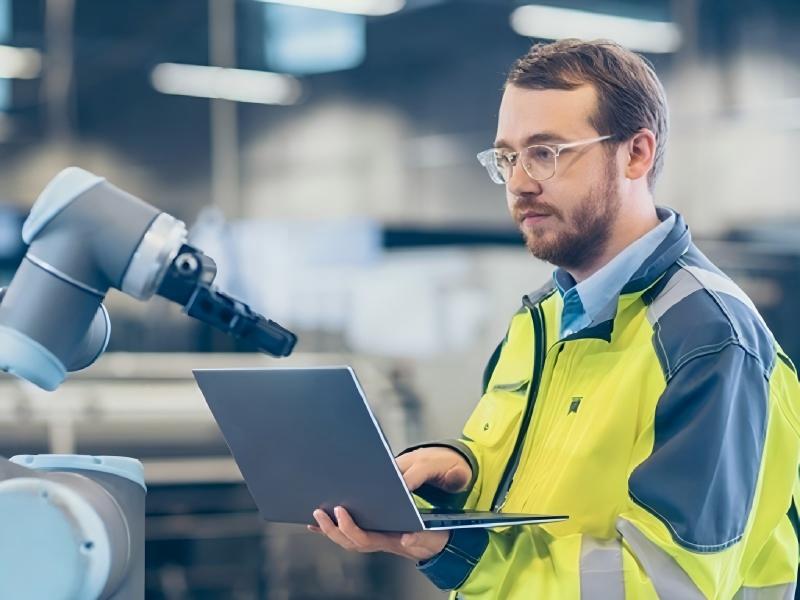
ABB, one of the world’s leading industrial automation and robotics technology providers, continues to expand its role in smart manufacturing by combining robotics expertise with automation systems, industrial software, and digital technologies.
The development of intelligent robotics is changing the traditional manufacturing model. Industrial robots are no longer only used for repetitive mechanical tasks. Modern robotic systems are becoming connected, intelligent production units capable of communicating with PLC systems, collecting operational data, and supporting flexible manufacturing processes.
For manufacturers in industries such as automotive, electronics, logistics, metal processing, and consumer goods, robotics automation has become an important strategy for improving production efficiency and maintaining global competitiveness.
The Growing Importance of Industrial Robotics in Manufacturing
Industrial robots have played an important role in manufacturing for many years.
Traditional robot applications mainly focused on:
- Welding
- Painting
- Material handling
- Assembly
- Packaging
These applications helped manufacturers improve productivity and reduce manual labor requirements.
However, modern manufacturing requirements are changing rapidly.
Companies now need production systems that can:
- Adapt quickly to product changes
- Improve manufacturing accuracy
- Reduce production waste
- Increase operational flexibility
- Support customized production
This has created demand for more intelligent robotic solutions.
Modern industrial robots are becoming integrated components of complete automation systems rather than independent machines.
ABB Robotics Supports Flexible Smart Factory Development
Smart manufacturing requires production systems that can respond quickly to changing market requirements.
Traditional production lines are often designed for specific products and may require significant engineering effort when production requirements change.
Intelligent robotic systems provide greater flexibility.
ABB robotic solutions support applications including:
- Assembly automation
- Material handling
- Machine tending
- Packaging automation
- Quality inspection
- Collaborative manufacturing
By integrating robotics with industrial automation systems, manufacturers can create production environments that are faster, more flexible, and more efficient.
For example, a modern production cell may include:
- Industrial robots performing assembly tasks
- PLC systems controlling machine sequences
- Sensors monitoring production conditions
- Vision systems checking product quality
- Software platforms analyzing production data
This creates a complete smart manufacturing environment.

PLC Integration Creates More Intelligent Robotic Automation
PLC systems remain a key component in industrial automation.
Although industrial robots perform mechanical operations, PLC controllers are often responsible for coordinating the complete production process.
PLC systems can manage:
- Robot communication
- Safety signals
- Machine synchronization
- Production sequences
- Sensor information
The integration between robots and PLC systems improves manufacturing efficiency.
For example:
A PLC controller can send production instructions to a robotic system.
The robot performs assembly operations.
Sensors confirm production results.
The PLC receives feedback and continues the next process step.
This coordination allows manufacturers to achieve reliable and repeatable production.
As factories become more intelligent, the relationship between PLC systems and robotic automation will continue becoming closer.
Artificial Intelligence Improves Industrial Robot Capabilities
Artificial intelligence is becoming an important technology in the future development of robotics.
Traditional industrial robots typically follow programmed movements.
AI technologies provide additional capabilities by allowing robots to analyze information and respond more intelligently.
Industrial AI applications include:
Intelligent Vision Systems
Machine vision allows robots to identify objects, inspect products, and make decisions based on visual information.
This improves automation performance in applications requiring high accuracy.
Adaptive Manufacturing
AI-supported robotic systems can adjust operations according to production conditions.
This helps manufacturers handle:
- Different product models
- Variable production requirements
- Changing operating environments
Predictive Robot Maintenance
Robotic systems generate valuable operational data.
AI analysis can identify unusual conditions and help maintenance teams prevent unexpected failures.
This improves:
- Equipment reliability
- Production availability
- Maintenance efficiency
Digital Transformation Connects Robots with Smart Factory Systems
The future of manufacturing depends on connectivity.
A smart factory requires communication between:
- Robots
- PLC controllers
- Sensors
- Industrial networks
- Manufacturing software
- Data platforms
Digital transformation allows manufacturers to monitor production performance in real time.
For example:
A robotic production cell generates operational information.
Automation systems collect production data.
Software platforms analyze performance.
Engineers identify improvement opportunities.
Management teams make decisions based on accurate information.
This creates a more transparent and efficient production environment.
Industrial Robots Improve Manufacturing Efficiency and Quality
One of the biggest advantages of industrial robotics is improved production consistency.
Human-based production processes can be affected by:
- Fatigue
- Variation
- Environmental conditions
Industrial robots provide:
- High repeatability
- Precise movement
- Stable production quality
- Continuous operation capability
This is especially valuable in industries requiring strict quality standards.
Examples include:
- Automotive components
- Electronic devices
- Semiconductor equipment
- Medical products
- Precision machinery
Robotic automation helps manufacturers maintain consistent quality while increasing production capacity.
Robotics Automation Supports Labor Challenges and Production Demands
Manufacturing companies worldwide are facing increasing challenges related to workforce availability and production requirements.
Automation technologies provide solutions by supporting employees and improving production efficiency.
Industrial robots can handle:
- Repetitive operations
- Heavy materials
- Dangerous environments
- High-precision tasks
This allows human workers to focus on:
- Engineering
- Process improvement
- Quality management
- System operation
The future of manufacturing is not simply replacing humans with machines.
Instead, intelligent automation creates cooperation between people and advanced technologies.
Industrial Communication Is Essential for Robotic Systems
Modern robotic automation depends on reliable industrial communication.
Robots must exchange information with:
- PLC systems
- Motion controllers
- Safety systems
- Sensors
- Production software
Industrial communication enables:
- Real-time control
- Faster response
- Better system coordination
- Improved diagnostics
For automation engineers, understanding robotic communication and integration has become increasingly important.
Future manufacturing projects will require expertise in:
- PLC programming
- Robot programming
- Industrial networking
- Motion control
- System integration
Challenges in Industrial Robotics Adoption
Although robotic automation provides many benefits, companies must consider several challenges.
Engineering Complexity
Robot systems require professional design, programming, and commissioning.
Successful implementation depends on proper integration between mechanical systems, electrical controls, and software.
Initial Investment
Advanced automation projects require investment in:
- Equipment
- Engineering
- Training
- Maintenance systems
However, long-term productivity improvements can provide significant value.
Workforce Skills
Modern factories need engineers who understand both automation and robotics.
Important skills include:
- PLC control
- Robot programming
- Industrial communication
- Digital manufacturing
Future Outlook: Intelligent Robotics Will Shape Smart Manufacturing
The future of manufacturing will depend on intelligent automation systems that combine robotics, PLC technology, artificial intelligence, and digital platforms.
Industrial robots will continue evolving from simple automated machines into intelligent production systems.
Future smart factories will increasingly use:
- Connected robots
- Advanced automation software
- AI-based optimization
- Digital production monitoring
- Flexible manufacturing systems
ABB robotics technology represents the broader transformation of industrial manufacturing toward smarter, more connected operations.
As companies worldwide upgrade their production facilities, robotic automation will remain a key technology for improving efficiency and competitiveness.
Conclusion
Industrial robotics is becoming one of the most important technologies driving smart manufacturing transformation.
The integration of ABB robotic systems with PLC automation, industrial networks, and digital technologies creates powerful solutions for modern factories.
By improving production flexibility, efficiency, and quality, intelligent robotic automation helps manufacturers respond to changing market demands.
As global industries continue moving toward digital manufacturing, robotics and automation technologies will play an essential role in building the factories of the future.