

ProductPRODUCT
Featured products
Contact Us
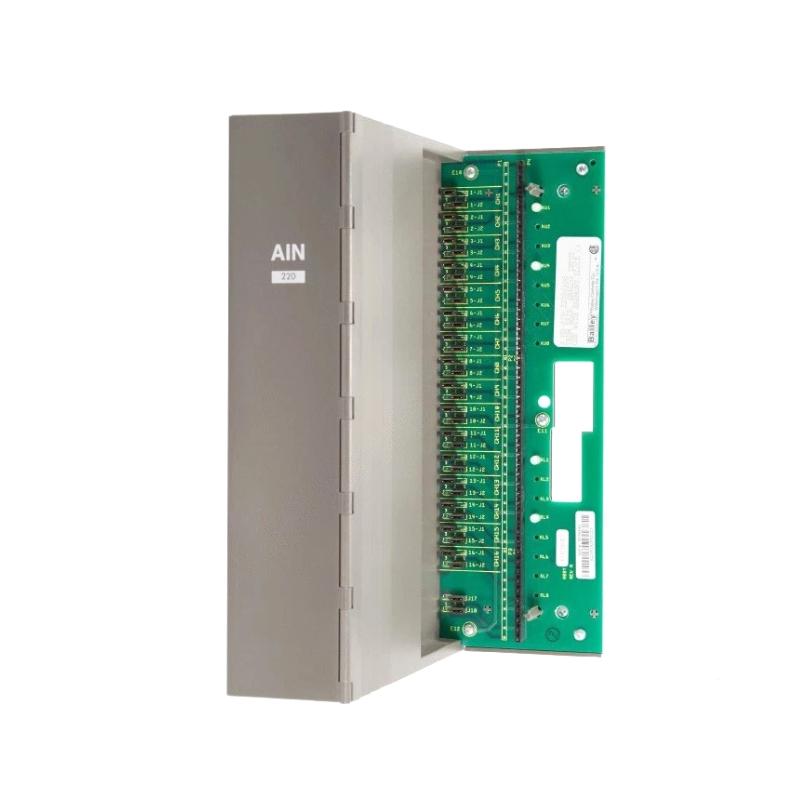
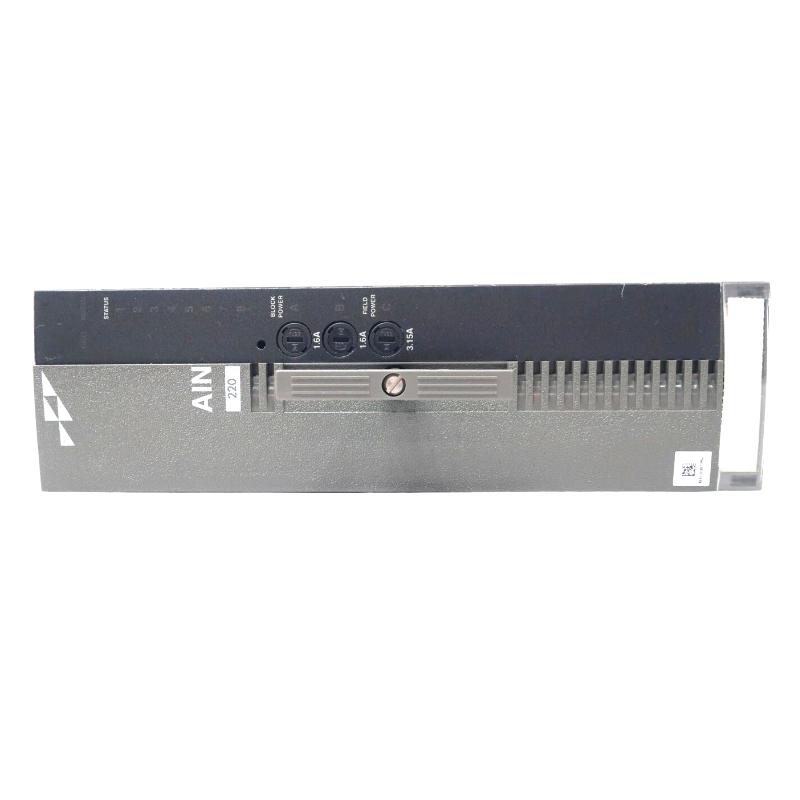
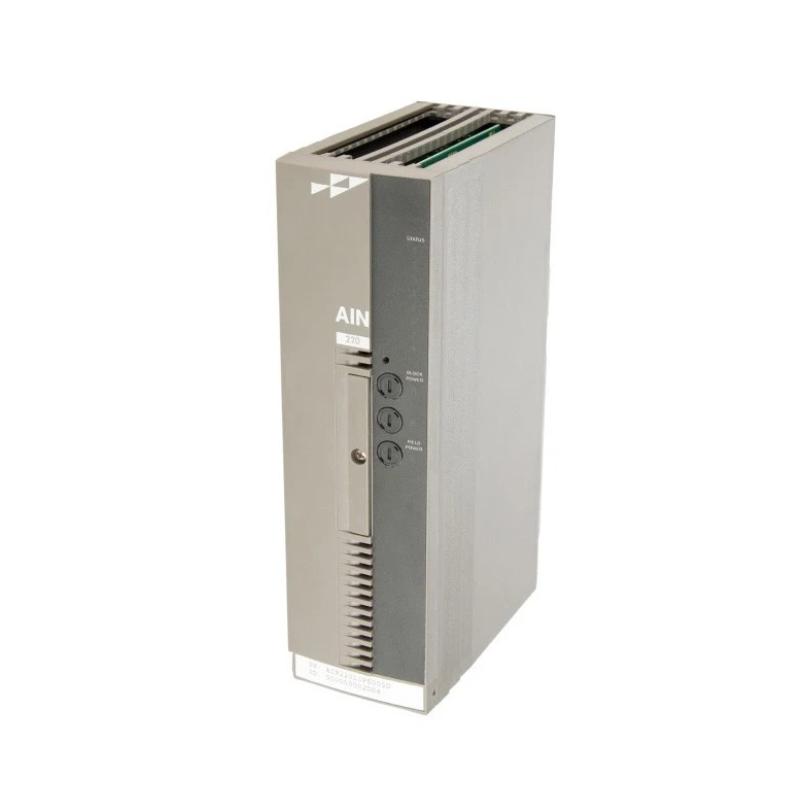
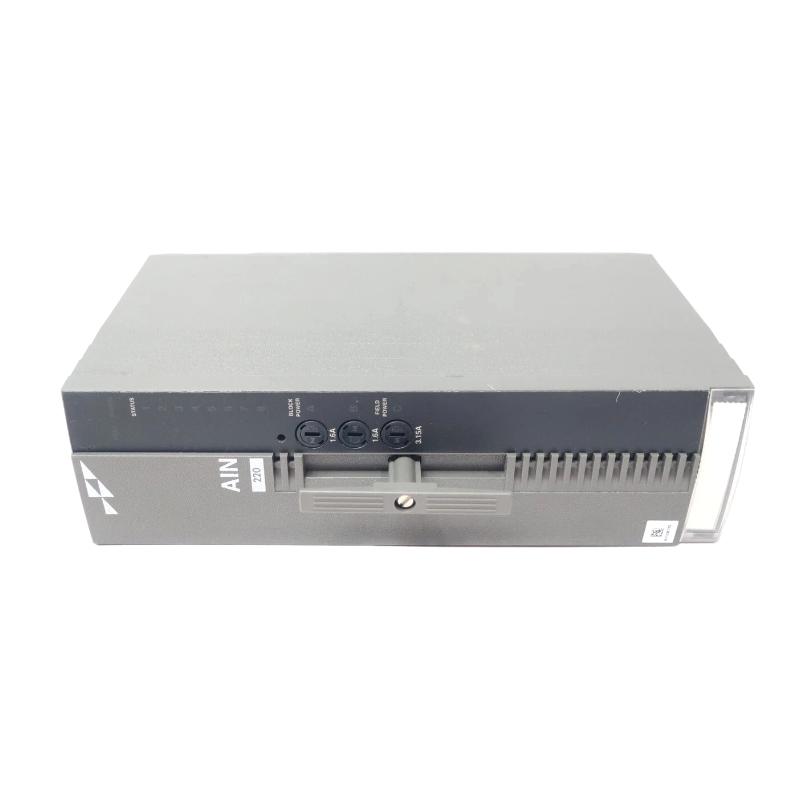
- ABB Bailey
- PHBAIN2000C100
- Analog Input Base
- Sweden (SE)
- 280 × 100 × 75 mm
- 1.8 kg
- Xiamen, China
- New & In Stock
- T/T, PayPal, Western Union
- 1 Year
- 1-3 Working Days
- DHL, UPS, TNT, FedEx and EMS.
- 24-Hour Service
- COO
- 5
Our advantage

Global Logistics
We have a 10-year logistics and express cooperation agreement, so our products can be shipped to any place in the world.

Brand new and original
Our products are imported in bulk from the place of origin. Because of the cooperative relationship, our products are all original and 100% new.

24-hour service
We provide 7*24 hours service to our customers. We will be there whenever you need us.

Price advantage
All our products are priced very favorably because we have our own warehouse and supply.
| Company Information | |||
| [email protected] | |||
| Mobile | +8615980777398 | ||
| +8615980777398 | |||
| 15980777398 |
Product Overview
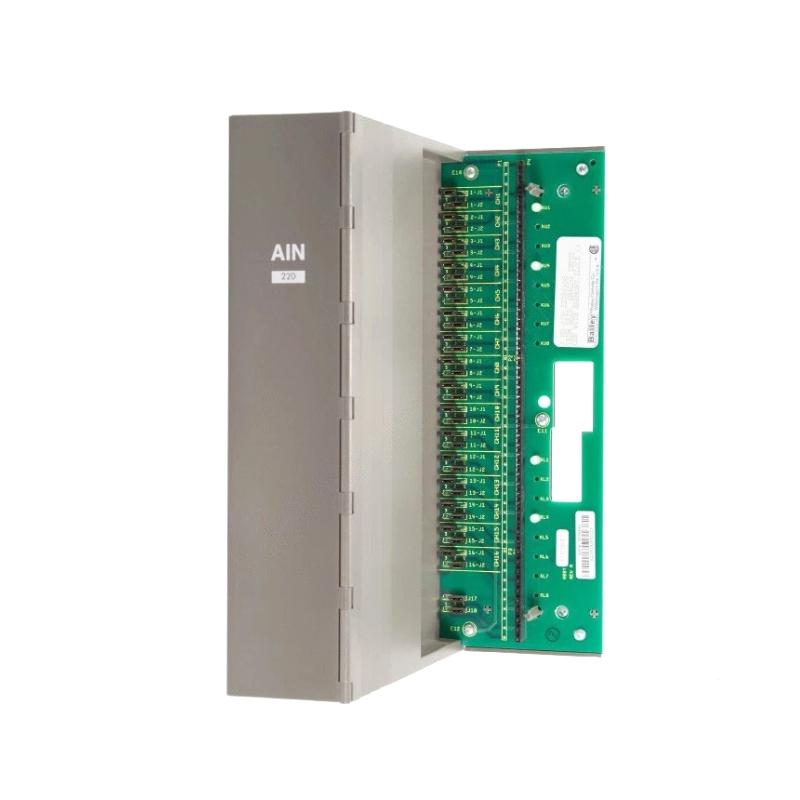
The ABB Bailey PHBAIN2000C100 Analog Input Base is an industrial automation hardware component designed to provide a physical and electrical foundation for analog input signal integration within compatible ABB Bailey control systems. As an analog input base, the PHBAIN2000C100 supports the organization and connection of process measurement signals before those signals are incorporated into the control architecture.
Analog input signals are essential in process automation because many industrial variables are continuously changing rather than simply ON or OFF. Temperature, pressure, flow, level, composition, speed, and other process conditions can be represented by analog electrical signals. A properly designed analog input base provides an organized interface between field instrumentation and the associated control electronics.
The ABB Bailey PHBAIN2000C100 has listed dimensions of 280 × 100 × 75 mm and a weight of 1.8 kg. Its physical construction is suitable for integration into industrial control cabinets and instrumentation assemblies where reliable field-signal organization and connection are required.
The PHBAIN2000C100 should be considered as part of a complete measurement chain rather than as an independent controller. Its practical function depends on the associated analog input electronics, field instruments, terminal connections, wiring, controller architecture, and system configuration.
Technical Specifications
| Parameter | Specification |
|---|---|
| Manufacturer | ABB Bailey |
| Model | PHBAIN2000C100 |
| Product Type | Analog Input Base |
| Product Family | ABB Bailey Industrial Control System |
| Primary Function | Analog input signal interface and mounting base |
| Signal Type | Analog process signals |
| Application | Industrial Process Automation |
| Interface Role | Field instrumentation to control-system interface |
| Installation | Industrial control cabinet / compatible system assembly |
| Dimensions | 280 × 100 × 75 mm |
| Weight | 1.8 kg |
| Typical Applications | Process measurement, instrumentation, monitoring and control |
Exact electrical characteristics, terminal assignments, supported signal ranges, and compatibility should be verified against the specific system configuration and hardware documentation before installation.
What Is the ABB Bailey PHBAIN2000C100?
The PHBAIN2000C100 is an Analog Input Base associated with ABB Bailey industrial automation equipment.
An analog input base provides the physical infrastructure required for connecting analog field signals with the appropriate input electronics. In a typical industrial automation architecture, sensors and transmitters are installed throughout the plant, while the control system is located in a protected control cabinet. The analog input base helps establish an organized connection between these two areas.
A simplified signal path can be represented as:
Process → Sensor/Transmitter → Field Wiring → PHBAIN2000C100 → Analog Input Electronics → Controller → HMI/SCADA
The exact architecture can vary according to the ABB Bailey system in which the base is installed.
Unlike a PLC CPU or standalone controller, the PHBAIN2000C100 is primarily associated with the physical organization and integration of analog input signals. Its correct operation therefore depends on the associated input modules and system hardware.
Analog Input Signal Principle
Industrial process sensors generate information about physical conditions. Depending on the instrumentation used, this information can be transmitted as an analog electrical signal.
For example, a transmitter may provide a continuously varying signal corresponding to:
- Process temperature
- Pressure
- Flow rate
- Liquid level
- Chemical concentration
- Differential pressure
- Equipment operating conditions
The analog input system receives this changing signal and makes it available to the control system.
The PHBAIN2000C100 forms part of this interface architecture. By providing an organized base for analog input integration, it helps simplify field wiring and system-level signal management.
The resulting process information can then be used by controllers for monitoring, alarms, calculations, process regulation, trend analysis, and operator displays.
Function and Working Principle
Field Signal Connection
The first stage of the measurement chain begins with field instrumentation.
A sensor or transmitter detects a physical process condition and produces a corresponding electrical signal. The signal travels through field wiring toward the control cabinet.
The analog input base provides the appropriate physical interface for integrating this field wiring with the control-system input architecture.
Signal Organization
Large industrial installations can contain hundreds or thousands of measurement points. Proper organization of these signals is therefore essential.
An analog input base helps maintain an orderly relationship between:
- Field instruments
- Signal cables
- Terminal connections
- Input electronics
- Control-system channels
Clear signal organization can reduce installation errors and simplify maintenance.
Interface With Input Electronics
The analog input base works with the associated input electronics responsible for processing the incoming analog signals.
The input electronics may perform functions such as signal conditioning, conversion, isolation, and diagnostic monitoring, depending on the host system.
The base itself should not be assumed to provide all of these functions independently.
Transfer to the Control System
After the analog signal has been properly interfaced and processed, the resulting measurement becomes available to the control system.
The controller can then use the process value for:
- Monitoring
- Alarm generation
- Closed-loop control
- Process calculations
- Equipment protection
- Historical trending
- Operator visualization
Role in ABB Bailey Industrial Automation
The PHBAIN2000C100 can form part of the instrumentation layer within an ABB Bailey process automation architecture.
Industrial control systems typically consist of several interconnected layers:
Field Devices → Signal Interface → I/O Electronics → Control Processor → Supervisory System
The analog input base belongs to the field-interface portion of this architecture.
This arrangement provides a structured method for bringing real-world process measurements into the automation system.
Reliable analog signal integration is particularly important in process industries because many control decisions depend on continuous measurement rather than discrete status information.
For example, a controller may continuously monitor a pressure transmitter and adjust a control valve according to the measured pressure. Similarly, temperature measurements can be used to regulate heaters, cooling systems, or process flow.
Importance of Analog Input Bases
Analog input bases are important in industrial control systems for several reasons.
Organized Field Wiring
A structured physical interface makes it easier to identify and maintain individual process signals.
Simplified Maintenance
Technicians can more easily trace signal paths when field connections and input hardware are logically organized.
System Expansion
A properly structured I/O architecture can simplify the addition of instrumentation when the control system is expanded.
Improved Documentation
Clearly organized signal interfaces make electrical drawings, loop diagrams, and maintenance records easier to manage.
Reduced Wiring Errors
Correct terminal identification and systematic cable routing help reduce the risk of incorrect field connections.
Industrial Applications
The ABB Bailey PHBAIN2000C100 can be used in industrial environments where analog process measurements must be incorporated into an ABB Bailey control architecture.
Power Generation
Power plants rely heavily on analog measurements for monitoring temperature, pressure, flow, vibration-related process conditions, and other operating parameters.
An organized analog input architecture helps integrate these measurements into the plant control system.
Chemical Processing
Chemical plants continuously monitor process variables such as temperature, pressure, flow, and liquid conditions.
Analog input interfaces allow these continuously changing measurements to be transferred into the control system.
Oil and Gas
Oil and gas facilities use extensive instrumentation throughout production and processing systems.
Analog signal interfaces can connect transmitters and sensors with centralized process control equipment.
Water and Wastewater
Water-treatment systems use measurement devices to monitor process conditions throughout treatment stages.
Analog measurements can support automatic control, alarm management, and quality monitoring.
Pharmaceutical Manufacturing
Process consistency is critical in pharmaceutical manufacturing. Continuous measurements are commonly required for environmental and production control.
An organized analog input infrastructure supports reliable integration of these measurements.
Food and Beverage Processing
Temperature, pressure, flow, and level measurements are frequently used in automated food and beverage production systems.
The analog input architecture helps connect these instruments with the process control system.
System Integration
The PHBAIN2000C100 should be integrated according to the architecture of the host ABB Bailey system.
A typical system can include:
- Field sensors
- Pressure and temperature transmitters
- Flow transmitters
- Level instruments
- Analog input bases
- Analog input modules
- I/O termination hardware
- Controllers
- Communication interfaces
- Operator stations
- HMI systems
- SCADA systems
The analog input base occupies an important position between field instrumentation and the input electronics.
System integration should always consider the complete signal path rather than evaluating the base independently.
PLC, Controller and I/O Integration
Although ABB Bailey systems are commonly associated with process automation architectures rather than conventional standalone PLC applications, analog input bases perform a function comparable to other industrial I/O interface hardware: they help connect physical process measurements with control logic.
The controller receives processed measurement data and can execute control algorithms based on configured process requirements.
For example:
Temperature Transmitter → Analog Input Interface → Controller → Control Logic → Heating Equipment
or:
Pressure Transmitter → Analog Input Interface → Controller → Control Valve
This architecture allows continuous process measurements to participate in automated control strategies.
HMI and SCADA Integration
Analog process values become particularly useful when they are displayed and monitored through operator interfaces.
Once an analog measurement has entered the control system, the value can potentially be used for:
- Real-time displays
- Trend graphs
- Alarm monitoring
- Historical records
- Process calculations
- Operator diagnostics
- Maintenance analysis
The PHBAIN2000C100 therefore contributes to the overall data path that allows physical process conditions to become visible to operators.
A properly organized input system also makes troubleshooting easier because technicians can follow the signal from the field instrument through the input interface and into the control application.
Installation Guidelines
Proper installation is important for reliable analog measurement performance.
Verify Part Identification
Before installation, verify:
- Complete model number
- Hardware identification
- Associated input electronics
- Connector arrangement
- Terminal configuration
- Existing cabinet position
- Host-system architecture
The replacement component should match the required system configuration.
Mechanical Installation
The listed dimensions of the PHBAIN2000C100 are:
280 × 100 × 75 mm
Adequate cabinet space should be provided for installation, wiring, inspection, and maintenance.
The unit should be mechanically secured using the appropriate mounting arrangement for the host equipment.
Field Wiring
Field wiring should be routed according to the system’s electrical design.
Signal cables should be clearly labeled to correspond with electrical drawings and loop documentation.
Cable Separation
Analog signal cables should be routed away from high-power conductors whenever practical.
Separating sensitive instrumentation wiring from motor, contactor, and high-current power wiring can reduce unwanted electrical interference.
Analog Signal Wiring Considerations
Analog signals can be more sensitive to electrical interference than simple discrete signals.
When installing the PHBAIN2000C100 as part of an analog input system, technicians should consider:
- Cable shielding
- Grounding practices
- Cable routing
- Cable length
- Connector condition
- Terminal tightness
- Electrical noise
- Moisture protection
The exact wiring method depends on the field instrument and the input-system design.
Before applying power, every connection should be compared with the applicable wiring documentation.
EMC and Electrical Noise
Industrial facilities contain many potential sources of electromagnetic interference.
Typical sources include:
- Variable frequency drives
- Large motors
- Switching power supplies
- Contactors
- Transformers
- High-current cables
- Welding equipment
Analog instrumentation cables should therefore be routed carefully.
Where shielded cables are specified, the shield should be installed according to the system’s grounding requirements.
Good grounding and cable-management practices can significantly improve signal stability.
Cabinet Installation and Space Planning
The 280 × 100 × 75 mm physical dimensions should be considered when designing or modifying a control cabinet.
Space planning should include room for:
- The base itself
- Associated input modules
- Field wiring
- Cable bends
- Terminal access
- Inspection
- Maintenance
- Replacement activities
Avoid installing equipment in a way that blocks connectors or makes field wiring inaccessible.
Good cabinet organization reduces maintenance time and improves long-term serviceability.
Commissioning Procedure
After installation, the analog input system should be commissioned systematically.
Step 1: Verify Hardware
Confirm that the PHBAIN2000C100 and associated components match the intended system configuration.
Step 2: Check Mechanical Installation
Verify that the base is securely mounted and that connectors are properly seated.
Step 3: Check Field Wiring
Compare every field connection against the applicable electrical drawings.
Step 4: Inspect Signal Routing
Confirm that analog cables are correctly routed and appropriately separated from major electrical noise sources.
Step 5: Power-System Verification
Confirm that the associated control equipment is receiving the required power and that there are no active hardware diagnostics.
Step 6: Verify Input Values
Apply known process conditions or an appropriate test signal and verify that the expected measurement is received by the control system.
Step 7: Confirm HMI/SCADA Display
Verify that the process value displayed to operators corresponds with the expected field condition.
Troubleshooting the PHBAIN2000C100
Troubleshooting should consider the entire analog signal chain rather than assuming that the base itself is defective.
No Analog Signal
If an expected measurement is missing, inspect:
- Field instrument
- Sensor power
- Field wiring
- Terminal connections
- Input module
- Base connections
- Controller diagnostics
- Configuration
A failed transmitter can produce symptoms that appear similar to an input-interface problem.
Unstable Analog Reading
An unstable measurement can result from:
- Electrical interference
- Loose terminals
- Damaged cables
- Poor grounding
- Sensor instability
- Process fluctuations
- Input electronics problems
The measurement should be observed at different points in the signal chain to isolate the source.
Incorrect Reading
If the displayed value is consistently too high or too low, check:
- Sensor calibration
- Transmitter configuration
- Wiring
- Input configuration
- Scaling parameters
- Signal conditioning
- Process conditions
Replacing the base without checking these factors may not solve the problem.
Intermittent Signal
An intermittent signal may indicate:
- Loose connections
- Connector wear
- Cable damage
- Vibration
- Moisture
- Poor shielding
- Sensor degradation
Physical inspection should be performed while monitoring the signal where practical.
Preventive Maintenance
Preventive maintenance helps maintain the reliability of analog input systems.
Inspect Connections
Periodically inspect connectors and terminals for looseness, contamination, corrosion, or mechanical damage.
Check Field Wiring
Look for damaged insulation, excessive bending, loose connections, and moisture ingress.
Monitor Process Trends
Unexpected long-term changes in analog measurements can indicate sensor aging, process changes, or developing instrumentation problems.
Maintain Cabinet Conditions
The control cabinet should be kept clean and protected from excessive dust, moisture, vibration, and temperature.
Review Documentation
Electrical drawings, I/O lists, loop diagrams, and configuration records should be kept synchronized with the installed system.
Replacement and Spare-Part Planning
When replacing an ABB Bailey PHBAIN2000C100, technicians should verify the complete model identification before installation.
Important checks include:
- Model number
- Hardware revision
- Associated input module
- Terminal configuration
- Connector arrangement
- Cabinet location
- Host control system
- Existing wiring
- System configuration
The listed physical dimensions are 280 × 100 × 75 mm, while the listed weight is 1.8 kg.
Physical dimensions are useful for cabinet planning, but physical similarity between different ABB Bailey components does not guarantee electrical compatibility.
The complete part identification and host-system requirements should therefore be checked before ordering or installing a replacement.
Physical Dimensions and Weight
The ABB Bailey PHBAIN2000C100 has the following listed physical specifications:
| Physical Parameter | Value |
|---|---|
| Length | 280 mm |
| Width | 100 mm |
| Height | 75 mm |
| Overall Dimensions | 280 × 100 × 75 mm |
| Weight | 1.8 kg |
These dimensions can be used for cabinet layout, spare-parts storage, transportation planning, and mechanical installation preparation.
The weight should also be considered when planning mounting arrangements and handling procedures.
Compatible System Components
A complete analog input architecture may contain several supporting components.
| Component | Typical Function |
|---|---|
| Process Sensor | Detects physical process conditions |
| Transmitter | Converts the measured condition into an electrical signal |
| Field Cable | Transfers the signal to the control cabinet |
| PHBAIN2000C100 | Provides analog input base/interface infrastructure |
| Analog Input Module | Processes incoming analog signals |
| I/O Termination Hardware | Organizes field connections |
| Controller | Executes process-control logic |
| Communication Interface | Transfers process information within the control architecture |
| HMI | Provides operator visualization |
| SCADA System | Provides supervisory monitoring and data management |
The exact components required depend on the host ABB Bailey architecture and application.
Recommended Related ABB Bailey Components
When planning an ABB Bailey analog input system, related hardware may include other components serving different functions within the control architecture.
| Related Component | General Function |
|---|---|
| PHBAIN1200S200 | Analog Input Base |
| NTU Series Terminal Units | Field signal termination and interface |
| Bailey Analog Input Modules | Analog signal acquisition |
| Bailey I/O Interface Components | Signal and control-system integration |
| Bailey Controller Assemblies | Process control execution |
| Bailey Communication Components | System-level data communication |
| Bailey Power Modules | Control-system power infrastructure |
These components should not be treated as direct substitutes for the PHBAIN2000C100 unless compatibility has been confirmed for the specific system.
Engineering Best Practices
Several engineering practices can improve the reliability of a PHBAIN2000C100-based analog input installation.
Maintain Accurate Loop Documentation
Every analog loop should be clearly identified in electrical drawings and instrumentation documentation.
Use Consistent Cable Labels
Cable labels should correspond with the I/O list and field-device identification.
Separate Signal and Power Wiring
Keeping analog signal cables away from high-current conductors can reduce electromagnetic interference.
Inspect the Complete Signal Chain
When an input value is incorrect, troubleshoot from the sensor toward the controller instead of replacing electronic hardware immediately.
Maintain Spare Components
Critical process-control installations should maintain suitable spare hardware according to the plant’s maintenance strategy.
Verify Before Replacement
The complete model and associated system configuration should be checked before installing a replacement base.
Key Advantages
Organized Analog Signal Integration
The PHBAIN2000C100 provides a structured physical interface for integrating analog process measurements.
Suitable for Process Automation
Analog measurements are fundamental to industrial process monitoring and control.
Cabinet-Friendly Construction
With listed dimensions of 280 × 100 × 75 mm, the unit can be incorporated into appropriately designed industrial control cabinets.
Supports System-Level Maintenance
A clearly organized analog input architecture can simplify signal tracing, inspection, and troubleshooting.
Integration With Industrial Instrumentation
The base can form part of a larger architecture containing sensors, transmitters, input electronics, controllers, operator interfaces, and supervisory systems.
Technical FAQs
What is the ABB Bailey PHBAIN2000C100?
The ABB Bailey PHBAIN2000C100 is an Analog Input Base designed to form part of an industrial analog signal interface architecture.
What type of signals is the PHBAIN2000C100 associated with?
It is associated with analog process signals generated by industrial sensors and transmitters. Exact supported signal characteristics depend on the associated input electronics and system configuration.
What are the dimensions of the PHBAIN2000C100?
The listed dimensions are 280 × 100 × 75 mm.
How much does the PHBAIN2000C100 weigh?
The listed weight is 1.8 kg.
Is the PHBAIN2000C100 a controller?
No. It is an analog input base, not a general-purpose PLC CPU or standalone process controller.
What applications use analog input bases?
Analog input architectures are commonly used in power generation, chemical processing, oil and gas, water treatment, pharmaceutical production, food processing, and other industrial process-control environments.
What can cause an analog input problem?
Potential causes include sensor faults, transmitter problems, wiring errors, loose connections, electrical interference, configuration errors, damaged connectors, or faults in associated input electronics.
Can another ABB Bailey analog input base replace the PHBAIN2000C100?
A different analog input base should not automatically be considered interchangeable. Model identification, system architecture, connector arrangement, associated input electronics, and configuration requirements should be verified before replacement.
How should the PHBAIN2000C100 be maintained?
Maintenance should include inspection of the base, connectors, field wiring, cabinet environment, and associated analog input electronics. Signal trends and system diagnostics should also be monitored for abnormal behavior.
Conclusion
The ABB Bailey PHBAIN2000C100 Analog Input Base is an industrial interface component designed to support the integration of analog process measurements into compatible ABB Bailey control architectures. By providing an organized foundation for analog input connections, it can help connect field instrumentation with the input electronics and control system responsible for monitoring and regulating industrial processes.
Analog measurements are essential in modern process automation because variables such as temperature, pressure, flow, and level continuously change during operation. A properly organized analog input architecture allows these measurements to be transferred into the control system and subsequently used for operator displays, alarms, process calculations, diagnostics, and automated control.
The PHBAIN2000C100 has listed dimensions of 280 × 100 × 75 mm and a weight of 1.8 kg, making these specifications useful for cabinet planning, replacement preparation, inventory management, and installation logistics.
For maintenance and replacement work, the complete PHBAIN2000C100 identification should be verified together with the associated input electronics, connectors, field wiring, and host ABB Bailey system. Proper installation, signal routing, grounding, commissioning, and preventive maintenance are important for achieving stable and reliable analog measurement performance in industrial automation applications.