
NewsNEWCENTER
Featured products
Contact Us
ABB Xiamen Industrial Center Demonstrates Integrated Green Microgrid: Making Better Use of Every Kilowatt-Hour of Renewable Electricity
2026-11-18ABB Showcases Source-Grid-Load-Storage Integration at Its Xiamen Industrial Center
ABB’s Xiamen Industrial Center in China has developed an integrated green microgrid combining distributed solar power generation, battery energy storage, flexible electricity loads, intelligent energy management and interaction with the wider power grid.
The project demonstrates how an industrial manufacturing facility can coordinate renewable energy generation and electricity consumption rather than relying on photovoltaic installations alone. By integrating energy sources, distribution networks, loads and storage under a unified management system, the facility aims to increase local renewable energy utilization, improve operational flexibility and reduce energy costs.
The project is built around the Chinese concept of “Source-Grid-Load-Storage” integration. This approach coordinates electricity generation, power distribution, consumption and energy storage to improve the balance between supply and demand.
According to ABB’s November 18, 2026 project report, the Xiamen facility has installed 12.3 MWp of distributed photovoltaic capacity and a 600 kW / 1.2 MWh energy storage system. Together with flexible load management and ABB’s ZEE600 intelligent microgrid management system, these resources form the foundation of the site’s integrated energy architecture.
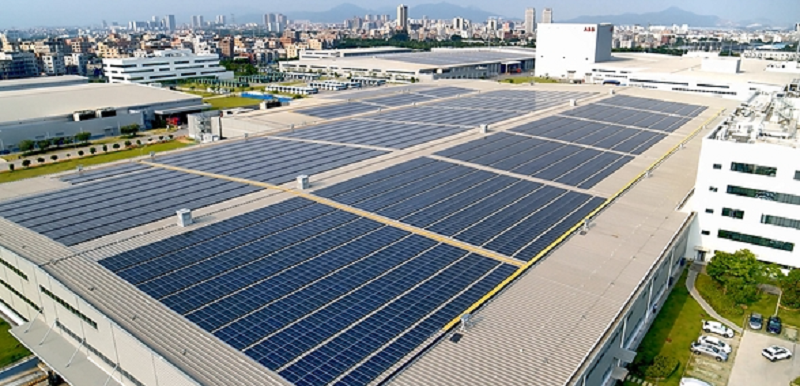
Key Project Figures: Solar Generation, Energy Storage and Renewable Energy Utilization
The ABB Xiamen Industrial Center project combines several energy technologies to support the site’s manufacturing and operational requirements.
Its main reported configuration and performance indicators include:
- 12.3 MWp distributed photovoltaic capacity: Solar panels installed across available industrial facility roof areas.
- 600 kW / 1.2 MWh energy storage: Battery storage capacity designed to support energy shifting and system flexibility.
- Approximately 36% clean electricity substitution: The latest project report states that clean energy accounts for around 36% of the facility’s electricity consumption.
- Nearly 90% local renewable electricity utilization: A high proportion of the generated green electricity is consumed locally within the industrial campus.
- More than 10 million kWh of green electricity annually: Reported annual renewable electricity generation.
- Approximately 13,400 tonnes of CO₂ emissions avoided annually: The reported estimated annual emissions reduction.
- Around 20% reduction in overall electricity costs: The latest report describes an overall reduction in electricity costs through photovoltaic generation, storage operation and energy management optimization.
These figures illustrate the potential benefits of integrating renewable generation with storage and demand-side management in an operating industrial facility.
The reported indicators should be understood within the project’s published calculation and operating scope. Actual results at other industrial sites will depend on solar resources, electricity demand, tariff structures, equipment configuration and operating conditions.
How the Source-Grid-Load-Storage System Works
The main technical value of the project lies in coordinating several energy resources through one management framework. Each part has a different function, but their operation is connected through monitoring, forecasting and control.
1. Source: Distributed Solar Power Generation
The energy system begins with a 12.3 MWp rooftop photovoltaic installation.
Solar generation provides renewable electricity directly to the industrial campus. During periods of strong sunlight, photovoltaic output can supply part of the facility’s electricity demand, reducing the amount of power that needs to be purchased from the external grid.
However, solar generation changes with weather conditions and time of day. Without coordinated energy management, periods of high photovoltaic output may not always match the facility’s electricity demand.
This is why the project combines solar generation with energy storage and flexible load management.
2. Storage: Improving the Balance Between Generation and Consumption
The project includes an ABB eStorage intelligent energy storage solution and a 600 kW / 1.2 MWh battery system.
Energy storage provides flexibility by absorbing electricity when generation exceeds immediate demand and releasing stored energy when additional power is required.
This can help reduce the mismatch between photovoltaic generation and electricity consumption. It can also support peak-period energy management and improve the flexibility of the site’s electricity system.
The project also incorporates AC and DC microgrid technologies. These technologies provide different options for integrating renewable generation, storage, charging infrastructure and electrical distribution equipment.
The actual operating strategy depends on battery capacity, charging and discharging limits, grid conditions and the site’s electricity demand.
3. Grid: Intelligent Distribution and Communication
An industrial microgrid requires reliable communication between distributed energy equipment, electrical distribution systems and the central management platform.
ABB’s project uses a 5G-based smart power distribution solution. The reported communication architecture incorporates network slicing and CPE-based Layer 2 networking to support secure and low-latency communication between system components.
This communication infrastructure helps connect distributed devices and supports coordinated monitoring and control.
For industrial facilities with multiple buildings, production areas and energy systems, reliable communication is an important part of achieving integrated energy management.
4. Load: Flexible Electricity Consumption
The load side focuses on coordinating electricity consumption with renewable energy availability while protecting production continuity.
At the Xiamen facility, different types of loads are managed according to their operating characteristics and adjustment potential.
Examples include:
- HVAC systems, which can adjust operating parameters within required environmental and comfort limits.
- Lighting systems, which can use zone-based and scenario-based control.
- Electric vehicle charging stations, where charging power can be adjusted according to charging demand and available electricity.
- Production-related equipment, which requires careful coordination to avoid affecting manufacturing operations.
Critical production, fire protection and control systems must retain their required operating priority. Energy optimization should not compromise industrial safety or production stability.
ZEE600: The Intelligent Management Platform
A central part of the project is ABB’s ZEE600 intelligent microgrid management system.
Industrial facilities often contain equipment from different manufacturers, communication protocols and control platforms. Without a unified management structure, energy data can remain distributed across separate systems, making it difficult to coordinate electricity generation and consumption.
ZEE600 is used to integrate information from photovoltaic installations, energy storage systems, charging stations, power distribution equipment, energy meters, HVAC systems, lighting, building automation, production lines and security systems.
Through multi-protocol integration and edge control, the platform provides a unified view of the site’s energy resources.
Its functions include:
- Monitoring distributed energy generation and consumption.
- Collecting operational data from electrical and building systems.
- Forecasting photovoltaic output and electricity demand.
- Coordinating battery charging and discharging strategies.
- Managing flexible electricity loads.
- Supporting interaction with external power grid systems.
According to the November 18 project report, the platform uses rolling forecasts at 15-minute intervals, with reported prediction accuracy exceeding 90%.
The project also applies a multi-agent coordination approach involving photovoltaic generation, energy storage, building loads, production loads and grid interaction. These functions work together to support operating decisions based on energy cost, system safety and carbon reduction objectives.
From an Industrial Electricity Consumer to a Flexible Grid Resource
An important feature of the Xiamen project is its interaction with the wider electricity system.
Traditionally, an industrial facility is primarily viewed as an electricity consumer. Its demand is supplied by the external grid, while internal energy management focuses mainly on maintaining reliable power and controlling costs.
An integrated microgrid can create additional flexibility.
By coordinating energy storage and adjustable loads, an industrial facility may be able to modify its electricity consumption in response to grid requirements. This is known as demand response.
ABB reports that its Xiamen Industrial Center’s ZEE600 platform has connected with Fujian Province’s new-type power load management system.
This connection allows the site to participate in broader demand-side management activities and supports its potential role as a flexible resource in the regional electricity system.
The project also explores interaction with virtual power plant operations. A virtual power plant coordinates distributed energy resources and flexible loads through digital platforms, allowing them to participate in electricity system management.
The practical value is that industrial energy assets can contribute not only to the site’s own electricity management but also to wider grid flexibility.
Why This Project Matters for Industrial Automation and Electrical Equipment
Although the project focuses on energy management rather than conventional factory automation alone, it has direct relevance to the industrial control and electrical equipment industry.
A modern industrial microgrid depends on the coordinated operation of multiple equipment categories.
Electrical distribution equipment
Switchgear, circuit breakers, protection devices, busway systems and power distribution units provide the electrical infrastructure needed to distribute energy safely throughout an industrial facility.
Energy storage and power conversion equipment
Battery systems, inverters and power conversion equipment support energy storage, conversion and controlled power flows between different parts of the microgrid.
Industrial monitoring and control
Intelligent controllers, communication gateways, energy meters and monitoring platforms collect operational data and support coordinated system management.
Building and facility automation
HVAC, lighting and other building systems can provide flexible loads when their operating requirements allow adjustment.
Digital energy management
Energy management platforms combine data from different systems to support forecasting, optimization and operational decision-making.
For manufacturers, system integrators and industrial equipment suppliers, the project highlights the growing connection between electrical infrastructure, automation technology and digital energy management.
A Reference for Green Transformation in Industrial Parks
ABB’s Xiamen Industrial Center provides a practical example of how an operating manufacturing facility can integrate renewable energy generation, energy storage and flexible electricity consumption.
The project has also received recognition in several energy transition initiatives. ABB reports that it was included in China’s Energy Transition white paper and selected as a National Energy Administration energy green and low-carbon transition case. It was also selected as one of the demonstration sites for a national key research and development project focused on multi-energy flexible systems in hot and humid regions.
These recognitions provide additional context for the project’s role as an industrial microgrid demonstration. They do not mean that the same configuration can be directly applied to every industrial park without adaptation.
Each facility needs to assess its electricity demand, available renewable energy resources, grid connection conditions, production schedules, safety requirements and investment model before selecting an appropriate microgrid architecture.
Conclusion
ABB’s Xiamen Industrial Center demonstrates how an integrated Source-Grid-Load-Storage architecture can improve renewable electricity utilization in an industrial manufacturing environment.
By combining 12.3 MWp of distributed photovoltaic generation, a 600 kW / 1.2 MWh energy storage system, flexible loads, 5G-enabled power distribution communication and the ZEE600 intelligent microgrid management platform, the facility has established a coordinated approach to energy generation, distribution and consumption.
The project highlights an important direction for industrial energy management: renewable electricity becomes more valuable when generation, storage, consumption and grid interaction are managed as one integrated system.
For the industrial automation and electrical equipment market, this development creates opportunities in smart distribution, energy storage, power conversion, industrial communication, monitoring and intelligent control.
SEO Keywords: ABB Xiamen Industrial Center, ABB green microgrid, Source Grid Load Storage, industrial microgrid, intelligent energy management system, ZEE600, renewable energy utilization, industrial energy storage, photovoltaic power generation, smart power distribution, industrial energy management, virtual power plant, green manufacturing.