

ProductPRODUCT
Featured products
Contact Us
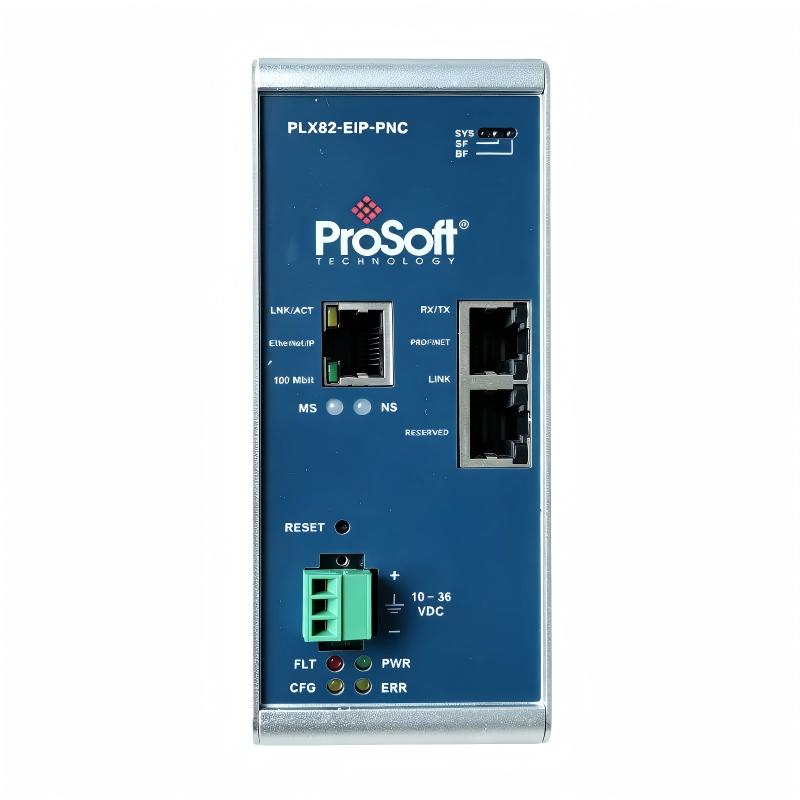
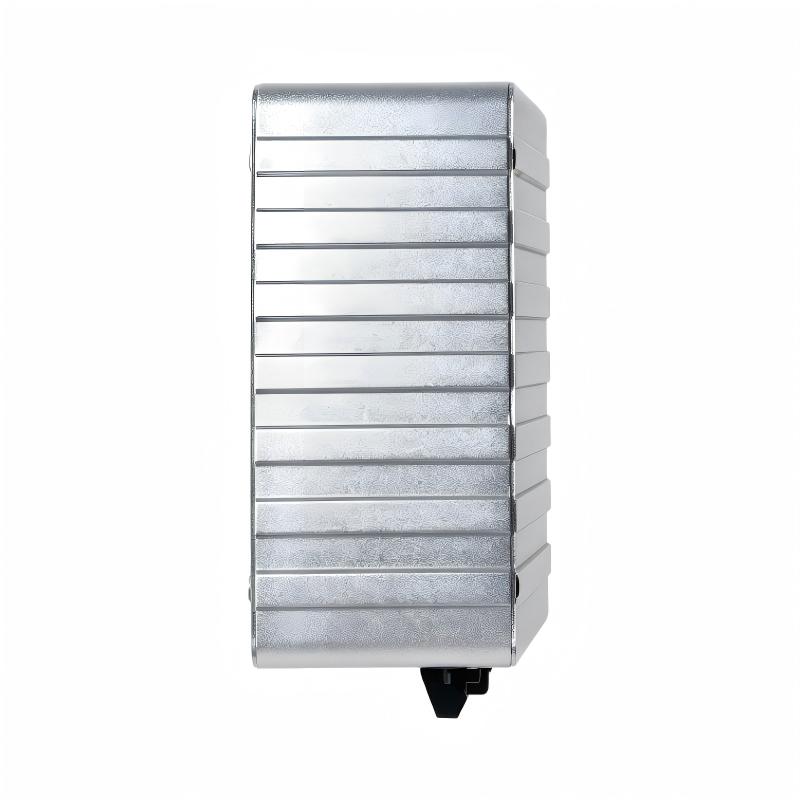
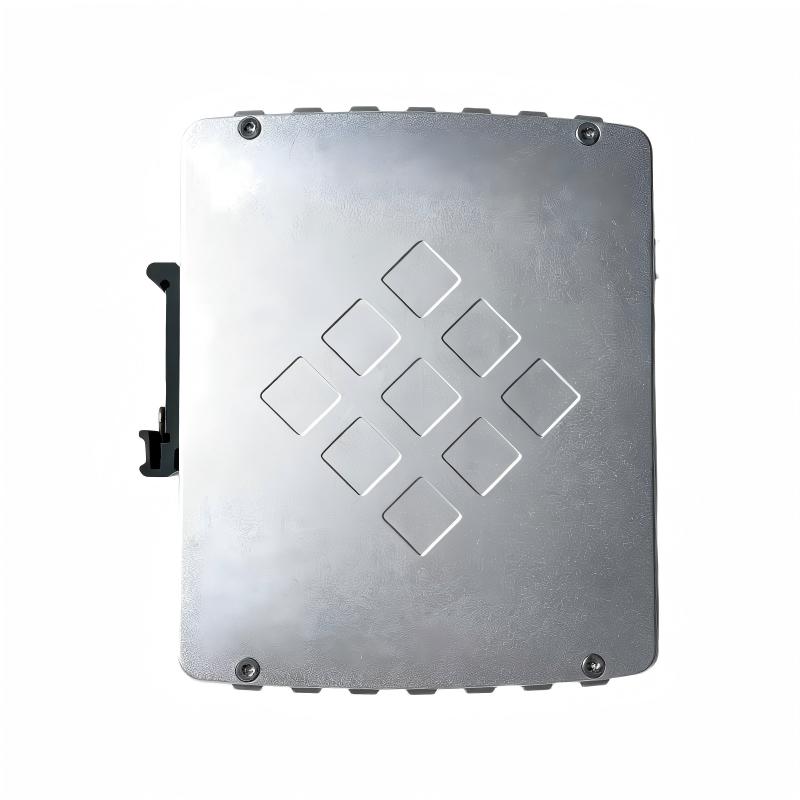
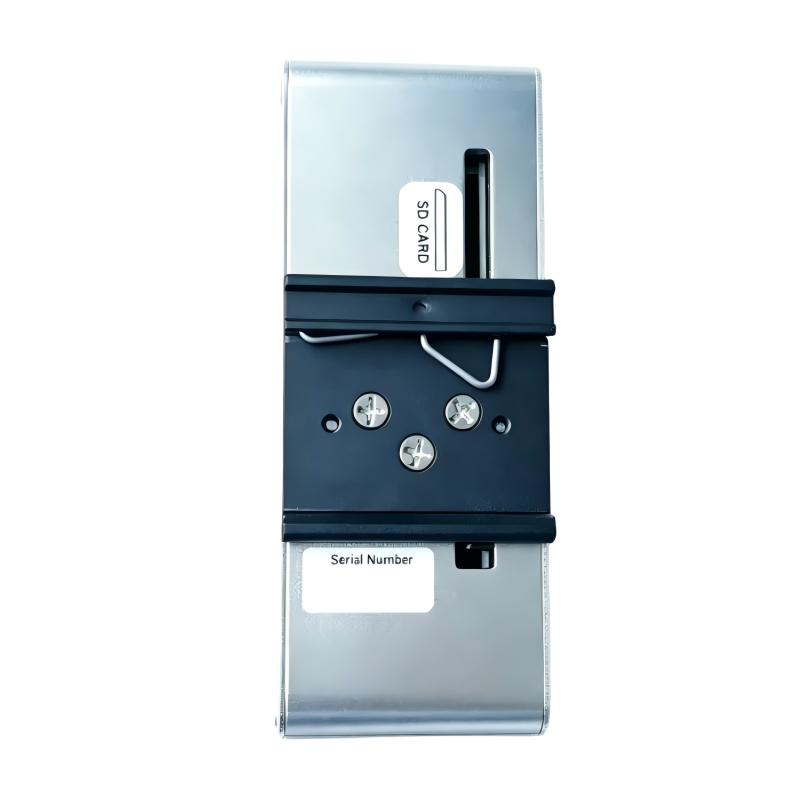
- Allen Bradley
- PLX82-EIP-PNC
- Ethernet/IP to Profinet Controller Gateway Module
- USA
- 140.1 x 52.4 x 110.9 mm
- 1.41 kg
- Xiamen, China
- New & In Stock
- T/T, PayPal, Western Union
- 1 Year
- 1-3 Working Days
- DHL, UPS, TNT, FedEx and EMS.
- 24-Hour Service
- COO
- 9
Our advantage

Global Logistics
We have a 10-year logistics and express cooperation agreement, so our products can be shipped to any place in the world.

Brand new and original
Our products are imported in bulk from the place of origin. Because of the cooperative relationship, our products are all original and 100% new.

24-hour service
We provide 7*24 hours service to our customers. We will be there whenever you need us.

Price advantage
All our products are priced very favorably because we have our own warehouse and supply.
| Company Information | |||
| [email protected] | |||
| Mobile | +8615980777398 | ||
| +8615980777398 | |||
| 15980777398 |
1. Product Overview
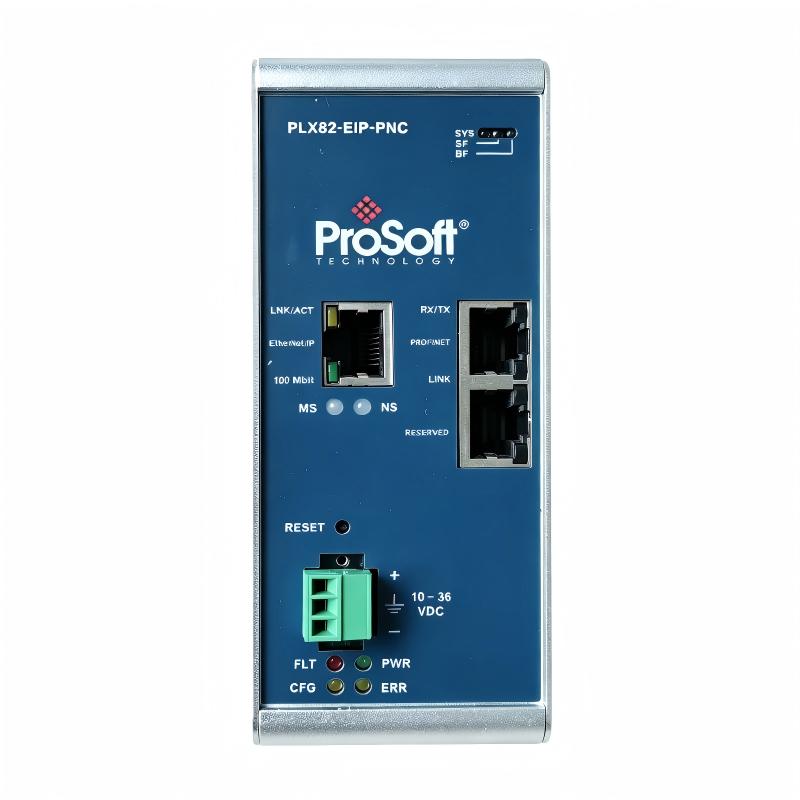
The PLX82-EIP-PNC Ethernet/IP to PROFINET Controller Gateway Module is an industrial communication gateway designed to connect EtherNet/IP-based automation controllers with PROFINET RT devices. It is commonly used in systems built around Allen-Bradley ControlLogix and CompactLogix controllers, allowing equipment on different industrial Ethernet networks to exchange control and status data.
The PLX82-EIP-PNC is manufactured by ProSoft Technology and is designed for integration with Rockwell Automation control systems. It addresses a common challenge in industrial automation: equipment from different manufacturers may use different communication protocols, making direct data exchange difficult without a suitable gateway.
By providing an interface between EtherNet/IP and PROFINET, the gateway helps integrate PROFINET-compatible remote I/O, drives, HMIs, controllers, and other supported devices into an EtherNet/IP-based control architecture. This can help manufacturers connect existing equipment, expand production lines, and integrate devices from multiple automation vendors without replacing the entire control system.
The module supports up to 36 PROFINET RT devices, with two Ethernet ports for network connectivity, configuration, and diagnostics. It is designed for DIN-rail mounting and can be configured using ProSoft Configuration Builder and ProSoft FDT Configuration Manager. Its embedded EDS Add-On Profile support also helps integrate the gateway into compatible Studio 5000 and RSLogix 5000 engineering workflows.
The PLX82-EIP-PNC is suitable for industrial installations that require communication between Rockwell Automation controllers and PROFINET-based equipment. Typical applications include manufacturing lines, packaging machinery, material handling systems, process automation, and equipment modernization projects.
For purchasing and maintenance purposes, the model number must be checked carefully. The PLX82-EIP-PNC is a specific EtherNet/IP-to-PROFINET Controller gateway, not a generic Ethernet switch or a simple cable converter. Its configuration, supported device count, network architecture, and data mapping determine whether it is suitable for a particular application.
2. Technical Specifications
| Parameter | Specification |
|---|---|
| Product name | Ethernet/IP to PROFINET Controller Gateway |
| Model | PLX82-EIP-PNC |
| Product manufacturer | ProSoft Technology |
| Typical control-system integration | Allen-Bradley ControlLogix and CompactLogix |
| Communication direction | EtherNet/IP controller to PROFINET controller gateway |
| EtherNet/IP role | Server |
| PROFINET role | Controller |
| Maximum PROFINET RT devices | 36 |
| Ethernet ports | 2 |
| Ethernet interface | 10/100 Mbps RJ45 |
| Nominal power supply | 24 V DC |
| Allowed supply voltage | 10–36 V DC |
| Current consumption | 400 mA at nominal 24 V DC; up to 610 mA over the specified supply range |
| Mounting method | DIN rail |
| Configuration software | ProSoft Configuration Builder and ProSoft FDT Configuration Manager |
| Rockwell integration | Embedded EDS Add-On Profile for compatible engineering environments |
| Input data capacity | 248 words per EtherNet/IP Class 1 connection |
| Output data capacity | 248 words per EtherNet/IP Class 1 connection |
| EtherNet/IP Class 1 connections | Up to 8 |
| EtherNet/IP Class 3 commands | Up to 100 |
| Operating temperature | 0°C to 50°C |
| Storage temperature | -10°C to 70°C |
| Relative humidity | 5–95%, non-condensing |
| Dimensions | 140.1 × 52.4 × 110.9 mm |
| Weight | 1.41 kg, as provided |
| Installation environment | Industrial control cabinet |
| Main application | EtherNet/IP and PROFINET RT network integration |
The listed weight is based on the supplied product information. Confirm the exact hardware revision, accessories, and installation requirements against the product documentation before procurement.
3. Function and Working Principle
3.1 Communication Between Different Industrial Networks
EtherNet/IP and PROFINET are widely used industrial Ethernet communication technologies, but they have different communication models and device integration requirements. A device designed for one protocol cannot necessarily communicate directly with a controller using the other.
The PLX82-EIP-PNC provides a gateway between these environments. It acts as an EtherNet/IP server on the Rockwell Automation side and as a PROFINET Controller on the PROFINET side. This arrangement allows an EtherNet/IP-based controller to exchange mapped data with supported PROFINET RT devices through the gateway.
The gateway does more than connect two Ethernet cables. It manages protocol-specific communication and presents data in a format that the respective network participants can use.
3.2 EtherNet/IP Integration
On the EtherNet/IP side, the PLX82-EIP-PNC works with compatible Allen-Bradley ControlLogix or CompactLogix controllers. The controller communicates with the gateway through configured EtherNet/IP connections.
The gateway’s embedded EDS Add-On Profile can simplify its integration into supported Rockwell Automation programming environments. Once the connection and data structures are configured, the controller can exchange data with the gateway using the supported communication arrangement.
The exact controller firmware, engineering software, gateway firmware, and EDS profile versions should be checked during project planning.
3.3 PROFINET Controller Function
On the PROFINET side, the gateway operates as a PROFINET Controller. It can communicate with supported PROFINET RT devices such as remote I/O stations, drives, HMIs, and other compatible field equipment.
The gateway supports up to 36 PROFINET RT devices. The actual number and performance of devices in an installation depend on network configuration, device requirements, communication load, and the application’s timing needs.
Each connected device must be correctly identified and configured. Its supported modules, input and output data, and device-specific parameters must be matched to the gateway configuration.
3.4 Data Mapping and Exchange
For a gateway to provide useful communication, data must be mapped between the EtherNet/IP and PROFINET sides. This mapping determines which input and output values are exchanged and how the controller program interprets them.
For example, a PROFINET drive may provide status information, fault indications, and operating feedback. The EtherNet/IP controller may send commands or reference values through the gateway. The controller program can then use the returned data to monitor the drive and coordinate machine operation.
Correct data mapping is essential. If the wrong offsets, lengths, data types, or byte arrangements are used, values may be interpreted incorrectly even when the physical network connections are working.
3.5 Configuration and Diagnostics
The PLX82-EIP-PNC is configured using ProSoft software tools. Configuration includes the EtherNet/IP connection, PROFINET network settings, device definitions, and data exchange parameters.
The gateway also provides status indicators and diagnostic capabilities to help engineers identify communication problems. Depending on the issue, troubleshooting may involve checking network connectivity, device configuration, connection status, controller settings, or the mapped data structure.
4. Role in Industrial Control Systems
4.1 Integrating Allen-Bradley Controllers with PROFINET Equipment
Many factories operate equipment purchased from different manufacturers over several years. An existing line may use Allen-Bradley controllers while newly installed field devices use PROFINET.
Replacing all existing control hardware can be expensive and disruptive. A protocol gateway can provide an alternative by allowing compatible devices to participate in a shared control architecture through a defined data interface.
The PLX82-EIP-PNC supports this type of integration when the controller, PROFINET devices, configuration, and performance requirements are compatible.
4.2 Connecting Remote I/O
Remote I/O systems distribute input and output modules around a production facility. PROFINET-based remote I/O can collect field signals and return them to the controller through the gateway.
Typical signals include sensor states, machine interlocks, equipment status, and actuator feedback. Output data may be used to command compatible devices or control local functions.
The gateway does not eliminate the need to configure the individual I/O system. Device names, module layouts, input and output sizes, and diagnostic behavior must still be handled correctly.
4.3 Integrating Drives and Motion-Related Equipment
Industrial drives often exchange command, status, and process data with a controller. Where the drive supports the required PROFINET RT interface, the gateway can provide a communication path to an EtherNet/IP-based controller.
The specific drive profile, data layout, control mode, and timing requirements must be checked. The gateway should not automatically be considered a substitute for a dedicated motion-control interface or a deterministic motion network without an engineering review.
4.4 Supporting Machine Modernization
Manufacturers may need to upgrade selected equipment without replacing every component in the control system. The PLX82-EIP-PNC can be considered when new PROFINET equipment must be integrated into an established EtherNet/IP control environment.
A well-planned gateway installation can reduce the scope of a modernization project. However, engineering teams should evaluate communication performance, fault handling, maintenance requirements, and long-term availability before making a final design decision.
4.5 Centralized Monitoring
Data received through the gateway can be used by the controller program for equipment monitoring and production logic. Depending on the system architecture, selected status and process values can also be made available to supervisory systems through the controller.
The gateway itself does not replace a complete SCADA, historian, or production management system. It provides the communication interface needed for the configured data exchange.
5. Industrial Applications
5.1 Automotive Manufacturing
Automotive production lines may include robotic equipment, conveyors, remote I/O stations, drive systems, and machine-control panels from multiple suppliers. Different equipment sections may use different industrial Ethernet protocols.
The PLX82-EIP-PNC can help connect compatible PROFINET RT devices to an EtherNet/IP-based control system. This can be useful during line expansion, equipment replacement, or integration of new stations.
Before commissioning, engineers should verify each device’s supported PROFINET configuration and the required data exchange rates.
5.2 Packaging and Food Processing Machinery
Packaging lines commonly coordinate conveyors, filling equipment, labeling machines, inspection systems, and case-handling equipment. The control system may need to exchange status and command data with devices using different protocols.
A gateway can provide a defined communication path between compatible PROFINET devices and an EtherNet/IP controller. For food processing installations, cabinet location, ambient conditions, power quality, and network maintenance requirements should also be evaluated.
5.3 Material Handling and Conveyor Systems
Warehouses and production facilities often use conveyor sections, sorting equipment, transfer stations, and distributed I/O. These systems may be expanded over time with equipment from different vendors.
The PLX82-EIP-PNC can support integration of compatible PROFINET equipment into an EtherNet/IP control architecture. Data exchanged through the gateway may include equipment states, operating commands, and fault information.
The control program must define how communication failures are handled so that a network issue does not create an unsafe or uncontrolled machine condition.
5.4 Process Automation
Process plants may contain packaged equipment with PROFINET interfaces alongside existing EtherNet/IP-based control systems. A gateway can help connect supported devices where the application does not require an unsupported communication function.
Engineers should confirm that the intended process values, status words, and commands are available through the selected device’s PROFINET data interface. Safety-related functions must use appropriately designed and certified systems rather than relying on ordinary gateway data exchange.
5.5 Water and Wastewater Equipment
Pumping stations, filtration equipment, and treatment systems may include packaged machines, remote I/O, drives, and local operator interfaces.
Where supported PROFINET devices must communicate with an EtherNet/IP controller, the gateway can help consolidate the data path. The control system should include appropriate fault detection, communication-loss handling, and maintenance procedures.
5.6 Factory Equipment Modernization
In modernization projects, the PLX82-EIP-PNC may be evaluated when replacing a field device or adding a new machine creates a protocol mismatch. The gateway can help avoid a complete control-system redesign when the required data exchange fits its capabilities.
A project assessment should include network topology, device support, required response time, controller compatibility, configuration complexity, and the availability of engineering support.
6. Installation and System Integration
6.1 DIN-Rail Mounting
The PLX82-EIP-PNC is designed for DIN-rail mounting inside an appropriate industrial enclosure. Before installation, confirm that the cabinet provides enough space for the module, Ethernet connectors, power wiring, cable bend radius, and ventilation.
The supplied dimensions are 140.1 × 52.4 × 110.9 mm. Installation planning should include additional clearance where required for cable access and maintenance.
Secure the module correctly to the rail and ensure that the cabinet environment remains within the specified operating temperature and humidity limits.
6.2 Power Supply Connection
The gateway uses a nominal 24 V DC supply and allows an input range of 10–36 V DC. Its specified current load is approximately 400 mA at nominal 24 V DC, with a maximum of 610 mA over the stated supply range.
Select a suitable industrial power supply and account for other devices sharing the same supply. Follow the module’s wiring diagram for positive, negative, and ground connections.
Before energizing the module, verify polarity, terminal tightness, supply voltage, and the grounding arrangement. Disconnect power before changing field wiring where required by the equipment procedures.
6.3 Ethernet Network Connections
The gateway has two 10/100 Mbps Ethernet ports. Connect the EtherNet/IP and PROFINET networks according to the approved topology and configuration.
Use appropriate industrial Ethernet cabling and connectors for the installation environment. Cable routing should minimize exposure to electrical interference and physical damage.
The two ports should not be assumed to function as an unrestricted general-purpose network switch. Their intended use and supported network arrangement must follow the gateway documentation.
6.4 EtherNet/IP Configuration
On the EtherNet/IP side, configure the gateway and the compatible Allen-Bradley controller using the required device profile and connection parameters.
Verify the controller firmware, engineering software version, gateway firmware, IP addressing, connection settings, and input/output data sizes. Confirm that the controller recognizes the gateway and that the configured connection is established.
The embedded EDS Add-On Profile is intended to simplify integration in compatible Studio 5000 and RSLogix 5000 environments. The exact setup procedure depends on the software and firmware versions in use.
6.5 PROFINET Device Configuration
Configure the PROFINET network using the required device descriptions, device names, IP settings, and module definitions. Each connected device must be supported and correctly represented in the gateway configuration.
Confirm that the expected input and output data lengths match the actual device configuration. Check that the device count remains within the supported limit of 36 PROFINET RT devices.
After configuration, verify that all intended devices establish communication and that their status indicators show the expected operating state.
6.6 Data Mapping and Testing
Before operating the complete machine, test data exchange in a controlled commissioning process. Confirm that input values appear in the correct controller tags and that output commands reach the intended devices.
Check data offsets, word lengths, data types, byte order where relevant, and update behavior. Use test values that can be safely verified at both ends of the gateway.
Communication testing should include normal operation, device restart, and network interruption scenarios where appropriate. The application should respond predictably if a device becomes unavailable.
6.7 Diagnostics and Maintenance
The gateway provides status indicators and diagnostic functions to support troubleshooting. Maintenance personnel should understand the relevant indicators and the normal status expected for the installed configuration.
When communication fails, check the power supply, Ethernet cabling, network addressing, device configuration, controller connection status, and gateway diagnostics. Where the physical network is operating but data is incorrect, inspect the mapping and data interpretation.
Keep a copy of the working configuration and document firmware versions, device settings, and network addresses. Configuration backups can reduce recovery time when a module must be replaced.
7. Compatible System Components
The following components and software categories are commonly considered when integrating the PLX82-EIP-PNC into an industrial automation system.
| Component | Function | Integration Considerations |
|---|---|---|
| Allen-Bradley ControlLogix controller | Runs EtherNet/IP-based control logic | Verify processor compatibility, firmware, and connection configuration |
| Allen-Bradley CompactLogix controller | Provides controller functionality in compact automation systems | Confirm supported controller and software versions |
| PROFINET RT remote I/O | Collects distributed field inputs and controls outputs | Check device description, module configuration, and data sizes |
| PROFINET-compatible drive | Exchanges control, status, and process data | Verify the supported PROFINET profile and timing requirements |
| PROFINET HMI or controller | Provides operator or control functions on the PROFINET side | Confirm the device is supported and its data interface is suitable |
| Industrial Ethernet cable | Connects the gateway to the networks | Use suitable industrial cabling and approved network topology |
| 24 V DC power supply | Powers the gateway | Supply must meet the 10–36 V DC range and current requirements |
| Studio 5000 or RSLogix 5000 | Configures and programs compatible Rockwell controllers | Check software version and gateway integration method |
| ProSoft Configuration Builder | Configures the gateway | Use a compatible software version and supported configuration files |
| ProSoft FDT Configuration Manager | Provides configuration and diagnostic functions | Confirm compatibility with the installed gateway revision |
The final system configuration depends on the exact controller, connected devices, firmware versions, and communication requirements. The presence of a PROFINET or EtherNet/IP interface alone does not guarantee that every device can be integrated without additional configuration.
8. Alternative Models and Replacement Considerations
Selecting a replacement gateway requires more than matching the physical dimensions. The replacement must support the required protocols, network roles, device count, data capacity, and controller integration method.
| Model or Category | Main Function | Considerations |
|---|---|---|
| ProSoft PLX82-EIP-PNC | EtherNet/IP server to PROFINET Controller | Reference model for this product page |
| ProSoft PLX82-MBTCP-PNC | Modbus TCP/IP to PROFINET Controller | Different source protocol; not a direct substitute for EtherNet/IP |
| ProSoft PLX82-EIP-61850 | EtherNet/IP server to IEC 61850 client | Intended for a different communication application |
| Another EtherNet/IP-to-PROFINET gateway | Bridges compatible EtherNet/IP and PROFINET devices | Verify controller/server roles, device capacity, data mapping, and software support |
| Native PROFINET controller solution | Uses a controller with direct PROFINET capability | May require control-system redesign and program changes |
| Native EtherNet/IP device alternative | Replaces a PROFINET field device with an EtherNet/IP equivalent | Check device functions, wiring, firmware, and application behavior |
These are evaluation categories and related gateway models, not guaranteed drop-in replacements. A substitute should be approved only after its technical documentation has been compared with the existing system requirements.
9. Key Advantages of the PLX82-EIP-PNC
Cross-Protocol Communication
The gateway provides a communication path between EtherNet/IP-based controllers and supported PROFINET RT devices. This helps integrate equipment from different automation environments.
Integration with Rockwell Automation Controllers
Its design supports compatible ControlLogix and CompactLogix systems. The embedded EDS Add-On Profile helps simplify integration into supported Studio 5000 and RSLogix 5000 engineering workflows.
Support for Multiple PROFINET Devices
The gateway can support up to 36 PROFINET RT devices. This can be useful for systems that need to connect several remote I/O stations, drives, HMIs, or other supported devices.
Two Ethernet Ports
Two Ethernet ports provide connectivity for the gateway’s network interfaces and support its intended industrial communication architecture. Network topology should follow the product documentation.
Configuration and Diagnostics
ProSoft configuration tools and onboard status indicators help engineers set up the gateway and investigate communication issues. A documented configuration also supports maintenance and replacement planning.
DIN-Rail Installation
DIN-rail mounting is suited to industrial control cabinets and helps simplify installation alongside other automation components.
Support for Modernization Projects
The gateway can be considered where existing EtherNet/IP controls must communicate with compatible PROFINET equipment. This may reduce the need for wholesale replacement of a working control system, provided the required data exchange is supported.
10. Technical FAQs
Q1: What is the PLX82-EIP-PNC?
It is an industrial communication gateway that connects EtherNet/IP-based controllers with supported PROFINET RT devices.
Q2: Is the PLX82-EIP-PNC an Allen-Bradley product?
The gateway is manufactured by ProSoft Technology and is designed for integration with compatible Rockwell Automation controllers, including ControlLogix and CompactLogix systems.
Q3: How many PROFINET devices can it support?
The gateway supports up to 36 PROFINET RT devices. Actual system performance depends on device configuration, network load, and application requirements.
Q4: What power supply does it require?
Its nominal supply is 24 V DC, and the specified allowable input range is 10–36 V DC. The power supply must also meet the current requirements.
Q5: What are the module dimensions?
The dimensions supplied for this product are 140.1 × 52.4 × 110.9 mm.
Q6: What is its weight?
The supplied product data lists a weight of 1.41 kg. Confirm whether this refers to the module alone or includes packaging or accessories when arranging shipment.
Q7: Does it have two Ethernet ports?
Yes. It has two 10/100 Mbps Ethernet ports. Follow the product documentation for the intended port functions and network topology.
Q8: What software is used to configure it?
The gateway is configured using ProSoft Configuration Builder and ProSoft FDT Configuration Manager. Compatible Rockwell engineering software is used for the associated controller integration.
Q9: Can it connect any PROFINET device to an Allen-Bradley PLC?
Not automatically. The device must be compatible with the gateway’s supported PROFINET implementation, and its configuration, data sizes, and communication requirements must be validated.
Q10: Does it replace an Ethernet switch?
No. It performs protocol gateway functions rather than serving as a general-purpose replacement for an industrial Ethernet switch.
Q11: Can it be used in safety-related communication?
Ordinary gateway data exchange should not be assumed to provide a certified safety communication path. Safety-related applications require an appropriately designed and certified architecture.
Q12: What should be checked before purchasing a replacement?
Verify the full model number, protocol direction, network roles, connected device support, data mapping, controller and firmware compatibility, power supply, dimensions, product condition, and configuration backup requirements.
11. Procurement and Maintenance Recommendations
When purchasing the PLX82-EIP-PNC for a new installation or as an industrial spare part, first confirm that the required communication direction is EtherNet/IP server to PROFINET Controller. Gateways with similar names may support different protocols or reverse communication roles, so the complete part number matters.
For replacement projects, record the existing firmware version, controller model, gateway configuration, PROFINET device list, and mapped data structures. A physically compatible replacement may still require configuration restoration or software adjustments before it can communicate with the installed equipment.
Inspect the module’s terminals, Ethernet connectors, DIN-rail mounting, and cabinet environment during maintenance. Ensure that the DC supply remains within the specified operating range and that the module is not exposed to excessive heat or condensation.
If communication is interrupted, begin by checking power, link status, network addressing, controller connection status, and PROFINET device availability. If the network is active but the values are incorrect, examine the data mapping and controller tag interpretation.
Keep a verified configuration backup in an accessible maintenance location. Documenting the network layout, IP addresses, device names, firmware versions, and controller settings can make recovery faster if the gateway needs to be replaced.
For international procurement, confirm the module’s condition, included accessories, delivery requirements, and compatibility with the existing control system before ordering. This is particularly important for production equipment where a protocol mismatch can delay commissioning or extend downtime.
12. Conclusion
The PLX82-EIP-PNC Ethernet/IP to PROFINET Controller Gateway Module is designed to connect compatible EtherNet/IP-based controllers with PROFINET RT equipment. Manufactured by ProSoft Technology for industrial automation integration, it supports ControlLogix and CompactLogix environments and can connect up to 36 PROFINET RT devices.
With two Ethernet ports, DIN-rail mounting, a nominal 24 V DC supply, and configuration and diagnostic tools, the gateway can be a useful option for industrial network integration and equipment modernization projects.
Before installation or replacement, engineers should confirm the communication direction, device compatibility, controller software, data mapping, power supply, and network requirements. Correct configuration and thorough commissioning are essential for reliable data exchange between the two industrial Ethernet environments.