

ProductPRODUCT
Featured products
Contact Us
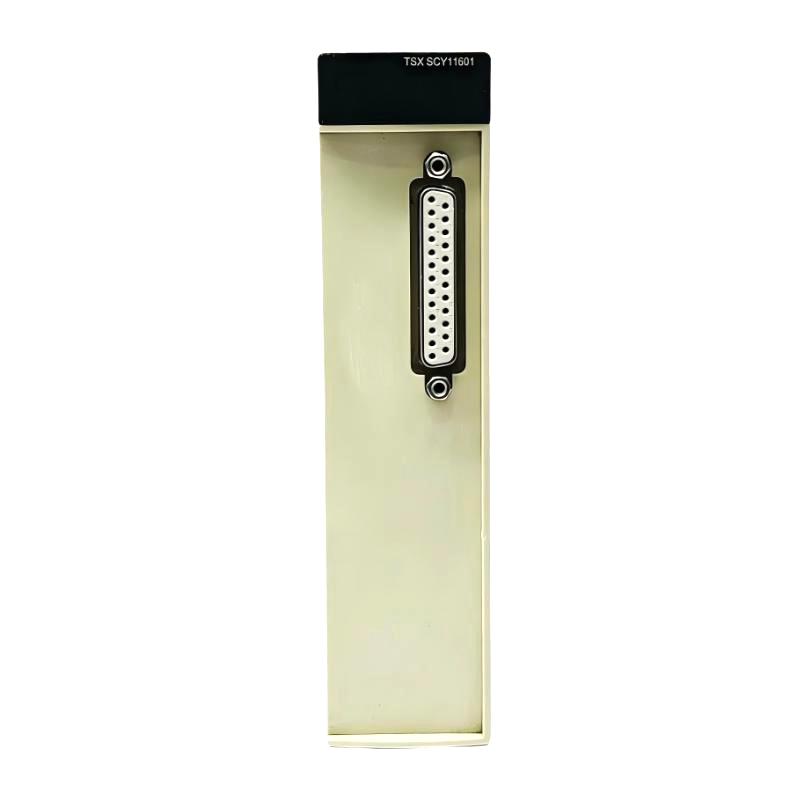
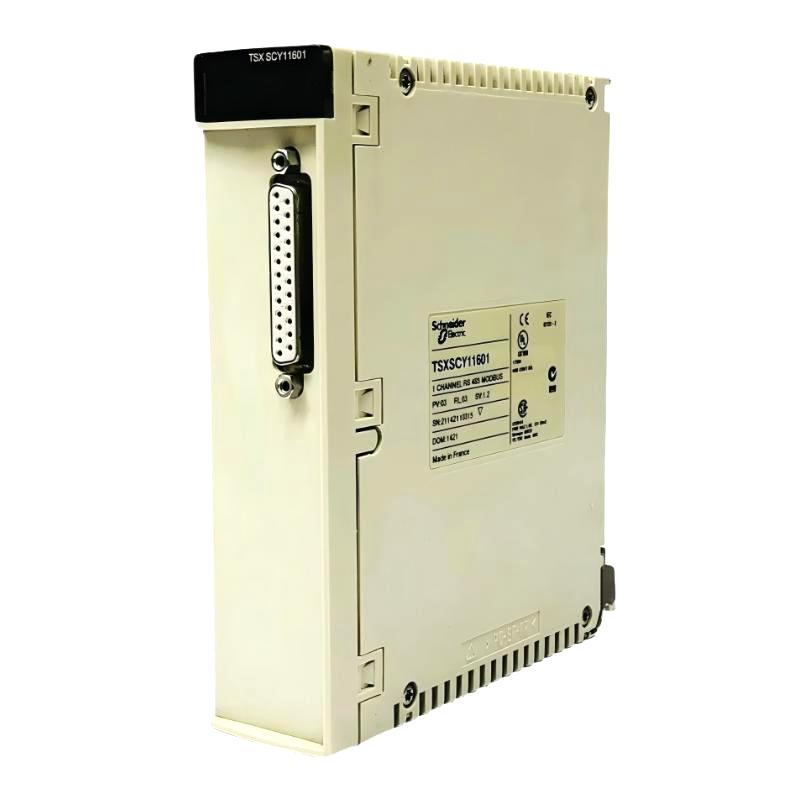
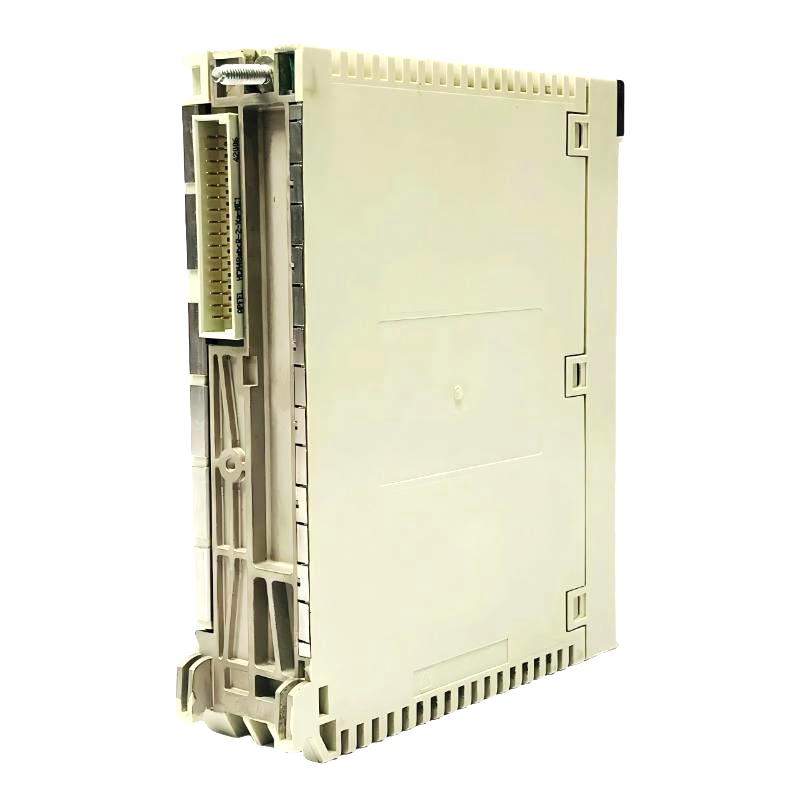
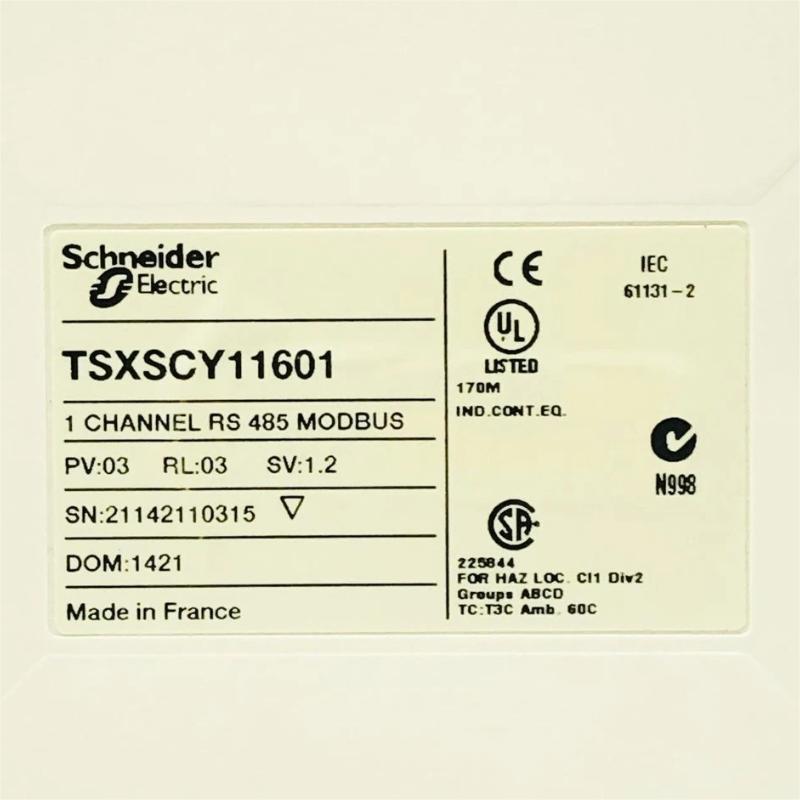
- Schneider
- TSXSCY11601
- Communication Module
- France
- 260 × 180 × 55 mm
- 0.34 kg
- Xiamen, China
- New & In Stock
- T/T, PayPal, Western Union
- 1 Year
- 1-3 Working Days
- DHL, UPS, TNT, FedEx and EMS.
- 24-Hour Service
- COO
- 3
Our advantage

Global Logistics
We have a 10-year logistics and express cooperation agreement, so our products can be shipped to any place in the world.

Brand new and original
Our products are imported in bulk from the place of origin. Because of the cooperative relationship, our products are all original and 100% new.

24-hour service
We provide 7*24 hours service to our customers. We will be there whenever you need us.

Price advantage
All our products are priced very favorably because we have our own warehouse and supply.
| Company Information | |||
| [email protected] | |||
| Mobile | +8615980777398 | ||
| +8615980777398 | |||
| 15980777398 |
1. Product Overview
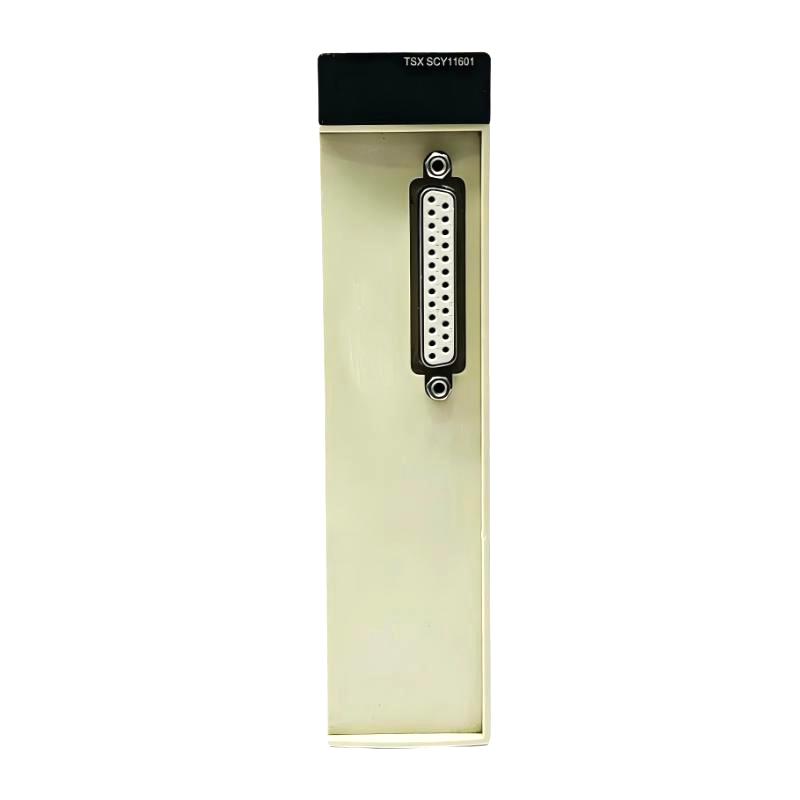
The Schneider Electric TSXSCY11601 Communication Module is an industrial serial communication module designed for compatible Modicon Premium and Atrium PLC systems. It provides an isolated RS485 communication interface for exchanging data between a programmable logic controller and external devices over an industrial serial network.
The TSXSCY11601 supports Jbus/Modbus communication and is designed for applications that require dependable data exchange between PLC controllers, remote equipment, instrumentation, and other compatible industrial devices. By integrating serial communication into a PLC rack, the module allows control systems to communicate with external equipment without relying exclusively on the processor’s built-in interfaces.
RS485 is widely used in industrial automation because it supports differential signaling, which helps improve communication reliability in electrically noisy environments. When correctly wired and configured, an RS485 network can connect multiple devices over a shared communication line, making it suitable for distributed monitoring, equipment control, and process data acquisition.
The TSXSCY11601 is intended for use in the Modicon Premium automation platform and compatible Atrium configurations. It occupies a standard module position in a supported PLC rack and communicates with the controller through the rack backplane. Its serial interface connects to the external network through a 25-pin SUB-D connector.
For maintenance teams and industrial equipment purchasers, this module can be relevant when repairing existing Premium PLC installations, restoring a legacy Modbus network, or maintaining communication with equipment that depends on the original hardware configuration.
Product identification
- Manufacturer: Schneider Electric
- Model: TSXSCY11601
- Product type: Industrial serial communication module
- Automation platform: Modicon Premium
- Compatible platform family: Supported Premium and Atrium PLC configurations
- Communication interface: Isolated RS485
- Protocol: Jbus/Modbus
- Maximum device capacity: Up to 32 devices, subject to network configuration
- Connector: 25-pin SUB-D
- Dimensions supplied for listing: 260 × 180 × 55 mm
- Weight supplied: 0.34 kg
2. Technical Specifications
| Parameter | Specification |
|---|---|
| Manufacturer | Schneider Electric |
| Model number | TSXSCY11601 |
| Product category | PLC communication module |
| Product range | Modicon Premium |
| Compatible PLC families | Supported Premium and Atrium systems |
| Communication interface | Isolated RS485 |
| Communication protocol | Jbus/Modbus |
| Communication channel | One integrated serial channel |
| Connector type | 25-pin female SUB-D on the module |
| Transmission mode | Asynchronous serial communication |
| Baud rate | 1,200 to 19,200 bit/s |
| Supported devices | Up to 32 devices |
| Addressing capability | Modbus/Jbus address range depends on protocol configuration; up to 247 slave addresses are documented |
| Maximum bus length | Up to approximately 1,300 m under specified conditions |
| Maximum tap-link length | Up to 15 m under specified conditions |
| Average current consumption | Approximately 350 mA at 5 V DC |
| Maximum current consumption | Approximately 420 mA at 5 V DC |
| Module format | Standard format |
| Operating temperature | 0 to 60°C |
| Storage temperature | -25 to 70°C |
| Relative humidity | 5–95%, non-condensing |
| Maximum operating altitude | 2,000 m |
| Dimensions supplied | 260 × 180 × 55 mm |
| Weight supplied | 0.34 kg |
Important: The listed dimensions are the dimensions supplied for this product listing and should be confirmed against the physical module before designing an enclosure or arranging a replacement. Communication distance, device count, and transmission performance depend on cable characteristics, topology, termination, electrical conditions, and configuration.
3. Function and Working Principle
The primary function of the TSXSCY11601 is to provide a serial communication channel between a compatible PLC system and external devices using an isolated RS485 interface.
3.1 RS485 Serial Communication
RS485 transmits data through a differential signal pair. Rather than measuring a signal against a single ground reference, the receiver evaluates the voltage difference between two conductors. This approach helps the network tolerate electrical interference commonly encountered around motors, drives, contactors, and industrial power equipment.
The TSXSCY11601’s isolated RS485 interface helps separate the communication circuit electrically from other parts of the system. Isolation can reduce the impact of certain ground-potential differences and electrical disturbances, although correct grounding, shielding, and installation practices remain essential.
The built-in channel is designed for a two-wire RS485 connection. The external network should therefore be wired according to the module documentation and the requirements of the connected devices.
3.2 Jbus/Modbus Protocol Support
The module supports Jbus/Modbus communication, enabling structured exchanges of data between compatible controllers and field equipment.
Typical data exchanges include:
- Reading measurement values from compatible instruments.
- Retrieving equipment status and operating information.
- Reading discrete states and register values.
- Writing supported control values or commands.
- Monitoring communication status and diagnosing data-exchange problems.
The available operations depend on the connected device, its Modbus register map, and the PLC application. A communication module does not automatically make every parameter of a connected device accessible; the PLC program must use the correct addresses, data formats, and protocol functions.
3.3 PLC Rack Integration
The TSXSCY11601 is installed in a supported Modicon Premium or Atrium PLC rack. The rack provides mechanical mounting and the internal connection to the PLC system.
Once the module is installed and configured, the PLC application can use the serial communication channel to exchange data with compatible network devices. The processor, communication module, network wiring, and external device configuration must all work together for reliable communication.
3.4 Network Capacity and Distance
The module is documented for networks supporting up to 32 devices and bus lengths of up to approximately 1,300 m under specified conditions. These figures are design limits, not guarantees for every installation.
Actual performance depends on baud rate, cable impedance, cable quality, network layout, the number of connected nodes, electromagnetic interference, and proper line termination. Branch lengths should also be controlled to avoid signal reflections and communication instability.
4. Role in Industrial Automation Systems
Communication is essential in industrial automation because the PLC must receive process information and exchange commands with equipment distributed across a machine or production facility.
The TSXSCY11601 provides a serial interface for compatible legacy systems, helping a Premium PLC exchange information with devices that support Jbus/Modbus over RS485.
4.1 Data Acquisition
Industrial instruments may provide temperature, pressure, flow, level, energy, or operating-status data through Modbus registers. When the instrument’s communication interface and register map are compatible, the PLC can retrieve the required information for monitoring and control.
The TSXSCY11601 provides the communication path, while the PLC application defines which registers are read, how often they are polled, and how the returned values are interpreted.
4.2 Equipment Monitoring
The module can support the exchange of operating information with compatible equipment such as motor controllers, power meters, and other serial-network devices. This information can be used by the PLC to identify operating states, display alarms, and coordinate equipment sequences.
Communication availability depends on the correct configuration of each connected device. Device addresses must be unique where required, and the PLC program must account for communication timeouts and unavailable nodes.
4.3 Control-System Integration
In a legacy installation, a communication module may be part of the interface between the PLC and equipment from different manufacturers. Modbus support can simplify data exchange when both ends implement compatible protocol functions and data formats.
However, protocol compatibility alone is not sufficient. Engineers should verify register assignments, scaling, byte order, supported commands, timing requirements, and any device-specific restrictions before commissioning the network.
4.4 Legacy-System Maintenance
Many industrial facilities continue to operate PLC systems that were installed years ago. Replacing the entire control system can require extensive engineering, testing, downtime, and production-risk assessment.
Maintaining the original communication module can be a practical option when the existing hardware is still suitable and the replacement module is compatible with the installed PLC, software, rack, and network design.
5. Typical Industrial Applications
Manufacturing and Production Lines
The TSXSCY11601 can be used in supported PLC systems that exchange data with serially connected equipment on assembly lines, packaging machinery, material-handling systems, and production cells.
Potential uses include reading equipment status, monitoring production parameters, and coordinating sequences between the PLC and compatible devices.
Process Automation
In process applications, Modbus-compatible instruments and controllers may provide measurements and status data to a central PLC. The communication module can serve as the serial interface for this data exchange, provided that the devices and control application support the required communication functions.
Utilities and Energy Monitoring
Compatible power meters and utility-monitoring devices may use Modbus registers to expose electrical measurements, energy counters, and alarms. The TSXSCY11601 can provide the RS485 communication path for such data in a supported Premium installation.
The actual information available depends on each meter’s register map and the PLC program.
Water and Wastewater Systems
Legacy pumping stations, treatment skids, and utility systems may use serial communication to connect instruments and controllers. The module can help maintain communication with compatible RS485 Modbus devices in an existing control architecture.
Machine and Equipment Retrofits
During a machine retrofit, an existing Premium PLC may need to continue communicating with legacy drives, instruments, or other serial equipment. Retaining the TSXSCY11601 may reduce the scope of changes when the original configuration remains supported and operational.
Any retrofit should still include a review of component condition, network wiring, software compatibility, and spare-parts availability.
6. Installation and System Integration
Correct installation is important for stable serial communication and long-term system reliability.
6.1 Verify PLC Compatibility
Before installation, confirm that the TSXSCY11601 is supported by the installed Modicon Premium or Atrium PLC configuration. Check the processor model, processor firmware or software version, rack type, module position, and system architecture.
The module is intended for supported rack installation. Do not assume that it can be installed in an arbitrary remote expansion rack; the applicable system documentation must be followed.
6.2 Install the Module Safely
Follow the machine’s electrical-safety procedures and the manufacturer’s installation instructions. Isolate power where required before handling or installing hardware, and use appropriate electrostatic-discharge precautions.
Inspect the module and connector for physical damage, corrosion, contamination, or bent contacts before installation. Ensure that the module is correctly seated and secured in the rack.
6.3 Connect the RS485 Network
Use a suitable shielded twisted-pair cable and the wiring arrangement specified for the application. Verify the pin assignments of the 25-pin SUB-D connector against the official wiring documentation rather than relying on assumptions based on another serial module.
Pay attention to:
- Correct differential-pair polarity.
- Appropriate cable type and routing.
- Shielding and grounding practices.
- Correct line termination at the appropriate ends of the network.
- Control of branch or tap lengths.
- Separation from high-voltage and high-noise power cables.
Improper polarity, missing termination, duplicate addresses, or excessive branch lengths can cause intermittent communication failures.
6.4 Configure Communication Parameters
Configure the PLC application and connected devices to use compatible communication settings. Parameters to check include baud rate, device address, protocol mode, register addresses, data format, and polling interval.
The TSXSCY11601 supports transmission rates from approximately 1,200 to 19,200 bit/s. Select a rate supported by all connected devices and appropriate for the cable length and network conditions.
6.5 Test the Network
After installation, verify that the PLC can exchange data with each required device. Confirm that returned values are valid, that the expected registers are being read or written, and that communication errors are handled appropriately by the application.
Where available, use the module’s front-panel status indicators and PLC diagnostics to help identify module faults, configuration issues, or missing communication activity.
6.6 Plan Maintenance and Spare Parts
For an older control system, record the module’s exact part number, hardware condition, software configuration, cable arrangement, and connected-device list. Keep a backup of the PLC application and relevant communication settings.
Because the TSXSCY11601 has been discontinued, verify the condition and provenance of any replacement stock before purchase. A used or refurbished unit should be inspected and tested as appropriate for the criticality of the application.
7. Compatible System Components
The TSXSCY11601 operates as part of a larger PLC and communication system. The components below describe the relevant categories of equipment; exact compatibility must be confirmed for the installed configuration.
| Component | Role in the System | Compatibility Considerations |
|---|---|---|
| Modicon Premium PLC processor | Executes the control program and manages system operation | Confirm the processor reference and supported software version |
| Compatible Atrium PLC configuration | Provides a supported controller platform | Verify the exact processor and system configuration |
| Premium PLC rack | Provides mounting and internal backplane connections | Use a rack and slot arrangement supported by the module |
| RS485 shielded twisted-pair cable | Carries serial data between devices | Follow cable, topology, shielding, and termination requirements |
| Modbus-compatible instruments | Supply process measurements and status data | Confirm register map, protocol functions, and serial settings |
| Modbus-compatible drives or controllers | Exchange supported operating and diagnostic data | Verify the specific device’s communication capabilities |
| PLC programming software | Configures the controller application and communication logic | Use a version appropriate for the installed PLC platform |
The table is intended as a system-planning guide, not a guarantee that every listed component will work together without configuration changes.
8. Recommended Alternative Models and Replacement Considerations
The TSXSCY11601 is a legacy communication module. Schneider Electric identifies the BMXNOM0200 Modicon X80 serial-link module as a recommended replacement reference. However, a recommended replacement should not be treated as a physically or functionally identical substitute.
| Model | Product Description | Replacement Considerations |
|---|---|---|
| TSXSCY11601 | Modicon Premium isolated RS485 Jbus/Modbus communication module | Original module for supported Premium/Atrium systems |
| BMXNOM0200 | Modicon X80 serial-link module with two RS485/RS232 ports and Modbus/character-mode support | Modernization candidate; requires platform, application, wiring, and functionality review |
| TSXSCY21601 | Modicon Premium communication module with a built-in serial channel and a PCMCIA communication-card host | Not equivalent to TSXSCY11601; intended for a different communication configuration |
Can BMXNOM0200 Directly Replace TSXSCY11601?
Not as a simple plug-in replacement. Although Schneider Electric lists BMXNOM0200 as a replacement reference, it belongs to the Modicon X80 platform and has different physical and system-integration requirements. It should not be assumed to fit the same rack or preserve the existing configuration without changes.
Before selecting a replacement, review the following:
- PLC platform: Confirm whether the existing controller will remain in service or be migrated to a newer platform.
- Protocol requirements: Verify the required Modbus functions, serial modes, addressing, and communication timing.
- Wiring: Check connector type, pin assignments, cable layout, shielding, and termination.
- Software: Review the engineering software, hardware configuration, application logic, and any required program changes.
- Functional testing: Validate communications with all connected devices before returning the system to production.
For an existing Premium installation, sourcing a tested TSXSCY11601 may be the lower-change option when maintaining the original configuration is the priority. For a planned modernization, BMXNOM0200 may be worth evaluating as part of a broader platform migration.
9. Key Advantages
Isolated RS485 Interface
The isolated serial interface is designed for industrial communication environments where electrical interference and differences in ground potential must be considered.
Established Modbus Communication
Jbus/Modbus support enables data exchange with compatible devices, subject to the supported protocol functions and application configuration.
Multi-Device Network Capability
The module supports a network of up to 32 devices under specified conditions, helping connect several compatible devices through a shared serial communication infrastructure.
Integration with Existing Premium Systems
For supported Modicon Premium and Atrium installations, the module provides a way to retain the original serial communication architecture without automatically replacing the entire controller system.
Useful Diagnostics
Front-panel RUN, ERR, and channel-status indicators can help maintenance personnel identify module status and investigate communication problems alongside PLC diagnostics.
Suitable for Legacy Spare-Parts Programs
A correctly identified and tested module can support maintenance plans for existing automation equipment where the original hardware remains in use.
10. Technical FAQs
What is the Schneider TSXSCY11601?
The TSXSCY11601 is a serial communication module for compatible Modicon Premium and Atrium PLC systems. It provides an isolated RS485 interface supporting Jbus/Modbus communication.
Which communication protocol does the TSXSCY11601 support?
The module supports Jbus/Modbus over its integrated RS485 serial channel. Confirm the exact protocol functions and configuration required by the connected device.
How many devices can the module support?
The module is documented for up to 32 devices under specified network conditions. The actual network design must also account for device addressing, cable topology, transmission rate, and other electrical requirements.
What is the maximum communication distance?
A bus length of up to approximately 1,300 m is documented under specified conditions. Actual usable distance depends on cable characteristics, baud rate, topology, termination, and electrical noise.
What connector does the TSXSCY11601 use?
The module uses a 25-pin SUB-D connector for its serial link. Always verify the official pinout and approved cable arrangement before connecting it to an RS485 network.
Is the TSXSCY11601 still available as a new product?
The model has been discontinued. Availability may depend on remaining inventory and the industrial spare-parts market. Buyers should confirm the exact model reference, condition, and warranty terms with the supplier.
Can BMXNOM0200 replace TSXSCY11601?
Schneider Electric lists BMXNOM0200 as a replacement reference, but it is a Modicon X80 module with different physical and system requirements. It is not a drop-in replacement for the Premium module. A migration assessment is required.
What should be checked before purchasing a replacement?
Confirm the complete model number, required protocol, PLC platform, connector condition, module condition, and intended application. For used or refurbished units, request clear product photographs and available testing information.
What are the dimensions and weight?
The supplied product listing specifies dimensions of 260 × 180 × 55 mm and a weight of 0.34 kg. Confirm whether the dimensions refer to the module itself or its packaging before using them for mechanical design or shipping calculations.
11. Procurement and Replacement Considerations
When sourcing the Schneider TSXSCY11601, model identification is especially important because legacy automation products may have similar-looking references with different communication functions.
Buyers should verify that the label clearly shows TSXSCY11601, rather than assuming that another TSXSCY-series module is equivalent. The TSXSCY21601, for example, has a different communication architecture and should not be regarded as an interchangeable model.
Before placing an order, consider the following points:
- Confirm the exact part number and any suffix shown on the nameplate.
- Specify whether new, unused surplus, or refurbished stock is acceptable.
- Ask about functional testing, warranty coverage, and return conditions.
- Confirm packaging and shipping dimensions when transport cost is important.
- Verify that the module’s communication functions match the existing PLC application.
- If planning a platform migration, assess the replacement module and associated engineering work as a complete system rather than as a single-component exchange.
For critical production equipment, a spare-parts plan should also include a verified PLC application backup, communication settings, cable information, and a documented recovery procedure.
12. Conclusion
The Schneider Electric TSXSCY11601 Communication Module provides an isolated RS485 serial interface for Jbus/Modbus communication in compatible Modicon Premium and Atrium PLC systems. Its support for multi-device serial networks makes it relevant to legacy manufacturing, process automation, utility monitoring, and equipment-control applications.
For maintenance and repair projects, the TSXSCY11601 may help preserve an established control-system configuration. Because the model is discontinued, purchasers should verify the exact part number, product condition, and communication requirements before ordering.
When a newer solution is required, BMXNOM0200 can be evaluated as a modernization candidate, but the change requires careful review of PLC platform compatibility, wiring, software, and application functionality. Correct selection and testing are essential to restoring reliable communication and minimizing production downtime.