

ProductPRODUCT
Featured products
Contact Us
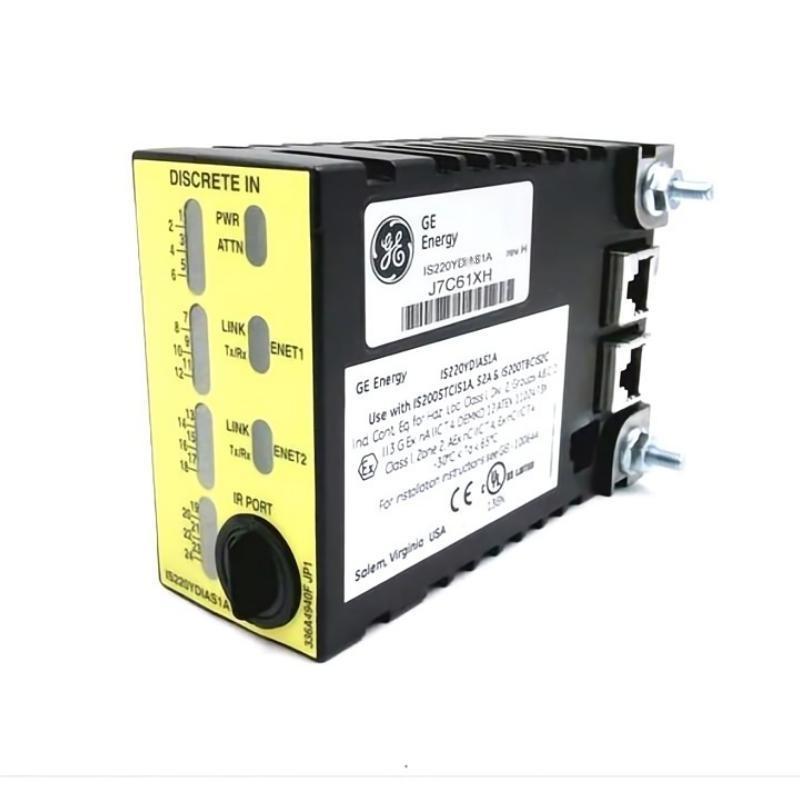
- GE
- IS220YDOAS1AK
- Discrete I/O Module
- USA
- 138 x 86 x 56 mm
- 0.907 kg
- Xiamen, China
- New & In Stock
- T/T, PayPal, Western Union
- 1 Year
- 1-3 Working Days
- DHL, UPS, TNT, FedEx and EMS.
- 24-Hour Service
- COO
- 4
Our advantage

Global Logistics
We have a 10-year logistics and express cooperation agreement, so our products can be shipped to any place in the world.

Brand new and original
Our products are imported in bulk from the place of origin. Because of the cooperative relationship, our products are all original and 100% new.

24-hour service
We provide 7*24 hours service to our customers. We will be there whenever you need us.

Price advantage
All our products are priced very favorably because we have our own warehouse and supply.
| Company Information | |||
| [email protected] | |||
| Mobile | +8615980777398 | ||
| +8615980777398 | |||
| 15980777398 |
Product Overview
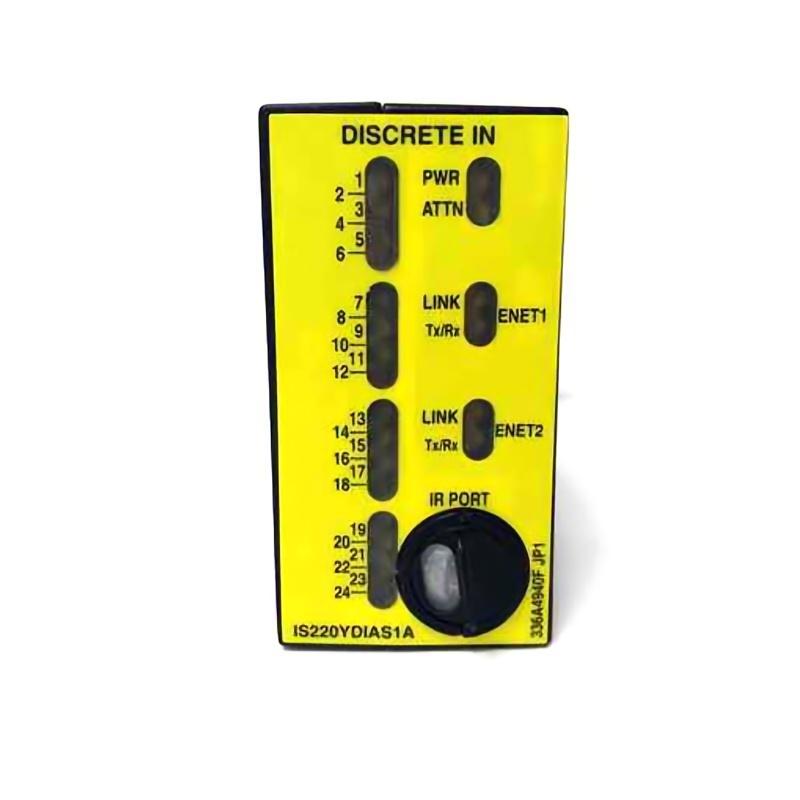
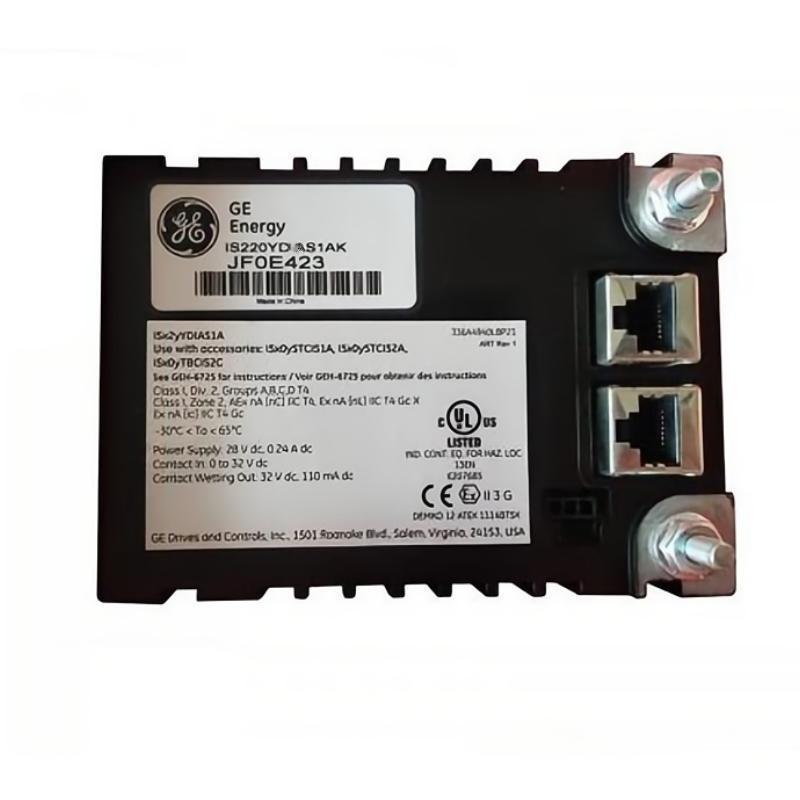
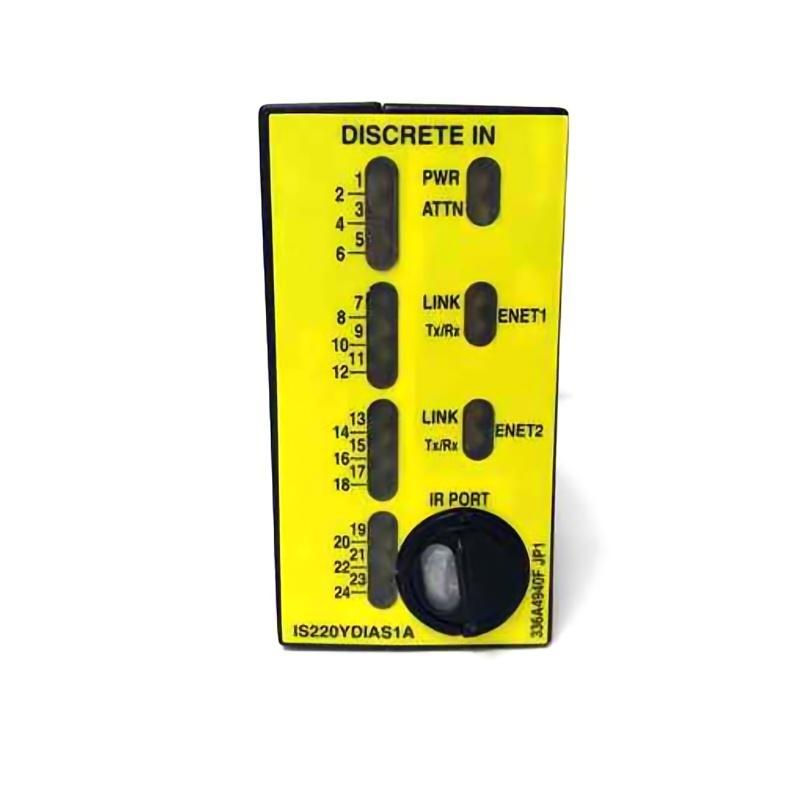
The GE IS220YDOAS1AK Discrete I/O Module is an industrial automation component identified for discrete input/output applications within compatible control architectures. Discrete I/O interfaces support the exchange of binary status information between field devices and control equipment, helping industrial systems monitor operating conditions and coordinate machine functions.
Discrete signals typically represent defined states rather than continuously varying measurements. Examples include equipment running status, switch positions, limit-switch activation, relay conditions, and other ON/OFF information. Within a properly configured control system, these signals can be used for sequence control, equipment supervision, alarm handling, and process interlocking.
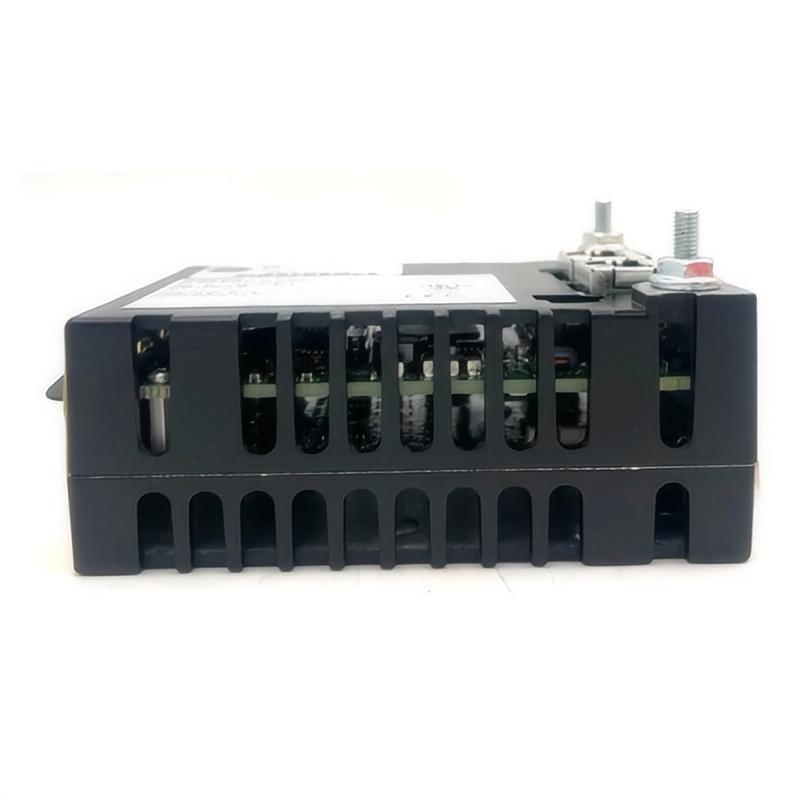
The GE IS220YDOAS1AK has listed dimensions of 138 × 86 × 56 mm and a weight of 0.907 kg. These physical characteristics are useful when planning installation space, evaluating replacement options, organizing maintenance activities, and handling control-system components.
Because the exact I/O configuration can vary by hardware model and revision, channel count, signal types, electrical ratings, terminal assignments, and supported interface functions should be verified against the specific module documentation before installation.
Technical Specifications
| Parameter | Specification |
|---|---|
| Manufacturer | General Electric (GE) |
| Model | IS220YDOAS1AK |
| Product Type | Discrete I/O Module |
| Product Family | GE IS220 Series |
| Primary Function | Discrete signal interfacing |
| Signal Category | Binary / ON-OFF signals |
| Dimensions | 138 × 86 × 56 mm |
| Weight | 0.907 kg |
| Installation | Compatible industrial control equipment |
| System Role | Discrete field-signal interface |
| Typical Applications | Equipment monitoring, sequence control, status acquisition, interlocking, and industrial automation |
Exact input/output channel configuration, electrical characteristics, and connection details must be confirmed for the specific hardware revision.
Understanding the GE IS220YDOAS1AK
Discrete I/O modules provide an interface between field-level signals and an industrial control system. Depending on the supported configuration, a discrete I/O architecture may acquire field-device states, distribute control signals, or coordinate both functions through the associated control hardware.
Typical field devices include:
- Limit switches
- Pushbuttons
- Selector switches
- Relay contacts
- Equipment auxiliary contacts
- Position switches
- Discrete status sensors
- Compatible ON/OFF control devices
Input signals provide information about the state of the equipment. Output signals, where supported, allow the control system to command compatible devices.
The actual capabilities of the GE IS220YDOAS1AK must be established from its exact hardware documentation rather than inferred solely from the general term “Discrete I/O Module.”
Discrete I/O Operating Principle
Discrete signal processing is based on distinguishing between defined electrical states.
For an input signal, a field device changes state and the interface detects the resulting electrical condition. The controller can then use the reported state in its program.
For an output signal, the controller issues a command and the compatible output interface changes its electrical state according to the system design.
A simplified architecture is:
Field Devices → Discrete Input Interface → Control Logic → Discrete Output Interface → Controlled Equipment
The actual arrangement depends on the module’s supported functions and the wider control-system configuration.
This architecture can support automated equipment sequencing, status verification, and coordinated operation between different parts of a machine.
Role in Industrial Automation
Discrete I/O interfaces contribute to industrial automation by connecting equipment status and control commands with programmed logic.
Potential system-level functions include:
- Monitoring machine operating states
- Detecting switch activation
- Reading equipment feedback
- Supporting automated sequences
- Coordinating discrete control commands
- Monitoring process permissives
- Reporting fault conditions
- Updating operator status displays
The module should be applied only where its documented electrical characteristics and interfaces match the intended control-system design.
Industrial Applications
Manufacturing Machinery
Discrete I/O interfaces can connect machine-status signals and control commands within automated production equipment.
Material Handling Systems
Conveyors, transfer units, and handling mechanisms often use discrete signals to report position, operating state, and sequence completion.
Packaging Equipment
Packaging machines use binary signals for product detection, indexing, machine-ready confirmation, and sequence coordination.
Process Automation
Discrete signals can be used to monitor valve status, pump feedback, equipment permissives, and other defined process conditions.
Industrial Equipment Monitoring
Input states can help determine whether equipment has reached a commanded state or whether an abnormal condition has occurred.
Alarm and Interlock Logic
Discrete signals can participate in programmed alarms and interlocks. Any safety-related function must use appropriately rated and validated safety equipment; ordinary I/O hardware should not be assumed to provide a certified safety function.
Input Signal Acquisition
When the module is used to acquire discrete inputs, the signal path begins at a field device.
For example, a limit switch may change state when a mechanical assembly reaches a particular position. The input interface detects the corresponding electrical condition, and the controller evaluates it against the programmed sequence.
A typical process includes:
- A field device detects a condition.
- The device changes its electrical output or contact state.
- The input interface receives the signal.
- The controller reads the reported status.
- Programmed logic evaluates the condition.
- The system updates its sequence, alarm, or status information.
Correct signal interpretation depends on compatible electrical levels, wiring, reference connections, and configuration.
Discrete Output and Equipment Control
Where the installed configuration supports discrete outputs, the control system may use binary commands to operate compatible field devices.
Examples of discrete control applications include:
- Commanding an interface relay
- Activating a compatible control circuit
- Issuing equipment enable commands
- Coordinating machine sequence steps
- Indicating operating status through external devices
The actual output type, load capacity, switching method, and electrical limits must be confirmed before connecting a field load. A module should not be assumed to drive a particular actuator directly without verifying its ratings.
Installation Guidelines
Correct installation supports stable signal transmission and reliable system operation.
1. Confirm the Module Identity
Verify the complete model number GE IS220YDOAS1AK, including the revision information shown on the hardware.
2. Inspect the Component
Check the housing, connectors, and accessible interfaces for mechanical damage, corrosion, contamination, or other visible defects.
3. Confirm Host-System Compatibility
Verify that the module is supported by the installed control architecture and associated interface hardware.
4. Review the Wiring Requirements
Use the correct documentation to identify terminal assignments, electrical references, signal requirements, and any applicable wiring restrictions.
5. Secure the Installation
Follow the host equipment’s mounting requirements and provide adequate space for connectors, cable routing, and maintenance access.
6. Check Grounding and Cable Routing
Follow the installation requirements for grounding, shielding, and separation of signal conductors from sources of electrical interference.
7. Inspect Before Commissioning
Confirm that wiring, connectors, mounting, and configuration are correct before restoring the equipment to service.
Wiring and Electrical Integration
Discrete I/O reliability depends on the compatibility of field circuits and the control interface.
Before wiring, verify:
- Supported signal types
- Input electrical limits
- Output electrical limits, if applicable
- Terminal assignments
- Common and reference connections
- External supply requirements
- Field-device compatibility
- Load requirements
- Cable routing and shielding
Incorrect connections can produce false input states, failed output operation, or hardware damage.
Do not assume that similarly sized GE modules have identical terminal arrangements or electrical ratings. All connections should follow the documentation applicable to the exact part number and revision.
Commissioning Procedure
A systematic commissioning process helps identify installation and configuration problems.
Step 1: Verify identification. Confirm the module model and hardware revision.
Step 2: Inspect the installation. Check mounting, connectors, and wiring.
Step 3: Confirm electrical compatibility. Verify field-device signals and output loads against the documented requirements.
Step 4: Check input status. Operate field devices using an approved procedure and compare their actual states with the control-system indications.
Step 5: Test output behavior. Where outputs are supported, verify operation using an approved test procedure and a compatible load.
Step 6: Validate control logic. Confirm that the controller responds correctly to input changes and output commands.
Step 7: Review diagnostics. Check for relevant system alarms, hardware faults, or configuration issues.
Step 8: Record the results. Document verified connections, configuration details, and any corrective actions.
Testing should follow site safety procedures, especially where signals affect moving machinery or hazardous processes.
Troubleshooting the GE IS220YDOAS1AK
Troubleshooting should consider the complete signal path, including field devices, wiring, interface hardware, controller configuration, and controlled equipment.
Input Signal Is Missing
Possible causes include:
- Field-device failure
- Open or damaged wiring
- Incorrect terminal connection
- Incompatible signal level
- Incorrect common or reference wiring
- Connector problems
- Configuration issues
Verify the field signal at the appropriate test point using an approved method before replacing the module.
Output Command Does Not Operate the Device
Where an output function is present, possible causes include:
- Incorrect control logic
- Output configuration problems
- Wiring faults
- Incompatible load requirements
- Missing external supply
- Field-device failure
- Output-interface fault
Check the controller command, interface status, wiring, and field-device requirements in sequence.
Input State Is Unstable
Unstable signals may be caused by loose connections, damaged cables, worn contacts, electrical interference, vibration, or an unstable reference connection.
Inspect the field circuit and compare the physical device state with the control-system indication.
Multiple I/O Points Fail
When several signals become abnormal simultaneously, investigate shared connections, external supplies, common wiring, interface connections, and host-system diagnostics. A shared fault can affect multiple points without indicating that each field device has failed independently.
Module Is Not Recognized
If the host system does not recognize the installed hardware, check the module identification, seating, connectors, supported configuration, and relevant controller diagnostics. Follow the applicable procedures before removing or replacing hardware.
Preventive Maintenance
Regular inspection helps reduce avoidable I/O faults.
Inspect Wiring and Terminals
Look for loose connections, damaged insulation, corrosion, and signs of moisture ingress.
Check Connectors
Verify that connectors are secure and free from visible damage.
Monitor System Diagnostics
Review recurring faults and abnormal signal behavior where diagnostic information is available.
Test Field Devices
Confirm that switches, contacts, sensors, and controlled equipment operate according to their own maintenance requirements.
Maintain Installation Conditions
Keep the control assembly within the environmental limits specified for the installed equipment. Excessive dust, moisture, heat, and vibration can affect long-term reliability.
Keep Configuration Records
Record the complete model number, hardware revision, wiring assignments, and controller configuration to simplify future troubleshooting.
Replacement and Compatibility Considerations
Before replacing the GE IS220YDOAS1AK, verify the following:
- Complete model designation
- Hardware revision
- Host-system compatibility
- Connector arrangement
- Input and output functions
- Electrical ratings
- Terminal assignments
- Field-device wiring
- Configuration requirements
The listed dimensions are 138 × 86 × 56 mm, and the listed weight is 0.907 kg.
Physical dimensions alone do not establish functional compatibility. A substitute must be checked against the electrical and system requirements of the actual installation.
Physical Dimensions and Cabinet Planning
The dimensions of 138 × 86 × 56 mm provide a reference for cabinet-layout preparation and mechanical installation.
Consider the following when planning the installation:
- Mounting space
- Connector access
- Cable-entry direction
- Wiring bend radius
- Clearance for maintenance
- Separation from electrical noise sources
- Accessibility for inspection and replacement
The listed weight of 0.907 kg should also be considered during handling and installation planning.
Integration with HMI and Supervisory Systems
When the module is integrated with a compatible controller, discrete signal information may be used by an HMI or supervisory system.
Depending on the programmed application, the operator interface may display:
- Equipment operating states
- Switch and limit-position states
- Sequence progress
- Control-command status
- Fault indications
- Alarm conditions
- Interlock status
Accurate display depends on correct signal mapping, controller logic, and HMI configuration. The module’s role is to interface with the control architecture, while the application determines how signal states are interpreted and displayed.
Key Advantages
- Discrete signal interfacing: Supports binary signal exchange within compatible industrial control systems.
- Automation integration: Discrete status information can be used in sequencing, monitoring, and control logic.
- Equipment supervision: Input states can support status verification and fault detection.
- System diagnostics: Structured troubleshooting can help isolate field, wiring, configuration, and interface faults.
- Defined physical dimensions: The 138 × 86 × 56 mm specification supports mechanical planning.
- Known listed weight: The 0.907 kg value assists handling and installation preparation.
Technical FAQs
What is the GE IS220YDOAS1AK?
The GE IS220YDOAS1AK is identified as a Discrete I/O Module for industrial automation applications involving discrete field signals.
What are its dimensions?
The listed dimensions are 138 × 86 × 56 mm.
What is its weight?
The listed weight is 0.907 kg.
What does a discrete I/O module do?
Discrete I/O interfaces connect binary field signals with a control system. Depending on the specific hardware, this can include acquiring equipment-status inputs or issuing discrete control outputs.
What can cause a discrete input to fail?
Potential causes include a defective field device, broken wiring, incorrect electrical levels, poor connections, configuration problems, or an interface fault.
What can cause a discrete output not to operate?
Possible causes include incorrect logic, wiring errors, incompatible load requirements, missing external power, field-device failure, or a fault in the output interface.
Can another GE IS220 module replace this model?
Not automatically. Confirm the complete part number, revision, I/O functions, electrical ratings, connector arrangement, and host-system compatibility before substitution.
How should the module be maintained?
Inspect the installation, wiring, connectors, field devices, and system diagnostics. Maintain accurate configuration records and investigate recurring faults systematically.
Conclusion
The GE IS220YDOAS1AK Discrete I/O Module is an industrial control component intended for discrete signal interfacing within compatible automation systems. Discrete I/O functionality supports equipment-status monitoring, machine sequencing, field-signal acquisition, and control-command integration when implemented with appropriate hardware and configuration.
With listed dimensions of 138 × 86 × 56 mm and a weight of 0.907 kg, the module’s physical specifications are useful for installation planning, cabinet layout, handling, and replacement preparation.
Reliable operation depends on correct wiring, compatible electrical conditions, accurate controller configuration, and proper integration with field devices. Before installing or replacing the GE IS220YDOAS1AK, verify the exact module identification and confirm its documented I/O functions and electrical characteristics against the requirements of the host system.