

ProductPRODUCT
Featured products
Contact Us
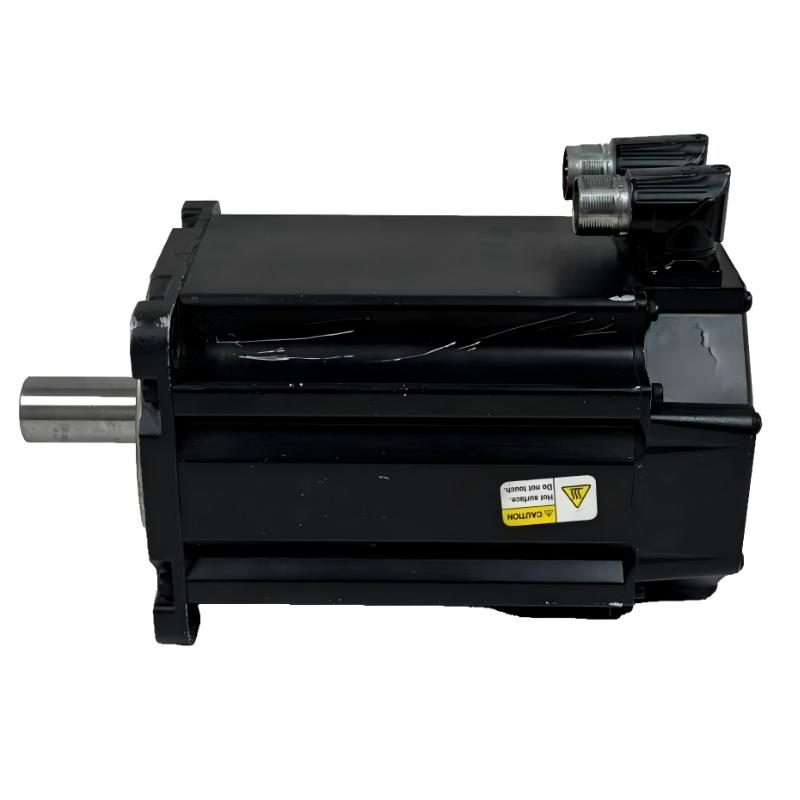
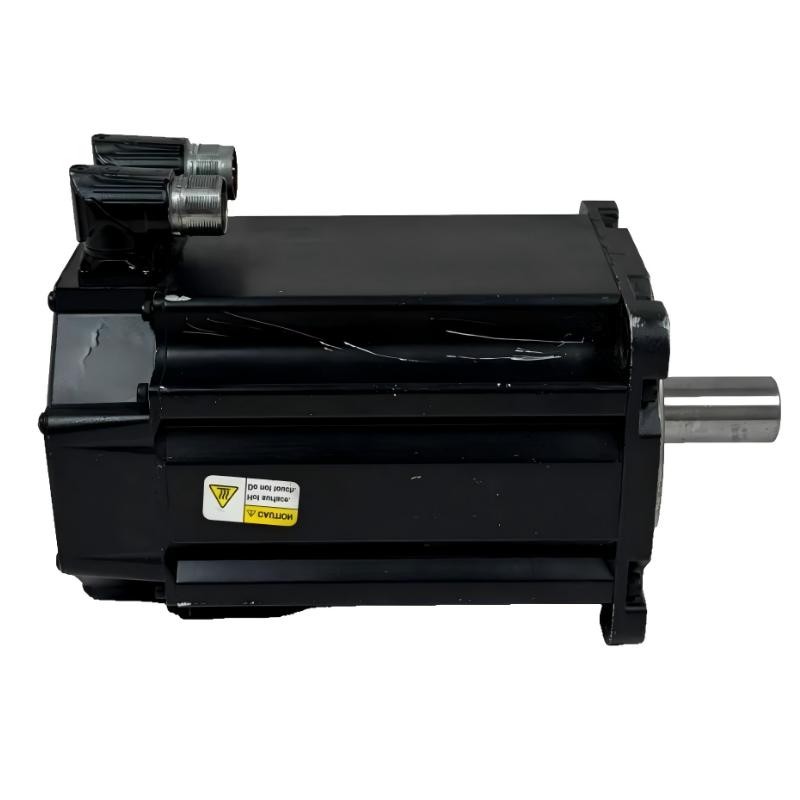
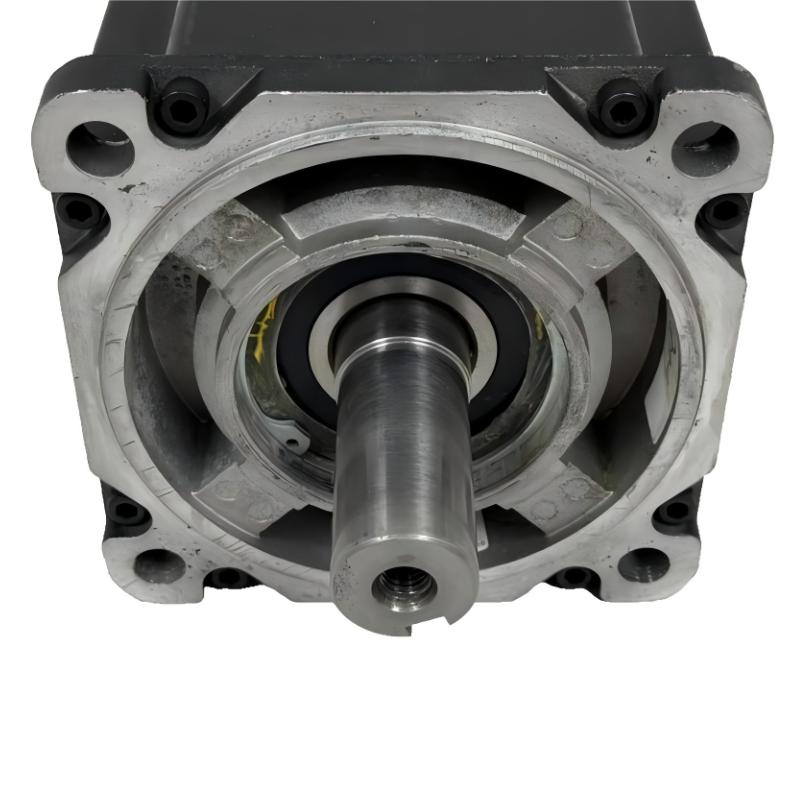
- Allen Bradley
- MPL-B680K-MJ72AA
- Low-Inertia Brushless Servo Motors Product
- USA
- 215 mm ×203.2 mm × 325 mm
- 42.7 kg
- Xiamen, China
- New & In Stock
- T/T, PayPal, Western Union
- 1 Year
- 1-3 Working Days
- DHL, UPS, TNT, FedEx and EMS.
- 24-Hour Service
- COO
- 3
Our advantage

Global Logistics
We have a 10-year logistics and express cooperation agreement, so our products can be shipped to any place in the world.

Brand new and original
Our products are imported in bulk from the place of origin. Because of the cooperative relationship, our products are all original and 100% new.

24-hour service
We provide 7*24 hours service to our customers. We will be there whenever you need us.

Price advantage
All our products are priced very favorably because we have our own warehouse and supply.
| Company Information | |||
| [email protected] | |||
| Mobile | +8615980777398 | ||
| +8615980777398 | |||
| 15980777398 |
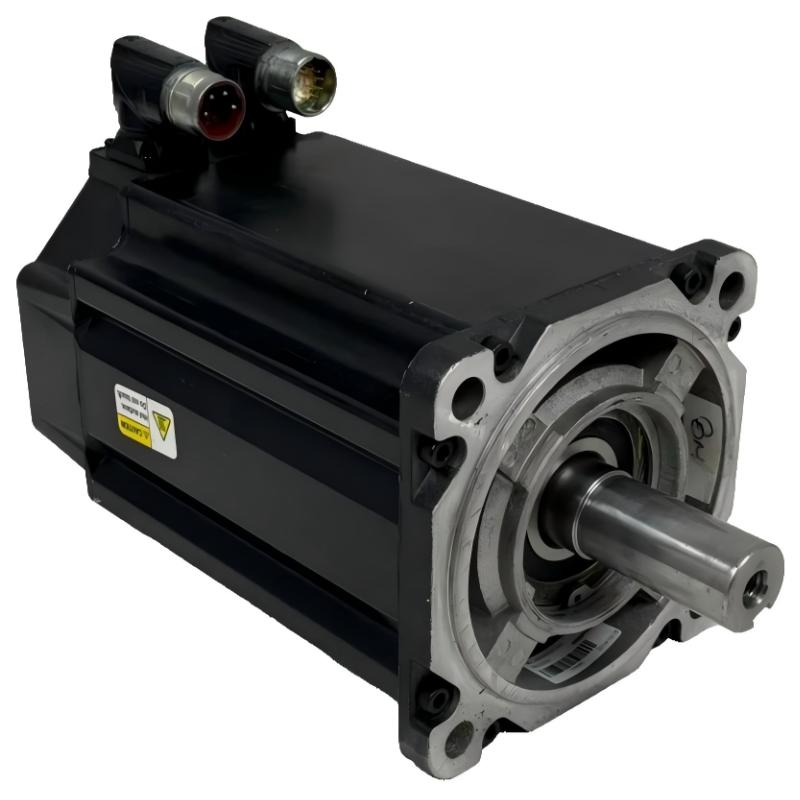
Allen-Bradley MPL-B680K-MJ72AA Servo Motor: Technical Parameters, Product Overview, Applications, Advantages, and Model Comparison
1. Product Overview
The Allen-Bradley MPL-B680K-MJ72AA is identified as a model in the MPL family of industrial brushless servo motors. Motors in this family are designed for automated machinery that requires controlled rotary movement, accurate positioning, and predictable acceleration and deceleration.
A servo motor is different from a conventional motor used only for continuous rotation. It operates with a compatible servo drive and motion controller, using feedback to regulate movement according to the machine’s commands. This arrangement supports programmed positioning, speed control, coordinated motion, and repeatable machine cycles.
The complete catalog number is important when selecting this motor. Models that look similar can have different speed classes, encoder configurations, brake options, shaft arrangements, and electrical requirements. A difference in one character can affect drive compatibility or whether the motor fits an existing machine.
Model verification is especially important for MPL-B680K-MJ72AA. The model number alone is not enough to confidently establish every electrical rating, external dimension, or weight. The specifications below distinguish general MPL-family characteristics from details that must be confirmed against the exact nameplate or dimensional drawing. Unconfirmed values are deliberately not presented as guaranteed ratings.
2. Detailed Technical Parameters
2.1 Basic specifications
|
Parameter |
Specification |
|---|---|
|
Model |
MPL-B680K-MJ72AA |
|
Brand |
Allen-Bradley |
|
Product family |
MP-Series |
|
Product series |
MPL low-inertia brushless servo motors |
|
Motor type |
Brushless AC rotary servo motor |
|
Motor technology |
Permanent-magnet synchronous motor |
|
Voltage class |
460 V AC |
|
Speed class |
K-series configuration; confirm the exact rated speed on the motor nameplate |
|
Frame size |
Size 6 |
|
Frame dimension |
Approximately 215 mm (8.46 in.) |
|
Magnet stack length |
Approximately 203.2 mm (8.00 in.) |
|
Feedback |
Multi-turn high-resolution absolute encoder |
|
Shaft type |
Keyed shaft extension |
|
Brake |
No integrated holding brake indicated by the MJ72AA configuration |
|
Connector |
SpeedTEC DIN, right-angle style, rotatable connector |
|
Mounting |
IEC metric, free mounting holes, Type FF |
|
Motor construction |
Three-phase, permanent-magnet brushless design |
|
Cooling style |
Totally enclosed, non-ventilated construction |
|
Control method |
Closed-loop servo control |
|
Intended use |
Industrial automation and controlled rotary motion |
|
Overall length |
Confirm using the exact dimensional drawing |
|
Overall width |
Confirm using the exact dimensional drawing |
|
Overall height |
Confirm using the exact dimensional drawing |
|
Shaft diameter |
Confirm using the exact dimensional drawing |
|
Shaft extension length |
Confirm using the exact dimensional drawing |
|
Product weight (kg) |
Exact net weight requires confirmation; approximately 40–45 kg is a preliminary family-level estimate only |
|
Shipping weight (kg) |
Depends on packaging and shipment; confirm with the supplied unit |
The model code suggests a multi-turn feedback configuration and no integrated brake. However, the precise rated speed and full electrical data should be confirmed from the motor’s nameplate or exact catalog specification before the unit is used in a production system.
2.2 Electrical and performance parameters
|
Parameter |
Preliminary specification or selection note |
|---|---|
|
Rated voltage class |
460 V AC |
|
Rated speed |
Verify exact K-variant rating |
|
Maximum operating speed |
Confirm against the exact motor specification and drive limits |
|
Continuous torque |
Confirm against the exact motor torque-speed data |
|
Peak torque |
Confirm against the exact motor torque-speed data |
|
Continuous current |
Confirm against the exact motor electrical data |
|
Peak current |
Confirm against the exact motor electrical data |
|
Rated output power |
Confirm against the exact motor electrical data |
|
Encoder type |
Multi-turn high-resolution absolute feedback |
|
Brake voltage |
Not applicable to the no-integrated-brake configuration |
|
Drive compatibility |
Must support the motor’s voltage class, feedback interface, and electrical ratings |
|
Ambient operating temperature |
Use the range specified for the exact motor and installation |
|
Humidity |
Follow the specified non-condensing operating limits |
|
Protection and shaft-seal options |
Confirm the exact motor variant and installed options |
For motor sizing, continuous torque and peak torque must be evaluated separately. Continuous torque is important for thermal performance during normal operation, while peak torque relates to short-duration demands such as acceleration or rapid changes in load.
The drive must also be able to supply the current needed for the required motion profile. A motor should not be selected solely by comparing its speed rating or frame size with another model.
2.3 Mechanical dimensions and weight
|
Dimension or physical parameter |
Value |
|---|---|
|
Frame dimension |
Approximately 215 mm |
|
Magnet stack length |
Approximately 203.2 mm |
|
Overall length |
Exact drawing required |
|
Overall width |
Exact drawing required |
|
Overall height |
Exact drawing required |
|
Mounting flange dimensions |
Exact drawing required |
|
Mounting-hole spacing |
Exact drawing required |
|
Shaft diameter |
Exact drawing required |
|
Shaft key and keyway dimensions |
Exact drawing required |
|
Shaft extension length |
Exact drawing required |
|
Connector clearance |
Check the installation layout |
|
Product weight (kg) |
Approximately 40–45 kg as an unverified family-level estimate |
|
Shipping weight (kg) |
Not confirmed; depends on packaging |
|
Installation orientation |
Confirm allowable mounting positions in the applicable installation instructions |
The 215 mm frame dimension and 203.2 mm stack length help identify the motor’s size class, but they do not define its complete external envelope. When replacing an existing motor, the flange, shaft extension, keyway, mounting-hole pattern, connector clearance, and overall length should all be compared with the original unit.
The weight estimate should be treated as preliminary rather than a guaranteed shipping or net weight. For lifting, machine-frame loading, or freight calculations, use the actual unit’s nameplate information or its exact mechanical documentation.
3. Product Introduction
The MPL-B680K-MJ72AA is intended for applications in which the motor must follow controlled movement commands rather than simply run at a fixed speed. In a typical servo system, the motion controller determines the required movement, the drive regulates the motor’s current and speed, and the encoder reports position feedback.
This closed-loop arrangement helps the machine control acceleration, deceleration, stopping position, and movement timing. It is useful for automated production equipment where repeatable motion is part of the operating cycle.
The model’s multi-turn high-resolution absolute feedback configuration is relevant when the application needs to track shaft position across multiple revolutions. Compared with a single-turn configuration, multi-turn feedback can provide additional position information beyond one complete revolution. The exact position-retention behavior, backup requirements, and setup procedure depend on the encoder and control system used.
The keyed shaft is intended for compatible mechanical connections. Depending on the machine design, this may include a coupling, pulley, gearbox, or other torque-transmission component. Correct shaft dimensions, keyway fit, alignment, and allowable shaft loading remain important during installation.
The MJ72AA configuration indicates that the motor does not have an integrated holding brake. This is an important point when considering the motor for vertical axes or mechanisms that must remain stationary when motor torque is removed. Where the load could move under gravity or an external force, the machine may require a separate holding arrangement designed for the application.
The motor should be selected as part of a complete motion-control system. The motor, servo drive, encoder interface, controller, mechanical transmission, and load must all be compatible. A model that appears similar mechanically may still require different wiring, configuration, or drive hardware.
4. Product Applications
4.1 Automated packaging machinery
Packaging equipment often requires accurate product spacing, controlled conveyor movement, rotary indexing, and synchronized operations. A servo motor can move components according to programmed profiles and coordinate its motion with other machine axes.
The MPL-B680K-MJ72AA may be considered for packaging machinery when its speed, torque, feedback configuration, and mechanical dimensions match the application. The multi-turn encoder can be useful where the control system needs position information across repeated shaft revolutions.
4.2 Automated assembly systems
Automated assembly lines use servo axes to position parts, move fixtures, index rotary stations, and coordinate successive production steps. Consistent motion is important when the same operation must be repeated throughout a production shift.
A properly configured servo system can support repeatable movement and controlled acceleration. The final positioning performance depends on the complete mechanical system, including the coupling, gearbox, fixture, load inertia, and motion-control tuning.
4.3 Material handling and transfer equipment
Industrial transfer systems often use motors to drive conveyors, rotating mechanisms, lift-related components, and positioning tables. A servo motor can help coordinate these movements with sensors and machine-control sequences.
For this model, the lack of an integrated brake should be considered carefully if the application involves vertical movement, suspended loads, or a mechanism that must hold position while de-energized. Any external holding arrangement must be suitable for the load and the intended operating conditions.
4.4 Rotary indexing tables
Rotary indexing equipment moves a workpiece or fixture between predetermined positions. The motion profile may include acceleration, rapid travel, deceleration, and a settling period before the next production step.
Multi-turn feedback can be useful when the system needs to track position over several revolutions. The motor’s suitability depends on the required indexing time, torque, positioning accuracy, and the capabilities of the selected drive and controller.
4.5 Printing, labeling, and converting machinery
Printing and converting equipment may require synchronized rollers, feed mechanisms, cutters, and material-handling axes. A servo system can coordinate the movement of these components and help maintain consistent production timing.
Before selecting this motor for such equipment, the required operating speed and torque must be evaluated together. The machine’s mechanical transmission ratio, load inertia, and duty cycle can significantly affect motor performance.
4.6 Machine tools and automated manufacturing
Servo motors are commonly used in automated manufacturing equipment for rotary positioning, material feeding, tooling support, and auxiliary machine movement. Their ability to follow programmed motion profiles makes them useful in systems that require controlled transitions between operating positions.
The MPL-B680K-MJ72AA should be evaluated against the machine’s actual speed, torque, accuracy, and environmental requirements. It should not be assumed to be a direct replacement for another servo motor solely because the frame dimensions are similar.
4.7 Inspection and testing equipment
Automated inspection equipment may rotate samples, position sensors, index fixtures, or move test components through a sequence of measurement positions. A servo motor can support repeatable movement and synchronization with data-acquisition or inspection operations.
In these applications, the motor’s encoder configuration, drive compatibility, and mechanical rigidity are important. The achievable repeatability is determined by the whole axis, not the motor alone.
4.8 Multi-axis production systems
Some machines use several servo axes that operate together. One axis may position a product, another may rotate a fixture, and another may feed material into a working station.
A compatible servo system can coordinate these movements using programmed sequences. The motor must be properly matched with the other axes and the controller to achieve the required timing and performance.
5. Product Advantages
5.1 Multi-turn high-resolution feedback
The multi-turn absolute feedback configuration is useful when a motion system needs position information across more than one shaft revolution. This can simplify position tracking in certain rotary applications and may reduce reliance on external position-counting arrangements.
The exact behavior after power loss depends on the feedback hardware and system configuration. Encoder setup, controller support, and any backup or initialization requirements should be confirmed before commissioning.
5.2 Suitable for controlled industrial motion
The MPL family is designed for closed-loop servo applications. When paired with a compatible drive and controller, the motor can support programmed acceleration, deceleration, speed regulation, and position control.
These capabilities are valuable in machinery where motion needs to follow a repeatable sequence rather than run continuously at a fixed speed.
5.3 Low-inertia motor design
Low-inertia motor construction can help the system respond to changing motion commands, especially in applications with frequent starts, stops, and direction changes.
The benefit depends on the relationship between rotor inertia and load inertia. The mechanical transmission, coupling, drive capability, and control tuning also influence acceleration and settling time. Low inertia alone does not guarantee higher accuracy or faster cycle times.
5.4 Keyed shaft connection
The keyed shaft provides a conventional mechanical interface for compatible torque-transmission components. It can be useful in installations where the existing machinery uses keyed couplings, pulleys, or other mechanical drive elements.
Correct shaft fit is essential. The shaft diameter, keyway dimensions, coupling tolerance, and allowable radial and axial loads should be verified before installation.
5.5 Rotatable right-angle connector
The right-angle connector arrangement can help with cable routing in machines where straight connectors would take up too much space. Its rotatable design can provide additional flexibility when the motor is installed near machine guards, frames, or other equipment.
The connector must still be positioned so that the cable does not experience excessive bending, pulling force, abrasion, or contact with moving components. Adequate clearance should be maintained for servicing and inspection.
5.6 Large frame and long stack configuration
The 215 mm frame dimension and 203.2 mm stack length identify a relatively large motor configuration within this product family. This size class may be worth evaluating when smaller motors cannot satisfy the required torque or dynamic performance.
However, frame size is not a substitute for torque data. The actual continuous and peak torque requirements must be compared with the motor’s performance curves, including the effects of speed, cooling, and duty cycle.
5.7 No integrated brake for suitable applications
For applications that do not require a motor-mounted holding brake, a no-brake configuration may simplify the motor’s brake-related wiring and eliminate the need to manage an integral brake circuit.
This is not automatically an advantage for every machine. If the axis must hold a load when power is removed, the machine may need a separate holding brake or another suitable load-retention solution. The correct choice depends on the mechanical arrangement and risk assessment.
5.8 Clear configuration differences within the product family
Related MPL models are available with different feedback and brake arrangements. Comparing the full catalog number helps identify whether the application needs multi-turn or single-turn feedback, a holding brake, a different speed class, or another motor configuration.
This is especially important for replacement work, where a seemingly minor catalog-number difference can affect the existing drive setup, wiring, and mechanical fit.
6. Brand and Product Series
|
Parameter |
Description |
|---|---|
|
Brand |
Allen-Bradley |
|
Product family |
MP-Series |
|
Product series |
MPL |
|
Series type |
Low-inertia brushless servo motors |
|
Motor category |
Industrial rotary AC servo motor |
|
Motor construction |
Brushless permanent-magnet design |
|
Voltage class |
460 V AC |
|
Frame dimension |
Approximately 215 mm |
|
Stack length |
Approximately 203.2 mm |
|
Feedback configuration |
Multi-turn high-resolution absolute encoder |
|
Shaft configuration |
Keyed shaft extension |
|
Brake configuration |
No integrated holding brake indicated |
|
Connector configuration |
Right-angle, rotatable SpeedTEC DIN |
|
Mounting arrangement |
IEC metric; confirm exact drawing |
|
Primary function |
Controlled rotary motion, positioning, and automation |
|
Typical system components |
Servo motor, compatible drive, controller, feedback interface, and mechanical transmission |
The MP-Series MPL family is intended for applications that require controlled movement and integration into industrial automation systems. Different models within the series vary in frame size, stack length, speed class, feedback type, and brake configuration.
For this reason, a motor should be selected by its complete catalog number and technical characteristics rather than by the series name alone. Two MPL motors can look similar while having different electrical ratings or feedback interfaces.
7. Five Recommended Models from the Same Series or Closely Related Variants
The following models are useful comparison candidates because they share the MPL family and similar frame or application characteristics. Their differences mainly concern speed class, feedback configuration, and brake availability.
|
Model |
Series |
Voltage class |
Speed class |
Frame dimension |
Stack length |
Feedback |
Brake |
Dimensions and weight (kg) |
|---|---|---|---|---|---|---|---|---|
|
MPL-B680K-MJ72AA |
MPL |
460 V AC |
Confirm exact K-variant rating |
215 mm |
203.2 mm |
Multi-turn absolute |
No integrated brake |
Frame 215 mm; stack 203.2 mm; net weight to confirm |
|
MPL-B680H-MJ72AA |
MPL |
460 V AC |
3,500 RPM |
215 mm |
203.2 mm |
Multi-turn high-resolution absolute |
No brake |
Frame 215 mm; stack 203.2 mm; approximately 40.45 kg family reference |
|
MPL-B680F-MJ72AA |
MPL |
460 V AC |
3,000 RPM |
215 mm |
203.2 mm |
Multi-turn high-resolution absolute |
No brake |
Frame 215 mm; stack 203.2 mm; approximately 40–45 kg preliminary estimate |
|
MPL-B680D-MJ72AA |
MPL |
460 V AC |
2,000 RPM |
215 mm |
203.2 mm |
Multi-turn high-resolution absolute |
No brake |
Frame 215 mm; stack 203.2 mm; approximately 40.4 kg reference |
|
MPL-B680D-MJ74AA |
MPL |
460 V AC |
2,000 RPM |
215 mm |
203.2 mm |
Multi-turn high-resolution absolute |
24 V DC brake |
Frame 215 mm; stack 203.2 mm; approximately 40.4 kg reference |
Weight figures are reference estimates for comparison, not guaranteed net weights for every catalog variant. Overall length, width, height, and shaft dimensions must be checked on the exact drawing.
7.1 Model comparison and selection guidance
MPL-B680H-MJ72AA
This is a useful comparison when the application requires multi-turn feedback and no integrated brake, but a 3,500 RPM speed class is suitable. The same general frame and stack dimensions make it worth considering for a machine that can accommodate the H variant’s speed characteristics.
MPL-B680F-MJ72AA
This model is a candidate when a 3,000 RPM class is sufficient. A lower speed class may be suitable for machinery with a different operating profile, but the torque available at the required speed must be checked before selecting it.
MPL-B680D-MJ72AA
This version belongs to the 2,000 RPM class. It may be worth evaluating when the application places greater emphasis on torque at lower speed than on maximum rotational speed. The actual load profile and required cycle time determine whether it is appropriate.
MPL-B680D-MJ74AA
This model adds an integrated 24 V DC holding brake to the general B680D configuration. It may be a candidate when the application requires a motor-mounted holding function. Brake capacity and the intended duty must be checked rather than assumed from the presence of a brake alone.
MPL-B680K-MJ72AA
For the target model, confirm the exact K-variant speed rating and performance data before using the comparison table for engineering decisions. The frame and stack dimensions are useful starting points, but they do not establish that another B680 variant is an electrically or mechanically interchangeable replacement.
8. Five Additional Allen-Bradley Models to Consider
The models below provide additional comparison points across different stack lengths and motor configurations. They are alternatives for evaluation, not guaranteed direct replacements.
|
Model |
Product series |
Voltage class |
Speed class |
Frame dimension |
Stack length |
Feedback |
Brake |
Dimensions and weight (kg) |
|---|---|---|---|---|---|---|---|---|
|
MPL-B640F-MJ72AA |
MPL |
460 V AC |
3,000 RPM |
215 mm |
101.6 mm |
Multi-turn absolute |
No brake |
Frame 215 mm; stack 101.6 mm; weight to confirm |
|
MPL-B640F-MJ74AA |
MPL |
460 V AC |
3,000 RPM |
215 mm |
101.6 mm |
Multi-turn absolute |
24 V DC brake |
Frame 215 mm; stack 101.6 mm; weight to confirm |
|
MPL-B660F-MJ72AA |
MPL |
460 V AC |
3,000 RPM |
215 mm |
152.4 mm |
Multi-turn absolute |
No brake |
Frame 215 mm; stack 152.4 mm; weight to confirm |
|
MPL-B660F-MJ74AA |
MPL |
460 V AC |
3,000 RPM |
215 mm |
152.4 mm |
Multi-turn absolute |
24 V DC brake |
Frame 215 mm; stack 152.4 mm; weight to confirm |
|
MPL-B680F-MJ74AA |
MPL |
460 V AC |
3,000 RPM |
215 mm |
203.2 mm |
Multi-turn absolute |
24 V DC brake |
Frame 215 mm; stack 203.2 mm; weight to confirm |
8.1 How these models differ
– MPL-B640F-MJ72AA: The shorter stack makes it a comparison candidate where the required torque and physical size may be lower than those of the B680 family.
– MPL-B640F-MJ74AA: Offers a similar general frame and speed class to the B640F no-brake version, with an integrated brake configuration.
– MPL-B660F-MJ72AA: Uses an intermediate stack length. It may be worth considering when the machine needs a different balance of motor size and performance.
– MPL-B660F-MJ74AA: Adds the brake option to the B660F configuration. Brake requirements should be assessed alongside the load and drive characteristics.
– MPL-B680F-MJ74AA: Retains the longer 203.2 mm stack while using the 3,000 RPM speed class and brake configuration. It is a useful comparison when the machine needs a brake but does not require the target model’s exact speed characteristics.
9. Key Specifications to Confirm Before Purchase
|
Verification item |
What to check |
|---|---|
|
Complete model number |
Confirm that the label reads MPL-B680K-MJ72AA exactly |
|
Voltage class |
Confirm 460 V AC compatibility with the existing drive |
|
Rated speed |
Verify the precise K-variant speed rating |
|
Continuous torque |
Check the torque-speed curve at the intended operating speed |
|
Peak torque |
Confirm that acceleration and short-duration loads are within limits |
|
Continuous and peak current |
Verify the motor and drive electrical ratings |
|
Encoder |
Confirm multi-turn absolute feedback compatibility |
|
Brake |
Confirm that the target configuration has no integrated brake |
|
Frame and stack |
Check 215 mm frame and 203.2 mm stack dimensions against the machine |
|
Shaft and keyway |
Verify diameter, keyway dimensions, extension length, and allowable shaft loads |
|
Overall dimensions |
Obtain the exact drawing for length, width, height, flange, and mounting-hole positions |
|
Product weight (kg) |
Confirm the exact net weight of the supplied unit |
|
Shipping weight (kg) |
Confirm separately for transportation and handling |
|
Connector |
Check orientation, cable compatibility, and clearance |
|
Drive configuration |
Verify that the installed drive supports the motor and its feedback interface |
10. Final Product Assessment
The Allen-Bradley MPL-B680K-MJ72AA is presented as an MPL-series brushless servo motor with a multi-turn absolute feedback configuration, keyed shaft, and no integrated holding brake. Its nominal frame and stack dimensions place it in the larger B680 mechanical size class.
Its potential advantages include closed-loop motion control, multi-turn position feedback, compatibility with industrial automation architectures, and a conventional keyed-shaft interface. These characteristics make it worth evaluating for rotary positioning, packaging machinery, automated assembly, material handling, and other controlled-motion applications.
The main limitation in preparing a definitive specification is that the exact K-variant performance data, full external dimensions, and net weight have not been established here. Those values should not be inferred from the H, F, or D variants merely because the models share a similar catalog structure.
For a replacement project, the most important steps are to confirm the complete nameplate number, verify the rated speed and torque data, check the encoder interface, and compare the exact mechanical drawing. The five closely related MPL models and five additional comparison models above provide a starting point for selection, but the final choice should be based on the machine’s electrical, mechanical, and motion-control requirements.