

ProductPRODUCT
Featured products
Contact Us
- Allen Bradley
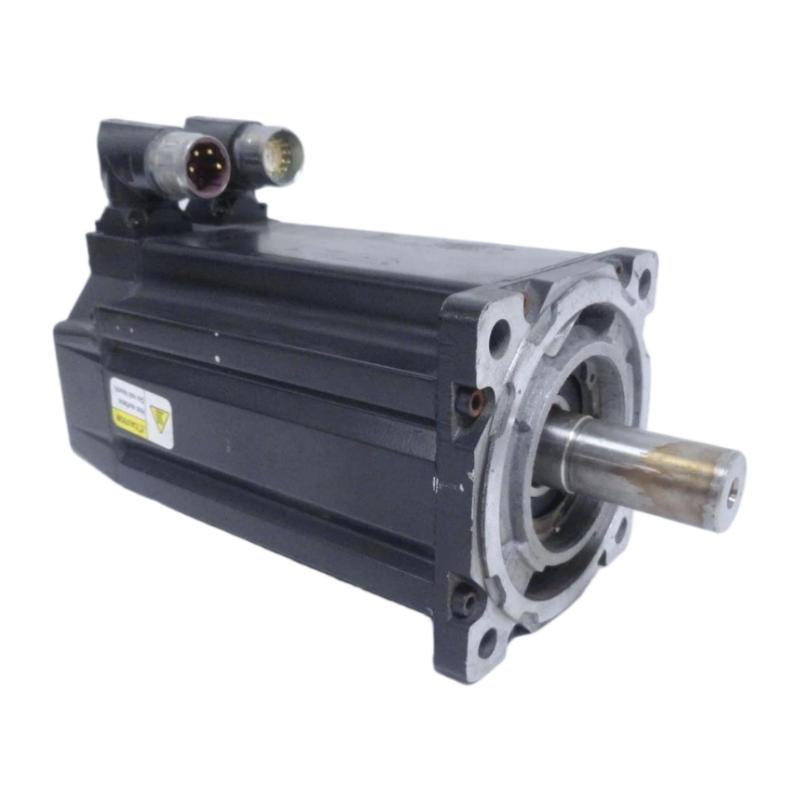
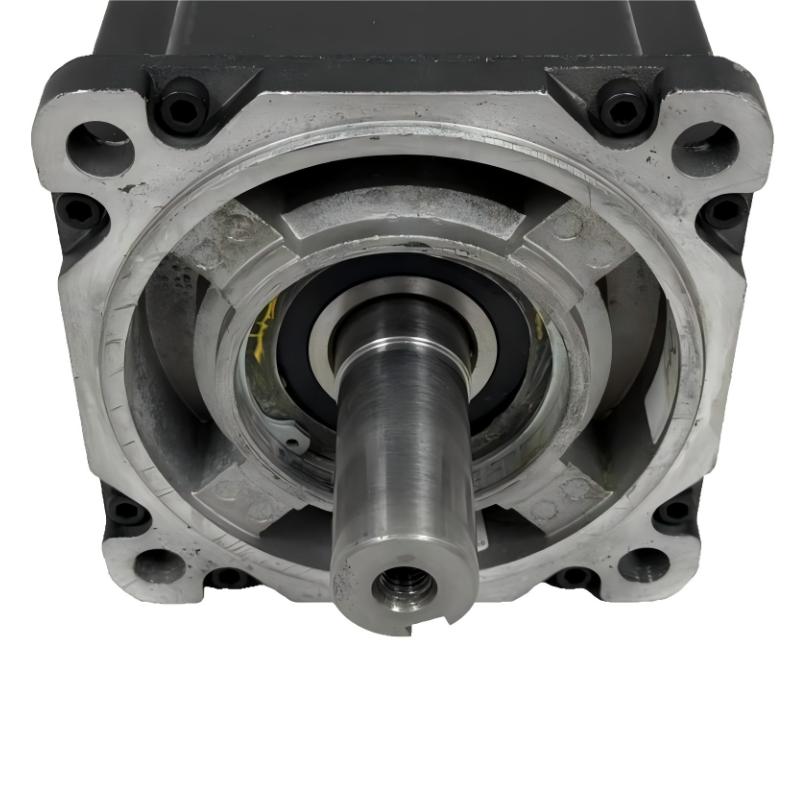
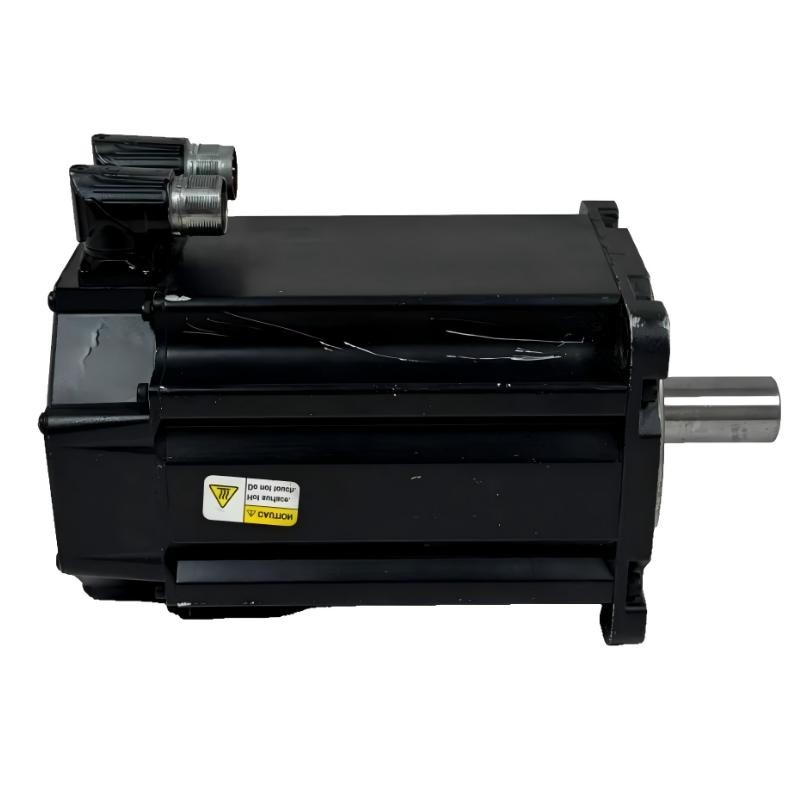
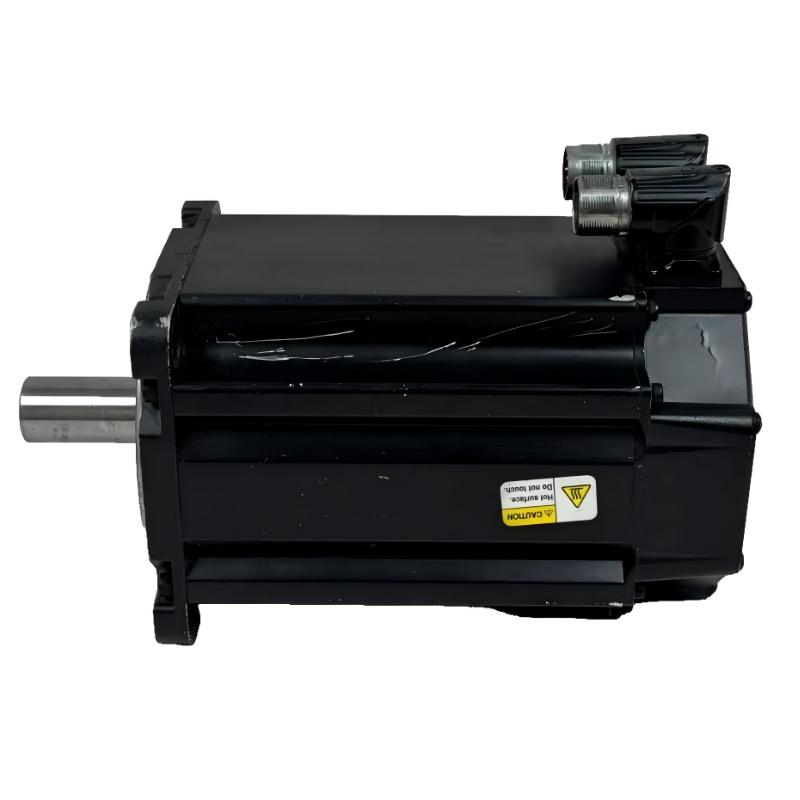
- MPL-B520K-MJ22AA
- Low-Inertia Brushless Servo Motors Product
- USA
- 138 mm × 87 mm × 105 mm
- 9.81kg
- Xiamen, China
- New & In Stock
- T/T, PayPal, Western Union
- 1 Year
- 1-3 Working Days
- DHL, UPS, TNT, FedEx and EMS.
- 24-Hour Service
- COO
- 12
Our advantage

Global Logistics
We have a 10-year logistics and express cooperation agreement, so our products can be shipped to any place in the world.

Brand new and original
Our products are imported in bulk from the place of origin. Because of the cooperative relationship, our products are all original and 100% new.

24-hour service
We provide 7*24 hours service to our customers. We will be there whenever you need us.

Price advantage
All our products are priced very favorably because we have our own warehouse and supply.
| Company Information | |||
| [email protected] | |||
| Mobile | +8615980777398 | ||
| +8615980777398 | |||
| 15980777398 |
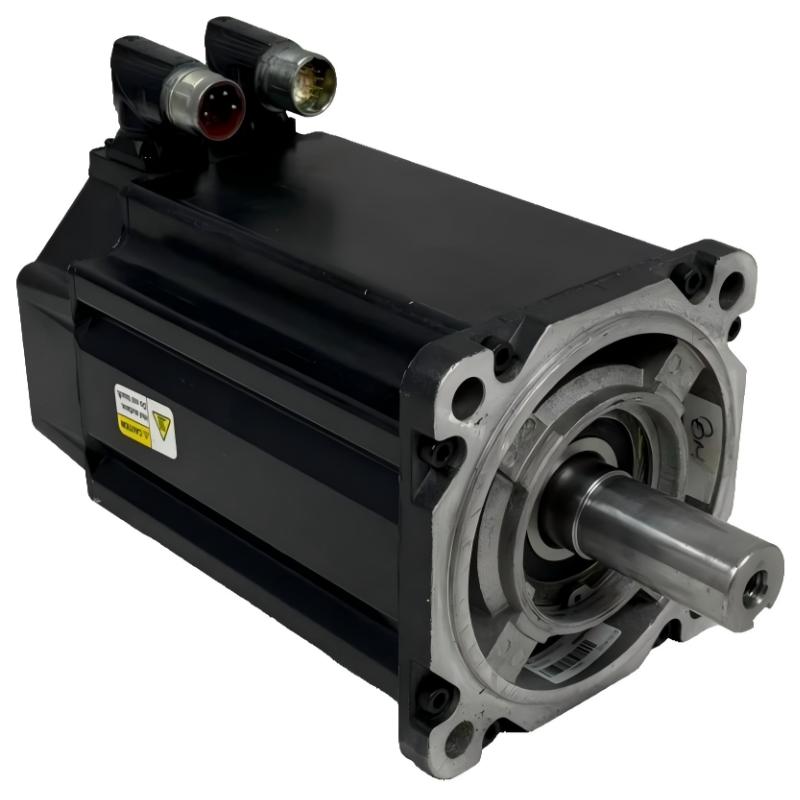
Allen-Bradley MPL-B520K-MJ22AA Servo Motor – Technical Specifications, Product Introduction, Applications, Advantages and Model Selection Guide
1. Product Overview
The MPL-B520K-MJ22AA is a low-inertia brushless AC servo motor from the Allen-Bradley MP-Series MPL family.
It is designed for industrial motion-control systems requiring high-speed rotation, accurate positioning, rapid acceleration and deceleration, and stable servo performance.
The motor uses a 165 mm frame, a 50.8 mm magnetic stack length, a 4000 rpm rated speed, and a multi-turn high-resolution encoder.
The motor has a keyed shaft extension, a bayonet connector, an IEC metric mounting configuration, and no integral holding brake.
The combination of a relatively short magnetic stack and low rotor inertia makes this motor particularly suitable for applications where high dynamic response is more important than extremely high continuous torque.
The rated continuous torque is approximately 10.7 N·m, while the peak torque capability is approximately 23.2 N·m.
The rated output power is approximately 3.5 kW, placing this motor in a useful mid-power range for industrial servo applications.
The motor is associated with the 460 V AC class and is intended for use with compatible servo drives and motion-control systems.
2. Brand and Product Series
| Item | Specification |
|---|---|
| Brand | Allen-Bradley |
| Product Family | MP-Series |
| Product Series | MPL Low-Inertia Brushless Servo Motors |
| Model | MPL-B520K-MJ22AA |
| Motor Type | Low-inertia brushless AC servo motor |
| Motor Construction | Permanent-magnet synchronous servo motor |
| Voltage Class | 460 V AC |
| Frame Size | 165 mm |
| Magnetic Stack | 50.8 mm |
| Rated Speed | 4000 rpm |
| Feedback | Multi-turn high-resolution encoder |
| Shaft | Keyed shaft extension |
| Brake | No integral brake |
| Connector | Bayonet connector, right-angle, rotatable |
| Mounting | IEC metric |
| Approximate Weight | 9.81 kg |
The product belongs to the MPL low-inertia servo motor series, which was developed for applications requiring fast dynamic response and accurate closed-loop positioning.
The MPL-B520K frame represents a larger motor size than the B45 and B46 families, but the relatively short 50.8 mm stack keeps the motor focused on high-speed operation rather than simply maximizing torque capacity.
3. Detailed Technical Parameters
| Parameter | MPL-B520K-MJ22AA Specification |
|---|---|
| Model | MPL-B520K-MJ22AA |
| Brand | Allen-Bradley |
| Series | MP-Series MPL |
| Motor Type | Low-inertia brushless AC servo motor |
| Voltage Class | 460 V AC |
| Nominal Voltage Class | 480 V class |
| Frame Size | 165 mm / 6.50 in |
| Magnetic Stack Length | 50.8 mm / 2.0 in |
| Rated Speed | 4000 rpm |
| Base Speed | Approximately 3500 rpm |
| Continuous Stall Torque | 10.7 N·m |
| Continuous Torque Class | Approximately 10.7 N·m |
| Peak Torque | Approximately 23.2 N·m |
| Rated Output Power | Approximately 3.5 kW |
| Rotor Inertia | Approximately 0.000783 kg·m² |
| Feedback Device | Multi-turn high-resolution encoder |
| Feedback Type | Absolute multi-turn feedback |
| Shaft Configuration | Keyed shaft extension |
| Shaft Seal | No shaft seal |
| Brake | No integral brake |
| Connector | Bayonet connector |
| Connector Orientation | Right-angle |
| Connector Rotation | Approximately 180° rotatable |
| Mounting Standard | IEC metric |
| Mounting Flange | IEC metric flange |
| Frame Dimension | 165 mm |
| Magnetic Stack Dimension | 50.8 mm |
| Overall Mechanical Envelope | Use the applicable mechanical drawing for final installation dimensions |
| Approximate Weight | 9.81 kg |
| Motor Construction | Permanent-magnet synchronous |
| Servo Category | Rotary servo motor |
| Intended Drive Type | Compatible AC servo drive |
| Application Class | High-speed industrial motion control |
The 10.7 N·m continuous torque rating provides a useful balance between speed and mechanical output.
The 23.2 N·m peak torque capability allows the motor to handle acceleration, deceleration, indexing, and short-duration load changes that are higher than the continuous operating point.
The approximately 0.000783 kg·m² rotor inertia is an important characteristic of the motor. Lower rotor inertia allows the servo drive to change motor speed quickly, which is particularly useful for machines that repeatedly accelerate, decelerate, stop, reverse, and reposition.
4. Dimensions and Weight
For mechanical selection, the most important dimensional characteristics of this motor are its frame size and magnetic stack length.
| Mechanical Parameter | Specification |
|---|---|
| Model | MPL-B520K-MJ22AA |
| Frame Size | 165 mm |
| Frame Size in Inches | 6.50 in |
| Magnetic Stack Length | 50.8 mm |
| Magnetic Stack Length in Inches | 2.0 in |
| Mounting System | IEC metric |
| Shaft Type | Keyed shaft |
| Connector Type | Bayonet |
| Approximate Weight | 9.81 kg |
| Weight in Pounds | Approximately 21.63 lb |
| Overall Installation Dimensions | Verify against the applicable mechanical drawing before fabrication |
The 165 mm frame provides a substantial mechanical mounting structure while the 50.8 mm stack keeps the electromagnetic length relatively short.
The approximate product weight is 9.81 kg, which should be considered during machine-frame design, vertical mounting, transportation, and service replacement.
For a new machine, the exact flange dimensions, shaft projection, shaft diameter, mounting-hole pattern, connector clearance, and overall motor envelope should always be checked against the mechanical drawing for the specific motor revision.
5. Product Introduction
The MPL-B520K-MJ22AA is a high-speed, low-inertia industrial servo motor designed for closed-loop motion control.
Unlike a conventional induction motor intended primarily for continuous-speed operation, this type of servo motor is designed to respond directly to position, speed, and torque commands from a servo drive.
The motor’s permanent-magnet rotor produces high torque density while its low-inertia design allows rapid changes in rotational speed.
This characteristic is especially useful in machines that perform repetitive indexing or synchronized movements.
The motor can accelerate rapidly, reach the commanded speed, decelerate, reverse direction, and settle into a precise position under closed-loop control.
The multi-turn high-resolution feedback system provides the servo controller with detailed rotor-position information.
This allows the control system to monitor the motor’s position over multiple revolutions and maintain accurate motion during complex machine cycles.
The keyed shaft provides a conventional positive mechanical connection between the motor and driven equipment.
It is particularly suitable for applications using keyed couplings, pulleys, gearboxes, belt drives, lead screws, and other mechanical transmission components designed around a keyed shaft.
6. Low-Inertia Servo Motor Design
Low rotor inertia is one of the defining characteristics of the MPL-B520K family.
The approximately 0.000783 kg·m² rotor inertia allows the motor to respond quickly to changes in commanded speed.
This is important in applications where the motor is not simply running continuously in one direction.
For example, an indexing machine may require the motor to accelerate from zero speed, move a mechanism to a defined position, decelerate rapidly, stop, remain stationary for a short period, and then repeat the sequence.
A low-inertia motor can reduce the amount of energy required to repeatedly accelerate and decelerate its own rotor.
It can also make servo tuning more responsive when the load inertia is properly matched to the motor.
The actual system response still depends on the load inertia, transmission ratio, coupling stiffness, mechanical friction, servo-drive settings, and machine structure.
7. Continuous Torque Performance
The continuous torque rating is approximately 10.7 N·m.
This rating represents the motor’s continuous torque capability under the applicable operating conditions.
For machine design, continuous torque should not be confused with peak torque.
A machine that requires 10 N·m continuously may be within the continuous capability of the motor, while a machine requiring 15 N·m for several seconds during every cycle requires a separate thermal and duty-cycle evaluation.
The motor is therefore best selected by analyzing the complete motion profile rather than simply comparing the highest instantaneous torque requirement.
8. Peak Torque Performance
The motor provides approximately 23.2 N·m of peak torque capability.
Peak torque is useful for short-duration acceleration, deceleration, indexing, disturbance rejection, and transient load conditions.
For example, when a machine moves a relatively heavy load from rest, the servo drive can command a higher torque for acceleration.
Once the desired speed has been reached, the torque demand can fall toward the continuous operating range.
Peak torque should not be treated as a continuous operating rating.
If the application repeatedly operates near the peak torque value, the motor’s thermal loading, duty cycle, acceleration profile, and cooling conditions must be evaluated carefully.
9. Rated Output Power
The motor is approximately a 3.5 kW servo motor.
The 3.5 kW class makes the motor suitable for applications that require substantially more output than small-frame servo motors while still requiring high-speed dynamic operation.
At 4000 rpm, the motor is optimized for applications where speed and acceleration are important.
The combination of approximately 10.7 N·m continuous torque and 4000 rpm rated speed gives the motor a useful operating range for material handling, indexing, packaging, machine automation, and other high-speed applications.
10. Multi-Turn High-Resolution Encoder
The MPL-B520K-MJ22AA uses a multi-turn high-resolution encoder.
The multi-turn function is particularly valuable when the machine must track motor position over multiple revolutions.
This is different from a basic single-turn feedback system, where absolute position is primarily represented within one revolution.
For servo applications involving gearboxes, rotary indexing mechanisms, screw drives, winding systems, and long-travel mechanisms, multi-turn feedback can simplify position management.
High-resolution feedback also improves the controller’s ability to detect small changes in shaft position.
This contributes to smoother motion, more accurate positioning, better velocity control, and improved repeatability.
11. Keyed Shaft Extension
The motor uses a keyed shaft extension.
A keyed shaft is a conventional industrial mechanical interface that provides positive torque transmission through a shaft key and matching coupling or hub.
This arrangement is widely used in industrial machinery because it is straightforward to install and easy to understand during maintenance.
Typical mechanical components that can be connected to the shaft include:
- Flexible couplings
- Timing pulleys
- Gear reducers
- Gearboxes
- Belt-drive systems
- Screw-drive mechanisms
- Rotary indexing mechanisms
- Rollers
- Industrial transmission assemblies
The shaft and coupling should be correctly aligned.
Excessive radial load, axial load, shaft misalignment, or improper coupling installation can reduce bearing life and affect servo performance.
12. No Integral Brake Configuration
The MPL-B520K-MJ22AA does not include an integral holding brake.
This configuration is useful when the mechanical system does not require a motor-mounted brake.
Removing the brake can simplify the motor configuration and can reduce unnecessary electrical connections.
It is particularly suitable for horizontal axes where the load does not need to be mechanically held when the servo is disabled.
For vertical axes or applications where gravity can move the load when motor torque is removed, a motor without a brake requires additional engineering consideration.
In such applications, a mechanical brake, external braking device, counterbalance, safety-rated holding mechanism, or a different motor configuration may be required.
13. Bayonet Connector
The motor uses a bayonet-style connector configuration.
The connector is arranged in a right-angle configuration and can be rotated approximately 180 degrees.
This provides flexibility when routing motor cables inside compact machine structures.
Cable orientation is important in servo installations because excessive bending or mechanical stress at the motor connector can shorten cable and connector life.
The rotatable connector can help machine builders position the cable exit in a direction that avoids interference with guards, frames, moving mechanisms, or adjacent motors.
14. IEC Metric Mounting
The motor uses an IEC metric mounting configuration.
This makes it suitable for machine designs based on metric mechanical dimensions.
The 165 mm frame provides a relatively large mounting structure compared with smaller MPL motors.
The motor flange should be mounted to a sufficiently rigid machine structure.
A flexible or weak mounting structure can introduce vibration, coupling misalignment, and positioning errors.
For precision motion applications, the motor mounting surface should be properly machined and aligned.
15. Main Product Advantages
15.1 High-Speed Operation
The 4000 rpm rated speed makes the motor suitable for high-speed motion systems.
This is useful for applications involving rapid indexing, high-speed transfer, fast positioning, and rotary mechanisms.
15.2 Low Rotor Inertia
The low-inertia rotor helps the motor accelerate and decelerate quickly.
This is particularly useful in repetitive motion profiles where the motor frequently changes speed.
15.3 Multi-Turn Position Feedback
The multi-turn high-resolution encoder provides detailed position feedback over multiple motor revolutions.
This supports accurate positioning in rotary and linear mechanical systems.
15.4 Useful 3.5 kW Power Class
The approximately 3.5 kW output level provides a practical middle ground between compact servo motors and larger high-torque servo motors.
15.5 10.7 N·m Continuous Torque
The 10.7 N·m continuous torque rating makes the motor suitable for a broad range of industrial machine axes.
15.6 23.2 N·m Peak Torque
The higher peak torque capability allows short-duration acceleration and transient load handling.
15.7 Conventional Keyed Shaft
The keyed shaft makes the motor compatible with many conventional industrial couplings and mechanical transmission systems.
15.8 No-Brake Configuration
The no-brake design is appropriate for applications where mechanical holding is not required.
It also avoids unnecessary brake wiring and brake-control hardware.
15.9 Rotatable Right-Angle Connector
The rotatable right-angle connector provides greater flexibility during machine layout and cable routing.
15.10 IEC Metric Mounting
The IEC metric mounting arrangement is convenient for machine builders working with metric mechanical structures.
16. Typical Applications
The MPL-B520K-MJ22AA is suitable for a wide range of industrial motion applications.
Its most appropriate applications are generally those requiring high speed, accurate positioning, fast acceleration, and repeated dynamic movement.
16.1 Packaging Machinery
Packaging equipment frequently uses servo motors for indexing, feeding, sealing, cutting, and product positioning.
The 4000 rpm speed capability is useful when the machine requires fast cycle times.
The multi-turn encoder can support precise synchronization between the servo axis and other machine mechanisms.
Typical applications include:
- Carton handling
- Bagging equipment
- Filling machines
- Labeling machines
- Wrapping machines
- Product indexing
- Conveyor synchronization
- Film feeding
- Cutting mechanisms
16.2 Material Handling Equipment
Servo motors are frequently used in material-handling systems where products must be positioned accurately.
The low-inertia design helps reduce response time during repeated acceleration and deceleration.
Typical applications include:
- High-speed conveyors
- Transfer mechanisms
- Pick-and-place systems
- Sorting systems
- Positioning tables
- Product feeders
- Rotary transfer units
16.3 Assembly Automation
Automated assembly systems often require multiple servo axes operating together.
The MPL-B520K-MJ22AA can be used for mechanical axes that require controlled speed and position.
Typical applications include:
- Component insertion
- Press positioning
- Automated fastening
- Assembly indexing
- Part transfer
- Rotary indexing
- Component alignment
16.4 Machine Tools
The motor can be used in machine-tool auxiliary axes and high-speed positioning systems.
Applications may include:
- Tool positioning
- Rotary indexing
- Feed axes
- Automated fixtures
- Material positioning
- Auxiliary spindle systems
The final motor selection must consider the required torque, speed, acceleration, load inertia, duty cycle, and mechanical transmission.
16.5 Printing and Converting Machinery
Printing and converting equipment often requires precise synchronization between rollers, feeders, cutters, and tension-control mechanisms.
The multi-turn feedback and high-speed operation are useful for these applications.
Typical systems include:
- Printing equipment
- Film converting machines
- Web handling systems
- Slitting machines
- Rotary cutters
- Feeding mechanisms
- Registration systems
16.6 Textile Machinery
Textile equipment can require rapid speed changes and accurate synchronization.
Applications may include:
- Yarn handling
- Spooling systems
- Winding equipment
- Cutting mechanisms
- Feeding systems
- Textile indexing
16.7 Electronics Manufacturing
Electronics production machinery requires repeatable positioning and high cycle rates.
The motor can be applied to:
- Component placement mechanisms
- PCB handling
- Inspection systems
- Precision feeders
- Automated assembly stations
- Transfer mechanisms
16.8 Robotics and Automation Equipment
The low-inertia characteristics can be beneficial in coordinated motion systems.
Potential applications include:
- Rotary positioning
- Transfer mechanisms
- Robotic auxiliary axes
- Automated handling
- Servo indexing
- Machine automation modules
The suitability of the motor for a robotic joint depends on the required continuous torque, peak torque, inertia ratio, gearbox ratio, payload, and mechanical duty cycle.
17. Motion-Control Advantages
The motor is well suited to systems where the motion profile contains repeated acceleration and deceleration.
A typical cycle may include:
Acceleration → High-Speed Travel → Deceleration → Positioning → Dwell → Reverse Motion
The low-inertia rotor helps reduce the motor’s own acceleration burden.
The multi-turn encoder provides detailed feedback to the servo controller.
The 10.7 N·m continuous torque provides the base operating capability, while the approximately 23.2 N·m peak torque provides additional short-duration acceleration capability.
This combination makes the motor particularly useful for machines that require both speed and positioning accuracy.
18. Servo Drive Integration
The MPL-B520K-MJ22AA should be paired with a compatible servo drive that supports the motor’s electrical characteristics and feedback system.
Drive selection should consider:
- Motor voltage class
- Continuous current
- Peak current
- Encoder compatibility
- Feedback interface
- Continuous torque requirement
- Peak torque requirement
- Maximum operating speed
- Regenerative energy
- Safety requirements
- Communication architecture
- Motion controller compatibility
Correct drive sizing is important because the servo drive must be capable of delivering sufficient current during both continuous operation and peak acceleration.
19. Load Inertia Considerations
Load inertia is one of the most important factors when selecting a low-inertia servo motor.
The motor’s rotor inertia is approximately 0.000783 kg·m².
The machine designer should calculate the inertia reflected to the motor shaft.
For direct-drive systems, the complete mechanical load inertia is directly visible to the motor.
For geared systems, the gearbox ratio changes the inertia reflected to the motor.
A properly selected transmission ratio can make a large mechanical load appear significantly smaller from the motor’s perspective.
A poorly selected ratio can produce excessive inertia mismatch and make servo tuning more difficult.
20. Acceleration and Deceleration
The 4000 rpm rating provides a high-speed operating point, but actual acceleration performance depends on the applied load.
For a light load, the motor can respond very quickly.
For a high-inertia load, the available peak torque must be sufficient to provide the desired acceleration.
The basic engineering relationship is:
Torque = Inertia × Angular Acceleration
Therefore, higher load inertia requires either:
- More torque,
- More acceleration time,
- A suitable gearbox ratio,
- Or a combination of these factors.
21. Thermal Considerations
Servo motor temperature depends on the actual RMS torque, speed, duty cycle, ambient temperature, mounting conditions, and cooling.
The motor should not be selected solely based on peak torque.
For continuous operation, the effective RMS torque should remain within the appropriate continuous capability.
A machine that operates near the peak torque for long periods may require a larger motor even if the peak torque requirement appears to be within the motor’s maximum capability.
Proper motor mounting also contributes to heat dissipation.
22. Applications Where This Motor Is Particularly Suitable
The MPL-B520K-MJ22AA is particularly suitable when the machine requires:
- 4000 rpm-class operation
- Approximately 3.5 kW output
- Approximately 10.7 N·m continuous torque
- Approximately 23.2 N·m peak torque
- Multi-turn absolute feedback
- Keyed shaft connection
- No integral brake
- IEC metric mounting
- 165 mm frame construction
- Fast acceleration and deceleration
- Repeated indexing
- High-speed positioning
- Coordinated multi-axis motion
23. Applications Where a Different Configuration May Be Better
Although the MPL-B520K-MJ22AA is a versatile motor, another configuration may be more appropriate in certain applications.
For a vertical axis requiring mechanical holding after power removal, a brake-equipped version should be considered.
For applications requiring a keyless shaft, a keyless version in the same family may be more appropriate.
For applications requiring only single-turn feedback, a single-turn configuration may provide a more suitable specification.
For applications requiring more continuous torque, the larger B540K, B560F, or B580F families may be more appropriate.
For applications requiring lower torque and a smaller physical envelope, a B4560F or B4540F motor may be more appropriate.
24. Model Number Interpretation
The model number MPL-B520K-MJ22AA contains several configuration identifiers.
| Model Section | Meaning |
|---|---|
| MPL | MPL low-inertia brushless servo motor family |
| B | 460 V class configuration |
| 5 | 165 mm frame size class |
| 20 | 50.8 mm / 2.0 in magnetic stack |
| K | 4000 rpm speed class |
| M | Multi-turn high-resolution encoder |
| J | Keyed shaft extension |
| 2 | No brake configuration |
| 2AA | Standard configuration designation |
The model number is therefore a compact representation of the motor’s mechanical and electrical configuration.
25. Comparison With Brake-Equipped Versions
A major configuration difference within the same family is whether an integral brake is included.
The MPL-B520K-MJ22AA is the no-brake configuration.
A brake-equipped version is more suitable for applications where the motor must mechanically hold a vertical load after the servo drive is disabled.
The no-brake version is generally appropriate for horizontal motion or applications where an external mechanical holding solution is already installed.
26. Comparison With Keyless Versions
The keyed-shaft configuration provides a traditional mechanical torque-transfer interface.
A keyless configuration can be preferable when the mechanical system uses a compatible clamping hub or other keyless coupling arrangement.
The choice should be made based on the machine’s transmission design rather than on motor performance alone.
27. Five Same-Series or Closely Related Models
The following models are useful comparison choices when selecting a motor around the MPL-B520K family.
| Model | Speed | Continuous Torque | Peak Torque | Power | Feedback | Shaft | Brake | Frame / Stack | Approx. Weight |
|---|---|---|---|---|---|---|---|---|---|
| MPL-B520K-MJ22AA | 4000 rpm | 10.7 N·m | 23.2 N·m | 3.5 kW | Multi-turn high-resolution | Keyed | No | 165 / 50.8 mm | 9.81 kg |
| MPL-B520K-MJ24AA | 4000 rpm | 10.7 N·m | 23.2 N·m | 3.5 kW | Multi-turn high-resolution | Keyed | 24 V DC brake | 165 / 50.8 mm | Approx. 13.9 kg |
| MPL-B520K-MK22AA | 4000 rpm | 10.7 N·m | 23.2 N·m | 3.5 kW | Multi-turn high-resolution | Keyless | No | 165 / 50.8 mm | Approx. 11.3 kg |
| MPL-B520K-SJ22AA | 4000 rpm | 10.7 N·m | 23.2 N·m | 3.5 kW | Single-turn high-resolution | Keyed | No | 165 / 50.8 mm | Approx. 11.3 kg |
| MPL-B520K-SJ24AA | 4000 rpm | 10.7 N·m | 23.2 N·m | 3.5 kW | Single-turn high-resolution | Keyed | 24 V DC brake | 165 / 50.8 mm | Approx. 13.9 kg |
These models share the same general B520K motor platform and provide different combinations of feedback type, shaft configuration, and brake configuration.
The MPL-B520K-MJ22AA is the appropriate choice when multi-turn feedback and a keyed shaft are required without an integral brake.
The MPL-B520K-MJ24AA is more appropriate for applications requiring a motor-mounted holding brake.
The MPL-B520K-MK22AA is suitable where multi-turn feedback is required but a keyless shaft interface is preferred.
The MPL-B520K-SJ22AA provides a single-turn feedback configuration with a keyed shaft.
The MPL-B520K-SJ24AA combines single-turn feedback, keyed shaft construction, and a holding brake.
28. Five Popular Allen-Bradley Servo Models for Comparison
The following models represent useful comparison points across different motor sizes and performance ranges.
| Model | Speed | Continuous Torque | Peak Torque | Power | Feedback | Shaft | Brake | Frame / Stack | Approx. Weight |
|---|---|---|---|---|---|---|---|---|---|
| MPL-B4530F-MJ74AA | 3000 rpm | Approx. 8.25 N·m | Approx. 20.3 N·m | Approx. 2.1 kW | Multi-turn high-resolution | Keyed | 24 V DC | 130 / 76.2 mm | Approx. 7.3 kg |
| MPL-B4540F-MJ74AA | 3000 rpm | Approx. 10.2 N·m | Approx. 27.1 N·m | Approx. 2.6 kW | Multi-turn high-resolution | Keyed | 24 V DC | 130 / 101.6 mm | Approx. 8.6 kg |
| MPL-B4560F-MJ74AA | 3000 rpm | Approx. 14.1 N·m | Approx. 34.4 N·m | Approx. 3.2 kW | Multi-turn high-resolution | Keyed | 24 V DC | 130 / 152.4 mm | Approx. 11.8 kg |
| MPL-B520K-MJ22AA | 4000 rpm | 10.7 N·m | 23.2 N·m | 3.5 kW | Multi-turn high-resolution | Keyed | No | 165 / 50.8 mm | 9.81 kg |
| MPL-B540K-MJ74AA | 4000 rpm | Approx. 19.4 N·m | Approx. 48.6 N·m | Approx. 5.4 kW | Multi-turn high-resolution | Keyed | 24 V DC | 165 / longer stack | Approx. 15 kg class |
The table shows an important characteristic of the B520K design.
Although the B520K has a larger 165 mm frame than the B45/B46 motors, its 50.8 mm stack is relatively short and its design is optimized around high-speed operation.
The B540K provides a significant increase in continuous and peak torque and is better suited to applications where the B520K does not provide enough torque capacity.
29. B520K Family Selection Guide
| Application Requirement | Recommended Configuration |
|---|---|
| Multi-turn feedback + keyed shaft + no brake | MPL-B520K-MJ22AA |
| Multi-turn feedback + keyed shaft + brake | MPL-B520K-MJ24AA |
| Multi-turn feedback + keyless shaft | MPL-B520K-MK22AA |
| Single-turn feedback + keyed shaft | MPL-B520K-SJ22AA |
| Single-turn feedback + keyed shaft + brake | MPL-B520K-SJ24AA |
| Single-turn feedback + keyless shaft | MPL-B520K-SK22AA |
| Single-turn feedback + keyless shaft + brake | MPL-B520K-SK24AA |
| Higher continuous torque requirement | MPL-B540K family |
| Lower torque and smaller frame requirement | MPL-B4540F / MPL-B4560F family |
30. Product Advantages for Machine Builders
The MPL-B520K-MJ22AA offers several practical advantages when integrated into industrial equipment.
First, the motor combines a relatively high operating speed with a moderate continuous torque rating.
Second, its low-inertia construction is useful for dynamic motion.
Third, the multi-turn encoder supports detailed position control over multiple revolutions.
Fourth, the keyed shaft provides a familiar mechanical interface.
Fifth, the no-brake configuration avoids the additional wiring and control requirements associated with a motor-mounted brake.
Sixth, the right-angle bayonet connector can simplify cable routing.
Seventh, the IEC metric mounting arrangement is suitable for conventional industrial machine construction.
31. Packaging Machine Selection
For packaging machines, the motor can be used for:
- Film feeding
- Product indexing
- Rotary cutting
- Conveyor synchronization
- Label positioning
- Carton positioning
- Sealing mechanisms
- Feeding rollers
The 4000 rpm speed capability is particularly useful where machine cycle time is an important factor.
When used with a gearbox or belt reduction, the motor can provide a combination of high motor speed and controlled mechanical output speed.
32. Conveyor and Material Handling Selection
In material-handling equipment, servo motors are often required to accelerate and decelerate loads repeatedly.
The B520K motor’s low rotor inertia helps reduce the motor’s own dynamic response burden.
It can be used for controlled conveyor positioning, transfer mechanisms, sorting equipment, and indexing systems.
For heavy conveyor loads, the load inertia and required acceleration should be calculated before selecting the motor.
33. Rotary Indexing Applications
Rotary indexing equipment is one of the applications where a low-inertia servo motor can provide significant benefits.
The machine may require:
- Rapid acceleration.
- High-speed rotation.
- Controlled deceleration.
- Accurate stopping.
- Short dwell time.
- Repeated cycle operation.
The B520K configuration is well matched to this type of motion profile when the continuous and peak torque requirements remain within its capability.
34. Gearbox Applications
The motor can be connected to a gearbox to increase output torque or reduce output speed.
For example, a gearbox can allow the motor to operate efficiently at a higher rotational speed while the machine mechanism operates at a lower speed.
Gearbox selection should account for:
- Ratio
- Backlash
- Efficiency
- Rated torque
- Peak torque
- Inertia
- Shaft arrangement
- Service factor
- Required positioning accuracy
Low-backlash gearing is generally preferred for precision servo applications.
35. Belt and Pulley Applications
The keyed shaft can be connected to a timing pulley or other mechanical transmission element.
Belt-driven servo systems are commonly used for:
- Linear positioning
- Conveyor axes
- Transfer systems
- Pick-and-place equipment
- Packaging equipment
- Long-travel axes
The pulley diameter and belt ratio directly influence the relationship between motor speed and linear speed.
Bearing loads must also be checked carefully.
36. Screw-Drive Applications
The motor can also drive a ball screw or other rotary-to-linear transmission mechanism.
In this configuration, the motor’s rotary motion is converted into linear movement.
The final linear speed depends on:
- Motor rpm
- Screw pitch
- Gear ratio
- Mechanical efficiency
The required motor torque depends on:
- Linear force
- Screw pitch
- Efficiency
- Acceleration
- Load inertia
- Vertical or horizontal orientation
For high-speed linear axes, the motor’s 4000 rpm capability can be advantageous.
37. Vertical-Axis Considerations
Because this configuration does not have an integral brake, special attention is required for vertical applications.
If the load can fall or move under gravity when motor torque is removed, a motor without a brake may not provide sufficient mechanical holding.
In such systems, the machine designer should consider:
- External holding brakes
- Counterbalance mechanisms
- Mechanical locking systems
- Safety-rated braking systems
- Suitable brake-equipped motor variants
The brake requirement should be evaluated as a machine safety function, not simply as a motor accessory.
38. Maintenance Considerations
Servo motors are generally low-maintenance compared with many conventional mechanical drive systems, but correct installation remains important.
Maintenance personnel should inspect:
- Motor mounting bolts
- Coupling condition
- Shaft alignment
- Cable condition
- Connector condition
- Encoder feedback
- Bearing noise
- Abnormal vibration
- Motor temperature
- Mechanical backlash
- Load-side transmission components
If a servo system begins to show positioning errors, the motor itself should not automatically be assumed to be the cause.
Mechanical backlash, coupling wear, encoder wiring, grounding, drive tuning, and machine-frame movement can also produce positioning errors.
39. Cable Installation
Servo motor cables should be routed so that they are not exposed to unnecessary bending, crushing, abrasion, or tensile loading.
The connector should not be used as a mechanical support point for the cable.
The right-angle connector configuration can help route the cable away from moving machine components.
In high-cycle applications, cable flexing should be considered carefully.
Where continuous cable movement occurs, a cable designed for the required flexing environment should be selected.
40. Mechanical Alignment
Correct alignment is essential for servo motor reliability.
Misalignment between the motor shaft and driven machine can create additional radial and axial loads.
Potential consequences include:
- Increased bearing load
- Increased vibration
- Increased motor temperature
- Coupling wear
- Positioning error
- Reduced bearing life
- Mechanical noise
A precision alignment procedure should therefore be used when installing the motor.
41. Servo Tuning
Servo tuning should be performed after the mechanical system is fully assembled.
The following factors influence tuning:
- Motor inertia
- Load inertia
- Gear ratio
- Coupling stiffness
- Belt stiffness
- Mechanical backlash
- Friction
- Resonance
- Structural rigidity
- Acceleration rate
- Deceleration rate
A mechanically rigid machine generally provides a better foundation for high-performance servo control.
42. Positioning Accuracy
The motor itself contributes to positioning accuracy through its feedback system, but the final machine accuracy depends on the complete mechanical system.
For example, a high-resolution encoder cannot eliminate mechanical backlash in a gearbox.
Similarly, a highly accurate servo motor cannot compensate for excessive flexibility in the machine frame.
The final positioning accuracy is therefore determined by the complete chain:
Encoder → Servo Drive → Motor → Coupling → Transmission → Machine Mechanism → Load
43. Dynamic Response
Dynamic response is one of the main reasons to use a low-inertia servo motor.
A conventional motor may be acceptable for constant-speed operation but may respond too slowly for a rapidly changing motion profile.
The B520K motor is designed around dynamic motion.
Its low rotor inertia allows the controller to change motor speed quickly when sufficient torque is available.
This is particularly valuable in:
- Indexing
- Pick-and-place
- Packaging
- Electronic assembly
- Material transfer
- High-speed positioning
44. Continuous Duty Versus Intermittent Duty
The motor’s 10.7 N·m continuous torque should be used as the primary reference for continuous-load applications.
The 23.2 N·m peak torque should be considered a short-duration capability.
For a cyclic application, the correct procedure is to determine:
- Maximum torque
- Minimum torque
- Average torque
- RMS torque
- Acceleration time
- Deceleration time
- Dwell time
- Cycle time
- Operating speed
This gives a more realistic picture of whether the motor is properly sized.
45. Why Choose the B520K Instead of a Smaller Servo?
A smaller motor may provide lower weight and a smaller frame, but the B520K can provide a different combination of speed and output power.
The 165 mm frame gives the motor a more substantial mechanical platform.
The 3.5 kW power level is also higher than many compact 130 mm-frame servo motors.
For applications where a smaller motor is operating close to its torque limit, moving to the B520K can provide additional power margin.
However, the larger physical frame must be considered during machine layout.
46. Why Choose the B520K Instead of a Larger Servo?
A larger B540K, B560F, or B580F motor can provide significantly more torque.
However, a larger motor also increases:
- Weight
- Cost
- Machine-space requirements
- Mechanical mounting requirements
- Inertia
If the machine only requires approximately 10.7 N·m continuous torque and 23.2 N·m peak torque, a larger motor may provide unnecessary capacity.
The B520K can therefore provide a useful middle ground between compact servo motors and larger high-torque motors.
47. Key Technical Advantages at a Glance
| Feature | Advantage |
|---|---|
| 4000 rpm rated speed | Suitable for high-speed motion |
| 10.7 N·m continuous torque | Good mid-range continuous output |
| 23.2 N·m peak torque | Supports rapid acceleration and transient loads |
| 3.5 kW output | Suitable for medium-power servo applications |
| 0.000783 kg·m² inertia | Fast dynamic response |
| Multi-turn encoder | Accurate multi-revolution position feedback |
| Keyed shaft | Conventional mechanical connection |
| No brake | Simplified configuration for non-braking axes |
| Bayonet connector | Practical industrial cable connection |
| Right-angle connector | Convenient cable routing |
| 180° rotatable connector | Flexible machine installation |
| IEC metric mounting | Suitable for metric machine construction |
| 165 mm frame | Strong mechanical platform |
| 50.8 mm stack | Compact electromagnetic stack relative to frame size |
| Approx. 9.81 kg weight | Manageable for a 165 mm-frame servo motor |
48. Recommended Model Selection by Application
| Application | Recommended Model | Reason |
|---|---|---|
| High-speed horizontal axis | MPL-B520K-MJ22AA | 4000 rpm, multi-turn feedback, keyed shaft |
| Vertical axis requiring brake | MPL-B520K-MJ24AA | Adds motor-mounted holding brake |
| Keyless mechanical coupling | MPL-B520K-MK22AA | Keyless shaft configuration |
| Single-turn position control | MPL-B520K-SJ22AA | Single-turn high-resolution feedback |
| Single-turn + brake | MPL-B520K-SJ24AA | Single-turn feedback with brake |
| Lower torque requirement | MPL-B4540F-MJ74AA | Smaller frame and lower power class |
| Higher torque requirement | MPL-B540K-MJ74AA | Higher continuous and peak torque |
| High dynamic 3 kW-class axis | MPL-B4560F-MJ74AA | Strong torque capability at 3000 rpm |
49. Product Selection Summary
The MPL-B520K-MJ22AA is best viewed as a 4000 rpm, 3.5 kW, low-inertia, multi-turn servo motor with a keyed shaft and no integral brake.
Its approximately 10.7 N·m continuous torque and 23.2 N·m peak torque provide a practical performance range for many industrial automation axes.
The 165 mm frame and 50.8 mm stack define its mechanical size class.
The multi-turn high-resolution encoder is well suited to applications where the controller needs accurate position information over multiple motor revolutions.
The keyed shaft makes it convenient for traditional industrial mechanical transmissions.
The no-brake configuration makes it suitable for horizontal axes and other applications where a motor-mounted holding brake is not required.
The 4000 rpm operating class is particularly useful for machines where high speed, fast indexing, and short cycle times are important.
50. Overall Product Assessment
The MPL-B520K-MJ22AA is a specialized industrial servo motor for applications requiring a combination of high speed, moderate-to-high power, low rotor inertia, multi-turn feedback, and conventional keyed mechanical transmission.
Its strongest characteristics are its 4000 rpm speed rating, 3.5 kW power class, 10.7 N·m continuous torque, 23.2 N·m peak torque, multi-turn high-resolution feedback, and low-inertia rotor design.
The motor is particularly appropriate for high-speed indexing, packaging, material handling, machine automation, printing and converting, electronic assembly, rotary positioning, and other servo-controlled industrial equipment.
For machine builders, the main selection question is not simply whether the motor can produce the required peak torque.
The complete application should be evaluated using continuous torque, RMS torque, peak torque, operating speed, acceleration time, load inertia, mechanical transmission ratio, machine duty cycle, feedback requirements, shaft configuration, and brake requirements.
When those parameters match the application, the MPL-B520K-MJ22AA provides a balanced servo configuration for high-speed industrial motion control.
Its combination of a 165 mm frame, 50.8 mm stack, 4000 rpm speed, approximately 3.5 kW output, 10.7 N·m continuous torque, 23.2 N·m peak torque, multi-turn high-resolution encoder, keyed shaft, and no-brake configuration makes it a useful choice for machines that prioritize dynamic response and precise closed-loop motion.
For replacement applications, the exact motor suffix should be matched carefully because models with similar B520K designations can differ in encoder type, shaft configuration, connector arrangement, and brake configuration.
For new machine design, the mechanical drawing, drive compatibility, cable configuration, feedback interface, continuous torque requirement, peak torque requirement, and machine safety requirements should all be checked before final selection.
In practical terms, the MPL-B520K-MJ22AA is a strong choice when the machine needs 4000 rpm-class servo performance without an integral brake, combined with multi-turn feedback and a keyed shaft interface.