

ProductPRODUCT
Featured products
Contact Us
- Schneider
- ATV71H075N4
- Transmission Drive
- France
- 230 × 130 × 175 mm
- 3 kg
- Xiamen, China
- New & In Stock
- T/T, PayPal, Western Union
- 1 Year
- 1-3 Working Days
- DHL, UPS, TNT, FedEx and EMS.
- 24-Hour Service
- COO
- 4
Our advantage

Global Logistics
We have a 10-year logistics and express cooperation agreement, so our products can be shipped to any place in the world.

Brand new and original
Our products are imported in bulk from the place of origin. Because of the cooperative relationship, our products are all original and 100% new.

24-hour service
We provide 7*24 hours service to our customers. We will be there whenever you need us.

Price advantage
All our products are priced very favorably because we have our own warehouse and supply.
| Company Information | |||
| [email protected] | |||
| Mobile | +8615980777398 | ||
| +8615980777398 | |||
| 15980777398 |
Product Overview
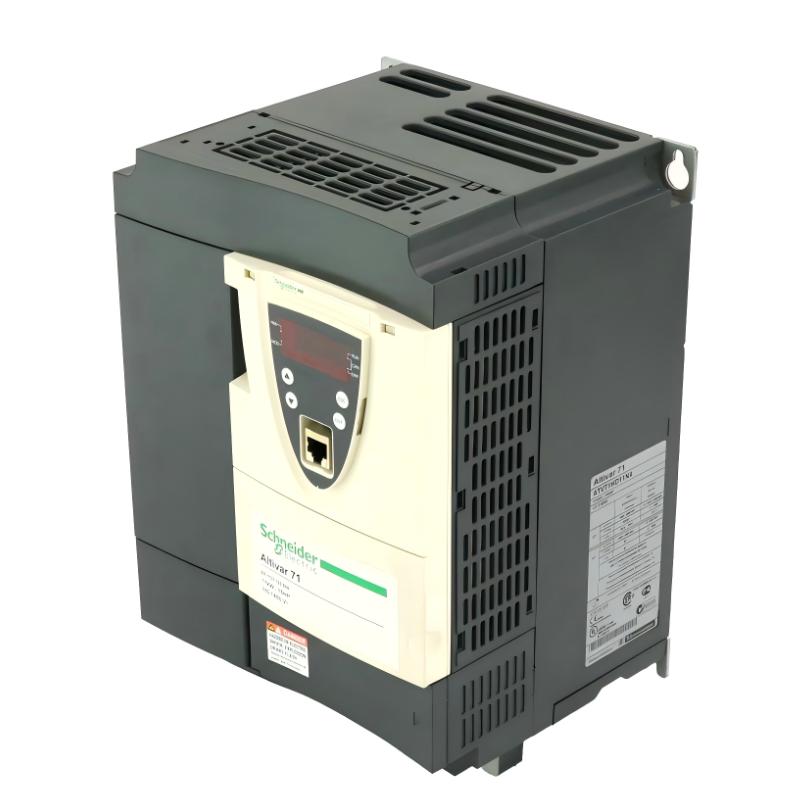
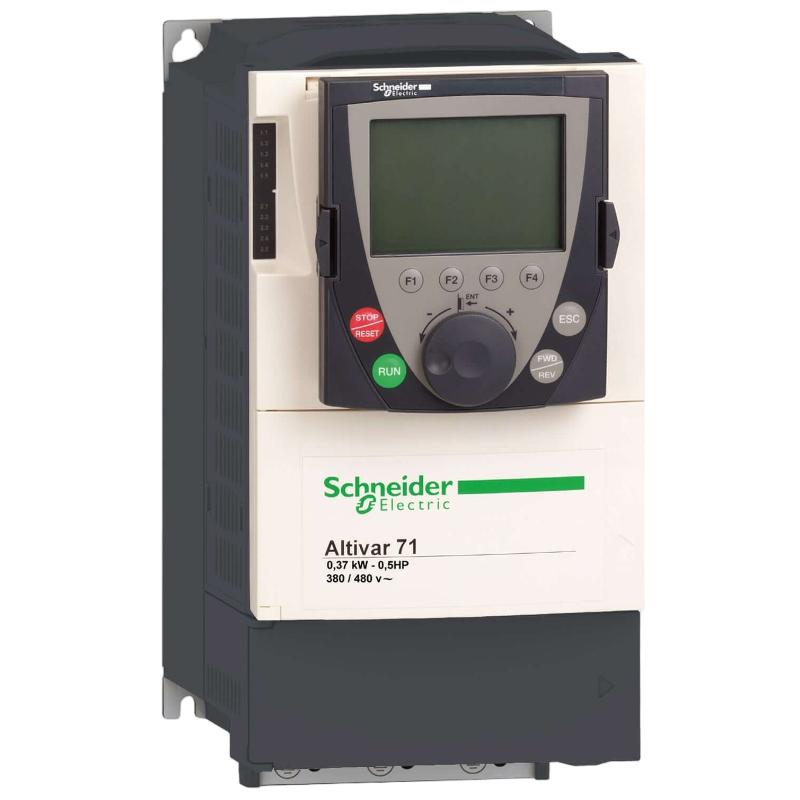
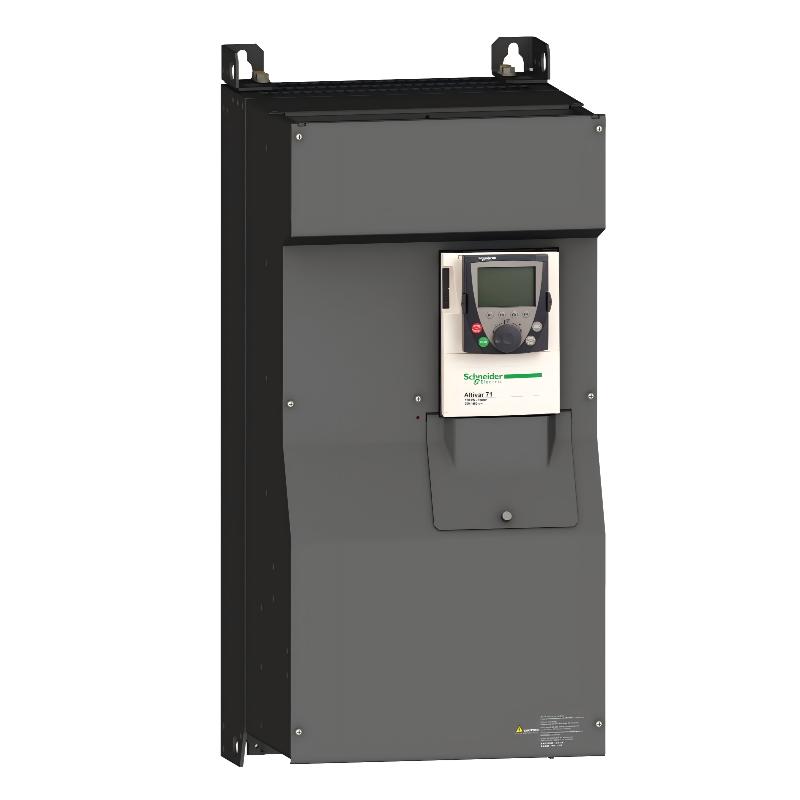
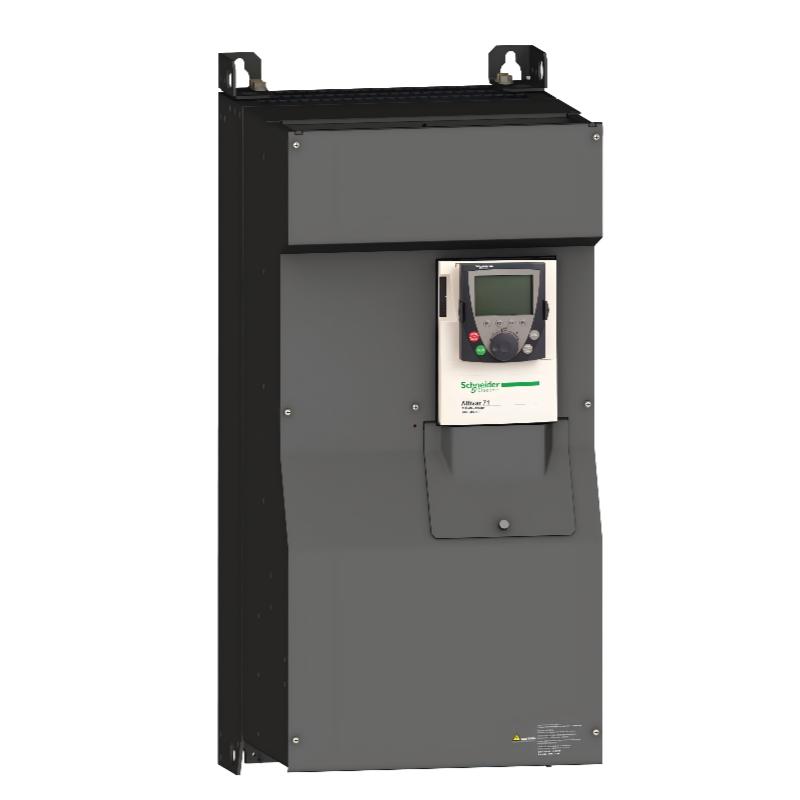
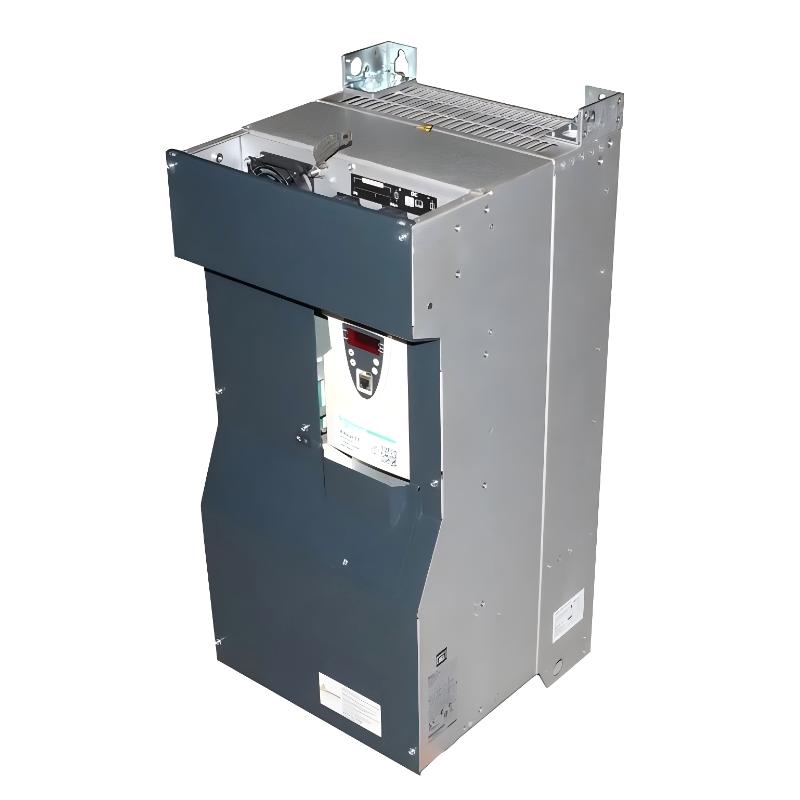
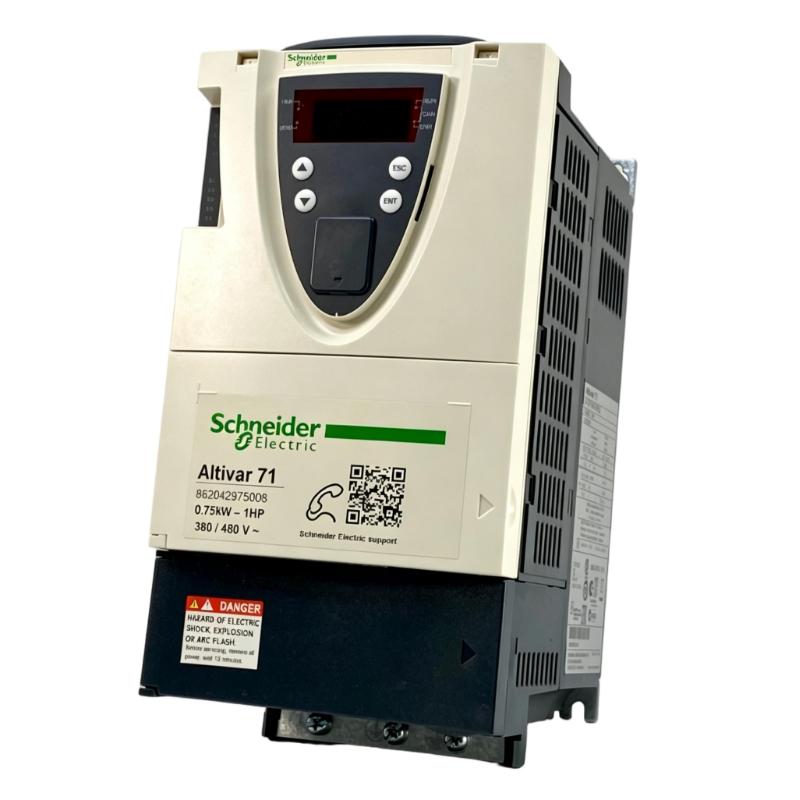
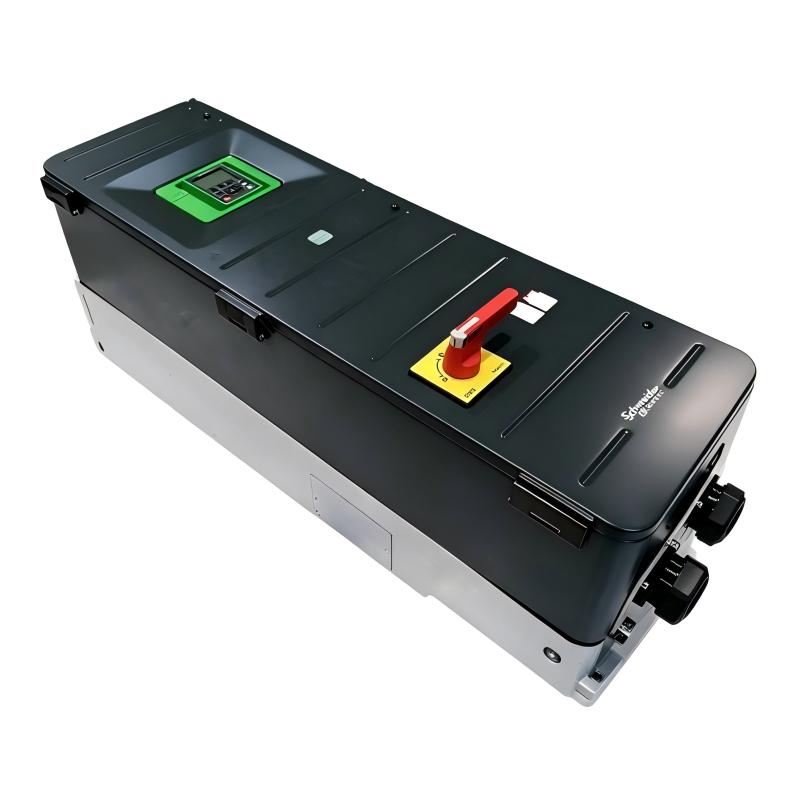
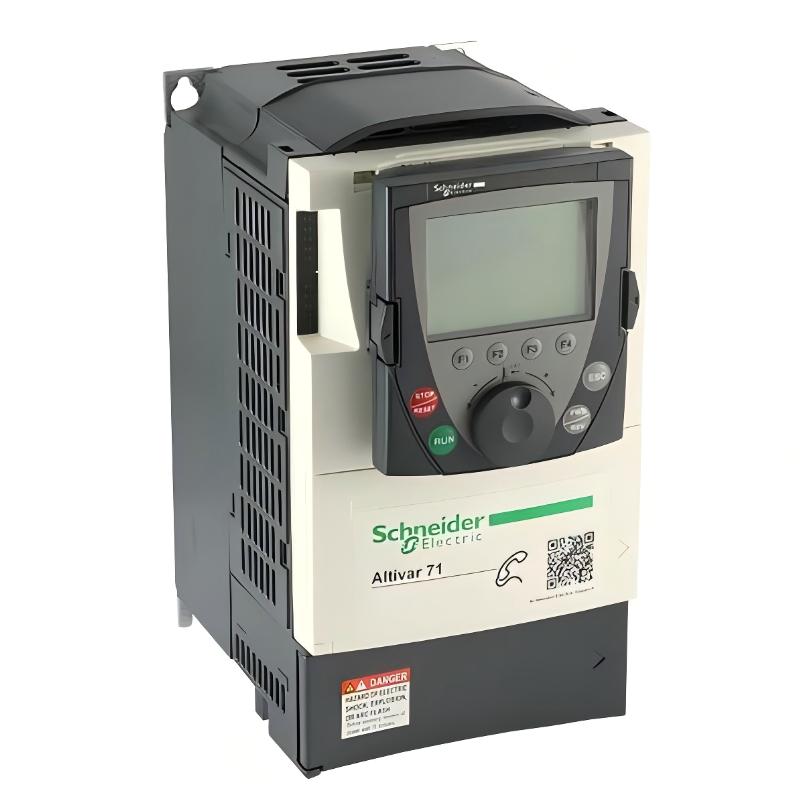
The Schneider Electric ATV71H075N4 Transmission Drive is an industrial variable speed drive designed to provide controlled operation of AC motors in demanding automation and machine-control applications. As part of the Altivar 71 series, the ATV71H075N4 is intended for installations where accurate motor speed control, controlled acceleration and deceleration, torque management, and flexible machine operation are required.
The ATV71 series was developed for applications that demand more than simple fixed-speed motor starting. A variable speed drive can regulate the frequency and voltage supplied to an AC motor, allowing the motor to operate at different speeds according to the requirements of the connected machinery. This makes the technology useful for conveyors, material-handling equipment, pumps, fans, hoists, processing machinery, and many other industrial systems.
The ATV71H075N4 is associated with the 0.75 kW motor power class. For installation and spare-parts planning, the specified physical dimensions are 230 × 130 × 175 mm, and the specified weight is 3 kg.
The drive can also operate as part of a larger industrial automation system. Depending on the actual installation and available interfaces, it can be integrated with PLCs, HMIs, SCADA systems, sensors, contactors, and other control equipment.
Technical Specifications
| Parameter | Specification |
|---|---|
| Manufacturer | Schneider Electric |
| Model | ATV71H075N4 |
| Product Family | Altivar 71 |
| Product Type | Transmission Drive / Variable Speed Drive |
| Motor Power Class | 0.75 kW |
| Primary Function | AC motor speed and torque control |
| Application | Industrial machine and process control |
| Control Functions | Speed regulation, acceleration, deceleration, torque management |
| Automation Integration | PLC, HMI, SCADA and industrial control systems |
| Typical Applications | Conveyors, pumps, fans, material handling and machinery |
| Installation | Industrial cabinet / suitable enclosure |
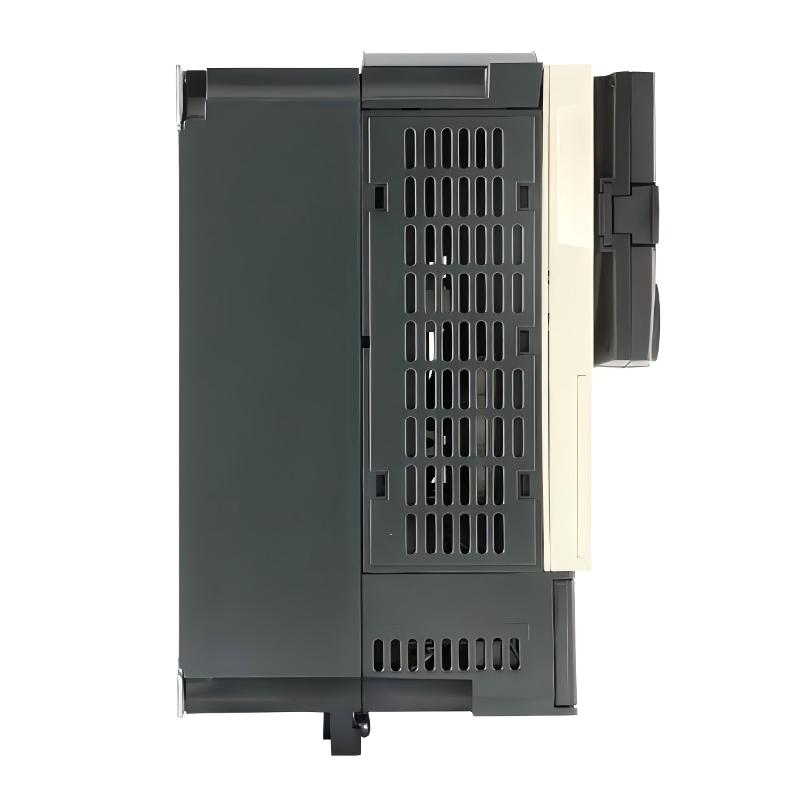
| Cooling | Air-cooled drive architecture |
| Dimensions | 230 × 130 × 175 mm |
| Weight | 3 kg |
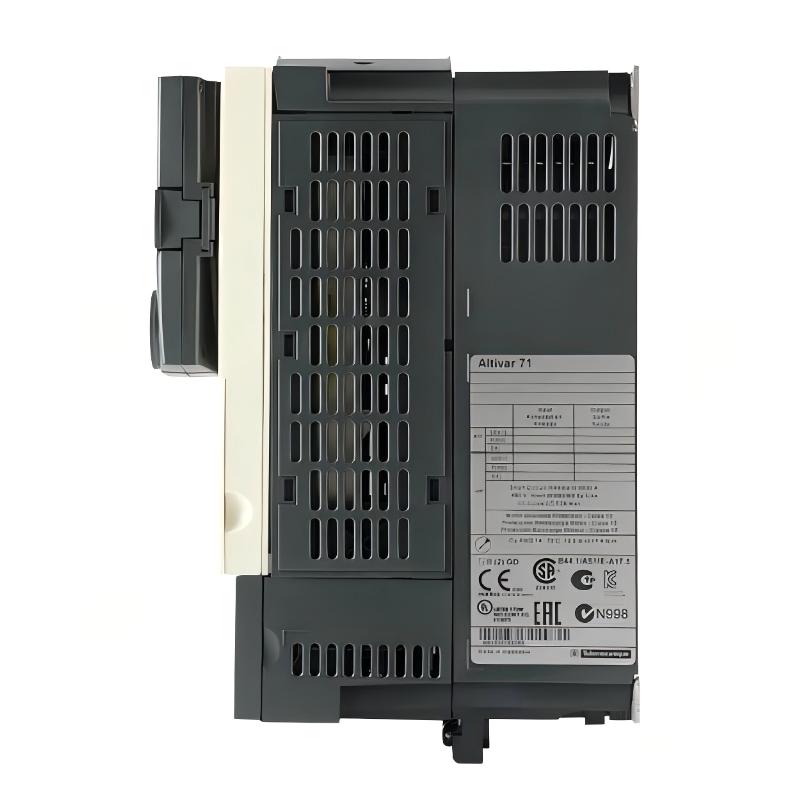
Exact input voltage, output current, overload capability, terminals, communication options, environmental ratings, braking functions, and accessory compatibility should be verified against the actual drive nameplate and applicable configuration documentation.
What Is the Schneider ATV71H075N4?
The ATV71H075N4 is a Schneider Electric Altivar 71 variable speed drive designed to control the operation of a compatible AC motor.
In a conventional motor installation, the motor may be connected directly to a fixed-frequency power source. Its operating speed is therefore largely determined by the supply frequency and motor characteristics.
A variable speed drive provides electronic control between the power source and motor:
Power Supply → ATV71H075N4 → Controlled AC Output → Motor → Mechanical Load
The drive processes the incoming electrical energy and generates a controlled output for the motor. By modifying the output frequency and voltage, it can regulate motor speed and support controlled acceleration and deceleration.
For industrial machinery, this can improve operating flexibility and provide better control over the mechanical process.
Working Principle of the ATV71H075N4
The ATV71H075N4 uses a power-electronic conversion process to regulate motor operation.
AC Input
The drive receives electrical power from the industrial supply.
Rectifier Stage
The incoming AC is converted into DC through the input power stage.
DC-Link Stage
The DC-link section provides an intermediate energy-storage and filtering stage for the inverter.
Inverter Stage
The inverter uses high-speed electronic switching to produce a controlled AC waveform.
Motor Control
The drive adjusts the electrical output supplied to the motor according to the configured control strategy.
Mechanical Output
The motor converts the electrical energy into mechanical power and drives the connected equipment.
This process allows the motor to operate at controlled speeds instead of being restricted to a single fixed operating condition.
Speed and Torque Control
One of the important characteristics of the Altivar 71 platform is its suitability for applications where motor speed and torque need to be controlled as part of machine operation.
For example, a conveyor may need to accelerate gradually to prevent material movement from becoming unstable. A processing machine may require different motor speeds during different production stages.
The drive can provide a control platform for functions such as:
- Adjustable motor speed
- Controlled acceleration
- Controlled deceleration
- Torque management
- Motor start and stop
- Operating-status monitoring
- Fault detection
- Alarm management
- Remote control
- Machine-process coordination
The actual control functions available depend on the drive configuration, application parameters, motor characteristics, and installed options.
Role in Industrial Automation
The ATV71H075N4 can act as a motor-control layer within an industrial automation architecture.
A simplified control structure is:
PLC / Controller → ATV71H075N4 → AC Motor → Mechanical Equipment
The controller can provide commands and references to the drive, while the drive regulates the motor.
Feedback and diagnostic information can also be made available to the automation system through the applicable control interface.
Typical monitored information may include:
- Drive status
- Motor operating condition
- Speed reference
- Actual operating information
- Alarm status
- Fault condition
- Control state
- Maintenance information
This allows the drive to participate in coordinated machine control.
Industrial Applications
Conveyor Systems
Variable speed control is valuable for conveyor systems because acceleration and deceleration can be controlled instead of applying the full motor speed immediately.
Applications may include:
- Material handling
- Packaging lines
- Production conveyors
- Sorting systems
- Transfer equipment
Controlled acceleration can help reduce mechanical stress on belts, couplings, gearboxes, and transported materials.
Material Handling
Material-handling machines often require adjustable motor speed to coordinate movement between different sections of a production line.
The ATV71H075N4 can be considered for suitable motor-driven equipment where controlled speed is required.
Pump Applications
The drive can also be used in suitable pumping systems where adjustable motor speed is beneficial.
Potential applications include:
- Water circulation
- Industrial fluid transfer
- Cooling systems
- Utility pumps
- Process equipment
Fan and Ventilation Equipment
Industrial fans may require different operating speeds depending on airflow requirements. Variable-speed operation provides a flexible method of controlling fan output.
General Machine Automation
The ATV71H075N4 can be incorporated into machinery requiring controlled AC motor operation, provided that the motor and load are properly matched to the drive.
PLC Integration
The ATV71H075N4 can be incorporated into PLC-based control systems.
A typical operating sequence may be:
- Sensors provide process information.
- The PLC evaluates the operating condition.
- The PLC calculates the required motor reference.
- A command or reference is transmitted to the drive.
- The ATV71H075N4 controls the motor.
- The motor drives the machine.
- Process feedback is returned to the controller.
- The PLC adjusts the drive command as required.
This arrangement allows the motor drive to become part of an automated control loop.
When configuring PLC communication, engineers should confirm the actual communication interface, protocol, parameter mapping, addressing, and installed options for the specific system.
HMI and SCADA Integration
An HMI can provide local control and monitoring for the ATV71H075N4.
Operators may be able to monitor:
- Drive operating state
- Motor status
- Speed reference
- Alarm information
- Fault conditions
- Process-related values
In larger installations, SCADA can provide centralized monitoring of multiple drives and machines.
This allows maintenance and operations personnel to identify abnormal conditions more quickly.
Installation Guidelines
Correct installation is important for reliable drive operation.
Before installing the ATV71H075N4, verify:
- Complete drive model
- Motor rating
- Motor electrical characteristics
- Supply requirements
- Load characteristics
- Cabinet dimensions
- Cooling requirements
- Grounding
- EMC requirements
- Control method
- Communication requirements
- Protective devices
The drive should be securely installed in a suitable industrial enclosure.
Cabinet Installation
The specified dimensions of the ATV71H075N4 are:
230 × 130 × 175 mm
The specified weight is:
3 kg
These parameters should be incorporated into the cabinet layout.
Adequate space should be provided for:
- Mounting
- Power wiring
- Motor wiring
- Control wiring
- Communication connections
- Cooling airflow
- Maintenance access
- Drive replacement
The cabinet should also provide suitable protection from dust, moisture, excessive heat, and other environmental conditions.
Thermal Management
Variable speed drives generate heat during normal operation. Appropriate thermal management is therefore important.
The installation should provide sufficient airflow around the drive and should avoid blocking cooling passages.
When multiple power-electronic devices are installed in the same cabinet, engineers should evaluate the combined heat load.
Poor thermal design can contribute to:
- Overtemperature conditions
- Reduced component life
- Unexpected shutdowns
- Increased maintenance requirements
The cabinet’s cooling strategy should be designed according to the complete equipment arrangement.
Power and Motor Wiring
Electrical installation should be performed by qualified personnel.
Before energizing the drive, inspect:
- Incoming power connections
- Motor connections
- Grounding
- Protective devices
- Control wiring
- Communication wiring
- Terminal connections
- Cable routing
Motor cables should be routed appropriately to reduce interference with sensitive control and communication circuits.
All wiring should be checked carefully before startup.
EMC and Cable Routing
The inverter stage of a variable speed drive uses high-frequency switching. Proper EMC practices can therefore be important for the complete installation.
Recommended practices include:
- Proper grounding
- Suitable motor cable selection
- Shielding where required
- Separation of motor and signal cables
- Separation of power and communication wiring
- Proper cabinet bonding
- Avoidance of unnecessary cable loops
The final EMC arrangement should be evaluated according to the actual machine and electrical system.
Commissioning Procedure
A structured commissioning procedure helps reduce startup risks.
Step 1: Verify Drive Identification
Confirm that the installed unit is the correct ATV71H075N4.
Step 2: Inspect the Drive
Check for physical damage, contamination, loose connections, or installation problems.
Step 3: Verify Motor Data
Confirm the motor nameplate information and verify that the motor is suitable for the application.
Step 4: Inspect Wiring
Check power, motor, grounding, control, and communication connections.
Step 5: Configure Motor Parameters
Enter the motor and application information required by the control system.
Step 6: Confirm Command Source
Determine whether the drive will be controlled locally, through terminals, a PLC, or another control system.
Step 7: Perform a Controlled Start
Start the motor under safe conditions.
Step 8: Verify Rotation
Confirm that the motor rotates in the required direction.
Step 9: Test Acceleration and Deceleration
Verify that the motor responds correctly to speed changes.
Step 10: Test the Machine
Operate the connected equipment while monitoring drive status, motor behavior, and process conditions.
Troubleshooting the ATV71H075N4
Drive Does Not Start
Possible causes include:
- Missing input power
- Active fault
- Incorrect command source
- Missing run command
- External interlock
- Incorrect parameter configuration
- Motor-related condition
Check diagnostic information before replacing the drive.
Motor Does Not Rotate
Inspect:
- Motor wiring
- Run command
- Speed reference
- Motor configuration
- Drive status
- External control signals
- Mechanical load
Motor Speed Is Incorrect
Possible causes include:
- Incorrect speed reference
- Incorrect scaling
- Wrong control source
- Parameter configuration
- PLC logic
- Communication configuration
Trace the complete command path from the controller to the drive.
Drive Overheating
Possible causes include:
- Insufficient cabinet ventilation
- High ambient temperature
- Blocked airflow
- Excessive loading
- Cooling-path contamination
- Poor cabinet thermal design
Inspect the installation environment before continuing full-load operation.
Communication Problems
If communication with the controller is lost, check:
- Network cables
- Connectors
- Communication configuration
- Device addressing
- PLC configuration
- Drive parameters
- Network diagnostic information
Preventive Maintenance
Preventive maintenance should include the drive and the complete motor-control system.
Visual Inspection
Look for dust accumulation, overheating, physical damage, or signs of abnormal operation.
Cabinet Inspection
Verify that ventilation openings remain clear and that the cabinet environment is suitable.
Connection Inspection
Check power, motor, grounding, control, and communication connections.
Cooling Inspection
Confirm that airflow is not restricted.
Fault-History Review
Repeated faults should be investigated to identify their underlying causes.
Motor and Mechanical Inspection
Drive problems can sometimes be caused by the connected motor, gearbox, bearings, coupling, or mechanical load.
A complete system inspection is therefore more effective than replacing the drive immediately.
Replacement and Spare-Part Planning
When replacing a Schneider ATV71H075N4, the complete model designation should be verified.
Important information includes:
- Full drive reference
- Motor power
- Supply requirements
- Load type
- Control method
- Communication requirements
- Installed options
- Existing wiring
- Parameter configuration
- Cabinet arrangement
The specified dimensions are 230 × 130 × 175 mm, and the specified weight is 3 kg.
These physical specifications are useful for spare-parts storage, transportation, cabinet planning, and maintenance access.
A visually similar Altivar product should not automatically be considered a replacement.
Compatible System Components
A typical ATV71H075N4 installation can include:
| Component | Typical Function |
|---|---|
| AC Motor | Provides mechanical output |
| PLC | Executes machine control logic |
| HMI | Provides operator control |
| SCADA | Provides centralized monitoring |
| Sensors | Provide process or machine feedback |
| Circuit Protection | Protects electrical circuits |
| Motor Disconnect | Provides maintenance isolation |
| Contactor / Switching Equipment | Supports system isolation and control |
| Industrial Network | Provides control and diagnostic communication |
| Mechanical Load | Conveyor, pump, fan or other driven equipment |
The exact system architecture depends on the application.
Recommended Related Schneider Electric Models
| Model | Product Type | General Application |
|---|---|---|
| ATV71H075N4 | Variable Speed Drive | 0.75 kW industrial motor control |
| ATV71HU15N4 | Variable Speed Drive | Small industrial motor applications |
| ATV71HU22N4 | Variable Speed Drive | Machine and process applications |
| ATV71HU30N4 | Variable Speed Drive | Industrial motor control |
| ATV71HU40N4 | Variable Speed Drive | Pumps, fans and machinery |
| ATV71HU55N4 | Variable Speed Drive | Medium-power industrial applications |
| ATV71HU75N4 | Variable Speed Drive | Larger machine applications |
| ATV71HD11N4 | Variable Speed Drive | Higher-power industrial equipment |
These models are related Altivar 71 products, but they should not be treated as direct substitutes without checking electrical ratings, physical configuration, application requirements, options, and control-system compatibility.
Engineering Considerations
Motor Selection
The motor should be correctly matched to the drive according to electrical characteristics and application requirements.
Load Profile
Engineers should determine whether the load requires constant speed, variable speed, variable torque, frequent acceleration, or other operating conditions.
Mechanical System
The condition of bearings, couplings, gearboxes, belts, chains, and other mechanical components should be considered when commissioning a variable speed drive.
Cabinet Design
The specified 230 × 130 × 175 mm dimensions should be incorporated into the enclosure layout.
Thermal Conditions
Cabinet temperature and airflow should be evaluated together with the heat generated by other installed equipment.
Automation Integration
The control architecture should clearly define how the PLC, HMI, SCADA, sensors, and drive exchange commands and status information.
Maintenance Access
Sufficient space should be provided for inspection, testing, wiring checks, and future replacement.
Key Advantages
- Industrial AC motor speed control
- Associated with the 0.75 kW motor power class
- Part of the Schneider Electric Altivar 71 family
- Adjustable motor speed
- Controlled acceleration and deceleration
- Suitable for machine automation
- Useful for conveyors and material-handling equipment
- Suitable for pumps and fans
- Supports integration with PLC-based systems
- Can be incorporated into HMI and SCADA architectures
- Provides drive operating and diagnostic information
- Compact installation format
- Specified dimensions of 230 × 130 × 175 mm
- Specified weight of 3 kg
Technical FAQs
What is the Schneider ATV71H075N4?
The Schneider ATV71H075N4 is an Altivar 71 Variable Speed Drive designed to control suitable AC motors in industrial machine and process applications.
What motor power class is associated with the ATV71H075N4?
The model is associated with the 0.75 kW motor power class.
What are the dimensions of the ATV71H075N4?
The specified dimensions are 230 × 130 × 175 mm.
How much does the ATV71H075N4 weigh?
The specified weight is 3 kg.
What applications can use the ATV71H075N4?
Typical applications include conveyors, material-handling systems, pumps, fans, ventilation equipment, and general industrial machinery requiring variable-speed AC motor control.
Can the ATV71H075N4 be controlled by a PLC?
Yes. The drive can be integrated into PLC-based automation systems using an appropriate control and communication architecture.
Can the ATV71H075N4 be monitored through an HMI?
Yes. An HMI can be used as part of a larger control system to display drive status, operating information, alarms, and other available data.
Why use a variable speed drive for a conveyor?
A VSD allows controlled acceleration, deceleration, and operating speed. This can improve process coordination and reduce mechanical stress during starting and stopping.
What should be checked before replacing the ATV71H075N4?
The complete model designation, motor rating, supply requirements, application, control configuration, communication requirements, installed options, wiring, and cabinet dimensions should be verified.
Is another Altivar 71 model automatically interchangeable with the ATV71H075N4?
No. Different Altivar 71 models can have different electrical ratings, dimensions, options, and application requirements. Compatibility must be confirmed before substitution.
Conclusion
The Schneider Electric ATV71H075N4 Transmission Drive is an industrial variable speed drive from the Altivar 71 series, designed to provide controlled operation of suitable AC motors in machine automation and process applications.
Associated with the 0.75 kW motor power class, the ATV71H075N4 can be considered for conveyors, material-handling equipment, pumps, fans, ventilation systems, and other machinery where adjustable motor speed and controlled acceleration or deceleration are required.
The specified physical dimensions are 230 × 130 × 175 mm, with a specified weight of 3 kg. These parameters are important for cabinet design, equipment transportation, spare-parts management, maintenance access, and replacement planning.
By placing electronically controlled motor operation between the industrial power supply and the mechanical load, the ATV71H075N4 can provide greater operating flexibility than fixed-speed motor control. It can also participate in larger automation architectures involving PLCs, HMIs, SCADA systems, sensors, and other industrial control equipment.
For installation or replacement projects, the complete Schneider ATV71H075N4 model identification should be verified together with motor characteristics, load requirements, electrical configuration, control architecture, and installation conditions before commissioning.