
NewsNEWCENTER
Featured products
Contact Us
Schneider Electric Advances Software-Defined Automation for the Next Generation of Smart Manufacturing
2026-09-04Schneider Electric is accelerating the transition toward open, software-defined industrial automation as manufacturers face growing pressure to modernize legacy control systems, improve production flexibility, and prepare factories for industrial AI.
In 2026, the company has continued to emphasize the convergence of software-defined automation, digital intelligence, electrification, edge computing, and industrial AI. Its recent demonstrations and technology initiatives highlight a broader change in industrial control architecture: automation software is increasingly being separated from dedicated hardware, allowing manufacturers to build more flexible and scalable control environments.
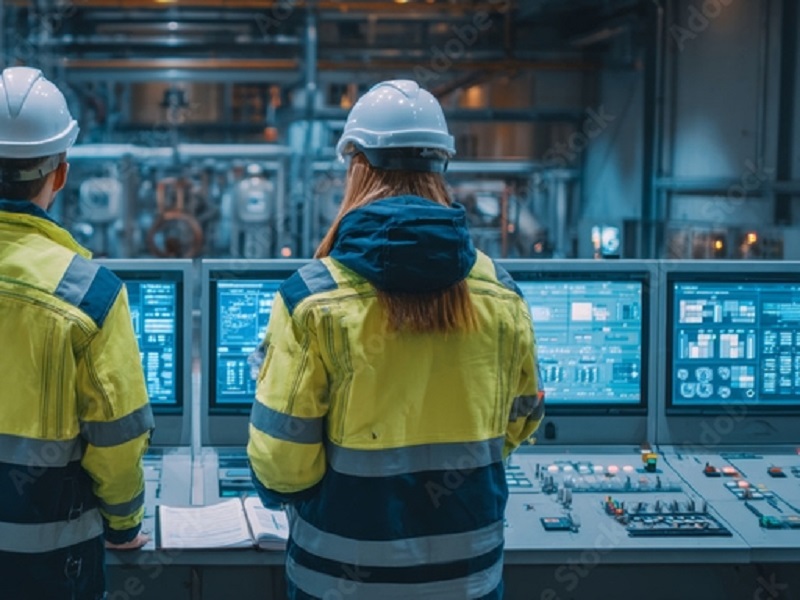
Software-Defined Automation Becomes a Key Industrial Trend
Traditional automation architectures generally associate control software with specific PLCs, PACs, DCS controllers, and other dedicated hardware. Although this approach provides reliable deterministic control, it can make modernization difficult when hardware becomes obsolete or production requirements change.
Schneider Electric’s EcoStruxure Automation Expert takes a different approach by supporting a software-centric automation architecture. Its platform is designed around hardware independence, distributed intelligence, reusable automation assets, and integration between operational technology and information technology.
This approach allows automation applications to be deployed across different computing and control environments rather than being permanently tied to a single hardware configuration. Schneider Electric also describes Soft dPAC technology as a containerized runtime capable of operating independently from conventional dedicated PLC hardware.
For manufacturers, this can provide greater flexibility when expanding production lines, replacing obsolete equipment, or introducing new digital technologies.
EcoStruxure Automation Expert Supports Flexible Control Architectures
A major component of Schneider Electric’s software-defined automation strategy is EcoStruxure Automation Expert.
The platform supports application-centric engineering and can integrate automation software with different physical or virtual control environments. Current capabilities include support for Soft dPAC and multiple Modicon-based controller options, providing different deployment possibilities for industrial applications.
The underlying philosophy is particularly relevant to modern factories where automation systems need to exchange information with higher-level software platforms.
Instead of treating the PLC as an isolated controller, the automation architecture can become part of a broader digital ecosystem involving:
- PLC and PAC control
- Distributed control
- HMI and SCADA
- Industrial edge computing
- Industrial Ethernet
- OPC UA communication
- IIoT devices
- Data historians
- Digital twins
- Manufacturing software
- Artificial intelligence and analytics
This architecture can help organizations create a continuous flow of operational data from machines and processes to engineering, monitoring, optimization, and business applications.
Modernization Without Replacing Everything at Once
One of the biggest challenges for industrial companies is brownfield modernization.
Factories may contain PLCs, DCS systems, drives, remote I/O, instrumentation, and communication networks that have been operating for many years. Completely replacing these systems can require significant capital investment and introduce production risks.
Schneider Electric’s recent industrial automation initiatives place strong emphasis on incremental modernization.
In June 2026, Schneider Electric introduced an Industrial Automation Modernization as a Service offering with HPE. The solution combines EcoStruxure Automation Expert with HPE hybrid-cloud infrastructure and is designed to help industrial operators modernize existing automation environments while continuing to operate existing PLC and DCS systems.
This is important because modernization does not necessarily have to mean a complete control-system replacement.
A phased strategy can allow companies to introduce new software-defined control functions while maintaining critical legacy equipment. This can reduce the technical and operational barriers associated with large automation migration projects.
Industrial AI Needs a Strong Automation Foundation
Artificial intelligence is becoming an increasingly important topic in manufacturing, but AI applications require reliable industrial data.
Machine-learning and AI systems can only provide meaningful results when production data is available with appropriate quality, context, timing, and connectivity.
This makes the automation layer increasingly important.
Schneider Electric’s current strategy connects software-defined automation with industrial AI and digital intelligence. At Automate 2026, the company demonstrated technologies combining open automation with digital twins, edge I/O, motion systems, drives, and AI-oriented industrial applications.
The practical value is not simply adding AI to an existing PLC system. Instead, the objective is to establish an architecture where automation data can be accessed and used by higher-level analytical applications.
Potential applications include:
- Predictive maintenance
- Production optimization
- Energy optimization
- Quality monitoring
- Asset performance management
- Process anomaly detection
- Production scheduling
- Digital commissioning
- Operational intelligence
Open Architecture and IT/OT Convergence
Another important aspect of Schneider Electric’s software-defined automation strategy is the convergence of IT and OT.
Industrial automation traditionally operated within specialized OT environments, while enterprise applications were managed by IT departments. Modern smart factories increasingly require these two environments to communicate securely.
Software-defined automation can provide a bridge between them.
Technologies such as OPC UA, MQTT, industrial Ethernet, containerized applications, edge computing, and hybrid-cloud infrastructure can help connect control systems with modern digital platforms.
EcoStruxure Automation Expert is built around an asset-oriented engineering philosophy and supports integration with industrial software environments. Schneider Electric also highlights the use of IEC 61499-based event-driven automation concepts in its software-defined architecture.
For system integrators and automation engineers, this creates opportunities to develop reusable control applications instead of rebuilding entire projects from the beginning.
Benefits for Machine Builders and System Integrators
Software-defined automation is also relevant to OEMs and system integrators.
Machine builders often need to deliver customized systems for different customers while maintaining a common engineering foundation. Reusable software components can reduce engineering effort and simplify modifications.
An application-centric approach can allow engineers to develop reusable control objects for functions such as:
- Motors
- Pumps
- Valves
- Conveyors
- Robots
- Process units
- Packaging equipment
- Material-handling systems
These software assets can then be adapted to different hardware configurations.
This approach is particularly attractive for manufacturers producing multiple machine variants because the control application can become a reusable engineering asset rather than a project-specific program.
Energy Management Becomes Part of Automation
Another important development is the growing relationship between industrial automation and energy management.
Factories are under increasing pressure to reduce energy consumption while maintaining production output. This requires automation systems to monitor not only production parameters but also electrical and energy-related information.
Schneider Electric’s strategy combines automation and electrification within a broader industrial architecture. This creates opportunities to connect machine control, electrical distribution, energy monitoring, and production data.
For smart manufacturing environments, this can support applications such as:
- Real-time energy monitoring
- Peak-load management
- Motor efficiency optimization
- Production-based energy analysis
- Energy consumption benchmarking
- Carbon-reduction initiatives
The result is a shift from viewing automation purely as a production-control technology toward treating it as part of an integrated industrial operating system.
What This Means for the Future of Industrial Automation
Schneider Electric’s current direction reflects a broader transformation taking place across the automation industry.
The future industrial control system is likely to be more modular, software-centric, connected, and data-driven. Dedicated PLC and DCS hardware will remain important for deterministic control, safety, and industrial reliability, but software will increasingly determine how automation systems are configured, expanded, monitored, and optimized.
For manufacturers planning modernization projects, the key question is therefore no longer simply which PLC should replace an existing PLC.
Instead, companies increasingly need to consider:
How flexible should the automation architecture be over its entire lifecycle?
That question includes hardware availability, cybersecurity, software portability, engineering efficiency, data connectivity, AI integration, energy management, and future expansion.
Schneider Electric’s investment in open, software-defined automation demonstrates how industrial control is moving toward this new architecture. With EcoStruxure Automation Expert, Soft dPAC technology, edge computing, digital intelligence, and integration with broader industrial software environments, the company is positioning software-defined automation as an important foundation for next-generation smart factories.
Conclusion
The development of software-defined automation represents a significant evolution in industrial control engineering. Schneider Electric is placing this concept at the center of its automation strategy, combining flexible control software with industrial data, edge computing, AI, digital twins, electrification, and open integration.
For factories operating legacy PLC and DCS infrastructure, the biggest advantage may be the ability to modernize progressively rather than replacing everything at once. For new smart factories, software-centric automation can provide a foundation for greater flexibility and long-term scalability.
As industrial companies continue adopting AI, connected equipment, and intelligent energy management, the automation architecture itself will become increasingly important. Schneider Electric’s continued development in this area suggests that open and software-defined automation will be a major direction for the next generation of industrial control systems.