
NewsNEWCENTER
Featured products
Contact Us
Ingersoll Rand Accelerates Smart Compressed Air Management with Digitalization and Predictive Technologies
2026-09-04Ingersoll Rand is continuing to transform industrial compressed air management through connected equipment, real-time monitoring, advanced analytics, and intelligent system optimization. As manufacturers face rising energy costs and increasing pressure to improve equipment reliability, compressed air is becoming an increasingly important part of the broader industrial automation and energy-management strategy.
The company’s latest developments demonstrate a clear shift from conventional compressor maintenance toward data-driven, predictive, and system-level management.
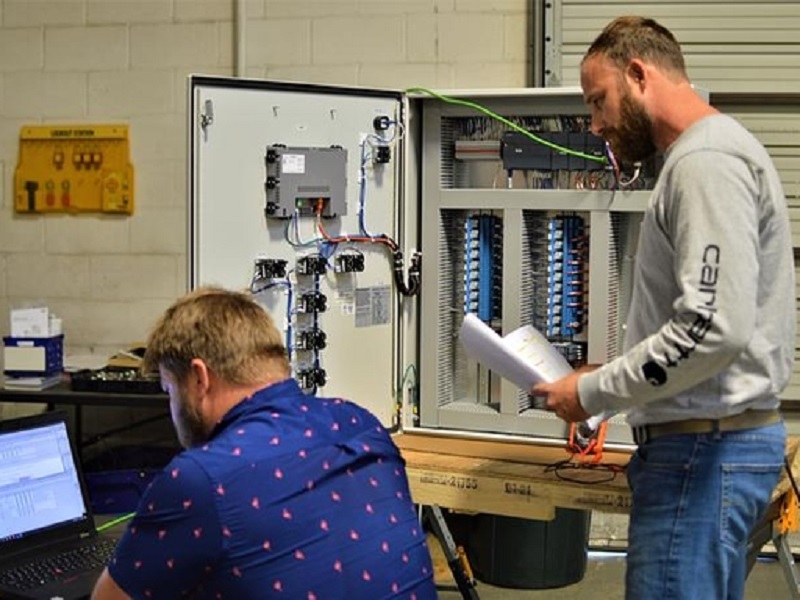
Compressed Air Is Becoming a Strategic Industrial Asset
Compressed air is widely used in manufacturing for pneumatic tools, automation equipment, packaging machinery, material handling, instrumentation, and process applications. However, maintaining an efficient compressed air system can be challenging because performance depends on much more than the compressor itself.
Air leaks, excessive pressure, inefficient compressor sequencing, changing production demand, inadequate maintenance, and pressure losses can all increase operating costs.
Ingersoll Rand’s recent industry strategy places greater emphasis on treating compressed air as an integrated system rather than simply a collection of individual machines. This approach is particularly relevant to factories where energy efficiency and production continuity are closely connected.
Digital Monitoring Moves Maintenance from Reactive to Predictive
A major part of this transformation is the use of connected monitoring technology.
Ingersoll Rand’s Helix Connected Platform provides real-time operating information from connected compressors and can deliver alerts, maintenance notifications, and equipment performance insights through a cloud-based environment. This allows maintenance teams to monitor equipment without relying entirely on periodic physical inspections.
Instead of waiting for a compressor to experience a serious fault, engineers can use operational data to identify unusual conditions earlier.
Typical information that can support predictive maintenance includes:
- Compressor operating status
- Pressure conditions
- Temperature trends
- Equipment utilization
- Maintenance requirements
- Alarm conditions
- Energy consumption
- Operating history
For large manufacturing facilities, centralized visibility can make it easier to identify equipment that requires attention before an unexpected failure affects production.
System Performance Manager Expands Intelligent Optimization
Ingersoll Rand is also expanding its digital approach through System Performance Manager, powered by Ecoplant.
The platform moves beyond individual compressor monitoring by analyzing compressor-room and system-level information. Its capabilities include real-time insights, proactive alerts, performance analysis, and optimization functions.
The platform is available in different levels of functionality, including monitoring, broader compressor-room visibility, and active optimization. The optimization approach can adjust compressor operation according to changing compressed-air demand, helping reduce inefficient unloaded operation and improve system stability.
This is an important development because industrial compressed air demand is rarely constant.
Production schedules change throughout the day, individual machines start and stop, and different manufacturing processes consume different quantities of air. Operating compressors at fixed settings under these conditions can result in unnecessary energy consumption.
Intelligent control can instead respond to actual system demand.
Energy Efficiency Becomes a Core Automation Objective
Energy efficiency is increasingly becoming a central concern for industrial automation departments.
Compressed air systems can consume substantial amounts of electrical energy, making even relatively small improvements in system operation potentially valuable over long operating periods.
Ingersoll Rand’s current approach focuses on identifying sources of waste such as:
- Air leaks
- Excessive system pressure
- Inefficient compressor sequencing
- Unnecessary unloaded operation
- Poorly matched compressor capacity
- Pressure losses
- Inefficient equipment operation
System-level analysis can help engineers understand where energy is being consumed and where improvements may be possible.
The company’s 2026 industry materials also emphasize that compressed air should increasingly be considered a strategic business issue involving operating cost, resilience, productivity, and sustainability rather than simply a utility expense.
Artificial Intelligence Enters Industrial Equipment Management
Artificial intelligence is another important element of the industrial equipment transformation.
Traditional industrial equipment generates large quantities of operational data, but collecting data alone does not automatically create value. The challenge is turning that information into useful decisions.
AI and advanced analytics can help identify patterns that may not be immediately obvious through conventional monitoring.
Potential applications include:
- Predictive maintenance
- Abnormal-condition detection
- Energy optimization
- Equipment health analysis
- Compressor sequencing
- Demand forecasting
- Maintenance planning
- Operational recommendations
Ingersoll Rand has described AI as an opportunity to make historically mechanical industrial assets more connected and intelligent, particularly in areas such as preventive maintenance, predictive models, and equipment efficiency.
This direction aligns closely with the broader development of Industry 4.0.
Connected Compressors Support Smart Factory Architecture
For modern manufacturing plants, compressed air equipment does not have to operate as an isolated utility system.
Connected compressors can become another data source within the factory’s digital architecture.
Operational information can potentially be integrated with:
PLC → SCADA → Industrial Network → Edge Computing → Cloud Platform → Analytics → Maintenance Decisions
This creates a more complete picture of factory operations.
For example, if a production line experiences increasing pneumatic demand, compressor data can help maintenance and engineering teams determine whether the problem is caused by increased production requirements, an air leak, pressure instability, or insufficient compressor capacity.
This type of visibility can shorten troubleshooting time and reduce unnecessary equipment replacement.
Real-World Monitoring Can Reveal Hidden Problems
One of the strongest advantages of digital monitoring is its ability to identify problems that may initially be misdiagnosed.
In one Ingersoll Rand case, connected monitoring data helped determine that increased production demand had exceeded the existing compressed-air capacity rather than an assumed downstream leak being the primary problem.
In another case, monitoring identified excessive unloaded compressor operation associated with changed system-controller settings. Correcting the settings restored more appropriate system operation.
These examples demonstrate why industrial digitalization should not be viewed simply as installing sensors.
The real value comes from combining data collection, engineering analysis, automated alerts, and practical corrective action.
Oil-Free Compression and High-Purity Applications
Digitalization is also developing alongside advances in compressor technology.
Industries such as electronics, pharmaceuticals, food and beverage, and other precision manufacturing sectors can require high-quality compressed air. Oil-free compressor technologies are therefore becoming increasingly important for applications where contamination must be tightly controlled.
In May 2026, Ingersoll Rand and Garrett Motion announced a multi-year partnership focused on next-generation oil-free centrifugal compressor technology for industrial applications, including food and beverage and life sciences. The collaboration is aimed at improving efficiency, reliability, and sustainability in industrial compression systems.
This illustrates how mechanical compressor technology and digital optimization are developing together.
What This Means for Industrial Automation Engineers
The evolution of compressed air management creates new responsibilities and opportunities for automation engineers.
Previously, compressor rooms could be treated mainly as supporting utilities. Today, their operating data can contribute to overall production optimization.
Automation teams may increasingly need to consider:
- Industrial communication
- Sensor integration
- Remote monitoring
- Data acquisition
- Edge connectivity
- Alarm management
- Predictive maintenance
- Energy analysis
- Cybersecurity
- Integration with plant-level automation systems
This makes compressed air another important component of the modern industrial IoT architecture.
The Future of Intelligent Compressed Air
Ingersoll Rand’s current direction reflects a larger transformation in industrial equipment.
The future of compressed air management is moving toward systems that can measure, analyze, predict, and optimize rather than simply generate air.
Connected monitoring provides visibility. Advanced analytics helps identify problems. Predictive technologies support maintenance planning. Intelligent control can respond to changing demand. Together, these capabilities can improve equipment reliability while supporting energy-efficiency objectives.
For manufacturers, the key benefit is not digitalization for its own sake. The goal is better production continuity, lower operating costs, improved energy performance, and greater control over critical industrial assets.
Conclusion
Ingersoll Rand is positioning compressed air technology as an increasingly intelligent part of the modern factory. Through connected monitoring, cloud-based analytics, predictive maintenance, system optimization, and ongoing compressor technology development, the company is helping move industrial compressed air from a traditional utility function toward a data-driven automation asset.
As factories continue adopting Industry 4.0 technologies, compressed air systems will increasingly be expected to communicate with digital platforms, provide real-time performance information, and respond intelligently to production requirements.
For industrial automation professionals, this represents an important trend: smart manufacturing is not limited to PLCs, robots, drives, or production machines. Supporting systems such as compressed air are becoming connected, measurable, and increasingly intelligent as well.