
NewsNEWCENTER
Featured products
Contact Us
Schneider Electric Industrial Automation: How Modicon PLCs, Altivar Drives and Industrial Networks Support Flexible Manufacturing
2026-08-25Introduction
Industrial manufacturers are under constant pressure to produce more efficiently while maintaining equipment reliability.
At the same time, production requirements are becoming more flexible.
Modern factories may need to manufacture multiple products on the same production line, change recipes quickly and integrate machines with higher-level production systems.
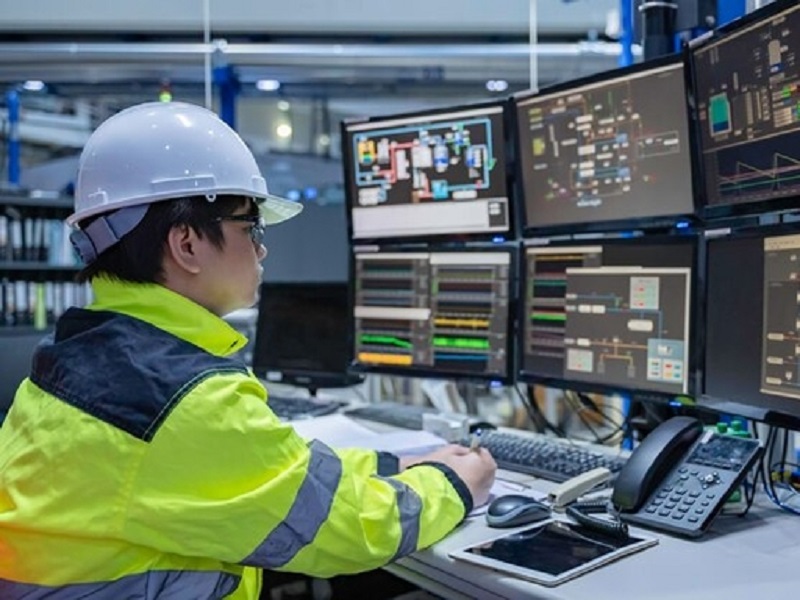
This requires an automation architecture that can provide:
- Reliable control
- Flexible programming
- Fast communication
- Motor management
- Motion control
- Operator visualization
- Industrial data access
Schneider Electric has developed a broad industrial automation portfolio covering PLCs, PACs, variable speed drives, HMIs, industrial communication, motion control and machine safety.
Among these technologies, Modicon controllers and Altivar drives are particularly relevant to machine and process automation.
The Role of a PLC in Schneider Electric Automation
A PLC is responsible for executing the control logic of an automated machine.
The controller receives information from:
- Sensors
- Switches
- Encoders
- Analog instruments
- Other controllers
It processes this information and sends commands to:
- Motors
- Valves
- Contactors
- Drives
- Actuators
This process occurs continuously.
The PLC therefore becomes the central decision-making component of many automated machines.
Modicon PLC Architecture
Modicon PLCs are used across different levels of industrial automation.
Depending on the machine and application, engineers may require:
- Compact controllers
- Modular controllers
- High-performance PLCs
- PAC-based systems
- Distributed I/O
The correct controller depends on application complexity.
Important selection factors include:
- I/O quantity
- Processing requirements
- Communication interfaces
- Motion requirements
- Memory
- Expansion capability
Distributed I/O
Large machines can contain sensors and actuators distributed across a significant physical area.
Connecting every field device directly to a central cabinet can create substantial wiring requirements.
Distributed I/O provides another approach.
An I/O station can be installed near the equipment.
The local station collects field signals and communicates with the PLC over an industrial network.
This can simplify machine wiring and improve modularity.
Schneider Electric Drives
Motor control is another major part of industrial automation.
Altivar variable speed drives can be used in applications involving:
- Pumps
- Fans
- Conveyors
- Compressors
- Material handling
- Machine equipment
A drive can adjust motor speed according to the control command.
This provides more flexibility than simple motor start-and-stop operation.
Why Variable Speed Control Matters
Consider a pump that does not always need maximum flow.
Operating the motor continuously at full speed may not be the most efficient solution.
A variable speed drive can adjust motor speed based on process demand.
The PLC can monitor:
- Pressure
- Flow
- Level
and adjust the drive accordingly.
This creates a feedback-based control strategy.
PLC and Drive Integration
The relationship between the PLC and drive is important.
The PLC can send:
- Start commands
- Stop commands
- Speed references
- Operating modes
- Reset commands
The drive can return:
- Actual speed
- Current
- Operating status
- Fault information
This two-way communication allows the automation system to coordinate motor operation more effectively.
Motion Control
Some machines require more than variable speed.
They may need precise positioning.
Examples include:
- Packaging machines
- Labeling systems
- Cutting machines
- Pick-and-place systems
- Material handling equipment
Motion control requires accurate management of:
- Position
- Velocity
- Acceleration
- Deceleration
- Synchronization
Schneider Electric automation architectures can integrate motion functions into machine control systems.
HMI and Operator Control
Operators need to interact with machines.
An HMI can provide:
- Machine status
- Alarm information
- Production parameters
- Manual controls
- Recipe selection
- Maintenance information
A good HMI should make important information easy to understand.
Operators should be able to quickly identify whether a machine is:
- Ready
- Running
- Stopped
- Waiting
- In fault
Industrial Communication
Modern machines contain many intelligent devices.
Communication may be required between:
- PLCs
- Drives
- Remote I/O
- HMIs
- Safety equipment
- Industrial computers
Industrial Ethernet and other industrial communication technologies can provide the necessary connectivity.
Communication is increasingly important because modern automation is moving away from isolated control components.
Machine Safety
Safety must be considered during machine design.
Automation systems may need to monitor:
- Emergency stops
- Guard switches
- Safety sensors
- Light curtains
- Safe motion conditions
The appropriate safety architecture depends on the machine risk assessment.
Safety functions should be designed together with the normal control system rather than treated as an afterthought.
Schneider Electric Automation for OEM Machine Builders
Original equipment manufacturers often build multiple machines with similar functions.
A modular automation architecture can help machine builders reuse engineering concepts.
For example, a standardized motor module can include:
- Motor control
- Start/stop logic
- Fault handling
- Status information
The same function can then be adapted to different machines.
This reduces repetitive engineering work.
Recipe-Based Manufacturing
Flexible manufacturing often requires multiple products.
Instead of modifying PLC code for each product, operators can select different recipes.
A recipe can contain:
- Speed
- Position
- Timing
- Temperature
- Quantity
- Process limits
The PLC loads the selected parameters.
This allows the same machine to produce different products.
Schneider Electric and Process Control
Automation is not limited to discrete manufacturing.
Process applications may require continuous control of:
- Flow
- Pressure
- Temperature
- Level
- Chemical concentration
PLC and PAC architectures can be used for many process-control applications.
The controller continuously compares actual process conditions with target values.
It then adjusts equipment to maintain stable operation.
Diagnostics
Modern controllers and drives provide diagnostic information.
When a machine stops, engineers may be able to identify whether the problem is related to:
- PLC logic
- I/O
- Drive
- Motor
- Communication
- Field sensor
This is much more efficient than replacing components randomly.
Preventive and Predictive Maintenance
Automation data can also support maintenance.
For example, engineers can monitor:
- Motor operating hours
- Drive alarms
- Current
- Temperature
- Cycle counts
Abnormal changes may indicate that equipment requires inspection.
This creates a connection between automation and maintenance management.
Energy Management
Industrial motors consume significant amounts of electrical energy.
Automation systems can monitor operating conditions and identify inefficient behavior.
Potential improvement areas include:
- Pump speed
- Fan operation
- Conveyor operation
- Motor loading
- Standby equipment
Drive-based control can also allow equipment to operate closer to actual process demand.
Cybersecurity
As automation systems become more connected, cybersecurity becomes increasingly important.
A Schneider Electric industrial network should be designed with appropriate consideration for:
- User access
- Network segmentation
- Remote access
- Controller protection
- Backup management
- Engineering workstation security
Connectivity should improve productivity without creating unnecessary exposure.
Modernization of Existing Automation Systems
Many factories operate older PLCs and drives.
Replacing an entire automation system at once can be difficult.
A phased modernization strategy may involve:
- Assessing the existing system.
- Identifying obsolete components.
- Replacing critical hardware.
- Upgrading communication.
- Improving HMI functions.
- Adding diagnostics.
- Gradually introducing higher-level digital systems.
This approach can reduce production disruption.
The Future of Schneider Electric Automation
Industrial automation is increasingly moving toward integrated architectures.
A future machine may combine:
Modicon Controller + Distributed I/O + Altivar Drive + HMI + Industrial Network + Safety + Data Analytics
Each component performs a specific role.
Together, they create a complete automation platform.
Conclusion
Schneider Electric industrial automation technologies provide a broad foundation for modern machine and process control.
Modicon controllers provide programmable control.
Distributed I/O simplifies field connectivity.
Altivar drives regulate motor operation.
Motion systems support precise machine movement.
HMIs provide operator interaction.
Industrial networks connect the different automation components.
For manufacturers and machine builders, the greatest value comes from integrating these technologies into a coherent system.
As production becomes more flexible and connected, Schneider Electric automation architectures can help manufacturers improve machine control, energy management, diagnostics and long-term maintainability.