

ProductPRODUCT
Featured products
Contact Us
- Xiamen, China
- New & In Stock
- T/T, PayPal, Western Union
- 1 Year
- 1-3 Working Days
- DHL, UPS, TNT, FedEx and EMS.
- 24-Hour Service
- COO
- 2
Our advantage

Global Logistics
We have a 10-year logistics and express cooperation agreement, so our products can be shipped to any place in the world.

Brand new and original
Our products are imported in bulk from the place of origin. Because of the cooperative relationship, our products are all original and 100% new.

24-hour service
We provide 7*24 hours service to our customers. We will be there whenever you need us.

Price advantage
All our products are priced very favorably because we have our own warehouse and supply.
| Company Information | |||
| [email protected] | |||
| Mobile | +8615980777398 | ||
| +8615980777398 | |||
| 15980777398 |
Siemens Eigen Engineering Agent Gains Recognition in Industrial AI Engineering
Artificial intelligence is becoming an increasingly important part of industrial automation, particularly in engineering design, PLC programming, system configuration, and manufacturing operations. As industrial systems grow more complex, manufacturers are looking for ways to improve engineering efficiency while maintaining reliability and technical quality.
Siemens’ Eigen Engineering Agent is attracting attention in this evolving market. The industrial AI solution has been highlighted in technical evaluation coverage for its engineering capabilities, with the reported assessment recognizing it through six five-star ratings. Separately, PAC Innovation Radar has named the Eigen Engineering Agent Best-in-Class for Advanced Industrial Engineering in Europe for 2026.
These recognitions reflect growing industry interest in AI systems that can do more than generate recommendations. Siemens positions Eigen as an engineering agent capable of planning, executing, and validating automation engineering tasks within its engineering environment.
For industrial automation companies, system integrators, and equipment manufacturers, the development signals a shift toward AI-assisted and agent-based engineering workflows.
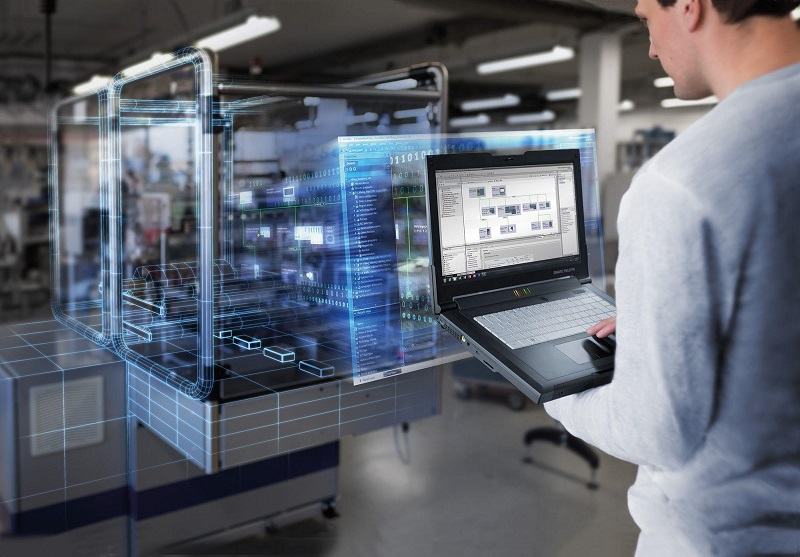
What Is the Siemens Eigen Engineering Agent?
The Eigen Engineering Agent is an industrial AI solution developed by Siemens for automation engineering. It works alongside Siemens’ Totally Integrated Automation Portal (TIA Portal), helping engineers carry out tasks associated with industrial control system development.
Unlike a conventional chatbot that mainly provides explanations or suggested code, Eigen is designed to interact with engineering project information and execute defined engineering workflows.
Its capabilities include:
- PLC code generation and engineering support.
- Human-machine interface (HMI) visualization.
- Automation device configuration.
- Engineering project analysis.
- Electrical design data integration.
- Generation of structured automation projects.
- Validation and refinement of engineering outputs.
By connecting with TIA Portal, the agent can work with project-specific information, including data structures, blocks, parameters, and relationships between engineering components.
This connection is important because industrial engineering tasks depend heavily on the actual configuration of a project. Generic AI-generated instructions may not be sufficient when engineers need solutions that match a specific PLC, device configuration, or machine architecture.
From AI Suggestions to Engineering Task Execution
One of the key differences between an engineering agent and a conventional AI assistant is its ability to participate directly in multi-step workflows.
Traditional AI tools often provide text-based answers, code examples, or troubleshooting suggestions. Engineers must then transfer this information into their engineering software, configure the relevant devices, and verify the results themselves.
Eigen is designed to move beyond this recommendation-based approach.
The agent can interpret engineering requirements, plan tasks, generate automation code, configure systems, and refine its output according to defined quality requirements.
For example, when working on a machine automation project, an engineer may need to create PLC logic, configure connected devices, and prepare an HMI interface. These activities normally involve multiple engineering steps and repeated checks.
An AI agent integrated into the engineering environment can help coordinate these tasks and reduce repetitive manual work.
However, engineering outputs still require appropriate review, testing, and approval. AI-assisted execution does not remove the need for qualified engineers, especially in applications involving machine safety, process protection, and production-critical control functions.
Key Application Areas in Industrial Automation
1. PLC Programming and Control Logic Development
Programmable logic controllers are essential components in industrial automation systems. They manage machine sequences, process sensor signals, control motors, and coordinate production equipment.
PLC programming can become time-consuming when projects involve large numbers of devices, complex control sequences, and extensive documentation.
Eigen is designed to assist with PLC coding and related engineering activities within TIA Portal.
Potential benefits include faster development of structured control logic, easier access to project information, and reduced repetitive engineering work.
For OEMs developing customized production equipment, this type of assistance may help shorten parts of the engineering workflow while allowing engineers to focus on system architecture and application-specific requirements.
2. HMI Visualization and Operator Interface Engineering
Human-machine interfaces allow operators to monitor equipment conditions, control machine functions, and respond to alarms.
Creating an HMI project involves more than designing screens. Engineers must also connect interface elements to PLC variables, organize operating information, and ensure that the displayed information corresponds to actual machine functions.
Eigen includes HMI visualization capabilities intended to support this engineering process.
By assisting with interface-related tasks, AI-based engineering tools may help reduce repetitive configuration work and improve consistency between control logic and operator interfaces.
3. Automation Device Configuration
Industrial automation projects often combine controllers, remote I/O modules, drives, motors, communication devices, and other components.
Each device requires suitable configuration and integration into the overall control system.
Eigen is designed to support device configuration within the engineering workflow. This can help engineers manage project information and reduce the effort involved in repetitive setup tasks.
The actual results depend on device compatibility, project structure, and the engineering requirements of each application.
4. Electrical Design Integration
Another important capability is the integration of electrical design information with automation engineering.
Siemens has described Eigen’s ability to work with electrical design files in formats such as XML and AML. The agent can use this information to identify inconsistencies, incorporate devices into a TIA Portal project, configure connections, and generate PLC tags based on hardware topology.
This capability addresses a common engineering challenge: electrical design and automation programming are often handled in separate workflows.
Connecting these information sources can reduce manual data transfer and help improve consistency between electrical documentation and PLC engineering projects.
5. Standards-Based Engineering Project Generation
Eigen also supports the generation of automation projects based on Siemens’ Automation Framework.
Engineers can describe a machine, its stations, connected devices, and expected behavior in natural language. The agent can then use these requirements to generate a structured project that follows the relevant framework.
This approach may help organizations establish more consistent engineering structures across projects.
It is particularly relevant for OEMs and system integrators that repeatedly develop similar machine architectures for different customers.
Reported Productivity Improvements and Industry Adoption
Siemens has reported measurable productivity improvements from the use of the Eigen Engineering Agent.
According to Siemens’ published information, the solution can complete engineering workflows approximately two to five times faster than manual methods, with engineering efficiency gains of up to 50% and improvements in overall solution quality of up to 80%.
These figures are company-reported results and should be understood in the context of the workflows and customer applications evaluated. Actual performance may vary according to project complexity, engineering standards, device compatibility, and the experience of the users.
Siemens has also reported adoption by more than 100 companies across 19 countries in its August 2026 announcement. Named examples include ANDRITZ Metals in Austria, CASMT in China, and Prism Systems in the United States.
These examples indicate that industrial AI engineering tools are moving beyond isolated demonstrations and are being explored in practical automation development environments.
Why Independent Technical Evaluation Matters
Industrial AI products must meet requirements that are different from those of general-purpose AI applications.
In a manufacturing environment, an engineering tool must work with structured project data, technical documentation, hardware configurations, and established engineering procedures.
A system that generates plausible-looking code is not necessarily suitable for industrial deployment. Its outputs must be consistent with the actual project, technically appropriate, and capable of being checked before implementation.
Independent technical evaluations can provide useful insight into product capabilities, market positioning, and engineering maturity.
The reported six five-star ratings associated with Eigen are therefore relevant to its market recognition. However, individual rating categories and scoring criteria should be interpreted only from the original evaluation report rather than inferred from the overall result.
The separate PAC Innovation Radar recognition of Eigen as Best-in-Class for Advanced Industrial Engineering in Europe for 2026 further highlights its position in the industrial engineering AI market.
These assessments are not equivalent to a safety certification, regulatory approval, or guarantee of performance in every industrial application.
Implications for PLC, DCS, and Industrial Control Equipment Markets
The development of AI-assisted engineering tools may influence the wider industrial control equipment market.
Although AI agents do not replace the physical components responsible for controlling industrial processes, they can change how engineers design, configure, and maintain automation systems.
PLC and controller systems: AI-assisted programming may help engineers create and review control logic more efficiently.
HMI and SCADA platforms: Intelligent engineering tools may support interface development and improve the consistency of operator information.
Variable frequency drives: AI may assist with device documentation, configuration workflows, and the identification of relevant technical parameters.
Remote I/O and industrial communication: Better access to project structures may help engineers manage device relationships and communication configurations.
DCS and process automation: AI-based engineering assistance may support documentation, configuration, and project management in complex automation environments.
For industrial equipment suppliers, this trend creates opportunities to provide more complete technical support, including product documentation, engineering assistance, system integration, and lifecycle services.
It also reinforces the importance of maintaining accurate product data and reliable technical documentation, which are essential for both human engineers and AI-based engineering tools.
Human Expertise Remains Essential in Industrial AI
Despite the growing capabilities of AI agents, industrial automation still requires engineering judgment and responsibility.
Control systems interact with physical equipment, electrical installations, production processes, and safety-related functions. Incorrect configuration or unverified code can lead to equipment damage, production interruptions, or safety risks.
AI-generated engineering outputs should therefore be subject to suitable validation procedures.
Engineers remain responsible for reviewing control logic, confirming hardware compatibility, testing machine behavior, and ensuring that the final system meets relevant standards and customer requirements.
The most practical approach is to use AI to reduce repetitive work and improve access to technical knowledge while keeping critical engineering decisions under appropriate human supervision.
Conclusion
The Siemens Eigen Engineering Agent is an example of how industrial AI is evolving from a conversational support tool toward a system capable of participating in real engineering workflows.
Its reported six five-star ratings and its recognition by PAC Innovation Radar as Best-in-Class for Advanced Industrial Engineering in Europe in 2026 have brought additional attention to its development.
With capabilities covering PLC coding, HMI visualization, device configuration, electrical design integration, and structured project generation, Eigen reflects the growing role of AI in industrial automation engineering.
For manufacturers, OEMs, and system integrators, the long-term value of industrial AI will depend on its ability to work reliably with real engineering projects, integrate with existing automation platforms, and deliver measurable improvements without compromising technical quality or operational safety.
As industrial digitalization continues, AI-assisted engineering is likely to become an increasingly important part of the automation technology landscape.
SEO Keywords: Siemens Eigen Engineering Agent, Siemens Industrial AI, Eigen Engineering Agent Review, Siemens TIA Portal AI, PLC Programming AI, Industrial Automation Engineering, AI for PLC Programming, HMI Engineering Automation, Siemens Xcelerator, Industrial AI Agent, Automation Engineering Software, Smart Manufacturing Technology.