

ProductPRODUCT
Featured products
Contact Us
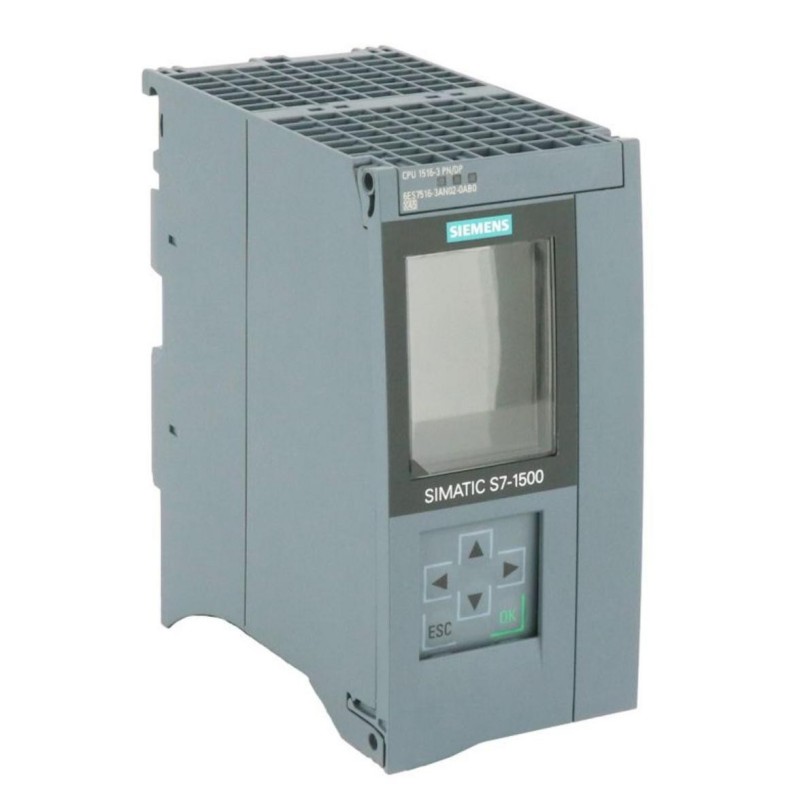
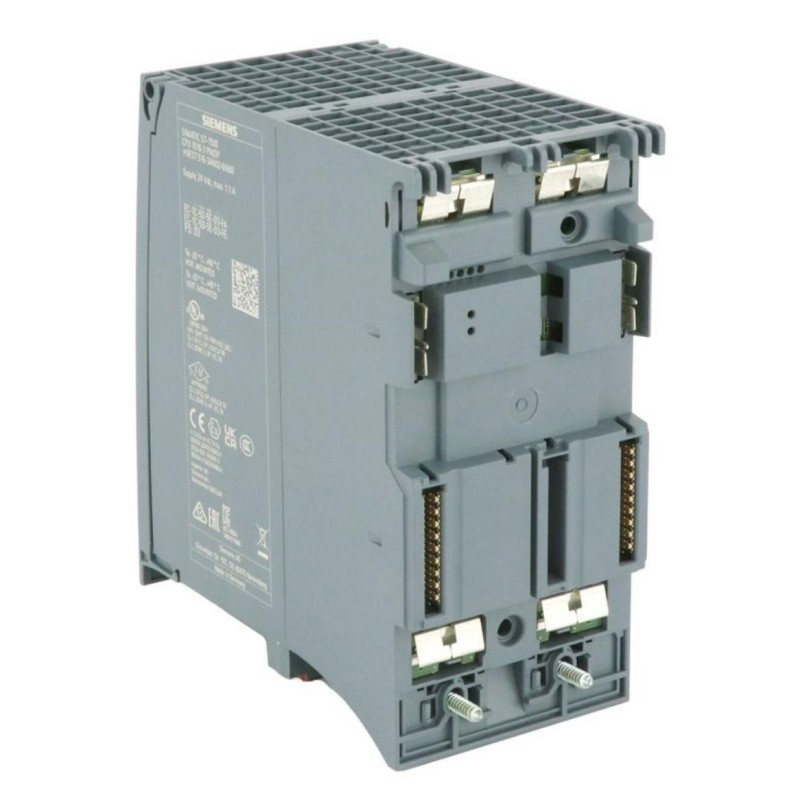
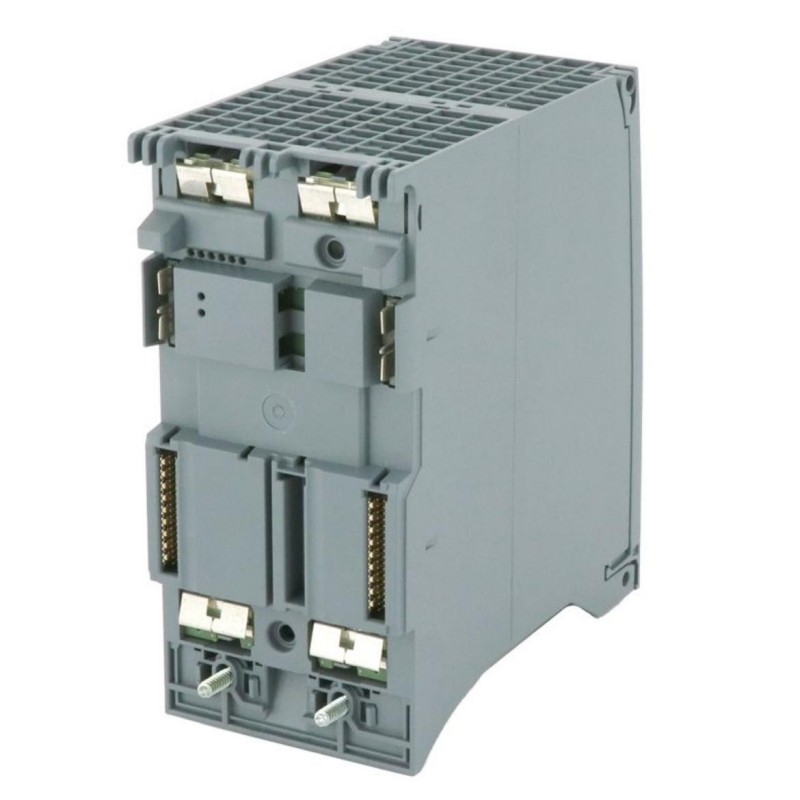
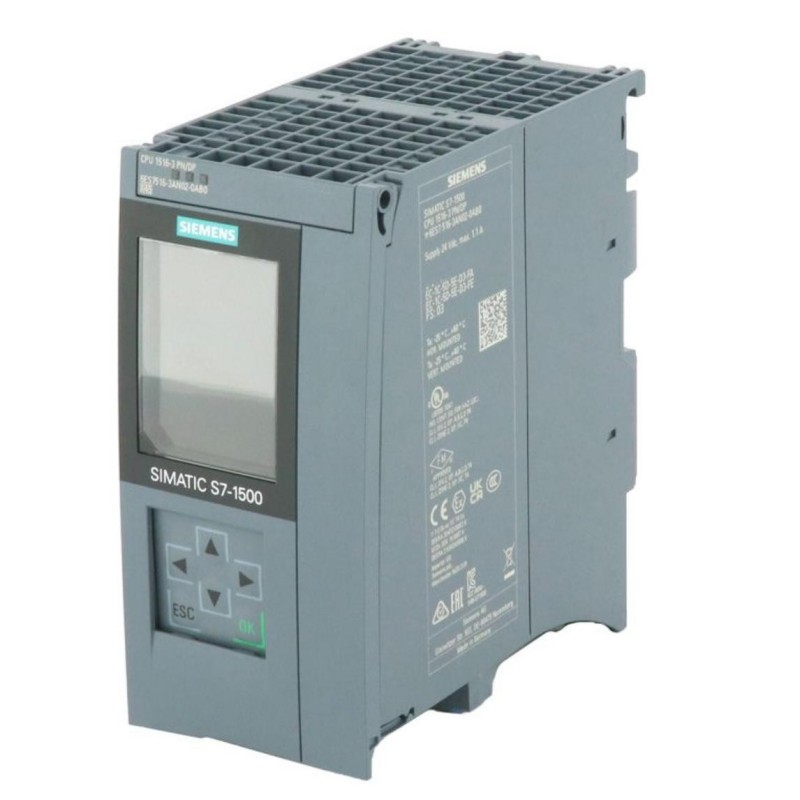
- Siemens
- 6AG1516-3AN02-2AB0
- Central Processing Unit
- Germany
- 70 × 147 × 129 mm
- 0.623 kg
- Xiamen, China
- New & In Stock
- T/T, PayPal, Western Union
- 1 Year
- 1-3 Working Days
- DHL, UPS, TNT, FedEx and EMS.
- 24-Hour Service
- COO
- 21
Our advantage

Global Logistics
We have a 10-year logistics and express cooperation agreement, so our products can be shipped to any place in the world.

Brand new and original
Our products are imported in bulk from the place of origin. Because of the cooperative relationship, our products are all original and 100% new.

24-hour service
We provide 7*24 hours service to our customers. We will be there whenever you need us.

Price advantage
All our products are priced very favorably because we have our own warehouse and supply.
| Company Information | |||
| [email protected] | |||
| Mobile | +8615980777398 | ||
| +8615980777398 | |||
| 15980777398 |
Product Overview
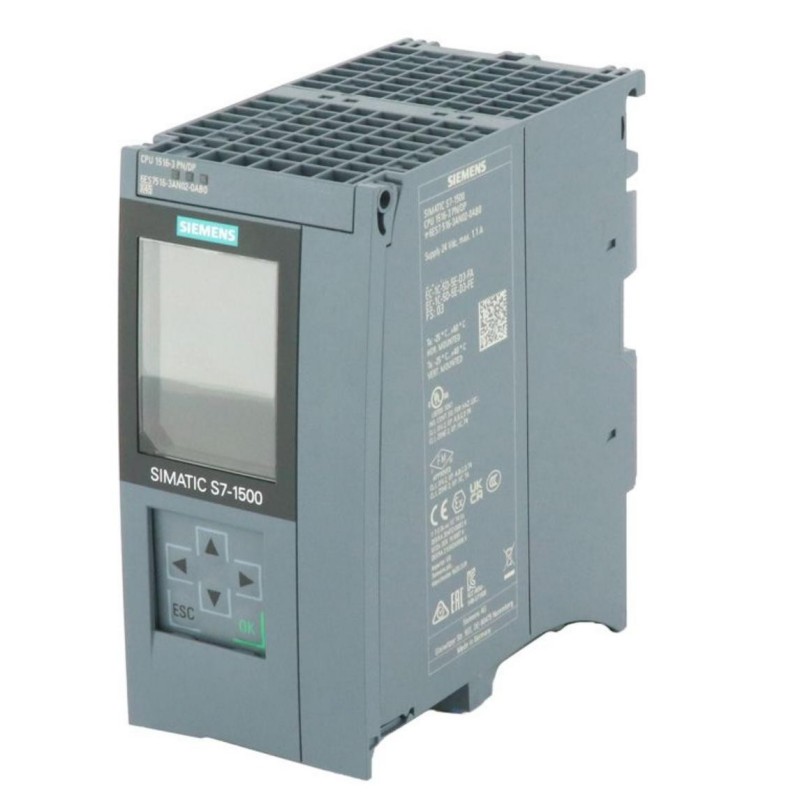
The Siemens 6AG1516-3AN02-2AB0 is a SIPLUS S7-1500 Central Processing Unit for control systems that require a higher-performance CPU within the S7-1500 platform. It handles the user program, system logic, diagnostics, and communication tasks that coordinate the distributed I/O and other automation components connected to the controller.
In a typical machine or process installation, the CPU sits at the center of the S7-1500 station. Field signals are collected through local or distributed I/O modules, the CPU processes the programmed logic, and output modules then pass commands to actuators. Engineering, diagnostics, and communication functions are handled around this central processing point rather than by the I/O modules themselves.
As a SIPLUS version, the module is intended for applications where the environmental conditions are more demanding than those normally encountered by standard automation equipment. The exact environmental ratings and permitted operating conditions should be matched to the applicable SIPLUS documentation and cabinet design.
Technical Specifications
| Parameter | Specification |
|---|---|
| Manufacturer | Siemens |
| Product Number | 6AG1516-3AN02-2AB0 |
| Product Family | SIPLUS S7-1500 |
| Product Type | Central Processing Unit |
| Platform | S7-1500 |
| Dimensions | 70 × 147 × 129 mm |
| Weight | 0.623 kg |
| Application | Industrial automation and process control |
Product Features
- Central processing unit for Siemens S7-1500 automation systems.
- Executes the configured control program and coordinates connected I/O.
- Supports centralized and distributed automation architectures within the S7-1500 platform.
- Provides system-level diagnostics and controller status information.
- SIPLUS variant for applications requiring enhanced environmental suitability.
- Suitable for machine, process, and plant control applications using the S7-1500 architecture.
Working Principle
The CPU receives process information through the S7-1500 I/O architecture and evaluates that information against the user program. Depending on the control logic, it can generate output commands, update process variables, execute sequencing functions, and exchange data with other automation devices.
During normal operation, the CPU works together with the I/O modules, communication interfaces, engineering system, and field devices. For example, a digital input may report the state of a limit switch, while an analog module supplies a process measurement. The CPU evaluates those signals and sends the resulting commands to the corresponding output channels.
For maintenance work, CPU diagnostics are particularly useful because a control problem may originate outside the processor itself. Communication faults, I/O configuration errors, field wiring problems, or power issues can all appear as symptoms at the controller level. Troubleshooting should therefore consider the complete S7-1500 station rather than immediately replacing the CPU.
Role in a Siemens S7-1500 Control Architecture
| System Element | Function |
|---|---|
| 6AG1516-3AN02-2AB0 CPU | Executes the control program, processes signals, manages controller functions, and coordinates the automation station. |
| S7-1500 I/O Modules | Acquire field signals and provide output interfaces for actuators. |
| Communication Modules | Connect the controller to distributed I/O, drives, HMIs, and other automation equipment where required. |
| Engineering System | Used to configure, program, diagnose, and maintain the S7-1500 station. |
| HMI | Provides operator interaction, process visualization, alarms, and operating commands. |
| Field Devices | Supply process measurements and receive control commands. |
| Industrial Network | Carries controller, I/O, diagnostic, and device communication data. |
Industrial Applications
| Application | Typical Use |
|---|---|
| Machine Automation | Sequence control, interlocking, motion-related logic, and machine status management. |
| Process Equipment | Monitoring and control of pumps, valves, temperature loops, and process signals. |
| Production Lines | Coordination of distributed stations, sensors, actuators, and machine sequences. |
| Material Handling | Conveyor sequencing, equipment interlocks, position monitoring, and control logic. |
| Industrial Plant Automation | Central processing for distributed I/O and supervisory control functions. |
Installation and Maintenance
- Confirm that the CPU part number matches the intended S7-1500 system configuration before installation.
- Check the CPU hardware version and required firmware compatibility against the existing project.
- Verify that the planned configuration is supported by the installed TIA Portal engineering environment.
- Switch off the relevant power supply before removing or installing the CPU.
- Follow Siemens installation requirements for mounting, grounding, and cabinet wiring.
- Check the backplane bus and adjacent module connections for contamination or mechanical damage.
- Verify that the CPU is correctly seated and mechanically secured in the S7-1500 rack.
- Check the configured I/O and communication modules after replacing the CPU.
- Load or restore the correct hardware configuration and user program when required.
- Inspect diagnostic information for configuration, communication, or module-related faults after startup.
- Confirm communication with distributed I/O, HMI devices, drives, and other networked equipment.
- Record the CPU replacement, firmware information, project version, and diagnostic results for future maintenance.
Compatible System Components
| Component | Function |
|---|---|
| Siemens S7-1500 Signal Modules | Provide digital or analog field I/O for the CPU. |
| Siemens S7-1500 Communication Modules | Extend communication capabilities for connected automation networks and devices. |
| Siemens S7-1500 Power Supply Modules | Supply the required system power for the controller station. |
| Siemens S7-1500 Distributed I/O | Extends field-level I/O away from the central controller. |
| Siemens HMI Systems | Provide operator control, visualization, alarms, and diagnostics. |
| Siemens TIA Portal | Provides engineering, configuration, programming, and diagnostic functions for the automation system. |
Recommended Related Models
| Model / Product Family | Product Type | Typical Application |
|---|---|---|
| Siemens 6AG1516-3AN02-2AB0 | SIPLUS S7-1500 Central Processing Unit | Central control and program execution |
| Siemens SIPLUS S7-1500 CPU Family | Central Processing Unit | Industrial control applications with enhanced environmental requirements |
| Siemens S7-1500 Signal Modules | Digital / Analog I/O Modules | Field signal acquisition and actuator control |
| Siemens S7-1500 Communication Modules | Communication Module | Network and device integration |
| Siemens S7-1500 Power Supply Modules | System Power Supply | Controller and system power distribution |
| Siemens ET 200 Distributed I/O | Distributed I/O System | Remote field signal acquisition and control |
Key Advantages
- Central processing for S7-1500 control architectures.
- Coordinates I/O, control logic, diagnostics, and connected automation functions.
- Suitable for distributed automation architectures.
- SIPLUS platform for applications with enhanced environmental requirements.
- Supports centralized troubleshooting from the controller level.
Technical FAQs
What is the role of the Siemens 6AG1516-3AN02-2AB0?
It serves as the central processing unit of an S7-1500 automation station. The CPU executes the configured control program, processes input information, manages output commands, and coordinates connected system components.
Can the 6AG1516-3AN02-2AB0 be replaced by any S7-1500 CPU?
Not automatically. CPU replacement should take into account the hardware configuration, program requirements, firmware compatibility, communication setup, memory requirements, and the environmental requirements of the installation. The replacement CPU should be verified against the existing project configuration.
What should be checked if the CPU reports a system fault after replacement?
Start with the CPU diagnostic information and then check the configured hardware, firmware compatibility, power supply, backplane connections, I/O modules, and network communication. A CPU fault indication does not necessarily mean that the processor itself is defective.
What is the difference between a SIPLUS CPU and a standard S7-1500 CPU?
The SIPLUS version belongs to Siemens’ product range for applications requiring enhanced environmental suitability. The specific permissible temperature, environmental, and installation conditions should be checked against the documentation for the exact SIPLUS order number rather than assumed from the standard S7-1500 specification.