

ProductPRODUCT
Featured products
Contact Us
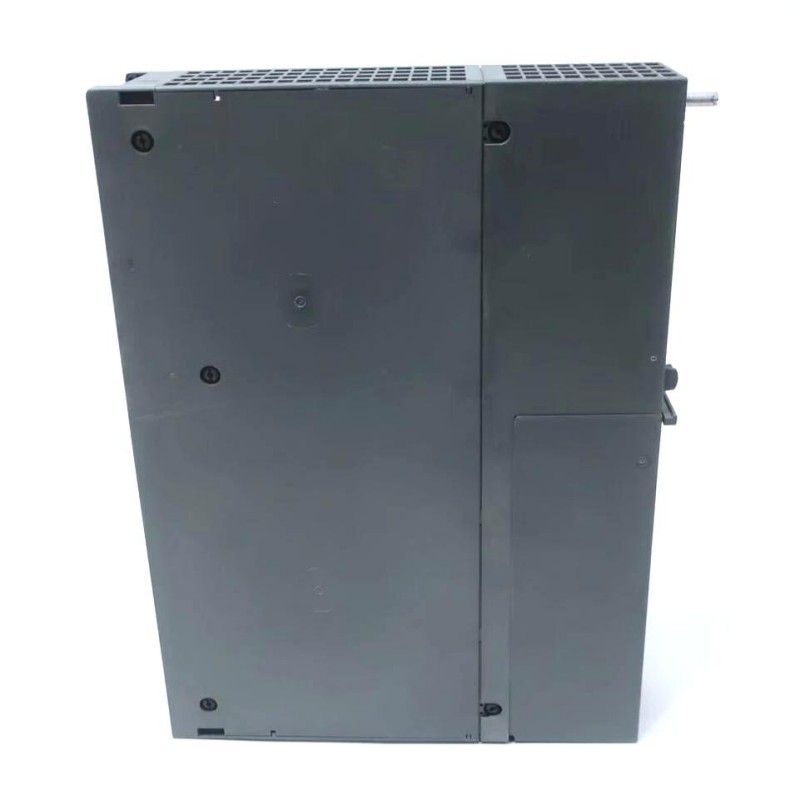
- Siemens
- 6AG1417-4XT07-7AB0
- CPU Module
- Germany
- 50 × 290 × 219 mm
- 1.004 kg
- Xiamen, China
- New & In Stock
- T/T, PayPal, Western Union
- 1 Year
- 1-3 Working Days
- DHL, UPS, TNT, FedEx and EMS.
- 24-Hour Service
- COO
- 38
Our advantage

Global Logistics
We have a 10-year logistics and express cooperation agreement, so our products can be shipped to any place in the world.

Brand new and original
Our products are imported in bulk from the place of origin. Because of the cooperative relationship, our products are all original and 100% new.

24-hour service
We provide 7*24 hours service to our customers. We will be there whenever you need us.

Price advantage
All our products are priced very favorably because we have our own warehouse and supply.
| Company Information | |||
| [email protected] | |||
| Mobile | +8615980777398 | ||
| +8615980777398 | |||
| 15980777398 |
Product Overview
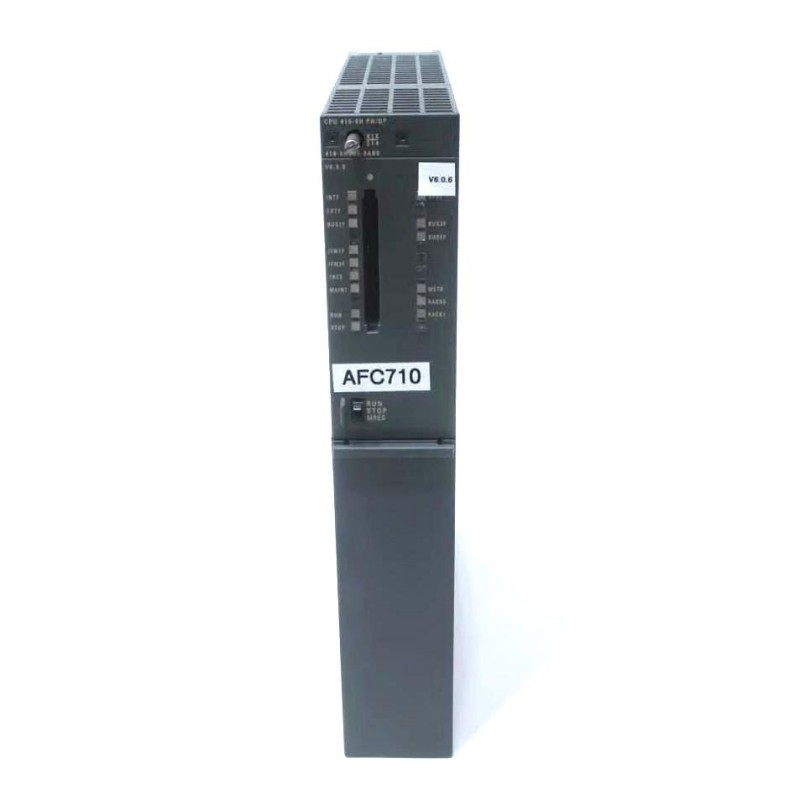
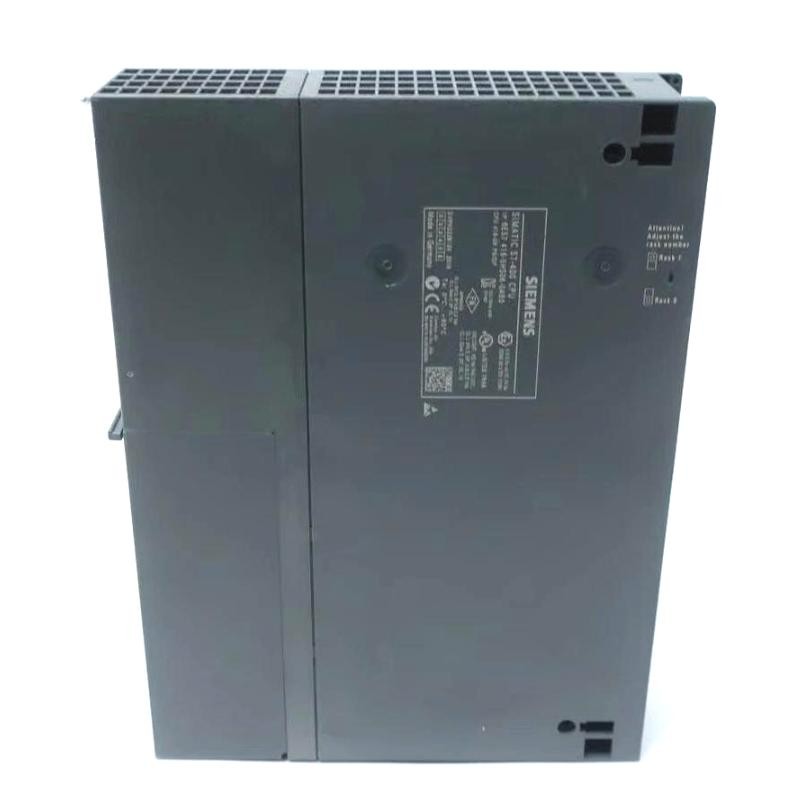
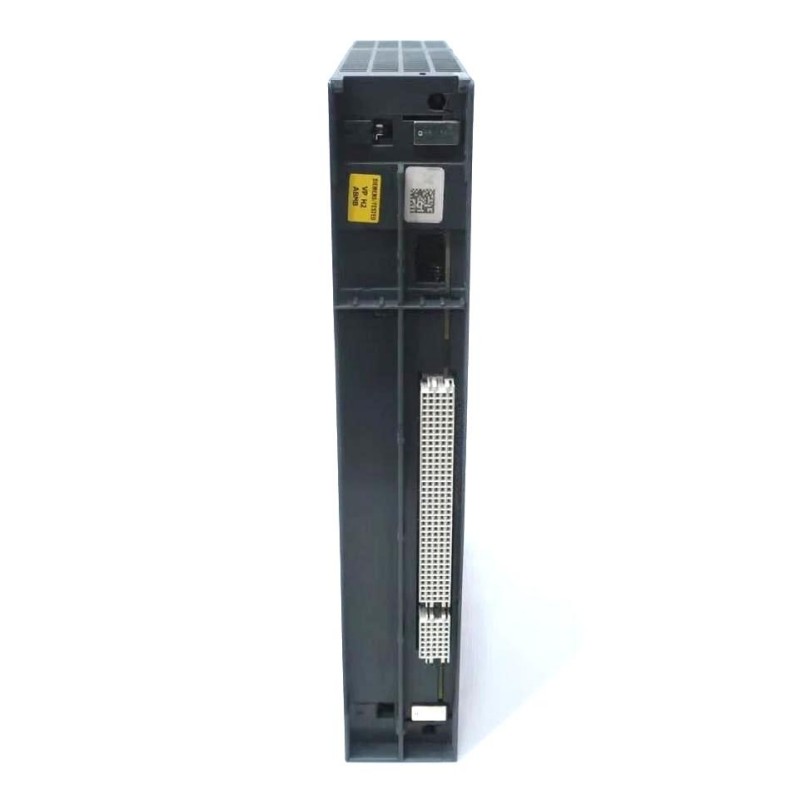
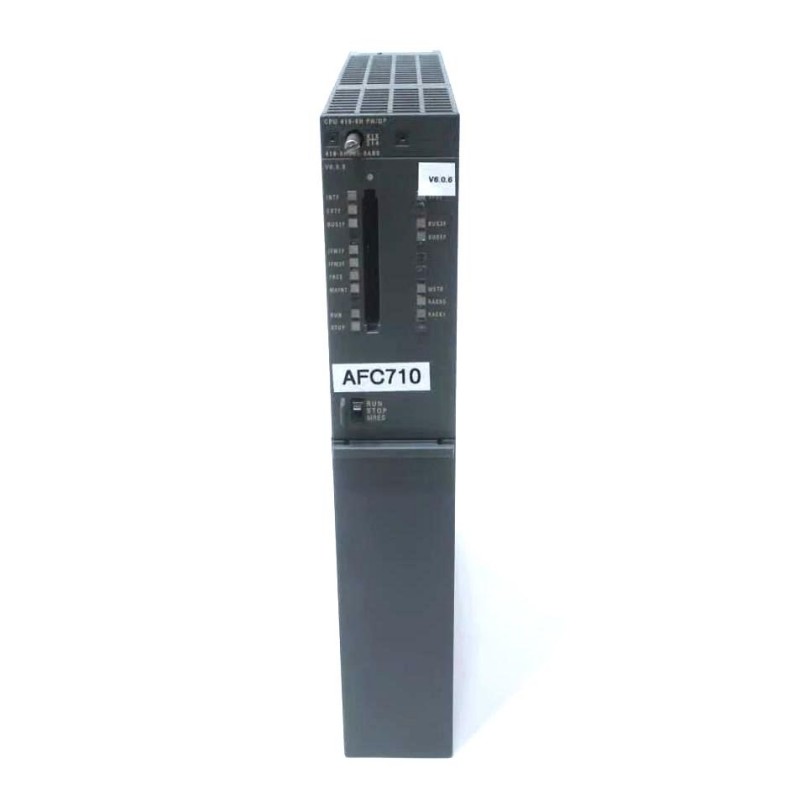
The Siemens 6AG1417-4XT07-7AB0 SIPLUS S7-400 CPU Module is a central processing unit for Siemens S7-400 automation systems. It executes the configured PLC program, processes process data, and coordinates control tasks between the CPU, I/O modules, communication components, and connected field equipment.
This CPU is suited to large control architectures where the PLC must handle coordinated sequences across multiple machine or process sections. In a production line, for example, input information from sensors and remote stations can be processed by the CPU while output commands are issued to drives, valves, contactors, and other actuators.
The SIPLUS designation makes this CPU particularly relevant to installations where the automation hardware is exposed to environmental conditions that require an appropriately specified industrial controller. It can be integrated into existing S7-400 architectures when the rack configuration, program requirements, and system compatibility are confirmed.
For replacement projects, the complete 6AG1417-4XT07-7AB0 order number should be checked rather than selecting a CPU solely according to its physical form. The existing S7-400 hardware configuration, communication arrangement, application program, and operating environment should all be considered before commissioning.
Technical Specifications
| Parameter | Specification |
|---|---|
| Model | 6AG1417-4XT07-7AB0 |
| Product Family | SIPLUS S7-400 |
| Product Type | CPU Module |
| CPU Platform | Siemens S7-400 |
| System Role | Central PLC processing unit |
| Primary Function | PLC program execution and process control |
| Typical Application | Industrial automation and process control |
| Dimensions | 50 × 290 × 219 mm |
| Weight | 1.004 kg |
Product Features
- Part of the Siemens SIPLUS S7-400 automation platform.
- Functions as the central processor within an S7-400 PLC configuration.
- Executes programmed control logic and process sequences.
- Coordinates data exchange with connected S7-400 I/O modules.
- Suitable for large-scale centralized automation architectures.
- Supports coordinated control of machines, process sections, and plant equipment.
- SIPLUS configuration is suited to demanding industrial installation environments.
- Suitable for replacement or expansion projects where the existing S7-400 configuration is compatible.
Working Principle
The CPU continuously processes information exchanged between the control program and the connected automation hardware. Field signals are acquired through the appropriate input modules and made available to the CPU for evaluation.
Field Devices → S7-400 I/O → 6AG1417-4XT07-7AB0 CPU → User Program → Output / Communication Modules → Controlled Equipment
The CPU evaluates input states and process values according to the programmed control logic. Depending on the application, this may include sequence control, interlocking, equipment status handling, timing functions, and coordination between different process sections.
After processing the current process information, the CPU updates the required output commands. These commands are transferred through the relevant S7-400 output or communication modules to field equipment, allowing the control cycle to continue as process conditions change.
Role in a Siemens S7-400 Control Architecture
The 6AG1417-4XT07-7AB0 serves as the central logic-processing element between the S7-400 I/O structure and the controlled process. Its position allows a single PLC architecture to coordinate signals from multiple process areas while maintaining a common control program.
Field Level → S7-400 I/O → SIPLUS S7-400 CPU → Control Logic → Output / Communication Layer → Process Equipment
| System Element | Function |
|---|---|
| Field Sensors | Detect process variables and equipment states |
| S7-400 Input Modules | Acquire digital and analog process information |
| 6AG1417-4XT07-7AB0 | Execute the PLC application and control logic |
| Communication Modules | Exchange data with connected automation systems |
| S7-400 Output Modules | Deliver control commands to field devices |
| HMI / Supervisory System | Provide operator monitoring and control |
| Actuators | Execute commands in the physical process |
Industrial Applications
| Application | Typical Use |
|---|---|
| Production Lines | Coordinated sequence and machine control |
| Process Plants | Centralized process logic and equipment coordination |
| Material Handling | Conveyor, transfer, and handling sequence control |
| Industrial Machinery | Machine interlocking and automatic operation |
| Plant Utilities | Control of pumps, fans, and auxiliary equipment |
| Infrastructure Automation | Central PLC control for distributed equipment |
Installation and Maintenance
- Confirm the complete 6AG1417-4XT07-7AB0 order number before installation.
- Verify compatibility with the existing S7-400 rack and hardware configuration.
- Back up the current PLC program and configuration before replacing an installed CPU.
- Follow the plant’s electrical isolation procedure before removing or installing the module.
- Inspect the rack and backplane interface for contamination or mechanical damage.
- Install the CPU in the specified S7-400 rack position.
- Confirm that the required power and communication connections are correctly restored.
- Load or restore the appropriate application configuration after replacement.
- Check CPU diagnostic indications during initial startup.
- Verify communication with connected I/O and external automation devices.
- Test critical input, logic, and output functions under controlled commissioning conditions.
- Monitor diagnostic information and process behavior after returning the system to normal operation.
Related Components
| Component | Function |
|---|---|
| Siemens S7-400 Rack | Provides the mounting and backplane structure |
| S7-400 Power Supply | Supplies power to the automation rack |
| S7-400 Digital Input Module | Acquires discrete field signals |
| S7-400 Digital Output Module | Controls discrete field devices |
| S7-400 Analog Input Module | Acquires analog process signals |
| S7-400 Analog Output Module | Sends analog control signals |
| S7-400 Communication Module | Connects the PLC with external automation networks |
| HMI System | Provides operator interface and process visualization |
Recommended Related Models
| Model / Product Family | Product Type | Typical Application |
|---|---|---|
| Siemens 6AG1417-4XT07-7AB0 | SIPLUS S7-400 CPU Module | Central PLC processing |
| Siemens SIPLUS S7-400 CPU Family | Industrial CPU | Demanding automation environments |
| Siemens S7-400 CPU Family | PLC CPU | Large-scale control systems |
| Siemens S7-400 Digital Input Modules | Digital Input Module | Discrete signal acquisition |
| Siemens S7-400 Digital Output Modules | Digital Output Module | Discrete actuator control |
| Siemens S7-400 Analog Input Modules | Analog Input Module | Process signal acquisition |
| Siemens S7-400 Analog Output Modules | Analog Output Module | Analog control |
| Siemens S7-400 Communication Modules | Communication Module | PLC network integration |
Key Advantages
- Centralized processing for S7-400 automation architectures.
- Suitable for coordinated control of complex industrial processes.
- Integrates with the established S7-400 rack and I/O structure.
- Supports centralized PLC program execution and process coordination.
- SIPLUS configuration is applicable to demanding industrial environments.
- Suitable for maintenance and replacement projects when hardware compatibility is confirmed.
Technical FAQs
What is the main role of the 6AG1417-4XT07-7AB0 in an S7-400 system?
It functions as the central CPU, executing the application program and coordinating process data between the S7-400 I/O system, communication components, and controlled equipment.
What should be compared when replacing this CPU with another S7-400 processor?
The existing hardware configuration, application program, communication requirements, I/O arrangement, CPU-specific configuration, and environmental requirements should all be checked. Matching the physical module format alone is not sufficient.
Why can a CPU replacement result in unexpected diagnostic faults?
Differences in hardware configuration, configured modules, program compatibility, communication settings, or retained system data can cause diagnostic conditions after replacement. The system configuration should be validated before returning the PLC to automatic operation.
What should be checked if the CPU is running but field outputs do not respond?
First check CPU diagnostic status and input processing, then verify the user program logic, output module status, communication paths, and field wiring. If the CPU is executing normally, the fault may be located downstream in the I/O or field-device layer.