

ProductPRODUCT
Featured products
Contact Us
- Siemens
- 6AG1314-6EH04-7AB0
- Compact CPU
- Germany
- 120 x 125 x 130 mm
- 0.801 kg
- Xiamen, China
- New & In Stock
- T/T, PayPal, Western Union
- 1 Year
- 1-3 Working Days
- DHL, UPS, TNT, FedEx and EMS.
- 24-Hour Service
- COO
- 7
Our advantage

Global Logistics
We have a 10-year logistics and express cooperation agreement, so our products can be shipped to any place in the world.

Brand new and original
Our products are imported in bulk from the place of origin. Because of the cooperative relationship, our products are all original and 100% new.

24-hour service
We provide 7*24 hours service to our customers. We will be there whenever you need us.

Price advantage
All our products are priced very favorably because we have our own warehouse and supply.
| Company Information | |||
| [email protected] | |||
| Mobile | +8615980777398 | ||
| +8615980777398 | |||
| 15980777398 |
Product Overview
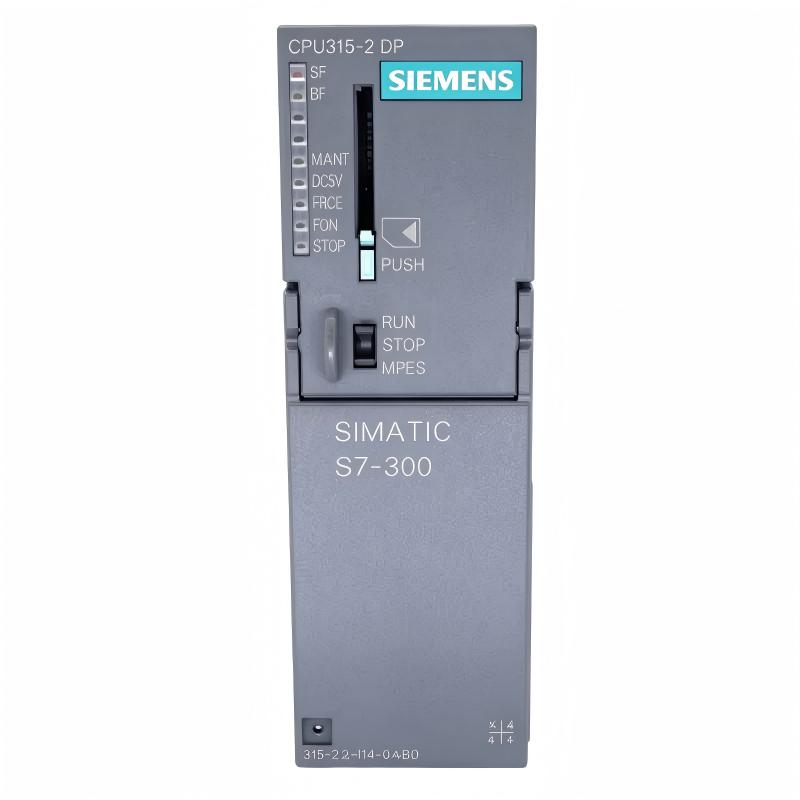
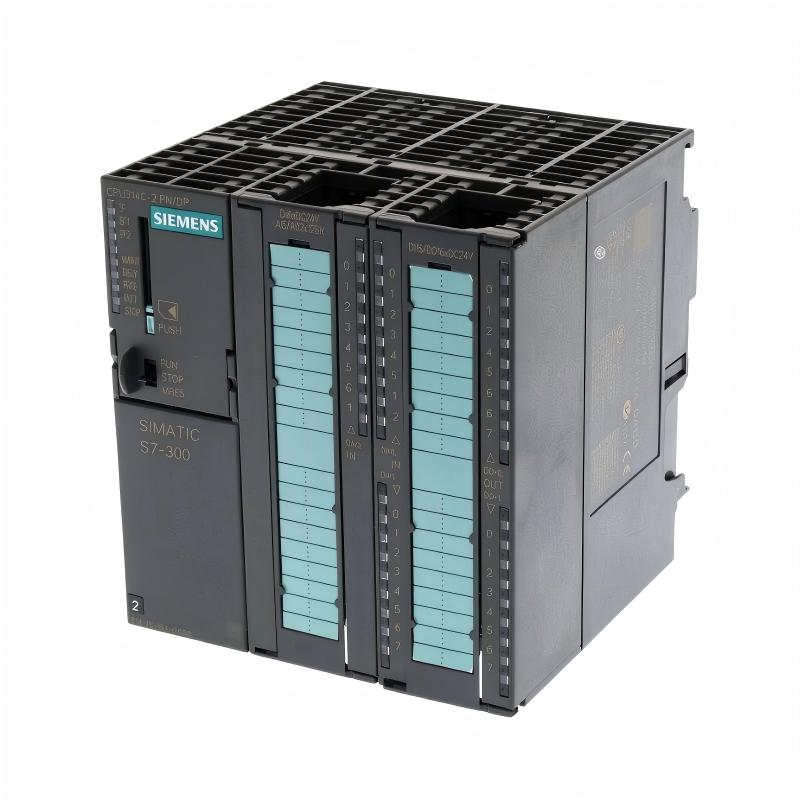
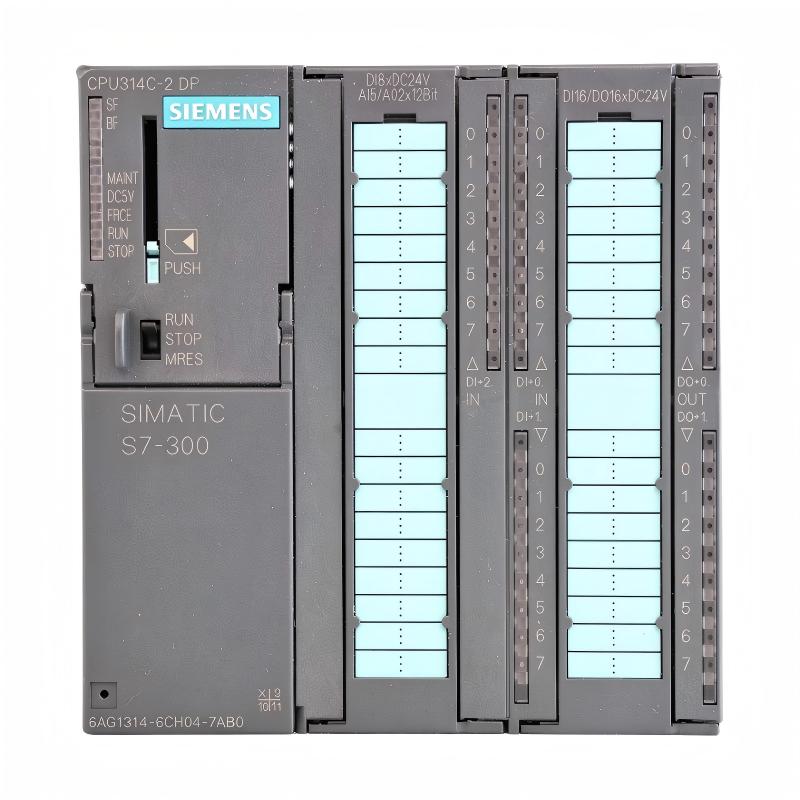
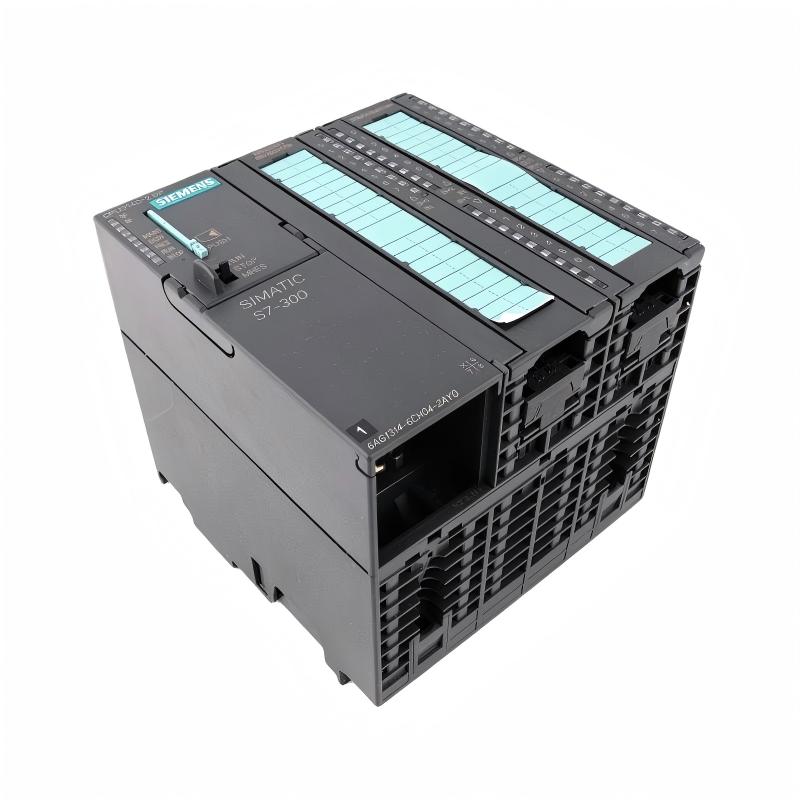
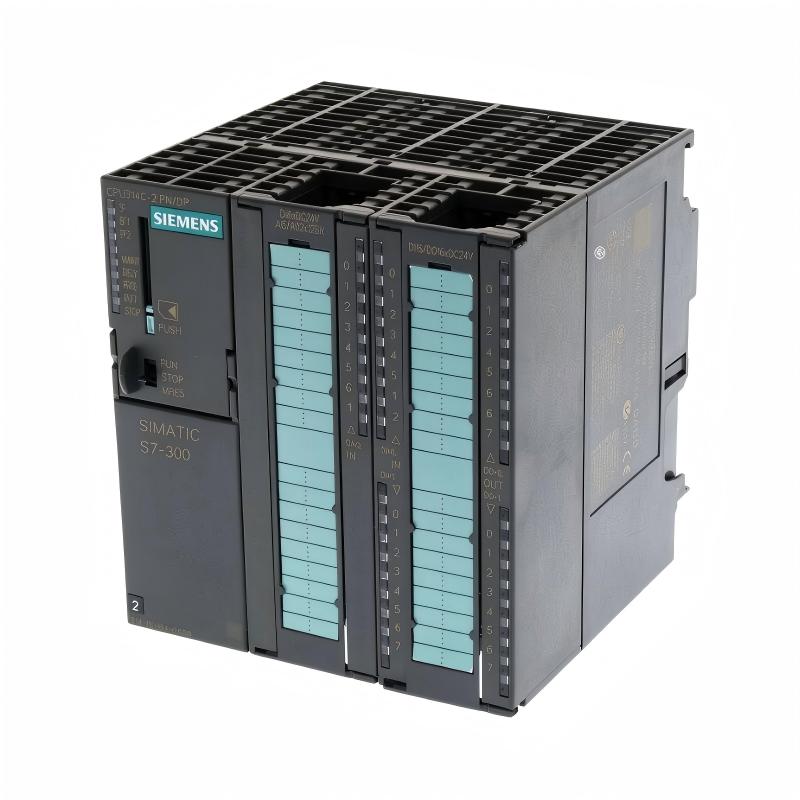
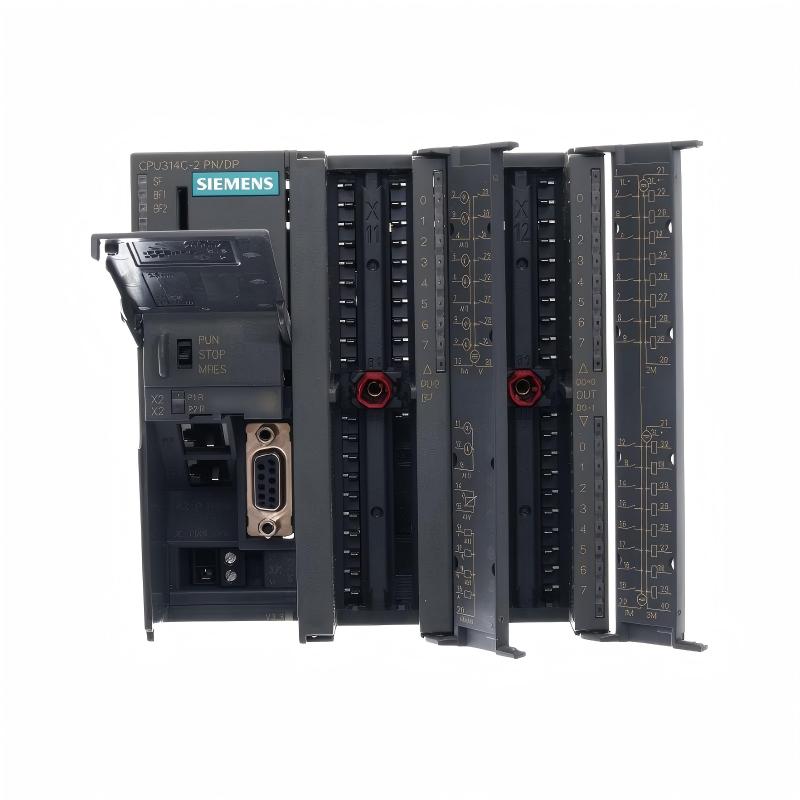
The Siemens 6AG1314-6EH04-7AB0 is a SIPLUS S7-300 CPU 314C-2PN/DP designed for industrial automation applications that require integrated control, communication, and signal-processing capabilities. Based on the standard SIMATIC S7-300 CPU 314C-2PN/DP, this compact controller combines a central processing unit with digital and analog I/O functions in one unit.
As part of the Siemens SIPLUS product range, this CPU features conformal coating and an extended operating temperature range of -25°C to +70°C. These characteristics make it suitable for selected industrial environments where temperature variation and exposure to environmental contaminants require additional equipment protection.
The CPU provides 192 KB of integrated work memory and includes 24 digital inputs, 16 digital outputs, four analog inputs, two analog outputs, one Pt100 temperature input, and four high-speed counters. It also supports MPI/DP communication and PROFINET through an Ethernet interface with an integrated two-port switch.
The integrated 24 V DC power supply simplifies the controller’s hardware arrangement. The module also supports STEP 7 programming and common Siemens programming languages, including LAD, FBD, STL, and SCL.
The 6AG1314-6EH04-7AB0 is intended for applications where a compact controller with integrated signal processing and industrial communication is preferred over a configuration requiring numerous separate I/O modules. It can be used in machine automation, production equipment, process monitoring, and distributed industrial control systems.
Technical Specifications
| Parameter | Specification |
|---|---|
| Brand | Siemens |
| Product Series | SIPLUS S7-300 |
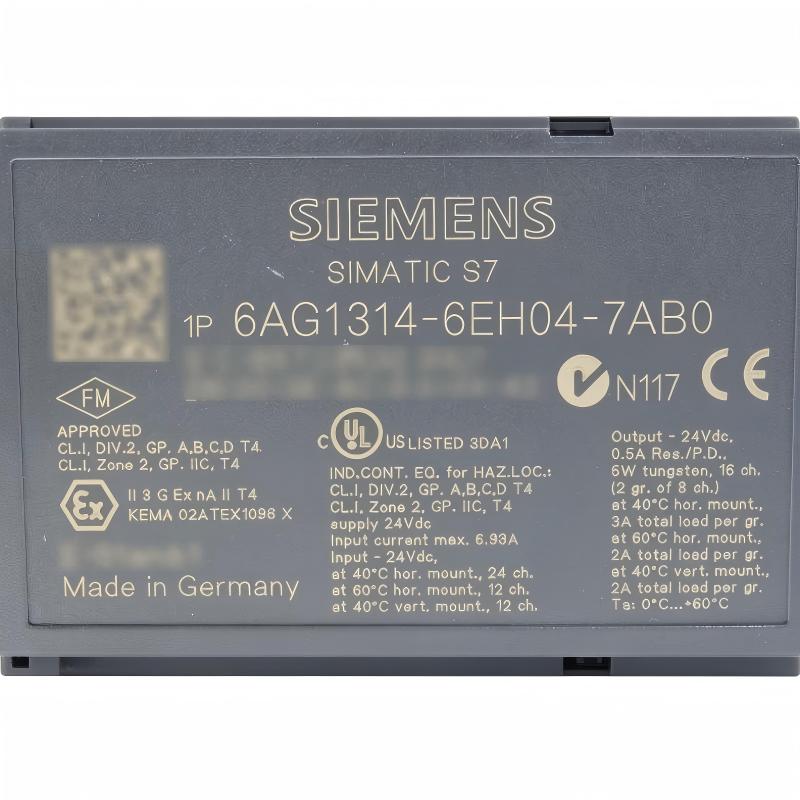
| Model | 6AG1314-6EH04-7AB0 |
| Product Type | Compact CPU / PLC Controller |
| CPU Designation | CPU 314C-2PN/DP |
| Based On | 6ES7314-6EH04-0AB0 |
| Work Memory | 192 KB |
| Digital Inputs | 24 |
| Digital Outputs | 16 |
| Analog Inputs | 4 |
| Analog Outputs | 2 |
| Temperature Input | 1 Pt100 |
| High-Speed Counters | 4 |
| High-Speed Counter Frequency | Up to 60 kHz |
| Communication Interfaces | MPI/DP and Ethernet PROFINET |
| PROFINET Interface | Integrated two-port switch |
| Integrated Power Supply | 24 V DC |
| Rated Supply Voltage | 24 V DC |
| Permissible Supply Range | 19.2–28.8 V DC |
| Operating Temperature | -25°C to +70°C |
| Protective Treatment | Conformal coating |
| Programming Software | STEP 7 V5.5 or higher with HSP 191 |
| Required Memory Card | Siemens Micro Memory Card |
| Front Connector | Two 40-pole connectors |
| Dimensions | 120 × 125 × 130 mm |
| Weight Provided | 0.801 kg |
The weight above is the supplied listing value. Siemens technical documentation lists an approximate module weight of 730 g. Actual shipping weight may vary according to packaging and accessories.
Function and Working Principle
The 6AG1314-6EH04-7AB0 operates as the central processing unit of an S7-300 automation system. It receives signals from connected field devices, executes the stored control program, processes measurement data, and updates outputs according to the programmed logic.
1. Central Processing and Program Execution
The CPU executes the automation program stored in its memory. It processes input information, evaluates control conditions, performs calculations, and determines the required output states.
The 192 KB work memory provides space for program execution and associated data. The CPU supports common Siemens programming languages, allowing engineers to develop control logic for different machine and process requirements.
Typical program operations include:
- Reading digital and analog input signals.
- Processing machine sequences and interlocks.
- Performing arithmetic and comparison operations.
- Monitoring process values.
- Controlling digital and analog outputs.
- Managing communication with other automation devices.
2. Integrated Digital Input Processing
The CPU provides 24 digital inputs for receiving binary signals from field devices.
Typical input devices include proximity sensors, limit switches, push buttons, pressure switches, and auxiliary contacts. These signals allow the controller to determine machine status and respond to changes in operating conditions.
For example, a proximity sensor may detect the arrival of a product on a conveyor. The CPU processes the input and executes the corresponding control sequence.
The integrated input channels reduce the need for a separate digital input module in applications that fit within the available channel count and electrical specifications.
3. Digital Output Control
The CPU includes 16 digital outputs for controlling compatible field devices.
These outputs can be used for control signals to relays, contactors, indicator lamps, and other automation equipment. The PLC program determines when each output should be activated or deactivated.
In a packaging machine, for example, the CPU may control a conveyor motor starter, activate a pneumatic valve through an appropriate interface, or operate a warning indicator.
Output wiring and load requirements must follow the manufacturer’s electrical specifications. External switching devices may be necessary when the connected load exceeds the permitted output ratings.
4. Analog Signal Processing
The integrated four analog inputs allow the controller to process continuous measurement signals. These may originate from pressure transmitters, temperature instruments, level sensors, or other compatible measurement devices.
The two analog outputs can provide control references to compatible external equipment, such as a variable frequency drive or regulating device.
Analog signal scaling and engineering-unit conversion are configured in the control program. Accurate signal processing also depends on correct wiring, grounding, shielding, and channel configuration.
5. Temperature Measurement
The CPU includes one Pt100 temperature input. This allows a compatible resistance temperature detector to provide temperature information directly to the controller.
Temperature monitoring can be used in equipment protection, process supervision, heating systems, and industrial temperature-control applications.
The sensor type, wiring arrangement, measurement range, and configuration must match the CPU’s supported input specifications.
6. High-Speed Counting
Four integrated high-speed counters support pulse-processing applications with frequencies up to 60 kHz.
These functions are useful when standard PLC scanning is not suitable for capturing fast pulse signals. Depending on the application, the counters can process signals from encoders, pulse generators, and other compatible devices.
Potential uses include speed monitoring, production counting, position-related measurement, and equipment cycle tracking.
Communication and System Integration
The Siemens 6AG1314-6EH04-7AB0 supports communication through MPI/DP and PROFINET interfaces. These interfaces allow the CPU to exchange data with other automation equipment and engineering systems.
MPI and PROFIBUS DP Communication
The first interface supports MPI and PROFIBUS DP communication at speeds up to 12 Mbps.
MPI can be used for programming, diagnostics, and communication with compatible Siemens devices. PROFIBUS DP supports communication with distributed I/O stations, drives, and other field-level automation equipment.
This communication capability is particularly relevant to existing S7-300 installations that use PROFIBUS-based control architectures.
PROFINET Communication
The second interface provides Ethernet-based PROFINET communication and includes an integrated two-port switch.
PROFINET allows the CPU to communicate with compatible remote I/O stations, drives, HMIs, and other industrial devices. It can also support real-time data exchange in suitable automation architectures.
The integrated switch simplifies network connections in appropriate configurations, although network topology, device count, and communication settings must still be planned correctly.
Integration with HMI Systems
An HMI can communicate with the CPU to display machine status, process values, alarms, and operating information.
Operators may use the HMI to enter production settings, select operating modes, acknowledge alarms, or monitor machine sequences. The CPU processes the corresponding commands according to the programmed control logic.
Integration with Distributed I/O
When the integrated I/O is insufficient for an application, compatible distributed I/O stations can extend the control system.
PROFINET or PROFIBUS DP can be used to exchange process data with supported remote I/O devices. This approach is useful when sensors and actuators are distributed across a large machine or production line.
Industrial Applications
The SIPLUS S7-300 CPU 314C-2PN/DP is suitable for industrial applications requiring integrated digital and analog control, communication, and temperature monitoring.
1. Manufacturing Machinery
The CPU can coordinate machine operations such as feeding, conveying, assembly, inspection, and packaging.
Digital inputs receive signals from sensors and operator controls, while digital outputs operate compatible actuators and switching devices. Analog channels can monitor process variables or provide reference signals to external equipment.
2. Packaging and Material Handling
Packaging systems often require coordinated control of conveyors, sensors, counting functions, and pneumatic equipment.
The CPU’s integrated I/O and high-speed counters can support product detection, quantity counting, and sequence management. PROFINET communication can connect the controller with suitable drives and distributed I/O equipment.
3. Temperature Monitoring Systems
The integrated Pt100 input can be used for temperature monitoring in selected industrial applications.
Examples include monitoring the temperature of machine components, heating equipment, process chambers, or auxiliary systems. Temperature values can be processed by the PLC program to generate alarms or control external equipment.
4. Pumping and Process Equipment
The controller can manage pump sequences, monitor pressure and level signals, and coordinate operating conditions with other equipment.
Analog inputs can receive measurement signals from compatible transmitters, while digital inputs provide equipment status and protection signals. Analog outputs can supply suitable control references to external devices.
5. Production Line Automation
In production lines, the CPU can coordinate multiple machine sections through its integrated I/O and communication interfaces.
It can exchange data with HMI panels, remote I/O stations, and compatible automation equipment. This makes it suitable for selected control tasks in manufacturing facilities.
6. Industrial Environments with Temperature Variation
The SIPLUS design provides an extended operating temperature range from -25°C to +70°C and conformal coating.
These features are relevant to installations where environmental conditions may exceed the standard operating range of conventional equipment. The actual suitability still depends on humidity, contamination, installation method, and the manufacturer’s environmental limits.
Installation and System Configuration
Correct installation and configuration are essential for reliable operation of the 6AG1314-6EH04-7AB0.
1. Power Supply Requirements
The CPU uses an integrated 24 V DC power supply connection. The specified permissible supply range is 19.2–28.8 V DC.
The external power source should provide stable voltage and sufficient current capacity for the CPU and its connected circuits. Siemens recommends suitable external circuit protection for the power supply lines.
Check the supply polarity and wiring before energizing the controller.
2. Mounting and Cabinet Installation
The supplied dimensions are 120 × 125 × 130 mm.
Install the CPU in a compatible S7-300 mounting arrangement and provide sufficient space for wiring, ventilation, and maintenance access.
The control cabinet should protect the equipment from excessive dust, moisture, vibration, and other environmental conditions outside the permitted operating limits.
3. Digital and Analog I/O Wiring
Connect field devices according to the terminal assignments and electrical specifications.
Digital input wiring should be checked for correct voltage levels and signal references. Digital output loads must remain within the specified switching limits.
For analog signals, use suitable cable types and grounding arrangements. Shielding and separation from high-power wiring can help reduce electrical interference.
4. Communication Configuration
Configure MPI/DP and PROFINET communication parameters according to the system architecture.
For PROFINET installations, assign the required device names and IP settings, configure the connected devices in the engineering software, and verify that the network topology matches the project design.
For PROFIBUS DP, confirm the bus address, baud rate, termination, and connected device configuration.
5. STEP 7 Programming
The CPU supports STEP 7 V5.5 or higher with the required hardware support package.
Engineers can develop programs using LAD, FBD, STL, SCL, and other supported programming options. The project hardware configuration must match the installed CPU and connected modules.
Before downloading a program, verify the hardware configuration, I/O addresses, communication settings, and program compatibility.
6. Micro Memory Card
A Siemens Micro Memory Card is required for the CPU’s program and load-memory functions.
Select a compatible memory card and ensure that the application program and relevant configuration data are stored correctly. The memory card also supports maintenance and program restoration procedures.
7. Commissioning and Functional Testing
After installation, verify the power supply, wiring, communication connections, and hardware configuration.
Test the digital and analog I/O channels, Pt100 measurement, high-speed counters, and communication with connected equipment. Confirm that alarms, interlocks, and output responses behave as expected before placing the machine into normal production.
Compatible System Components
The CPU can be integrated with various components from the Siemens SIMATIC S7-300 automation ecosystem.
| Component | Function | Integration Considerations |
|---|---|---|
| SIMATIC S7-300 mounting rail | Mechanical mounting | Confirm the correct mounting arrangement |
| Siemens Micro Memory Card | Program and load-memory storage | Required for CPU operation |
| 24 V DC power supply | Supplies the CPU and compatible control circuits | Verify voltage and current capacity |
| S7-300 digital I/O modules | Extends digital signal capacity | Select according to electrical and system requirements |
| S7-300 analog I/O modules | Expands analog signal processing | Confirm signal type and channel requirements |
| PROFIBUS DP devices | Distributed field-level communication | Configure addresses and bus parameters |
| PROFINET remote I/O | Extends distributed I/O | Verify device compatibility and network configuration |
| Siemens HMI panels | Operator interface | Configure communication and tag addressing |
| Compatible motor drives | Provides variable-speed motor control | Confirm the required communication or hardwired interface |
| Pt100 temperature sensor | Provides temperature measurement | Match the sensor and wiring configuration to the input specification |
The actual system configuration depends on the application. Not every listed component is included with the CPU.
Alternative Models and Replacement Considerations
When replacing the 6AG1314-6EH04-7AB0, engineers should compare the full product designation and technical characteristics rather than selecting a CPU based only on its S7-300 family name.
| Related Model or Product | Main Difference or Consideration |
|---|---|
| 6ES7314-6EH04-0AB0 | Standard SIMATIC S7-300 CPU 314C-2PN/DP version on which the SIPLUS model is based |
| 6AG1314-6CH04-7AB0 | SIPLUS S7-300 CPU 314C-2DP variant with a different communication configuration |
| 6AG1314-6BH04-7AB0 | SIPLUS S7-300 CPU 314C-2PTP variant with a different interface arrangement |
| 6AG1315-2EH14-7AB0 | SIPLUS S7-300 CPU 315-2PN/DP with different processing and memory characteristics |
| 6ES7314-6BH04-0AB0 | Standard S7-300 CPU 314C-2 PTP variant; communication functions differ |
Before selecting a replacement, compare:
- Integrated digital and analog I/O.
- Work-memory capacity.
- High-speed counter functions.
- MPI, PROFIBUS DP, and PROFINET interfaces.
- Operating temperature range.
- Conformal coating and environmental protection.
- Power supply requirements.
- Micro Memory Card compatibility.
- STEP 7 hardware configuration and firmware requirements.
- Mounting dimensions and terminal arrangements.
A standard S7-300 CPU may not provide the same environmental protection as the SIPLUS version. A replacement must therefore be evaluated against both control-system requirements and the installation environment.
Key Advantages
Integrated I/O Functions
The CPU combines digital inputs, digital outputs, analog channels, a Pt100 input, and high-speed counters. This reduces the need for additional modules in applications that fit within the integrated I/O capacity.
Dual Communication Capabilities
MPI/DP and PROFINET interfaces support integration with a range of Siemens automation devices and industrial networks.
Extended Temperature Range
The SIPLUS configuration supports operation from -25°C to +70°C, making it suitable for selected installations with wider temperature variation.
Conformal Coating
The protective coating provides additional resistance to specified environmental influences. It does not eliminate the need for correct cabinet design and environmental assessment.
Flexible Programming
Support for STEP 7 and multiple programming languages allows engineers to develop control applications using familiar Siemens engineering methods.
High-Speed Signal Processing
Four integrated high-speed counters support pulse-processing applications with frequencies up to 60 kHz.
Compact Controller Design
The combination of CPU processing, integrated I/O, and communication interfaces provides a compact control solution for suitable industrial machines and equipment.
Technical FAQs
1. What is the Siemens 6AG1314-6EH04-7AB0?
It is a SIPLUS S7-300 CPU 314C-2PN/DP compact programmable controller. It combines a central processing unit with integrated digital and analog I/O, temperature measurement, high-speed counters, and industrial communication interfaces.
2. What is the difference between 6AG1314-6EH04-7AB0 and 6ES7314-6EH04-0AB0?
The 6AG1314-6EH04-7AB0 is the SIPLUS version based on the standard 6ES7314-6EH04-0AB0. It features conformal coating and an extended operating temperature range of -25°C to +70°C.
3. How much work memory does the CPU have?
The CPU has 192 KB of integrated work memory. It also uses a compatible Siemens Micro Memory Card for load-memory functions.
4. How many digital inputs and outputs are integrated?
The CPU provides 24 digital inputs and 16 digital outputs. These channels allow direct connection of compatible field devices without requiring separate I/O modules for every signal.
5. Does the CPU support PROFINET?
Yes. It includes an Ethernet PROFINET interface with an integrated two-port switch. This allows communication with compatible PROFINET devices in a properly configured network.
6. Does it support PROFIBUS DP?
Yes. Its first communication interface supports MPI/DP communication at speeds up to 12 Mbps, allowing integration with compatible PROFIBUS DP devices.
7. What programming software is required?
The CPU supports STEP 7 V5.5 or higher with the required hardware support package. The engineering project must use a compatible hardware configuration.
8. Does the CPU require a Micro Memory Card?
Yes. A Siemens Micro Memory Card is required for the CPU’s program and load-memory functions. Confirm card compatibility before purchasing a replacement card.
9. What is the operating temperature range?
The specified operating temperature range is -25°C to +70°C. The conformal coating and extended temperature capability distinguish this SIPLUS version from the corresponding standard CPU.
10. Can it replace a standard S7-300 CPU?
It may be suitable for selected replacement projects, but the complete hardware configuration must be checked. Compare I/O, communication interfaces, firmware, memory requirements, mounting, and environmental specifications before installation.
Procurement and Maintenance Recommendations
When sourcing the Siemens 6AG1314-6EH04-7AB0, verify the complete order number and confirm that the product is the SIPLUS CPU 314C-2PN/DP rather than a visually similar standard S7-300 CPU.
Check the module’s physical condition, connector integrity, product label, and available test information. For used or refurbished equipment, request details about functional testing and warranty coverage.
Before installation, confirm that the existing control project supports the CPU and that the required STEP 7 hardware support package is available. Verify the Micro Memory Card, power supply, communication settings, and I/O configuration.
For maintenance, retain a backup of the PLC program, hardware configuration, and relevant parameter settings. Periodically inspect connectors, wiring, cabinet ventilation, and environmental conditions. Keep unused interface covers in place during operation as required by the manufacturer’s environmental instructions.
If the CPU is being used in a critical production system, consider maintaining a compatible spare unit and documenting the replacement and commissioning procedure. This can help reduce recovery time in the event of an unexpected controller failure.
Conclusion
The Siemens 6AG1314-6EH04-7AB0 SIPLUS S7-300 CPU 314C-2PN/DP is a compact industrial controller that combines 192 KB of work memory, integrated digital and analog I/O, a Pt100 input, four high-speed counters, and MPI/DP and PROFINET communication.
Its conformal coating and extended operating temperature range of -25°C to +70°C make it suitable for selected industrial environments requiring additional environmental protection. With integrated 24 V DC power, STEP 7 programming support, and compatibility with the S7-300 automation ecosystem, it provides a practical controller option for suitable machine and process-control applications.