

ProductPRODUCT
Featured products
Contact Us
- Siemens
- 6AG1314-6CH04-7AB0
- Compact CPU
- Germany
- 120 x 125 x 130 mm
- 0.765 kg
- Xiamen, China
- New & In Stock
- T/T, PayPal, Western Union
- 1 Year
- 1-3 Working Days
- DHL, UPS, TNT, FedEx and EMS.
- 24-Hour Service
- COO
- 8
Our advantage

Global Logistics
We have a 10-year logistics and express cooperation agreement, so our products can be shipped to any place in the world.

Brand new and original
Our products are imported in bulk from the place of origin. Because of the cooperative relationship, our products are all original and 100% new.

24-hour service
We provide 7*24 hours service to our customers. We will be there whenever you need us.

Price advantage
All our products are priced very favorably because we have our own warehouse and supply.
| Company Information | |||
| [email protected] | |||
| Mobile | +8615980777398 | ||
| +8615980777398 | |||
| 15980777398 |
Product Overview
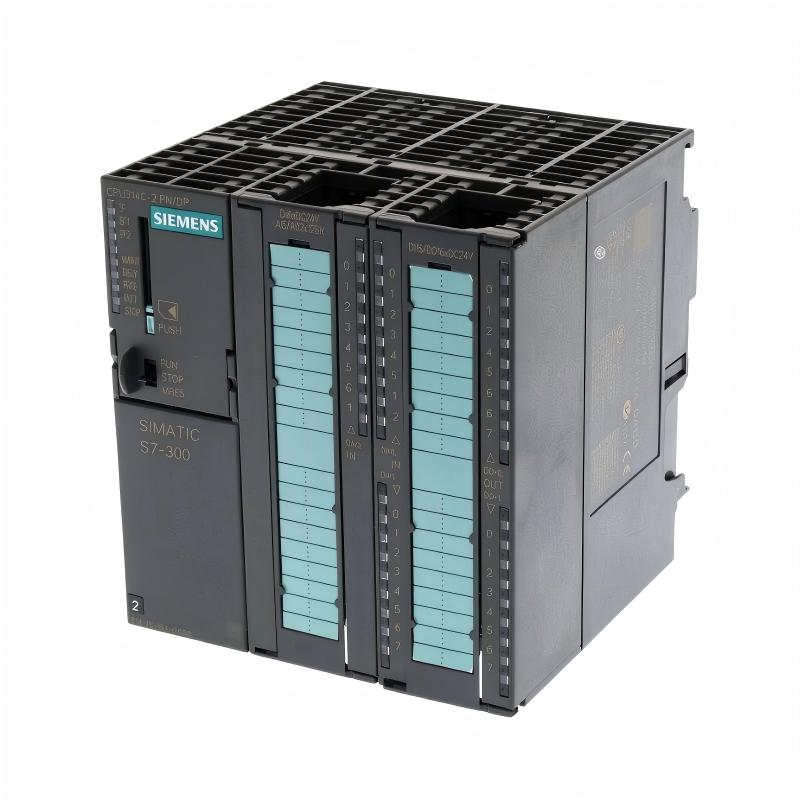
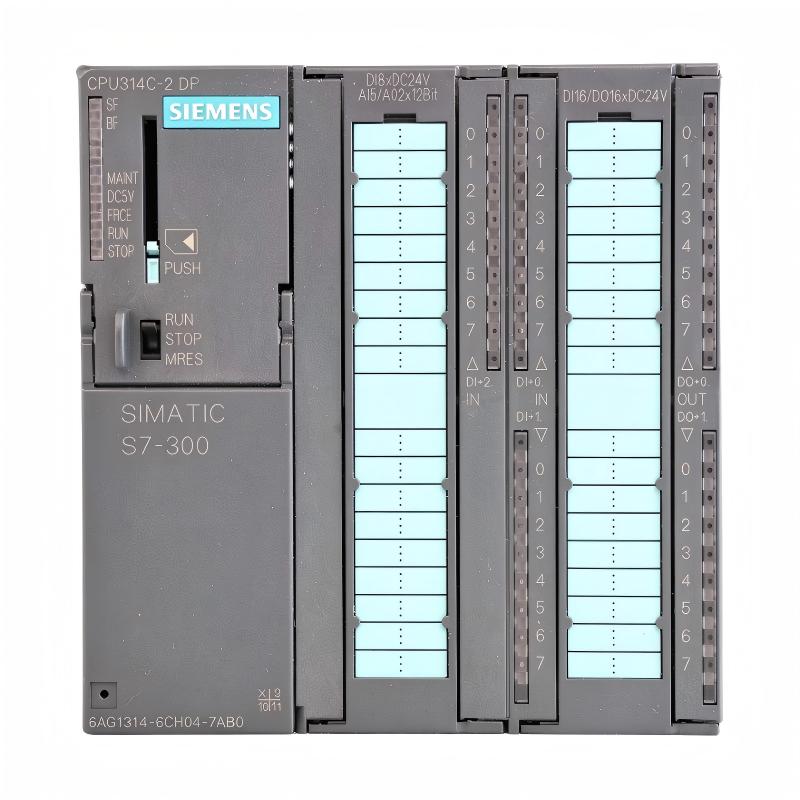
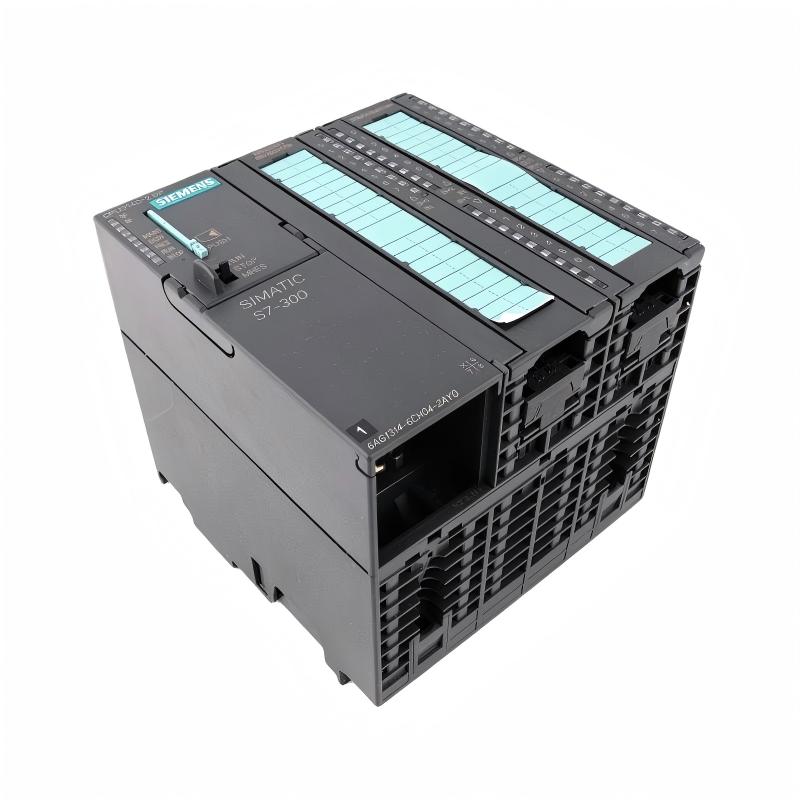
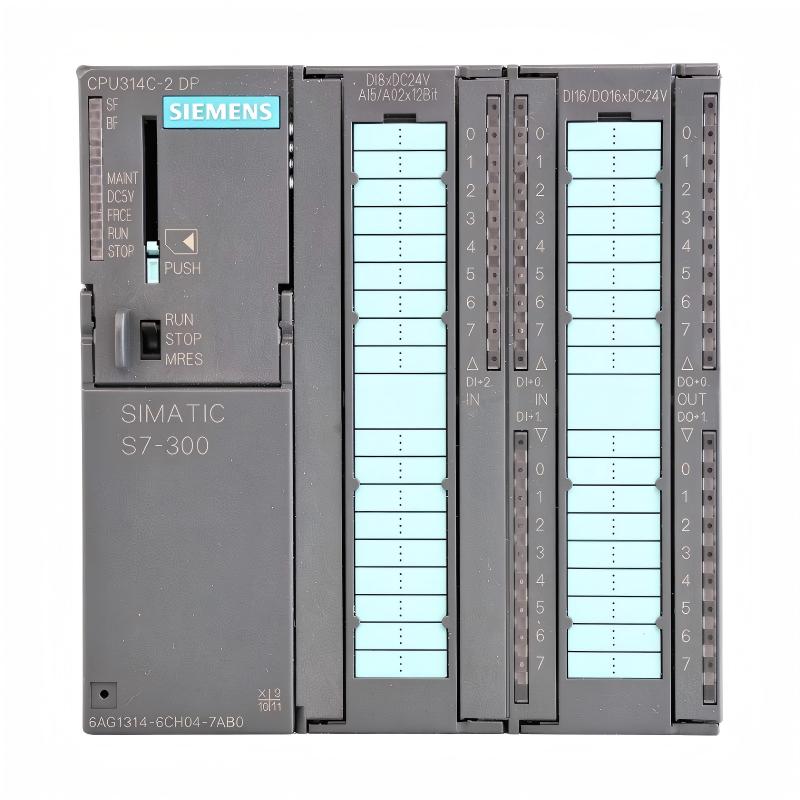
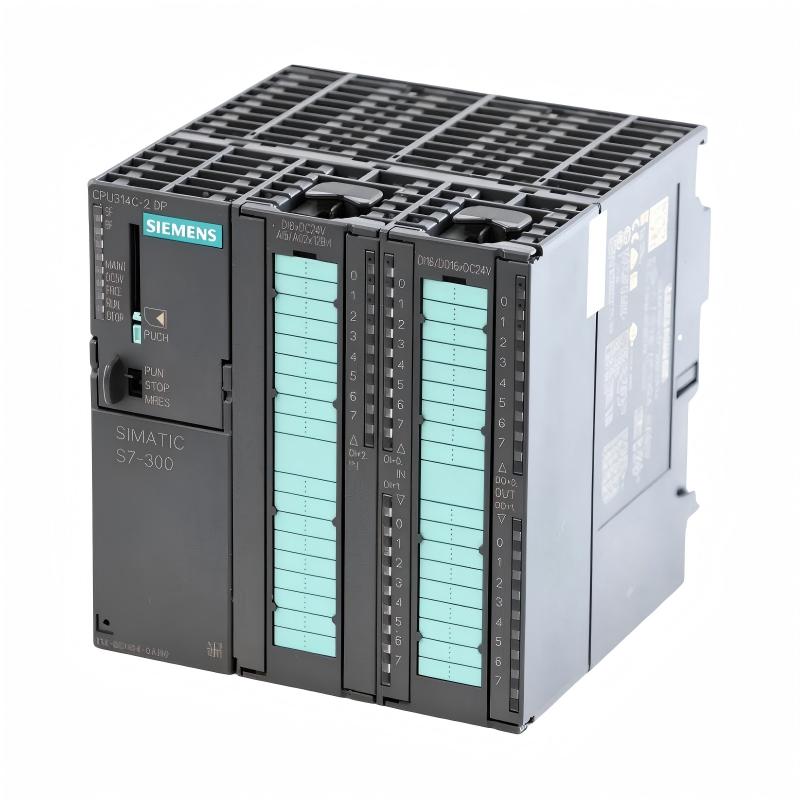
The Siemens 6AG1314-6CH04-7AB0 Compact CPU is a SIPLUS S7-300 CPU 314C-2DP designed for industrial automation systems that require integrated control functions and enhanced environmental resistance. Based on the standard SIMATIC S7-300 CPU 314C-2DP platform, this controller combines central processing capabilities with digital and analog I/O, communication interfaces, and technological functions in a compact unit.
Unlike a conventional CPU that relies heavily on separate expansion modules for basic signal processing, the CPU 314C-2DP integrates multiple I/O channels directly into the controller. This arrangement can simplify system architecture, reduce the number of additional modules required for smaller automation tasks, and provide a practical control solution for machinery and process equipment.
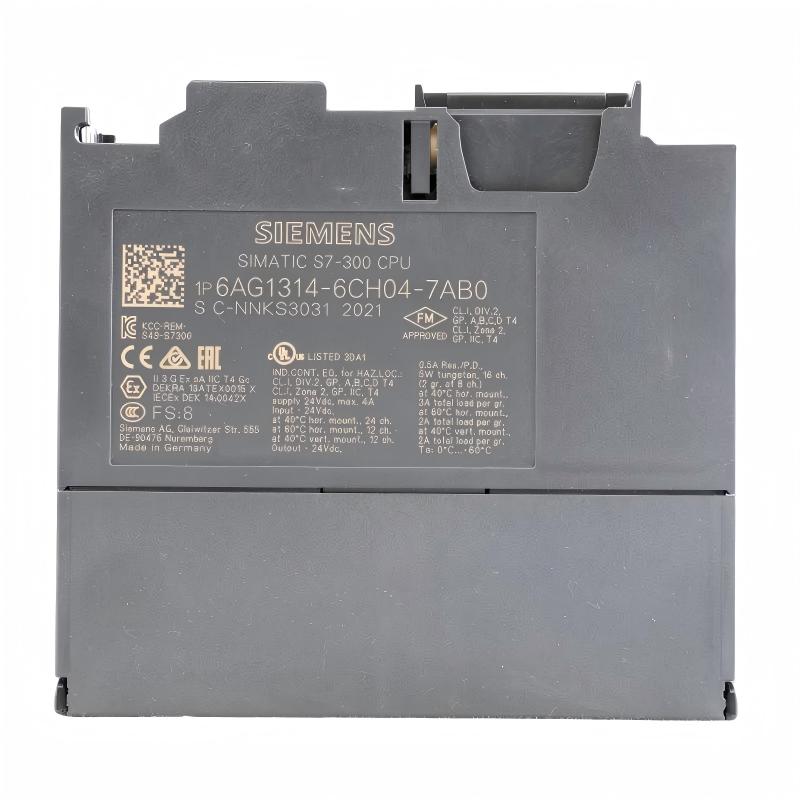
The 6AG1314-6CH04-7AB0 belongs to the Siemens SIPLUS product family. Its environmental design supports an extended operating temperature range of -25 to +70°C under specified conditions. The product also features conformal coating intended to provide additional protection for electronic assemblies in demanding industrial environments.
The controller integrates 24 digital inputs, 16 digital outputs, four analog inputs, two analog outputs, and one resistance-temperature measurement channel. It also includes four high-speed counters with counting frequencies of up to 60 kHz, an MPI interface, and an integrated PROFIBUS DP interface.
With 192 KB of working memory and support for established STEP 7 programming languages, the CPU can execute machine-control logic, process field signals, coordinate connected devices, and perform technological functions such as counting, frequency measurement, and PID control.
The 6AG1314-6CH04-7AB0 is based on the standard Siemens 6ES7314-6CH04-0AB0 CPU. However, the SIPLUS version has different environmental characteristics. When selecting a replacement, engineers should distinguish between the standard SIMATIC model and the SIPLUS version rather than treating them as identical products.
Technical Specifications
| Parameter | Specification |
|---|---|
| Brand | Siemens |
| Product Family | SIPLUS S7-300 |
| Model | 6AG1314-6CH04-7AB0 |
| CPU Type | CPU 314C-2DP |
| Product Type | Compact CPU / Central Processing Unit |
| Based On | 6ES7314-6CH04-0AB0 |
| Working Memory | 192 KB |
| Digital Inputs | 24 |
| Digital Outputs | 16 |
| Analog Inputs | 4 voltage/current channels plus 1 resistance input |
| Analog Outputs | 2 |
| High-Speed Counters | 4 |
| Maximum Counting Frequency | 60 kHz |
| Communication Interfaces | MPI and integrated PROFIBUS DP |
| Integrated Power Supply | 24 V DC |
| Temperature Measurement | 1 Pt100 channel |
| Operating Temperature | -25 to +70°C, subject to approval-specific limits |
| Programming Software | STEP 7 |
| Supported Programming Languages | LAD, FBD, STL, SCL, GRAPH, CFC, HiGraph |
| Dimensions | 120 × 125 × 130 mm |
| Weight Provided | 0.765 kg |
| Environmental Protection | SIPLUS design with conformal coating |
| Product Lifecycle | Discontinued |
Note: The listed weight of 0.765 kg is the supplied product-listing value. Siemens technical documentation gives an approximate product weight of 0.68 kg. Confirm whether the listing value includes additional packaging or accessories.
Function and Working Principle
The CPU 314C-2DP operates as the central processing unit of an S7-300 automation system. It executes the user program, reads input signals, processes control logic, updates outputs, and exchanges information with connected automation devices.
1. Central Processing and Program Execution
The CPU processes instructions stored in its user program. During normal operation, it reads input data, executes logic and function blocks, updates output states, and manages communication and diagnostic tasks.
The 192 KB working memory provides storage capacity for the controller’s program and associated data. Actual application capacity depends on program complexity, data structures, configuration, and the memory requirements of the installed software.
For machine automation, the CPU can coordinate operating sequences such as motor starting, material feeding, machine interlocking, alarm handling, and production-cycle control.
2. Integrated Digital Input Processing
The controller provides 24 digital inputs for receiving binary signals from field devices.
Typical input devices include:
- Proximity sensors
- Photoelectric sensors
- Limit switches
- Push buttons
- Selector switches
- Relay contacts
- Machine status signals
The digital inputs use a nominal 24 V DC signal level. The CPU evaluates the incoming states according to the configured program and uses them to determine the next control actions.
Sixteen of the digital inputs can be used for technological functions, allowing the controller to support applications requiring faster signal processing than ordinary digital input monitoring.
3. Integrated Digital Output Control
The CPU includes 16 digital outputs for controlling external devices and electrical loads.
These outputs can be used for:
- Relay coils
- Indicator lamps
- Solenoid valves
- Contactor control circuits
- Small actuator interfaces
- Machine status signals
The digital outputs provide a nominal switching voltage based on the 24 V DC supply arrangement. Each output group has defined current limits, and the total output current must remain within the specified operating conditions.
External interface relays or suitable driver circuits may be required when controlling loads that exceed the output ratings.
4. Analog Signal Processing
The integrated analog inputs allow the controller to acquire continuous process values from compatible sensors and transmitters.
Typical measurement applications include:
- Temperature monitoring
- Pressure measurement
- Flow monitoring
- Level measurement
- Voltage and current signal acquisition
- Resistance-temperature measurement
The CPU supports voltage and current measurement ranges, including 0–10 V, ±10 V, 0–20 mA, and 4–20 mA configurations, subject to channel configuration and electrical limits.
The two analog outputs can provide control signals to compatible devices, such as variable-speed drives, control valves, and other process-control equipment.
Correct wiring, signal conditioning, grounding, and channel configuration are important for obtaining reliable analog measurements.
5. High-Speed Counting and Frequency Measurement
The controller integrates four high-speed counters with a maximum counting frequency of 60 kHz.
These functions are useful when an automation system must process pulse signals generated by:
- Incremental encoders
- Proximity sensors
- Pulse transmitters
- Rotating equipment
- Position-detection devices
- Production counting sensors
High-speed counters can process pulses for counting, speed measurement, and position-related control tasks. Their use reduces dependence on ordinary cyclic input scanning for applications that require faster signal recognition.
The supported technological functions must be configured according to the relevant Siemens programming documentation.
6. Integrated PID Control
The CPU supports PID controller functions for suitable closed-loop control applications.
A PID controller compares a measured process value with a desired setpoint and calculates an output adjustment based on the control error. This function can be applied to temperature, pressure, flow, and other process variables.
For example, the CPU can process a temperature measurement and adjust an analog output connected to a suitable control device.
The quality of control depends on sensor accuracy, actuator response, process characteristics, and correct PID parameter tuning.
Role in Industrial Control Systems
The 6AG1314-6CH04-7AB0 serves as the main controller in an S7-300 automation architecture. It can coordinate field devices, manage local I/O, communicate with distributed equipment, and execute machine or process-control programs.
PLC-Based Machine Control
The CPU can manage the operating sequence of individual machines or compact production systems. It receives signals from field sensors, evaluates programmed conditions, and controls connected actuators.
Typical control functions include:
- Start and stop sequences
- Equipment interlocking
- Motor control commands
- Alarm processing
- Product counting
- Machine timing
- Automatic and manual operating modes
The integrated I/O can reduce the need for separate modules in installations whose signal requirements fit the available channels.
PROFIBUS DP Communication
The integrated PROFIBUS DP interface allows the controller to communicate with compatible distributed I/O stations and automation devices.
In a distributed control arrangement, field signals can be collected through remote I/O stations and exchanged with the CPU over the PROFIBUS DP network.
This approach is useful when equipment is distributed across a production line or when field wiring needs to be organized around local I/O stations.
Network configuration, device addresses, bus termination, and communication parameters must be established correctly.
MPI Communication
The integrated MPI interface supports communication with compatible Siemens programming and automation devices.
It can be used for engineering access, programming, diagnostics, and communication with supported operator-interface equipment.
MPI is associated with legacy Siemens automation installations, so the communication requirements of connected devices should be verified before integrating the CPU into an existing system.
Distributed Automation Architecture
The CPU can coordinate local I/O with remote equipment through PROFIBUS DP. This makes it suitable for automation projects where field devices, operator stations, and other controllers are installed in different physical locations.
The controller executes the main program while communicating with the configured devices according to the network architecture.
Industrial Applications
The Siemens SIPLUS S7-300 CPU 314C-2DP is suitable for automation systems requiring integrated digital and analog I/O, communication capabilities, and operation under specified demanding environmental conditions.
1. Manufacturing Machinery
Manufacturing equipment often requires coordinated control of sensors, motors, pneumatic actuators, and operator commands.
The CPU can manage machine sequences, monitor operating conditions, process alarms, and coordinate individual production stages.
Its integrated I/O is useful for compact machines that need multiple signal types without requiring a large number of separate modules.
2. Packaging and Material Handling
Packaging systems use sensors, motors, counting devices, and actuators to coordinate product movement.
The CPU’s high-speed counters can process pulse signals for product counting and speed-related applications. Digital outputs can control compatible machine interfaces, while analog channels can acquire process values.
Typical applications include:
- Conveyor control
- Product counting
- Packaging sequence management
- Sorting equipment
- Material feeding
- Machine synchronization
3. Process Automation
The integrated analog channels and PID capabilities support suitable process-control tasks.
The CPU can acquire signals from pressure, temperature, flow, and level transmitters and use the measured values in the control program.
Analog outputs can provide reference signals to compatible control devices. The actual control performance depends on the process requirements and the characteristics of the connected equipment.
4. Environmental and Utility Systems
Industrial utility equipment may operate in environments where temperature and other conditions are more demanding than those found in standard control cabinets.
The SIPLUS design of the 6AG1314-6CH04-7AB0 provides an extended operating temperature range and conformal coating for appropriate industrial conditions.
Potential applications include ventilation equipment, auxiliary pumping systems, water treatment equipment, and facility automation.
5. Distributed Industrial Equipment
The integrated PROFIBUS DP interface supports communication with compatible distributed I/O and field devices.
This can simplify the control architecture of production lines where sensors and actuators are located at several stations.
The CPU can coordinate these devices through a centralized control program while maintaining communication with the configured network participants.
6. Temperature and Position-Related Control
The integrated Pt100 input and high-speed counting functions support selected temperature and pulse-processing applications.
The controller can monitor a compatible resistance-temperature sensor and process pulse signals from encoders or other measuring devices.
These functions are useful in machinery that combines temperature monitoring, counting, and sequence control.
Installation and System Integration
Proper installation is essential for stable controller operation and reliable communication with connected equipment.
1. Mounting and Mechanical Installation
The supplied dimensions are 120 × 125 × 130 mm. Confirm the actual dimensions and mounting requirements before preparing the control cabinet.
Install the CPU in an appropriate S7-300 mounting arrangement and ensure that sufficient space is available for wiring, ventilation, and maintenance access.
The cabinet should provide protection against environmental conditions outside the controller’s specified limits.
2. Power Supply Connection
The CPU has an integrated 24 V DC power supply arrangement. The incoming supply must meet the specified electrical requirements.
Check the supply polarity, voltage stability, current capacity, and grounding arrangement before energizing the controller.
A suitable upstream protective device should be selected according to the installation design.
3. Digital I/O Wiring
Connect field input devices to the appropriate digital input terminals and ensure that the 24 V DC signal levels match the CPU requirements.
Digital output wiring must account for the current limits of each output and output group.
For inductive loads such as relay coils and solenoid valves, suitable suppression components may be required to reduce switching transients.
4. Analog I/O Configuration
Analog input channels must be configured according to the connected sensor or transmitter.
Check the signal type, measurement range, polarity, cable shielding, and reference connections. For 4–20 mA signals, verify the current-loop wiring and transmitter supply arrangement.
Analog output channels should be matched to the electrical requirements of the connected actuator or drive reference input.
5. PROFIBUS DP Network Configuration
When using the integrated PROFIBUS DP interface, configure the network according to the system topology.
Important considerations include:
- Unique device addresses
- Correct communication speed
- Proper bus termination
- Suitable PROFIBUS cable
- Correct connector installation
- Compatible device configuration
- Appropriate network diagnostics
Incorrect termination or address configuration may result in communication errors or unavailable remote I/O.
6. Programming and Commissioning
The CPU is configured and programmed using supported STEP 7 engineering software.
The supported programming languages include LAD, FBD, STL, SCL, GRAPH, CFC, and HiGraph, subject to the applicable software version and engineering environment.
Before commissioning, verify the hardware configuration, I/O addresses, communication settings, and user program.
Perform controlled tests of digital inputs, digital outputs, analog channels, high-speed counters, and network communication before placing the complete machine into automatic operation.
7. Environmental Considerations
The SIPLUS version is designed for a wider operating temperature range than the standard CPU platform. Its stated range is -25 to +70°C, although specific approvals may impose lower maximum temperatures.
Maintain the required environmental conditions and keep unused interfaces protected with the supplied covers as instructed by Siemens.
Conformal coating provides additional protection for electronic assemblies but does not eliminate the need for appropriate cabinet design and environmental management.
Compatible System Components
The 6AG1314-6CH04-7AB0 can be used with compatible Siemens S7-300 components and industrial automation devices.
| Component | Function | Integration Considerations |
|---|---|---|
| S7-300 mounting rail | Supports the controller and compatible modules | Verify the required mechanical arrangement |
| Siemens S7-300 signal modules | Expand digital or analog I/O capacity | Confirm hardware and configuration compatibility |
| PROFIBUS DP remote I/O | Collects distributed field signals | Configure addresses, bus parameters, and device data |
| MPI-compatible programming device | Supports engineering and diagnostics | Verify the required MPI connection method |
| Siemens HMI | Provides operator control and visualization | Confirm supported communication interface |
| 24 V DC power supply | Supplies the controller and field circuits where required | Verify capacity and electrical specifications |
| Digital sensors | Provide machine status and detection signals | Match the input voltage and wiring requirements |
| Analog transmitters | Measure process variables | Configure the appropriate signal range |
| Motor drives | Control connected AC motors | Coordinate speed references and operating commands |
| PROFIBUS DP connectors and cables | Establish fieldbus communication | Observe network topology and termination requirements |
The table lists typical system components. Actual compatibility depends on the installed hardware, firmware, software version, and application design.
Alternative Models and Replacement Considerations
The 6AG1314-6CH04-7AB0 belongs to the SIPLUS S7-300 family and is based on the standard 6ES7314-6CH04-0AB0 CPU.
When selecting an alternative, engineers should consider the environmental requirements as well as the processing, I/O, and communication functions.
| Related Model | Description | Replacement Considerations |
|---|---|---|
| 6ES7314-6CH04-0AB0 | Standard SIMATIC S7-300 CPU 314C-2DP | Similar base platform, but environmental specifications differ |
| 6AG1314-6EH04-7AB0 | SIPLUS S7-300 CPU 314C-2PN/DP | Provides a different communication configuration |
| 6AG1314-6BH04-7AB0 | SIPLUS S7-300 CPU 314C variant | Verify I/O, communication, and environmental characteristics |
| Other SIPLUS S7-300 CPUs | Environmental-resistant controller alternatives | Compare memory, integrated I/O, interfaces, and temperature ratings |
| SIMATIC S7-1500 CPUs | Newer Siemens controller family | May require hardware redesign, program migration, and commissioning |
A replacement should not be selected only because it belongs to the Siemens S7 family.
Before substitution, compare:
- Working memory and program requirements
- Number and type of integrated I/O channels
- Analog measurement ranges
- High-speed counter capabilities
- MPI and PROFIBUS DP requirements
- Environmental operating temperature
- Conformal-coating requirements
- Mounting and wiring arrangements
- STEP 7 software compatibility
- Existing PLC program and communication configuration
A standard CPU may not provide the same environmental protection as its SIPLUS counterpart. For installations exposed to demanding conditions, this difference must be evaluated carefully.
Key Advantages
Integrated Digital and Analog I/O
The CPU combines digital inputs, digital outputs, analog inputs, and analog outputs in one compact controller. This can reduce the need for additional modules in smaller automation systems.
Enhanced Environmental Design
The SIPLUS configuration is designed for specified demanding environmental conditions, with an operating temperature range of -25 to +70°C and conformal coating.
Integrated PROFIBUS DP Interface
The controller can communicate with compatible distributed I/O and industrial devices through its integrated PROFIBUS DP interface.
High-Speed Counting Functions
Four integrated high-speed counters support pulse-processing applications with counting frequencies up to 60 kHz.
Built-In Temperature Measurement
The integrated Pt100 measurement channel supports suitable temperature-monitoring applications without requiring a separate measurement module for that channel.
Integrated PID Control
The CPU supports closed-loop control functions for appropriate process applications, including temperature, pressure, and flow regulation.
Established S7-300 Platform
The controller is based on the widely used SIMATIC S7-300 architecture, making it relevant to existing Siemens automation installations and legacy system maintenance.
Technical FAQs
1. What is the Siemens 6AG1314-6CH04-7AB0?
It is a SIPLUS S7-300 CPU 314C-2DP compact controller designed for industrial automation. It combines processing, integrated digital and analog I/O, MPI communication, PROFIBUS DP, and technological functions.
2. What is the difference between 6AG1314-6CH04-7AB0 and 6ES7314-6CH04-0AB0?
The 6AG1314-6CH04-7AB0 is the SIPLUS version based on the standard 6ES7314-6CH04-0AB0 CPU. The SIPLUS version provides enhanced environmental characteristics, including an extended operating temperature range and conformal coating.
3. How many digital inputs and outputs does this CPU have?
It provides 24 digital inputs and 16 digital outputs. The input and output channels must be wired according to their specified electrical characteristics and current limits.
4. Does the CPU support PROFIBUS DP?
Yes. It has an integrated PROFIBUS DP interface for communication with compatible distributed I/O stations and automation devices.
5. Does it support MPI communication?
Yes. The CPU includes an MPI interface that can be used with compatible Siemens programming and communication equipment.
6. How much working memory does the CPU provide?
The CPU has 192 KB of working memory. Actual program capacity depends on the application, program structure, and data requirements.
7. What is the maximum counting frequency?
The integrated high-speed counters support counting frequencies up to 60 kHz. The actual achievable performance depends on the configured technological function and signal conditions.
8. What is the operating temperature range?
The stated operating temperature range is -25 to +70°C. Certain certification and approval conditions may impose lower temperature limits, so the applicable documentation should be checked for the intended installation.
9. Which software is used to program this CPU?
The CPU is configured and programmed using compatible Siemens STEP 7 engineering software. Supported programming languages include LAD, FBD, STL, SCL, GRAPH, CFC, and HiGraph.
10. Is the 6AG1314-6CH04-7AB0 suitable as a replacement for a standard S7-300 CPU?
It may be suitable in an appropriately designed system, but the complete hardware configuration must be checked. Differences in environmental specifications, I/O, interfaces, and firmware requirements can affect replacement compatibility.
Procurement and Maintenance Recommendations
The Siemens 6AG1314-6CH04-7AB0 is a specialized SIPLUS controller, so procurement should begin with verification of the complete order number rather than relying only on the CPU 314C-2DP description.
For replacement projects, confirm the exact catalog number, hardware condition, interface configuration, I/O functionality, and environmental requirements. Check whether the unit includes the required front connectors and whether a compatible Micro Memory Card is available. The CPU requires a Micro Memory Card for operation.
For used or refurbished units, inspect the connector condition, housing, terminal interfaces, and visible signs of contamination or damage. Where possible, request a functional test covering CPU startup, program loading, I/O operation, and PROFIBUS DP communication.
During maintenance, keep the control cabinet within the specified environmental limits. Protect unused interfaces with the supplied covers and inspect wiring, connectors, and communication connections according to the maintenance schedule.
Because the product has been announced for discontinuation, users maintaining existing installations should consider spare-unit availability and long-term migration planning. If a newer controller is selected, evaluate program conversion, communication changes, I/O mapping, and commissioning requirements before implementing the upgrade.
Conclusion
The Siemens 6AG1314-6CH04-7AB0 SIPLUS S7-300 CPU 314C-2DP is a compact industrial controller that combines processing capability, integrated digital and analog I/O, MPI communication, PROFIBUS DP, high-speed counting, and PID control functions.
Its SIPLUS environmental design distinguishes it from the standard S7-300 CPU platform, making it relevant to automation systems operating under specified demanding environmental conditions. For maintenance and replacement applications, accurate model identification, environmental compatibility, and verification of the complete hardware configuration are essential for reliable system operation.