

ProductPRODUCT
Featured products
Contact Us
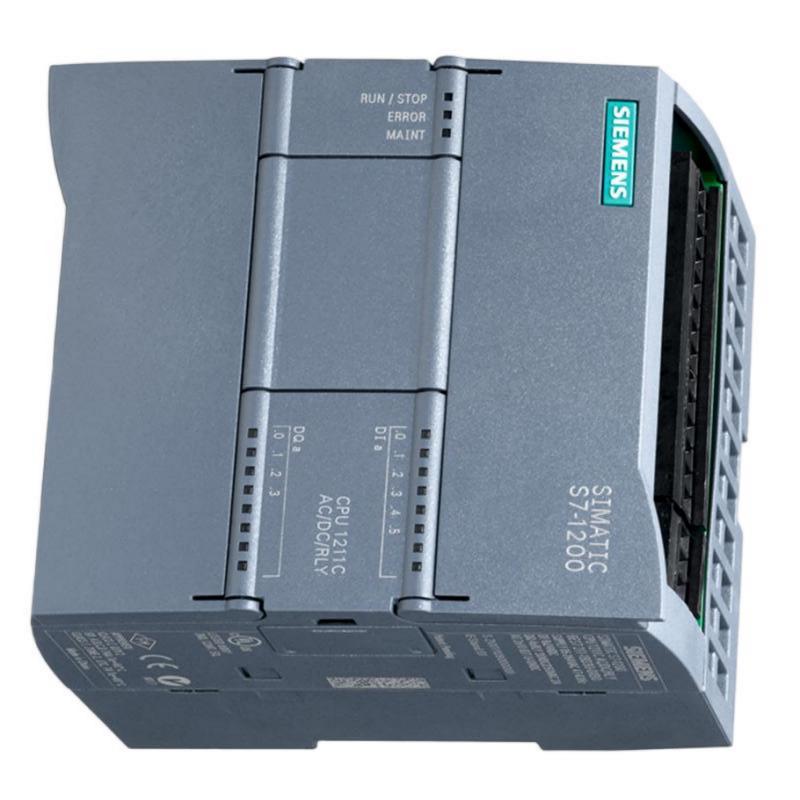
- Siemens
- 6AG1226-6DA32-5XB0
- SIPLUS S7-1200 SM 1226 F-DI 16x24VDC
- Germany
- 300 mm x 200 mm x 150 mm
- 0.03kg
- Xiamen, China
- New & In Stock
- T/T, PayPal, Western Union
- 1 Year
- 1-3 Working Days
- DHL, UPS, TNT, FedEx and EMS.
- 24-Hour Service
- COO
- 3
Our advantage

Global Logistics
We have a 10-year logistics and express cooperation agreement, so our products can be shipped to any place in the world.

Brand new and original
Our products are imported in bulk from the place of origin. Because of the cooperative relationship, our products are all original and 100% new.

24-hour service
We provide 7*24 hours service to our customers. We will be there whenever you need us.

Price advantage
All our products are priced very favorably because we have our own warehouse and supply.
| Company Information | |||
| [email protected] | |||
| Mobile | +8615980777398 | ||
| +8615980777398 | |||
| 15980777398 |
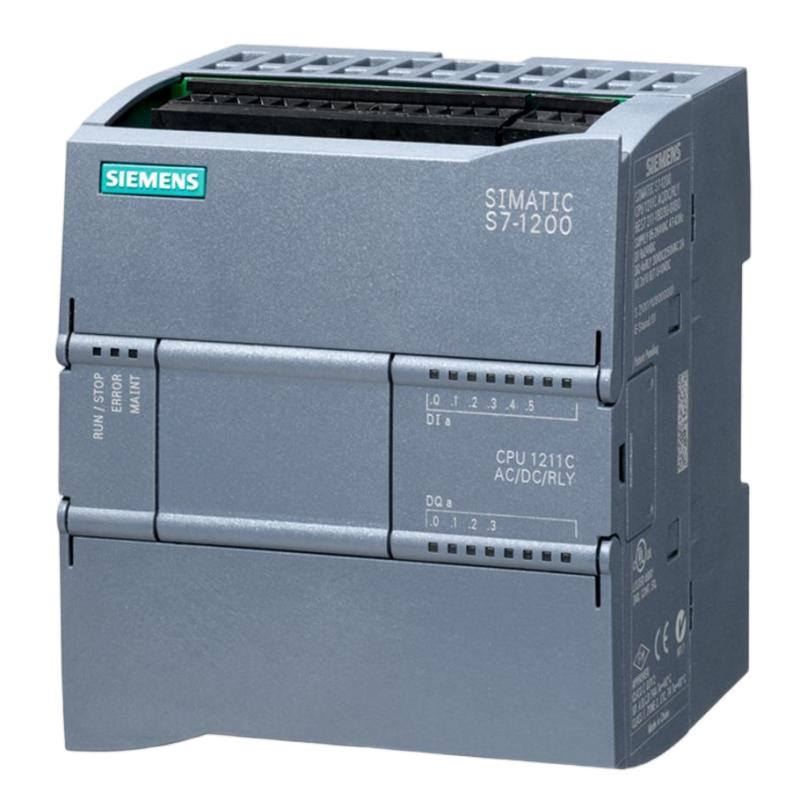
6AG1226-6DA32-5XB0 — Product Overview, Technical Parameters, Applications, Advantages, and Related Models
1. Product Overview
The 6AG1226-6DA32-5XB0 is a SIPLUS S7-1200 SM 1226 F-DQ fail-safe digital output module designed for safety-related industrial automation applications.
The module is intended to provide fail-safe digital output signals to compatible field devices as part of a properly designed safety-control system. Typical applications include safety-related machine stopping, enabling or disabling compatible actuators, and controlling external switching devices through an appropriate safety architecture.
The module belongs to the SIPLUS product family, which includes automation products designed for applications with specific environmental requirements. The exact environmental capabilities depend on the individual product variant and its specified operating conditions.
This module is intended for use with a compatible fail-safe controller and safety-related communication and configuration. It should not be treated as a general-purpose output module or as a standalone safety device.
Important specification note: The product’s functional family can be identified as a fail-safe digital output module, but every electrical rating, dimensional value, and weight should be confirmed against the exact article number before purchase or installation. Values marked for verification below are deliberately not estimated as confirmed facts.
2. Product Identification
| Parameter | Description |
|---|---|
| Model | 6AG1226-6DA32-5XB0 |
| Brand | Siemens |
| Product family | SIPLUS S7-1200 |
| Module series | SM 1226 F-DQ |
| Product category | Fail-safe digital output module |
| Standard-series reference | 6ES7226-6DA32-0XB0 |
| Main function | Safety-related digital output switching |
| Output configuration | Four fail-safe digital output channels |
| Nominal output voltage | 24 V DC |
| Output technology | Electronic digital output; confirm the exact output characteristics |
| Safety communication | PROFIsafe, subject to compatible system configuration |
| Typical application | Safety-related switching and machine control |
| Controller compatibility | Compatible fail-safe controller and supported hardware configuration required |
| Environmental design | SIPLUS product variant |
| Conformal coating | Confirm the exact product specification |
| Operating temperature | Confirm the exact permitted range for this article number |
| Protection rating | Confirm the specified rating |
| Dimensions (W × H × D) | Exact dimensions require confirmation |
| Weight (kg) | Exact product weight requires confirmation |
| Installation | Compatible control-cabinet installation |
| Output load suitability | Must be checked against the output rating and connected load |
| Replacement suitability | Requires verification of electrical, mechanical, and safety-system compatibility |
3. Detailed Technical Parameters
3.1 Electrical Specifications
| Parameter | Specification |
|---|---|
| Model | 6AG1226-6DA32-5XB0 |
| Module type | Fail-safe digital output |
| Number of output channels | 4 |
| Nominal output voltage | 24 V DC |
| Output signal | Digital ON/OFF |
| Output technology | Electronic switching; verify exact implementation |
| Rated output current | Confirm exact rated current per channel |
| Maximum output current | Confirm the specified limit |
| Permitted load type | Compatible electrical loads within the module’s ratings |
| Short-circuit protection | Confirm the exact protection and diagnostic characteristics |
| Overload protection | Confirm the exact specification |
| Output diagnostics | Depends on the supported configuration and system diagnostics |
| Safety communication | PROFIsafe |
| Safety performance | Depends on the module’s specified capability and the complete safety system |
| Power supply requirements | Follow the module’s exact electrical specification |
| Backplane bus current consumption | Confirm exact value |
| Power dissipation | Confirm exact value |
| Wiring arrangement | Follow the terminal assignment and approved wiring configuration |
The module is designed to provide digital output signals within a safety-related control architecture.
A digital output typically switches between defined states. In an industrial application, the controller may use this function to command a compatible switching device, actuator interface, or other electrical load.
The actual output current, permissible load type, switching behavior, and protective functions must be checked before connecting a field device.
3.2 Output Configuration
| Parameter | Description |
|---|---|
| Model | 6AG1226-6DA32-5XB0 |
| Output channels | 4 |
| Signal type | Digital output |
| Nominal signal voltage | 24 V DC |
| Main function | Fail-safe output switching |
| Control architecture | Compatible fail-safe PLC system |
| Communication | PROFIsafe, subject to supported configuration |
| Typical controlled equipment | Compatible switching devices and actuator interfaces |
| Output status monitoring | Depends on module configuration and supported diagnostics |
| Safety behavior | Defined by the complete safety architecture |
| Output current | Must be confirmed before connecting a load |
| External protection | Determined by the load, wiring, and installation requirements |
Four output channels provide a compact way to implement several safety-related switching functions in a suitable application.
The number of channels alone, however, does not determine whether the module is appropriate for a particular safety function. The engineer must also evaluate the output ratings, load characteristics, required fault response, and system-level safety requirements.
3.3 Mechanical Specifications
| Parameter | Specification |
|---|---|
| Model | 6AG1226-6DA32-5XB0 |
| Module width | Confirm exact value |
| Module height | Confirm exact value |
| Module depth | Confirm exact value |
| Overall dimensions (W × H × D) | Exact dimensions require confirmation |
| Weight (kg) | Exact weight requires confirmation |
| Housing | Industrial automation module enclosure |
| Mounting arrangement | Compatible S7-1200 system installation |
| Installation location | Suitable control cabinet, subject to environmental requirements |
| Wiring clearance | Must follow the installation requirements |
| Maintenance clearance | Must allow safe access and servicing |
| Packaging weight | Depends on packaging and supplied accessories |
The dimensions of a module affect cabinet design, wiring access, thermal planning, and replacement procedures.
The exact dimensions of 6AG1226-6DA32-5XB0 should be confirmed before preparing a mechanical drawing or deciding whether it will fit into an existing installation.
The same applies to weight. A verified product weight is necessary when preparing shipping information, inventory records, or equipment-handling documentation.
3.4 Environmental Specifications
| Parameter | Specification |
|---|---|
| Model | 6AG1226-6DA32-5XB0 |
| Product family | SIPLUS S7-1200 |
| Environmental design | Variant intended for specified industrial environmental conditions |
| Conformal coating | Confirm exact specification |
| Operating temperature | Confirm exact rated range |
| Storage temperature | Confirm exact rated range |
| Humidity limits | Follow the specified environmental requirements |
| Condensation tolerance | Must be confirmed for the specific installation |
| Protection rating | Confirm exact rating |
| Installation environment | Industrial control cabinet or other approved installation |
| Additional enclosure requirements | Depend on site conditions and the module’s protection rating |
The SIPLUS designation is relevant when selecting automation equipment for installations with particular environmental requirements.
It should not be interpreted as a guarantee that the module can withstand any temperature, humidity, contamination, or condensation condition.
The correct selection requires a comparison between the actual installation environment and the module’s specified operating limits.
4. Product Introduction
The 6AG1226-6DA32-5XB0 is intended for fail-safe digital output switching in industrial automation systems based on a compatible S7-1200 safety architecture.
Its role is to provide the output interface through which a safety-control program can command compatible external devices.
In a machine, the controller may need to stop hazardous movement, disable an enabling circuit, or switch a suitable control interface when a safety condition is no longer satisfied.
The fail-safe output module forms part of the electrical path used to implement these functions. Its correct operation depends on the controller, safety program, communication configuration, field wiring, and connected equipment.
4.1 Fail-Safe Digital Output Control
A fail-safe digital output module is designed for safety-related control applications rather than ordinary switching alone.
The safety controller evaluates the relevant input conditions and executes the configured safety logic. The output module then provides the required output behavior through compatible channels.
The specific response depends on the safety function. It may include removing an enable signal or commanding an appropriate external device to enter a defined safe state.
The module should be used only within its specified safety architecture.
4.2 Integration with the Automation System
The module is one component of a larger industrial control system.
A typical installation may include:
- A compatible fail-safe PLC CPU.
- Digital input modules for collecting field signals.
- Fail-safe output modules for safety-related switching.
- Safety switches and emergency-stop devices.
- Compatible contactors, drives, or actuator interfaces.
- A suitable power supply and protective devices.
- Industrial communication and engineering software.
The compatibility of each component must be checked during system design.
4.3 Safety Communication
PROFIsafe is used to exchange safety-related information in compatible industrial automation architectures.
Where supported by the selected controller and configuration, the communication arrangement enables safety-related signals to be processed within the configured control system.
The system must be correctly configured, commissioned, and validated. Merely installing a PROFIsafe-capable module does not establish that a complete machine meets its required safety level.
4.4 SIPLUS Product Characteristics
The SIPLUS product family is intended for applications where environmental conditions are an important part of equipment selection.
For this model, the precise temperature range, coating characteristics, and other environmental properties should be confirmed against the exact product specification.
These details are particularly important when the module will be installed in a location subject to demanding ambient conditions.
5. Main Applications
5.1 Safety-Related Machine Stopping
Industrial machines may require a controlled safety response when a hazardous condition occurs.
A fail-safe digital output module can be part of the control architecture that issues the required switching command to compatible external equipment.
The final stopping behavior depends on the machine design and the selected safety devices. A digital output alone should not be assumed to provide all the functions required for safe stopping.
5.2 Emergency-Stop Systems
Emergency-stop systems are designed to initiate a defined response when an operator identifies an immediate hazard.
The module may be used as part of a suitable safety system in which a fail-safe controller processes the emergency-stop status and commands the required output response.
The complete system must use suitable safety devices, correctly designed wiring, and validated control logic.
5.3 Protective Guard Interlocking
Machine guards and access doors help prevent personnel from reaching hazardous moving parts.
A safety system can monitor the status of suitable interlocking devices and use that information to control permitted machine operation.
A compatible fail-safe output module may provide the required switching interface when the safety logic determines that a protective response is necessary.
5.4 Automated Production Lines
Automated production lines often contain multiple machines, conveyors, transfer mechanisms, and operator access points.
Safety-related output functions may be required to stop or inhibit selected equipment when an unsafe condition is detected.
The module can be considered for such applications when its electrical and safety characteristics match the required system design.
5.5 Packaging Machinery
Packaging machines can contain moving cutters, sealing mechanisms, feeding systems, and other potentially hazardous equipment.
A safety-control system may need to inhibit motion or remove an enabling command when a protective guard is opened or another safety condition is triggered.
The module can form part of the output interface for such functions, provided the overall architecture meets the required safety performance.
5.6 Conveyor and Material-Handling Systems
Conveyor installations may require safety-related switching for equipment shutdown, access protection, or the control of selected machine functions.
A fail-safe output module can be useful when several safety-related output signals must be handled within a compatible controller system.
Output current, load compatibility, and the behavior of external switching devices must be considered carefully.
5.7 Robotics and Automated Work Cells
Robotic work cells may contain hazardous movement and restricted-access areas.
Safety-related output functions can be used to control compatible external safety interfaces as part of a validated safety system.
The appropriate output architecture depends on the robot controller, protective devices, drive system, and required safety functions.
5.8 Industrial Equipment in Demanding Environments
The SIPLUS product family may be relevant when an installation requires specific environmental characteristics.
Before choosing this module, the engineer should compare the actual operating temperature, humidity, contamination, and enclosure conditions with the exact product ratings.
A suitable enclosure and correct installation remain important even when an environmentally enhanced product variant is selected.
6. Product Advantages
6.1 Designed for Safety-Related Switching
The module is intended for fail-safe digital output applications.
This makes it relevant to systems that require more than the ordinary switching functionality of a standard digital output module.
Its suitability still depends on the exact safety function, configuration, and system-level validation.
6.2 Four Output Channels
The module provides four fail-safe digital output channels.
This allows multiple output signals to be handled in a compact module when the selected architecture and channel requirements permit it.
A four-channel arrangement can help organize the safety output section of a control cabinet and simplify the assignment of output functions.
6.3 Integration with a Compatible Control System
A compatible module can be integrated into an automation architecture that includes a fail-safe controller and supported communication.
This can help maintain a structured system design in which safety inputs, control logic, and safety outputs are clearly defined.
The benefits depend on correct hardware selection, engineering configuration, and commissioning.
6.4 Potential Support for Centralized Safety Control
In a suitable system, safety-related logic can be processed by a compatible fail-safe controller, while the output module provides the required switching interface.
This approach can help coordinate multiple safety functions within a machine or production cell.
The system must still be designed to meet the applicable safety requirements.
6.5 Modular System Design
A modular automation architecture allows engineers to select components according to the requirements of the machine.
Input modules, output modules, controllers, and communication components can be combined where compatibility is supported.
This approach can make it easier to organize hardware functions and maintain clear documentation.
6.6 Suitability for Industrial Automation
The module is intended for use in industrial automation systems where reliable digital switching is required for safety-related functions.
Correct selection can help provide a structured interface between the control program and compatible external equipment.
Electrical ratings, environmental conditions, and system compatibility must all be evaluated before installation.
6.7 Maintenance and Replacement Identification
The complete article number provides a specific identifier for procurement and maintenance records.
Using the full number can reduce the risk of confusing the target module with a standard digital output module or a different safety-related variant.
For safety equipment, replacement procedures should include configuration checks and any required safety validation.
6.8 Clear Separation Between Input and Output Functions
The module provides digital outputs rather than digital input acquisition.
This separation helps engineers identify the intended function of the module during system design and maintenance.
If a machine requires both safety input monitoring and safety output switching, compatible input and output modules may be needed.
7. Five Related Models in the Same or a Related Product Family
The following models cover related S7-1200 signal and safety functions. They should be treated as candidates for technical comparison, not as automatic replacements.
| Model | Product category | Main function | Key parameters | Dimensions (W × H × D) | Weight (kg) |
|---|---|---|---|---|---|
| 6AG1226-6BA32-5XB0 | SIPLUS SM 1226 F-DI | Fail-safe digital input acquisition | 16 × 24 V DC inputs; PROFIsafe; safety capability depends on configuration | Confirm exact dimensions | Confirm exact weight |
| 6AG1226-6RA32-5XB0 | SIPLUS SM 1226 F-relay output | Fail-safe relay output switching | 2 relay outputs; contact rating and load category require confirmation | Confirm exact dimensions | Confirm exact weight |
| 6ES7226-6DA32-0XB0 | Standard SM 1226 F-DQ | Fail-safe digital output switching | Four fail-safe digital outputs; verify current ratings and output characteristics | Confirm exact dimensions | Confirm exact weight |
| 6ES7226-6BA32-0XB0 | Standard SM 1226 F-DI | Fail-safe digital input acquisition | 16 × 24 V DC inputs; PROFIsafe; confirm system requirements | Confirm exact dimensions | Confirm exact weight |
| 6ES7226-6RA32-0XB0 | Standard SM 1226 fail-safe relay output | Fail-safe relay switching | Two relay outputs; confirm contact rating and permitted load | Confirm exact dimensions | Confirm exact weight |
7.1 Related Model: 6AG1226-6BA32-5XB0
This model is relevant when the application requires fail-safe digital input acquisition rather than output switching.
It can be considered for systems that need to receive signals from compatible safety switches and other suitable field devices.
The input module and output module perform different functions and are generally complementary rather than interchangeable.
7.2 Related Model: 6AG1226-6RA32-5XB0
A fail-safe relay output module may be relevant when the application specifically requires relay-based switching.
Relay outputs differ from electronic outputs in their electrical behavior, switching characteristics, and permitted load types.
The correct selection depends on the external circuit and the required safety function.
7.3 Related Model: 6ES7226-6DA32-0XB0
This is the standard-series model associated with the same SM 1226 F-DQ functional category.
It is a useful comparison point when evaluating whether a standard product variant can meet the application’s environmental requirements.
The standard version should not be assumed to provide the same environmental characteristics as the SIPLUS version.
7.4 Related Model: 6ES7226-6BA32-0XB0
This standard fail-safe digital input module is relevant when the system requires digital signal acquisition for safety-related control.
It may be paired with a suitable fail-safe output module in a compatible system.
Its input configuration and environmental ratings must be evaluated independently.
7.5 Related Model: 6ES7226-6RA32-0XB0
This model belongs to the related standard fail-safe relay output category.
It may be considered when the application requires relay switching and the standard environmental specification is sufficient.
The exact relay contact ratings and permitted load categories should be confirmed before selection.
8. Five Additional Models from the Same Brand’s Automation Portfolio
The following table includes representative PLC and signal-module models for different automation functions. These models are not direct replacements for the target fail-safe digital output module.
| Model | Product category | Main function | Key parameters | Dimensions (W × H × D) | Weight (kg) |
|---|---|---|---|---|---|
| 6ES7214-1AG40-0XB0 | S7-1200 PLC CPU | Main controller and logic processing | Integrated I/O and communication features depend on the exact CPU variant | Confirm exact dimensions | Confirm exact weight |
| 6ES7215-1AG40-0XB0 | S7-1200 PLC CPU | PLC control for compatible automation systems | CPU performance, integrated I/O, memory, and communication depend on the exact variant | Confirm exact dimensions | Confirm exact weight |
| 6ES7221-1BH32-0XB0 | SM 1221 digital input module | Standard digital input acquisition | Confirm channel count, voltage, and wiring arrangement | Confirm exact dimensions | Confirm exact weight |
| 6ES7222-1BH32-0XB0 | SM 1222 digital output module | Standard digital output switching | Confirm channel count, output technology, voltage, and current | Confirm exact dimensions | Confirm exact weight |
| 6ES7231-4HF32-0XB0 | SM 1231 analog input module | Analog measurement acquisition | Confirm channel count, supported signal ranges, and resolution | Confirm exact dimensions | Confirm exact weight |
8.1 PLC CPU Models
A PLC CPU executes the user program and coordinates the operation of the automation system.
The CPU processes input information, executes logic, manages output commands, and communicates with compatible devices.
CPU selection should be based on processing requirements, memory, communication interfaces, integrated I/O, expansion capability, and compatibility with the intended application.
A standard CPU should not be assumed to provide the fail-safe capabilities needed for safety-related machine functions.
8.2 Standard Digital Input Modules
A standard digital input module receives discrete signals from devices such as push buttons, limit switches, proximity sensors, and general-purpose switches.
These modules are appropriate for ordinary machine-status monitoring where the required safety function is handled elsewhere in the approved architecture.
They should not be substituted for fail-safe input modules when a safety-rated input function is required.
8.3 Standard Digital Output Modules
A standard digital output module provides switching signals for compatible loads.
It may be used for ordinary actuator commands, indicator lights, and other general-purpose control functions.
The output voltage, current rating, load type, and output technology must be checked before connecting equipment.
A standard digital output module is not automatically suitable for a safety-related switching function.
8.4 Analog Input Modules
Analog input modules measure varying electrical signals from compatible sensors and transmitters.
They are commonly used in process monitoring and measurement applications involving quantities such as temperature, pressure, flow, and liquid level.
Their supported signal ranges, resolution, accuracy, and channel count depend on the exact model.
They perform a different function from a fail-safe digital output module.
9. Comparison of Related Module Types
| Feature | 6AG1226-6DA32-5XB0 | Fail-safe digital input module | Fail-safe relay output module | Standard digital output module |
|---|---|---|---|---|
| Main function | Fail-safe output switching | Safety-related input acquisition | Fail-safe relay switching | General-purpose output switching |
| Signal direction | Output | Input | Output | Output |
| Typical signal type | 24 V DC digital output | 24 V DC digital input | Relay contact switching | Model-dependent digital output |
| Channel count | 4 | Model-dependent | Model-dependent | Model-dependent |
| Safety capability | Depends on the specified module and system design | Depends on the specified module and system design | Depends on the specified module and system design | Do not assume fail-safe capability |
| Communication | PROFIsafe in a compatible architecture | Model-dependent safety communication | Model-dependent safety communication | Model-dependent |
| Environmental version | SIPLUS | Standard or SIPLUS | Standard or SIPLUS | Standard or other variant |
| Dimensions | Confirm exact value | Model-dependent | Model-dependent | Model-dependent |
| Weight (kg) | Confirm exact value | Model-dependent | Model-dependent | Model-dependent |
| Replacement suitability | Depends on the complete specification | Not a direct substitute for an output module | Not automatically interchangeable with electronic outputs | Not a direct substitute for a fail-safe output module |
The most important distinction is the difference between ordinary digital switching and fail-safe switching.
A standard digital output module may be suitable for ordinary machine control, while a fail-safe output module is intended for a defined safety-related application when used within an appropriate safety system.
The choice must be based on the actual safety function and the relevant technical requirements.
10. Installation and Commissioning Considerations
10.1 Verify the Electrical Load
Before connecting a load, confirm the rated voltage, current, load characteristics, and output protection requirements.
An output module must not be assumed to support every 24 V DC device simply because the nominal voltage is the same.
The connected load must remain within the permitted electrical limits.
10.2 Confirm Controller Compatibility
Check that the module is supported by the selected controller and engineering configuration.
Hardware compatibility, firmware requirements, safety communication, and parameterization should be confirmed before installation.
10.3 Configure the Safety Program
The safety program must implement the required behavior for the machine.
This includes defining the conditions under which outputs are enabled or disabled, establishing fault responses, and ensuring that the programmed behavior matches the intended safety function.
The module’s hardware capability alone does not establish the achieved safety level.
10.4 Check Environmental Conditions
Confirm that the module’s operating temperature and other environmental ratings are appropriate for the installation.
The control cabinet should provide the required enclosure protection and installation conditions.
Environmental enhancement does not eliminate the need for proper cabinet design and maintenance.
10.5 Plan Cabinet Space
The exact module dimensions should be confirmed before finalizing the cabinet layout.
The design should provide adequate space for wiring, terminal access, maintenance, heat dissipation, and other components installed nearby.
10.6 Perform Functional Testing
After installation, the complete system should be tested according to the approved commissioning and safety-validation procedure.
Testing should verify the expected output behavior, diagnostic response, communication, and the machine’s response to relevant safety conditions.
Changes to safety-related equipment should be documented and validated as required by the application.
11. Purchasing and Replacement Checklist
| Item | Requirement | Reason |
|---|---|---|
| Full article number | Confirm 6AG1226-6DA32-5XB0 | Prevents confusion with related models |
| Product category | Confirm fail-safe digital output function | Ensures the correct functional type |
| Output channel count | Confirm four-channel configuration | Matches the required output count |
| Electrical ratings | Confirm voltage and current limits | Ensures load compatibility |
| Safety communication | Confirm controller and PROFIsafe compatibility | Supports correct system integration |
| Safety capability | Confirm required safety performance | Ensures suitability for the intended function |
| Environmental ratings | Confirm temperature and other limits | Ensures suitability for the installation |
| Dimensions | Obtain verified W × H × D values | Supports cabinet design |
| Weight (kg) | Obtain verified product weight | Supports logistics and handling |
| Product condition | Confirm new, unused, refurbished, or used status | Clarifies purchasing expectations |
| Replacement testing | Follow the approved validation procedure | Confirms correct operation after replacement |
12. Final Summary
The 6AG1226-6DA32-5XB0 is identified as a SIPLUS S7-1200 SM 1226 F-DQ fail-safe digital output module with four digital output channels.
Its intended role is to provide the output interface for compatible safety-related control functions in an appropriately engineered automation system.
The main areas to evaluate are:
- Four-channel fail-safe digital output functionality.
- Nominal 24 V DC output operation.
- Compatibility with the selected fail-safe controller and safety communication architecture.
- Output current and connected-load requirements.
- Environmental suitability of the SIPLUS product variant.
- Exact physical dimensions and weight in kilograms.
- Safety configuration, commissioning, and validation requirements.
The five related models provide comparison options for fail-safe input acquisition, electronic fail-safe outputs, and relay-based safety switching. The additional five models represent common controller and signal-module categories within the broader automation portfolio.
These products perform different functions and should not be treated as direct replacements without checking their complete specifications.
Final technical note: Exact output-current ratings, dimensions, weight, environmental limits, and other detailed parameters should be confirmed for the complete article number before purchasing or installing the module. Where a value is not confirmed, it is safer to leave it identified as requiring verification than to use an estimated number in an engineering specification.