

ProductPRODUCT
Featured products
Contact Us
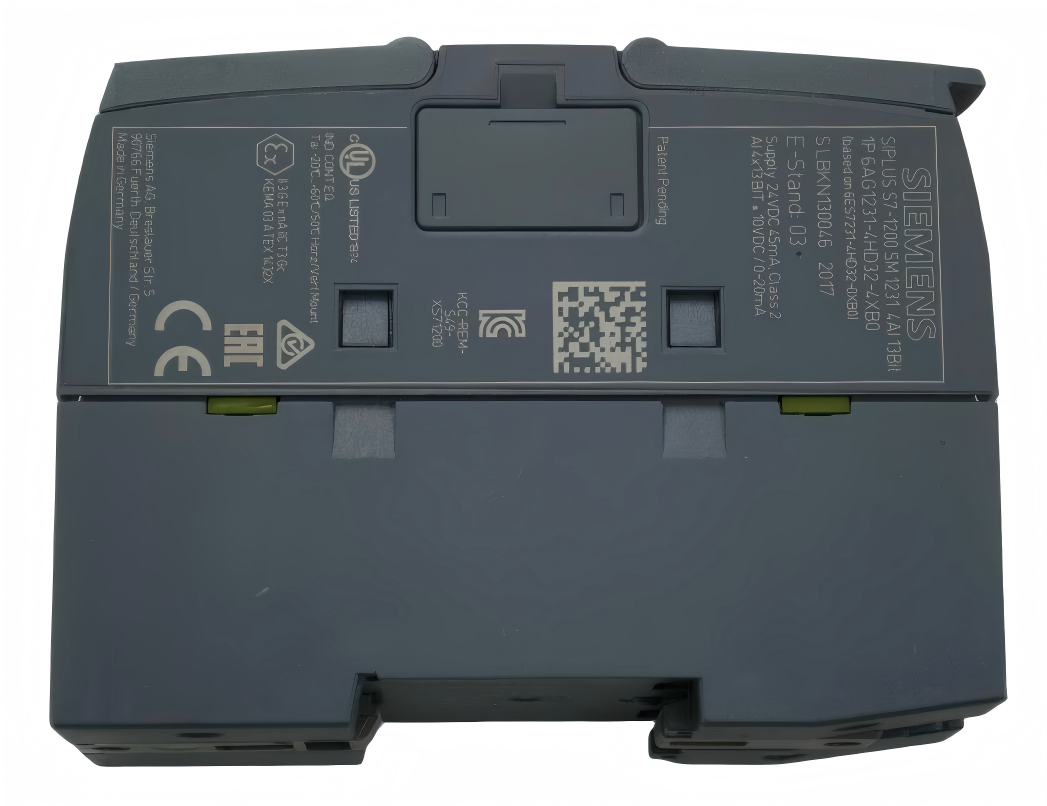
- Siemens
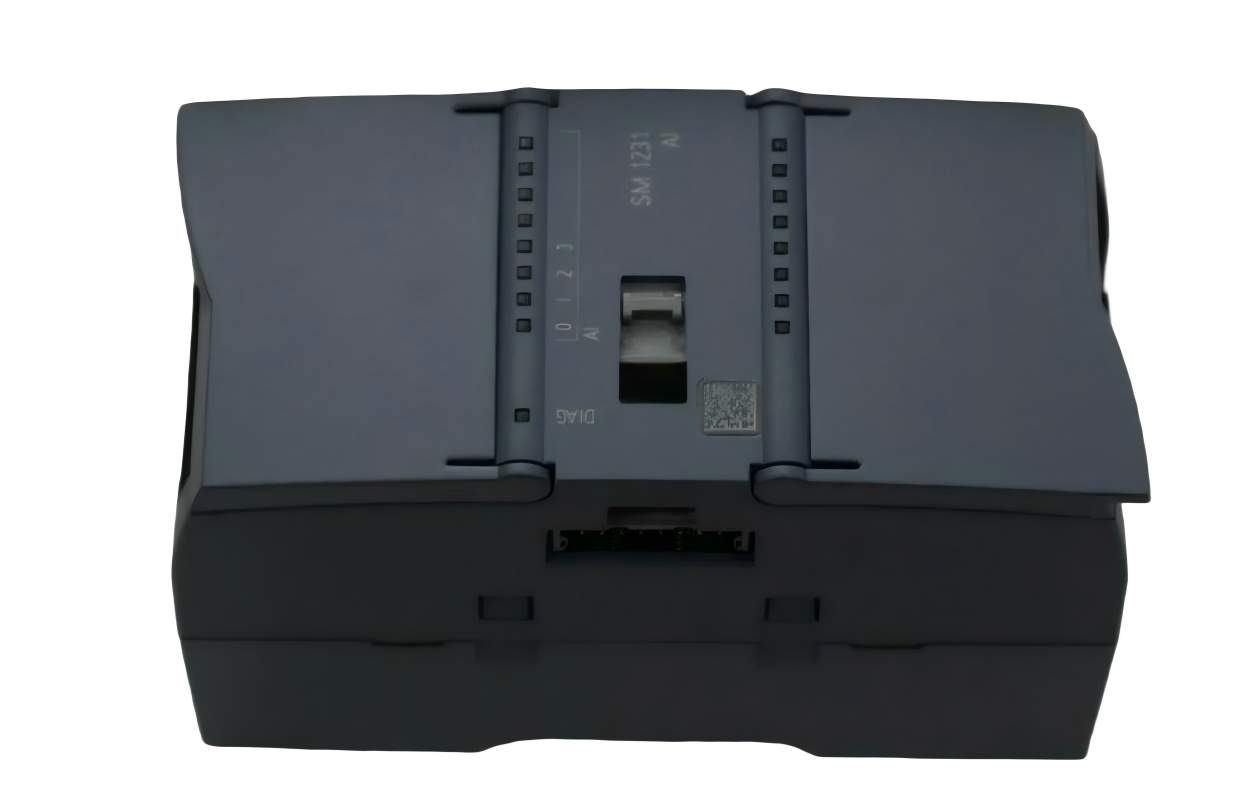
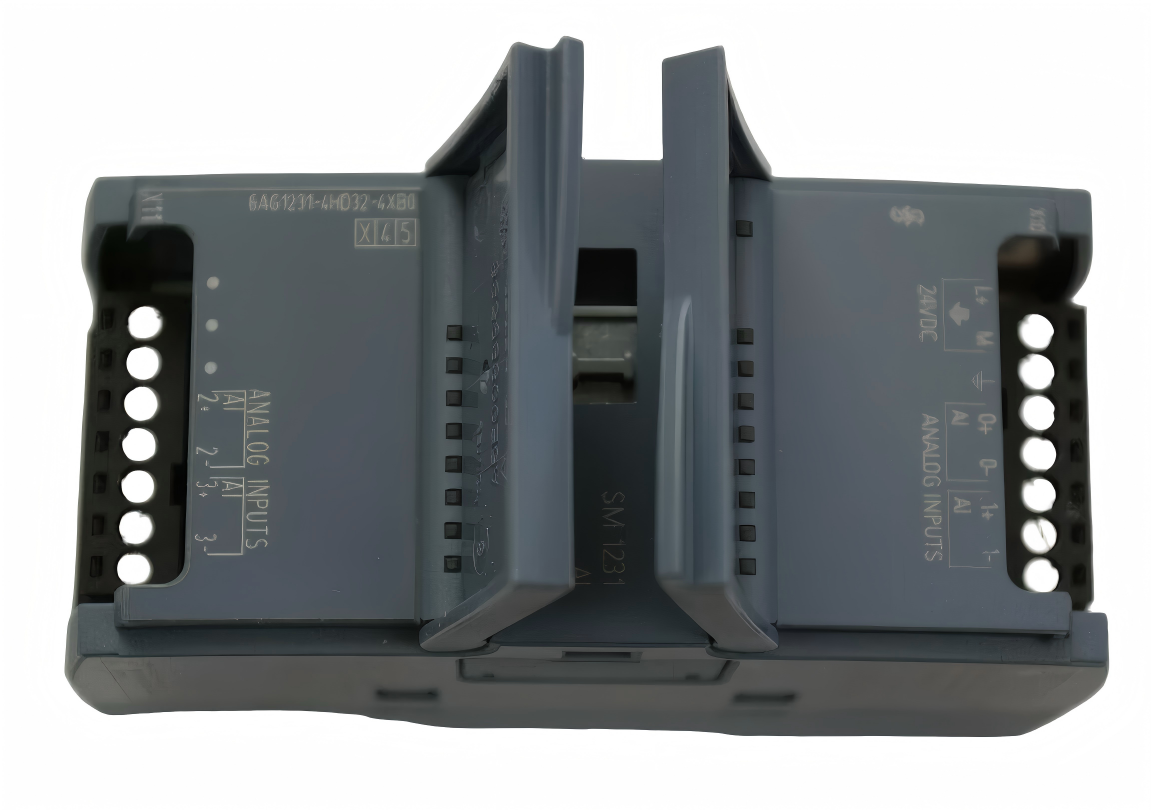
- 6AG1231-5PD32-2XB0
- SIPLUS S7-1200 SM 1231
- Germany
- 45 × 100 × 75 mm
- 0.22kg
- Xiamen, China
- New & In Stock
- T/T, PayPal, Western Union
- 1 Year
- 1-3 Working Days
- DHL, UPS, TNT, FedEx and EMS.
- 24-Hour Service
- COO
- 4
Our advantage

Global Logistics
We have a 10-year logistics and express cooperation agreement, so our products can be shipped to any place in the world.

Brand new and original
Our products are imported in bulk from the place of origin. Because of the cooperative relationship, our products are all original and 100% new.

24-hour service
We provide 7*24 hours service to our customers. We will be there whenever you need us.

Price advantage
All our products are priced very favorably because we have our own warehouse and supply.
| Company Information | |||
| [email protected] | |||
| Mobile | +8615980777398 | ||
| +8615980777398 | |||
| 15980777398 |
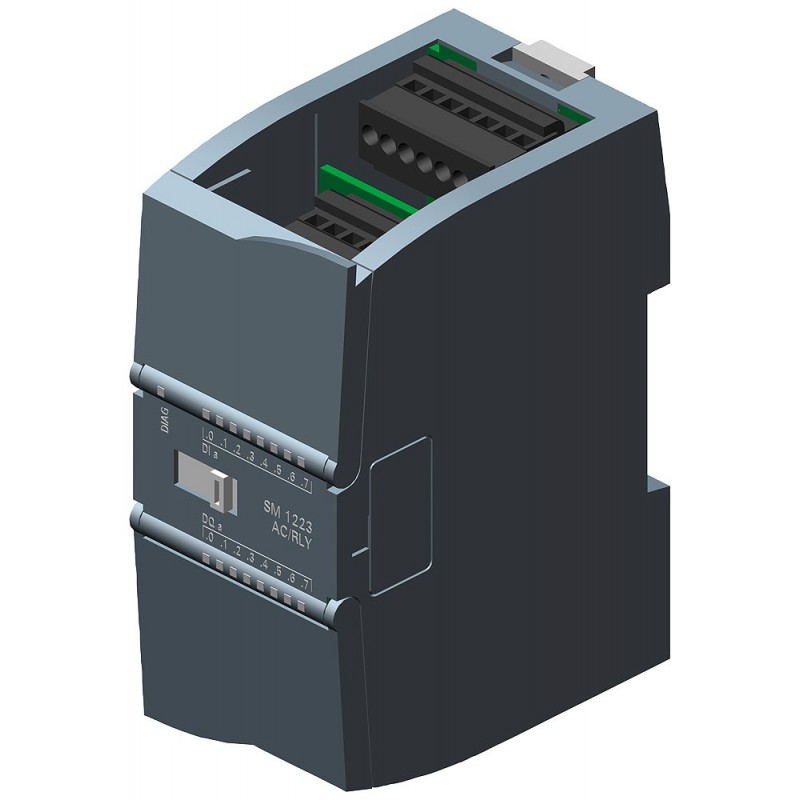
Product Datasheet: 6AG1231-5PD32-2XB0
1. Product Overview
The 6AG1231-5PD32-2XB0 is a SIPLUS S7-1200 SM 1231 RTD analog input module designed for accurate temperature acquisition using resistance temperature detectors (RTDs). It provides four analog input channels for measuring resistance-based temperature sensors and transferring the measured values to a SIMATIC S7-1200 PLC for monitoring, processing, recording, and control.
This model is designed for industrial applications where dependable temperature measurement is important and environmental conditions may be more demanding than those found in a standard control cabinet. Its conformal-coated electronics and extended operating-temperature capability make it suitable for installations exposed to temperature variation, humidity, dust, and certain chemically active environmental conditions, subject to the applicable installation requirements.
The module is based on the standard 6ES7231-5PD32-0XB0 design and adds SIPLUS environmental protection features. It is particularly useful when a machine or process needs several temperature measurements without requiring separate signal-conditioning equipment for each compatible resistance sensor.
2. Product Identification
| Item | Specification |
|---|---|
| Model number | 6AG1231-5PD32-2XB0 |
| Brand | Siemens |
| Product family | SIPLUS |
| Automation platform | SIMATIC S7-1200 |
| Product series | SM 1231 RTD |
| Module type | Analog input module for resistance temperature detectors |
| Channel configuration | 4 × RTD analog inputs |
| Standard base model | 6ES7231-5PD32-0XB0 |
| Input signal type | Resistance temperature sensor |
| Environmental protection | Conformal-coated electronics |
| Protection rating | IP20 |
| Rated DC supply | 24 V DC |
| Operating temperature | -40 °C to +70 °C |
| Startup temperature | -25 °C minimum, according to the specified startup condition |
| Dimensions (W × H × D) | 45 × 100 × 75 mm |
| Approximate net weight | 0.220 kg |
| Front connector | Required |
| Typical installation | S7-1200 control cabinet or suitable industrial enclosure |
3. Detailed Technical Parameters
3.1 Electrical and Input Specifications
| Parameter | Specification |
|---|---|
| Model number | 6AG1231-5PD32-2XB0 |
| Product designation | SM 1231, AI 4 × 16-bit RTD |
| Number of analog inputs | 4 |
| Input measurement type | Resistance temperature detector (RTD) |
| Supported sensor family | Platinum, nickel, copper, and specified resistance sensors |
| Supported sensor examples | Pt100, Pt200, Pt500, Pt1000, Ni100, Ni120, Ni1000, Cu10, and other supported types |
| Sensor connection | 2-wire, 3-wire, or 4-wire, depending on the selected sensor and configuration |
| Temperature display unit | °C or °F |
| Maximum resolution including sign | 15 bits + sign |
| Rated DC supply | 24 V DC |
| Typical current consumption from 24 V DC supply | Approximately 40 mA |
| Typical backplane current at 5 V DC | Approximately 80 mA |
| Typical power dissipation | Approximately 1.5 W |
| Input diagnostics | Diagnostic functions and supply-voltage monitoring |
| Wire-break detection | Supported where applicable to the configured sensor and measurement method |
| Front connector | Required |
| Protection rating | IP20 |
Sensor compatibility note: The exact list of selectable sensor types, measuring ranges, wiring arrangements, and diagnostic behavior must be checked against the hardware manual and the configuration software version used in the installation. All channels should be configured for the intended sensor type before commissioning.
3.2 Environmental and Mechanical Specifications
| Parameter | Specification |
|---|---|
| Model number | 6AG1231-5PD32-2XB0 |
| Operating ambient temperature | -40 °C to +70 °C |
| Minimum startup temperature | -25 °C |
| Storage and transport conditions | Follow the product’s environmental specification |
| Conformal coating | Yes |
| Coating classification | Class 2 for high-reliability PCB assemblies under the applicable specification |
| Pollution protection | Conformal coating with specified protection against fouling |
| Protection rating | IP20 |
| Enclosure/front material | Plastic |
| Width | 45 mm |
| Height | 100 mm |
| Depth | 75 mm |
| Overall dimensions | 45 × 100 × 75 mm |
| Approximate net weight | 0.220 kg |
| Installation format | S7-1200 modular expansion system |
| Installation environment | Suitable industrial control cabinet or protected enclosure |
| Front connector | Required |
The stated dimensions refer to the module itself. Packaging dimensions can be larger and should not be used to calculate the required installation space inside the control cabinet.
3.3 Temperature Measurement and Configuration
| Parameter | Specification |
|---|---|
| Model number | 6AG1231-5PD32-2XB0 |
| Measurement purpose | Temperature acquisition through resistance measurement |
| Measurement channels | 4 |
| Temperature units | Celsius or Fahrenheit |
| Sensor selection | Configurable for supported RTD types |
| Wiring options | 2-wire, 3-wire, or 4-wire, as supported by the selected sensor configuration |
| Signal conversion | Resistance measurement converted into a digital value for the PLC |
| PLC integration | SIMATIC S7-1200 |
| Configuration method | Engineering software and module parameter settings |
| Data use | Temperature display, limits, alarms, trends, and process control |
| Accuracy | Depends on the selected sensor, wiring, measuring range, configuration, and operating conditions |
| Installation recommendation | Place the module where temperature fluctuations are limited where practical |
4. Product Introduction
The 6AG1231-5PD32-2XB0 is intended for applications that need several temperature measurement points within an S7-1200 automation system. It reads compatible resistance temperature sensors and provides the resulting digital measurements to the controller, where they can be used by the PLC program.
RTD sensors are widely used because their electrical resistance changes predictably with temperature. By configuring the module for a supported sensor type, the controller can use the measured values to monitor equipment temperature, supervise heating and cooling processes, or maintain a process within a defined operating range.
The four-channel arrangement allows several sensors to be connected to one module. This helps reduce the number of separate input modules required when monitoring multiple zones, bearings, tanks, pipes, or machine components.
A further distinction is its SIPLUS construction. Compared with the corresponding standard module, this version includes conformal coating and an extended specified operating-temperature range. These features can improve suitability for certain demanding industrial environments, although they do not eliminate the need for proper cabinet design, wiring, grounding, and protection against environmental conditions outside the product’s limits.
5. Main Applications
5.1 Industrial Temperature Monitoring
The module can monitor temperature at several locations in a machine or process. Typical examples include motor housings, equipment bearings, process pipes, fluid reservoirs, and machine frames equipped with compatible RTD sensors.
The PLC can compare each measured temperature with configured limits and trigger warnings or control actions when a value rises above or falls below the required range.
5.2 Heating and Cooling Equipment
In heating and cooling systems, the module can provide temperature feedback for process control. Applications may include heating units, cooling circuits, industrial ovens, temperature-controlled cabinets, and thermal processing equipment.
The PLC can use the measured temperature to regulate heaters, pumps, valves, fans, or other actuators. The module itself performs measurement; the control response is implemented in the PLC program and associated control equipment.
5.3 Food and Beverage Processing Equipment
Temperature monitoring is important in mixing tanks, production vessels, hot-water systems, refrigeration equipment, and other temperature-controlled processes. With suitable sensor selection and hygienic installation, the module can collect RTD measurements for monitoring and control.
The module is an automation component, not a hygienic sensor or a food-contact component. Sensor construction and installation must meet the requirements of the particular process.
5.4 Water Treatment and Utility Systems
The module can be used to measure temperatures in water circulation systems, treatment equipment, storage tanks, and utility installations. Temperature values may be used for operational monitoring, equipment protection, and process sequencing.
5.5 Machinery and Equipment Manufacturing
Machine builders can use the module to collect temperature signals from multiple points in a production machine. The measurements may be used for machine interlocks, overheating alarms, trend records, maintenance information, or temperature-dependent operating sequences.
5.6 Industrial Installations with Challenging Ambient Conditions
The conformal-coated construction and extended operating-temperature specification make the module worth considering for installations where ambient conditions are more demanding than those of a typical office or clean indoor environment.
Suitability still depends on the actual temperature, humidity, condensation, chemical exposure, vibration, cabinet ventilation, and installation requirements. The product should not be treated as waterproof or suitable for unrestricted outdoor mounting.
6. Product Advantages
6.1 Four RTD Measurement Channels
Four input channels allow several temperature points to be monitored through a single expansion module. This can simplify control-cabinet layout and reduce the number of modules required for temperature acquisition.
6.2 Compatibility with the S7-1200 Platform
The module is designed for integration with the S7-1200 automation system. This makes it suitable for machines and process equipment already using that platform, provided the CPU, firmware, engineering software, and system configuration are compatible.
6.3 Support for Common Resistance Temperature Sensors
The module supports a range of specified resistance temperature detectors, including common platinum sensor types such as Pt100 and Pt1000, along with other supported sensor families.
Using a suitable sensor and correct wiring arrangement helps provide stable temperature measurements for industrial control.
6.4 Extended Operating-Temperature Range
The specified operating range of -40 °C to +70 °C provides more flexibility than a typical standard-temperature installation. The separate startup limitation must also be respected: the specified minimum startup temperature is -25 °C.
6.5 Conformal-Coated Electronics
The conformal coating provides additional protection for the electronic assemblies against certain environmental contaminants. This is valuable in appropriately designed industrial installations where humidity, airborne contaminants, or corrosive influences may be concerns.
The coating does not make the module immune to all chemicals, immersion, heavy condensation, or direct exposure to liquids. Installation conditions must remain within the specified limits.
6.6 Reduced Need for Separate Signal Conditioning
Compatible RTD sensors can be connected directly to the module without requiring an individual external amplifier for each sensor. This can simplify the design and reduce component count in suitable applications.
6.7 Flexible Sensor Wiring
The supported 2-wire, 3-wire, or 4-wire arrangements allow the design to be matched to the selected sensor and measurement requirements. The correct arrangement should be chosen according to the sensor specification and the module’s configuration instructions.
6.8 Useful Diagnostics
Diagnostic capabilities can help maintenance personnel identify certain sensor, wiring, or module-related problems. The precise diagnostics available depend on the selected sensor, wiring, configuration, and system setup.
6.9 Compact Mechanical Design
With a module width of 45 mm, the unit offers four RTD inputs in a compact S7-1200 expansion format. This can be useful where control-panel space is limited.
7. Installation and Commissioning Recommendations
Before installation, confirm that the selected S7-1200 CPU and engineering software support the module and its required functions. Check the hardware configuration, firmware compatibility, and available expansion capacity.
Select the correct RTD type and configure the input channels accordingly. Incorrect sensor selection or wiring can produce inaccurate readings, diagnostic errors, or unusable measurement values.
Use the wiring method specified for the chosen sensor. Where measurement accuracy is important, consider lead resistance, cable routing, electrical interference, grounding, and the sensor manufacturer’s recommendations.
Mount the module in a suitable enclosure and provide adequate clearance for wiring and maintenance. Although the module has conformal-coated electronics, its IP20 rating means it requires appropriate protection against contact and environmental exposure.
For commissioning, compare the displayed temperature with a known reference or calibrated instrument where practical. Confirm that each channel reports the correct value and that alarm thresholds, scaling, and PLC responses operate as intended.
8. Five Related Models
The following models are relevant alternatives within the S7-1200 RTD and analog-input product range. Their exact sensor support, environmental rating, dimensions, weight, and availability should be checked before substitution.
| Model | Product type / key parameters | Dimensions (W × H × D) | Weight (kg) | Typical selection reason |
|---|---|---|---|---|
| 6AG1231-5PD32-4XB0 | SIPLUS SM 1231 RTD, 4 RTD inputs; specified operating range -20 °C to +60 °C | 45 × 100 × 75 mm | Verify exact value | Four RTD inputs where the standard SIPLUS temperature variant meets the environment |
| 6AG1231-5PF32-2XB0 | SIPLUS SM 1231 RTD, 8 RTD inputs; extended-temperature SIPLUS version | Verify exact dimensions | Verify exact value | More temperature channels in a similar environmental-protection family |
| 6AG1231-5PF32-4XB0 | SIPLUS SM 1231 RTD, 8 RTD inputs; -20 °C to +60 °C version | Verify exact dimensions | Verify exact value | Eight-channel RTD measurement for applications within the specified ambient range |
| 6ES7231-5PD32-0XB0 | Standard S7-1200 SM 1231 RTD module, 4 RTD inputs; base design for the featured model | 45 × 100 × 75 mm | Verify exact value | Standard-environment alternative when SIPLUS environmental features are not required |
| 6ES7231-5PF32-0XB0 | Standard S7-1200 SM 1231 RTD module, 8 RTD inputs | Verify exact dimensions | Verify exact value | Higher RTD channel count in a standard-environment installation |
The four-channel and eight-channel SIPLUS variants are particularly relevant when comparing input capacity and environmental requirements. A standard model may be appropriate for a controlled cabinet, while a SIPLUS version may be preferable when the specified environmental conditions call for it.
9. Five Popular Related Models from the Same Brand
The following models are common S7-1200 automation components that may be used in the same control system. They are not all direct substitutes for an RTD module; each serves a different automation function.
| Model | Product type / key parameters | Dimensions (W × H × D) | Weight (kg) | Typical application |
|---|---|---|---|---|
| 6ES7214-1AG40-0XB0 | SIMATIC S7-1200 CPU 1214C; central controller with integrated digital and analog I/O, subject to exact variant specification | Verify exact dimensions | Verify exact value | Main PLC for a machine or compact process system |
| 6ES7215-1AG40-0XB0 | SIMATIC S7-1200 CPU 1215C; central controller with integrated I/O and additional communication capability, subject to exact variant specification | Verify exact dimensions | Verify exact value | Applications requiring additional control or communication resources |
| 6ES7221-1BH32-0XB0 | SM 1221 digital input expansion module; digital signal acquisition | Verify exact dimensions | Verify exact value | Pushbuttons, limit switches, and digital status signals |
| 6ES7222-1BH32-0XB0 | SM 1222 digital output expansion module; digital control outputs | Verify exact dimensions | Verify exact value | Controlling relays, indicators, and compatible digital devices |
| 6ES7231-4HF32-0XB0 | SM 1231 analog input module; voltage/current analog measurement variant | Verify exact dimensions | Verify exact value | Acquiring analog process signals from compatible transmitters |
These models complement an RTD input module in a broader automation system. The CPU executes the control program, digital input modules collect on/off signals, digital output modules control compatible loads, and analog input modules acquire process measurements.
The model numbers shown identify representative products in the family. Confirm the full order number, hardware revision, electrical ratings, channel count, and software compatibility before purchasing or replacing a module.
10. Selection Guide
| Application requirement | Recommended direction |
|---|---|
| Four RTD temperature points in a demanding environment | 6AG1231-5PD32-2XB0 |
| Four RTD points in a more controlled environment | 6ES7231-5PD32-0XB0 |
| Eight RTD temperature points | 6AG1231-5PF32-2XB0 or 6ES7231-5PF32-0XB0, depending on environmental requirements |
| Main controller for an S7-1200 system | 6ES7214-1AG40-0XB0 or another compatible CPU variant |
| Digital input expansion | 6ES7221-1BH32-0XB0, subject to required channel count |
| Digital output expansion | 6ES7222-1BH32-0XB0, subject to load and output requirements |
| General analog voltage/current measurements | 6ES7231-4HF32-0XB0, subject to signal type and range |
11. Important Notes Before Ordering
- Confirm the full order number. Similar-looking suffixes can indicate different temperature ranges or environmental specifications.
- Confirm the required number of RTD channels and the exact sensor types used in the application.
- Check the permitted operating temperature and startup conditions separately. The extended operating range does not mean the module can be started at every temperature within that range.
- Verify the module dimensions and weight against the current technical documentation if these figures are being used for a cabinet layout, shipping quotation, or bill of materials. The featured model’s stated dimensions are 45 × 100 × 75 mm and its approximate net weight is 0.220 kg.
- Confirm that the selected CPU, firmware, engineering software, and expansion configuration are compatible.
- Check sensor wiring, grounding, shielding, and the selected measurement configuration before commissioning.
- Do not assume that conformal coating makes the module waterproof or suitable for direct exposure to liquids. The specified protection rating is IP20.
- For replacement projects, compare the existing module’s full order number and hardware requirements rather than relying on the product family name alone.
12. Summary
The 6AG1231-5PD32-2XB0 is a four-channel RTD analog input module in the SIPLUS S7-1200 SM 1231 product family. Its main role is to acquire resistance-based temperature measurements from compatible sensors and provide the resulting values to a PLC for monitoring and process control.
Its main strengths are four RTD input channels, support for common resistance temperature sensors, compact S7-1200 integration, conformal-coated electronics, and an extended specified operating-temperature range. These features make it a useful option for industrial equipment that requires dependable temperature acquisition under more demanding ambient conditions.
For a final design or purchasing decision, confirm the exact sensor configuration, operating conditions, system compatibility, and current mechanical specifications. These checks help ensure that the selected module meets the application’s requirements without unnecessary cost or avoidable commissioning issues.