

ProductPRODUCT
Featured products
Contact Us
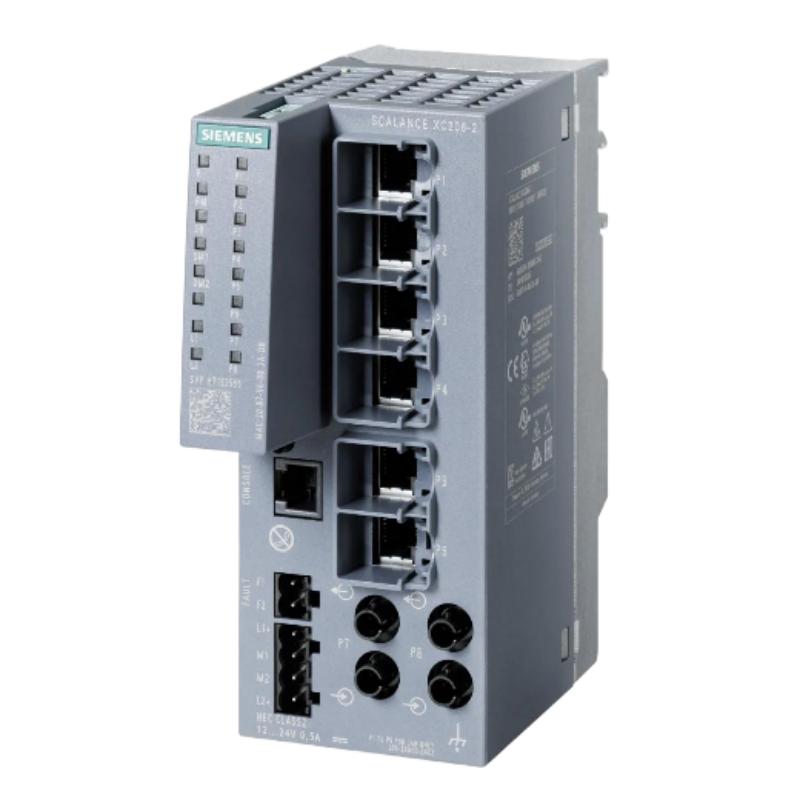
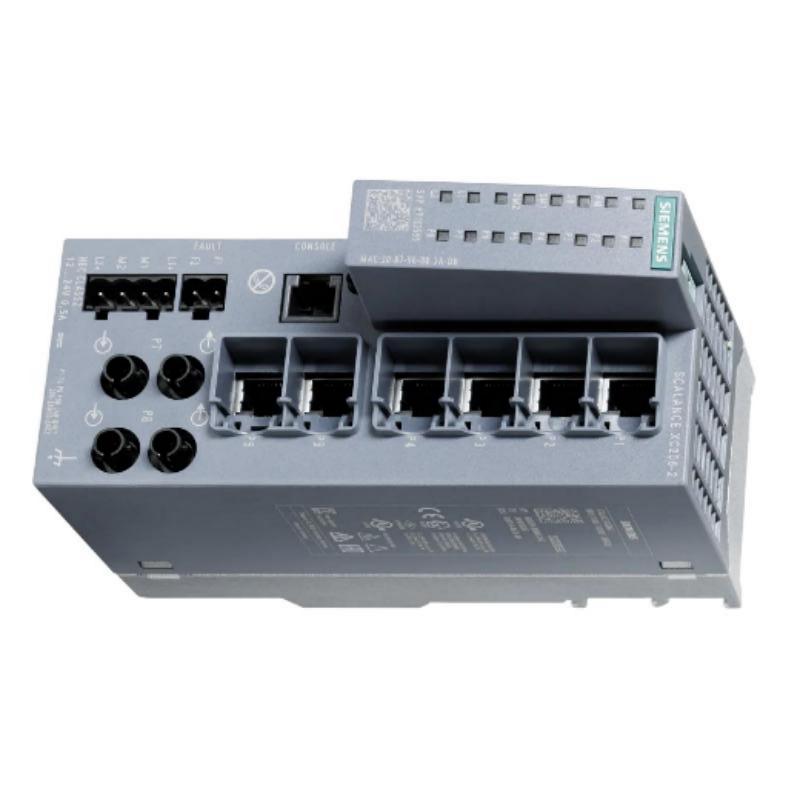
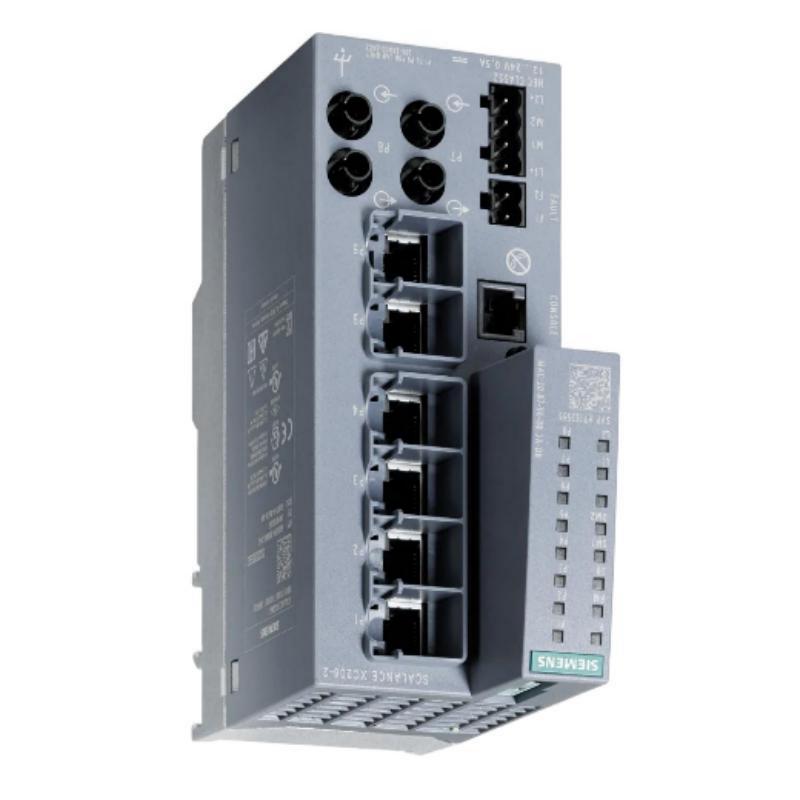
- Siemens
- 6AG1206-2BB00-7AC2
- Manageable Internet Explorer Switch
- Germany
- 60 × 147 × 125 mm
- 0.54 kg
- Xiamen, China
- New & In Stock
- T/T, PayPal, Western Union
- 1 Year
- 1-3 Working Days
- DHL, UPS, TNT, FedEx and EMS.
- 24-Hour Service
- COO
- 29
Our advantage

Global Logistics
We have a 10-year logistics and express cooperation agreement, so our products can be shipped to any place in the world.

Brand new and original
Our products are imported in bulk from the place of origin. Because of the cooperative relationship, our products are all original and 100% new.

24-hour service
We provide 7*24 hours service to our customers. We will be there whenever you need us.

Price advantage
All our products are priced very favorably because we have our own warehouse and supply.
| Company Information | |||
| [email protected] | |||
| Mobile | +8615980777398 | ||
| +8615980777398 | |||
| 15980777398 |
Product Overview
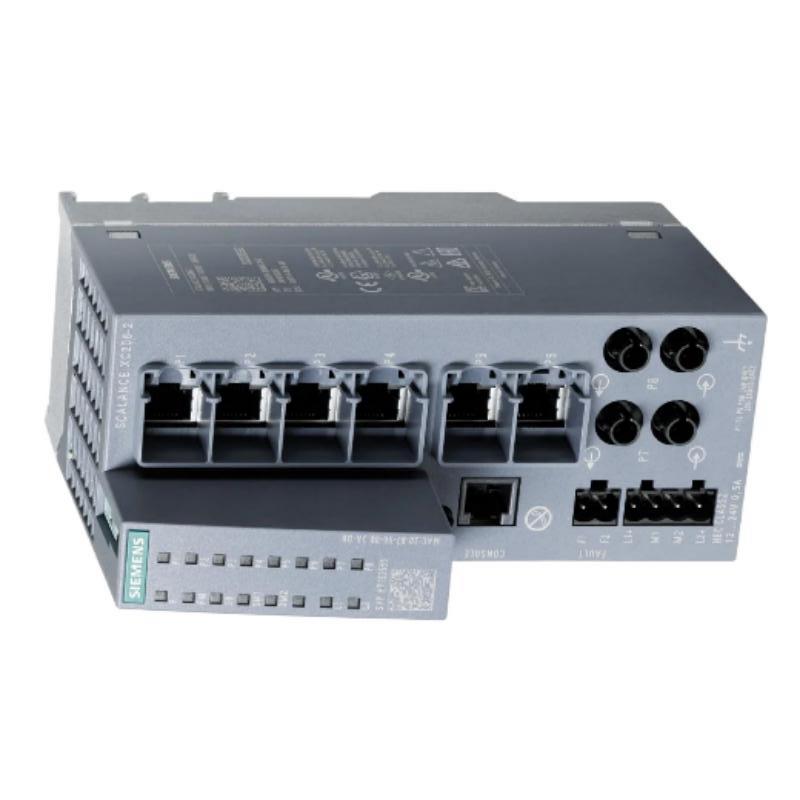
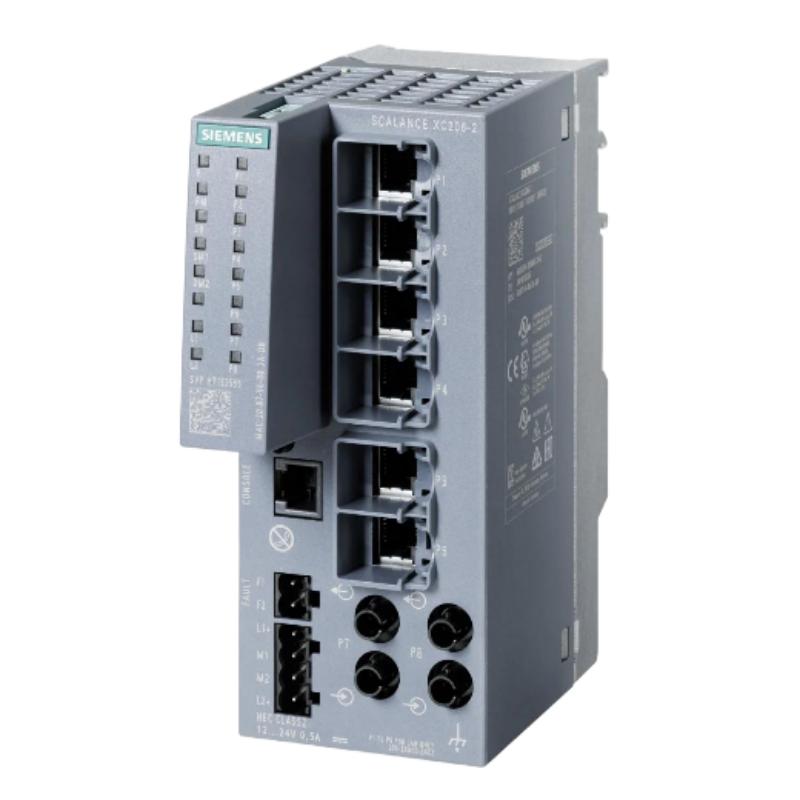
The Siemens 6AG1206-2BB00-7AC2 Manageable Industrial Ethernet Switch is an industrial networking component designed to provide reliable Ethernet connectivity, network management, and communication infrastructure for industrial automation systems. As a manageable Ethernet switch, it can be integrated into automation architectures where network visibility, controlled communication, and reliable data transmission are important.
Industrial control systems increasingly depend on Ethernet communication between PLCs, remote I/O stations, HMIs, drives, SCADA systems, industrial PCs, and other intelligent field devices. A managed switch provides more than basic port-to-port connectivity. It can support structured network management and help automation engineers organize, monitor, and maintain industrial Ethernet communication.
The Siemens 6AG1206-2BB00-7AC2 has listed dimensions of 60 × 147 × 125 mm and a weight of approximately 0.54 kg. Its compact industrial construction makes it suitable for installation in control cabinets and industrial network enclosures where space efficiency and dependable communication infrastructure are required.
The device can form part of an industrial Ethernet architecture in which network equipment must operate as an organized communication layer between automation controllers and connected devices. Depending on the complete system configuration, manageable switching functions can contribute to improved network diagnostics, segmentation, communication control, and maintenance efficiency.
Technical Specifications
| Parameter | Specification |
|---|---|
| Manufacturer | Siemens |
| Model | 6AG1206-2BB00-7AC2 |
| Product Type | Manageable Industrial Ethernet Switch |
| Product Family | Siemens Industrial Networking |
| Primary Function | Managed Ethernet network connectivity |
| Communication Type | Industrial Ethernet |
| Network Role | Ethernet switching and network management |
| Installation | Industrial control cabinet / automation network |
| Dimensions | 60 × 147 × 125 mm |
| Weight | 0.54 kg |
| Application | Industrial Automation and Ethernet Networking |
| Typical Connected Devices | PLCs, HMIs, I/O stations, drives, SCADA systems, industrial PCs |
| Configuration | Managed network operation |
| System Integration | Industrial Ethernet automation architectures |
Exact port configuration, supported protocols, transmission rates, management functions, power requirements, and environmental ratings should be verified against the specific hardware revision and system documentation before engineering or replacement.
What Is the Siemens 6AG1206-2BB00-7AC2?
The 6AG1206-2BB00-7AC2 is a Siemens manageable industrial Ethernet switch intended to provide structured network connectivity for industrial automation environments.
An Ethernet switch receives data frames from connected devices and forwards them toward the appropriate destination. In a simple network, this function can be sufficient for connecting several controllers and field devices. In a larger industrial network, however, engineers often need additional capabilities for network organization, diagnostics, and communication management.
This is where a manageable switch becomes valuable.
The 6AG1206-2BB00-7AC2 can be considered part of the communication infrastructure between automation equipment:
PLC / Controller → Industrial Ethernet → Managed Switch → Remote Devices
A typical system may contain several switches distributed between control cabinets, production cells, machine sections, or process areas. The switch provides the physical and logical communication path required for devices to exchange industrial data.
Because the exact network functions depend on the installed hardware and configured system, engineers should verify the applicable Siemens documentation when determining detailed configuration parameters.
Industrial Ethernet Switching Principle
An industrial Ethernet switch operates primarily at the network communication layer responsible for forwarding Ethernet frames between connected network devices.
When a device sends Ethernet data, the switch examines the frame information and determines the appropriate forwarding path. Instead of continuously transmitting every frame to every connected device, switching technology allows traffic to be directed toward the required network segment or destination.
This improves the organization of network communication.
In an industrial automation system, the communication path may look like:
PLC → Ethernet Switch → HMI
or:
PLC → Switch → Remote I/O → Field Devices
A larger architecture can contain multiple switching levels:
Control Network → Distribution Switch → Machine-Level Switch → Automation Devices
The manageable nature of the switch allows engineers to configure and supervise the network more systematically than with an unmanaged switching device.
Managed Network Functions
The principal advantage of a manageable industrial Ethernet switch is the ability to configure and supervise network behavior.
Depending on the specific supported feature set, managed industrial switches can provide functions related to:
- Network configuration
- Port management
- Communication diagnostics
- Network segmentation
- Traffic control
- Redundancy management
- Fault identification
- Network monitoring
- Device status information
- Industrial Ethernet system maintenance
The exact functions available on the 6AG1206-2BB00-7AC2 should be confirmed against the relevant Siemens product documentation and hardware version.
For automation engineers, these functions can simplify troubleshooting because communication problems can be investigated at the network level rather than only at the PLC or field-device level.
Role in Industrial Automation Systems
The Siemens 6AG1206-2BB00-7AC2 can act as a communication infrastructure component within an industrial automation system.
Modern production systems commonly connect many devices through Ethernet networks. A single automation cell may contain:
- PLC controllers
- Distributed I/O
- Variable frequency drives
- Servo drives
- HMIs
- Industrial PCs
- Barcode readers
- Vision systems
- SCADA interfaces
- Engineering stations
- Diagnostic equipment
The Ethernet switch provides the network connection required for these devices to exchange information.
For example, a PLC may communicate with remote I/O through the switch while an HMI simultaneously exchanges process information with the same controller.
A properly designed switching architecture helps keep communication organized and allows maintenance personnel to identify network problems more efficiently.
Network Architecture and System Integration
A typical industrial Ethernet architecture using a manageable switch can be divided into several levels.
Control Level
PLCs and automation controllers execute the control logic and exchange process data with field devices.
Network Level
Industrial Ethernet switches connect controllers, distributed I/O, drives, HMIs, and other intelligent devices.
Supervisory Level
SCADA systems, industrial PCs, and operator stations collect process information and provide higher-level monitoring.
Enterprise or Plant Level
Where appropriate, selected process information can be transferred to higher-level manufacturing or enterprise systems through controlled network architecture.
The switch can therefore occupy an important position between automation devices and higher-level communication systems.
PLC and Controller Connectivity
The 6AG1206-2BB00-7AC2 can be incorporated into Ethernet-based PLC communication architectures when its interfaces and supported communication features match the system requirements.
A typical arrangement may include:
Siemens PLC → Managed Ethernet Switch → Remote I/O
Additional devices can be connected to the same industrial network, depending on the topology and engineering requirements.
During commissioning, engineers should verify:
- Correct network addressing
- Correct device identification
- Ethernet cable connections
- Link status
- Communication parameters
- Network topology
- Device diagnostics
- Controller communication status
Incorrect addressing or network configuration can prevent otherwise healthy automation equipment from communicating correctly.
HMI and SCADA Integration
Industrial HMIs and SCADA systems frequently rely on Ethernet communication to exchange process data with PLCs and other controllers.
A managed switch can provide the communication path between these systems.
For example:
PLC → Ethernet Switch → HMI
and:
PLC → Ethernet Switch → SCADA Server
This architecture allows operators to access process information while the PLC continues to execute real-time control functions.
When a communication fault occurs, the network switch can become an important diagnostic point. Engineers can inspect physical links, connected devices, and network configuration to determine whether the problem originates in the controller, cable, switch, or remote device.
Industrial Applications
Factory Automation
The switch can be used as part of Ethernet infrastructure connecting PLCs, remote I/O, drives, HMIs, and machine-level controllers.
Manufacturing Lines
Production lines often require communication between several machine sections. Industrial Ethernet switching provides a practical method for connecting these automation zones.
Process Automation
Industrial Ethernet networks can connect controllers, operator stations, remote I/O, instrumentation interfaces, and supervisory systems.
Machine Control
Machine builders can integrate manageable Ethernet switches into control cabinets to connect multiple intelligent devices.
Material Handling
Conveyor systems, sorting equipment, robotic cells, and warehouse automation systems may use industrial Ethernet networks to coordinate controllers and field equipment.
Energy and Utility Systems
Industrial networking equipment can also form part of automation systems used for utility monitoring, electrical infrastructure, and plant services.
Installation Guidelines
Correct installation is essential for reliable industrial network operation.
Verify the Product Identification
Before installation or replacement, confirm:
- Complete Siemens part number
- Hardware revision
- Product designation
- Existing network architecture
- Connector arrangement
- Power requirements
- Mounting requirements
The complete reference 6AG1206-2BB00-7AC2 should be matched with the existing system documentation.
Mounting
The listed dimensions are:
60 × 147 × 125 mm
The available cabinet space should therefore be checked before installation.
Allow sufficient space for:
- Ethernet cable routing
- Power wiring
- Connector access
- Ventilation
- Maintenance access
Ethernet Cabling
Industrial Ethernet cables should be routed carefully and protected from mechanical damage.
Where high levels of electromagnetic interference are present, cable routing should be separated from high-power conductors and other major sources of electrical noise.
Power Connection
The applicable supply voltage and wiring arrangement should be verified from the equipment documentation before energizing the switch.
Incorrect supply connections can damage electronic networking equipment.
Cabinet Installation and Environmental Considerations
Industrial networking devices are commonly installed inside electrical control cabinets together with PLCs, power supplies, contactors, drives, and other automation equipment.
These devices can generate heat and electromagnetic interference.
Good cabinet design should therefore consider:
- Internal temperature
- Air circulation
- Device spacing
- Cable routing
- Grounding
- Electromagnetic compatibility
- Accessibility
- Maintenance requirements
The 6AG1206-2BB00-7AC2 occupies a compact installation envelope of 60 × 147 × 125 mm, but additional clearance should be considered beyond the physical dimensions.
The cabinet should also remain within the environmental limits specified for the actual product.
Ethernet Network Topology
The switch can be incorporated into several network topology concepts depending on the application.
Star Topology
Multiple devices connect to a central switch.
PLC
↓
Managed Switch
↙ ↓ ↘
HMI – Remote I/O – Drive
This arrangement is easy to understand and can simplify troubleshooting.
Line or Daisy-Chain Architecture
Devices may be connected sequentially where supported by the selected hardware and network design.
This can reduce cabling requirements in certain machine layouts.
Ring Architecture
Industrial networks may use ring structures where supported by the equipment and configured network protocols.
Ring architectures can provide alternative communication paths and may improve network resilience when correctly engineered.
The actual topology should be selected according to the required availability, cable distance, device capabilities, and communication architecture.
Network Configuration and Commissioning
After installation, the network should be commissioned systematically.
Step 1: Confirm Physical Connections
Check every Ethernet connection and verify that cables are securely inserted.
Step 2: Energize the Network
Apply the correct supply to the switch and observe its diagnostic indicators where available.
Step 3: Verify Link Status
Check whether the connected network devices establish physical Ethernet links.
Step 4: Configure Network Parameters
Enter the required network settings according to the automation system design.
Step 5: Verify Device Communication
Test communication between the PLC, HMI, remote I/O, drives, or other connected equipment.
Step 6: Check Network Diagnostics
Review available switch and controller diagnostics to identify abnormal links or communication conditions.
Step 7: Document the Configuration
Record the final network topology, addresses, connected ports, and relevant configuration information.
Good documentation significantly reduces future maintenance time.
Troubleshooting the Siemens 6AG1206-2BB00-7AC2
Network faults should be investigated systematically rather than immediately replacing the switch.
No Network Communication
Possible causes include:
- Incorrect power connection
- Damaged Ethernet cable
- Loose connector
- Incorrect network configuration
- Device addressing problems
- Faulty network interface
- Switch configuration problems
- Fault at the connected device
Start with the physical layer before investigating more advanced network parameters.
One Device Cannot Communicate
If other network devices continue to operate normally, investigate the affected connection first.
Check:
- Ethernet cable
- Connector
- Switch port
- Device network interface
- Network configuration
- Device status
This approach helps determine whether the fault is localized or network-wide.
Multiple Devices Lose Communication
If several devices stop communicating simultaneously, inspect:
- Switch power
- Network uplink
- Network topology
- Main communication path
- Switch configuration
- Network redundancy
- Common power or grounding conditions
A common communication failure often indicates a shared network component rather than several independent device failures.
Intermittent Communication
Intermittent faults can be caused by:
- Loose Ethernet connectors
- Damaged cables
- Electromagnetic interference
- Poor cable routing
- Temperature problems
- Network configuration issues
- Hardware degradation
- Unstable power
Monitoring the network while observing the physical installation can help locate intermittent problems.
Preventive Maintenance
Industrial Ethernet equipment benefits from regular inspection even when the network appears to be operating normally.
Recommended maintenance activities include:
Inspect Ethernet Connections
Check connectors for looseness, contamination, or mechanical damage.
Inspect Cables
Look for:
- Crushed cable sections
- Excessive bending
- Damaged insulation
- Poor routing
- Mechanical stress
Review Network Diagnostics
Periodically inspect available network diagnostic information for abnormal communication conditions.
Check Cabinet Conditions
Verify that excessive heat, dust, moisture, or vibration is not affecting the networking equipment.
Maintain Network Documentation
Network diagrams should be updated after equipment changes.
Monitor Communication Trends
Repeated communication errors or intermittent link problems may indicate an emerging hardware, cable, or network-design issue.
Replacement and Spare-Part Considerations
When replacing a Siemens 6AG1206-2BB00-7AC2, technicians should verify the complete product reference rather than relying only on physical appearance.
Important identification information includes:
- Siemens part number
- Product designation
- Hardware revision
- Network interface arrangement
- Existing switch configuration
- Connected equipment
- Network topology
- Cabinet mounting arrangement
The physical dimensions are:
60 × 147 × 125 mm
The listed weight is:
0.54 kg
These values can also be useful when planning spare-parts storage and control cabinet installation.
A visually similar Ethernet switch should not automatically be considered a direct replacement because industrial networking devices may differ in port configuration, supported protocols, management functions, power requirements, and system compatibility.
Compatible Automation Equipment
The 6AG1206-2BB00-7AC2 can be considered within a broader industrial Ethernet architecture containing equipment such as:
| Equipment | Typical Role |
|---|---|
| Siemens PLC | Machine and process control |
| Remote I/O | Distributed signal acquisition and output |
| Siemens HMI | Operator visualization |
| Industrial PC | Supervisory and data-processing functions |
| Variable Speed Drive | Motor speed and process control |
| Servo Drive | Motion control |
| SCADA System | Plant-level monitoring |
| Industrial Ethernet Switch | Network communication |
| Engineering Station | Configuration and maintenance |
| Industrial Sensors | Process and machine feedback |
Exact compatibility should always be evaluated according to the communication protocols, network architecture, and requirements of the complete automation system.
Engineering Best Practices
A reliable industrial Ethernet installation requires more than simply connecting cables to a switch.
Plan the Network Before Installation
Prepare a network diagram showing controllers, switches, field devices, HMIs, and supervisory systems.
Separate Critical Network Segments
Where necessary, use appropriate network segmentation to prevent unnecessary traffic from affecting critical automation communication.
Label Network Connections
Clearly labeled Ethernet cables and switch ports simplify troubleshooting and maintenance.
Document Device Addresses
Maintain an updated record of network addresses and device names where applicable.
Protect Communication Cables
Avoid routing Ethernet cables directly alongside high-current power cables whenever possible.
Maintain Spare Hardware
For critical automation systems, keeping an appropriately matched spare switch can reduce downtime when a communication component fails.
Key Advantages
Managed Industrial Networking
The manageable architecture provides greater control over network organization and maintenance than a basic unmanaged switch.
Compact Industrial Design
The 60 × 147 × 125 mm dimensions allow the device to be incorporated into compact control cabinets and industrial networking enclosures.
Reliable Ethernet Infrastructure
The switch can provide a centralized communication point for multiple industrial Ethernet devices.
Improved Troubleshooting
Network management and diagnostic capabilities can help maintenance personnel isolate communication problems.
Flexible Automation Integration
The switch can form part of Ethernet architectures containing PLCs, HMIs, remote I/O, drives, industrial PCs, and supervisory systems.
Suitable for Industrial Control Networks
Its intended role as a manageable industrial Ethernet switch makes it useful in structured automation communication systems where network availability and maintainability are important.
Technical FAQs
What is the Siemens 6AG1206-2BB00-7AC2?
The Siemens 6AG1206-2BB00-7AC2 is a Manageable Industrial Ethernet Switch designed to provide Ethernet switching and network management functions within industrial automation systems.
What is the main purpose of an industrial Ethernet switch?
An industrial Ethernet switch connects multiple Ethernet-enabled devices and forwards communication data between them. A manageable switch additionally supports network configuration, diagnostics, and other management functions depending on the specific model.
Where can the 6AG1206-2BB00-7AC2 be used?
It can be incorporated into industrial automation networks connecting equipment such as PLCs, remote I/O, HMIs, drives, industrial PCs, and supervisory systems, subject to system compatibility.
What are the dimensions of the 6AG1206-2BB00-7AC2?
The listed dimensions are 60 × 147 × 125 mm.
How much does the Siemens 6AG1206-2BB00-7AC2 weigh?
The listed weight is approximately 0.54 kg.
Is the 6AG1206-2BB00-7AC2 a PLC?
No. It is a manageable industrial Ethernet switch. Its primary role is network connectivity and communication management rather than executing PLC control logic.
Can the switch connect a PLC and HMI?
A compatible industrial Ethernet switch can provide the network connection between a PLC and HMI, provided that the communication interfaces and network configuration meet the requirements of the application.
What causes Ethernet communication failures?
Common causes include damaged cables, loose connectors, incorrect configuration, power problems, device faults, network topology problems, electromagnetic interference, and switch or interface failures.
Should a similar Siemens switch be used as a replacement?
A similar-looking switch should not automatically be treated as a direct replacement. The complete Siemens part number, hardware revision, interfaces, supported functions, power requirements, and network configuration should be verified before replacement.
How should the switch be maintained?
Maintenance should include inspection of Ethernet cables and connectors, cabinet environmental conditions, network diagnostics, power connections, and network documentation. Periodic inspection can help identify communication problems before they result in production downtime.
Conclusion
The Siemens 6AG1206-2BB00-7AC2 Manageable Industrial Ethernet Switch is a compact industrial networking component designed to support structured Ethernet communication in automation environments. By providing a managed switching point between controllers, field devices, HMIs, drives, industrial PCs, and supervisory systems, it can contribute to a more organized and maintainable industrial communication architecture.
With listed dimensions of 60 × 147 × 125 mm and a weight of 0.54 kg, the device is suitable for applications where industrial Ethernet equipment must be integrated into control cabinets or distributed automation infrastructure.
For reliable operation, installation should be based on the complete network design rather than the switch alone. Correct Ethernet cabling, power connections, network configuration, cabinet conditions, topology planning, and commissioning procedures all contribute to dependable industrial communication.
When replacing or maintaining the Siemens 6AG1206-2BB00-7AC2, technicians should verify the complete part number and hardware configuration before installation. Proper identification and systematic network diagnostics help reduce communication downtime and support stable long-term operation of industrial automation systems.