

ProductPRODUCT
Featured products

Contact Us
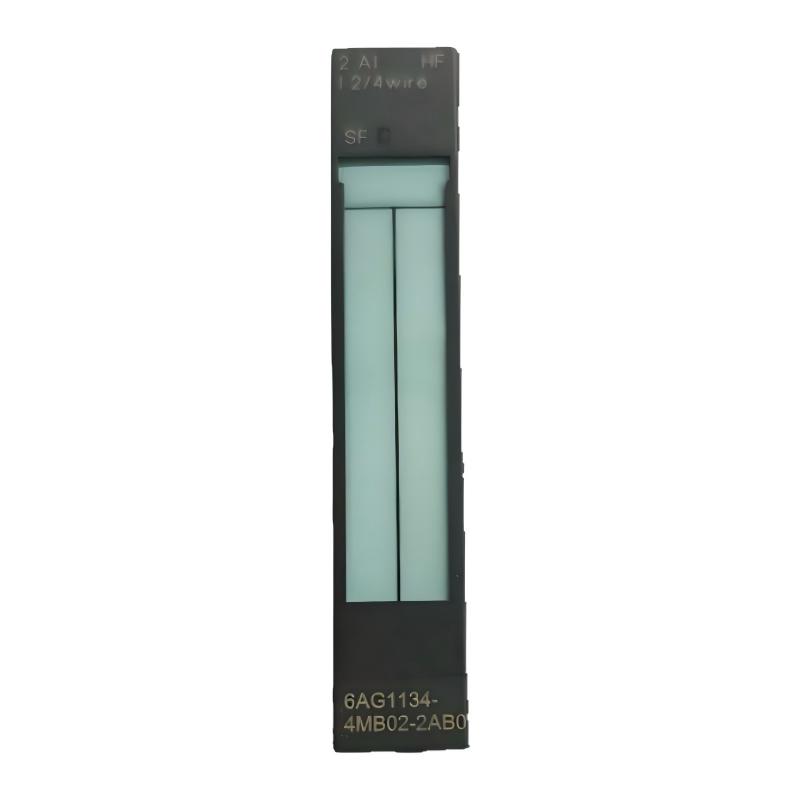
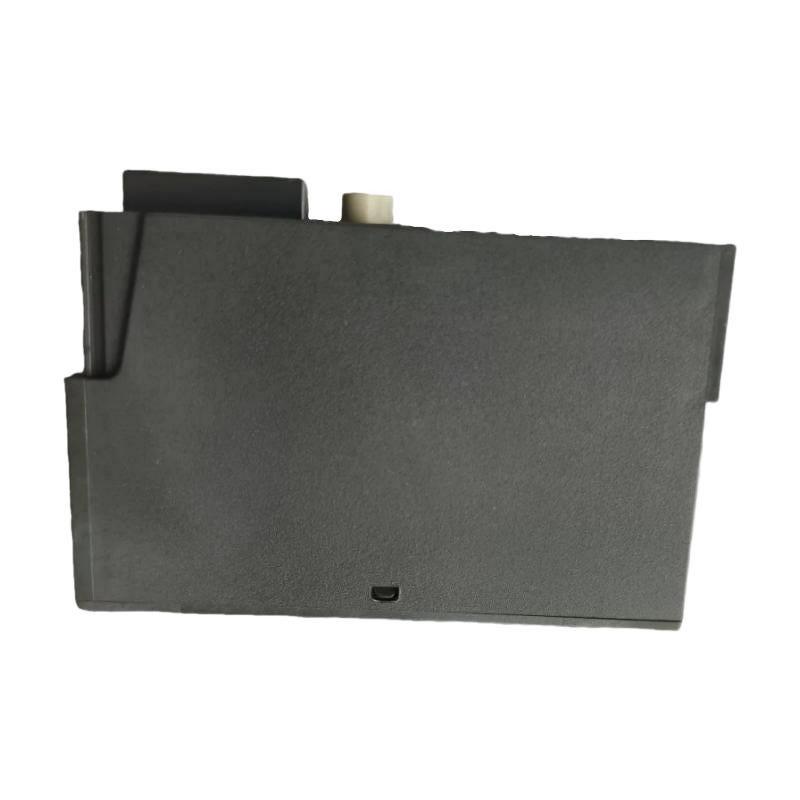

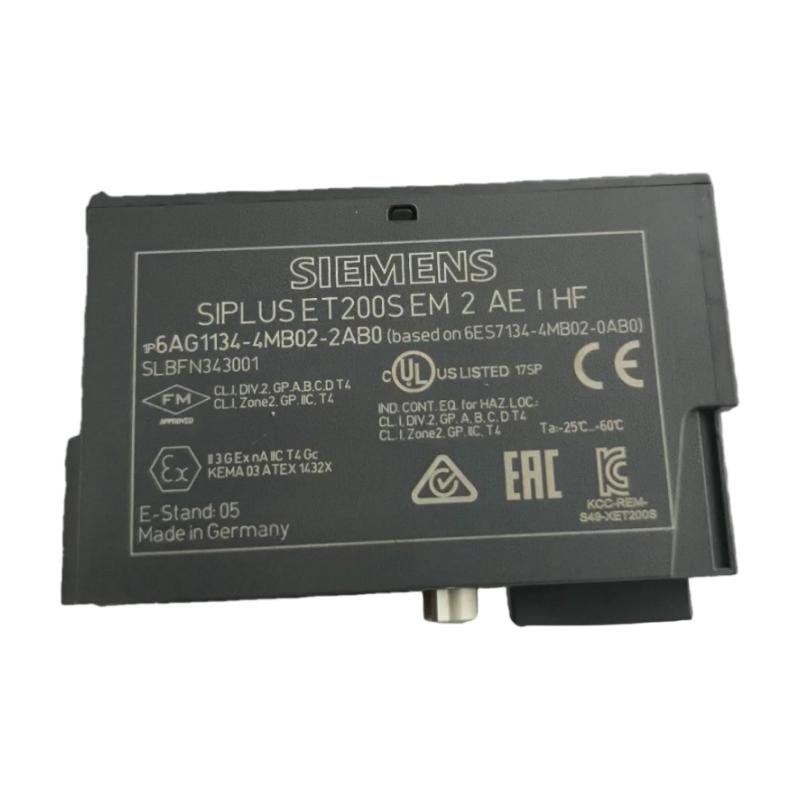
- Siemens
- 6AG1134-4MB02-2AB0
- Analog Input ModuleAnalog Input Module
- Germany
- 15 × 81 × 52 mm
- 0.045 kg
- Xiamen, China
- New & In Stock
- T/T, PayPal, Western Union
- 1 Year
- 1-3 Working Days
- DHL, UPS, TNT, FedEx and EMS.
- 24-Hour Service
- COO
- 46
Our advantage

Global Logistics
We have a 10-year logistics and express cooperation agreement, so our products can be shipped to any place in the world.

Brand new and original
Our products are imported in bulk from the place of origin. Because of the cooperative relationship, our products are all original and 100% new.

24-hour service
We provide 7*24 hours service to our customers. We will be there whenever you need us.

Price advantage
All our products are priced very favorably because we have our own warehouse and supply.
| Company Information | |||
| [email protected] | |||
| Mobile | +8615980777398 | ||
| +8615980777398 | |||
| 15980777398 |
Product Overview
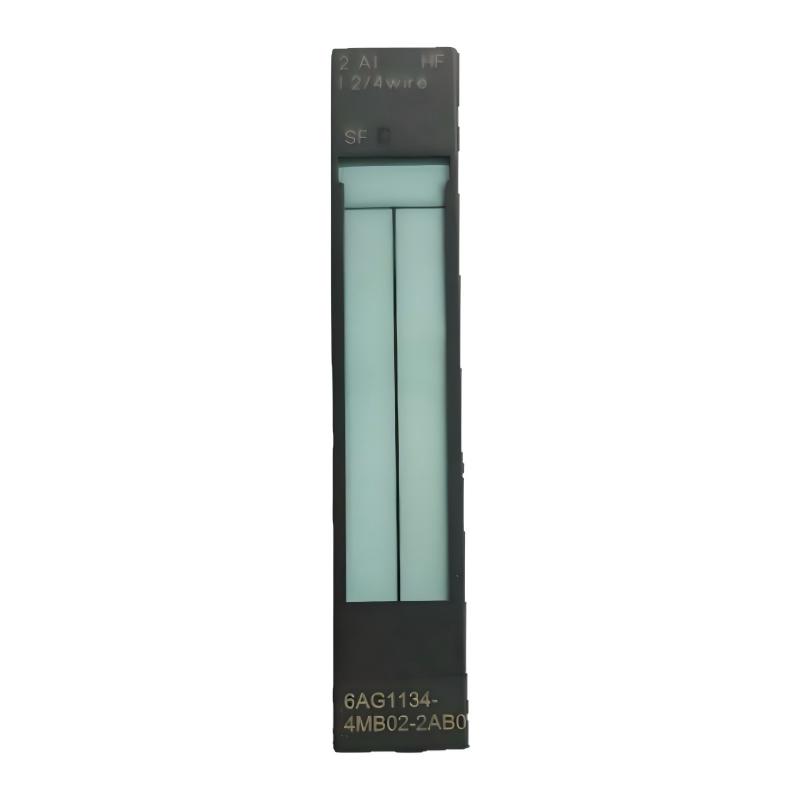
The Siemens 6AG1134-4MB02-2AB0 is a SIPLUS ET 200S Analog Input Module designed for distributed industrial automation and process-control applications. It provides an interface between field-level analog instrumentation and a Siemens ET 200S control system, allowing continuously variable process signals to be acquired and processed by the PLC.
The module is particularly useful when sensors or transmitters provide analog measurement signals representing variables such as pressure, temperature, flow, level, position, or other process conditions. Once acquired, these signals can be processed by the PLC program, displayed through an HMI or SCADA system, or used as feedback for automatic control functions.
The specified physical dimensions of the 6AG1134-4MB02-2AB0 are 15 × 81 × 52 mm, with a specified weight of 0.045 kg. Its compact form factor makes it suitable for distributed I/O installations where cabinet space and installation density are important considerations.
As a SIPLUS product, the module is intended for demanding industrial environments and incorporates enhanced environmental protection compared with standard automation modules. Correct application still requires verification of the complete electrical, mechanical, environmental, and software configuration.
Product Identification
| Parameter | Specification |
|---|---|
| Manufacturer | Siemens |
| Product Family | SIPLUS ET 200S |
| Model | 6AG1134-4MB02-2AB0 |
| Product Type | Analog Input Module |
| Application | Distributed Industrial I/O |
| System | SIMATIC ET 200S |
| Module Width | 15 mm |
| Dimensions | 15 × 81 × 52 mm |
| Weight | 0.045 kg |
| Installation | ET 200S Distributed I/O Station |
| Main Function | Analog Signal Acquisition |
| Environmental Design | SIPLUS Industrial Design |
| Signal Processing | Analog-to-Digital Conversion |
Technical Specifications
| Technical Item | Specification |
|---|---|
| Manufacturer | Siemens |
| Model | 6AG1134-4MB02-2AB0 |
| Series | SIPLUS ET 200S |
| Product Category | Analog Input Module |
| Number of Channels | Application-dependent configuration |
| Signal Type | Analog |
| Dimensions | 15 × 81 × 52 mm |
| Weight | 0.045 kg |
| Installation System | ET 200S |
| Mounting | Distributed I/O Station |
| Application | PLC / Process Automation |
| Environmental Design | SIPLUS |
| Configuration | Hardware and software dependent |
| Maintenance | Wiring, signal, diagnostic and configuration inspection |
Exact electrical input characteristics, channel configuration, signal ranges, resolution, diagnostic functions, and compatible terminal modules should be verified against the engineering documentation for the specific 6AG1134-4MB02-2AB0 installation.
What Is the Siemens 6AG1134-4MB02-2AB0?
The 6AG1134-4MB02-2AB0 is an analog input module used to connect field instrumentation to a Siemens distributed I/O architecture.
A conventional digital input generally provides information such as:
ON / OFF
An analog input instead allows the PLC to monitor a continuously varying value.
For example:
Sensor
↓
Transmitter
↓
Analog Signal
↓
6AG1134-4MB02-2AB0
↓
ET 200S Station
↓
PLC CPU
↓
Control Logic
↓
HMI / SCADA
This arrangement allows the automation system to respond to real-time process measurements.
Role in Industrial Automation
Analog inputs are fundamental to many industrial control systems because most physical process variables are continuously variable.
Examples include:
- Temperature
- Pressure
- Flow
- Liquid level
- Position
- Speed
- Force
- Machine feedback
- Process concentration
- Equipment condition
The analog input module provides the electrical interface between these measurements and the digital control system.
How the Analog Input System Works
A typical analog measurement process consists of several stages.
1. Physical Measurement
A sensor detects a physical variable.
For example, a pressure sensor detects pressure inside a process vessel.
2. Signal Generation
The sensor or transmitter produces an electrical analog signal proportional to the measured variable.
3. Signal Acquisition
The analog input module receives the electrical signal.
4. Analog-to-Digital Conversion
The module converts the analog measurement into digital data suitable for PLC processing.
5. PLC Processing
The CPU processes the measurement according to the application program.
6. Engineering Scaling
The PLC converts the raw measurement into a meaningful engineering value.
7. Control or Monitoring
The resulting value can be used by:
- PID control
- Alarm logic
- HMI displays
- SCADA systems
- Data logging
- Production monitoring
Installation Guide
1. Confirm the Exact Product
Before installation, verify the complete ordering number:
Siemens 6AG1134-4MB02-2AB0
Do not rely solely on the external appearance of the module. Similar ET 200S modules can have comparable dimensions while supporting different electrical functions.
2. Verify System Compatibility
Confirm that the module is intended for the planned ET 200S station.
Review:
- Interface module
- Terminal module
- Module position
- PLC hardware configuration
- Field-device type
- Signal characteristics
- Power arrangement
- Environmental conditions
3. Inspect the Module
Before installation, visually inspect the module.
Look for:
- Damaged housing
- Cracks
- Bent contacts
- Corrosion
- Contamination
- Abnormal discoloration
- Mechanical deformation
Do not install a module with obvious physical damage.
4. Check the Installation Space
The specified module dimensions are:
15 × 81 × 52 mm
Allow sufficient space for:
- Adjacent modules
- Wiring
- Terminal access
- Maintenance
- Ventilation
- Inspection
The compact 15 mm width allows high-density installation, but wiring clearance should not be overlooked.
5. Identify the Field Signal
Before connecting the field device, determine the signal type being supplied.
Confirm:
- Voltage or current signal
- Signal range
- Polarity
- Reference connection
- Transmitter power requirements
- Shielding requirements
The field signal must match the actual electrical characteristics supported by the configured module.
6. Isolate the System
Before installing or removing the module:
- Stop the process.
- Place the equipment into a safe state.
- Shut down the relevant control system.
- Isolate electrical power.
- Apply appropriate lockout/tagout procedures.
- Verify that hazardous voltage has been removed.
7. Install the Module
Install the module into the designated ET 200S position.
Verify:
- Correct orientation
- Correct station position
- Proper engagement
- Secure installation
- No mechanical interference
Never force the module into the station.
8. Check the Terminal Module
The analog input module works as part of the ET 200S distributed I/O architecture.
Before connecting field wiring, verify that the associated terminal module is the correct type for the application.
Check:
- Terminal compatibility
- Terminal condition
- Wiring arrangement
- Channel identification
9. Connect Field Wiring
Connect the analog field signals according to the approved electrical drawing.
Pay attention to:
- Channel assignment
- Polarity
- Signal reference
- Cable shielding
- Grounding
- Terminal identification
Record the wiring before commissioning.
10. Separate Signal and Power Wiring
Analog signal cables should be routed away from high-energy electrical conductors wherever possible.
Avoid unnecessary parallel routing with:
- Motor cables
- VFD output cables
- Contactor wiring
- High-current power cables
- Switching circuits
This can reduce electromagnetic interference.
11. Verify Shielding
Follow the plant’s approved instrumentation grounding and shielding strategy.
Incorrect shield connections can result in:
- Noise
- Measurement offset
- Unstable values
- Ground loops
Shielding should be implemented consistently throughout the signal path.
Configuration and Commissioning
Step 1 – Configure the Hardware
Add the appropriate module to the ET 200S hardware configuration.
Verify:
- Module identification
- Station position
- Interface configuration
- Terminal configuration
Step 2 – Configure Analog Channels
Configure each channel according to the connected instrumentation.
The module configuration must correspond to the actual field signal.
A mismatch can result in:
- Incorrect readings
- Diagnostic messages
- Saturated values
- Unexpected process behavior
Step 3 – Check PLC Addressing
Verify the process-image addresses assigned to the module.
Incorrect addressing can make a correctly installed module appear to produce no usable data.
Step 4 – Check Diagnostic Information
After system startup, review the available diagnostics.
Check for:
- Module faults
- Station faults
- Channel faults
- Configuration errors
- Communication errors
Step 5 – Verify Raw Input Data
Observe the raw analog input value in the PLC.
Where practical, apply a known input signal and compare the PLC value against the expected result.
Step 6 – Verify Scaling
Convert the acquired raw data into the required engineering unit.
Typical units include:
- °C
- bar
- psi
- %
- mm
- rpm
- m³/h
Verify that the scaling corresponds to the actual transmitter range.
Step 7 – Test Process Response
Change the input under controlled conditions.
Verify that:
- The field signal changes.
- The module detects the change.
- The PLC receives the corresponding data.
- The engineering value changes correctly.
- The HMI displays the correct value.
- Associated alarms and control functions respond correctly.
Troubleshooting Guide
Fault 1 – Module Is Not Recognized
Possible Causes
- Incorrect hardware configuration
- Incorrect module position
- Poor module seating
- Terminal-module problem
- ET 200S communication issue
- Power problem
Recommended Checks
Start with:
Hardware Configuration → Station → Interface Module → Terminal Module → Analog Input Module
Compare the physical installation with the software configuration.
Fault 2 – Analog Input Reads Zero
Possible causes include:
- Open field circuit
- Incorrect wiring
- Missing transmitter power
- Incorrect signal configuration
- Failed sensor
- Loose terminal
- Incorrect channel assignment
Measure the actual field signal before replacing the module.
Fault 3 – Reading Is Too High
Check:
- Input configuration
- Transmitter range
- Signal polarity
- Wiring
- Scaling
- Grounding
- Actual field signal
If the raw input is already high, investigate the field signal.
If the raw input is correct but the engineering value is high, investigate scaling.
Fault 4 – Reading Is Too Low
Possible causes include:
- Weak field signal
- Incorrect transmitter range
- Wiring resistance
- Poor connection
- Incorrect scaling
- Signal reference problem
Use an independent measurement where possible.
Fault 5 – Analog Value Fluctuates
Potential causes include:
- Electromagnetic interference
- Poor cable routing
- Incorrect shielding
- Ground loop
- Loose terminal
- Unstable transmitter
- Damaged cable
First determine whether the physical process is actually fluctuating.
Fault 6 – Multiple Channels Have the Same Problem
When several inputs exhibit the same behavior, investigate common system elements.
Check:
- Module configuration
- Station power
- Terminal module
- Grounding
- Shielding
- Common signal reference
- PLC configuration
Multiple simultaneous channel failures often indicate a common installation or configuration issue.
Fault 7 – One Channel Has an Abnormal Reading
If only one channel is affected, investigate:
- Connected sensor
- Transmitter
- Signal cable
- Terminal
- Channel configuration
- Individual channel status
Compare the affected channel against a known-good input where safe and practical.
Fault 8 – HMI Value Is Incorrect
If the raw PLC input is correct but the HMI display is wrong, check:
- Scaling
- PLC logic
- HMI tag
- Engineering units
- Data type
- Decimal formatting
The analog input module may be functioning correctly.
Fault 9 – Signal Becomes Unstable After Equipment Starts
If the analog signal becomes noisy when motors, drives, or other equipment starts, investigate electromagnetic interference.
Check:
- Cable separation
- Shielding
- Grounding
- VFD cable routing
- Cabinet wiring
Fault 10 – Measurement Drifts
Potential causes include:
- Sensor aging
- Transmitter drift
- Temperature changes
- Calibration problems
- Environmental effects
- Wiring degradation
Compare the measurement with a calibrated reference instrument.
Fault 11 – Intermittent Signal Loss
Possible causes include:
- Loose terminal
- Damaged cable
- Connector problem
- Vibration
- Poor shielding
- Intermittent transmitter power
Inspect the physical signal path while monitoring the PLC input.
Fault Isolation Strategy
A structured diagnostic path is:
Process
↓
Sensor
↓
Transmitter
↓
Field Wiring
↓
Terminal Module
↓
6AG1134-4MB02-2AB0
↓
ET 200S Station
↓
PLC CPU
↓
Scaling
↓
HMI / SCADA
This prevents unnecessary replacement of the analog module when the actual problem is located elsewhere.
Preventive Maintenance
Module Inspection
Periodically inspect the module for:
- Mechanical damage
- Corrosion
- Contamination
- Abnormal heating
- Contact problems
Terminal Maintenance
Check:
- Terminal tightness
- Cable condition
- Correct channel assignment
- Shield connections
- Mechanical stress
Cable Maintenance
Inspect analog cables for:
- Abrasion
- Cuts
- Crushing
- Excessive bending
- Damaged shielding
- Improper routing
Environmental Maintenance
Because the module belongs to the SIPLUS product family, environmental conditions remain an important consideration.
Review:
- Temperature
- Humidity
- Condensation
- Dust
- Chemical exposure
- Vibration
Enhanced module construction does not eliminate the need for suitable cabinet design and environmental management.
Configuration Maintenance
Maintain an updated record of:
- PLC program
- ET 200S hardware configuration
- Module configuration
- Input parameters
- Scaling
- Alarm limits
This is especially important before replacing an installed module.
Preventive Maintenance Checklist
| Inspection Item | Recommended Action |
|---|---|
| Module Housing | Inspect for physical damage |
| Module Contacts | Check condition |
| Terminal Module | Inspect connections |
| Analog Wiring | Check continuity and condition |
| Shielding | Verify approved grounding |
| Power | Check system supply |
| Configuration | Verify module settings |
| Scaling | Confirm engineering values |
| Diagnostics | Review recurring faults |
| PLC Backup | Maintain current project |
Industrial Applications
Process Temperature Monitoring
The module can be incorporated into temperature-monitoring systems where compatible analog instrumentation provides continuous temperature data.
Pressure Measurement
Pressure transmitters can provide analog feedback for:
- Pump systems
- Compressors
- Hydraulic equipment
- Process vessels
- Industrial machinery
Flow Monitoring
Analog flow signals can be used for:
- Production monitoring
- Process control
- Flow alarms
- Pump management
Level Measurement
Analog level instrumentation can support:
- Tank monitoring
- Vessel control
- Pump protection
- High-level alarms
- Low-level alarms
Machine Position Feedback
Compatible analog position sensors can provide continuous feedback for machine-control applications.
Industrial Equipment Monitoring
Analog measurements can also be used for monitoring:
- Machine condition
- Process performance
- Equipment operating parameters
- Production variables
Replacement Procedure
1. Identify the Existing Module
Confirm the complete part number:
6AG1134-4MB02-2AB0
Record the module’s:
- Station location
- Position
- Channel assignments
- Signal configuration
- Connected instruments
2. Back Up the Configuration
Save the current:
- PLC program
- Hardware configuration
- ET 200S station configuration
- Analog parameters
- Scaling
- Alarm settings
3. Document Field Wiring
Record each channel and its associated field device.
Document:
- Terminal assignment
- Signal polarity
- Common/reference
- Shield connection
4. Put the Process in a Safe State
Determine how loss of the analog inputs will affect the machine or process.
Place the equipment into a safe condition.
5. Isolate Power
Disconnect the relevant electrical power and verify safe conditions.
6. Remove the Existing Module
Remove the module using the approved ET 200S maintenance procedure.
Avoid disturbing adjacent wiring unnecessarily.
7. Inspect the Terminal Module
Before installing the replacement, inspect:
- Terminal contacts
- Wiring
- Shielding
- Mechanical condition
- Adjacent modules
8. Install the Replacement Module
Install the replacement Siemens 6AG1134-4MB02-2AB0 in the correct station position.
9. Reconnect Field Wiring
Reconnect the analog channels according to the documented wiring.
Verify every connection before energizing the station.
10. Restore Configuration
Confirm that the software configuration corresponds to the installed module and station position.
11. Restore Power
Restart the station according to the approved commissioning sequence.
12. Check Diagnostics
Verify:
- Station status
- Module recognition
- Diagnostic status
- Channel status
- PLC communication
13. Test Analog Inputs
Apply normal process conditions or controlled test signals.
Verify the resulting PLC input values.
14. Verify Scaling and HMI
Confirm:
- Correct engineering units
- Correct scaling
- Correct HMI values
- Alarm operation
- Control logic response
Technical Specifications Summary
| Parameter | Specification |
|---|---|
| Manufacturer | Siemens |
| Model | 6AG1134-4MB02-2AB0 |
| Product Family | SIPLUS ET 200S |
| Product Type | Analog Input Module |
| Application | Distributed I/O |
| Dimensions | 15 × 81 × 52 mm |
| Weight | 0.045 kg |
| Installation | ET 200S System |
| Main Function | Analog Signal Acquisition |
| Environmental Design | SIPLUS |
| Configuration | Hardware / Software Dependent |
| System Integration | SIMATIC Distributed Automation |
Key Advantages
- Siemens SIPLUS industrial automation design
- Compact 15 × 81 × 52 mm form factor
- Low specified weight of 0.045 kg
- Designed for ET 200S distributed I/O architectures
- Provides an interface between analog field instrumentation and PLC control
- Suitable for process monitoring and machine automation
- Appropriate for high-density distributed control installations
- SIPLUS design provides enhanced environmental suitability
- Supports structured PLC-based diagnostics and maintenance
Technical FAQs
What is the Siemens 6AG1134-4MB02-2AB0?
The 6AG1134-4MB02-2AB0 is a Siemens SIPLUS ET 200S analog input module used to acquire analog signals from compatible industrial field devices.
What are the dimensions of the module?
The specified dimensions are 15 × 81 × 52 mm.
How much does the module weigh?
The specified weight is 0.045 kg, or approximately 45 grams.
What is the purpose of an analog input module?
It receives continuously varying electrical signals from field instruments and converts them into data that can be processed by the PLC.
What applications can use this type of module?
Typical applications include temperature, pressure, flow, level, position, and other continuous process measurements, provided the field signal is electrically compatible.
Why is correct scaling important?
Scaling converts the acquired PLC value into a meaningful engineering value. Incorrect scaling can make a correctly acquired signal appear incorrect to operators.
Why does an analog signal fluctuate?
Common causes include electrical interference, incorrect shielding, grounding problems, loose connections, unstable transmitters, and damaged cables.
What should I check if the module is not recognized?
Check the hardware configuration, station position, terminal-module arrangement, module seating, station power, and communication status.
What should I check if only one input is incorrect?
Start with the individual sensor, transmitter, wiring, terminal, and channel configuration before replacing the module.
What if several analog channels fail simultaneously?
Investigate common elements such as station power, terminal modules, grounding, shielding, configuration, and the module itself.
Can a physically similar Siemens analog module be used as a replacement?
Not automatically. Electrical characteristics, system compatibility, channel configuration, terminal arrangement, and software support must be verified.
Why should I check raw input values?
Raw values help distinguish an electrical acquisition problem from a PLC scaling or HMI display problem.
Conclusion
The Siemens 6AG1134-4MB02-2AB0 Analog Input Module is a compact SIPLUS ET 200S component designed to integrate analog field measurements into distributed Siemens automation systems. With specified dimensions of 15 × 81 × 52 mm and a weight of 0.045 kg, it is well suited to high-density industrial control installations.
The module’s practical value lies in its position between field instrumentation and the PLC application. Reliable operation therefore depends not only on the module itself but also on the sensor, transmitter, field wiring, terminal module, grounding, shielding, hardware configuration, PLC program, and engineering scaling.
For installation, technicians should first verify system compatibility and the exact signal requirements, then install the module safely, connect the field wiring correctly, configure the ET 200S station, and verify the resulting PLC data.
For troubleshooting, a systematic signal-path approach is recommended. Start with the field instrument and work toward the PLC and HMI rather than immediately replacing the module. This approach can identify wiring, transmitter, grounding, configuration, scaling, and communication problems while reducing unnecessary hardware replacement.
With proper installation, configuration, environmental management, and preventive maintenance, the 6AG1134-4MB02-2AB0 can serve as a reliable analog acquisition component in Siemens distributed industrial automation applications.