

ProductPRODUCT
Featured products
Contact Us
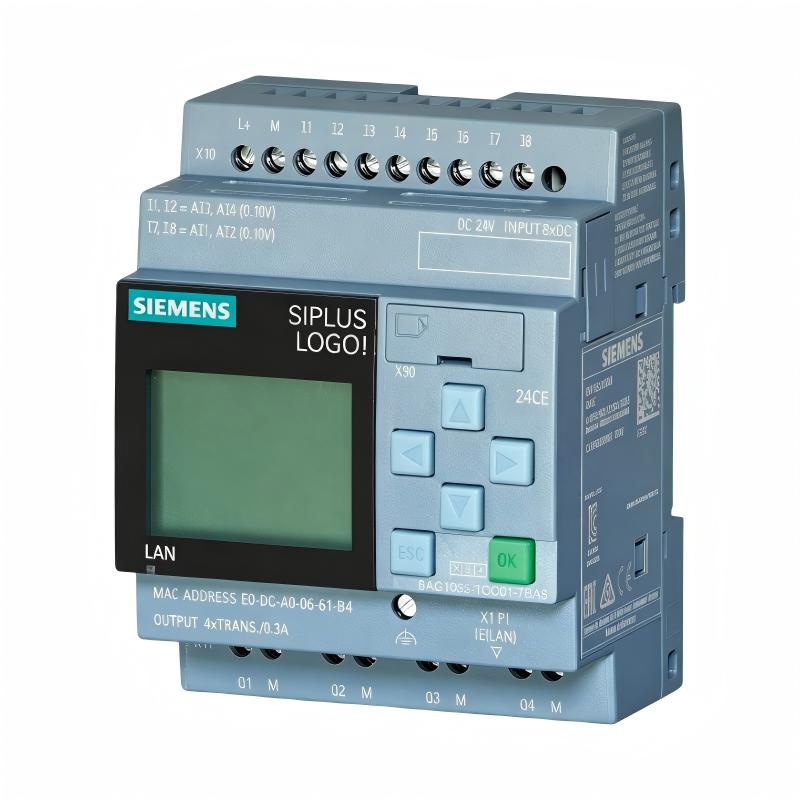
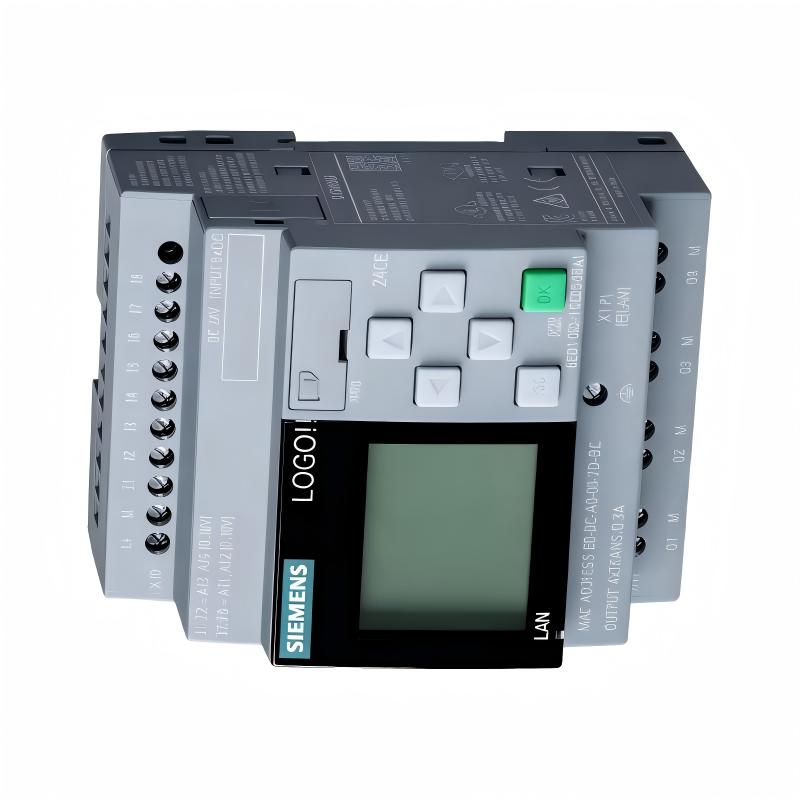
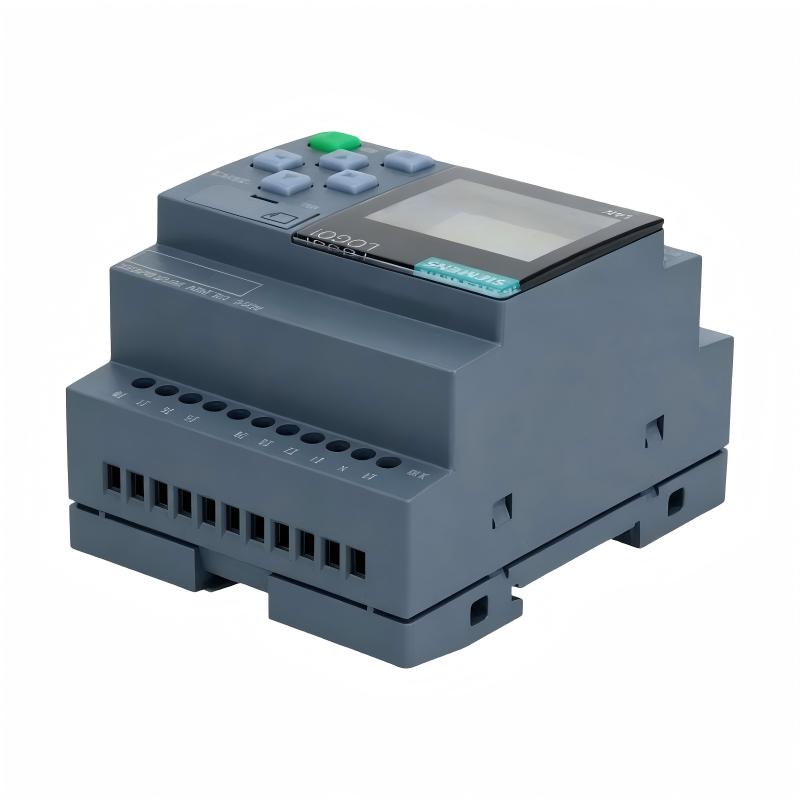
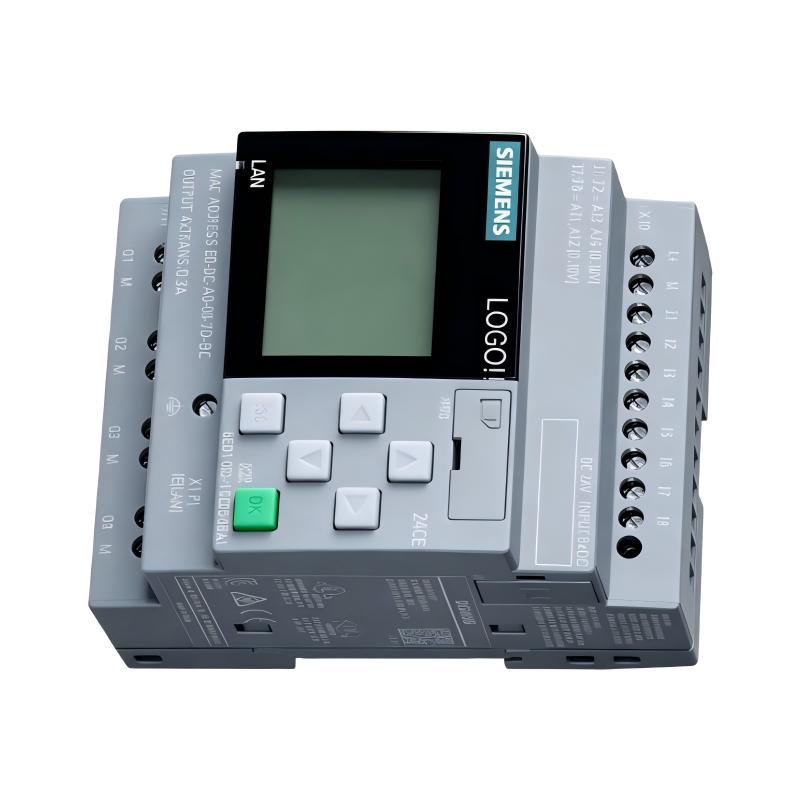
- Siemens
- 6AG1052-1HB08-7BA0
- Logic Module
- Germany
- 71.5 x 90 x 60 mm
- 0.3 kg
- Xiamen, China
- New & In Stock
- T/T, PayPal, Western Union
- 1 Year
- 1-3 Working Days
- DHL, UPS, TNT, FedEx and EMS.
- 24-Hour Service
- COO
- 2
Our advantage

Global Logistics
We have a 10-year logistics and express cooperation agreement, so our products can be shipped to any place in the world.

Brand new and original
Our products are imported in bulk from the place of origin. Because of the cooperative relationship, our products are all original and 100% new.

24-hour service
We provide 7*24 hours service to our customers. We will be there whenever you need us.

Price advantage
All our products are priced very favorably because we have our own warehouse and supply.
| Company Information | |||
| [email protected] | |||
| Mobile | +8615980777398 | ||
| +8615980777398 | |||
| 15980777398 |
Product Overview
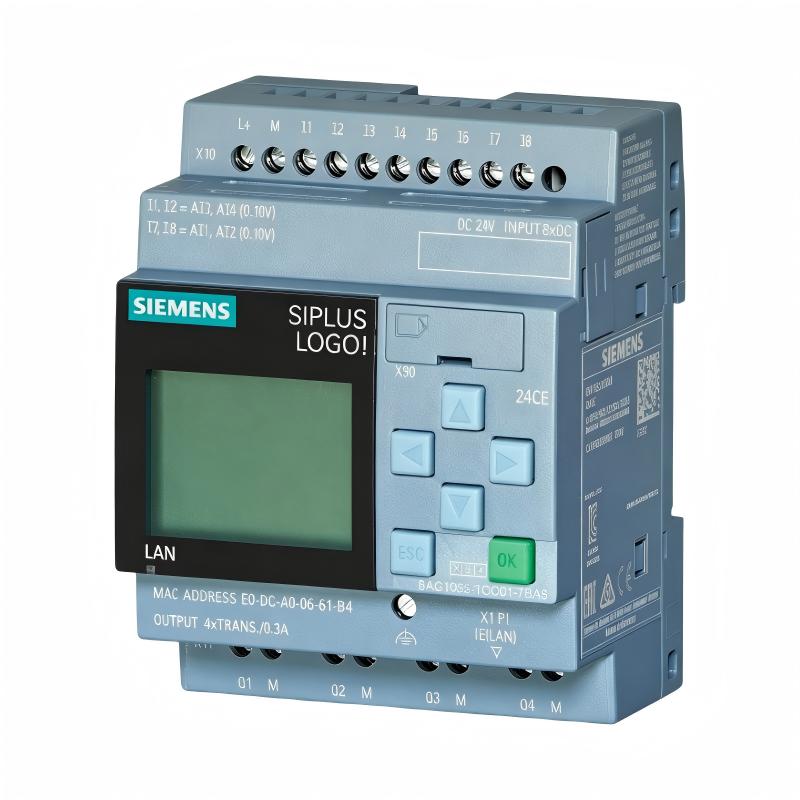
The Siemens 6AG1052-1HB08-7BA0 Logic Module is a compact programmable control component designed for logic-based automation and electrical control applications. It provides a practical solution for implementing localized control sequences, switching logic, equipment interlocks, monitoring functions, and other programmable operations within industrial equipment.
With listed dimensions of 71.5 × 90 × 60 mm and a weight of 0.3 kg, the Siemens 6AG1052-1HB08-7BA0 is suitable for compact control cabinets, machine panels, equipment control assemblies, and distributed automation installations where efficient use of cabinet space is important.
Logic modules can simplify control architectures by replacing portions of conventional relay-based logic with programmable functions. Instead of creating every sequence through fixed physical wiring, the control behavior can be organized through logic programming and configuration.
The exact electrical ratings, input and output characteristics, communication capabilities, memory specifications, programming functions, and environmental limits should be verified against the applicable hardware configuration before the module is installed in an operating system.
Technical Specifications
| Parameter | Specification |
|---|---|
| Manufacturer | Siemens |
| Model | 6AG1052-1HB08-7BA0 |
| Product Type | Logic Module |
| Primary Function | Programmable logic and localized automation control |
| Dimensions | 71.5 × 90 × 60 mm |
| Weight | 0.3 kg |
| Installation | Industrial control cabinet / automation equipment |
| Application | Machine control, equipment sequencing, monitoring and automation |
| Control Concept | Programmable logic-based control |
| System Integration | Siemens automation architecture, subject to application configuration |
| Construction | Compact industrial control module |
The dimensions and weight above are the supplied product information for the 6AG1052-1HB08-7BA0. Configuration-dependent electrical and functional specifications should be confirmed before engineering, wiring, or replacement.
Understanding the Siemens 6AG1052-1HB08-7BA0
The 6AG1052-1HB08-7BA0 belongs to the logic-module category of industrial automation equipment. A logic module processes defined conditions and executes programmed control operations according to the application requirements.
The basic concept can be represented as:
Input Conditions → Logic Evaluation → Control Decision → Output Action
Input conditions may originate from switches, sensors, machine-status contacts, operator commands, or other control devices. The programmed logic evaluates these conditions and determines the appropriate response.
This makes a logic module useful for applications where the control task is relatively localized and can be represented through defined logical relationships.
How a Logic Module Supports Automation
Industrial equipment often contains many simple control decisions.
For example, a motor may only be permitted to start when several conditions are satisfied:
- Start command is active
- Equipment is available
- Required permissive signals are present
- No relevant fault condition is active
- The operating sequence permits startup
A programmable logic module can organize these conditions into a defined control sequence.
A simplified process may look like:
Operator Command
↓
Input Evaluation
↓
Permissive Check
↓
Programmed Logic
↓
Output Command
↓
Equipment Operation
This structured approach can make control sequences easier to modify and maintain than large collections of hardwired relay circuits.
Role in Industrial Control Systems
The Siemens 6AG1052-1HB08-7BA0 can be incorporated into an industrial control system as a local logic-processing element.
A larger automation architecture may contain several levels:
| Control Level | Typical Equipment |
|---|---|
| Field Level | Sensors, switches, actuators |
| Local Control | Logic modules and small controllers |
| Machine Control | PLCs and distributed I/O |
| Operator Level | HMI panels |
| Supervisory Level | SCADA and monitoring systems |
| Enterprise Level | Production and management systems |
A compact logic module can perform selected local functions while higher-level controllers coordinate the overall production process.
This can help separate simple local control tasks from more complex machine or process logic.
Typical Industrial Applications
Machine Sequencing
Machine automation often requires a series of predefined operations.
A logic module can be used within an appropriate architecture to manage conditions such as:
- Start
- Stop
- Reset
- Enable
- Interlock
- Sequence transition
- Equipment status
Conveyor Automation
Conveyor systems can use logic-based control to coordinate motors, sensors, and machine sections.
Possible control functions include product detection, start/stop coordination, section interlocking, and equipment status monitoring.
Pump and Utility Equipment
Pumping systems frequently use logical conditions to determine when equipment should operate.
The control sequence may involve operating commands, equipment availability, process conditions, and fault signals.
Material Handling
Material-handling equipment often requires repetitive sequences and coordinated equipment states. Local programmable logic can contribute to these functions when the system architecture is appropriately designed.
Packaging and Production Equipment
Packaging machines and production equipment may require repeated control sequences involving multiple operating states. A programmable logic component can provide localized control functions within the overall automation system.
Logic Processing and Sequence Control
The value of programmable logic comes from the ability to define relationships between conditions and actions.
For example:
Condition A + Condition B = Equipment Enable
or:
Condition A + Fault Condition = Stop Command
or:
Start Command + Permissive Conditions = Sequence Initiation
More complex sequences can also include timing, state transitions, counters, monitoring conditions, and reset requirements where supported by the actual device.
The exact functions available on the 6AG1052-1HB08-7BA0 should be confirmed from the applicable configuration information rather than assumed from the general logic-module category.
Installation and Cabinet Integration
The Siemens 6AG1052-1HB08-7BA0 has listed dimensions of:
71.5 × 90 × 60 mm
and a listed weight of:
0.3 kg
These physical specifications should be considered during cabinet design.
Important installation factors include:
- Mounting position
- Available cabinet space
- Adjacent equipment
- Wiring clearance
- Cable routing
- Connector access
- Ventilation
- Environmental conditions
- Service accessibility
Even when a control module is physically compact, sufficient space should be reserved for wiring and maintenance.
Electrical Wiring Considerations
The exact electrical characteristics of the 6AG1052-1HB08-7BA0 should be confirmed before connecting field devices.
Power Connection
The required power supply must be verified before energizing the module. Incorrect voltage or connection can damage electronic equipment.
Input Devices
Depending on the actual configuration, field inputs may represent switches, sensors, contacts, or other control signals.
Input wiring should be checked carefully to ensure that the connected devices are compatible with the module.
Output Devices
Control outputs may interface with relays, contactors, indicators, actuators, or other equipment.
The connected load must comply with the actual output specifications of the installed hardware.
Signal Integrity
Good wiring practices can reduce the effects of electrical interference.
Control cables should be routed appropriately and separated from high-power conductors where required by the system design.
Integration with Siemens Automation Systems
A logic module can operate as part of a broader Siemens automation architecture.
Depending on the application, the surrounding system may contain:
- Siemens PLC controllers
- Digital and analog I/O modules
- HMI panels
- Industrial communication equipment
- Motor starters
- Variable speed drives
- Contactors
- Sensors
- Actuators
- Safety devices
The logic module can perform localized control functions while the PLC or supervisory system handles broader process coordination.
The exact communication method and system topology must be determined from the actual hardware configuration.
Commissioning Guide
A systematic commissioning procedure can help identify installation errors before the equipment enters normal operation.
Step 1: Confirm the Model
Verify the complete product designation:
Siemens 6AG1052-1HB08-7BA0
Step 2: Inspect the Installation
Check mounting, connectors, wiring, cabinet conditions, and surrounding equipment.
Step 3: Verify the Power Supply
Confirm that the supply arrangement is suitable for the installed hardware.
Step 4: Check Input Signals
Test field switches and sensors to ensure that the expected conditions are reaching the control system.
Step 5: Verify Logic
Check that the configured control sequence matches the intended machine operation.
Step 6: Test Outputs
Verify that control outputs respond correctly and that connected equipment reacts as expected.
Step 7: Test Interlocks
Confirm that required permissive and interlock conditions operate correctly.
Step 8: Perform Functional Testing
Run the equipment through its intended sequence under controlled conditions before releasing it for normal production.
Troubleshooting the 6AG1052-1HB08-7BA0
When troubleshooting the Siemens 6AG1052-1HB08-7BA0, it is important to consider the complete control chain.
The recommended diagnostic path is:
Power → Inputs → Logic → Outputs → Field Equipment
No Module Operation
Possible causes include:
- Incorrect power
- Loose connection
- Wiring error
- Installation problem
- Configuration issue
- Hardware fault
Begin by checking power and physical connections.
Input Signal Missing
If an expected input is not recognized, inspect:
- Sensor or switch
- Sensor power
- Field wiring
- Terminal connections
- Signal compatibility
- Input configuration
A field-device problem can easily appear to be a controller problem.
Output Does Not Activate
If the programmed logic appears correct but an output does not operate, check:
- Input conditions
- Program logic
- Interlocks
- Output wiring
- External power
- Connected relay or contactor
- Downstream equipment
Unexpected Control Sequence
Unexpected behavior can be caused by:
- Incorrect configuration
- Incorrect input state
- Wiring errors
- Program logic
- Missing permissive conditions
- Faulty field equipment
Reviewing each condition in the sequence can help isolate the source.
Preventive Maintenance
Regular inspection can help maintain reliable operation of the logic module and its associated control system.
Recommended maintenance includes:
- Inspecting wiring and terminals
- Checking connectors
- Removing excessive dust from the cabinet
- Monitoring abnormal heat
- Checking for moisture or contamination
- Inspecting for mechanical damage
- Maintaining configuration backups
- Recording hardware identification
- Reviewing recurring alarms or control faults
Maintenance should also cover the field equipment connected to the logic module.
Program and Configuration Management
A programmable control system depends on both hardware and configuration.
Before replacing the 6AG1052-1HB08-7BA0, maintenance personnel should determine how the existing application configuration is stored and restored.
Good engineering practices include:
- Maintaining current configuration backups
- Recording configuration revisions
- Documenting control sequences
- Keeping replacement procedures available
- Recording hardware identification
- Testing restored configuration before returning equipment to production
This is particularly important when the logic module controls a machine with customized operating sequences.
Replacement Considerations
When sourcing a replacement for the Siemens 6AG1052-1HB08-7BA0, the complete order number should be checked.
Important details include:
- Full product designation
- Hardware version
- Existing configuration
- Connected field devices
- Wiring arrangement
- Application requirements
- Program or configuration data
- Cabinet installation arrangement
The supplied physical specifications are:
71.5 × 90 × 60 mm
0.3 kg
Physical compatibility alone is not sufficient to establish electrical or functional compatibility. A replacement should be verified against the complete automation system.
Cabinet Layout and Mechanical Planning
The compact dimensions of the 6AG1052-1HB08-7BA0 allow it to be considered for installations where cabinet space is limited.
When planning the cabinet, engineers should account for:
- Module dimensions
- Wiring space
- Cable bend radius
- Neighboring equipment
- Ventilation
- Service access
- Connector accessibility
- Future modifications
The 0.3 kg listed weight is also useful for handling and logistics planning.
System-Level Fault Diagnosis
A reliable troubleshooting strategy should distinguish between faults in the logic module and faults in connected equipment.
A useful diagnostic sequence is:
Power Stage
Confirm that the required power is available.
Input Stage
Verify that the field sensors and switches provide the expected conditions.
Logic Stage
Confirm that the programmed control conditions are being evaluated correctly.
Output Stage
Check whether the required control command is generated.
Equipment Stage
Inspect the relay, contactor, drive, valve, motor, or other connected equipment.
Process Stage
Confirm that the physical process responds correctly.
This approach prevents unnecessary replacement of the logic module when the actual problem is located elsewhere.
Key Advantages
The Siemens 6AG1052-1HB08-7BA0 Logic Module provides several useful characteristics for compact automation applications:
- Compact 71.5 × 90 × 60 mm design
- Listed weight of 0.3 kg
- Programmable logic-based control
- Suitable for localized automation functions
- Useful for machine sequencing
- Supports structured control logic
- Can simplify portions of hardwired control systems
- Suitable for equipment monitoring and interlocking applications
- Can be incorporated into Siemens automation architectures
- Compact form factor for control cabinet installation
Technical FAQs
What is the Siemens 6AG1052-1HB08-7BA0?
The Siemens 6AG1052-1HB08-7BA0 is a Logic Module designed for programmable logic and localized automation control applications.
What are the dimensions of the 6AG1052-1HB08-7BA0?
The listed dimensions are 71.5 × 90 × 60 mm.
What is the weight of the 6AG1052-1HB08-7BA0?
The listed weight is 0.3 kg.
What is the purpose of a logic module?
A logic module is used to process defined control conditions and execute programmed actions. Typical applications include sequencing, switching logic, monitoring, and equipment interlocking.
Can the 6AG1052-1HB08-7BA0 be used in machine control?
A logic module can be used as part of a machine-control system when its actual functions and electrical characteristics match the application requirements.
What should be checked during installation?
The complete model identification, power requirements, input/output characteristics, wiring, mounting conditions, environmental requirements, and system configuration should be verified.
What should be checked if the machine sequence is incorrect?
Check field inputs, wiring, programmed logic, interlocks, configuration, output signals, and downstream equipment systematically.
Can a similar Siemens logic module replace this model?
A similar physical design does not guarantee compatibility. The complete order number, configuration, wiring, and application requirements should be verified before replacement.
Are exact electrical specifications provided in this article?
No. The confirmed information used here is the supplied model, product type, dimensions, and weight. Exact electrical ratings and configuration-dependent functions should be verified for the specific 6AG1052-1HB08-7BA0 hardware.
Conclusion
The Siemens 6AG1052-1HB08-7BA0 Logic Module is a compact programmable control component designed for localized automation and logic-processing applications. With listed dimensions of 71.5 × 90 × 60 mm and a weight of 0.3 kg, it can be incorporated into compact industrial control cabinets and equipment automation systems.
By implementing programmable control logic, a logic module can organize machine sequences, equipment interlocks, switching decisions, and monitoring functions while reducing the need for extensive hardwired relay arrangements. It can therefore form a useful part of machine automation, material handling, utility control, conveyor systems, and other localized industrial applications when correctly matched to the system.
For installation and replacement, the complete 6AG1052-1HB08-7BA0 identification should be verified together with the applicable hardware configuration. Proper wiring, power verification, configuration management, commissioning, and systematic troubleshooting are essential for reliable operation.
The combination of compact physical dimensions, 0.3 kg listed weight, and programmable logic functionality makes the Siemens 6AG1052-1HB08-7BA0 a practical component for space-conscious industrial control architectures.