

ProductPRODUCT
Featured products
Contact Us
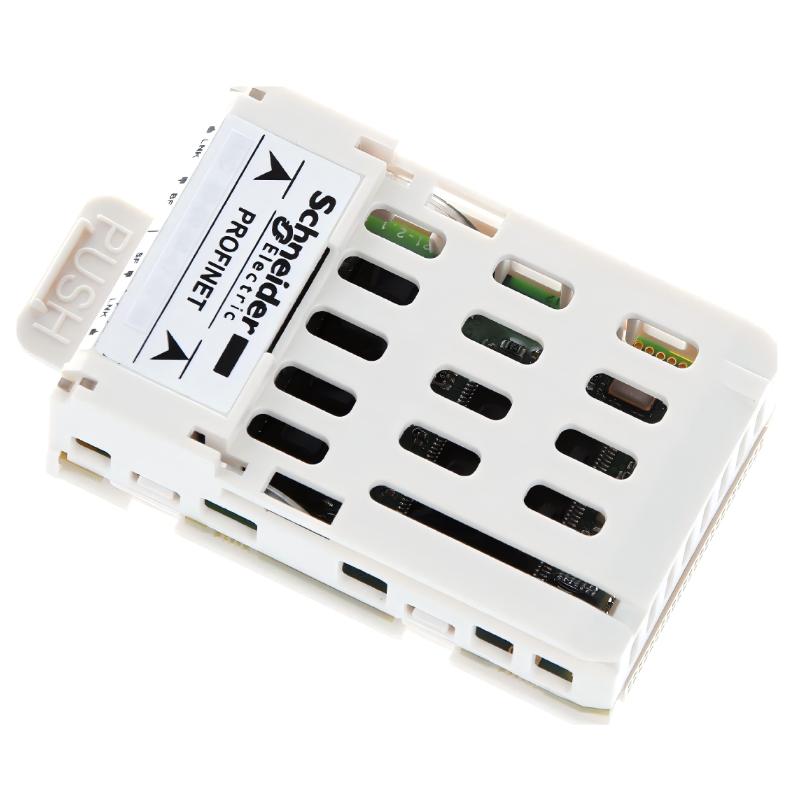
- Schneider
- VW3A3627
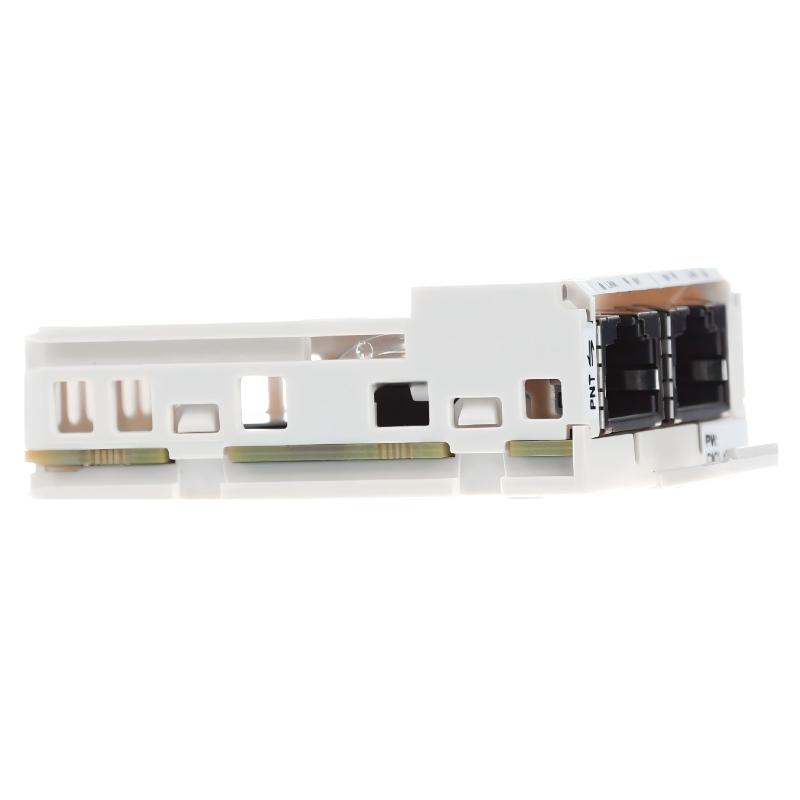
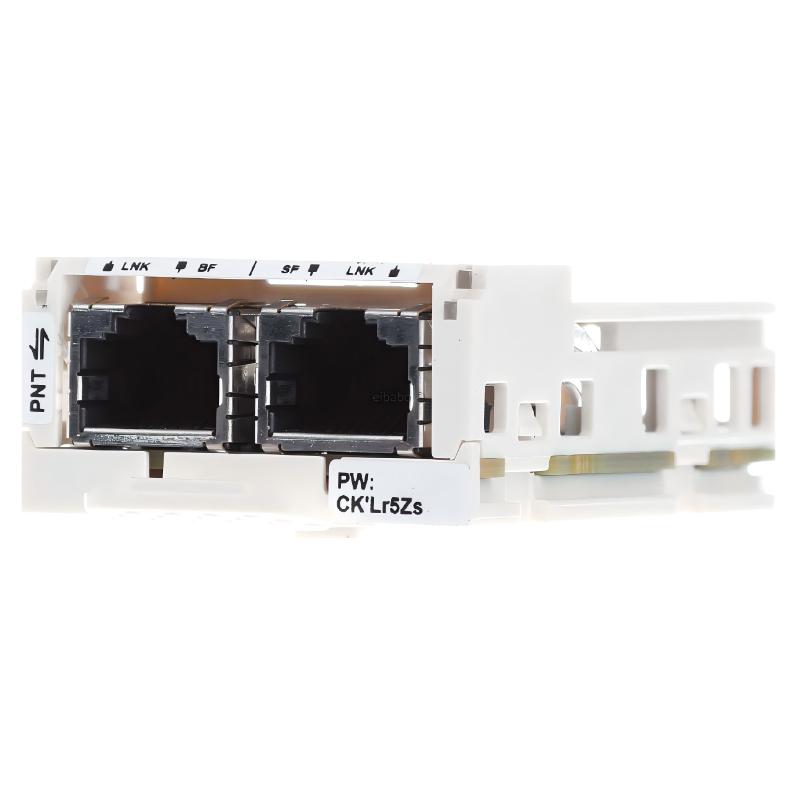
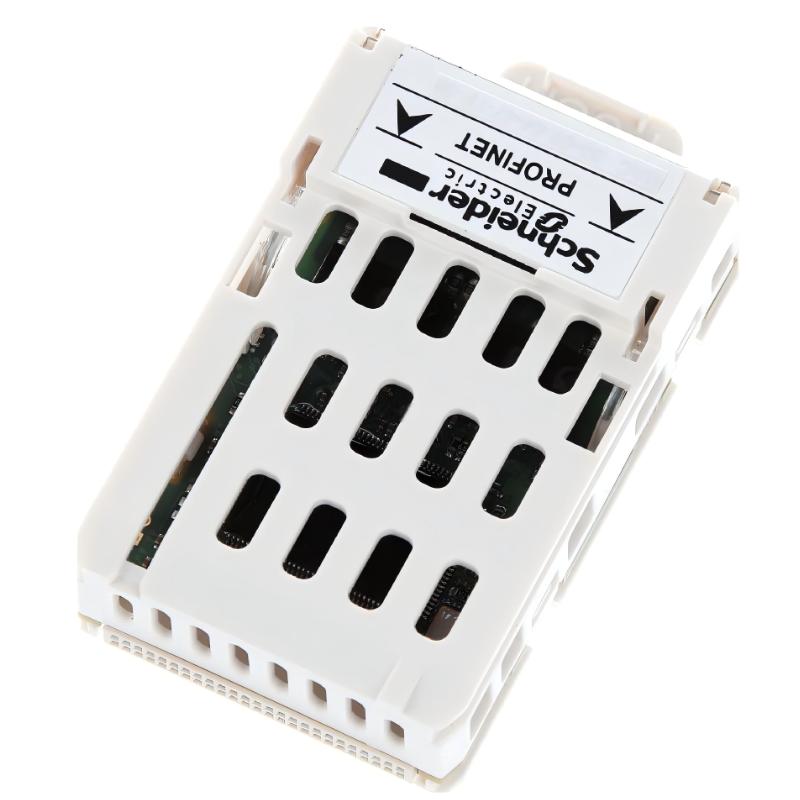
- PROFINET Communication Module
- France
- 100 × 80 × 20 mm
- 0.3 kg
- Xiamen, China
- New & In Stock
- T/T, PayPal, Western Union
- 1 Year
- 1-3 Working Days
- DHL, UPS, TNT, FedEx and EMS.
- 24-Hour Service
- COO
- 75
Our advantage

Global Logistics
We have a 10-year logistics and express cooperation agreement, so our products can be shipped to any place in the world.

Brand new and original
Our products are imported in bulk from the place of origin. Because of the cooperative relationship, our products are all original and 100% new.

24-hour service
We provide 7*24 hours service to our customers. We will be there whenever you need us.

Price advantage
All our products are priced very favorably because we have our own warehouse and supply.
| Company Information | |||
| [email protected] | |||
| Mobile | +8615980777398 | ||
| +8615980777398 | |||
| 15980777398 |
Product Overview
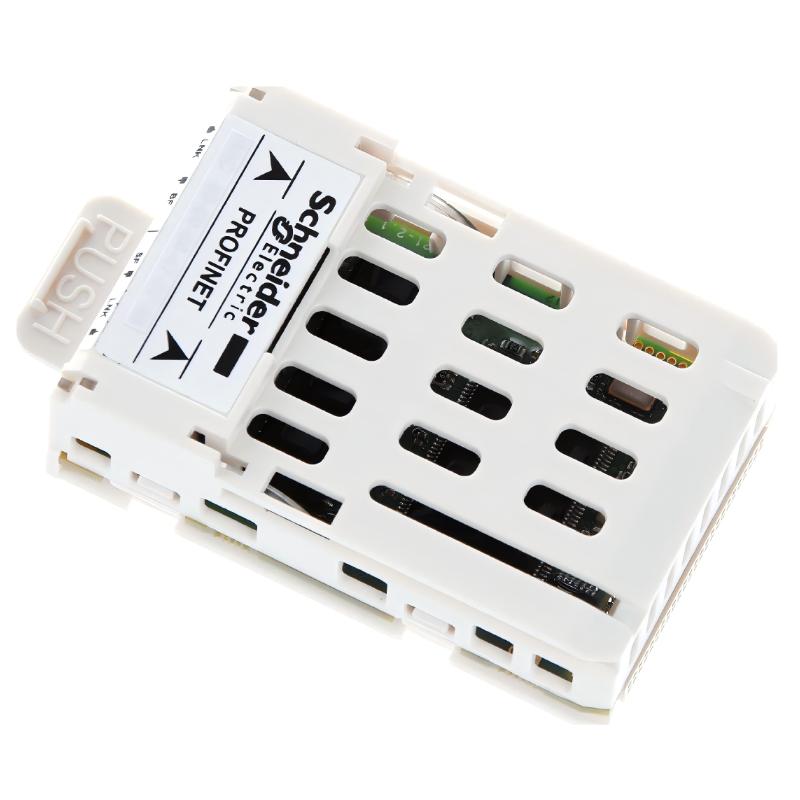
The Schneider VW3A3627 Altivar PROFINET Communication Module is a communication accessory for compatible Altivar drive systems that need to exchange control and monitoring data over a PROFINET industrial Ethernet network.
In a machine controlled by a PROFINET-capable PLC, the drive can become part of the same automation network as remote I/O, HMIs, controllers, and other field devices. Instead of sending every drive command through individual hardwired terminals, the controller can exchange configured drive data through the network. This makes the VW3A3627 particularly useful in distributed machine architectures where several variable-speed drives must be coordinated from a central controller.
A typical application may involve several motors operating as different sections of the same production line. The PLC can manage the overall sequence while communicating with each Altivar drive individually. Drive status, operating information, and diagnostic conditions can also be brought back into the control program, allowing the machine logic to react to drive conditions.
The module handles the communication interface; the Altivar drive itself remains responsible for motor control and power conversion.
Technical Specifications
| Parameter | Specification |
|---|---|
| Product | Schneider VW3A3627 |
| Product Type | Altivar PROFINET Communication Module |
| Communication Protocol | PROFINET |
| Application | PROFINET communication for compatible Altivar drive systems |
| Dimensions | 100 × 80 × 20 mm |
| Weight | 0.3 kg |
Product Features
- Provides PROFINET connectivity for compatible Altivar drive systems.
- Allows drive commands and operating information to be exchanged through an industrial Ethernet network.
- Supports integration with PROFINET-based PLC control architectures.
- Makes drive status and diagnostic information available to the automation controller.
- Suitable for machines containing multiple networked variable-speed drives.
- Reduces the need for separate hardwired control and monitoring signals.
- Supports centralized supervision with distributed drive-level control.
- Compact communication-module construction for integration into the applicable Altivar system.
Working Principle
The VW3A3627 establishes the communication path between the Altivar drive and a PROFINET controller.
In a normal operating sequence, the PLC sends configured process or drive-control data through the PROFINET network. The VW3A3627 receives the network information and transfers the relevant data to the Altivar drive. The drive then uses the received command or reference according to its configured control settings.
The communication flow also works in the opposite direction. Operating status, monitoring information, and diagnostic data generated by the drive can be returned through the PROFINET connection. The PLC can use this information for sequencing, alarm handling, machine interlocking, or HMI display.
For example, a production line may contain separate drives for feeding, conveying, and processing. The PLC can coordinate their operating sequence through PROFINET while monitoring whether each drive has reached the required operating state before allowing the next machine step.
The VW3A3627 therefore serves as the bridge between Ethernet-based automation communication and drive-level control data. It does not directly control the motor power stage.
Role in a PROFINET Drive Network
The VW3A3627 connects the Altivar drive to the PROFINET automation layer.
A simplified system architecture is:
PROFINET PLC → Industrial Ethernet Network → VW3A3627 → Altivar Drive → Motor
The PLC acts as the central controller for the machine sequence, while the Altivar handles motor operation. The communication module carries the data exchanged between these two levels.
In a multi-drive installation, each drive can participate in the same PROFINET control architecture. The PLC can assign different control functions and references to individual drives while collecting their operating states through the network.
This arrangement is useful when drive coordination is more important than simple standalone speed control. For instance, one drive may need to start only after another drive reaches its operating condition, or several drives may need to follow coordinated references during a production cycle.
Industrial Applications
Automated Conveyor Lines
Multiple conveyor sections can be connected to the same PROFINET network. The PLC can coordinate individual Altivar drives and monitor their running and fault states.
Packaging Equipment
Packaging machines often contain several motors for feeding, conveying, indexing, and auxiliary movement. PROFINET communication allows these drives to be integrated into the machine’s centralized control program.
Material Handling Systems
Rollers, transfer units, feeders, and sorting equipment can use networked drives when centralized command and drive diagnostics are required.
Manufacturing Lines
Production lines with multiple variable-speed motors can exchange drive references and status information through the PROFINET network instead of relying on extensive point-to-point wiring.
Process Machinery
Pumps, fans, mixers, and other process drives can be integrated into a PROFINET control system where the PLC needs continuous access to drive operating conditions.
Distributed Machine Control
Machines with several drive cabinets or distributed motor-control sections can benefit from an Ethernet-based architecture that connects the drives to a common PROFINET controller.
Installation and Maintenance
Before installation, confirm that the VW3A3627 is suitable for the intended Altivar drive and that the machine controller supports the required PROFINET configuration.
Install the module with the drive isolated from its electrical supply. Check that the module is correctly seated and that the Ethernet connection is secure. Industrial Ethernet cables should be routed with suitable separation from high-power motor wiring to reduce the possibility of electromagnetic interference.
During commissioning, configure the drive as the appropriate PROFINET device within the controller project. Verify the device identification, network configuration, and assigned address information before testing motor commands.
A practical commissioning sequence is to first establish PROFINET communication, then verify that the PLC can exchange basic data with the drive, and finally enable the complete machine sequence.
If communication fails, troubleshoot in layers:
- Check Ethernet cabling and physical connections.
- Verify network configuration and device identification.
- Check the PLC hardware and software configuration.
- Confirm the drive’s communication and command-source settings.
- Examine diagnostic information from both the controller and drive.
If the PLC detects the PROFINET device but the motor does not respond, the problem may be related to the drive’s control configuration rather than the network connection itself.
Related Components
| Component | Function |
|---|---|
| Altivar Drive | Controls motor operation and supplies drive status information |
| VW3A3627 | Provides PROFINET communication between the drive and automation network |
| PROFINET PLC | Controls the machine sequence and exchanges data with the drive |
| Industrial Ethernet Switch | Connects multiple PROFINET devices where required |
| PROFINET Ethernet Cable | Carries network communication between devices |
| HMI | Displays drive status, alarms, and operating information |
| Motor | Converts electrical drive output into mechanical movement |
Recommended Related Models
| Model | Product Type |
|---|---|
| Schneider VW3A3627 | Altivar PROFINET Communication Module |
| Schneider VW3A3327 | Altivar PROFINET Communication Card |
| Schneider VW3A3607 | Altivar PROFIBUS DP V1 Communication Module |
| Schneider VW3A3616 | Altivar Modbus TCP and EtherNet/IP Communication Module |
| Schneider VW3A3401 | Altivar Encoder Interface Card |
| Schneider VW3A3501 | Altivar Controller Inside Programmable Card |
Key Advantages
- Adds PROFINET communication capability to compatible Altivar drives.
- Integrates drive control into PROFINET-based PLC architectures.
- Allows commands, references, status, and diagnostic information to be exchanged through the network.
- Well suited to multi-drive machine configurations.
- Reduces the amount of individual hardwired control wiring.
- Supports centralized monitoring of distributed drives.
- Facilitates coordination between multiple Altivar drives through the automation network.
Technical FAQs
1. What role does the VW3A3627 have when an Altivar drive is connected to a PROFINET PLC?
The VW3A3627 provides the communication interface between the drive and the PROFINET network. It allows configured control and monitoring data to pass between the PLC and the Altivar drive, while the drive continues to perform the actual motor-control function.
2. What does it mean if the PLC recognizes the VW3A3627 but no useful drive data is exchanged?
Network recognition only confirms that the PROFINET device can be identified. The configured device data, communication parameters, PLC project configuration, and drive command-source settings must also be correct before the controller can operate the drive as intended.
3. How can the VW3A3627 simplify control of several Altivar drives?
Multiple drives can be integrated into the same PROFINET automation architecture. The PLC can address their configured data individually, coordinate their operating sequence, and collect status or diagnostic information without requiring separate hardwired command circuits for every drive function.
4. What is a useful troubleshooting approach when PROFINET communication drops during machine operation?
First determine whether the fault is physical or configuration-related. Inspect Ethernet connections and cabling, then check network status and device configuration in the PLC. If the network remains available but drive communication is unstable, review the module installation, drive communication settings, and diagnostic information from the controller and drive.