

ProductPRODUCT
Featured products
Contact Us
- Schneider
- TSXP57453AM
- Dual-Format PL7 Processor
- France
- 95 x 180 x 260 mm
- 0.56 kg
- Xiamen, China
- New & In Stock
- T/T, PayPal, Western Union
- 1 Year
- 1-3 Working Days
- DHL, UPS, TNT, FedEx and EMS.
- 24-Hour Service
- COO
- 3
Our advantage

Global Logistics
We have a 10-year logistics and express cooperation agreement, so our products can be shipped to any place in the world.

Brand new and original
Our products are imported in bulk from the place of origin. Because of the cooperative relationship, our products are all original and 100% new.

24-hour service
We provide 7*24 hours service to our customers. We will be there whenever you need us.

Price advantage
All our products are priced very favorably because we have our own warehouse and supply.
| Company Information | |||
| [email protected] | |||
| Mobile | +8615980777398 | ||
| +8615980777398 | |||
| 15980777398 |
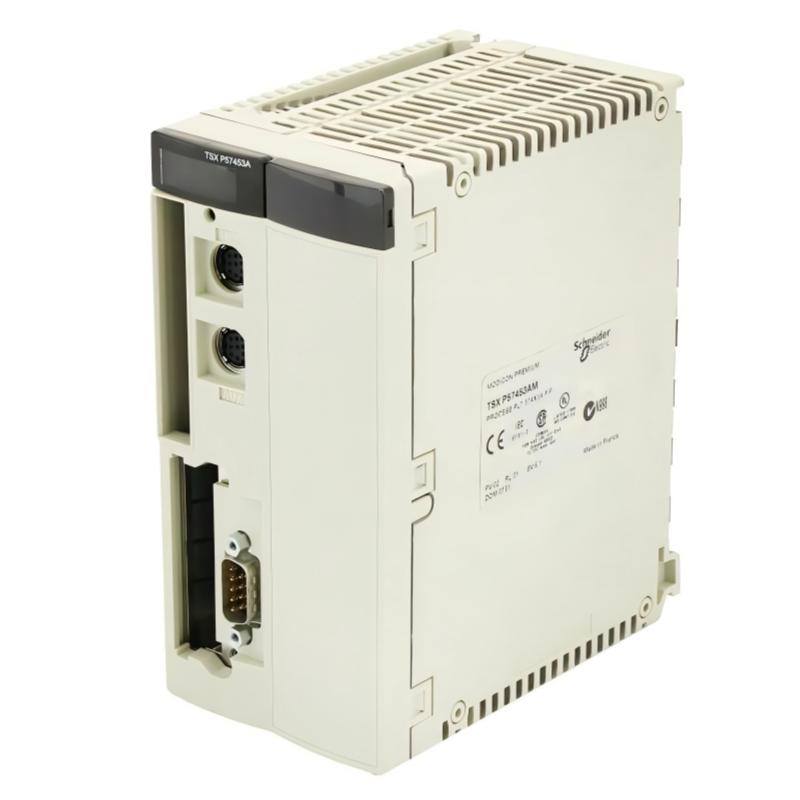
1. Product Overview
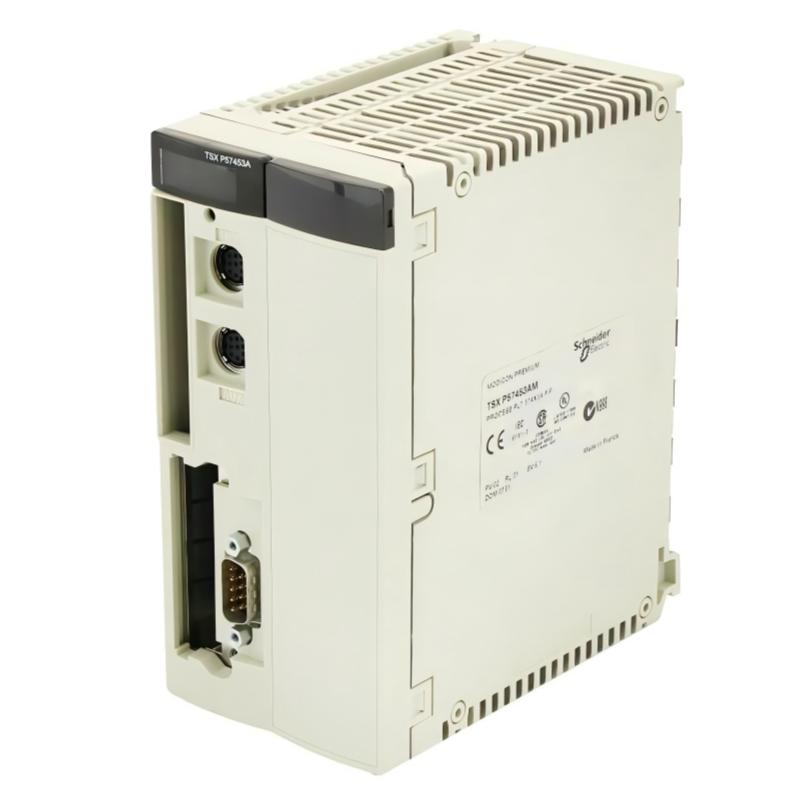
The Schneider Electric TSXP57453AM Dual-Format PL7 Processor is a programmable logic controller (PLC) processor designed for the Modicon Premium automation platform. It serves as the central processing component of a compatible PLC station, executing control logic, managing application data, and coordinating communication with connected input/output modules and other automation equipment.
Designed for industrial control applications, the TSXP57453AM supports established PLC architectures used in manufacturing, machinery control, and process automation. Its dual-format design allows it to occupy the designated processor position in a compatible Modicon Premium rack configuration.
The processor supports PL7 Junior/Pro programming software and provides integrated communication interfaces for supported automation networks and serial connections. Its memory architecture supports internal program and data storage, with additional storage capabilities available through compatible PCMCIA memory cards.
The supplied product dimensions are 95 × 180 × 260 mm, and the listed weight is 0.56 kg. These specifications are useful for preliminary identification and spare-parts planning.
As a legacy automation component, the TSXP57453AM requires careful compatibility verification when used for maintenance or replacement. Engineers should confirm the processor revision, rack configuration, application requirements, communication interfaces, and available programming tools before installing it.
2. Technical Specifications
| Parameter | Specification |
|---|---|
| Brand | Schneider Electric |
| Model | TSXP57453AM |
| Product Type | Dual-Format PL7 Processor |
| Product Family | Modicon Premium |
| Software Designation | PL7 Junior/Pro |
| Dimensions | 95 × 180 × 260 mm |
| Weight | 0.56 kg |
| Internal Memory | 96 Kwords for program and data without PCMCIA expansion |
| PCMCIA Memory Support | Compatible cards provide additional program or data storage |
| Discrete I/O Capacity | Up to 2,040 I/O points |
| Analog I/O Capacity | Up to 256 I/O channels |
| Integrated Communication | Fipio manager and serial interfaces |
| Supply Arrangement | Powered through the compatible PLC rack |
| Installation | Designated processor position in a compatible Modicon Premium rack |
| Application | Industrial PLC control and process automation |
Note: Specifications and supported configurations should be checked against the exact product reference and the requirements of the installed system. PCMCIA memory capacities depend on the compatible card used.
3. Function and Working Principle
The TSXP57453AM operates as the processor of a compatible Modicon Premium PLC station. It executes the application program, processes input information, updates internal data, and coordinates the outputs and communications defined by the control application.
A typical PLC control cycle involves several operations:
- Input processing: The controller obtains information from connected digital and analog input modules.
- Program execution: The processor executes the configured application logic using the supported PL7 programming environment.
- Data management: Internal memory stores the program and working data required by the application.
- Output updating: The controller updates outputs according to the program’s logic and operating conditions.
- Communication management: The processor exchanges information with supported network devices, remote equipment, and engineering tools.
The TSXP57453AM supports a structured application model with a master task, a fast task, and event-driven tasks. This arrangement allows compatible applications to organize control operations according to their timing and execution requirements.
The processor also supports expansion of its memory capabilities through compatible PCMCIA cards. Depending on the card and configuration, additional memory can be used for application programs or data storage.
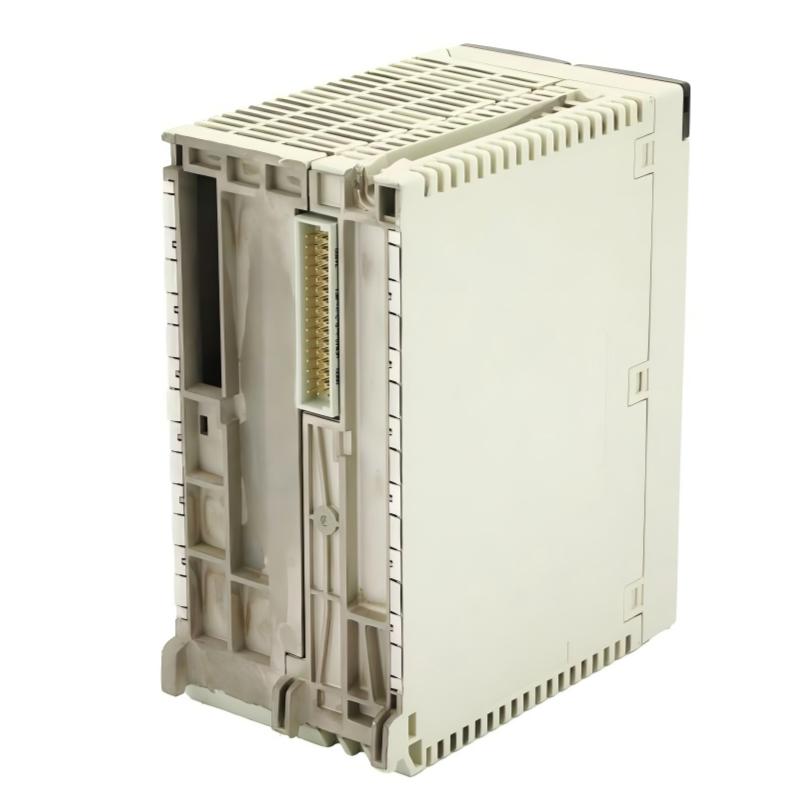
Correct operation depends on the processor being installed in a supported rack, supplied with the required backplane power, and configured with compatible I/O, communication, and application components.
4. Role in Industrial Automation Systems
Central PLC Processing
The processor is responsible for executing the control logic of the PLC station. It coordinates the relationship between input signals, application instructions, output commands, and internal data.
I/O Management
The TSXP57453AM supports substantial discrete and analog I/O capacity within a compatible Modicon Premium architecture. The actual system capacity depends on rack configuration, installed modules, and application requirements.
Industrial Communication
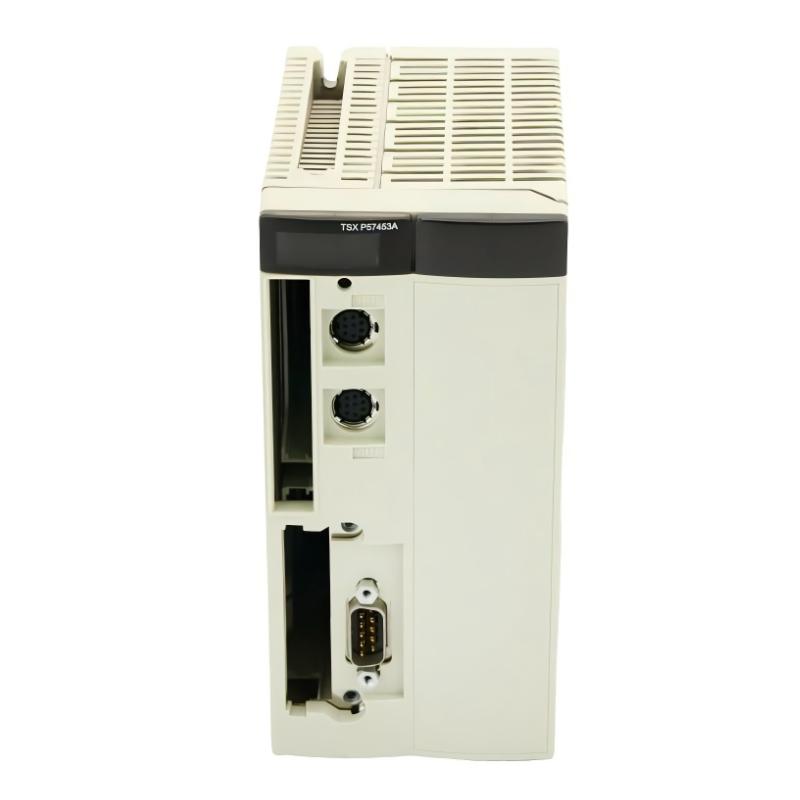
Integrated communication interfaces allow the processor to exchange data with supported devices. The Fipio manager interface supports communication with compatible Fipio devices, while serial connections can be used for supported communication and engineering functions.
Application Memory Management
The processor includes internal memory for program and data storage. Compatible PCMCIA memory cards can extend available storage, subject to the supported card type and configuration.
Process and Machine Control
The processor can coordinate control sequences, interlocks, alarms, and data handling in applications designed for the Modicon Premium platform. Its suitability depends on the required performance, I/O configuration, and compatibility of the installed equipment.
5. Industrial Applications
The TSXP57453AM may be used in existing industrial installations that rely on a compatible Modicon Premium PLC architecture.
Manufacturing and Production Lines
Manufacturing systems use PLC processors to coordinate equipment sequences, monitor sensor signals, and control actuators. A compatible processor manages the application logic and exchanges information with the connected modules.
Packaging Machinery
Packaging equipment requires coordinated control of conveyors, filling mechanisms, sealing units, and labeling stations. PLC processing helps execute programmed sequences and manage machine interlocks.
Material Handling Systems
Conveyor lines, transfer equipment, and sorting machinery use controller-based logic to coordinate movement and monitor operating status. The processor’s I/O and communication capabilities can support suitable configurations.
Process Automation
Industrial process equipment may require coordinated operation of valves, pumps, instruments, and auxiliary systems. A properly configured PLC processor executes the applicable control strategy and processes related signals.
Legacy Industrial Equipment
The TSXP57453AM is particularly relevant to maintenance planning for installations built around the Modicon Premium platform. Replacing a processor in such a system requires attention to the original program, rack arrangement, communication architecture, and supported engineering environment.
These applications describe potential uses within compatible systems. Actual suitability must be determined from the installation requirements and the processor’s documented capabilities.
6. Installation and System Integration
Correct installation helps protect the processor and reduces the risk of unexpected PLC faults. Always follow the applicable Schneider Electric installation instructions and the site’s electrical safety procedures.
Step 1: Verify the Model
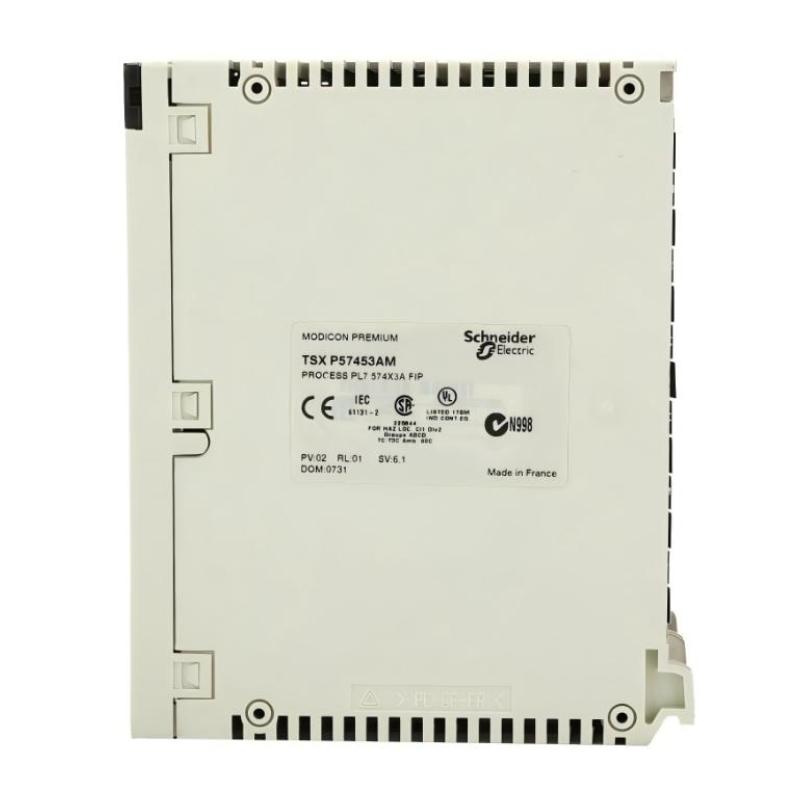
Confirm that the product label identifies the processor as TSXP57453AM. Compare the part number with the equipment documentation and the processor being replaced.
Step 2: Back Up the Application
Before removing an existing processor, make a verified backup of the PLC application and relevant configuration information whenever possible. Record any communication settings and other parameters needed for recovery.
Step 3: Isolate the Equipment
Place the controlled machinery in a safe state and follow the site’s lockout/tagout procedures. Isolate the relevant power sources before removing or installing the processor.
Step 4: Inspect the Rack and Processor
Check the module housing, connectors, and rack position for visible damage or contamination. Confirm that the rack is an approved configuration for the processor.
Step 5: Verify Power and Hardware Compatibility
Confirm that the rack power supply and installed modules meet the requirements of the system. Check the processor’s compatibility with the existing I/O modules, communication modules, and memory cards.
Step 6: Install the Processor
Insert the module into the designated processor position using the approved installation procedure. Ensure that it is correctly seated and secured. Do not force the processor into the rack.
Step 7: Restore Power and Review Status
Restore power according to the approved commissioning process. Observe the processor’s status indicators and review any diagnostic messages available through the supported engineering tools.
Step 8: Load or Verify the Application
If the application must be transferred or restored, use the appropriate programming software and a verified project backup. Confirm the processor configuration and application status before enabling normal operation.
Step 9: Perform Functional Testing
Verify communication with connected I/O modules and relevant devices. Test the required control sequences, alarms, and interlocks under the site’s commissioning procedure before returning the machine to production.
7. Common Problems and Troubleshooting
Processor-related faults can arise from power problems, incompatible hardware, application errors, communication failures, or aging components.
| Symptom | Possible Cause | Recommended Action |
|---|---|---|
| Processor does not start normally | Rack power issue, poor seating, or hardware fault | Verify the power supply, rack connections, and installation |
| PLC reports an I/O configuration error | Incorrect or unsupported module arrangement | Compare the installed modules with the approved configuration |
| Engineering software cannot connect | Incorrect communication settings, cable issue, or software incompatibility | Check the connection method, communication parameters, and supported tools |
| Application does not execute as expected | Program issue, configuration mismatch, or processor fault | Review diagnostics and compare the loaded application with the verified backup |
| Network devices are unavailable | Interface configuration or communication-path problem | Check supported interfaces, cabling, device configuration, and diagnostics |
| Memory expansion is not recognized | Incompatible or incorrectly installed PCMCIA card | Verify the card reference and installation requirements |
| Intermittent system faults | Loose connections, electrical interference, or aging hardware | Inspect connections and investigate power and environmental conditions |
7.1 Check the Rack Power Supply
Confirm that the rack power supply is operating within its specified limits and that the processor is installed correctly. Follow safe measurement procedures and the manufacturer’s instructions.
7.2 Review Processor Diagnostics
Record the status indicators and diagnostic messages before changing the hardware or application. These details can help distinguish between processor, I/O, communication, and configuration problems.
7.3 Verify the Application Configuration
Check the installed rack arrangement, module assignments, and application configuration. If a replacement processor has been installed, confirm that the correct project and supported configuration have been loaded.
7.4 Investigate Communication Faults
Inspect the applicable communication connections and verify that the connected equipment supports the configured interface. Confirm serial settings or Fipio configuration as appropriate for the installation.
7.5 Check Memory Expansion
If the PLC does not recognize an installed PCMCIA memory card, verify that the card is approved for the processor and that it is installed according to the documented procedure.
7.6 Evaluate Hardware Replacement
If the fault persists after power, configuration, connections, and associated modules have been checked, further testing or processor replacement may be necessary. Use an approved replacement and validate the complete system before resuming production.
8. Preventive Maintenance
Preventive maintenance helps preserve system reliability and simplifies the support of legacy PLC installations.
- Back up the application: Maintain verified copies of the PLC program and relevant configuration files.
- Monitor diagnostic messages: Record recurring processor and communication faults for further investigation.
- Inspect connections: Check accessible connectors and rack seating during scheduled maintenance.
- Maintain cabinet conditions: Keep the control cabinet clean and within the specified environmental limits.
- Document the hardware configuration: Maintain accurate records of the processor, rack, power supply, I/O modules, and memory cards.
- Protect spare parts: Store replacement processors in suitable conditions and use appropriate electrostatic discharge precautions.
- Verify engineering-tool compatibility: Ensure that the available programming tools and project files can support the installed legacy system.
- Record replacements: Document the part number, replacement date, application backup status, and commissioning results.
Maintenance intervals should be based on operating conditions, system criticality, and the manufacturer’s recommendations.
9. Compatibility and Replacement Considerations
The TSXP57453AM belongs to the Modicon Premium family, so replacement planning should consider both the processor and the wider automation architecture.
| Selection Factor | What to Verify |
|---|---|
| Exact processor reference | Confirm TSXP57453AM and any applicable hardware revision |
| Rack compatibility | Verify the supported Modicon Premium rack arrangement |
| Application software | Confirm availability of the required PL7 Junior/Pro environment |
| I/O configuration | Check installed digital, analog, and specialized modules |
| Communication interfaces | Verify the required Fipio and serial communication functions |
| Memory configuration | Confirm internal memory requirements and PCMCIA card compatibility |
| Application transfer | Determine how the existing program and configuration will be restored |
| Product condition | Assess the module’s condition and testing history |
| Commissioning requirements | Plan for communication checks, I/O validation, and application testing |
Legacy Product Status
The TSXP57453AM is a discontinued product reference. Its availability and service support may vary by region and date. Before purchasing a replacement or planning a long-term repair strategy, confirm the current support status for the relevant market.
A newer controller should not be treated as a direct plug-in replacement solely because it offers comparable control functions. Migrating from a Modicon Premium installation to another platform may require changes to the rack, I/O modules, wiring, communication architecture, application software, and commissioning procedures.
10. Key Advantages
Integrated PLC Processing
The processor combines application execution, data management, and supported communication functions within a single controller component.
Broad I/O Support
Its documented capacity of up to 2,040 discrete I/O points and 256 analog I/O channels supports a range of compatible control-system configurations.
Expandable Memory
Compatible PCMCIA cards can extend available program or data storage, helping support application requirements within the processor’s documented limits.
Structured Application Execution
Support for master, fast, and event-driven tasks enables application designers to organize control operations according to the requirements of the process.
Support for Established Automation Systems
For existing Modicon Premium installations, a correctly matched TSXP57453AM can serve as a replacement component without requiring an immediate platform migration, provided the rest of the system remains compatible.
11. Technical FAQs
Q1: What is the Schneider TSXP57453AM?
The TSXP57453AM is a dual-format PL7 processor for the Schneider Electric Modicon Premium automation platform. It executes PLC application logic and manages data and supported communication functions.
Q2: Which programming software does the processor use?
The processor is designated for PL7 Junior/Pro. Confirm the availability and compatibility of the required engineering software before performing maintenance or program transfer.
Q3: What are the dimensions and weight?
The supplied dimensions are 95 × 180 × 260 mm, and the supplied weight is 0.56 kg.
Q4: How much internal memory does the processor provide?
The documented configuration provides 96 Kwords of internal program and data memory without a PCMCIA expansion card. Compatible cards provide additional storage according to their type and supported configuration.
Q5: What communication interfaces are available?
The processor provides an integrated Fipio manager interface and serial connections. The exact communication setup depends on the connected devices and the configured system architecture.
Q6: Is the TSXP57453AM suitable for every Modicon Premium rack?
No. The rack arrangement and installed hardware must match the processor’s supported configuration. Check the relevant hardware documentation before installation.
Q7: What should be checked before replacing the processor?
Verify the exact model, rack compatibility, application backup, memory configuration, communication interfaces, and engineering software requirements. After installation, validate the program and connected I/O.
Q8: Can a newer Schneider Electric processor replace the TSXP57453AM?
A newer processor may be a migration option, but it should not be assumed to be a direct replacement. Confirm the manufacturer’s recommended replacement path and assess the required hardware, software, wiring, and application changes.
Q9: Why might a replacement processor fail to run the original application?
Possible causes include an incompatible hardware configuration, missing or incorrect application data, communication settings, or differences between processor platforms. Review diagnostic messages and use a verified project backup.
12. Conclusion
The Schneider TSXP57453AM Dual-Format PL7 Processor is a PLC processing component for the Modicon Premium automation platform. With support for PL7 Junior/Pro, integrated communication interfaces, internal program and data memory, and compatible PCMCIA memory expansion, it is designed to manage the application logic of supported industrial control systems.
The supplied dimensions of 95 × 180 × 260 mm and weight of 0.56 kg support product identification and spare-parts planning. Because this is a legacy processor, careful verification of rack compatibility, software availability, memory configuration, and application backup is essential before replacement or commissioning.
Following approved installation procedures, reviewing diagnostics, and validating the complete control system can help reduce downtime and maintain the reliability of existing industrial automation equipment.