

ProductPRODUCT
Featured products
Contact Us
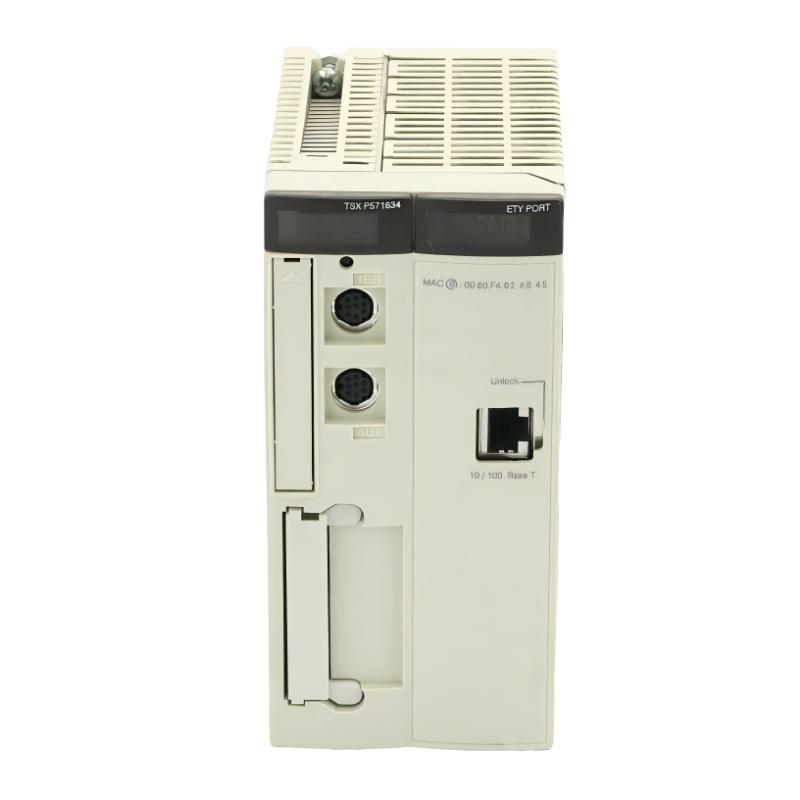
- Schneider
- TSXP571634M
- Unity Processor
- France
- 95 × 180 × 260 mm
- 0.74 kg
- Xiamen, China
- New & In Stock
- T/T, PayPal, Western Union
- 1 Year
- 1-3 Working Days
- DHL, UPS, TNT, FedEx and EMS.
- 24-Hour Service
- COO
- 47
Our advantage

Global Logistics
We have a 10-year logistics and express cooperation agreement, so our products can be shipped to any place in the world.

Brand new and original
Our products are imported in bulk from the place of origin. Because of the cooperative relationship, our products are all original and 100% new.

24-hour service
We provide 7*24 hours service to our customers. We will be there whenever you need us.

Price advantage
All our products are priced very favorably because we have our own warehouse and supply.
| Company Information | |||
| [email protected] | |||
| Mobile | +8615980777398 | ||
| +8615980777398 | |||
| 15980777398 |
Product Overview
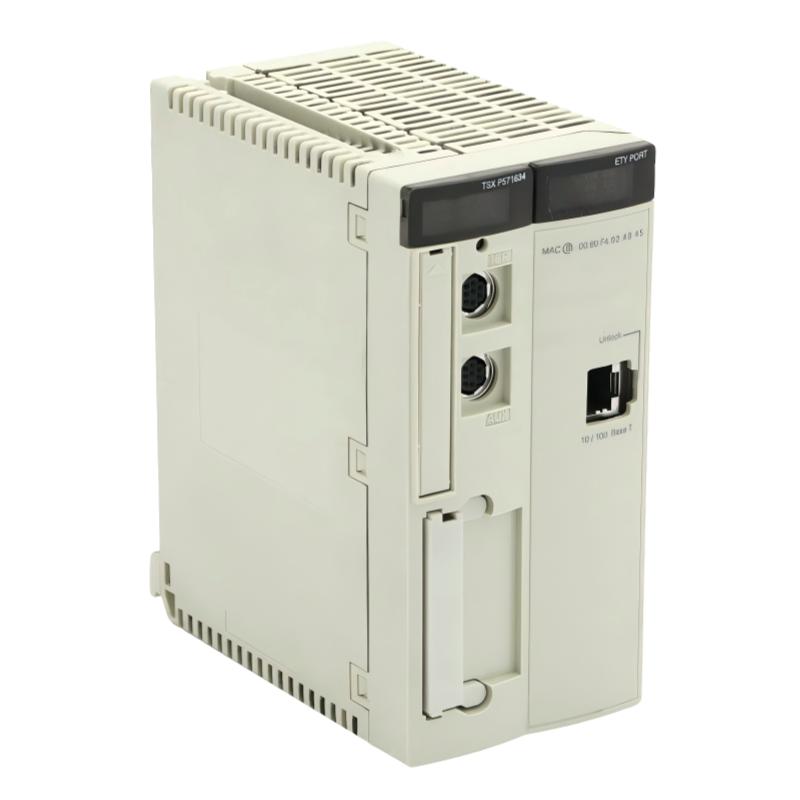
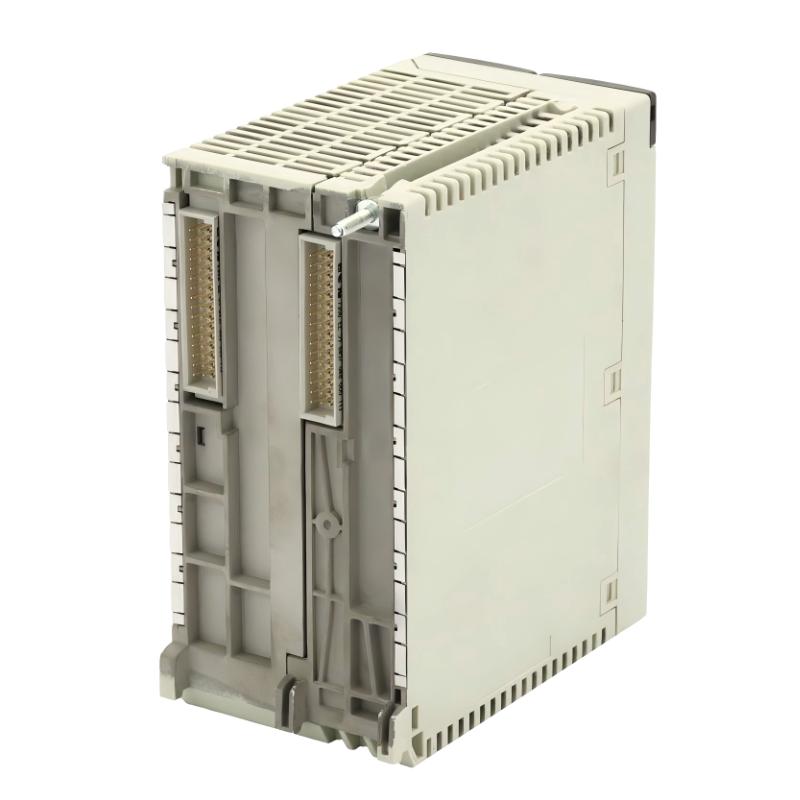
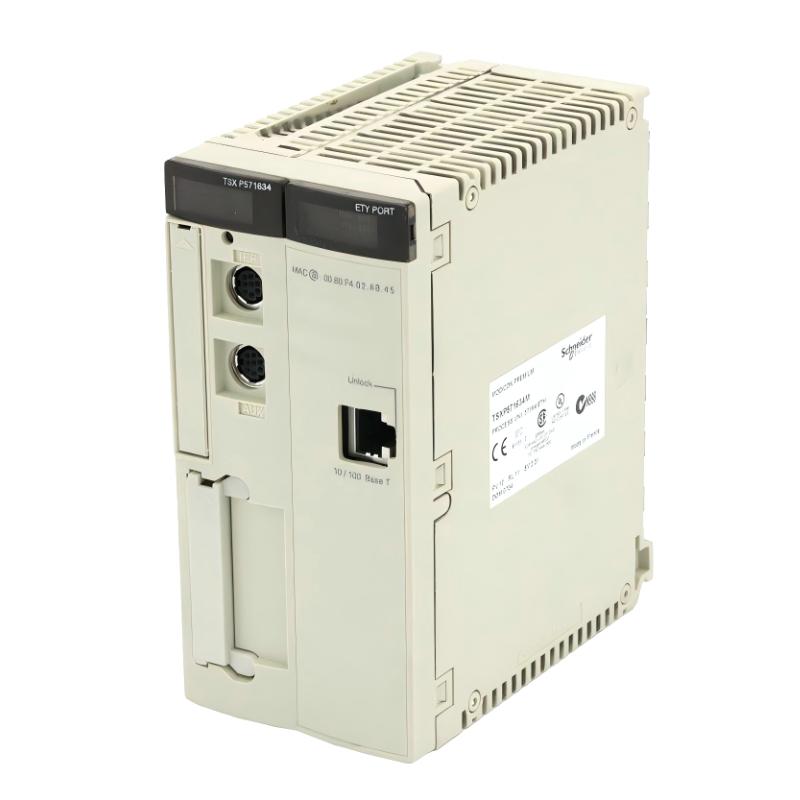
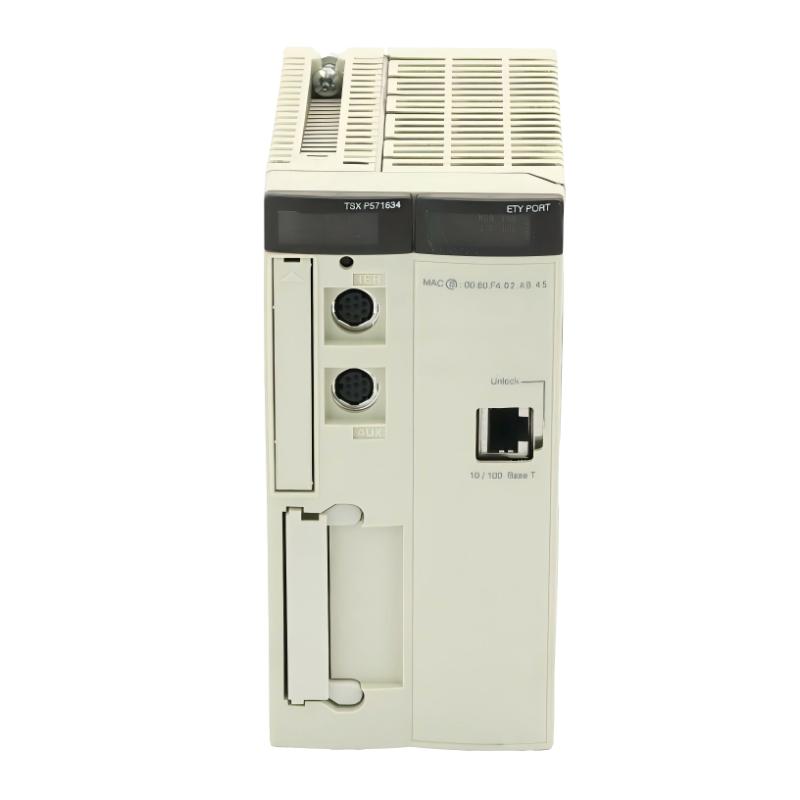
The Schneider TSXP571634M Modicon Premium Unity Processor is a PLC processor used in the Modicon Premium automation platform. It forms the central processing element of a Premium control station, executing the application program and coordinating information exchanged with connected I/O and communication modules.
In a working automation system, the processor sits between the control application and the hardware that interacts with the machine. Digital inputs may report the position of a cylinder, analog inputs may indicate pressure or temperature, and output modules may command valves, motors, or other actuators. The processor evaluates these signals according to the PLC program and determines the corresponding control actions.
The Unity designation is particularly relevant when maintaining older Premium installations that were engineered with Schneider Electric’s Unity-based programming environment. In such systems, the processor configuration, application program, I/O arrangement, and communication setup need to be considered together when replacing hardware.
A typical Premium control cabinet can contain the TSXP571634M alongside a power supply, discrete and analog I/O modules, communication modules, and other Premium hardware. The processor provides the logic-processing center while the surrounding modules handle specific field and communication functions.
When troubleshooting a machine that has stopped responding correctly, it is important not to assume that the processor is automatically at fault. A PLC application can be affected by an I/O module, communication path, power supply, field device, or configuration issue. Processor diagnostics should be considered together with the rest of the control architecture.
Technical Specifications
| Parameter | Specification |
|---|---|
| Manufacturer | Schneider Electric |
| Model | TSXP571634M |
| Product Family | Modicon Premium |
| Product Type | Unity Processor |
| System Role | PLC Central Processing Unit |
| Primary Function | PLC Program Execution |
| Application | Industrial Automation / Machine Control |
| Platform | Modicon Premium |
| Programming Environment | Unity |
| Installation | Premium PLC System |
| Dimensions | 95 × 180 × 260 mm |
| Weight | 0.74 kg |
Product Features
The TSXP571634M serves as the processing center of a Modicon Premium PLC installation.
- Schneider Electric Modicon Premium Unity Processor
- Model TSXP571634M
- Used as a central PLC processing unit
- Executes the configured control application
- Coordinates information from connected I/O
- Works with Premium system architecture
- Suitable for machine and process-control applications
- Supports PLC-based sequence and logic control
- Integrates with Premium communication and I/O hardware
- Relevant to legacy Premium system maintenance and replacement
The processor should be matched with the existing Premium hardware configuration and project software environment before replacement.
Working Principle
The TSXP571634M follows the basic PLC operating cycle: acquire system information, execute the control program, and update the relevant outputs and internal data.
A simplified control path is:
Field Inputs → Premium I/O → TSXP571634M → PLC Program → Premium Outputs → Field Equipment
For example, a machine may use a proximity sensor to confirm that a workpiece has reached a specific position. The corresponding input module reports the condition to the processor. The TSXP571634M evaluates that input according to the programmed sequence and can then command an output that starts the next machine operation.
The processor also coordinates information from other parts of the automation system. Communication modules can exchange data with remote equipment, while the application program determines how that information affects the machine.
A practical PLC cycle can therefore be viewed as:
Input Status → Logic Processing → Output Update → Communication / Diagnostics → Next Scan
The actual behavior depends on the application program and system configuration.
When a machine behaves incorrectly, engineers should compare the physical process condition with the corresponding PLC input and internal logic. If the input reaches the processor correctly but the expected output is not generated, the investigation can move toward the application logic or processor-side configuration.
Role in a Modicon Premium Control Architecture
The TSXP571634M occupies the central processing position within the Premium PLC system.
A simplified architecture is:
Field Devices → Premium I/O → TSXP571634M → Control Logic → Output Modules → Actuators
Additional communication paths may connect the processor with HMI systems, supervisory computers, remote PLCs, drives, and other automation equipment.
| System Element | Function |
|---|---|
| TSXP571634M | Executes the PLC application |
| Premium Power Supply | Supplies the PLC station |
| Premium I/O Modules | Interface with field signals |
| Digital Input Modules | Acquire discrete equipment states |
| Digital Output Modules | Control discrete devices |
| Analog Input Modules | Acquire process measurements |
| Analog Output Modules | Send analog control signals |
| Communication Modules | Exchange data with external systems |
| HMI | Displays machine and process information |
| Field Sensors | Provide process feedback |
| Actuators | Execute PLC commands |
The processor is consequently dependent on the surrounding Premium hardware to form a complete control system.
PLC Processing and Application Logic
The processor’s practical role becomes clearer when looking at a normal machine sequence.
Suppose an automated assembly station uses:
- A start push button
- A workpiece-detection sensor
- A cylinder-position switch
- A motor-running contact
- A solenoid valve
- An alarm output
The TSXP571634M evaluates these conditions according to the application logic.
A simplified sequence could be:
Start Command → Part Detected → Cylinder Position Confirmed → Motor Command → Running Feedback → Next Sequence Step
The processor does not physically detect the workpiece or operate the valve itself. Those tasks belong to the field devices and I/O modules. The processor determines what the collected information means and what action should follow.
This separation is useful during troubleshooting because it allows the engineer to isolate the problem into:
Field Device → I/O → Processor Logic → Output → Actuator
Industrial Applications
| Application | Typical Use |
|---|---|
| Manufacturing Lines | Sequence and machine control |
| Packaging Machinery | Coordinating sensors, actuators, and machine sequences |
| Assembly Equipment | Position and process control |
| Material Handling | Conveyor and transfer-system control |
| Process Machinery | Monitoring and controlling process equipment |
| Water Treatment | Pump, valve, and process logic |
| Industrial Utilities | Equipment monitoring and control |
| Automated Production Cells | Coordinated PLC-based machine operation |
The specific application depends on the Premium hardware configuration and PLC program.
Installation and Maintenance
Processor replacement requires attention to both hardware and application configuration.
Recommended practices include:
- Confirm the complete TSXP571634M model.
- Identify the existing Premium PLC architecture.
- Record the processor configuration.
- Back up the PLC application before maintenance.
- Document the installed I/O and communication modules.
- Check the processor diagnostic information.
- Verify the power supply condition.
- Inspect rack and module connections.
- Confirm communication paths are operational.
- Identify whether the fault is processor-related or caused by another system component.
- Follow the approved PLC shutdown procedure.
- Replace the processor according to the applicable maintenance procedure.
- Restore the required application and configuration.
- Verify processor startup status.
- Check connected I/O recognition.
- Confirm communication with external devices.
- Monitor PLC diagnostics.
- Test representative input signals.
- Verify corresponding output actions.
- Check machine sequence operation.
- Confirm alarms and interlocks.
- Record the final system status.
For an older Premium installation, preserving the existing application and configuration before hardware replacement is particularly important.
Compatible System Components
The TSXP571634M normally operates as part of a complete Modicon Premium control station.
| Component | Function |
|---|---|
| TSXP571634M | Central PLC processing |
| Premium Power Supply | PLC system power |
| Premium Rack | Module mounting and system interconnection |
| Digital Input Modules | Discrete signal acquisition |
| Digital Output Modules | Discrete equipment control |
| Analog Input Modules | Process measurement |
| Analog Output Modules | Analog control |
| Communication Modules | External device communication |
| HMI | Operator interface |
| Industrial Network | Controller-to-system communication |
| Field Sensors | Process and equipment feedback |
| Actuators | Execute control commands |
The actual combination should be verified against the existing Premium project.
Recommended Related Models
The recommendations below focus on Modicon Premium processors and closely related Premium control hardware, making them more useful for replacement planning and SEO product grouping.
| Model / Product Family | Product Type | Typical Application |
|---|---|---|
| Schneider TSXP571634M | Modicon Premium Unity Processor | Premium PLC control |
| Schneider TSXP57204M | Modicon Premium Processor | General PLC applications |
| Schneider TSXP572634M | Modicon Premium Processor | Higher-performance control |
| Schneider TSXP573634M | Modicon Premium Processor | Advanced Premium PLC systems |
| Schneider TSXH5724M | Modicon Premium Hot Standby Processor | Redundant PLC control |
| Schneider TSXDEZ08A5 | Modicon TSX Micro Discrete Input Module | Discrete signal acquisition |
| Schneider TSXAEY414 | Modicon Premium Analog Input Module | Analog process measurement |
| Schneider TSXDSY16T2 | Modicon Premium Discrete Output Module | Discrete actuator control |
Key Advantages
- Schneider Electric Modicon Premium Unity Processor.
- Model TSXP571634M.
- Serves as the central processing unit of a Premium PLC system.
- Executes machine and process-control logic.
- Coordinates information from Premium I/O modules.
- Supports integration with communication and supervisory systems.
- Suitable for established Premium automation installations.
- Relevant to PLC processor replacement and maintenance projects.
Technical FAQs
What should be backed up before replacing a TSXP571634M?
The PLC application, hardware configuration, communication settings, and relevant diagnostic information should be preserved before the processor is removed. This gives the replacement processor the information needed to restore the original control-system configuration.
Can an I/O fault be mistaken for a TSXP571634M processor fault?
Yes. A failed input module, damaged field wiring, communication problem, or power issue can produce symptoms that appear to be a PLC processing problem. Checking processor diagnostics together with I/O status helps separate processor faults from problems elsewhere in the control chain.
Why is the Unity environment relevant when maintaining this processor?
The processor belongs to a Premium system associated with Unity-based engineering. When replacing hardware in an existing installation, the software project and hardware configuration should be considered along with the physical processor to avoid configuration incompatibilities.
What should be verified after installing a replacement processor?
The engineer should first confirm processor startup and diagnostics, then verify recognition of the installed Premium modules and communication interfaces. Representative input/output functions should be tested afterward, followed by machine sequencing, alarms, and other application-specific functions.