

ProductPRODUCT
Featured products
Contact Us
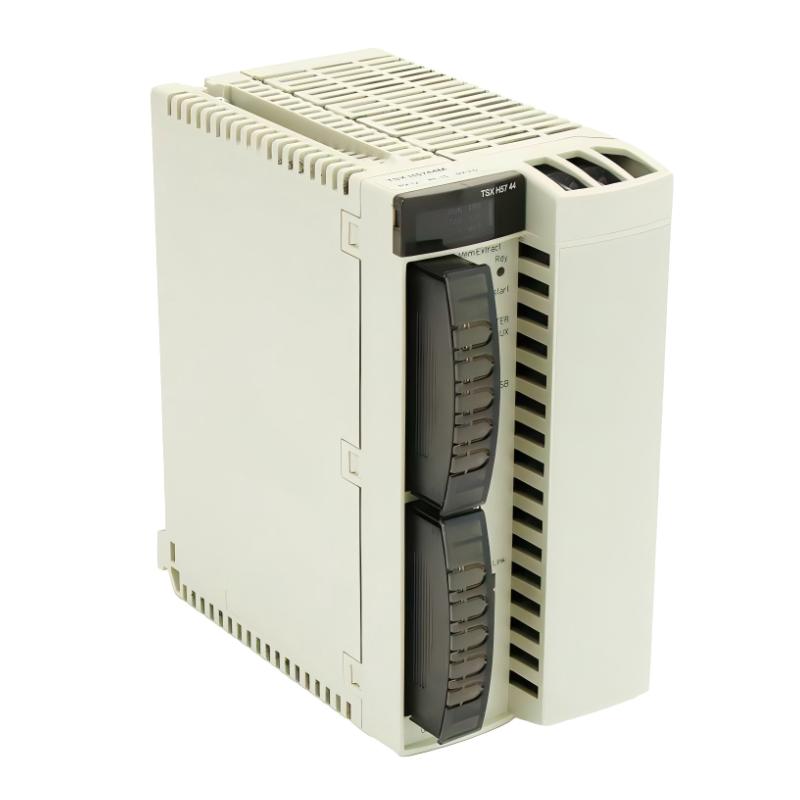
- Schneider
- TSXH5724M
- Hot Standby Processor
- France
- 55 × 180 × 260 mm
- 0.56 kg
- Xiamen, China
- New & In Stock
- T/T, PayPal, Western Union
- 1 Year
- 1-3 Working Days
- DHL, UPS, TNT, FedEx and EMS.
- 24-Hour Service
- COO
- 51
Our advantage

Global Logistics
We have a 10-year logistics and express cooperation agreement, so our products can be shipped to any place in the world.

Brand new and original
Our products are imported in bulk from the place of origin. Because of the cooperative relationship, our products are all original and 100% new.

24-hour service
We provide 7*24 hours service to our customers. We will be there whenever you need us.

Price advantage
All our products are priced very favorably because we have our own warehouse and supply.
| Company Information | |||
| [email protected] | |||
| Mobile | +8615980777398 | ||
| +8615980777398 | |||
| 15980777398 |
Product Overview
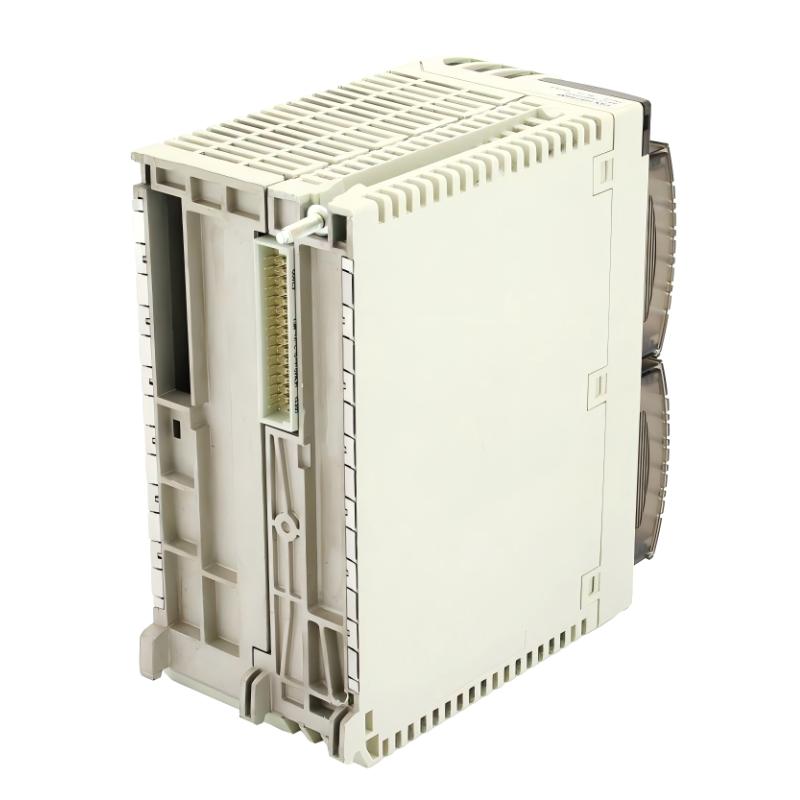
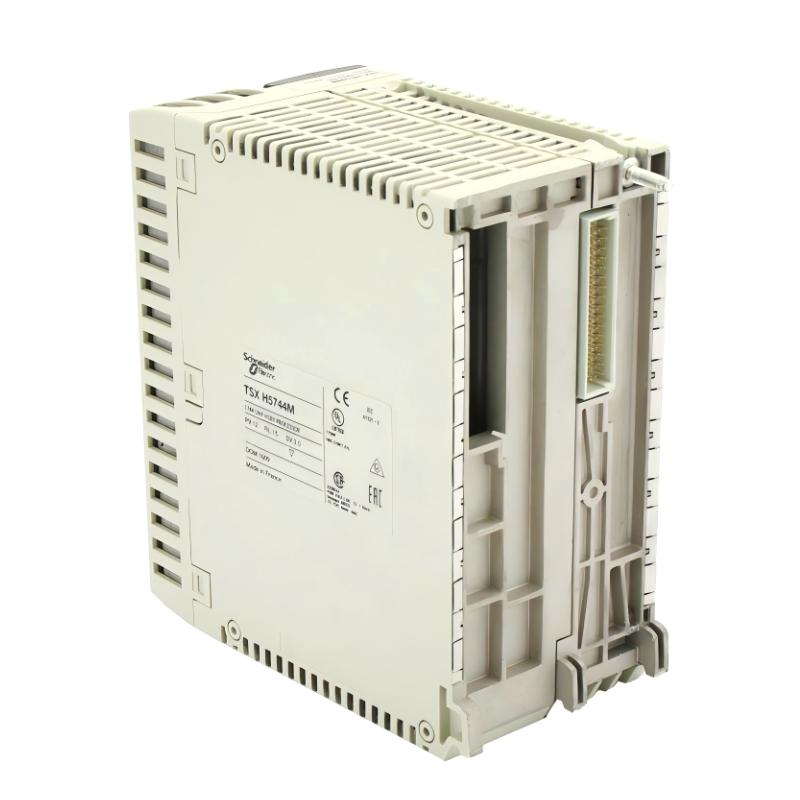
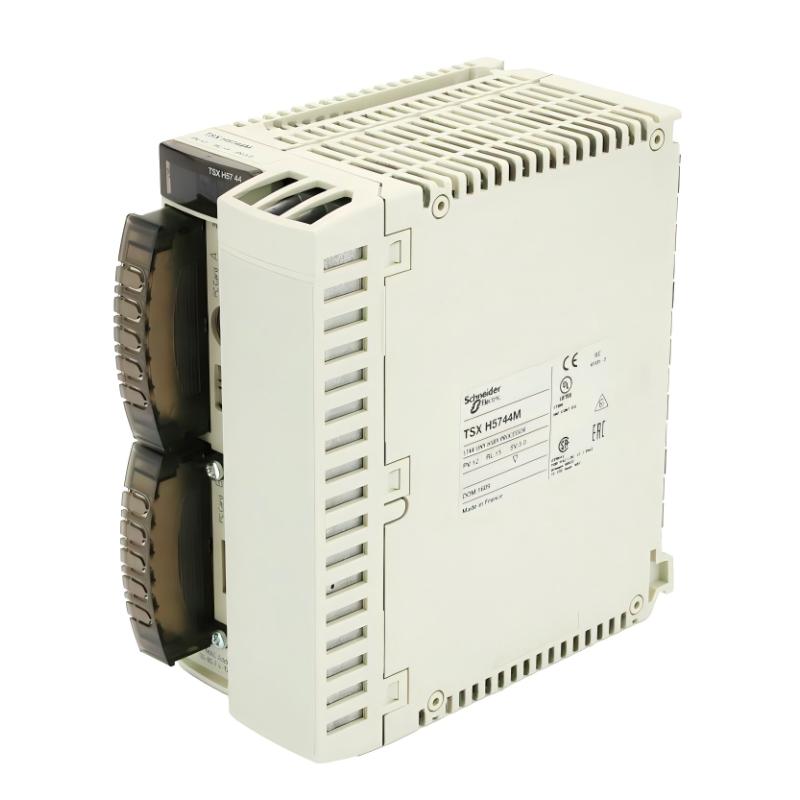
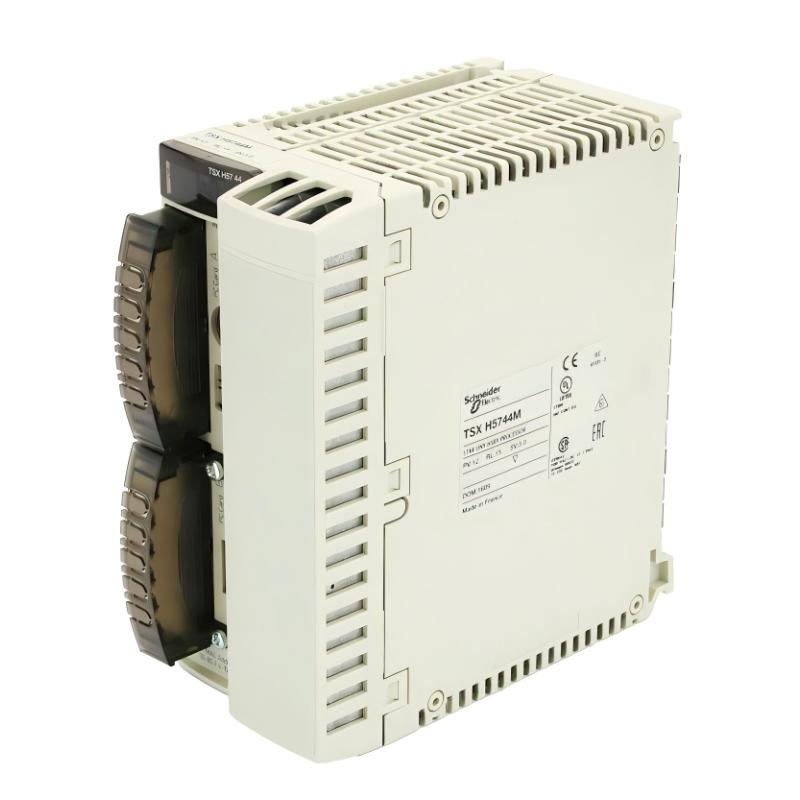
The Schneider TSXH5724M Modicon Premium Hot Standby Processor is a redundant PLC processor used in Modicon Premium automation systems where continued control operation is a priority.
Unlike a conventional PLC installation with a single processor, a Hot Standby architecture uses two processors working as a coordinated primary and standby pair. Under normal conditions, one processor carries the active control role while the other remains ready to assume control if the primary system becomes unavailable.
This arrangement is useful in applications where stopping the process because of a controller failure would create significant production loss, equipment risk, or difficult recovery procedures. Typical examples include continuous production lines, material-handling systems, process equipment, and other installations where controller availability matters.
The TSXH5724M belongs to the processing layer of the Premium control architecture. It does not replace field I/O modules; instead, it executes the control program and participates in the redundant controller arrangement.
A practical Hot Standby installation normally contains two compatible PLC processor stations with the required synchronization and communication connections. The application therefore needs to be considered as a complete redundant system rather than treating one processor as an isolated replacement part.
Technical Specifications
| Parameter | Specification |
|---|---|
| Manufacturer | Schneider Electric |
| Model | TSXH5724M |
| Product Family | Modicon Premium |
| Product Type | Hot Standby Processor |
| System Role | Redundant PLC Processor |
| Primary Function | Control Program Execution and Processor Redundancy |
| Application | Industrial Automation / Process Control |
| Architecture | Hot Standby PLC System |
| Installation | Modicon Premium Automation System |
| Dimensions | 55 × 180 × 260 mm |
| Weight | 0.56 kg |
Product Features
The TSXH5724M is intended for Premium applications requiring a redundant processor arrangement.
- Schneider Electric Modicon Premium Hot Standby Processor
- Model TSXH5724M
- Supports redundant PLC control architectures
- Used in primary/standby processor arrangements
- Suitable for high-availability automation applications
- Supports continuity of control following a processor-side failure
- Intended for Modicon Premium systems
- Suitable for continuous or critical machine-control applications
- Useful for redundant PLC maintenance and replacement
- Allows processor availability to be considered at the system level
Hot Standby performance depends on the complete redundant architecture, including both processor stations, synchronization, communication, power, I/O, and application configuration.
Working Principle
The TSXH5724M operates as part of a two-processor Hot Standby arrangement.
A simplified architecture is:
Primary PLC → Control Process
Standby PLC → Synchronization / Ready State
Both stations maintain the information required for the standby processor to take over when the active processor can no longer perform its control role.
Under normal operation, the primary processor executes the control application and manages the process. The standby processor remains synchronized with the active station so that it can assume control when the redundancy system determines that a switchover is required.
The basic sequence can be represented as:
Primary Processor Running → Processor Fault / Availability Loss → Standby Takes Control → Process Control Continues
The exact switchover behavior depends on the system configuration and the conditions that trigger the transfer.
This arrangement is particularly valuable in applications where a conventional PLC restart would be unacceptable. Instead of waiting for a failed controller to be repaired before restoring control, the redundant station can assume the active role.
For troubleshooting, engineers need to determine whether the problem is limited to one processor or affects the redundancy link, power supply, I/O system, or both PLC stations.
Role in a Modicon Premium Hot Standby Architecture
The TSXH5724M sits at the core of the redundant control structure.
A simplified system can be represented as:
Field I/O → Premium PLC Station A ↔ Premium PLC Station B → Supervisory / Network Systems
| System Element | Function |
|---|---|
| TSXH5724M | Executes control logic and participates in Hot Standby redundancy |
| Primary Processor | Performs active control |
| Standby Processor | Remains prepared for control takeover |
| Premium Rack | Hosts processor and associated modules |
| I/O Modules | Interface with field equipment |
| Redundancy Connection | Maintains coordination between processor stations |
| Power Supply | Supports PLC hardware operation |
| HMI | Displays process and controller status |
| Industrial Network | Exchanges information with other systems |
| Field Devices | Provide process feedback and receive commands |
The processor should therefore be viewed as one half of a redundant control system rather than simply as another CPU module.
Hot Standby Operation in Practice
A Hot Standby system is most useful when the process cannot tolerate a long controller outage.
Consider a continuous production line. The primary PLC is controlling motors, valves, sensors, sequencing, and interlocks. The second PLC remains synchronized and ready.
If the active processor experiences a qualifying failure, the redundant system can transfer the control role to the standby processor.
From the maintenance perspective, several conditions should be distinguished:
Processor Failure
The active processor itself becomes unavailable. The standby station may take over depending on the configured redundancy conditions.
Communication Failure
The processors may remain individually operational, but the synchronization or communication path is interrupted. This can affect the redundant relationship even though neither processor has completely failed.
Power Failure
Loss of power to one PLC station can remove that station from the redundant pair and trigger a transfer.
I/O Problem
A field I/O fault may have nothing to do with the processor. Replacing a TSXH5724M will not correct a failed sensor, output module, or field circuit.
This distinction is essential when diagnosing a Hot Standby system.
Industrial Applications
| Application | Typical Use |
|---|---|
| Continuous Manufacturing | Maintaining PLC control availability |
| Process Machinery | Redundant control of critical equipment |
| Material Handling | Maintaining automated movement and sequencing |
| Production Lines | Reducing controller-related downtime |
| Industrial Utilities | Continuous equipment control |
| Water and Wastewater | Redundant process-control architectures |
| Packaging Lines | Maintaining automated production sequences |
| Large Machine Systems | Processor redundancy for critical operations |
The suitability of a Hot Standby architecture depends on the process requirements and the consequences of controller downtime.
Installation and Maintenance
Replacement of a processor in a Hot Standby system requires more planning than replacing a conventional standalone PLC CPU.
Before maintenance, engineers should:
- Confirm the complete TSXH5724M model.
- Identify the active and standby PLC stations.
- Determine which processor is currently controlling the process.
- Record the current redundancy status.
- Back up the PLC application and relevant configuration.
- Check processor diagnostics.
- Inspect the redundancy communication path.
- Verify power availability for both stations.
- Check the associated rack and module configuration.
- Confirm the status of connected I/O.
- Follow the approved system changeover procedure.
- Avoid unnecessary interruption of the active controller.
- Replace the affected processor according to the maintenance procedure.
- Restore the required configuration.
- Re-establish synchronization between the two stations.
- Confirm that both processors report the expected status.
- Verify the active/standby relationship.
- Test the redundancy transfer where the operating procedure permits.
- Confirm that field I/O remains correctly controlled.
- Check HMI and supervisory indications.
- Record the final redundancy status.
For critical installations, a processor replacement should be treated as a system-level maintenance operation, not simply a hardware swap.
Compatible System Components
The TSXH5724M depends on several surrounding components to form a functioning Premium Hot Standby system.
| Component | Function |
|---|---|
| TSXH5724M | Hot Standby processor |
| Modicon Premium Rack | Provides the processor/module installation platform |
| Premium I/O Modules | Interface with field equipment |
| Power Supply Module | Supplies PLC system power |
| Redundancy Communication Path | Coordinates the processor pair |
| Industrial Network | Connects the PLC system with external equipment |
| HMI | Displays controller and process conditions |
| Digital I/O | Handles discrete field signals |
| Analog I/O | Handles process measurements |
| Field Devices | Provide feedback and receive control commands |
The exact hardware arrangement should be checked against the existing Premium Hot Standby project before replacement.
Recommended Related Models
For this processor, the most relevant related products are other Modicon Premium processors, redundant-control components, and associated Premium system hardware.
| Model / Product Family | Product Type | Typical Application |
|---|---|---|
| Schneider TSXH5724M | Modicon Premium Hot Standby Processor | Redundant PLC control |
| Schneider TSXH5744M | Modicon Premium Hot Standby Processor | Higher-level redundant control applications |
| Schneider TSXP57204M | Modicon Premium Processor | Standard PLC control |
| Schneider TSXP572634M | Modicon Premium Processor | High-performance PLC applications |
| Schneider TSXP573634M | Modicon Premium Processor | Advanced Premium control systems |
| Schneider TSXAEY414 | Modicon Premium Analog Input Module | Analog process acquisition |
| Schneider TSXDEY16D2 | Modicon Premium Discrete Input Module | Discrete field-state acquisition |
| Schneider TSXDSY16T2 | Modicon Premium Discrete Output Module | Discrete equipment control |
Key Advantages
- Schneider Electric Modicon Premium Hot Standby Processor.
- Model TSXH5724M.
- Intended for redundant PLC architectures.
- Supports primary/standby processor operation.
- Helps maintain control availability after a qualifying processor failure.
- Suitable for continuous and critical automation applications.
- Integrates with Modicon Premium I/O and control infrastructure.
- Useful for redundant PLC maintenance and replacement projects.
Technical FAQs
What is the main difference between TSXH5724M and a conventional Premium processor?
The TSXH5724M is intended for a Hot Standby architecture in which two compatible processor stations operate as a coordinated redundant pair. A conventional processor normally serves as a standalone controller rather than as part of a primary/standby arrangement.
Does a Hot Standby system eliminate the need for PLC maintenance?
No. Redundancy reduces the impact of certain controller failures, but both processor stations, power supplies, communication paths, I/O, and configuration still require maintenance. A standby station that has been left faulty or unsynchronized cannot be relied upon during an actual failure.
What should be checked if the standby processor does not become ready for takeover?
The engineer should examine processor diagnostics, synchronization status, communication between the two stations, power conditions, hardware configuration, and application compatibility. The problem may be with the redundancy relationship rather than the processor hardware itself.
Why should a processor replacement be performed from the system’s active/standby status?
Removing the wrong processor at the wrong time can interrupt the active control path. Knowing which station is currently primary and which is standby allows maintenance personnel to plan the replacement while minimizing the risk of an unnecessary process interruption.