

ProductPRODUCT
Featured products
Contact Us
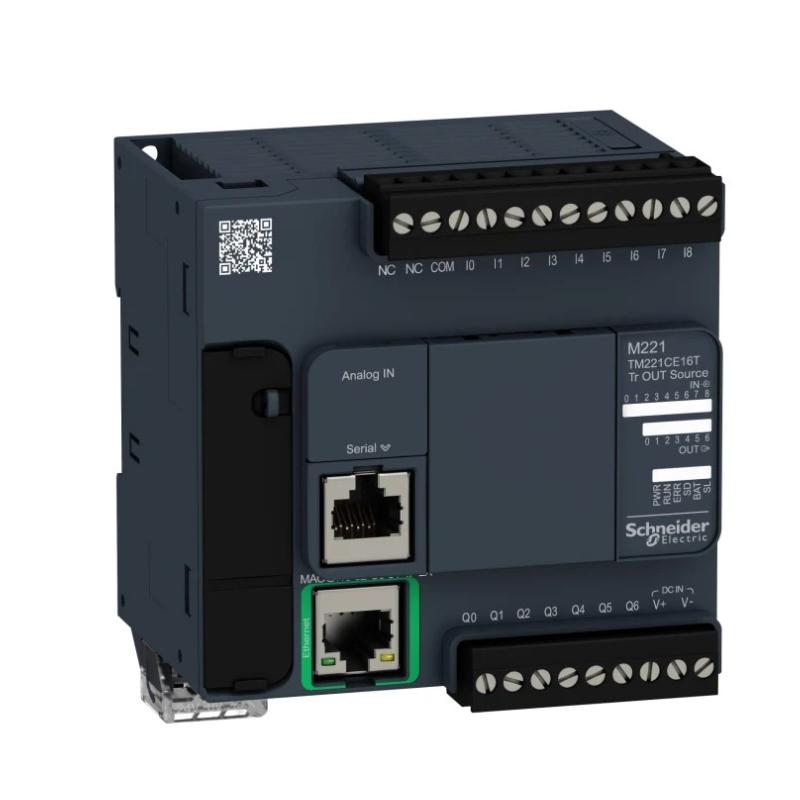
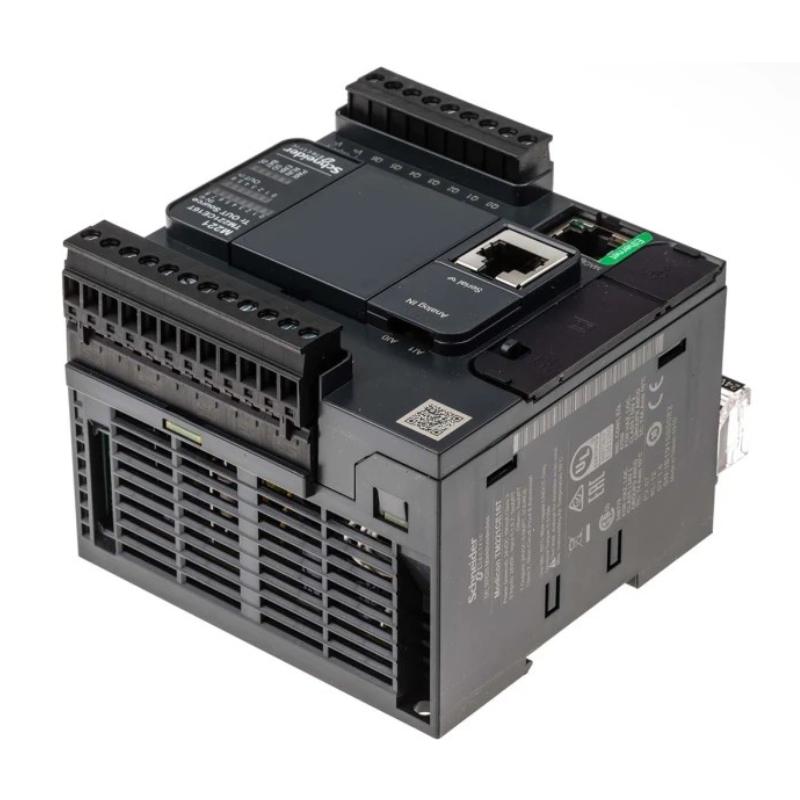
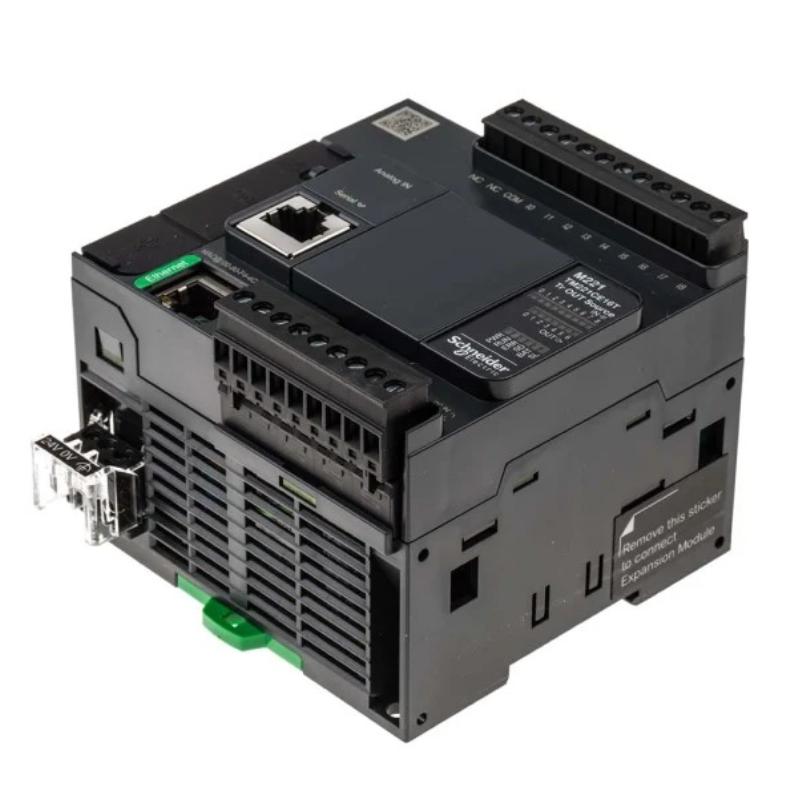
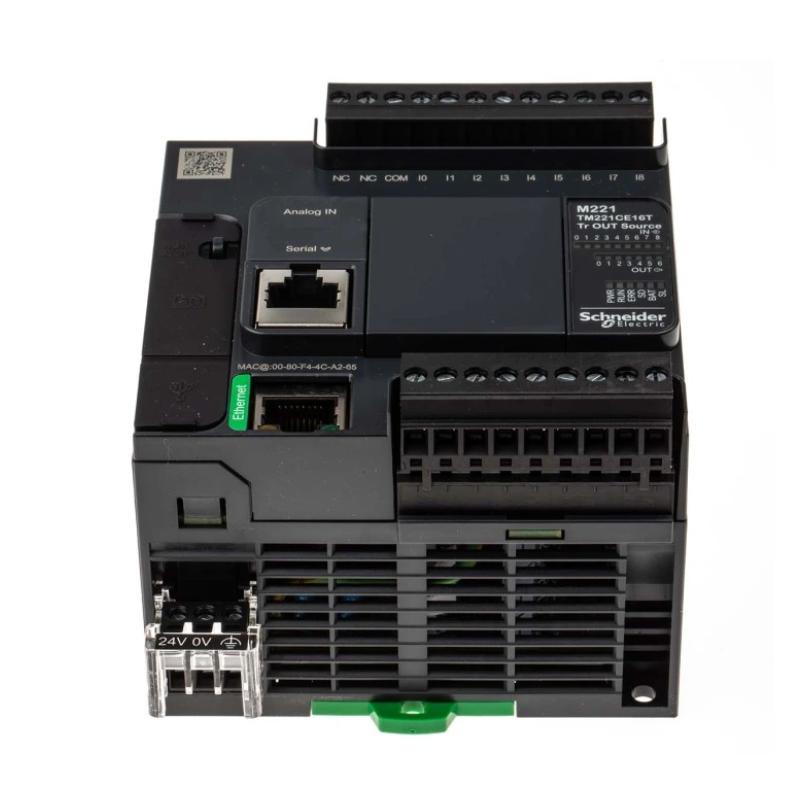
- Schneider
- TM221CE16T
- Logic Controller
- France
- 103.6 × 75.9 × 95 mm
- 0.346 kg
- Xiamen, China
- New & In Stock
- T/T, PayPal, Western Union
- 1 Year
- 1-3 Working Days
- DHL, UPS, TNT, FedEx and EMS.
- 24-Hour Service
- COO
- 56
Our advantage

Global Logistics
We have a 10-year logistics and express cooperation agreement, so our products can be shipped to any place in the world.

Brand new and original
Our products are imported in bulk from the place of origin. Because of the cooperative relationship, our products are all original and 100% new.

24-hour service
We provide 7*24 hours service to our customers. We will be there whenever you need us.

Price advantage
All our products are priced very favorably because we have our own warehouse and supply.
| Company Information | |||
| [email protected] | |||
| Mobile | +8615980777398 | ||
| +8615980777398 | |||
| 15980777398 |
Product Overview
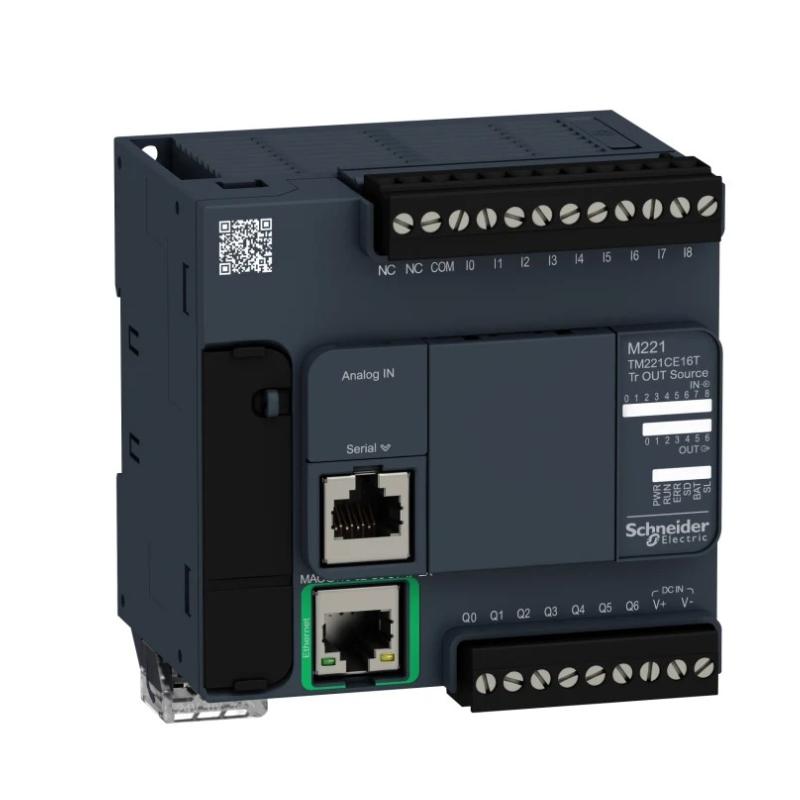
The Schneider TM221CE16T Modicon M221 Logic Controller is a compact PLC for machine automation applications. As part of the Modicon M221 family, it serves as the central control unit for executing application logic, processing field signals, coordinating actuators, and managing machine sequences.
The controller is suited to compact and medium-sized machines where a dedicated PLC is required to handle repetitive control tasks, equipment interlocks, operating sequences, and communication with other automation devices.
A typical control architecture can be arranged as:
Field Sensors → TM221CE16T → Actuators / Drives → Machine
The M221 controller can also work with an HMI and other control equipment, allowing operators to monitor machine status and interact with the programmed application.
Technical Specifications
| Parameter | Specification |
|---|---|
| Manufacturer | Schneider Electric |
| Model | TM221CE16T |
| Product Family | Modicon M221 |
| Product Type | Logic Controller |
| Main Function | Machine Logic Control |
| Application | Industrial Machine Automation |
| Dimensions | 103.6 × 75.9 × 95 mm |
| Weight | 0.346 kg |
Main Features
The TM221CE16T is intended for machine-level PLC control where compact dimensions and integrated control functionality are important.
- Modicon M221 Logic Controller
- Suitable for machine automation
- Executes programmed PLC logic
- Handles machine sequencing and interlocking
- Interfaces with field devices
- Suitable for actuator and drive coordination
- Supports integration with operator-interface equipment
- Compact PLC architecture
- Suitable for OEM machinery
- Useful for automated production equipment
- Dimensions of 103.6 × 75.9 × 95 mm
- Weight of 0.346 kg
Working Principle
The TM221CE16T operates by repeatedly reading field inputs, executing the user application, and updating its outputs.
The control process can be summarized as:
Input Acquisition → Program Execution → Logic Processing → Output Update
For example, a sensor may detect that a product has reached a specified position. The controller evaluates the sensor state together with the programmed sequence and other interlock conditions.
If the required conditions are satisfied, the PLC changes the appropriate output state. This can activate a motor-control device, solenoid valve, contactor, or another actuator.
The controller then monitors the resulting machine feedback and continues through the programmed sequence.
This cyclic operation allows the M221 to coordinate multiple machine functions while maintaining consistent control logic.
Machine Automation Architecture
The TM221CE16T can serve as the central controller in a compact machine-control cabinet.
A common architecture is:
Sensors / Switches → PLC → Actuators
with additional connections to:
HMI ↔ PLC ↔ Drives / Automation Devices
Typical field equipment includes:
- Proximity sensors
- Photoelectric sensors
- Limit switches
- Push buttons
- Pressure switches
- Temperature sensors
- Solenoid valves
- Contactors
- Variable frequency drives
- Servo systems
The controller determines how these devices interact through the application program. This allows individual machine actions to be organized into complete automatic cycles.
I/O and Communication Integration
When integrating the TM221CE16T into a machine, the controller should be considered together with the required I/O and communication architecture.
Engineers should verify:
- Digital input requirements
- Digital output requirements
- Analog signal requirements
- Communication interfaces
- Network topology
- HMI requirements
- Drive communication
- Expansion requirements
- Safety-system interfaces
For example, a packaging machine may use sensors to detect product position, a drive to control conveyor movement, and an HMI to display operating status. The M221 coordinates these devices according to the programmed sequence.
Where additional modules or network devices are required, their compatibility with the specific M221 configuration should be confirmed during system design.
Industrial Applications
The TM221CE16T is suitable for a wide range of machine-control applications.
| Application | Typical Control Function |
|---|---|
| Packaging Machinery | Product handling and sequence control |
| Conveyor Systems | Motor and sensor coordination |
| Assembly Machines | Process sequencing |
| Material Handling | Position and actuator control |
| Pump Systems | Start/stop and interlocking |
| Small Production Machines | Central PLC control |
| Processing Equipment | Automated sequence control |
| OEM Machinery | Machine logic execution |
| Automated Handling | Sensor and actuator coordination |
| Auxiliary Equipment | Equipment sequencing |
Its compact form makes it particularly suitable for machines where control functions need to be concentrated within a relatively small cabinet.
Programming and Commissioning
A staged commissioning process is recommended when putting a TM221CE16T-based machine into operation.
A practical sequence is:
Power-Up → I/O Verification → Communication Check → Manual Test → Interlock Test → Automatic Operation
First, verify that the controller starts correctly and that the input states correspond to actual field conditions.
Next, check communication with the HMI, drives, or other connected devices. Individual outputs can then be tested before the complete automatic sequence is enabled.
Important commissioning checks include:
- Start and stop commands
- Sensor feedback
- Actuator response
- Machine interlocks
- Fault handling
- HMI commands
- Drive control
- Automatic sequence transitions
- Controlled shutdown
Testing each function separately makes it easier to identify wiring, configuration, or program-related problems.
Installation and Maintenance
Before installing or replacing the TM221CE16T, verify the controller model and the complete machine configuration.
Recommended checks include:
- Confirm the complete TM221CE16T model.
- Verify the controller power requirements.
- Check cabinet mounting arrangements.
- Confirm field I/O wiring.
- Verify connected device compatibility.
- Check communication connections.
- Back up the PLC application program.
- Record the existing controller configuration.
- Inspect terminals and connectors.
After installation, verify controller startup, I/O operation, communication, and machine logic before returning the equipment to automatic production.
When replacing an existing PLC, retaining the original application program and configuration can significantly reduce commissioning time.
Related Components
| Component | Function |
|---|---|
| HMI | Operator interface and machine visualization |
| Digital Sensors | Position and status feedback |
| Analog Sensors | Process measurement |
| Variable Frequency Drive | Motor speed control |
| Servo Drive | Motion control |
| Contactor | Motor switching |
| Solenoid Valve | Pneumatic or hydraulic actuation |
| Remote I/O | Distributed signal acquisition |
| Safety Controller | Safety-related machine functions |
| Industrial Network | Controller/device communication |
The actual component selection depends on the machine’s I/O requirements, motion system, safety architecture, and communication structure.
Recommended Related Models
| Model | Product Type | Main Function | Typical Application |
|---|---|---|---|
| Schneider TM221CE16T | Modicon M221 Logic Controller | Machine logic control | Compact machine automation |
| Schneider TM221CE24T | Modicon M221 Logic Controller | Machine logic control | General machine control |
| Schneider TM221CE40T | Modicon M221 Logic Controller | Machine logic control | Larger machine automation |
| Schneider TM221CE16R | Modicon M221 Logic Controller | PLC control | Compact automation |
| Schneider TM221CE24R | Modicon M221 Logic Controller | PLC control | OEM machinery |
| Schneider TM221CE40R | Modicon M221 Logic Controller | PLC control | Machine sequencing |
The correct M221 model should be selected according to required I/O, output type, communication functions, expansion needs, and the overall machine architecture.
Key Advantages
- Modicon M221 PLC platform
- Suitable for machine-level automation
- Centralizes machine logic and sequence control
- Coordinates sensors and actuators
- Suitable for compact OEM machinery
- Can integrate with HMI and drive systems
- Supports machine interlocking and fault logic
- Compact controller construction
- Suitable for control cabinet applications
- Dimensions of 103.6 × 75.9 × 95 mm
- Weight of 0.346 kg
Technical FAQs
What is the Schneider TM221CE16T used for?
The TM221CE16T is a Modicon M221 logic controller used for machine automation. It executes programmed control logic and coordinates field devices, actuators, drives, and operator-interface equipment.
What makes the M221 suitable for compact machines?
The M221 family uses a compact PLC architecture while providing the control functions required for machine sequencing, I/O processing, interlocking, and integration with other automation equipment. This makes it suitable for control cabinets where installation space needs to be managed efficiently.
Can the TM221CE16T control variable frequency drives?
The controller can be incorporated into systems containing variable frequency drives, provided the selected communication or I/O interface is compatible with the drive and the specific controller configuration. The control method should be established during system design.
What should be checked when replacing a TM221CE16T?
Verify the exact controller model, application program, I/O wiring, power requirements, communication configuration, and connected devices. After installation, test I/O, communication, interlocks, and the automatic machine sequence before returning the equipment to normal operation.