

ProductPRODUCT
Featured products
Contact Us
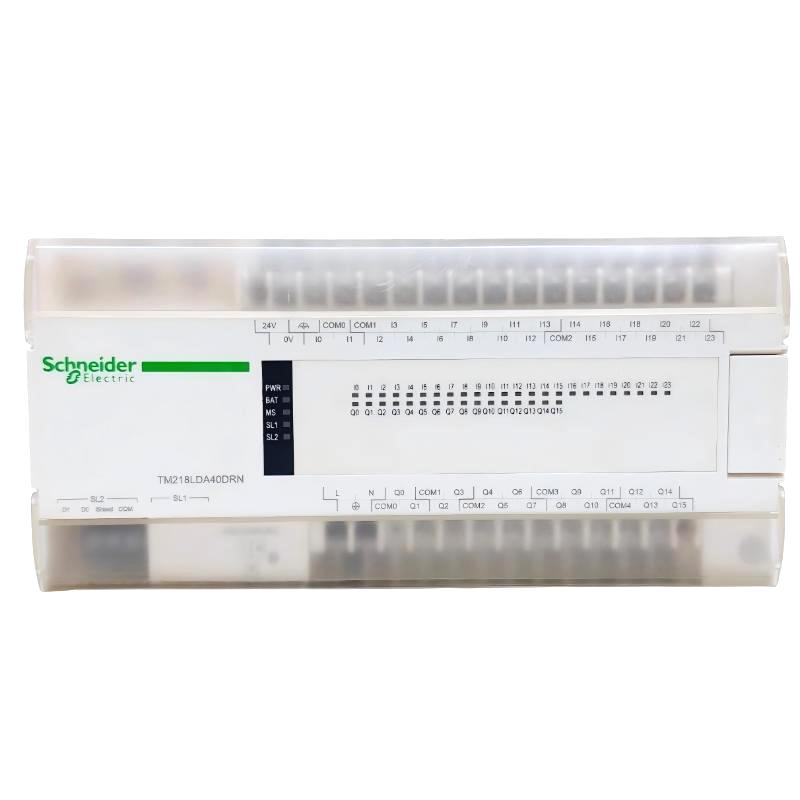
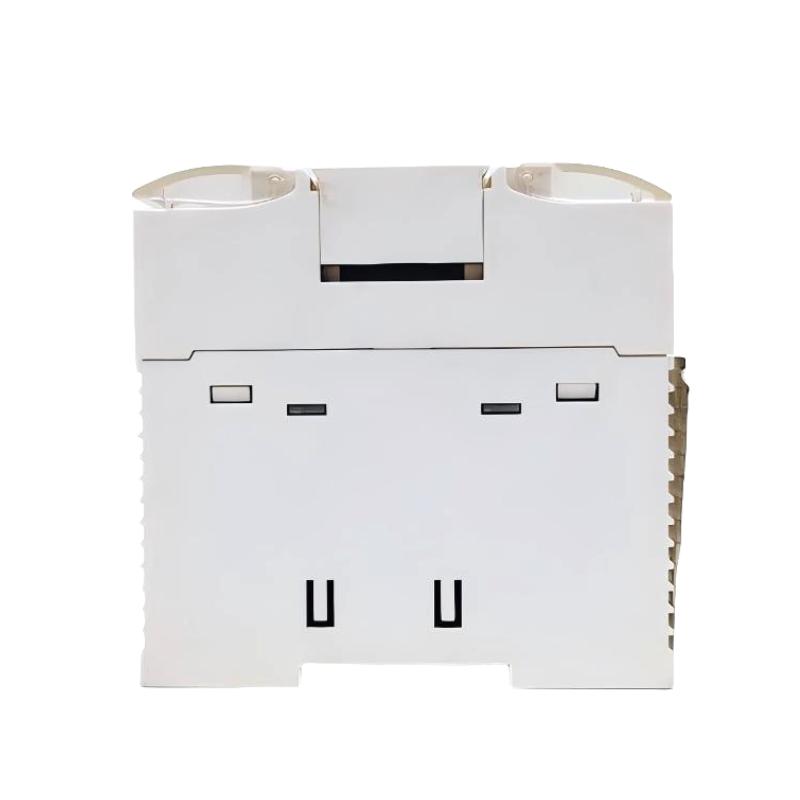
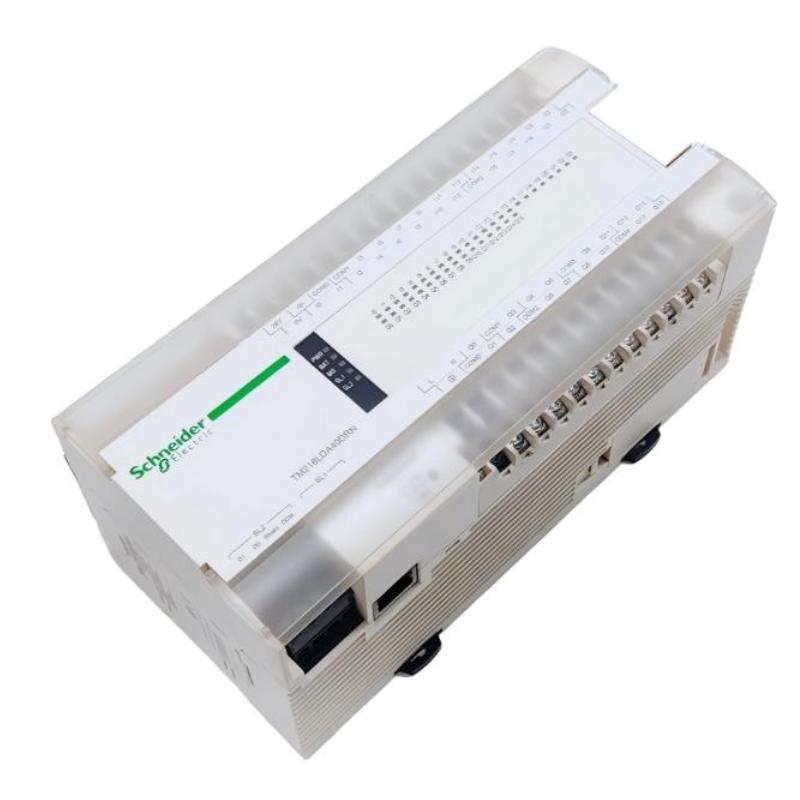
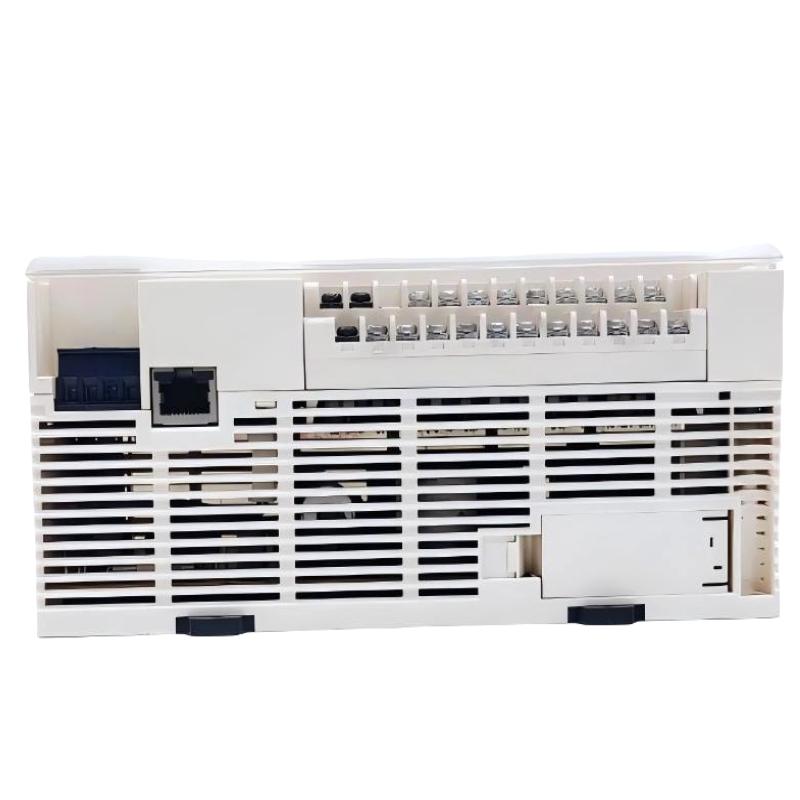
- Schneider
- TM218LDA40DRN
- Logic Controller
- France
- 87.5 × 190 × 94.5 mm
- 0.55 kg
- Xiamen, China
- New & In Stock
- T/T, PayPal, Western Union
- 1 Year
- 1-3 Working Days
- DHL, UPS, TNT, FedEx and EMS.
- 24-Hour Service
- COO
- 53
Our advantage

Global Logistics
We have a 10-year logistics and express cooperation agreement, so our products can be shipped to any place in the world.

Brand new and original
Our products are imported in bulk from the place of origin. Because of the cooperative relationship, our products are all original and 100% new.

24-hour service
We provide 7*24 hours service to our customers. We will be there whenever you need us.

Price advantage
All our products are priced very favorably because we have our own warehouse and supply.
| Company Information | |||
| [email protected] | |||
| Mobile | +8615980777398 | ||
| +8615980777398 | |||
| 15980777398 |
Product Overview
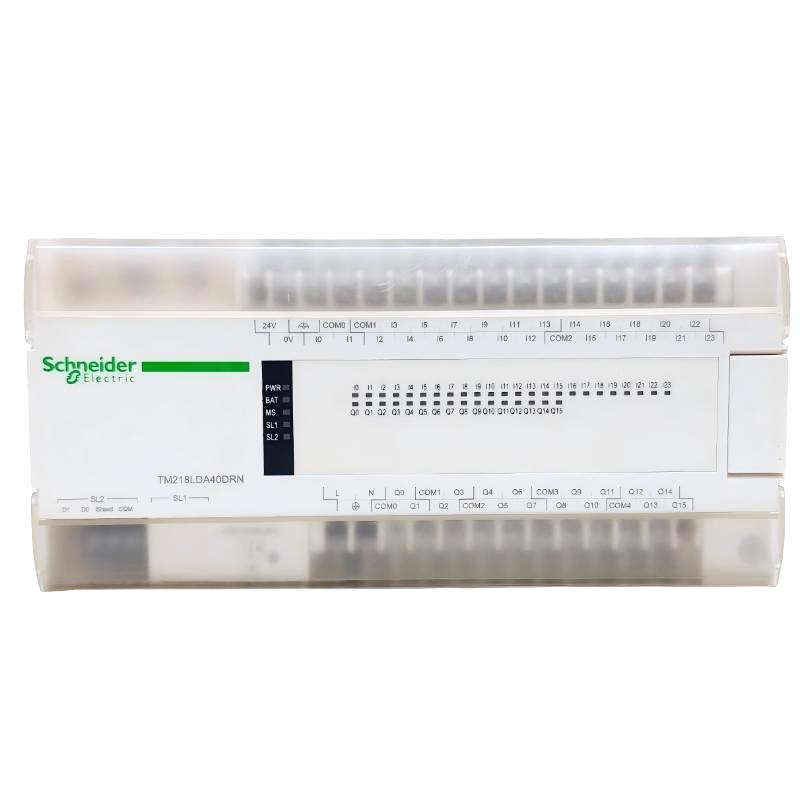
The Schneider TM218LDA40DRN Modicon M218 Logic Controller is a machine-level PLC from the Modicon M218 family. It serves as the central logic unit for automated equipment, coordinating field signals, machine sequences, actuators, and other control devices according to the application program.
The controller is suited to machine automation where multiple operating conditions must be evaluated before an action is performed. Typical control tasks include start/stop logic, sequence control, interlocking, status monitoring, fault handling, and coordination with motor-control equipment.
In a typical machine architecture:
Sensors / Field Devices → TM218LDA40DRN → Actuators / Drives → Machine
The controller can therefore sit at the center of the machine-control layer while HMI equipment and other automation devices provide operator interaction and system-level functions.
Technical Specifications
| Parameter | Specification |
|---|---|
| Manufacturer | Schneider Electric |
| Model | TM218LDA40DRN |
| Product Family | Modicon M218 |
| Product Type | Logic Controller |
| Main Function | Machine Logic Control |
| Application | Industrial Machine Automation |
| Dimensions | 87.5 × 190 × 94.5 mm |
| Weight | 0.55 kg |
Main Features
The TM218LDA40DRN is intended for centralized PLC control in industrial machinery.
- Modicon M218 Logic Controller
- Suitable for machine automation
- Executes programmed control logic
- Handles sequence control and machine interlocks
- Coordinates field sensors and actuators
- Suitable for integration with HMI and drive systems
- Supports centralized machine-control architecture
- Suitable for OEM equipment
- Useful for automated production machinery
- Compact PLC construction
- Dimensions of 87.5 × 190 × 94.5 mm
- Weight of 0.55 kg
Working Principle
The TM218LDA40DRN continuously scans input conditions, executes the programmed logic, and updates its outputs according to the application.
The basic control process can be represented as:
Field Inputs → Program Execution → Logic Decision → Output Commands
For example, a proximity sensor may indicate that a workpiece has reached a designated position. The controller reads this condition and evaluates it together with other programmed requirements, such as machine status, interlocks, and sequence position.
If all required conditions are satisfied, the controller activates the corresponding output. That output may command a motor-control device, solenoid valve, contactor, or other actuator.
Feedback from the machine is then read during subsequent control cycles, allowing the controller to continue the sequence or respond to an abnormal condition.
Machine Control Architecture
The TM218LDA40DRN can serve as the central control element of an automated machine.
A practical architecture may include:
Sensors → PLC → Actuators
with operator and drive integration:
HMI ↔ PLC ↔ Drives / Machine Equipment
Common field devices include:
- Proximity sensors
- Photoelectric sensors
- Limit switches
- Push buttons
- Pressure switches
- Temperature sensors
- Solenoid valves
- Contactors
- Variable frequency drives
- Servo systems
The PLC program determines the relationship between these devices. This allows a machine to perform repeatable sequences instead of relying on independent device control.
I/O and Communication Integration
When applying the TM218LDA40DRN, the controller should be evaluated together with the complete machine architecture.
Important considerations include:
- Required digital I/O
- Analog signal requirements
- Field-device signal types
- HMI interface
- Drive integration
- Communication interfaces
- Network structure
- Expansion requirements
- Safety-system architecture
For example, a conveyor machine may use sensors to detect product position, a drive to control conveyor movement, and an HMI to display machine status. The PLC coordinates these elements through the programmed control sequence.
For more complex equipment, communication requirements should be established before selecting the associated network and peripheral components.
Industrial Applications
The TM218LDA40DRN can be used in various machine-control applications.
| Application | Typical Control Function |
|---|---|
| Packaging Machinery | Sequence and actuator control |
| Conveyor Systems | Motor and sensor coordination |
| Assembly Equipment | Automated process sequencing |
| Material Handling | Position and movement logic |
| Pumping Equipment | Start/stop and interlocking |
| Processing Machinery | Automated control sequences |
| OEM Machinery | Central machine control |
| Production Equipment | Cycle and fault management |
| Machine Tools | Auxiliary equipment control |
| Automated Handling | Sensor and actuator coordination |
It is particularly useful where several machine operations need to be coordinated by a central PLC.
Programming and Commissioning
A staged commissioning process helps reduce troubleshooting time.
A practical sequence is:
Power-Up → I/O Verification → Communication Check → Manual Test → Interlock Test → Automatic Operation
First, verify that the controller starts correctly and that each field input corresponds to the actual machine condition.
Next, test connected HMI and drive communication. Individual outputs can then be tested in manual mode before the complete machine sequence is enabled.
The final commissioning stage should verify:
- Start/stop functions
- Sensor feedback
- Actuator response
- Machine interlocks
- Fault conditions
- Automatic sequence transitions
- Controlled shutdown
- Operator commands
This process helps distinguish wiring issues from PLC configuration or application-program problems.
Installation and Maintenance
Before installing or replacing the TM218LDA40DRN, confirm the complete controller model and machine configuration.
Recommended checks include:
- Confirm the TM218LDA40DRN part number.
- Verify the controller power requirements.
- Check cabinet installation space.
- Confirm field wiring.
- Verify input and output compatibility.
- Check HMI and drive connections.
- Back up the PLC application.
- Record the existing configuration.
- Inspect terminals and connectors.
After installation, verify controller startup, I/O operation, communication, and machine sequences before returning the equipment to automatic production.
For controller replacement, retaining the original application program and configuration can simplify commissioning and reduce machine downtime.
Related Components
| Component | Function |
|---|---|
| HMI | Operator interface and machine visualization |
| Digital Sensors | Position and status feedback |
| Analog Sensors | Process measurement |
| Variable Frequency Drive | Motor speed control |
| Servo Drive | Motion control |
| Contactor | Motor switching |
| Solenoid Valve | Pneumatic or hydraulic actuation |
| Remote I/O | Distributed field signals |
| Safety Controller | Safety-related machine functions |
| Industrial Network | Controller/device communication |
The actual component selection depends on the machine’s control points, motion requirements, communication architecture, and safety design.
Recommended Related Models
| Model | Product Type | Main Function | Typical Application |
|---|---|---|---|
| Schneider TM218LDA40DRN | Modicon M218 Logic Controller | Machine logic control | General machine automation |
| Schneider TM218LDA40DR4PHN | Modicon M218 Logic Controller | Machine logic control | Larger machine control |
| Schneider TM218LDA16DRN | Modicon M218 Logic Controller | Machine logic control | Compact machine automation |
| Schneider TM218LDA24DRN | Modicon M218 Logic Controller | Machine logic control | General machine control |
| Schneider TM218LDA24DR | Modicon M218 Logic Controller | PLC control | OEM machinery |
| Schneider TM218LDA16DR | Modicon M218 Logic Controller | PLC control | Compact automation |
The appropriate controller should be selected according to the required I/O resources, electrical configuration, communication requirements, and machine architecture.
Key Advantages
- Modicon M218 PLC platform
- Suitable for centralized machine control
- Supports programmed sequence execution
- Coordinates sensors, actuators, and machine devices
- Suitable for OEM and industrial machinery
- Can integrate with HMI and drive systems
- Supports machine interlocking and fault logic
- Compact controller design
- Suitable for control cabinet applications
- Dimensions of 87.5 × 190 × 94.5 mm
- Weight of 0.55 kg
Technical FAQs
What is the Schneider TM218LDA40DRN used for?
The TM218LDA40DRN is a Modicon M218 logic controller used to execute machine-control programs and coordinate sensors, actuators, drives, HMI equipment, and other automation devices.
What types of machines can use the TM218LDA40DRN?
It can be applied to packaging machines, conveyors, assembly equipment, material-handling systems, processing machinery, pumping equipment, and other OEM machines that require centralized PLC control.
What should be checked before connecting field devices to the controller?
Engineers should verify the required I/O type, electrical characteristics, wiring arrangement, actuator requirements, communication interfaces, and the overall machine-control architecture before commissioning field devices.
How can a TM218LDA40DRN be tested after replacement?
Start with controller power-up and I/O verification. Then check communication, test individual outputs manually, verify machine interlocks, and finally run the automatic sequence. The complete machine cycle should be confirmed before returning the equipment to production.