

ProductPRODUCT
Featured products
Contact Us

- Schneider
- MT40H1b
- Circuit Breaker
- France
- 439 x 556 x 395 mm
- 90 kg
- Xiamen, China
- New & In Stock
- T/T, PayPal, Western Union
- 1 Year
- 1-3 Working Days
- DHL, UPS, TNT, FedEx and EMS.
- 24-Hour Service
- COO
- 4
Our advantage

Global Logistics
We have a 10-year logistics and express cooperation agreement, so our products can be shipped to any place in the world.

Brand new and original
Our products are imported in bulk from the place of origin. Because of the cooperative relationship, our products are all original and 100% new.

24-hour service
We provide 7*24 hours service to our customers. We will be there whenever you need us.

Price advantage
All our products are priced very favorably because we have our own warehouse and supply.
| Company Information | |||
| [email protected] | |||
| Mobile | +8615980777398 | ||
| +8615980777398 | |||
| 15980777398 |
Product Overview
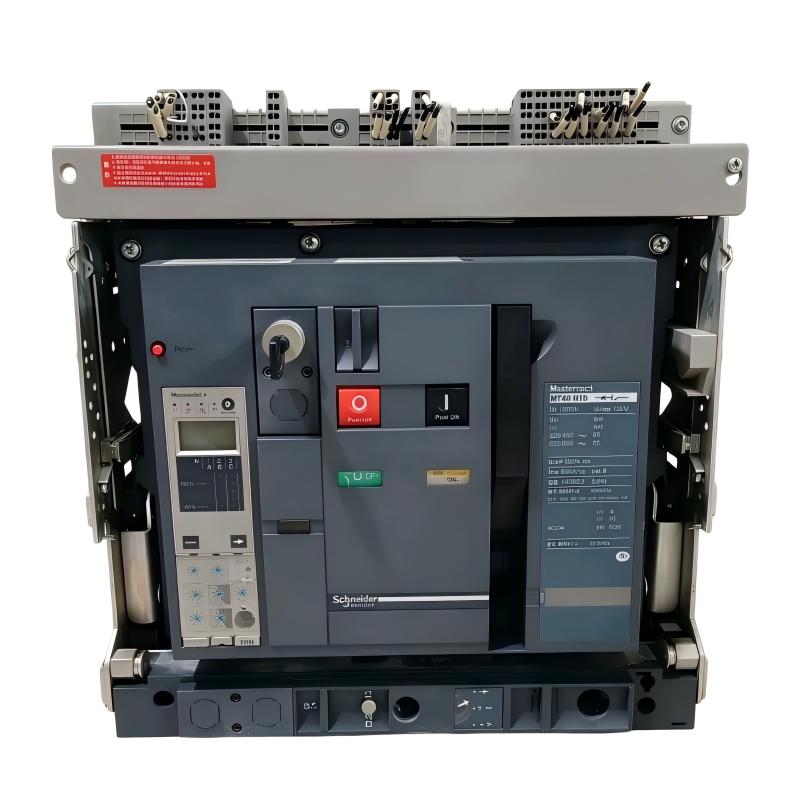
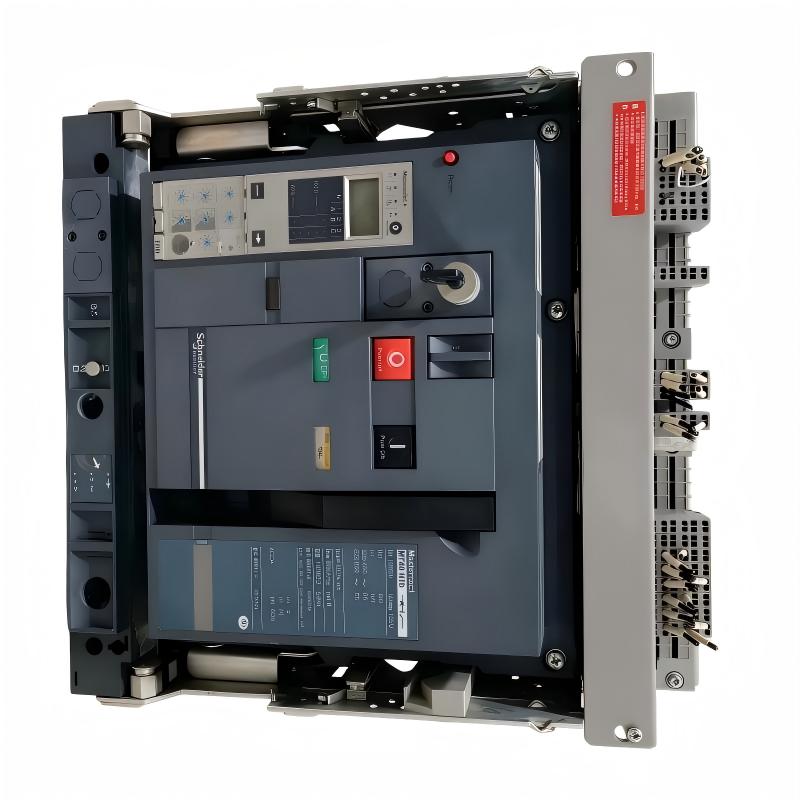
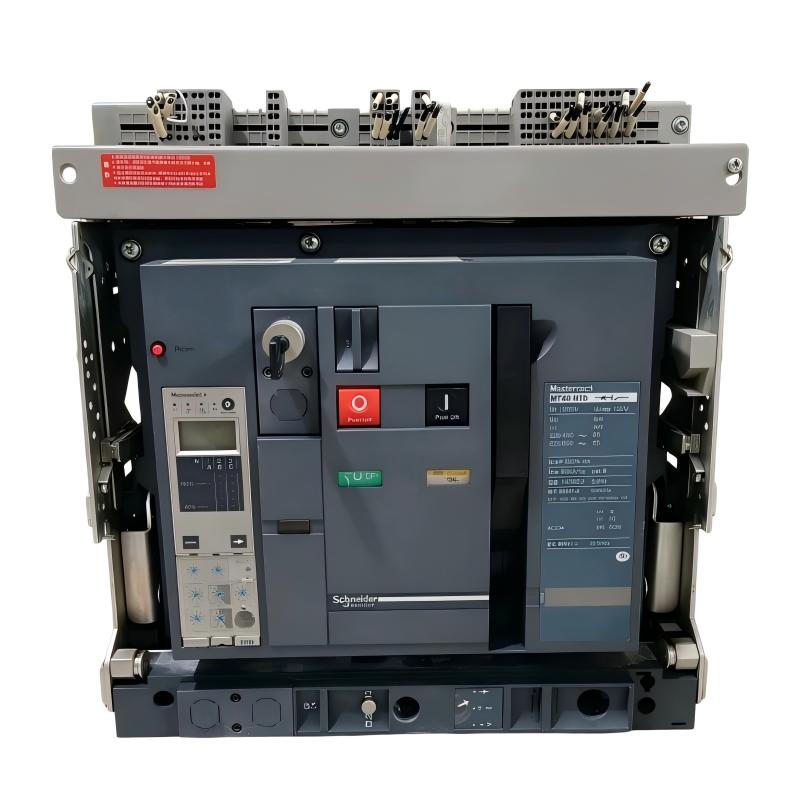
The Schneider MT40H1b Masterpact Circuit Breaker is a high-capacity air circuit breaker designed for low-voltage power distribution and protection applications. With a 4000 A frame rating, it is intended for electrical installations where large currents must be switched, controlled, and protected against abnormal operating conditions.
As part of the Masterpact circuit breaker family, the MT40H1b is associated with industrial power distribution systems, large electrical switchboards, and infrastructure installations. Air circuit breakers are commonly used as incoming, bus-coupler, and feeder protection devices in main distribution equipment.
The primary function of the MT40H1b is to interrupt electrical current when a fault or abnormal condition is detected by the configured protection system. Depending on the installed trip unit and accessories, the circuit breaker can provide protection against overloads, short circuits, and other electrical faults.
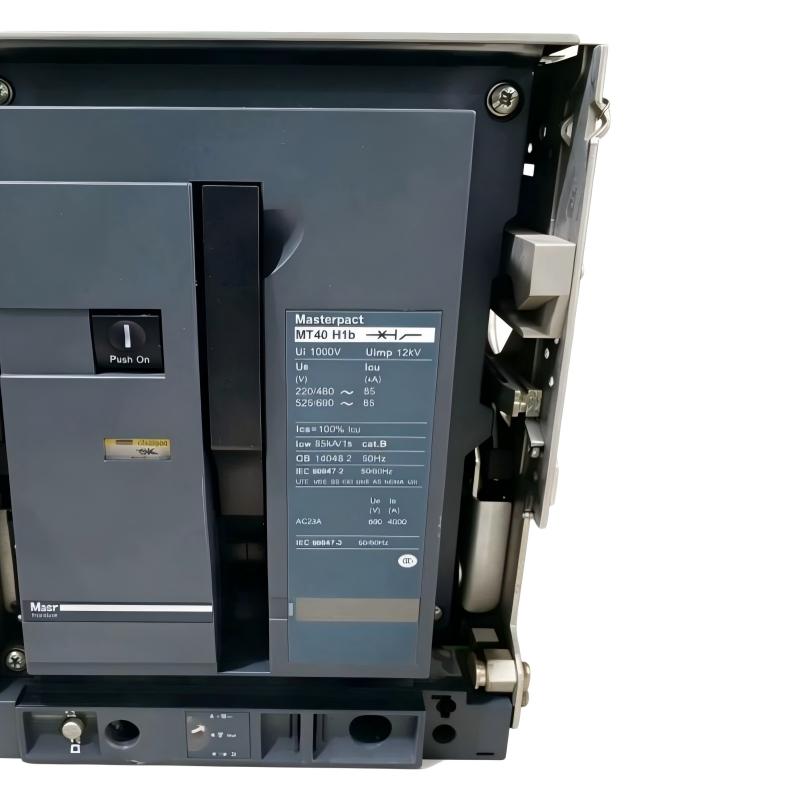
The H1b designation identifies a particular breaking-capacity configuration. Available product information associates the MT40H1b with a 4000 A rated-current frame and an 85 kA ultimate short-circuit breaking-capacity class under the specified test conditions. Actual protection performance must be confirmed against the circuit breaker’s complete nameplate and applicable voltage rating.
The MT40H1b is a large industrial switching device rather than a standard miniature or molded-case circuit breaker. Its selection requires consideration of system voltage, rated current, fault level, pole configuration, mounting arrangement, trip-unit characteristics, and installation conditions.
For maintenance and replacement projects, checking the complete model designation and installed accessories is essential. Circuit breakers with similar frame ratings may have different trip units, electrical characteristics, and mechanical configurations.
Technical Specifications
| Parameter | Specification |
|---|---|
| Brand | Schneider Electric |
| Product Family | Masterpact |
| Model | MT40H1b |
| Product Type | Air Circuit Breaker (ACB) |
| Rated Current Frame | 4000 A |
| Breaking Capacity Class | H1b |
| Published Ultimate Breaking Capacity | 85 kA, subject to rated-voltage conditions |
| Application | Low-voltage power distribution |
| Protection Function | Overload and short-circuit protection, depending on installed trip unit |
| Operating Mechanism | Circuit-breaker operating mechanism |
| Installation | Verify fixed or drawout configuration |
| Dimensions Provided | 439 × 556 × 395 mm |
| Weight Provided | 90 kg |
| Typical Installation | Main switchboards, distribution panels, industrial power systems |
Important: The dimensions and weight above are supplied listing data. Confirm the exact MT40H1b construction, including whether the measurement includes a chassis or cradle, before using these figures for installation or transportation. The trip unit, pole configuration, rated operational voltage, and accessory configuration should also be verified from the nameplate.
Function and Working Principle
The MT40H1b is designed to control and protect high-current electrical distribution circuits. Its operating principle combines mechanical switching components with an electrical protection and tripping arrangement.
1. Normal Current Switching
During normal operation, the circuit breaker maintains an electrical connection between the power source and the downstream distribution circuit.
The main contacts carry the operating current through the breaker. The contact system is designed to handle the specified current rating when the equipment is installed and operated within its rated conditions.
The operating mechanism allows the breaker to be opened or closed through the supported manual or electrical control arrangement.
2. Overload Protection
An overload occurs when the current exceeds the permitted operating level for a sustained period.
The configured protection unit monitors electrical conditions and can initiate a trip when an overload reaches the applicable protection threshold. This helps prevent excessive heating of cables, busbars, transformers, and connected equipment.
Protection settings must be coordinated with the downstream equipment and the electrical installation. Incorrect settings can result in unnecessary interruptions or insufficient protection.
3. Short-Circuit Protection
A short circuit can produce extremely high fault current within a very short period. If not interrupted, this current may cause severe thermal and mechanical stress on electrical equipment.
The circuit breaker uses its protection and interruption mechanisms to disconnect the affected circuit when the configured trip conditions are met.
The H1b breaking-capacity designation is important when selecting the breaker for installations with high prospective fault current. The available breaking-capacity value must always be checked at the actual system voltage.
4. Arc Interruption
When the contacts separate while current is flowing, an electrical arc may form between them.
Air circuit breakers use an arc-control and interruption arrangement to extinguish the arc and isolate the circuit. The design of the contact system and arc chamber is important for safe interruption under rated operating conditions.
Regular inspection and maintenance are necessary because contact wear and operating-mechanism condition can affect long-term performance.
5. Manual and Electrical Operation
Depending on the installed configuration, the breaker may support manual operation and electrical operating accessories.
Electrical accessories can allow the circuit breaker to be operated as part of a larger power distribution control system. The exact control arrangement depends on the installed motor mechanism, closing and opening releases, auxiliary contacts, and other options.
The actual accessory list should be checked before designing remote-control or monitoring functions.
Role in Industrial Power Distribution Systems
The MT40H1b can serve as a major switching and protection device in low-voltage electrical distribution installations.
Main Incoming Circuit Protection
In large industrial facilities, the main incoming circuit breaker connects the incoming electrical supply to the main distribution board.
A high-current ACB such as the MT40H1b may be selected where the installation requires a 4000 A frame rating and an appropriate short-circuit breaking capacity.
The final selection must consider the transformer rating, busbar capacity, prospective fault current, and protection coordination requirements.
Busbar Coupling
Some distribution systems use separate busbar sections to improve operational flexibility and support maintenance activities.
A circuit breaker installed as a bus-coupler can connect or isolate two busbar sections according to the system operating strategy.
Interlocking and protection coordination are important to prevent unsafe switching sequences or unintended parallel operation.
Feeder Protection
The breaker may also be used in a high-capacity feeder circuit supplying downstream distribution equipment.
Its protection settings should be coordinated with downstream circuit breakers so that faults can be isolated as selectively as the system design requires.
Power Distribution Monitoring
When suitable auxiliary contacts and monitoring accessories are installed, breaker status can be integrated into a supervisory or building management system.
This allows operators to monitor open and closed status, trip conditions, and selected operating information through the wider electrical control architecture.
Industrial Applications
1. Manufacturing Plants
Large manufacturing facilities contain motors, production lines, heating systems, compressors, and other electrical loads.
A high-capacity air circuit breaker can provide incoming or distribution-level protection for the electrical infrastructure supplying these systems.
2. Power Distribution Switchboards
The MT40H1b is relevant to main low-voltage switchboards where large current capacity and fault interruption capability are required.
Its suitability depends on the switchboard design, busbar rating, available fault current, and installation configuration.
3. Data Centers
Data centers require dependable electrical distribution for servers, cooling equipment, UPS systems, and supporting infrastructure.
High-capacity circuit breakers may be used in main distribution and power-transfer arrangements. Protection coordination is particularly important because unnecessary interruptions can affect critical loads.
4. Industrial Infrastructure
Water treatment facilities, transportation infrastructure, and large utility installations use high-capacity electrical distribution equipment.
An appropriately selected ACB can help protect major distribution circuits and support controlled isolation during maintenance.
5. Commercial and Industrial Buildings
Large commercial complexes and industrial buildings may require high-current incoming protection for central electrical rooms.
The breaker must be selected according to the building’s load demand, electrical system design, and applicable installation standards.
Installation and System Integration
Correct installation is essential for the safe operation of a high-current air circuit breaker.
1. Verify the Electrical Ratings
Before installation, confirm the circuit breaker’s rated operational voltage, rated current, frequency, pole configuration, and breaking capacity.
The 4000 A frame rating alone is not sufficient to establish suitability. The breaker must be compatible with the prospective short-circuit current at the installation point.
2. Confirm the Mounting Arrangement
Check whether the actual unit is a fixed or drawout type. The mounting arrangement affects the required switchboard space, mechanical supports, connection interfaces, and maintenance procedures.
The supplied dimensions of 439 × 556 × 395 mm should be checked against the manufacturer’s drawing for the exact assembly.
If the breaker is supplied with a chassis or cradle, confirm whether the dimensions describe the breaker body alone or the complete assembly.
3. Check Busbar and Cable Connections
The electrical connections must be suitable for the installation’s rated current and temperature-rise requirements.
Verify busbar dimensions, connection surfaces, bolt specifications, tightening torque, and phase clearances against the manufacturer’s instructions.
Poor connections can create excessive resistance and localized heating, even when the breaker itself is correctly rated.
4. Configure the Protection Unit
The trip unit and its protection settings are critical to the circuit breaker’s performance.
Engineers should configure the appropriate overload, short-time, instantaneous, and other available protection functions according to the electrical system study and manufacturer’s instructions.
Protection coordination should be reviewed before the breaker is placed into service.
5. Connect Control and Monitoring Accessories
Where remote operation or status monitoring is required, verify the installed auxiliary contacts, operating releases, motor mechanism, and control voltage.
Do not assume that every MT40H1b unit includes the same accessories. The complete accessory configuration should be documented before integration with a PLC, SCADA, or power management system.
6. Commissioning and Functional Testing
Before energizing the installation, inspect the mechanical assembly, electrical connections, insulation condition, grounding, and protective settings.
Functional testing should follow the applicable manufacturer’s procedures and relevant electrical standards. Tests may include mechanical operation, trip-unit verification, auxiliary contact checks, and inspection of the opening and closing mechanisms.
High-current circuit breaker testing should be carried out by qualified personnel using appropriate test equipment.
Compatible System Components
The MT40H1b operates as part of a wider electrical distribution system. The following components may be used in a suitable installation.
| Component | Function | Integration Considerations |
|---|---|---|
| Low-voltage switchboard | Houses and supports distribution equipment | Verify mechanical dimensions, ratings, and compartment design |
| Main busbar system | Distributes electrical power | Confirm current capacity, temperature rise, and connection geometry |
| Protection trip unit | Detects abnormal electrical conditions | Verify trip-unit type, settings, and compatibility |
| Current transformers | Provide current measurement signals where required | Confirm ratio, accuracy, and protection application |
| Auxiliary contacts | Provide breaker status signals | Verify contact arrangement and electrical ratings |
| Opening release | Initiates electrical opening | Confirm control voltage and accessory compatibility |
| Closing release | Supports electrical closing | Check the operating mechanism and control circuit |
| Motor operating mechanism | Enables electrical charging or operation where fitted | Confirm the exact breaker configuration |
| PLC or SCADA system | Monitors and coordinates electrical equipment | Use suitable auxiliary signals and communication accessories |
| Protection relay | Provides additional system protection where required | Coordinate with the circuit breaker’s trip arrangement |
These are system-level components and are not necessarily supplied with the circuit breaker.
Alternative Models and Replacement Considerations
The MT40H1b should be replaced only with a circuit breaker that meets the electrical, mechanical, and protection requirements of the original installation.
| Alternative or Related Product | Replacement Considerations |
|---|---|
| Schneider Masterpact MT series | Verify frame rating, breaking-capacity code, pole configuration, and trip unit |
| Schneider Masterpact NW series | A related air circuit breaker family, but mechanical and electrical compatibility must be checked |
| Schneider Masterpact NT series | Intended for different current ranges; verify suitability for the actual installation |
| Schneider Masterpact MTZ series | A newer product family that may be considered for system upgrades, subject to engineering review |
| Other 4000 A air circuit breakers | Compare rated voltage, breaking capacity, dimensions, connection layout, and protection functions |
Before selecting a replacement, check:
- Rated operational voltage.
- Rated current and frame size.
- Ultimate and service short-circuit breaking capacities.
- Short-time withstand current.
- Number of poles.
- Fixed or drawout construction.
- Trip-unit type and protection settings.
- Auxiliary contacts and electrical accessories.
- Mechanical dimensions and mounting interfaces.
- Busbar connection arrangement.
- Applicable standards and certification requirements.
A breaker with the same 4000 A frame rating is not automatically a direct replacement. Changes to the mounting arrangement, busbar interfaces, protection unit, or accessory configuration may require switchboard modifications.
Key Advantages
High Current Capacity
The 4000 A frame rating makes the MT40H1b relevant to high-capacity low-voltage power distribution systems.
High Breaking-Capacity Class
The H1b designation is associated with an 85 kA ultimate breaking-capacity class under specified voltage conditions, supporting selection for installations with demanding fault-level requirements.
Circuit Isolation
The breaker provides a means of opening and isolating major electrical distribution circuits when operated according to the installation’s procedures.
Protection Coordination
When equipped with a compatible trip unit and correctly configured, the breaker can participate in coordinated overload and short-circuit protection.
Industrial Switchboard Integration
Its application in main distribution and feeder arrangements makes it relevant to large industrial electrical installations.
Expandable Control and Monitoring
Depending on the installed accessories, auxiliary signals and electrical operating components can support integration with remote monitoring and control systems.
Technical FAQs
1. What is the Schneider MT40H1b?
The MT40H1b is a Schneider Masterpact air circuit breaker designed for high-current low-voltage power distribution applications.
2. What is the rated current of the MT40H1b?
The model designation is associated with a 4000 A frame rating. The actual rated current and permissible operating conditions should be confirmed from the circuit breaker’s nameplate.
3. What does H1b mean?
H1b identifies a breaking-capacity configuration within the Masterpact range. Available product information associates this designation with an 85 kA ultimate short-circuit breaking-capacity class under specified voltage conditions.
4. What is the purpose of an air circuit breaker?
An air circuit breaker switches electrical circuits and interrupts fault current. It is commonly used in main distribution boards, large industrial switchboards, and high-capacity feeder circuits.
5. Can the MT40H1b protect against overloads and short circuits?
Yes, when equipped with a compatible protection unit and correctly configured. The exact protection functions and settings depend on the installed trip unit.
6. Can this breaker be integrated with a PLC or SCADA system?
It may be integrated into a monitoring or control system through suitable electrical accessories, auxiliary contacts, and interface equipment. The actual capabilities depend on the installed configuration.
7. Is the MT40H1b a fixed or drawout circuit breaker?
The complete model designation alone should not be used to assume the mounting arrangement. Confirm whether the actual unit is fixed or drawout by checking its nameplate, product documentation, and physical assembly.
8. What should be checked before purchasing an MT40H1b?
Verify the full model designation, rated voltage, current, breaking capacity, pole configuration, trip unit, accessory list, physical condition, and mounting arrangement.
9. Can an MT40H1b be replaced with an NW40H1?
Not automatically. Although both are high-current Masterpact-related product references, their electrical ratings, mechanical interfaces, dimensions, and accessory configurations must be compared before substitution.
10. Why should the dimensions be verified?
Large ACBs may be supplied with different chassis, cradle, or mounting arrangements. The dimensions of the breaker body may differ from those of the complete drawout assembly. Confirm the exact configuration before preparing the switchboard or arranging transportation.
Procurement and Maintenance Recommendations
When purchasing a Schneider MT40H1b, verify the full model designation and inspect the circuit breaker’s nameplate. Rated voltage, rated current, breaking capacity, trip-unit type, pole configuration, and mounting arrangement are essential identification details.
For used or surplus units, request photographs of the front panel, nameplate, terminals, operating mechanism, and rear connection area. Confirm whether the breaker has been tested and whether any accessories, trip units, or chassis components are included.
For installation projects, confirm the switchboard dimensions and busbar connection arrangement before ordering. The supplied 439 × 556 × 395 mm dimensions and 90 kg weight should be checked against the actual unit and its packaging configuration.
Routine maintenance should follow the manufacturer’s recommendations and applicable electrical safety standards. Inspection may include contact condition, operating mechanism, electrical connections, insulation, trip-unit operation, and accessory condition.
Because the MT40H1b is a high-capacity power distribution device, maintenance and testing should be performed by qualified electrical personnel. Before servicing, isolate the equipment, follow lockout procedures, and verify the absence of hazardous voltage.
Conclusion
The Schneider MT40H1b Masterpact Air Circuit Breaker is a high-current protection and switching device associated with a 4000 A frame rating and an H1b breaking-capacity configuration. It is intended for demanding low-voltage distribution applications, including main switchboards, industrial power systems, and large electrical infrastructure.
Correct selection depends on more than the current rating. Rated voltage, short-circuit performance, trip-unit configuration, mounting arrangement, and installed accessories must all be verified. For maintenance and replacement projects, accurate identification and compatibility checks are essential to ensure safe and reliable operation.