

ProductPRODUCT
Featured products
Contact Us
- Schneider
- LC1F400G7
- Contactor
- France
- 206 x 213 x 219 mm
- 9.1 kg
- Xiamen, China
- New & In Stock
- T/T, PayPal, Western Union
- 1 Year
- 1-3 Working Days
- DHL, UPS, TNT, FedEx and EMS.
- 24-Hour Service
- COO
- 6
Our advantage

Global Logistics
We have a 10-year logistics and express cooperation agreement, so our products can be shipped to any place in the world.

Brand new and original
Our products are imported in bulk from the place of origin. Because of the cooperative relationship, our products are all original and 100% new.

24-hour service
We provide 7*24 hours service to our customers. We will be there whenever you need us.

Price advantage
All our products are priced very favorably because we have our own warehouse and supply.
| Company Information | |||
| [email protected] | |||
| Mobile | +8615980777398 | ||
| +8615980777398 | |||
| 15980777398 |
Product Overview
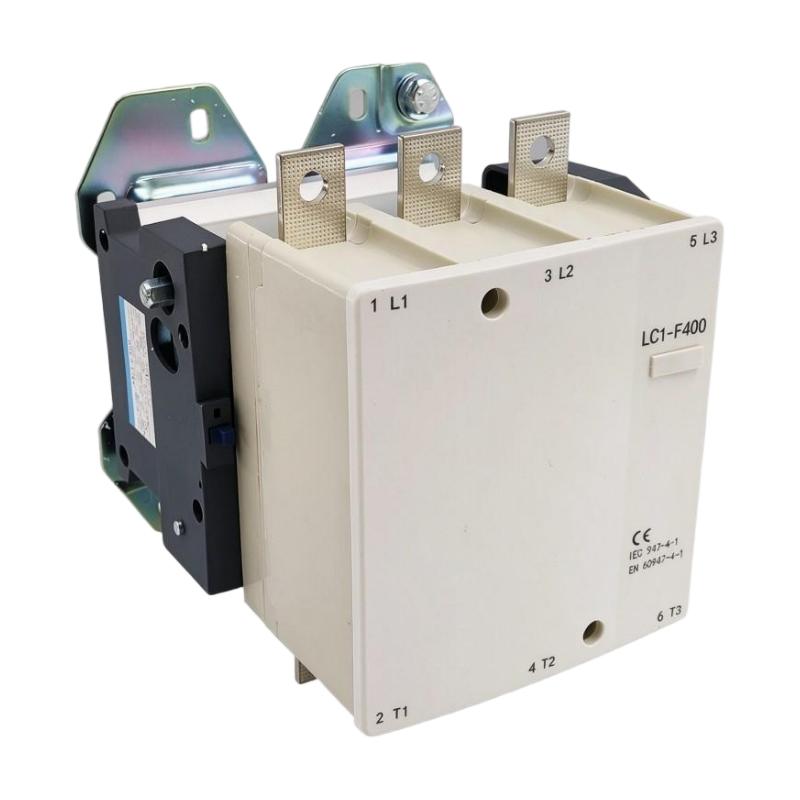
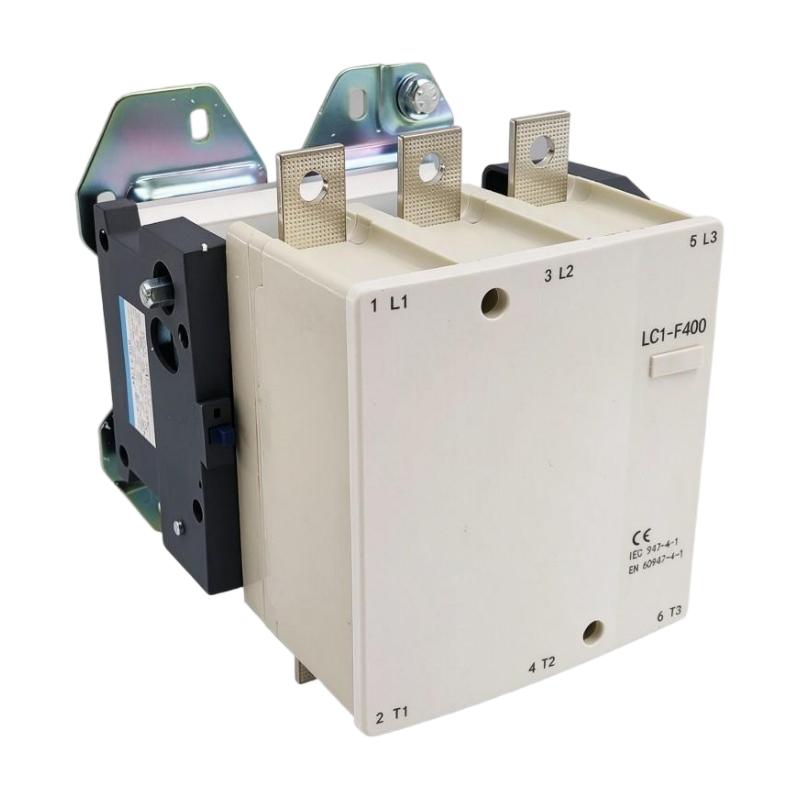
The Schneider Electric LC1F400G7 TeSys F Contactor is a high-current industrial contactor designed for switching and controlling three-phase motors and other electrical loads. It belongs to the TeSys F product family and is intended for demanding industrial power-control applications where reliable switching, electrical isolation, and coordinated motor operation are important.
As an electromechanical switching device, the LC1F400G7 uses an electromagnetic coil to operate its main contacts. When the control circuit energizes the coil, the contactor closes its main contacts and connects the electrical supply to the load. When the coil is de-energized, the contacts return to their open position, interrupting the controlled circuit.
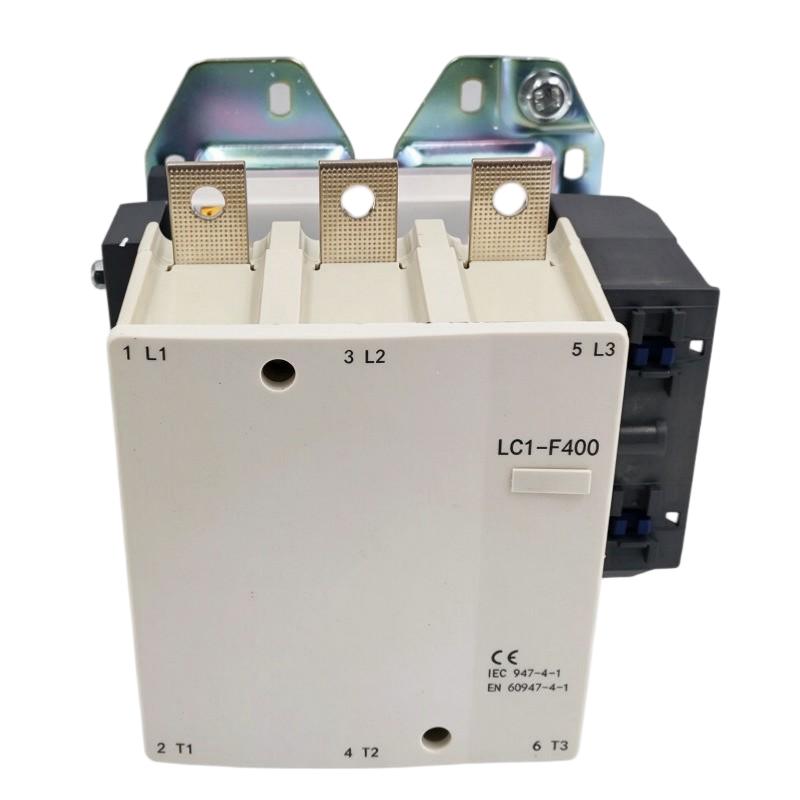
The LC1F400G7 features three main poles with three normally open contacts. Its AC-3 rated operational current is 400 A at operating voltages up to 440 V AC, while its conventional thermal current rating is 500 A under the specified conditions. The control coil is rated at 120 V AC.
This contactor is designed for motor-control and resistive-load applications. In industrial installations, it can be used in motor starters, power distribution assemblies, production machinery, and other systems requiring high-capacity electrical switching.
The product’s large current capacity makes correct installation particularly important. Engineers must consider the load category, operating voltage, switching frequency, short-circuit protection, coil supply, and electrical clearances when selecting and commissioning the device.
The LC1F400G7 has been discontinued by Schneider Electric. It remains relevant to maintenance, repair, and replacement projects involving existing TeSys F installations. Buyers should verify the exact model and investigate compatible replacement products before purchasing.
Technical Specifications
| Parameter | Specification |
|---|---|
| Brand | Schneider Electric |
| Product Series | TeSys F |
| Model | LC1F400G7 |
| Product Type | Power Contactor |
| Main Contact Configuration | 3P, 3NO |
| Number of Poles | 3 |
| AC-3 Rated Operational Current | 400 A |
| AC-1 Conventional Thermal Current | 500 A |
| Rated Operational Voltage | Up to 440 V AC for the specified AC-3 rating |
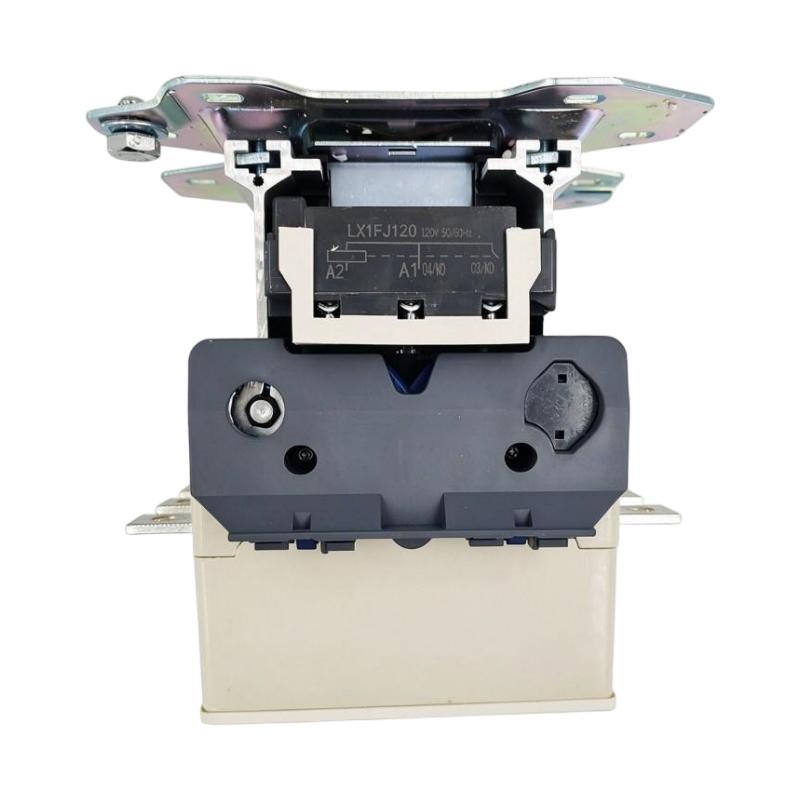
| Control Coil Voltage | 120 V AC |
| Control Circuit Frequency | 40–400 Hz |
| Rated Insulation Voltage | 1000 V AC |
| Rated Impulse Withstand Voltage | 8 kV |
| Rated Breaking Capacity | 3200 A |
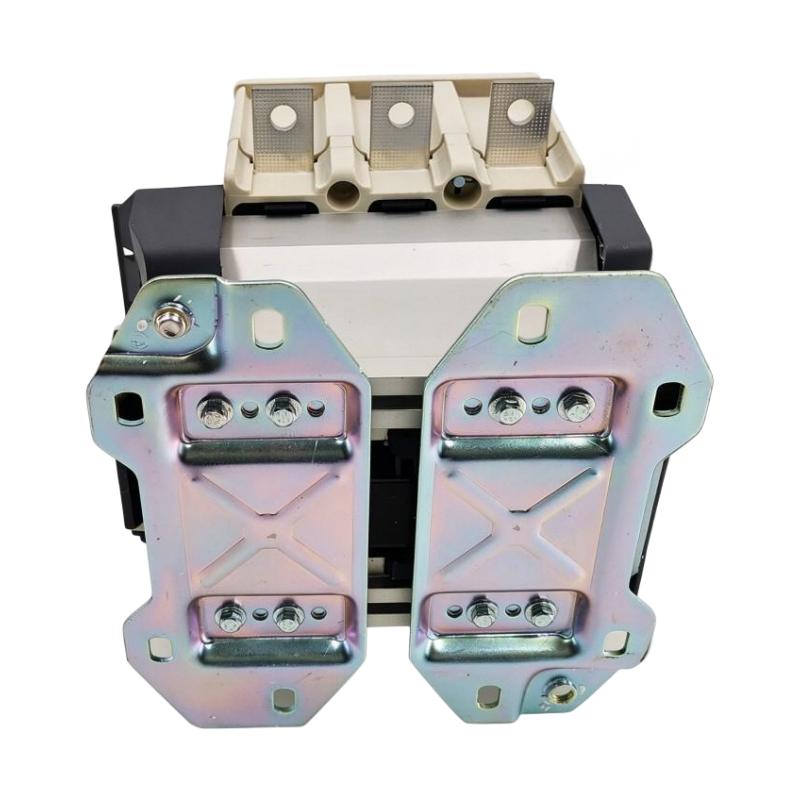
| Mounting | Plate mounting |
| Front Protection | IP20 with specified terminal shrouds |
| Operating Temperature | -5 to +55 °C |
| Mechanical Durability | Up to 10 million operating cycles under specified conditions |
| Dimensions | 206 × 213 × 219 mm |
| Weight | 9.1 kg |
| Product Lifecycle | Discontinued |
| Typical Applications | Industrial motor control and resistive-load switching |
Note: Electrical ratings depend on utilization category, operating voltage, ambient temperature, and installation conditions. Always consult the product’s technical documentation when selecting protection devices and designing the control circuit.
Function and Working Principle
The LC1F400G7 operates through electromagnetic actuation. Its coil, armature, return mechanism, and main contacts work together to control the connection between the power supply and the electrical load.
1. Electromagnetic Coil Operation
The contactor uses a 120 V AC control coil. When the correct control voltage is applied, the coil generates a magnetic field that attracts the moving armature.
This mechanical movement operates the main contacts. When the coil is energized, the three normally open power contacts close, allowing current to flow through the connected electrical circuit.
When the coil is de-energized, the magnetic force disappears and the return mechanism moves the armature back to its original position. The main contacts open and interrupt the controlled circuit.
2. Three-Pole Main Contact Switching
The LC1F400G7 has three main power poles, each with a normally open contact. This arrangement is suitable for controlling three-phase electrical loads.
In a typical motor-control installation, the three phases of the supply are connected through the contactor to the motor circuit. The contactor opens or closes all three main poles through its common mechanical operating mechanism.
This arrangement allows the control system to switch a three-phase motor supply using a comparatively low-power control circuit.
3. Motor Control Under AC-3 Conditions
The AC-3 utilization category applies to starting squirrel-cage motors and switching them off while running. Motor starting produces a high initial current, while opening the circuit during normal motor operation creates switching stress on the contactor.
The LC1F400G7 has an AC-3 rated operational current of 400 A under the specified conditions. This rating is important when selecting the contactor for industrial motor starters.
The actual motor power that can be controlled depends on supply voltage, motor characteristics, operating conditions, and the applicable utilization category.
4. Resistive-Load Switching
The contactor can also be used for resistive-load applications. Under AC-1 conditions, its conventional thermal current rating is 500 A at the specified ambient temperature.
Resistive loads generally produce different switching conditions from inductive motor loads. Therefore, the AC-1 and AC-3 ratings must not be treated as interchangeable.
5. Electrical Arc Management
When a contactor interrupts a high-current circuit, an electrical arc may form between separating contacts. The contactor’s internal contact and arc-management construction is designed to handle switching conditions within its specified ratings.
Correct application selection, upstream protection, terminal connections, and maintenance are essential to maintain safe switching performance.
Role in Industrial Control Systems
The LC1F400G7 is commonly used as a power-switching component within industrial motor-control and electrical distribution systems. It works with control devices such as PLCs, overload relays, push buttons, protection equipment, and auxiliary contacts.
PLC-Based Motor Control
A programmable logic controller can control the contactor through an appropriately designed output circuit. The PLC processes operating conditions and sends a command to energize or de-energize the contactor coil.
For example, a PLC may start a motor when a production sequence begins and stop it when a sensor detects that a process stage has been completed.
The PLC does not normally carry the motor’s main power current. Instead, it controls the contactor’s coil through a suitable interface and control circuit.
Motor Starter Systems
The LC1F400G7 can serve as the main switching element in an industrial motor starter. A typical starter may include:
- Main contactor.
- Motor overload protection.
- Short-circuit protection.
- Control transformer or control power supply.
- Start and stop push buttons.
- PLC or relay control logic.
- Auxiliary contacts for status feedback.
The contactor performs the switching function, while the protection devices detect abnormal electrical conditions and help protect the motor circuit.
HMI and Operator Control
An HMI can provide operators with start, stop, and status-control functions through a PLC or other control architecture.
The HMI may display motor operating status, contactor feedback, overload alarms, and system interlock conditions. The LC1F400G7 itself is an electromechanical contactor rather than a programmable controller, so the logic and monitoring functions are provided by external control equipment.
Power Distribution and Electrical Switching
In larger industrial electrical assemblies, the contactor can be used to switch power to selected equipment or load groups. Its three-pole configuration supports three-phase circuit switching when applied within the specified electrical ratings.
The overall installation must include suitable upstream protection and appropriate isolation arrangements.
Industrial Applications
The LC1F400G7 is designed for high-current industrial switching applications. Its 400 A AC-3 rating makes it relevant to motor-control systems with substantial electrical loads.
1. Industrial Motor Starters
Large industrial motors are commonly used in manufacturing plants, processing facilities, and material-handling systems.
The LC1F400G7 can serve as the main contactor in a suitable motor starter. It receives commands from the control circuit and connects or disconnects the motor from the electrical supply.
The motor’s rated current, starting method, operating frequency, and overload characteristics must be checked before selecting the contactor.
2. Pumps and Water Treatment Equipment
Industrial pumping systems may use large motors to move water, chemicals, or process fluids. A contactor can provide the main switching function for pump motors.
In a pump-control system, the contactor may be operated by a PLC, pressure switch, level controller, or other control equipment.
The contactor rating must be selected according to the motor’s electrical characteristics and the required switching duty.
3. Compressors and Process Machinery
Industrial compressors and process machines often use high-power motors that require reliable switching and coordinated protection.
The LC1F400G7 may be incorporated into a suitable motor starter or electrical control cabinet. The complete system should include the required overload and short-circuit protection.
4. Manufacturing and Production Lines
Manufacturing facilities use contactors to control motors, machinery, and auxiliary electrical loads.
The LC1F400G7 can be used in applications where high-current three-phase switching is required. It may be coordinated with PLC control logic to support automatic production sequences and equipment interlocks.
5. Industrial Power Assemblies
The contactor may be installed in motor control centers, power distribution panels, and industrial electrical assemblies.
Its high-current switching capability can support the control of selected power circuits, provided that the contactor’s utilization category, voltage, protection requirements, and installation conditions are appropriate.
Installation and System Integration
Correct installation is essential for the LC1F400G7 because high-current switching equipment requires careful attention to conductor sizing, electrical clearances, mechanical mounting, and protection coordination.
1. Verify the Control Coil Voltage
The LC1F400G7 uses a 120 V AC control coil. Before energizing the coil, verify that the control circuit supplies the correct voltage and operates within the specified frequency range.
Applying an incorrect coil voltage can cause unreliable operation or damage to the coil.
The control circuit should also be designed to provide suitable protection and isolation.
2. Confirm Main Circuit Ratings
Check the system’s operating voltage, motor current, load type, and utilization category.
For motor applications, use the AC-3 rating rather than relying on the higher AC-1 thermal current figure. The contactor must be selected according to the actual motor operating conditions.
3. Mounting and Panel Layout
The supplied dimensions are 206 × 213 × 219 mm, and the listed product weight is 9.1 kg.
The contactor should be mounted securely on a suitable plate or structural support. The panel design must allow sufficient room for power cables, control wiring, terminal access, ventilation, and maintenance.
For high-current installations, electrical clearances are particularly important. Follow the manufacturer’s drawings and installation instructions when determining spacing and terminal-shroud requirements.
4. Power Wiring and Terminal Connections
Use conductors and terminals suitable for the operating current and installation environment.
Ensure that all power connections are properly tightened to the specified torque. Loose connections can create excessive resistance, heat generation, and contact damage.
Power wiring should be arranged to prevent mechanical strain on the contactor terminals.
5. Protection Coordination
A contactor does not replace circuit breakers, fuses, or motor overload protection.
The complete motor-control system should include suitable short-circuit protection and overload protection. Protection-device selection must be coordinated with the contactor’s ratings and the characteristics of the connected motor.
6. Commissioning and Functional Testing
Before placing the contactor into service, inspect the mounting, wiring, coil voltage, terminal connections, and protective devices.
Test the control circuit to verify that the contactor energizes and releases correctly. Confirm that all three main poles operate properly and that the associated motor protection and interlocks function as intended.
Record the final circuit configuration and maintenance information for future service work.
Compatible System Components
The LC1F400G7 is normally used with other electrical and automation components in a complete motor-control installation.
| Component | Function | Integration Considerations |
|---|---|---|
| Three-phase AC motor | Converts electrical energy into mechanical motion | Confirm motor current, voltage, starting conditions, and duty |
| PLC | Controls motor operation and production sequences | Use a suitable output interface for the 120 V AC coil circuit |
| Motor overload relay | Protects against sustained motor overload | Select and coordinate according to motor and starter requirements |
| Circuit breaker | Provides upstream circuit protection | Verify interrupting capacity and coordination |
| Fuse system | Provides short-circuit protection | Follow the contactor manufacturer’s protection recommendations |
| Control transformer | Supplies the required control voltage | Confirm the secondary voltage and power capacity |
| HMI | Provides operator commands and status information | Usually communicates through the PLC or control system |
| Auxiliary contacts | Provide additional control or feedback signals | Confirm the required contact arrangement and accessories |
| Motor control center | Houses and organizes motor-control equipment | Check mounting, clearances, heat, and electrical ratings |
These components are examples of equipment that may be used in a complete installation. They are not necessarily included with the LC1F400G7.
Alternative Models and Replacement Considerations
The LC1F400G7 has been discontinued. Schneider Electric identifies TeSys Giga products as recommended replacement options for this reference.
| Alternative Model | Description | Replacement Considerations |
|---|---|---|
| LC1G400KUEN | TeSys Giga 3-pole 400 A contactor with 100–250 V AC/DC coil | Confirm coil-control compatibility and installation requirements |
| LC1G400EHEA | TeSys Giga 3-pole 400 A contactor with 48–130 V AC/DC coil | Check control voltage, accessories, and application configuration |
| LC1G400EHEN | TeSys Giga 3-pole 400 A contactor with 48–130 V AC/DC coil | Verify mechanical and electrical integration before substitution |
| LC1F330 series | Related TeSys F contactor family | Lower current rating; not a direct substitute without load assessment |
| LC1F500 series | Higher-capacity TeSys F family | Requires full evaluation of load, dimensions, coil, and installation |
Before selecting a replacement, compare:
- Rated operational current under the required utilization category.
- Main contact configuration and number of poles.
- Main circuit operating voltage.
- Control coil voltage and frequency.
- Motor power rating.
- Short-circuit protection requirements.
- Mounting dimensions and terminal arrangements.
- Auxiliary contact and accessory requirements.
- PLC control wiring and interlocks.
A replacement with the same nominal current rating is not necessarily a drop-in substitute. Mechanical dimensions, coil voltage, accessories, and control-circuit characteristics may differ.
Key Advantages
High-Current Switching Capability
The 400 A AC-3 rating makes the LC1F400G7 suitable for selected high-current motor-control applications.
Three-Pole Main Contact Configuration
Its three normally open main contacts support switching of three-phase electrical loads.
120 V AC Control Coil
The AC control coil can be integrated into appropriately designed industrial control circuits using a matching control supply.
Industrial Motor-Control Design
The TeSys F product family is designed for industrial switching applications involving motors and resistive loads.
High Thermal Current Rating
The 500 A AC-1 conventional thermal current rating supports suitable resistive-load applications under the specified conditions.
Integration with Automation Systems
The contactor can be controlled by PLCs, relay circuits, and other industrial automation equipment through an appropriate coil-control arrangement.
Established Industrial Installation Base
The LC1F400G7 is relevant to maintenance and replacement projects involving existing TeSys F motor-control assemblies.
Technical FAQs
1. What is the Schneider Electric LC1F400G7?
The LC1F400G7 is a TeSys F three-pole power contactor designed for industrial motor control and resistive-load switching.
2. What is the rated current of the LC1F400G7?
Its AC-3 rated operational current is 400 A at operating voltages up to 440 V AC. Its AC-1 conventional thermal current rating is 500 A under the specified conditions.
3. What is the coil voltage?
The LC1F400G7 uses a 120 V AC control coil. The control supply must be checked before installation.
4. How many poles does this contactor have?
It has three main poles with three normally open contacts (3P, 3NO), making it suitable for controlling three-phase circuits.
5. What is the difference between AC-1 and AC-3 ratings?
AC-1 applies to non-inductive or slightly inductive loads, while AC-3 applies to starting squirrel-cage motors and switching them off while running. The applicable rating depends on the load type and switching conditions.
6. Can the LC1F400G7 be controlled by a PLC?
Yes. A PLC can control the contactor through a properly designed output circuit or suitable interface. The control circuit must be compatible with the 120 V AC coil.
7. Is the LC1F400G7 still available as a new product?
The model has been discontinued by Schneider Electric. Availability may depend on remaining inventory and industrial spare-parts suppliers. Buyers should confirm the product’s condition and warranty terms.
8. What products can replace the LC1F400G7?
Schneider Electric lists LC1G400KUEN, LC1G400EHEA, and LC1G400EHEN from the TeSys Giga family as recommended replacement options. A detailed compatibility check is still necessary.
9. What should be checked before purchasing a used LC1F400G7?
Verify the full model number, coil voltage, contact condition, terminal condition, mechanical operation, and physical condition. For critical applications, request suitable testing and confirm the supplier’s warranty and return policy.
10. What are the dimensions and weight?
The supplied dimensions are 206 × 213 × 219 mm, and the listed weight is 9.1 kg. These values should be used as reference information and confirmed against the actual unit when planning shipping or panel installation.
Procurement and Maintenance Recommendations
Because the LC1F400G7 is discontinued, procurement should begin with exact model verification. Check the complete reference printed on the nameplate, especially the final coil-voltage code. Similar TeSys F contactors may use different coil voltages and are not necessarily interchangeable.
For new-old-stock, used, or refurbished units, request clear photographs of the nameplate, main terminals, coil connections, and contact assembly. Confirm whether the contactor has been tested and whether any terminal shrouds or auxiliary accessories are included.
During maintenance, inspect the main contacts for wear, overheating, pitting, or other signs of deterioration. Check terminal tightness, mechanical movement, coil condition, and the operation of associated protection devices. Maintenance and replacement intervals should follow the manufacturer’s instructions and the actual switching duty.
For replacement projects, evaluate the complete motor starter rather than changing only the contactor. Verify the overload relay, short-circuit protection, coil-control circuit, mounting arrangement, and PLC interlocks. If a TeSys Giga replacement is selected, review its installation documentation and update the panel design or wiring as necessary.
Conclusion
The Schneider Electric LC1F400G7 TeSys F Contactor is a three-pole industrial power contactor with a 400 A AC-3 rating, a 500 A AC-1 thermal current rating, and a 120 V AC control coil. It is designed for high-current motor control and resistive-load switching in industrial electrical systems.
With its substantial switching capacity and compatibility with conventional motor-control architectures, the LC1F400G7 remains relevant to maintenance and replacement projects involving existing TeSys F installations. Since the model has been discontinued, accurate identification, condition verification, and careful evaluation of recommended TeSys Giga replacements are essential when planning procurement.