

ProductPRODUCT
Featured products



Contact Us
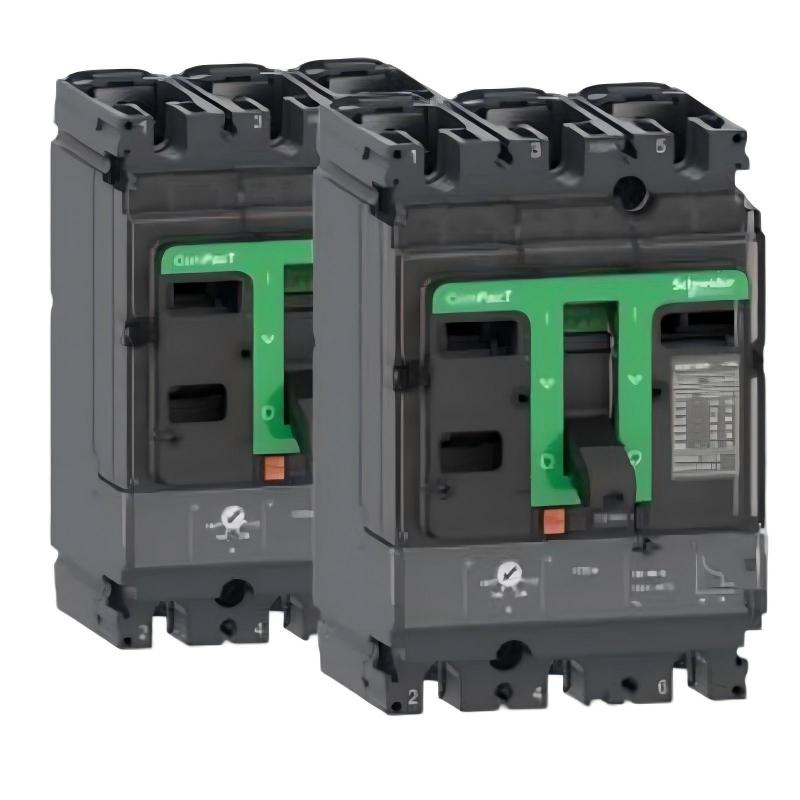
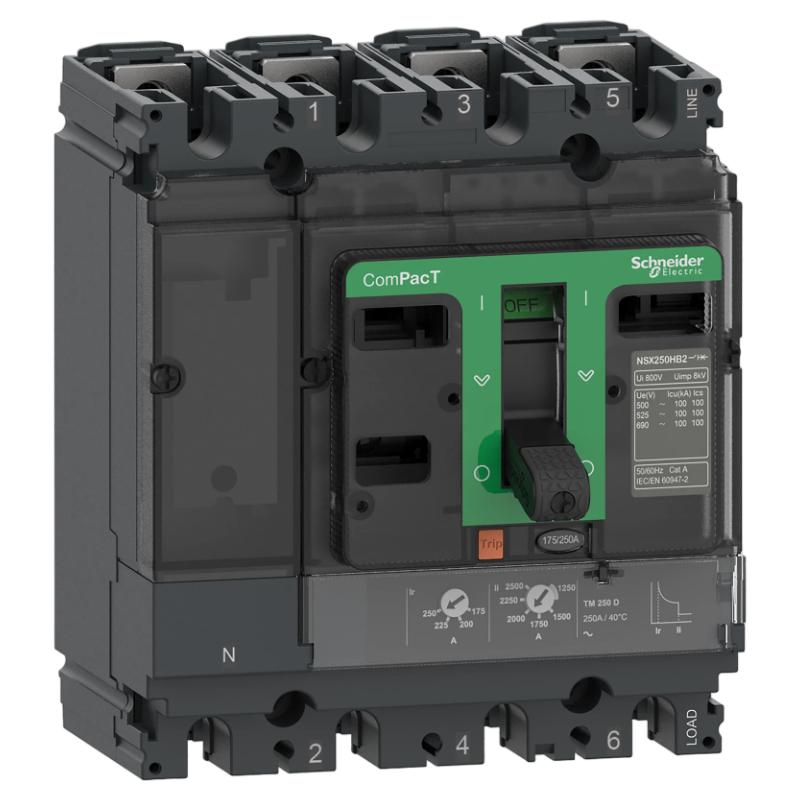
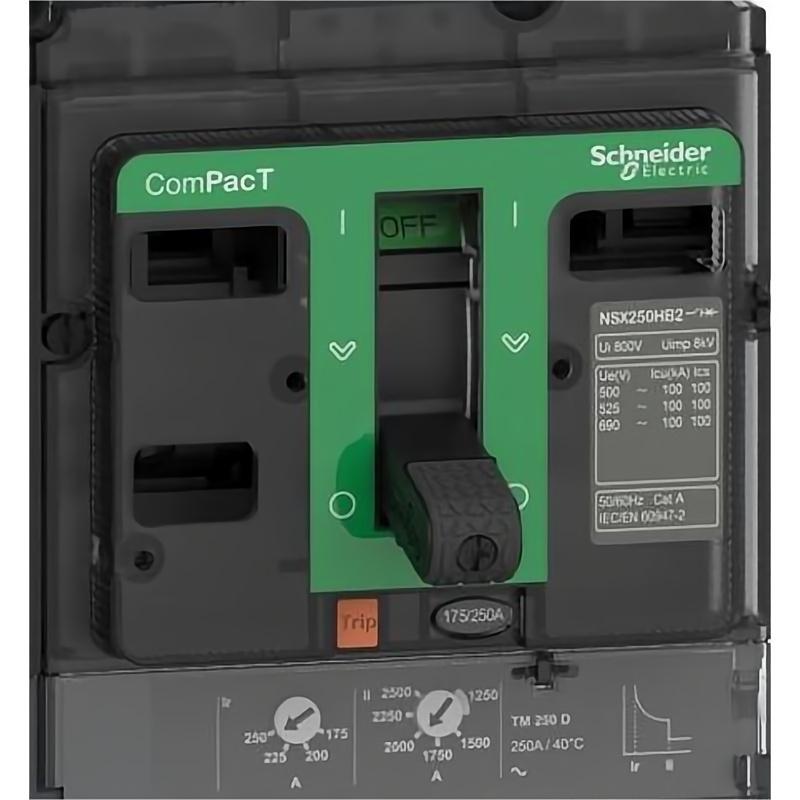
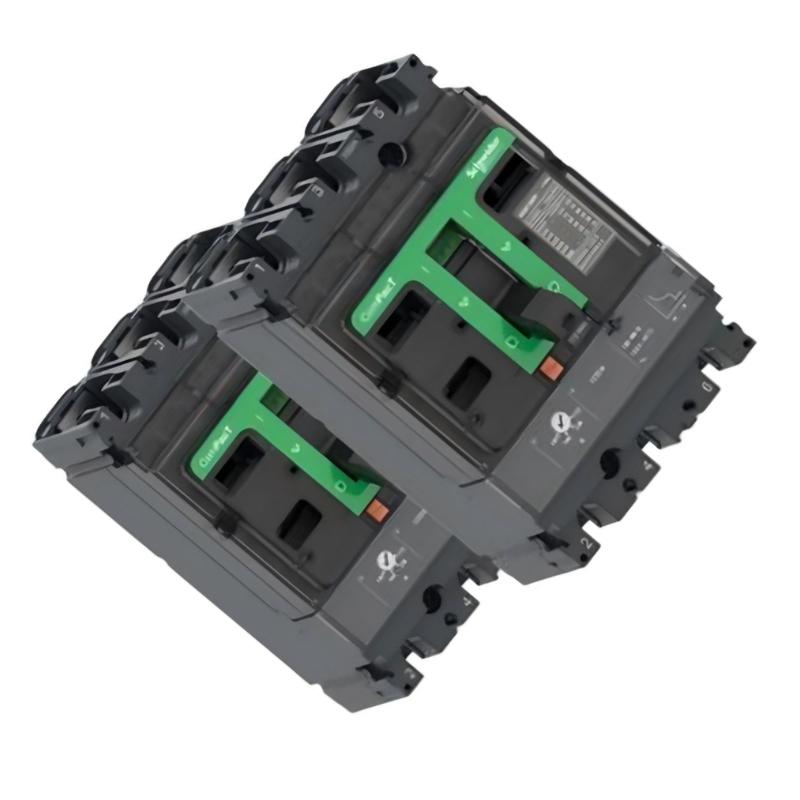
- Schneider
- C25N6TM200
- ComPacT NSX250N Circuit Breaker
- France
- 140 x 161 x 86 mm
- 2.8 kg
- Xiamen, China
- New & In Stock
- T/T, PayPal, Western Union
- 1 Year
- 1-3 Working Days
- DHL, UPS, TNT, FedEx and EMS.
- 24-Hour Service
- COO
- 38
Our advantage

Global Logistics
We have a 10-year logistics and express cooperation agreement, so our products can be shipped to any place in the world.

Brand new and original
Our products are imported in bulk from the place of origin. Because of the cooperative relationship, our products are all original and 100% new.

24-hour service
We provide 7*24 hours service to our customers. We will be there whenever you need us.

Price advantage
All our products are priced very favorably because we have our own warehouse and supply.
| Company Information | |||
| [email protected] | |||
| Mobile | +8615980777398 | ||
| +8615980777398 | |||
| 15980777398 |
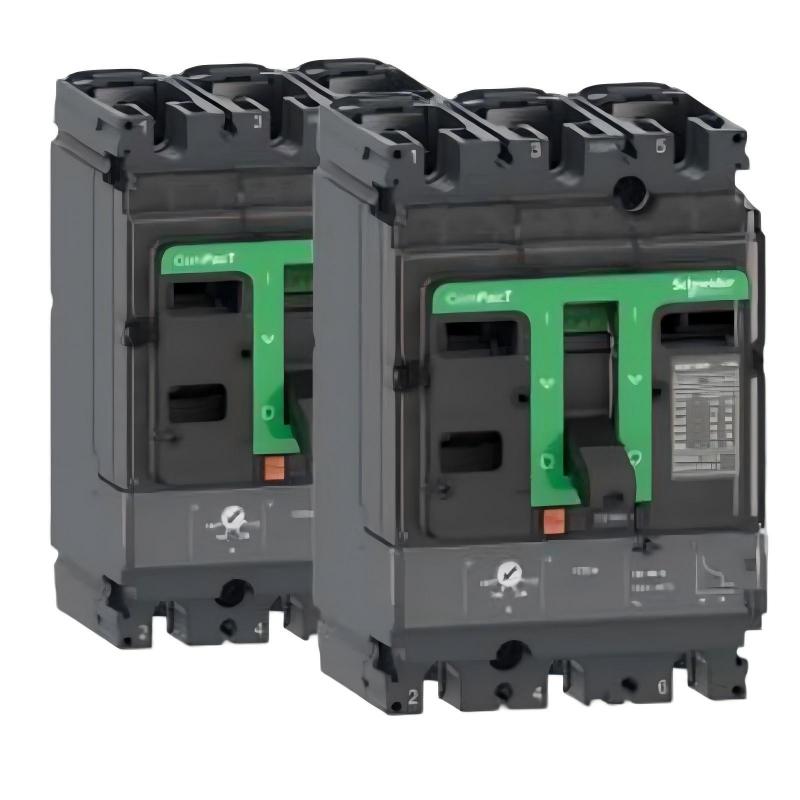
Product Overview
The Schneider C25N6TM200 ComPacT NSX250N Circuit Breaker is a compact molded-case circuit breaker designed for electrical distribution and equipment protection applications. As part of the ComPacT NSX250N family, the device provides a protective switching interface for industrial and commercial electrical systems where reliable circuit interruption and equipment protection are required.
Circuit breakers are fundamental components in industrial electrical installations. They help protect conductors and connected equipment against abnormal electrical conditions and provide a means of disconnecting circuits during maintenance or fault conditions.
The C25N6TM200 combines the mechanical construction of the ComPacT NSX platform with an associated trip-protection arrangement identified by its complete model designation. The complete device should always be selected and configured according to the electrical characteristics of the installation, including system voltage, current requirements, prospective fault conditions, conductor sizing, and coordination with upstream and downstream protective devices.
The listed physical dimensions of the Schneider C25N6TM200 are 140 × 161 × 86 mm, with a listed weight of 2.8 kg. Its compact enclosure makes it suitable for electrical distribution assemblies and industrial control cabinets where available installation space must be used efficiently.
Technical Specifications
| Parameter | Specification |
|---|---|
| Manufacturer | Schneider Electric |
| Model | C25N6TM200 |
| Product Family | ComPacT NSX250N |
| Product Type | Circuit Breaker |
| Circuit Breaker Type | Molded-Case Circuit Breaker |
| Primary Function | Electrical circuit protection and switching |
| Dimensions | 140 × 161 × 86 mm |
| Weight | 2.8 kg |
| Installation | Electrical distribution equipment / control cabinet |
| Application | Industrial and commercial electrical distribution |
| Protection Role | Overcurrent and fault protection, according to configured protection characteristics |
Exact electrical ratings, pole configuration, trip characteristics, interrupting capacity, connection accessories, and installation requirements should be verified for the specific C25N6TM200 configuration before use.
What Is the Schneider C25N6TM200?
The Schneider C25N6TM200 is a circuit breaker within the ComPacT NSX250N product family.
A circuit breaker has two fundamental roles in an electrical installation:
- Carry electrical current during normal operation.
- Interrupt the circuit when a specified abnormal electrical condition occurs.
This combination allows the circuit breaker to function as both a protective device and a switching component.
In an industrial distribution system, the general power path may be represented as:
Power Source → Main Distribution → Circuit Breaker → Load → Equipment
The C25N6TM200 can therefore occupy an important position between the electrical distribution system and the equipment it protects.
Circuit Breaker Working Principle
Under normal operating conditions, electrical current passes through the circuit breaker and continues to the connected load.
When the protection system detects an electrical condition outside the configured protection characteristics, the breaker can initiate an opening operation.
The interruption process separates the electrical contacts and stops current flow through the protected circuit.
Depending on the specific protection arrangement, circuit protection can address conditions associated with:
- Overload
- Short circuit
- Abnormal current conditions
- Equipment faults
The exact protection behavior and adjustment range depend on the complete circuit-breaker configuration.
A properly selected breaker should interrupt a fault before the associated conductors or equipment are subjected to unacceptable electrical stress.
Role in Industrial Electrical Systems
The C25N6TM200 can serve several functions within an electrical distribution architecture.
Circuit Protection
The primary role of a circuit breaker is to protect electrical circuits from abnormal current conditions.
Equipment Protection
Correctly coordinated protection can help reduce the electrical stress placed on downstream equipment during faults.
Switching
A circuit breaker can also provide a means of switching or isolating a circuit where the installation design permits.
Maintenance Isolation
Electrical distribution systems require controlled isolation during maintenance. The circuit breaker can form part of the isolation strategy when used according to applicable safety procedures.
Distribution Coordination
Circuit breakers can be coordinated with upstream and downstream protective devices to help manage fault conditions within a distribution system.
Industrial Applications
Factory Electrical Distribution
Industrial facilities contain numerous motors, machines, control cabinets, and auxiliary systems. Circuit breakers can provide protection for individual distribution branches and equipment feeders.
Manufacturing Machinery
Production machinery typically contains multiple electrical loads. A correctly selected molded-case circuit breaker can provide protection for associated electrical circuits.
Control Panels
Control cabinets may contain power distribution sections that require dedicated circuit protection.
Motor Control Systems
Motor-driven equipment can create substantial starting and operating currents. Protection must be selected according to the motor and system characteristics.
Building Electrical Systems
ComPacT NSX circuit breakers can also be used in commercial and building distribution applications where the device configuration is appropriate.
Industrial Utility Systems
Auxiliary electrical systems for pumps, fans, compressors, HVAC equipment, and other utility equipment may require circuit protection.
Physical Characteristics
The Schneider C25N6TM200 has the following listed physical characteristics:
Dimensions: 140 × 161 × 86 mm
Weight: 2.8 kg
These dimensions should be considered during electrical-panel design and installation.
Adequate space should be provided not only for the breaker body but also for:
- Electrical connections
- Cable routing
- Terminal access
- Operating mechanisms
- Maintenance
- Associated accessories
- Heat dissipation
- Required electrical clearances
The listed 2.8 kg weight should also be considered when planning panel mounting and mechanical support.
Installation Guidelines
Installation should be performed by appropriately qualified personnel according to the applicable electrical installation requirements.
Verify the Breaker Model
Before installation, confirm:
- C25N6TM200 model number
- ComPacT NSX250N family
- Intended electrical system
- Required protection characteristics
- Connection arrangement
- Installation orientation
- Associated accessories
Check the Electrical System
The circuit breaker must be suitable for the electrical system in which it will be installed.
Important considerations include:
- System voltage
- Operating current
- Fault level
- Conductor size
- Load characteristics
- Protection coordination
- Upstream protection
- Downstream equipment
Prepare the Mounting Location
Ensure that the panel provides adequate mechanical support for the 140 × 161 × 86 mm breaker.
The installation should allow sufficient access for wiring, inspection, and operation.
Connect Conductors Correctly
Power connections should be installed according to the applicable electrical design.
Connection torque, conductor size, terminal arrangement, and other installation parameters should be confirmed from the relevant equipment documentation rather than estimated.
Inspect Before Energization
Before applying power, verify:
- Correct wiring
- Tightness of electrical connections
- Correct breaker configuration
- Mechanical operation
- Absence of foreign objects
- Appropriate protective-device coordination
Protection Coordination
A circuit breaker should not be selected in isolation.
The C25N6TM200 should be evaluated as part of the complete electrical distribution system.
Coordination considerations may include:
- Upstream circuit breakers
- Downstream protective devices
- Cable capacity
- Load characteristics
- Fault current
- Selectivity
- Backup protection
- Equipment withstand capability
Proper coordination helps ensure that a fault is interrupted by the appropriate protective device while minimizing unnecessary interruption to unaffected portions of the electrical installation.
Application in Automation Systems
In industrial automation, circuit breakers are often located upstream of PLCs, drives, power supplies, motors, and other electrical equipment.
A simplified architecture may look like:
Main Power → Distribution Protection → C25N6TM200 → Machine Power Circuit → Control and Drive Equipment
The breaker does not directly control PLC logic. Instead, it provides the electrical protection layer that allows automation equipment to operate within a protected power-distribution architecture.
This makes circuit protection an important supporting element of industrial automation reliability.
Relationship with Motor and Drive Systems
Modern industrial machines frequently contain:
- Variable speed drives
- Servo drives
- Motors
- Transformers
- Control power supplies
- PLC systems
- HMI equipment
- Industrial communication devices
Each of these loads may have different electrical characteristics.
For example, a motor circuit may have a different starting-current profile from a PLC power supply. A variable speed drive may have different input protection requirements from a resistive load.
Therefore, the C25N6TM200 should be selected and configured according to the actual circuit rather than simply according to the downstream equipment’s nominal power.
Troubleshooting
A circuit breaker that trips should not simply be reset repeatedly without investigating the cause.
Breaker Trips Immediately
An immediate trip may indicate:
- Short circuit
- Severe overcurrent
- Wiring fault
- Equipment fault
- Incorrect circuit configuration
The affected circuit should be isolated and investigated before attempting repeated resets.
Breaker Trips During Normal Operation
If the breaker trips after the equipment has been operating for some time, possible causes include:
- Sustained overload
- Excessive load current
- Motor operating conditions
- Equipment malfunction
- Incorrect protection configuration
- Thermal conditions
The actual current and operating conditions should be measured and compared with the designed circuit characteristics.
Breaker Will Not Reset
If the breaker cannot be reset, inspect the circuit for an unresolved fault.
Potential causes include:
- Persistent short circuit
- Mechanical issue
- Faulty downstream equipment
- Protection mechanism remaining in a trip state
- Improper operating procedure
Do not force the operating mechanism.
Nuisance Tripping
Repeated unexplained trips should be investigated systematically.
Check:
- Actual load current
- Load starting characteristics
- Wiring condition
- Downstream equipment
- Protection configuration
- Ambient conditions
- Coordination with other protective devices
Maintenance Recommendations
Circuit breakers should be included in the preventive-maintenance program for industrial electrical systems.
Recommended activities include:
Visual Inspection
Check the breaker housing for cracks, contamination, discoloration, or mechanical damage.
Connection Inspection
Electrical connections should be checked according to the applicable maintenance procedure.
Operating Mechanism
Where permitted by the equipment maintenance procedure, the operating mechanism should be inspected for abnormal mechanical behavior.
Thermal Inspection
Unusual heating around the breaker or connections can indicate excessive current, loose connections, or other electrical problems.
Fault History
Repeated trips should be recorded and investigated rather than treated as isolated events.
Environmental Conditions
The surrounding electrical cabinet should be kept within the appropriate environmental conditions for the installed equipment.
Safety Considerations
Circuit breakers are safety-critical components in electrical distribution systems.
Before working on equipment protected by the C25N6TM200:
- Follow applicable electrical safety procedures.
- De-energize circuits when required.
- Apply appropriate lockout/tagout procedures.
- Verify absence of hazardous voltage using suitable test equipment.
- Use appropriate personal protective equipment.
- Do not bypass protective devices.
- Do not repeatedly reset a breaker without determining why it tripped.
The breaker should never be considered a substitute for the complete electrical safety procedure.
Replacement Considerations
When replacing the Schneider C25N6TM200, verify the complete model designation rather than selecting a replacement based only on the physical appearance.
Important information includes:
- Complete model number
- ComPacT NSX250N family
- Protection configuration
- Electrical system requirements
- Pole configuration
- Connection arrangement
- Mounting requirements
- Accessories
- Upstream and downstream coordination
The supplied physical specifications are:
140 × 161 × 86 mm
2.8 kg
A physically similar circuit breaker may have different electrical characteristics and should not automatically be considered interchangeable.
Panel Design and Space Planning
The physical size of the C25N6TM200 should be incorporated into the electrical cabinet layout.
The listed 140 × 161 × 86 mm dimensions provide a reference for equipment-space planning, but the actual installation also needs to accommodate the connection system and required operating or maintenance clearances.
Panel designers should consider:
- Breaker mounting
- Incoming conductors
- Outgoing conductors
- Cable bending
- Adjacent devices
- Heat dissipation
- Maintenance access
- Operating access
- Electrical clearances
The 2.8 kg weight should also be considered when designing mechanical mounting arrangements.
Integration with Industrial Distribution Equipment
A ComPacT NSX250N circuit breaker can form part of a broader electrical distribution system containing:
- Main disconnect devices
- Distribution boards
- Busbars
- Circuit breakers
- Contactors
- Motor starters
- Variable speed drives
- Transformers
- Power supplies
- Control cabinets
- PLC systems
- Industrial machines
The C25N6TM200 should be evaluated as one component within this complete power-distribution architecture.
Key Advantages
The Schneider C25N6TM200 provides several practical characteristics for industrial electrical installations:
- ComPacT NSX250N platform
- Molded-case circuit breaker construction
- Compact 140 × 161 × 86 mm dimensions
- Listed weight of 2.8 kg
- Circuit protection and switching functionality
- Suitable for industrial electrical distribution applications
- Can support protected power distribution for automation equipment
- Suitable for integration into structured electrical-panel designs
- Supports controlled circuit isolation when used according to applicable procedures
- Provides a dedicated protective layer between power distribution and downstream loads
Technical FAQs
What is the Schneider C25N6TM200?
The Schneider C25N6TM200 is a ComPacT NSX250N Circuit Breaker designed for electrical circuit protection and switching applications.
What are the dimensions of the C25N6TM200?
The listed dimensions are 140 × 161 × 86 mm.
How much does the C25N6TM200 weigh?
The listed weight is 2.8 kg.
What is the primary function of a circuit breaker?
A circuit breaker carries current during normal operation and interrupts the circuit when specified abnormal electrical conditions occur.
Can the C25N6TM200 be used in an automation control cabinet?
It can form part of an electrical distribution arrangement supporting automation equipment when its complete electrical configuration is appropriate for the application.
Why does a circuit breaker trip?
A trip can result from an overload, short circuit, equipment fault, or another electrical condition outside the configured protection characteristics.
Should a tripped breaker simply be reset?
No. Repeated tripping should be investigated to determine the underlying cause before the circuit is returned to service.
Can another NSX250N breaker automatically replace the C25N6TM200?
No. The complete model designation and electrical configuration must be verified. Protection characteristics, connections, accessories, and system requirements can differ between models.
What should be checked before installation?
System voltage, operating current, fault level, conductor requirements, protection coordination, mounting arrangement, connections, and the complete breaker configuration should be verified.
Conclusion
The Schneider C25N6TM200 ComPacT NSX250N Circuit Breaker is a compact molded-case circuit breaker designed to provide circuit protection and switching functionality within industrial and commercial electrical distribution systems. As part of the ComPacT NSX250N platform, it can serve as an important protective element between electrical distribution equipment and downstream loads.
The supplied physical specifications are 140 × 161 × 86 mm with a listed weight of 2.8 kg. These dimensions and weight should be considered when planning electrical-panel mounting, conductor routing, maintenance access, and equipment replacement.
For reliable operation, the C25N6TM200 must be selected according to the complete electrical characteristics of the installation. System voltage, current, fault conditions, conductor capacity, protection coordination, and the exact breaker configuration should all be evaluated before commissioning.
Proper installation and maintenance are equally important. Electrical connections should be secure, the breaker should remain free from physical damage and excessive environmental contamination, and repeated trips should always be investigated rather than routinely reset. When correctly integrated into a coordinated protection system, the Schneider C25N6TM200 can provide a practical circuit-protection interface for industrial power-distribution and automation applications.