

ProductPRODUCT
Featured products
Contact Us
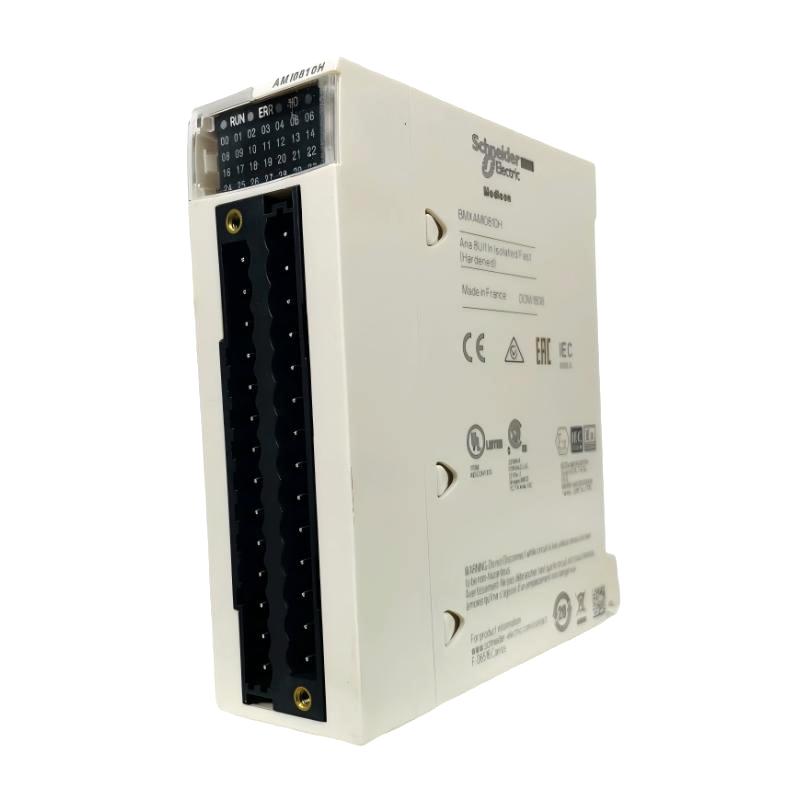
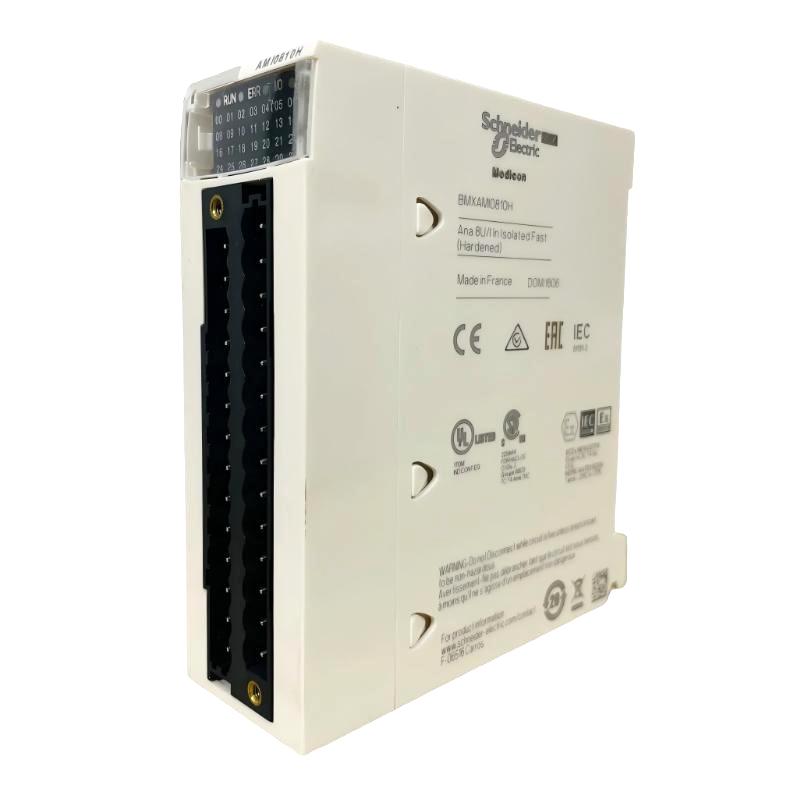
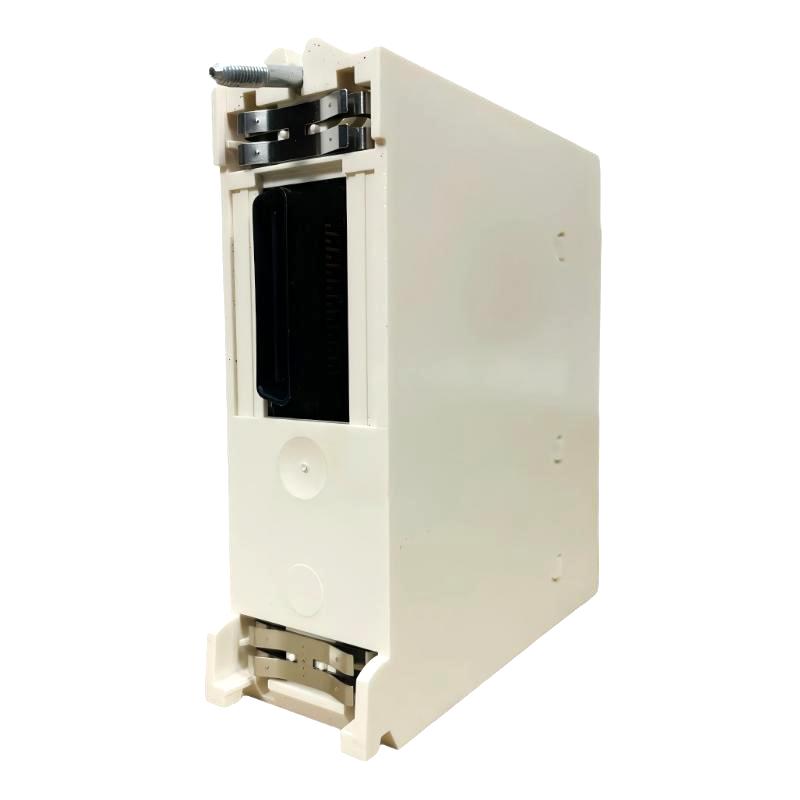
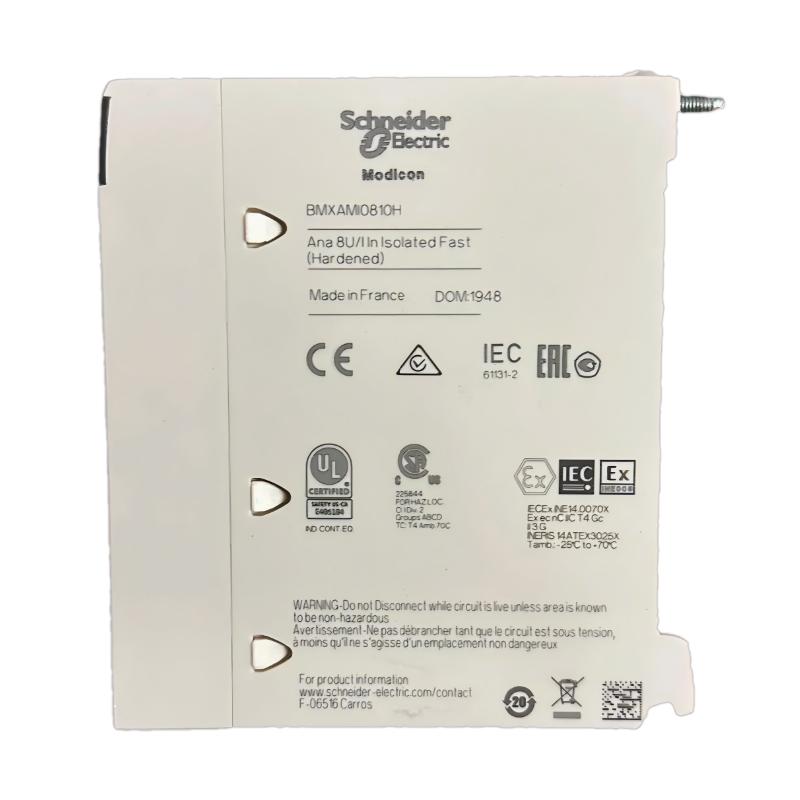
- Schneider
- BMXAMI0810H
- Analog Input Module
- France
- 116 x 110 x 55 mm
- 0.175 kg
- Xiamen, China
- New & In Stock
- T/T, PayPal, Western Union
- 1 Year
- 1-3 Working Days
- DHL, UPS, TNT, FedEx and EMS.
- 24-Hour Service
- COO
- 5
Our advantage

Global Logistics
We have a 10-year logistics and express cooperation agreement, so our products can be shipped to any place in the world.

Brand new and original
Our products are imported in bulk from the place of origin. Because of the cooperative relationship, our products are all original and 100% new.

24-hour service
We provide 7*24 hours service to our customers. We will be there whenever you need us.

Price advantage
All our products are priced very favorably because we have our own warehouse and supply.
| Company Information | |||
| [email protected] | |||
| Mobile | +8615980777398 | ||
| +8615980777398 | |||
| 15980777398 |
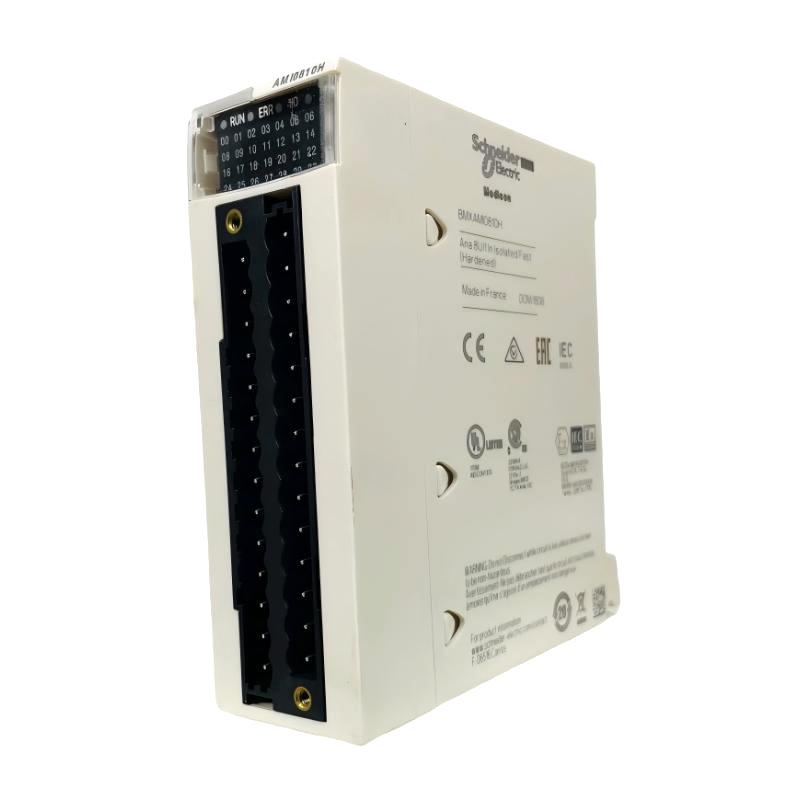
Product Overview
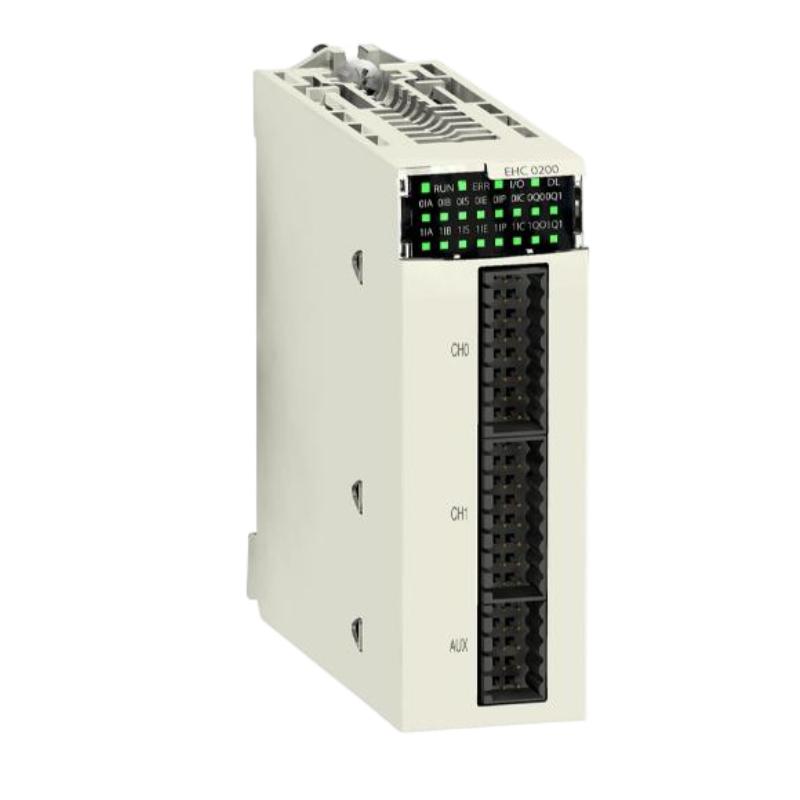
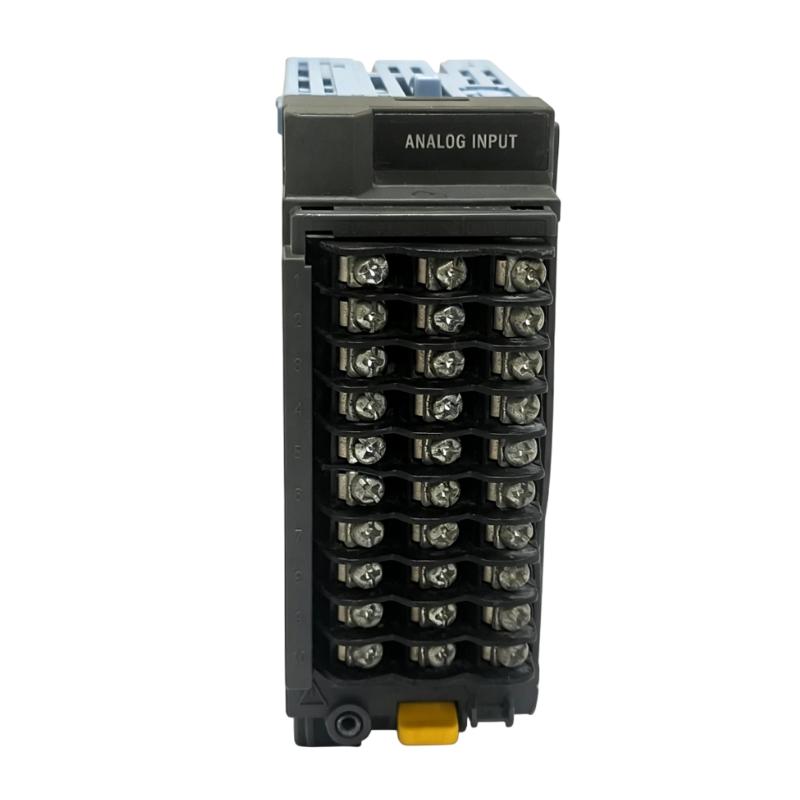
The Schneider BMXAMI0810H Analog Input Module is an industrial automation I/O component designed for acquiring analog signals from field instruments and transferring measurement information to a PLC or process-control system. Analog input modules are essential in applications where process variables are represented by continuously changing electrical signals rather than simple ON/OFF states.
In industrial environments, sensors and transmitters are commonly used to measure variables such as pressure, temperature, flow, level, position, and other process conditions. The resulting analog signals must be received, conditioned, converted, and made available to the controller so that the automation system can monitor the process and execute the required control logic.
The BMXAMI0810H provides an interface between field-level analog instrumentation and the automation controller. It can therefore form part of a larger PLC-based control architecture involving sensors, transmitters, actuators, HMIs, communication networks, and supervisory systems.
The supplied physical specifications for this module are 116 × 110 × 55 mm, with a weight of 0.175 kg. These values are useful for cabinet planning, I/O rack layout, replacement preparation, equipment handling, and spare-parts management.
Exact input ranges, signal types, resolution, accuracy, isolation characteristics, wiring assignments, diagnostic functions, and supported sensor configurations should be verified against the applicable Schneider Electric documentation for the specific BMXAMI0810H installation.
Technical Specifications
| Parameter | Specification |
|---|---|
| Manufacturer | Schneider Electric |
| Model | BMXAMI0810H |
| Product Type | Analog Input Module |
| Primary Function | Analog Signal Acquisition |
| System Role | PLC / Process I/O |
| Application | Industrial Automation and Process Control |
| Dimensions | 116 × 110 × 55 mm |
| Weight | 0.175 kg |
| Installation | Modular PLC / I/O System |
| Typical Applications | Process Monitoring, Machine Automation, Instrumentation and Control |
The dimensions and weight above are based on the supplied product information. Exact electrical specifications should be confirmed against the appropriate hardware documentation before system design or replacement.
What Is the Schneider BMXAMI0810H?
The Schneider BMXAMI0810H is identified as an Analog Input Module designed to connect analog field instrumentation with an industrial automation controller.
Unlike a digital input, which normally represents two basic states such as ON and OFF, an analog input represents a continuously variable measurement.
For example, a pressure transmitter may produce an electrical signal that changes as pressure changes. The analog input module receives this signal and converts it into usable measurement information for the controller.
A simplified measurement chain is:
Process → Sensor / Transmitter → BMXAMI0810H → PLC → Control Logic → Output Device
This architecture allows physical process conditions to become part of the automated control strategy.
Analog Input Working Principle
The basic operation of an analog input module involves receiving a field signal and converting it into digital information that can be processed by the controller.
Field Signal
A field sensor or transmitter detects a physical process variable.
Examples include:
- Pressure
- Temperature
- Flow
- Level
- Position
- Speed
- Force
- Other process measurements
The sensor generates an electrical signal corresponding to the measured condition.
Signal Acquisition
The analog input module receives the electrical signal from the field device.
Correct wiring and signal configuration are important because analog measurements can be affected by electrical interference, grounding problems, incorrect connections, and sensor faults.
Analog-to-Digital Conversion
The analog input system converts the received electrical signal into digital measurement information that can be processed by the PLC.
The controller can then use the measurement for:
- Monitoring
- Alarms
- Process regulation
- Equipment protection
- Sequence control
- Data collection
Control Processing
After the analog value becomes available to the PLC, application logic can determine how the system should respond.
For example, a controller may monitor a pressure measurement and generate an output command when the measured value reaches a configured threshold.
Role in Industrial Control Systems
The BMXAMI0810H can serve as the measurement interface between field instrumentation and the PLC control layer.
A typical automation architecture can be represented as:
Field Sensor → Analog Input Module → PLC Controller → Control Logic → Actuator
Additional equipment may include:
- HMI panels
- SCADA systems
- Variable-speed drives
- Communication modules
- Remote I/O
- Engineering stations
The analog input module therefore plays an important role in connecting real-world process conditions to digital control logic.
Signal Scaling and Engineering Values
The electrical signal received by an analog input module generally represents a physical engineering value.
For example, a transmitter may represent a process range using a standardized electrical signal. The PLC program then converts the measured electrical value into an engineering unit such as:
- °C
- bar
- MPa
- L/min
- m³/h
- %
- mm
- rpm
The general scaling process can be represented as:
Electrical Signal → Raw Digital Value → Scaling → Engineering Value
Correct scaling is essential for accurate process monitoring.
An incorrect scaling configuration can cause a physically correct input signal to appear as an incorrect process value in the PLC or HMI.
Industrial Applications
Process Instrumentation
Analog input modules are widely used in industrial process systems where continuous measurements are required.
Applications may include:
- Pressure monitoring
- Flow measurement
- Temperature monitoring
- Level measurement
- Process quality monitoring
Water and Wastewater Treatment
Water-treatment systems commonly use analog instruments to monitor process conditions.
Measurements may be used for:
- Pump control
- Tank-level monitoring
- Flow monitoring
- Pressure control
- Treatment-process supervision
Manufacturing Equipment
Manufacturing machines often use analog sensors to monitor operating conditions and production parameters.
Chemical Processing
Chemical processes require continuous monitoring of process variables.
Analog measurement can provide the controller with information needed for regulation, alarms, and equipment protection.
HVAC and Utility Systems
Industrial utility systems may use analog inputs for monitoring:
- Pressure
- Temperature
- Flow
- Tank levels
- Equipment operating conditions
PLC System Integration
The BMXAMI0810H can operate as part of a modular PLC architecture.
A typical control structure includes:
BMXAMI0810H → PLC CPU → Application Logic → Digital / Analog Outputs
The analog input module provides process measurements to the controller.
The PLC can then compare measurements against configured values, execute control algorithms, generate alarms, or transmit information to an HMI or SCADA system.
The exact rack architecture and module compatibility should be verified for the intended Schneider Electric platform.
HMI Integration
An HMI can display analog measurements acquired through the BMXAMI0810H.
Typical operator displays may include:
- Live process values
- Engineering units
- High and low alarms
- Process trends
- Equipment status
- Diagnostic information
For example, a pressure measurement acquired through the analog input module can be scaled in the PLC and displayed on the HMI as a pressure value.
This gives operators a convenient way to monitor process conditions without directly accessing field instrumentation.
SCADA and Supervisory Monitoring
Analog input data can also become part of a larger supervisory control architecture.
A SCADA system may use the measurement information to provide:
- Real-time monitoring
- Historical trends
- Alarm management
- Process analysis
- Equipment diagnostics
- Production reporting
This creates a data path from the physical process through the analog input module and PLC to the supervisory system.
Installation Guidelines
Correct installation is important for obtaining stable analog measurements.
Verify Module Identification
Confirm the complete product designation:
Schneider BMXAMI0810H
Check the module label before installation.
Confirm Physical Dimensions
The supplied dimensions are:
116 × 110 × 55 mm
The control cabinet or I/O installation area should provide sufficient space for the module and associated wiring.
Check Field Wiring
Before commissioning, verify:
- Sensor wiring
- Terminal connections
- Cable condition
- Signal polarity where applicable
- Shielding and grounding arrangements
Incorrect wiring can produce unstable or incorrect measurements.
Separate Analog and High-Power Wiring
Analog signal cables should be routed appropriately to minimize interference from:
- Motor cables
- Variable-speed drives
- Contactors
- High-current conductors
- Switching equipment
Good wiring practices can significantly improve measurement stability.
Analog Signal Wiring Considerations
Analog signals can be more sensitive to electrical interference than simple digital signals.
Recommended engineering practices include:
- Use suitable instrumentation cable.
- Keep analog cables away from high-power conductors where practical.
- Avoid unnecessary cable loops.
- Maintain secure terminal connections.
- Apply appropriate shielding practices.
- Follow the system’s grounding requirements.
The exact wiring arrangement should always follow the applicable Schneider Electric installation documentation and the specifications of the connected field transmitter.
Commissioning Procedure
A systematic commissioning process helps prevent measurement errors.
Step 1: Inspect the Module
Check the BMXAMI0810H for physical damage and verify its identification.
Step 2: Verify System Configuration
Confirm that the installed module matches the PLC project’s hardware configuration.
Step 3: Check Field Instruments
Verify that connected sensors and transmitters are correctly installed and powered according to their own specifications.
Step 4: Check Wiring
Inspect the complete signal path from the field instrument to the analog input module.
Step 5: Verify Input Configuration
Confirm that the software configuration corresponds to the intended field signal and application.
Step 6: Check Raw Input Values
Monitor the input value in the PLC engineering environment.
Compare the displayed value with the expected field condition.
Step 7: Verify Scaling
Confirm that the raw input value is correctly converted into the required engineering unit.
Step 8: Test the HMI or SCADA
Verify that the measurement displayed to the operator corresponds with the actual process condition.
Troubleshooting the BMXAMI0810H
Analog input faults should be investigated as a complete measurement chain.
No Input Signal
Possible causes include:
- Sensor power problem
- Broken signal cable
- Loose terminal
- Incorrect wiring
- Incorrect software configuration
- Field instrument fault
- Module fault
The sensor and wiring should be checked before replacing the module.
Unstable Analog Value
An unstable measurement can be caused by:
- Electrical interference
- Poor grounding
- Shielding problems
- Loose wiring
- Damaged cable
- Unstable field instrument
- Process fluctuations
- Incorrect configuration
Check both the physical signal and the process condition.
Reading Too High or Too Low
Possible causes include:
- Incorrect signal configuration
- Incorrect scaling
- Sensor calibration problem
- Wiring error
- Incorrect engineering range
- Field transmitter fault
- Analog input hardware problem
Compare the PLC reading with an appropriate reference measurement.
Input Remains at a Fixed Value
If the value does not change when the process changes, inspect:
- Sensor output
- Signal wiring
- Terminal connections
- Software configuration
- Input-channel status
- PLC application logic
A fixed reading does not necessarily indicate a defective input module.
Intermittent Measurement
Intermittent analog values may result from:
- Loose terminals
- Cable damage
- Electromagnetic interference
- Sensor instability
- Grounding issues
- Environmental conditions
Monitoring the signal while inspecting the wiring can help locate the problem.
Preventive Maintenance
Regular maintenance can help preserve analog measurement quality.
Inspect Field Instruments
Sensors and transmitters should be checked according to their maintenance requirements.
Inspect Wiring
Check analog cables and terminals for:
- Damage
- Loose connections
- Moisture
- Corrosion
- Excessive mechanical stress
Monitor Measurement Trends
Trend monitoring can identify gradual sensor drift or process abnormalities.
Maintain Cabinet Conditions
Keep the control cabinet clean and properly ventilated.
Check Configuration Backups
Maintain current PLC and I/O configuration backups according to site procedures.
Replacement Considerations
When replacing a Schneider BMXAMI0810H Analog Input Module, the complete model number should be verified.
Important considerations include:
- Full model designation
- Hardware revision
- PLC platform
- I/O rack configuration
- Signal type
- Field instrument requirements
- Software configuration
- Wiring arrangement
- Application scaling
The supplied physical specifications are:
Dimensions: 116 × 110 × 55 mm
Weight: 0.175 kg
A visually similar analog module should not automatically be considered interchangeable. Input characteristics, signal ranges, configuration requirements, wiring, and system compatibility must be confirmed before replacement.
Physical Dimensions and Weight
The supplied physical information for the BMXAMI0810H is:
| Physical Parameter | Value |
|---|---|
| Dimensions | 116 × 110 × 55 mm |
| Weight | 0.175 kg |
These specifications are useful for:
- PLC rack planning
- Cabinet layout
- Replacement preparation
- Spare-parts management
- Equipment handling
- Maintenance planning
Connector clearance and mounting requirements should be confirmed before final cabinet design.
Engineering Best Practices
Use Correct Signal Configuration
The PLC configuration should correspond to the connected field transmitter.
Verify Scaling
Always verify the relationship between the raw input value and the engineering value displayed to the operator.
Protect Analog Wiring
Keep analog signal wiring away from major sources of electrical noise wherever practical.
Check Sensor Condition
A defective or contaminated sensor can produce incorrect measurements even when the analog input module is operating normally.
Monitor Trends
Long-term trend analysis can reveal sensor drift, wiring problems, and developing process abnormalities.
Maintain Documentation
Record field-device identification, wiring, configuration, scaling, and replacement information to simplify future maintenance.
Compatible Automation Components
Depending on the overall Schneider Electric automation architecture, the BMXAMI0810H may operate alongside:
- Schneider Electric PLC CPUs
- Modular I/O Racks
- Digital Input Modules
- Digital Output Modules
- Analog Output Modules
- Analog Input Modules
- Communication Modules
- HMI Systems
- Variable-Speed Drives
- Process Transmitters
- Industrial Sensors
- SCADA Systems
- Engineering Stations
Exact compatibility should be confirmed against the specific PLC platform and system configuration.
Recommended Related Schneider Product Categories
| Product Category | Typical Function |
|---|---|
| Schneider Analog Input Modules | Continuous process measurement |
| Schneider Analog Output Modules | Analog control signals |
| Schneider Digital Input Modules | Discrete field-state acquisition |
| Schneider Digital Output Modules | Discrete device control |
| Schneider PLC CPUs | Control logic execution |
| Schneider Communication Modules | Industrial network communication |
| Schneider HMI Systems | Operator monitoring |
| Schneider Variable-Speed Drives | Motor speed control |
These are related automation categories and should not automatically be treated as direct replacement products.
Key Advantages
Analog Process Measurement
The BMXAMI0810H provides an interface between analog field instrumentation and an industrial automation controller.
Continuous Data Acquisition
Analog measurements allow the control system to monitor continuously changing process conditions.
PLC Integration
The module can form part of a modular PLC architecture where field measurements are processed by application logic.
Process Monitoring
Analog signals can be used for monitoring pressure, temperature, flow, level, and other industrial variables when compatible field instrumentation is connected.
Compact Construction
The supplied dimensions of 116 × 110 × 55 mm support integration into modular automation installations.
Lightweight Design
With a supplied weight of 0.175 kg, the module is relatively lightweight for installation and replacement operations.
Technical FAQs
What is the Schneider BMXAMI0810H?
The Schneider BMXAMI0810H is an Analog Input Module designed to acquire analog signals from field instrumentation and make measurement information available to an industrial automation controller.
What is an analog input module used for?
It is used to receive continuously variable electrical signals from sensors or transmitters and convert them into information that the PLC can process.
What are the dimensions of the BMXAMI0810H?
The supplied dimensions are 116 × 110 × 55 mm.
How much does the BMXAMI0810H weigh?
The supplied weight is 0.175 kg.
What process variables can analog inputs monitor?
Depending on the connected instrumentation and supported signal configuration, analog inputs can be used for measurements such as pressure, temperature, flow, level, position, and other continuously variable process conditions.
Why is analog signal scaling important?
Scaling converts the raw input value into a meaningful engineering value such as bar, °C, %, L/min, or another unit used by the application.
What can cause an incorrect analog reading?
Possible causes include sensor problems, incorrect wiring, electrical interference, grounding issues, incorrect configuration, incorrect scaling, or faults in the measurement chain.
Should the analog module be replaced when a sensor reading is incorrect?
Not immediately. The sensor, wiring, configuration, scaling, and process condition should be checked before determining whether the BMXAMI0810H itself is defective.
Can another Schneider analog input module replace the BMXAMI0810H?
Compatibility should not be assumed. The input signal characteristics, hardware configuration, wiring, software requirements, and PLC platform must be verified before replacement.
Conclusion
The Schneider BMXAMI0810H Analog Input Module is an industrial automation I/O component designed to connect analog field instrumentation with a PLC or process-control system. By acquiring continuously variable signals from sensors and transmitters, the module allows real-world process conditions to become part of automated monitoring, control, alarm management, and supervisory applications.
The supplied physical specifications are 116 × 110 × 55 mm, with a weight of 0.175 kg. These parameters are useful for PLC rack planning, cabinet layout, replacement preparation, spare-parts management, and equipment handling.
Reliable analog measurement depends on more than the input module itself. Correct sensor selection, field wiring, shielding, grounding, signal configuration, scaling, commissioning, and regular maintenance all contribute to measurement quality.
For installation or replacement, the complete BMXAMI0810H model designation should be verified together with the intended PLC platform, field instrumentation, signal configuration, wiring arrangement, and applicable system requirements.