

ProductPRODUCT
Featured products
Contact Us
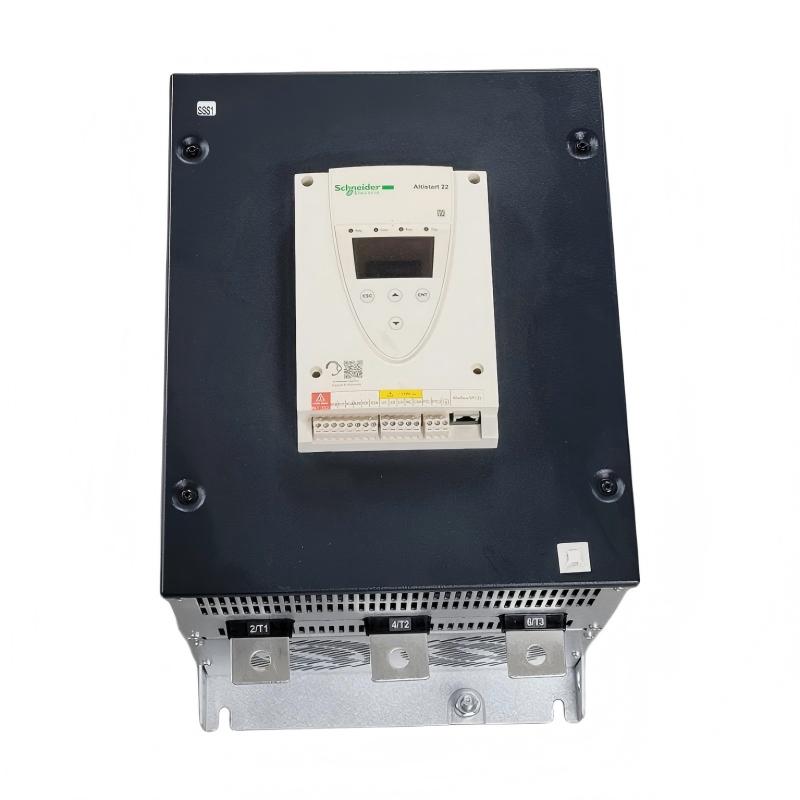
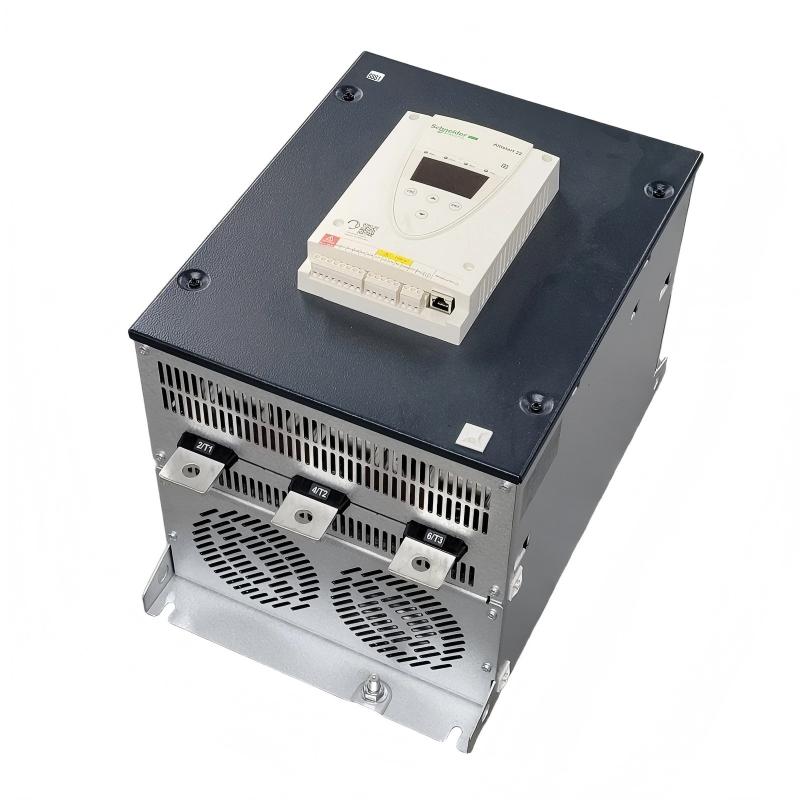
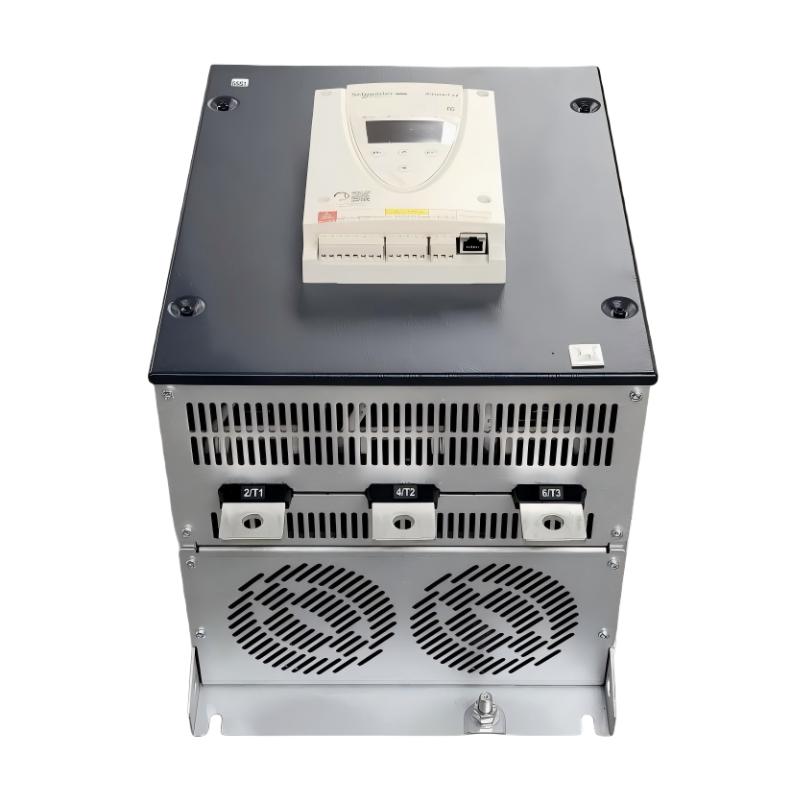
- Schneider
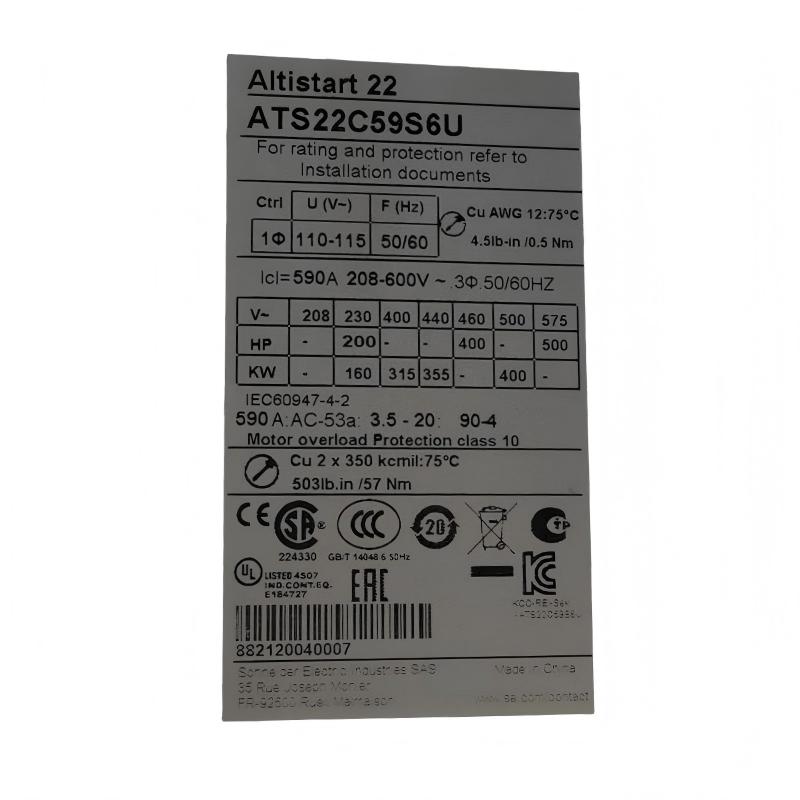
- ATS22C59S6U
- Soft Starter
- France
- 455 x 304 x 339.7 mm
- 50 kg
- Xiamen, China
- New & In Stock
- T/T, PayPal, Western Union
- 1 Year
- 1-3 Working Days
- DHL, UPS, TNT, FedEx and EMS.
- 24-Hour Service
- COO
- 76
Our advantage

Global Logistics
We have a 10-year logistics and express cooperation agreement, so our products can be shipped to any place in the world.

Brand new and original
Our products are imported in bulk from the place of origin. Because of the cooperative relationship, our products are all original and 100% new.

24-hour service
We provide 7*24 hours service to our customers. We will be there whenever you need us.

Price advantage
All our products are priced very favorably because we have our own warehouse and supply.
| Company Information | |||
| [email protected] | |||
| Mobile | +8615980777398 | ||
| +8615980777398 | |||
| 15980777398 |
Product Overview
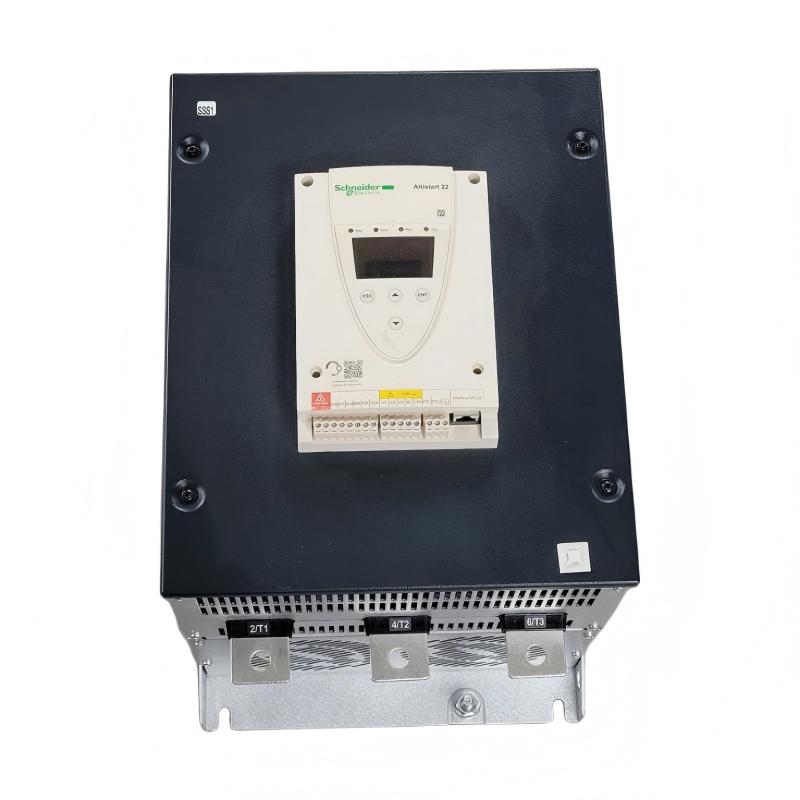
The Schneider ATS22C59S6U is a high-current Altistart 22 soft starter designed for controlled starting and stopping of three-phase asynchronous motors in large industrial applications. With a 590 A starter rating and a 110 V AC control circuit, this model is intended for high-power motor systems where direct-on-line starting can create excessive electrical current and mechanical stress.
Large motors often require several times their normal operating current when started directly from the electrical supply. This sudden current demand can create voltage disturbances in an industrial power network, especially when several large motors are connected to the same distribution system. At the mechanical level, direct starting can also apply a sudden torque load to shafts, couplings, gearboxes, belts, pumps, fans, and other driven equipment.
The ATS22C59S6U provides a controlled acceleration process that allows the motor to reach operating speed progressively. This makes the soft starter suitable for industrial equipment where smoother motor starting is required but continuous variable-speed control is not necessary.
The model belongs to the Schneider Altistart 22 product family and is designed for three-phase asynchronous motors. Its 110 V AC control voltage is an important identification feature of the S6U version and should be checked carefully when selecting a replacement or integrating the starter into an existing control cabinet.
The ATS22C59S6U has an IcL starter rating of 590 A for standard applications with the starter connected in the motor supply line. It supports high-power motor applications and can be used in systems such as large pumps, fans, compressors, conveyors, and industrial process machinery.
The supplied physical dimensions are approximately 455 × 304 × 339.7 mm, and the supplied product weight is approximately 50 kg. Because of its size and weight, cabinet structure, ventilation, cable routing, lifting, and maintenance access should be considered during installation planning.
Technical Specifications
| Parameter | Details |
|---|---|
| Manufacturer | Schneider Electric |
| Model | ATS22C59S6U |
| Product Family | Altistart 22 |
| Product Type | Soft Starter |
| Application | Three-Phase Asynchronous Motors |
| Number of Phases | 3 Phase |
| Rated Supply Voltage | 208…600 V AC |
| Supply Voltage Limits | 177…660 V |
| Control Circuit Voltage | 110 V AC |
| Control Frequency | 50/60 Hz |
| Starter Rating | 590 A |
| Factory Current Setting | 477 A |
| Starting Method | Torque-Controlled Start |
| Starting Current Limitation | Approximately 3.5 × In |
| Utilization Category | AC-53A |
| Internal Bypass | Yes |
| Communication Protocol | Modbus |
| Communication Interface | RS485 Multidrop |
| Communication Connector | RJ45 |
| Transmission Rate | 4800 / 9600 / 19200 bps |
| Maximum Installed Devices | 31 |
| Logic Inputs | 3 |
| Relay Outputs | 2 |
| PTC Probe Input | Yes |
| Cooling Method | Forced Convection |
| Protection Rating | IP00 |
| Installation Position | Vertical ±10° |
| Dimensions | 455 × 304 × 339.7 mm |
| Weight | 50 kg |
| Operating Temperature | -10…40 °C without derating |
| Storage Temperature | -25…70 °C |
| Standard | EN/IEC 60947-4-2 |
What Is the Schneider ATS22C59S6U?
The Schneider ATS22C59S6U is a high-power industrial soft starter used to control the acceleration and stopping of three-phase asynchronous motors.
Its main purpose is to provide a smoother alternative to direct-on-line motor starting. When a large motor is connected directly to the supply, the initial current can become several times higher than the motor’s normal running current. At the same time, the sudden production of motor torque can place considerable stress on the mechanical transmission.
The ATS22C59S6U controls the motor-starting process so that acceleration can occur progressively. This can reduce sudden torque transfer and improve the starting behavior of large motor-driven machines.
The soft starter is particularly useful when an application requires controlled starting and stopping but does not require continuous motor speed adjustment. This makes it different from a variable frequency drive.
A VFD changes the motor’s operating frequency and voltage to provide continuous speed control. The ATS22C59S6U, in contrast, is primarily designed to manage the transition between stopped and running conditions while allowing the motor to operate normally at line frequency after starting.
Function and Working Principle
The basic motor-control structure can be represented as:
Three-Phase Supply → Circuit Protection → ATS22C59S6U → Three-Phase Motor → Mechanical Load
When the start command is received, the ATS22C59S6U begins its configured acceleration sequence. The starter controls the electrical conditions applied to the motor instead of allowing the motor to experience the full impact of direct-on-line starting immediately.
The Altistart 22 uses torque-controlled starting with current limitation. The starting current can be limited to approximately 3.5 times the configured motor current, depending on the selected parameters and operating conditions.
This allows the motor to accelerate progressively. The actual acceleration time and motor response depend on the motor characteristics, load inertia, starting torque requirement, configured parameters, and application conditions.
After the motor reaches normal running conditions, the integrated bypass function can be used to establish the normal operating path. This reduces the continuous power dissipation associated with the soft-starting stage during normal motor operation.
The ATS22C59S6U can also provide controlled stopping. In applications such as pumps, fans, and conveyors, a controlled stop may be useful when an abrupt motor shutdown could create undesirable process or mechanical effects.
The unit also supports Modbus communication over RS485. This allows the soft starter to exchange operating and diagnostic information with compatible PLCs, automation controllers, and supervisory systems.
Typical Motor Power Applications
The ATS22C59S6U is a 590 A class soft starter intended for large motor applications. Motor power capability depends on supply voltage and application conditions.
| Motor Supply | Typical Motor Power Reference |
|---|---|
| 230 V AC | Up to approximately 200 hp |
| 460 V AC | Up to approximately 400 hp |
| 575 V AC | Up to approximately 500 hp |
| 380…440 V AC | High-Power Industrial Motor Applications |
These values are application references rather than a replacement for proper engineering selection. Motor full-load current, starting duty, load inertia, ambient temperature, operating frequency, installation altitude, and other application conditions should be evaluated before installation.
Role in Industrial Control Systems
The ATS22C59S6U can operate as the motor-starting component within a larger industrial automation system. It can be connected to a PLC, HMI, circuit breaker, contactor, motor protection equipment, and process sensors.
A typical control system may include:
- PLC controller
- HMI operator interface
- ATS22C59S6U soft starter
- Three-phase asynchronous motor
- Incoming circuit breaker
- Motor protection equipment
- Isolation or switching contactor
- Emergency stop circuit
- Process pressure sensors
- Flow sensors
- Modbus RS485 communication network
- 110 V AC control power source
The PLC can manage the process sequence while the ATS22C59S6U manages the motor-starting characteristics. Status and diagnostic information can be transferred back to the control system through hardwired signals or Modbus communication.
For example, in a large pumping station, the PLC may monitor tank level, pressure, and flow. When a pump needs to start, the PLC can issue the appropriate command to the ATS22C59S6U. The soft starter then controls motor acceleration while the PLC continues to supervise the process.
Industrial Applications
Large Pump Systems
Large pumps can have high motor power and significant hydraulic inertia. Direct starting can produce substantial current demand and mechanical stress. The ATS22C59S6U can provide controlled acceleration for appropriately selected pumping applications.
Typical applications can include water treatment, industrial water supply, cooling-water systems, wastewater equipment, process pumping, and utility pump stations.
Cooling Tower Fans
Large cooling tower fans often use high-power motors with significant rotational inertia. Controlled acceleration can help reduce the sudden torque applied to fan shafts, couplings, and transmission components.
Industrial Ventilation
Large exhaust and ventilation systems can require powerful motors. The ATS22C59S6U can be used where smooth motor starting is required without continuous variable-speed operation.
Compressors
Industrial compressors can place significant demands on electrical systems during startup. A high-current soft starter can help manage the motor-starting process when the motor and compressor configuration are suitable.
Conveyor Systems
Heavy conveyors may have large mechanical inertia and substantial loads. A controlled acceleration profile can reduce sudden stress on belts, couplings, gearboxes, and drive components.
Industrial Process Machinery
Large mixers, blowers, agitators, crushers, and other process machines can use soft starters when controlled acceleration is required and continuous speed control is not a primary requirement.
HVAC Equipment
High-capacity HVAC pumps, fans, chillers, and air-handling equipment can use soft starters to improve motor-starting behavior and reduce the sudden electrical impact of large motor startup.
Installation and System Integration
Correct installation is essential for safe and reliable operation of the ATS22C59S6U. Because this is a high-current motor starter, power wiring, protection, cooling, control voltage, and mechanical mounting all require careful consideration.
Verify Motor Nameplate Data
Before selecting or installing the starter, verify the motor’s rated voltage, full-load current, frequency, power, connection arrangement, starting duty, and mechanical load.
The motor’s rated current should be compared with the soft starter’s applicable current rating. Selecting a starter only by horsepower can lead to an incorrect application.
Verify the Motor Supply Voltage
The ATS22C59S6U is designed for three-phase AC motor supply applications in the approximately 208…600 V range. The actual site voltage should be verified before the unit is energized.
Check the Control Voltage
The S6U version uses 110 V AC control voltage. This is one of the most important identification characteristics of the ATS22C59S6U.
It should not be assumed that another ATS22 model with the same current rating has the same control voltage. The complete model number should always be checked before replacement.
Install Suitable Protection
The complete motor-control system should include appropriate short-circuit protection, isolation, motor protection, grounding, and switching equipment.
Protection selection should be based on the motor, soft starter, electrical distribution system, installation environment, and applicable engineering requirements.
Mechanical Installation
The ATS22C59S6U has supplied dimensions of approximately 455 × 304 × 339.7 mm and a supplied weight of approximately 50 kg.
The mounting structure must therefore be capable of safely supporting the equipment. Sufficient clearance should also be provided for power cables, control wiring, ventilation, inspection, and maintenance.
Cooling and Cabinet Design
The ATS22C59S6U uses forced-convection cooling. The cabinet should provide sufficient airflow to prevent excessive heat accumulation.
Other heat-producing components installed in the same cabinet should be included in the cabinet thermal calculation. High ambient temperatures may require current derating.
Power Wiring
Before energizing the system, verify the incoming phase connections, motor connections, cable sizing, terminal tightness, grounding, and phase sequence.
Because this is a high-current starter, power connections should be installed and inspected carefully.
Control Wiring
The ATS22C59S6U provides three logic inputs and two relay outputs. These can be incorporated into the PLC control architecture for start, stop, status, alarm, and fault functions.
Modbus Integration
The RS485 Modbus interface can be used when the soft starter needs to communicate with a PLC or supervisory control system. The communication address, transmission rate, and network wiring must be configured consistently throughout the RS485 network.
Commissioning
Initial commissioning should include checking the control voltage, incoming supply, motor wiring, motor rotation direction, acceleration behavior, stopping behavior, motor current, alarm status, and communication functions.
The motor should first be tested under controlled conditions before the equipment is placed into full production service.
Compatible System Components
| Component | Function |
|---|---|
| ATS22C59S6U | High-Current Motor Starting and Stopping |
| Three-Phase Asynchronous Motor | Mechanical Power Generation |
| Circuit Breaker | Short-Circuit Protection and Isolation |
| Motor Protection Device | Motor Protection |
| Contactor | Switching and Isolation |
| PLC | Automatic Control Logic |
| HMI | Operator Monitoring and Control |
| Modbus RS485 Network | Communication and Diagnostics |
| Process Sensors | Process Feedback |
| Emergency Stop Circuit | Safety Shutdown |
| 110 V AC Control Supply | Control Circuit Power |
Recommended Alternative Models
When selecting a replacement for the ATS22C59S6U, the complete electrical specification should be compared rather than selecting a model based only on current rating or physical dimensions.
The 110 V AC control circuit is particularly important. A model with the same 590 A rating but a different control voltage may not be a direct electrical replacement.
| Model | Product Type | Key Feature | Application |
|---|---|---|---|
| ATS22C59S6U | Soft Starter | 590 A, 110 V Control | Large Industrial Motors |
| ATS22C48S6U | Soft Starter | 480 A Class, 110 V Control | Large Motor Applications |
| ATS22C59S6 | Soft Starter | 590 A Class, Different Control Configuration | Large Industrial Motors |
| ATS22C59S6U Replacement | Soft Starter | Modern Replacement Platform | New Industrial Installations |
| ATS430C59S6 | Soft Starter | 590 A, 208…600 V AC, 110…230 V AC Control | Modern Replacement Applications |
| Altistart 22 Series | Soft Starter Family | Multiple Current and Control Options | Industrial Motor Control |
Key Advantages
- High-current 590 A industrial soft starter
- Designed for three-phase asynchronous motors
- 110 V AC control circuit
- Supports approximately 208…600 V AC motor supply applications
- Torque-controlled starting
- Starting current limitation of approximately 3.5 × In
- Internal bypass function
- Modbus communication capability
- RS485 multidrop communication interface
- Three logic inputs
- Two relay outputs
- PTC probe input
- Forced-convection cooling
- Suitable for PLC-based industrial motor control
- Suitable for pumps, fans, compressors, conveyors, and process machinery
- Supports controlled motor acceleration and stopping
- Large industrial motor application capability
- Supplied dimensions of approximately 455 × 304 × 339.7 mm
- Supplied weight of approximately 50 kg
Technical FAQs
What is the Schneider ATS22C59S6U?
The Schneider ATS22C59S6U is a high-current Altistart 22 soft starter designed for controlled starting and stopping of three-phase asynchronous motors.
What is the current rating of the ATS22C59S6U?
The ATS22C59S6U has an IcL starter rating of 590 A for standard applications with the starter connected in the motor supply line.
What is the control voltage of the ATS22C59S6U?
The ATS22C59S6U uses a 110 V AC control circuit at 50/60 Hz.
What supply voltage does the ATS22C59S6U support?
The model supports three-phase AC motor supply applications in the approximately 208…600 V AC range.
What type of motors can use the ATS22C59S6U?
The ATS22C59S6U is designed for compatible three-phase asynchronous motors. The actual motor current, supply voltage, starting duty, and load characteristics must be checked before application.
Does the ATS22C59S6U have an internal bypass?
Yes. The ATS22C59S6U includes an internal bypass function that can be used after the motor reaches normal operating conditions.
Does the ATS22C59S6U support Modbus?
Yes. The soft starter provides Modbus communication through an RS485 multidrop interface with an RJ45 connection.
Can the ATS22C59S6U be controlled by a PLC?
Yes. The soft starter can be integrated into PLC-based systems through its three logic inputs, two relay outputs, and Modbus communication interface.
What are the typical applications for the ATS22C59S6U?
Typical applications include large pumps, cooling tower fans, industrial ventilation systems, compressors, conveyors, HVAC equipment, mixers, and other high-power industrial machinery.
Is the ATS22C59S6U a variable frequency drive?
No. The ATS22C59S6U is a soft starter. It is designed primarily to control motor acceleration and stopping rather than provide continuous variable-speed operation.
What are the dimensions of the ATS22C59S6U?
The supplied dimensions are approximately 455 × 304 × 339.7 mm.
How much does the ATS22C59S6U weigh?
The supplied product weight is approximately 50 kg.
What cooling method does the ATS22C59S6U use?
The ATS22C59S6U uses forced convection cooling. Proper cabinet ventilation is therefore important for reliable operation.
What is the replacement for the ATS22C59S6U?
For replacement planning, the ATS430C59S6 is a modern Schneider soft starter option in the same 590 A class. The complete application, motor data, control voltage, mounting arrangement, and system requirements should be checked before replacement.
What should be checked before replacing an ATS22C59S6U?
Motor rated current, motor supply voltage, control voltage, starting duty, load characteristics, protection requirements, cabinet dimensions, cooling conditions, control wiring, communication requirements, and the replacement model’s installation requirements should all be checked.
Conclusion
The Schneider ATS22C59S6U Soft Starter is a high-capacity Altistart 22 motor-control device designed for large three-phase asynchronous motor applications. With a 590 A starter rating and 110 V AC control circuit, it is intended for demanding industrial systems where controlled motor starting is required.
The soft starter provides torque-controlled acceleration, current limitation, internal bypass, and Modbus RS485 communication. These features allow it to operate as part of a broader industrial automation system containing PLCs, HMIs, protection devices, process sensors, and motor-control equipment.
The ATS22C59S6U is particularly suitable for large pumps, fans, compressors, conveyors, HVAC equipment, and industrial process machinery. By controlling the motor-starting sequence, it can help reduce sudden electrical current demand and mechanical torque during acceleration.
The supplied dimensions of approximately 455 × 304 × 339.7 mm and weight of approximately 50 kg should be considered during cabinet design and equipment installation. Because of its high current capacity and physical size, appropriate mounting support, ventilation, cable routing, and maintenance access are essential.
For engineers, system integrators, OEM machine builders, and maintenance teams, the 110 V control voltage is one of the most important identification characteristics of the ATS22C59S6U. It should be verified carefully when replacing an existing starter or comparing it with other ATS22 models.
For replacement projects, the newer ATS430C59S6 can be evaluated as a successor option for the ATS22C59S6U. However, replacement should always be based on a complete comparison of motor current, supply voltage, control voltage, application duty, communication requirements, dimensions, wiring, and commissioning parameters.
When correctly selected and integrated, the Schneider ATS22C59S6U provides a robust solution for controlling the starting and stopping of large industrial motors while supporting integration with conventional PLC and industrial communication architectures.