

ProductPRODUCT
Featured products
Contact Us
- Schneider
- ATS22C17Q
- Soft Starter
- France
- 356 x 150 x 229.5 mm
- 18 kg
- Xiamen, China
- New & In Stock
- T/T, PayPal, Western Union
- 1 Year
- 1-3 Working Days
- DHL, UPS, TNT, FedEx and EMS.
- 24-Hour Service
- COO
- 49
Our advantage

Global Logistics
We have a 10-year logistics and express cooperation agreement, so our products can be shipped to any place in the world.

Brand new and original
Our products are imported in bulk from the place of origin. Because of the cooperative relationship, our products are all original and 100% new.

24-hour service
We provide 7*24 hours service to our customers. We will be there whenever you need us.

Price advantage
All our products are priced very favorably because we have our own warehouse and supply.
| Company Information | |||
| [email protected] | |||
| Mobile | +8615980777398 | ||
| +8615980777398 | |||
| 15980777398 |
Product Overview
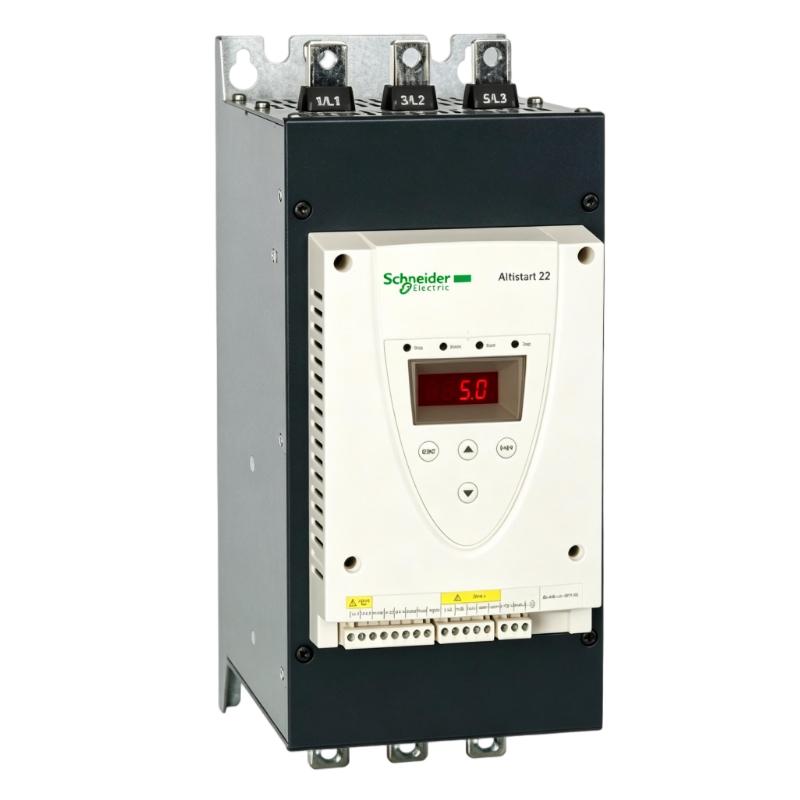
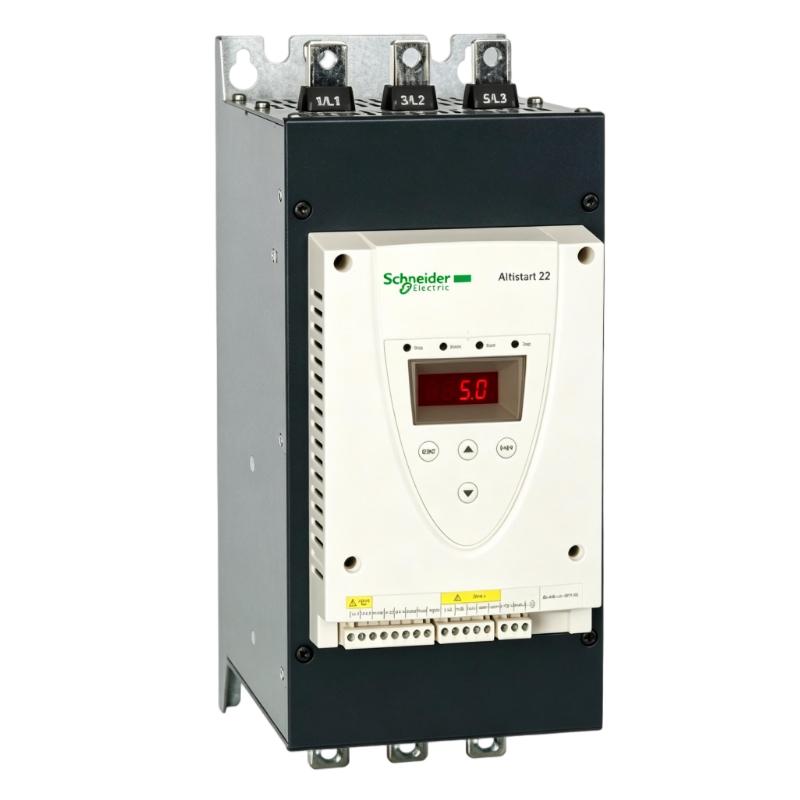
The Schneider ATS22C17Q is a soft starter designed to provide controlled starting and stopping for three-phase industrial motors. As part of the Schneider Altistart 22 family, it is intended for applications where reducing motor starting stress, limiting starting current, and improving mechanical operating conditions are important.
When a conventional motor is connected directly to the power supply, it can draw a high starting current and produce a sudden torque response. In some machines, this abrupt start can create mechanical shock, voltage disturbances, belt stress, or excessive load on couplings and gearboxes. A soft starter provides a controlled voltage ramp so the motor can accelerate more progressively.
The ATS22C17Q is therefore positioned between the incoming electrical supply and the motor within an appropriate motor-control architecture. Instead of applying full motor voltage immediately, the soft starter manages the motor starting process according to the configured operating parameters.
This type of motor control is particularly useful for pumps, fans, compressors, conveyors, and other rotating equipment where smooth acceleration and controlled stopping are more important than continuously varying motor speed.
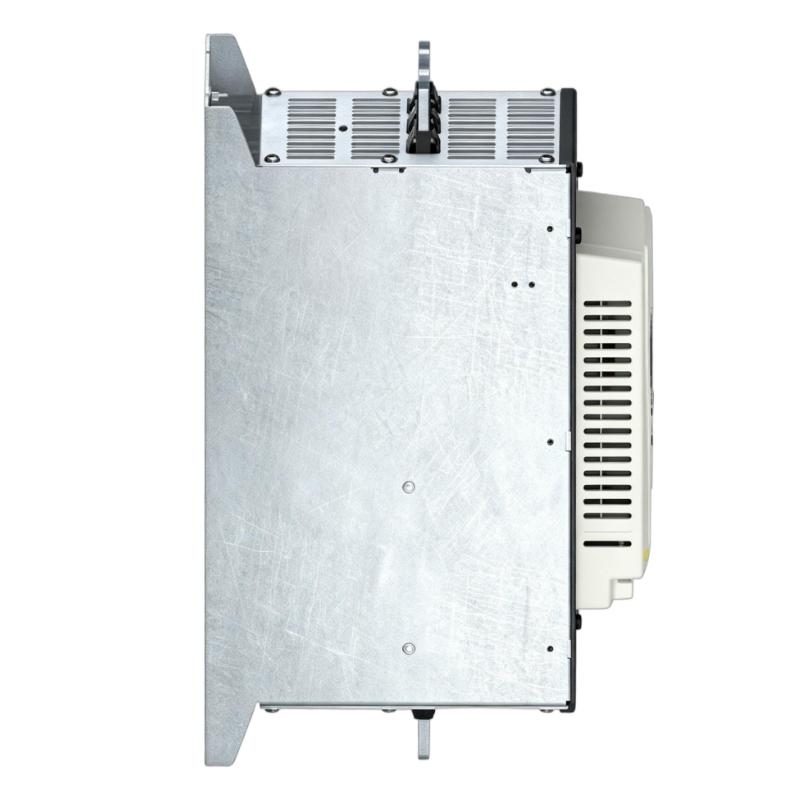
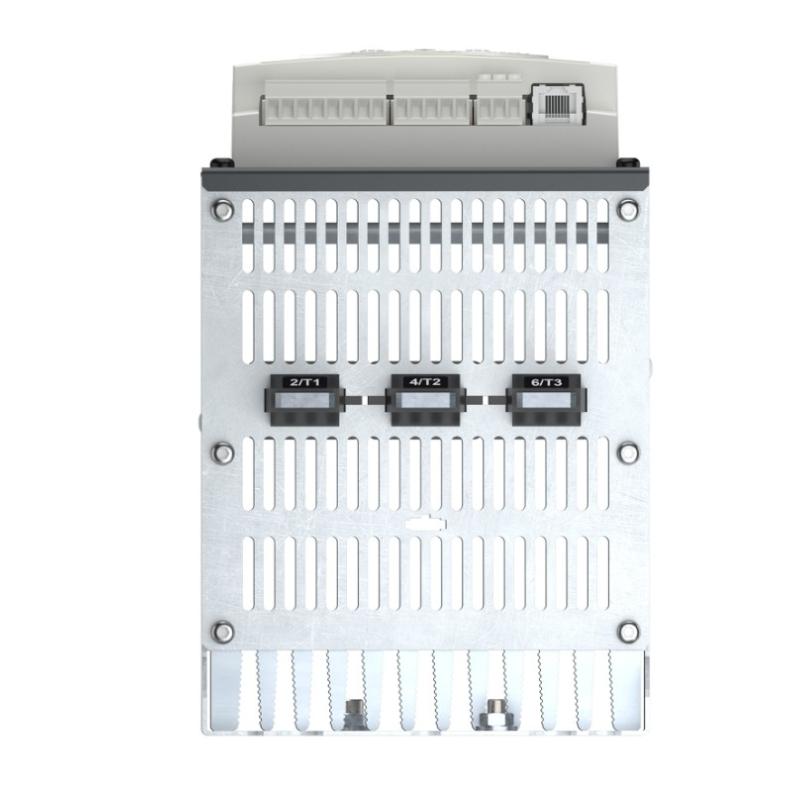
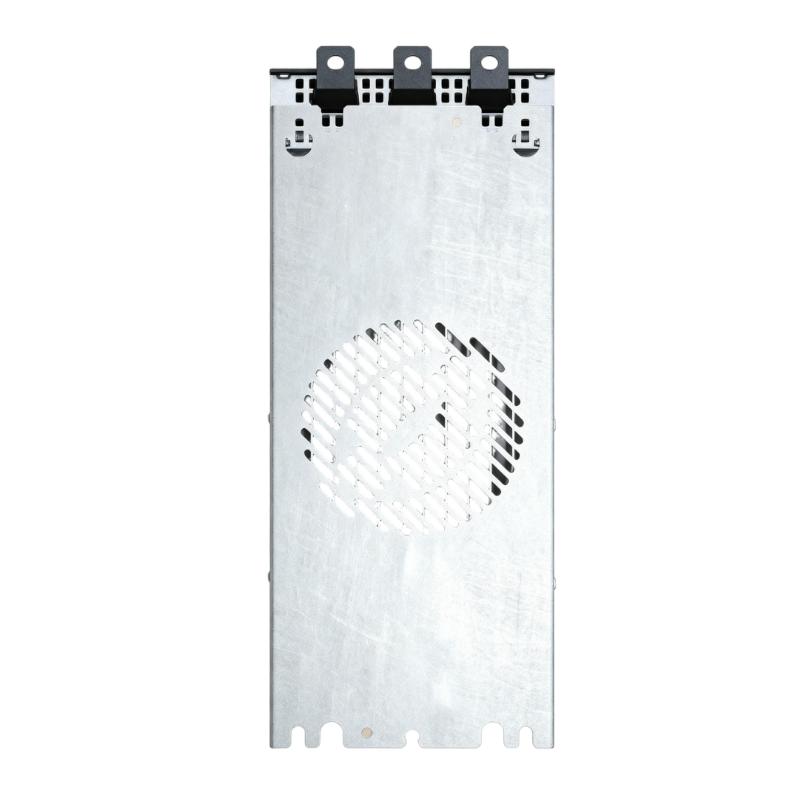
The supplied physical dimensions of the Schneider ATS22C17Q are approximately 356 × 150 × 229.5 mm, with a supplied weight of approximately 18 kg. Its relatively substantial enclosure size and weight reflect its role as an industrial motor-control device intended for installation inside suitable electrical cabinets or control equipment.
Technical Specifications
| Parameter | Details |
|---|---|
| Manufacturer | Schneider Electric |
| Model | ATS22C17Q |
| Product Family | Altistart 22 |
| Product Type | Soft Starter |
| Main Function | Controlled Motor Starting and Stopping |
| Motor Application | Industrial Three-Phase Motors |
| Control Method | Soft Starting / Soft Stopping |
| Typical Loads | Pumps, Fans, Conveyors, Compressors and Machinery |
| Dimensions | 356 × 150 × 229.5 mm |
| Weight | 18 kg |
| Installation | Electrical Control Cabinet / Motor Control Panel |
| Application Area | Industrial Motor Control |
| Primary Benefit | Reduced Starting Stress and Controlled Acceleration |
What Is the Schneider ATS22C17Q?
The Schneider ATS22C17Q is an industrial motor soft starter. Its purpose is to control the way an electric motor starts and, depending on the configured application, stops.
A traditional direct-on-line starter applies the available supply voltage directly to the motor. While this method is simple, the motor can experience a large inrush current and high starting torque. For machines with significant inertia or sensitive mechanical transmission components, this sudden acceleration can be undesirable.
A soft starter addresses this issue by controlling the voltage applied to the motor during the starting period. The motor voltage is progressively increased according to the selected ramp and operating parameters, allowing the motor to accelerate more smoothly.
The ATS22C17Q should not be confused with a variable frequency drive. A soft starter is primarily intended to manage the motor starting and stopping process. It is not normally selected when an application requires continuous speed control across a wide operating range.
How the ATS22C17Q Works
The operating principle of a soft starter is based on controlling the electrical power supplied to the motor during acceleration.
A simplified motor-control sequence can be represented as:
Incoming Power → Protection → ATS22C17Q Soft Starter → Motor → Mechanical Load
When a start command is issued, the soft starter begins the configured starting sequence. Instead of immediately applying full electrical stress to the motor, it controls the voltage during acceleration.
As the motor speed increases, the applied voltage is progressively increased until the motor reaches its normal operating condition. This controlled acceleration can reduce the mechanical shock associated with direct starting.
For suitable applications, controlled stopping can also help reduce sudden deceleration. This is especially useful in systems where abrupt stopping could create pressure surges, belt movement, product displacement, or mechanical shock.
The exact settings should always be selected according to the motor nameplate information, load characteristics, starting requirements, and electrical system design.
Why Use a Soft Starter?
Motor starting can be one of the most demanding operating events in an industrial electrical system. A large motor may draw several times its normal operating current when started directly from the supply.
This can cause several practical problems:
- High starting current
- Voltage disturbances
- Mechanical shock
- High starting torque
- Stress on couplings and gearboxes
- Stress on belts and drive systems
- Water hammer in some pump systems
- Accelerated mechanical wear
A correctly selected soft starter can help reduce these effects by providing a more controlled acceleration profile.
Role in Industrial Motor Control Systems
The ATS22C17Q can act as the motor-starting control element within a larger industrial electrical system. It is commonly installed together with upstream protection, isolation equipment, contactors or bypass arrangements where required, motor overload protection, control circuits, and the motor itself.
A typical system may contain:
- Main circuit breaker
- Motor protection equipment
- Control transformer or control power supply
- Soft starter
- Bypass or switching equipment where required
- Three-phase motor
- PLC or control relay
- Start and stop pushbuttons
- Emergency stop circuit
- HMI or supervisory control system
The PLC does not necessarily need to perform the actual motor starting function itself. Instead, it can provide the start or stop command to the motor-control circuit while the soft starter manages the electrical starting sequence.
Industrial Applications
Pump Systems
Pumps are one of the most common applications for soft starters. Controlled acceleration and stopping can help reduce mechanical stress and, in suitable systems, reduce sudden hydraulic changes.
Conveyor Systems
Conveyor belts can experience mechanical shock if a motor starts abruptly. A controlled start can help the belt accelerate more smoothly, particularly when carrying sensitive or heavy materials.
Fans and Blowers
Large fans and blowers can have significant rotational inertia. A soft starter can provide controlled acceleration without requiring continuous variable-speed operation.
Compressors
Industrial compressors may require controlled motor starting to manage electrical demand and mechanical stress. Proper motor and soft-starter selection is important because compressor loading conditions vary between applications.
Material Handling Equipment
Industrial handling systems may use motors connected to gearboxes, conveyors, hoists, or other mechanical transmission systems. Smooth starting can help reduce sudden loading of mechanical components.
Industrial Machinery
OEM equipment manufacturers can use soft starters where a motor needs controlled starting but continuous variable-speed control is not required.
HVAC Equipment
Large ventilation and air-handling systems may use motor soft starters to provide controlled acceleration for fans and other rotating equipment.
Installation and System Integration
Proper installation is essential for safe and reliable operation of any industrial motor-control device. The ATS22C17Q should be integrated according to the electrical characteristics of the motor, supply system, protection architecture, and application.
Verify Motor Information
Before installation, verify the motor nameplate data, including voltage, current, frequency, connection arrangement, and motor power. The soft starter must be appropriately matched to the motor and application.
Check Incoming Power
The incoming supply must be compatible with the selected motor-control system. Supply voltage, phase arrangement, frequency, fault level, and protection requirements should be reviewed during system design.
Provide Appropriate Protection
Upstream protective equipment should be selected according to the complete installation. Protection must consider short-circuit conditions, overload requirements, motor characteristics, and applicable electrical standards.
Cabinet Installation
With supplied dimensions of 356 × 150 × 229.5 mm and a weight of approximately 18 kg, the ATS22C17Q requires appropriate mechanical support and adequate cabinet space. Sufficient clearance should be provided for ventilation, wiring, inspection, and maintenance.
Motor Wiring
The motor connections should be checked carefully before energization. Incorrect phase wiring or incorrect motor configuration can cause abnormal operation and should be corrected before commissioning.
Control Wiring
Start, stop, fault, and other control signals should be connected according to the application design. When a PLC is used, the control system should be tested without immediately placing the motor under full production load.
Parameter Configuration
Starting ramp, stopping characteristics, current-related settings, and protection functions should be configured according to the motor and load requirements.
Commissioning
During commissioning, first verify the motor direction and unloaded or low-load starting behavior where practical. The acceleration profile should then be checked under normal operating conditions.
Compatible System Components
| Component | Function |
|---|---|
| ATS22C17Q | Motor Soft Starting and Stopping |
| Three-Phase Motor | Mechanical Power Generation |
| Circuit Breaker | Electrical Protection and Isolation |
| Motor Protection Equipment | Motor and Circuit Protection |
| Contactor | Motor Switching and Isolation |
| Bypass Contactor | Post-Start Motor Connection Where Required |
| PLC | Automatic Start/Stop Control |
| HMI | Operator Monitoring and Control |
| Control Power Supply | Control Circuit Power |
| Emergency Stop Circuit | Safety Shutdown |
| Motor Cable | Power Connection to Motor |
Recommended Alternative Models
When selecting an alternative soft starter, the motor’s rated current, voltage, starting method, load type, starting frequency, environmental conditions, cabinet requirements, and control architecture should all be considered. A different model should not be treated as a direct replacement solely because it belongs to the same product family.
| Model | Product Type | Key Feature | Application |
|---|---|---|---|
| ATS22C17Q | Soft Starter | Controlled Motor Starting | Industrial Motors |
| ATS22C14Q | Soft Starter | Compact Motor Starting Control | Pumps and Machinery |
| ATS22C21Q | Soft Starter | Higher Motor Starting Capacity | Industrial Equipment |
| ATS22C25Q | Soft Starter | Controlled Acceleration | Pumps and Fans |
| ATS22C32Q | Soft Starter | Industrial Motor Control | Heavy-Duty Applications |
| ATS22 Series | Soft Starter Family | Multiple Motor Ratings | Industrial Automation |
Key Advantages
- Designed for controlled starting of industrial motors
- Helps reduce the mechanical shock associated with direct motor starting
- Can reduce the impact of high starting current when correctly applied
- Suitable for pumps, fans, conveyors, compressors, and machinery
- Can support controlled stopping for suitable applications
- Can be integrated into PLC-based motor control systems
- Suitable for industrial control cabinet installations
- Supplied dimensions of approximately 356 × 150 × 229.5 mm
- Supplied weight of approximately 18 kg
- Suitable for applications where variable-speed control is not required
Technical FAQs
What is the Schneider ATS22C17Q?
The Schneider ATS22C17Q is an industrial soft starter designed to provide controlled starting and stopping for compatible motor applications.
What is the main purpose of the ATS22C17Q?
Its main purpose is to control the motor starting process, helping provide smoother acceleration and reduce the electrical and mechanical stresses associated with direct starting.
Is the ATS22C17Q a variable frequency drive?
No. A soft starter and a variable frequency drive perform different functions. A soft starter primarily manages motor starting and stopping, while a variable frequency drive is normally selected when continuous motor speed control is required.
Where can the ATS22C17Q be used?
Typical applications include pumps, fans, conveyors, compressors, material-handling equipment, HVAC machinery, and other industrial motor-driven systems.
Can the ATS22C17Q be controlled by a PLC?
Yes. A PLC can be integrated into the motor-control architecture to provide start, stop, status, alarm, and other control functions according to the system design.
Why use a soft starter instead of direct-on-line starting?
A soft starter can provide a more controlled acceleration profile, which may reduce mechanical shock and limit the impact of high starting current compared with direct-on-line starting.
Does a soft starter continuously control motor speed?
No. A conventional soft starter is primarily intended for the starting and stopping process. If continuous speed adjustment is required, a variable frequency drive may be more appropriate.
What are the dimensions of the ATS22C17Q?
The supplied dimensions are approximately 356 × 150 × 229.5 mm.
What is the weight of the ATS22C17Q?
The supplied weight is approximately 18 kg.
What should be checked if the motor does not start?
Check the incoming power, control circuit, motor connections, protective devices, start command, soft-starter status, configured parameters, and motor condition. A systematic check should be performed before replacing the soft starter.
What can cause excessive motor starting time?
Possible causes include incorrect starting parameters, excessive mechanical load, motor problems, supply conditions, incorrect motor selection, or an application that requires a different starting method.
Conclusion
The Schneider ATS22C17Q Soft Starter is an industrial motor-control device designed to provide controlled acceleration and stopping for compatible three-phase motor applications. By managing the motor starting process rather than applying the full supply abruptly, it can help reduce starting stress and improve the mechanical behavior of connected equipment.
The supplied dimensions are approximately 356 × 150 × 229.5 mm, with a supplied weight of approximately 18 kg. These physical characteristics should be considered when designing the control cabinet, mounting structure, ventilation arrangement, and maintenance access.
The ATS22C17Q can be integrated with circuit breakers, motor protection equipment, contactors, PLCs, HMIs, motors, and other control components to create a complete industrial motor-control system. Typical applications include pumps, fans, conveyors, compressors, material-handling equipment, HVAC systems, and OEM machinery.
For system integrators, electrical engineers, maintenance technicians, and machine builders, correct selection and commissioning are essential. Motor nameplate information, load characteristics, starting requirements, protection settings, cabinet conditions, and control wiring should all be verified before the equipment is placed into normal service.