

ProductPRODUCT
Featured products
Contact Us
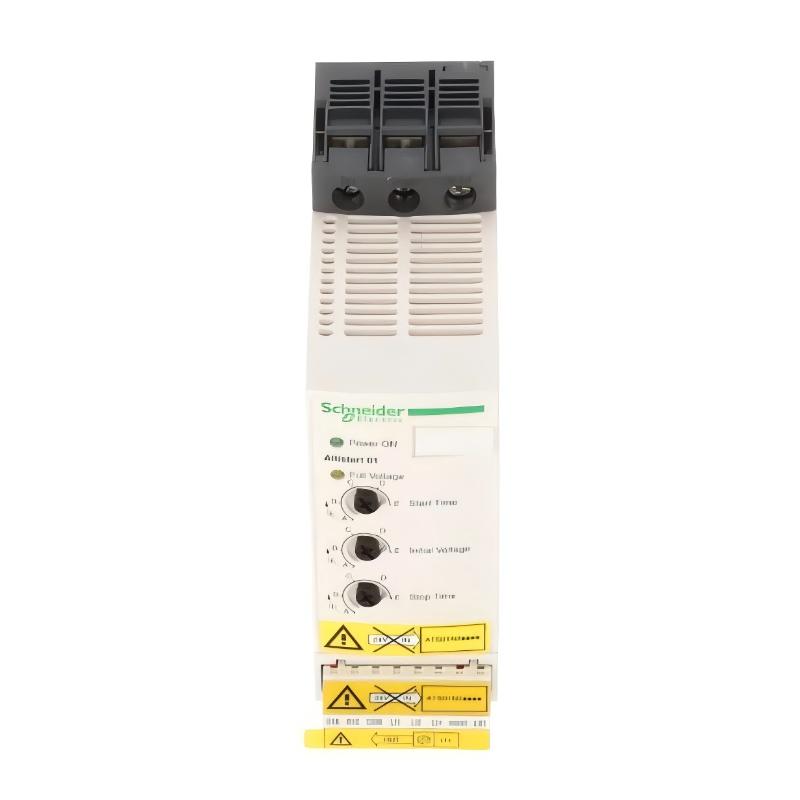
- Schneider
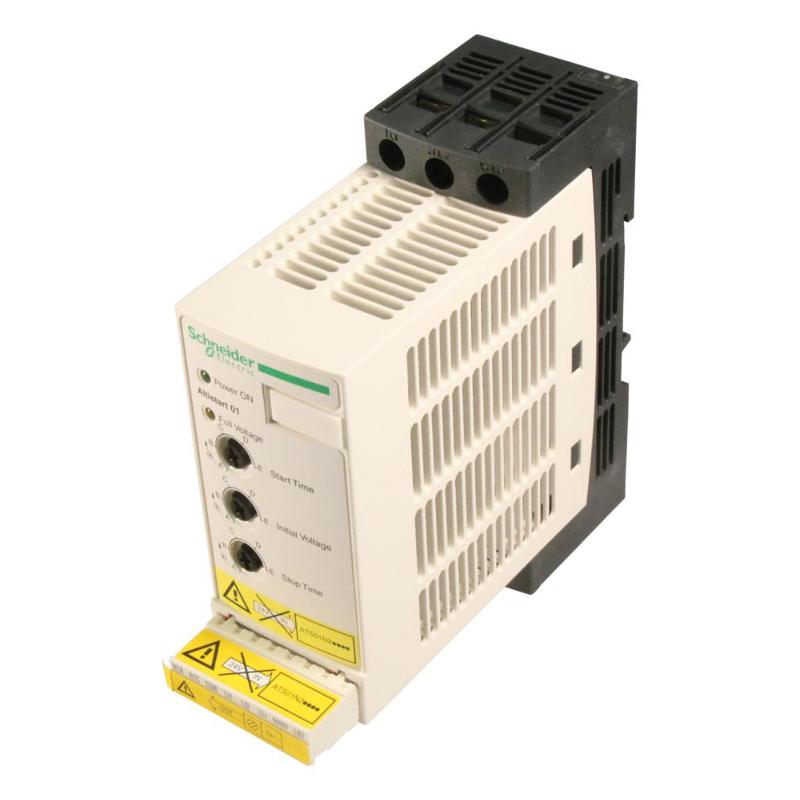
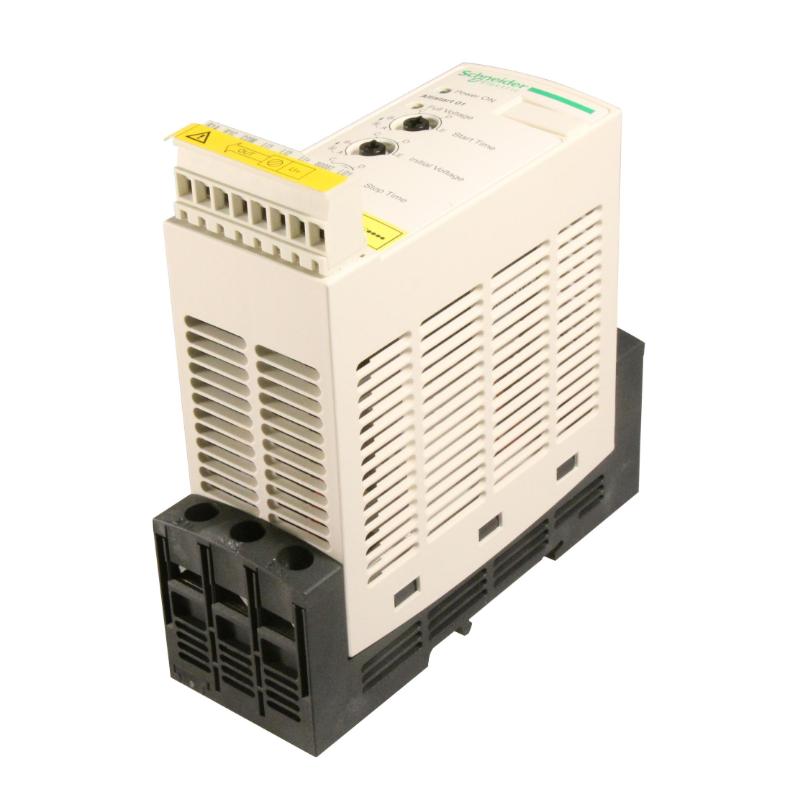
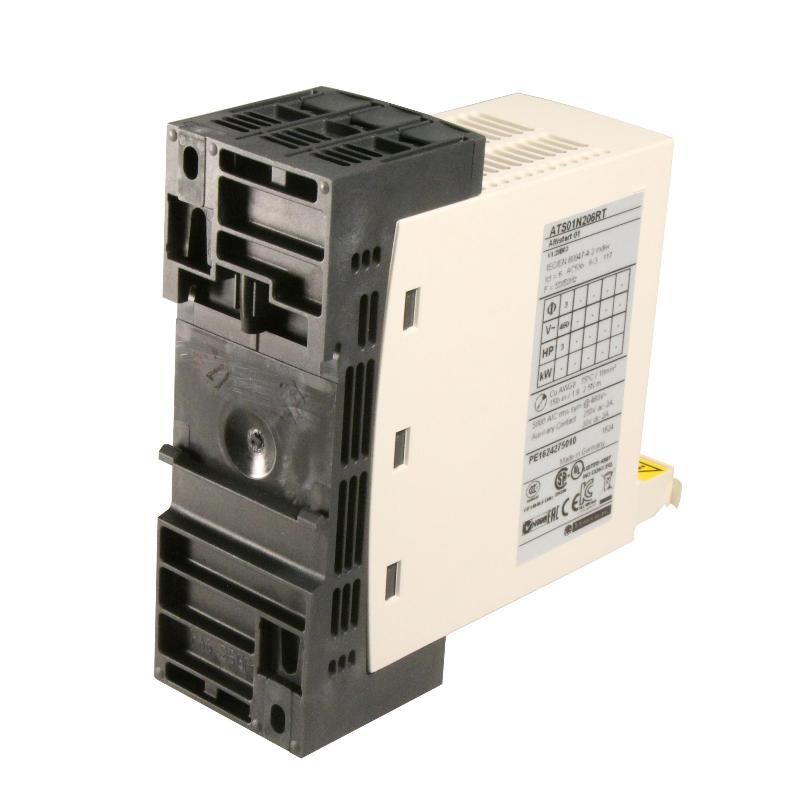
- ATS01N206RT
- Soft Starter For Asynchronous Motor
- France
- 124 × 45 × 131 mm
- 0.42 kg
- Xiamen, China
- New & In Stock
- T/T, PayPal, Western Union
- 1 Year
- 1-3 Working Days
- DHL, UPS, TNT, FedEx and EMS.
- 24-Hour Service
- COO
- 63
Our advantage

Global Logistics
We have a 10-year logistics and express cooperation agreement, so our products can be shipped to any place in the world.

Brand new and original
Our products are imported in bulk from the place of origin. Because of the cooperative relationship, our products are all original and 100% new.

24-hour service
We provide 7*24 hours service to our customers. We will be there whenever you need us.

Price advantage
All our products are priced very favorably because we have our own warehouse and supply.
| Company Information | |||
| [email protected] | |||
| Mobile | +8615980777398 | ||
| +8615980777398 | |||
| 15980777398 |
Product Overview
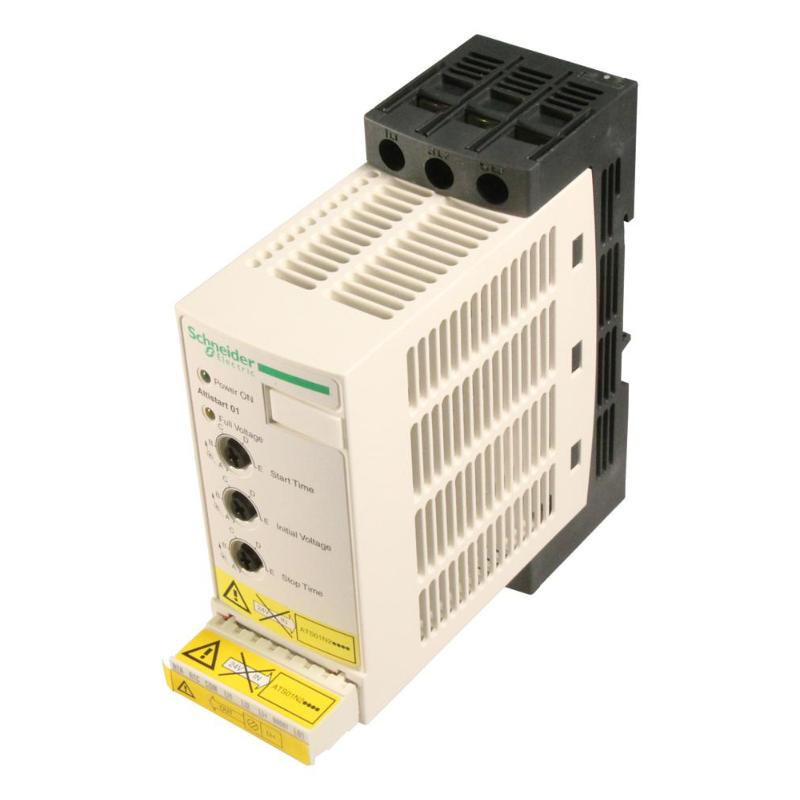
The Schneider ATS01N206RT Soft Starter for Asynchronous Motor is a compact motor starting device designed to provide smoother acceleration for asynchronous motors. It is used in motor control applications where a direct connection to the power supply could result in high starting current, sudden torque, or unnecessary mechanical stress.
An asynchronous motor can draw considerably more current during startup than during normal operation. At the same time, the sudden development of motor torque can place additional load on couplings, belts, gearboxes, pumps, fans, and other connected equipment.
The ATS01N206RT provides a controlled starting process by progressively managing the voltage applied to the motor. This allows the motor to accelerate in a more controlled manner instead of receiving the full starting condition immediately.
The unit belongs to the Schneider Altistart 01 family and is intended for straightforward motor starting applications. Unlike a variable frequency drive, its primary purpose is not continuous speed regulation but controlled motor starting and associated motor control functions.
With dimensions of 124 × 45 × 131 mm and a stated weight of 0.42 kg, the ATS01N206RT maintains a compact form factor suitable for industrial control cabinets where installation space needs to be used efficiently.
Technical Specifications
| Parameter | Details |
|---|---|
| Manufacturer | Schneider Electric |
| Model | ATS01N206RT |
| Product Type | Soft Starter |
| Product Family | Altistart 01 |
| Application | Asynchronous Motor |
| Motor Type | Three-Phase Asynchronous Motor |
| Main Function | Controlled Motor Starting |
| Starting Method | Soft Start |
| Control Function | Motor Acceleration Control |
| Installation | Industrial Control Cabinet |
| Dimensions | 124 × 45 × 131 mm |
| Weight | 0.42 kg |
| Application Area | Industrial Motor Control |
Product Features
The Schneider ATS01N206RT is designed to provide a controlled motor starting method without introducing the complexity of a full variable speed drive.
Key features include:
- Controlled starting for asynchronous motors
- Progressive motor acceleration
- Reduced mechanical shock during startup
- Helps manage the effects of direct motor starting
- Compact 45 mm wide design
- Suitable for industrial control cabinets
- Suitable for pumps, fans, conveyors, and machinery
- Easy integration into conventional motor control arrangements
- Lightweight industrial construction
- Suitable for applications requiring smoother motor startup
The device is particularly useful when the motor normally operates at a fixed speed and the main requirement is to improve the starting process.
Working Principle
The ATS01N206RT controls the motor’s electrical supply during the acceleration phase.
When a start command is received, the soft starter begins with a controlled voltage condition and progressively increases the voltage supplied to the motor. As the motor accelerates, the electrical and mechanical response becomes smoother than a conventional direct-on-line starting sequence.
The operating process can be summarized as follows:
- A start command is issued to the motor control system.
- The soft starter initiates a controlled voltage output.
- The motor begins accelerating from standstill.
- The applied voltage increases progressively.
- Motor torque develops in a controlled manner.
- The motor reaches its normal operating condition.
This method can help reduce sudden mechanical loading on connected equipment, especially in applications involving rotating machinery with belts, couplings, pumps, or fans.
Role in Industrial Motor Control Systems
The ATS01N206RT is installed as part of the motor power and control circuit.
| Function | Description |
| Motor Starting | Provides controlled acceleration of an asynchronous motor |
| Starting Current Management | Helps moderate the electrical response during startup |
| Torque Control Support | Reduces the sudden mechanical response associated with direct starting |
| Equipment Protection Support | Helps reduce mechanical stress on connected equipment |
| Control Integration | Works with external start and stop commands |
| Motor System Integration | Forms part of a complete motor control arrangement |
A soft starter is only one part of the overall motor control system. Appropriate short-circuit protection, overload protection, switching, and isolation equipment should be selected according to the complete installation.
Industrial Applications
The ATS01N206RT can be applied to a wide range of motor-driven equipment where controlled acceleration is beneficial.
| Industry | Typical Applications |
| Manufacturing | Production machinery and process equipment |
| Water Treatment | Pump starting and water circulation |
| HVAC | Fans and air handling equipment |
| Material Handling | Conveyors and transport systems |
| Packaging | Belt-driven packaging machines |
| Process Industry | Pumps and auxiliary machinery |
| Building Services | Ventilation and circulation equipment |
| Industrial Facilities | General-purpose motor control |
For equipment with significant mechanical inertia, a controlled starting process can help reduce sudden stress on mechanical transmission components.
Installation and System Integration
The ATS01N206RT should be installed as part of a coordinated motor control system. The motor, protection devices, supply system, and driven load all need to be considered during installation.
Recommended installation steps include:
- Verify the ATS01N206RT model and application.
- Confirm compatibility with the connected asynchronous motor.
- Check the electrical supply requirements.
- Mount the soft starter securely inside the control cabinet.
- Provide suitable upstream short-circuit protection.
- Connect the motor and supply wiring correctly.
- Install appropriate motor overload protection.
- Connect the external control circuit.
- Configure the starting characteristics according to the load.
- Inspect all connections before energizing.
- Perform a controlled startup test.
The acceleration settings should be selected according to the mechanical characteristics of the driven equipment. A high-inertia machine may require a different starting approach from a lightly loaded fan or pump.
Compatible System Components
The ATS01N206RT normally works with several supporting components in a complete motor control installation.
| Compatible Component | Function |
| Asynchronous Motor | Main motor driven by the soft starter |
| Circuit Breaker | Provides upstream electrical protection |
| Contactor | Provides switching and isolation |
| Motor Overload Protection | Helps protect the motor against excessive load |
| Motor Disconnect | Allows safe electrical isolation |
| PLC | Provides automated start and stop commands |
| Control Relay | Provides simple motor control signals |
| Control Power Supply | Supplies the control circuit where required |
The complete system should be coordinated so that the soft starter, motor, protective devices, and control equipment operate together within their intended electrical conditions.
Recommended Alternative Models
| Model | Type | Key Feature | Application |
| Schneider ATS01N125FT | Soft Starter | Compact controlled motor starting | General industrial motor control |
| Schneider ATS01N206RT | Soft Starter | Controlled asynchronous motor startup | Industrial machinery |
| Schneider ATS01N206QN | Soft Starter | Soft starting solution | General motor applications |
| Schneider ATS01N209QN | Soft Starter | Controlled motor acceleration | Pumps, fans, and machinery |
| Schneider ATS01N212QN | Soft Starter | Higher-capacity soft starting | Industrial equipment |
When replacing the ATS01N206RT, selection should be based on motor rated current, motor power, supply voltage, starting conditions, load characteristics, control requirements, protection coordination, and physical installation requirements. A model with the same external dimensions is not automatically a suitable electrical replacement.
Key Advantages
- Provides controlled starting for asynchronous motors
- Helps reduce sudden mechanical shock
- Supports smoother motor acceleration
- Helps manage the effects of high starting demand
- Compact 124 × 45 × 131 mm form factor
- Lightweight 0.42 kg construction
- Suitable for space-conscious control cabinet layouts
- Suitable for pumps, fans, conveyors, and industrial machinery
- Easier to integrate than a variable speed drive for basic starting applications
- Supports conventional industrial motor control architectures
Technical FAQs
What makes the ATS01N206RT different from a conventional motor contactor starter?
A conventional contactor starter generally applies the available motor supply directly when the contactor closes. The ATS01N206RT introduces a controlled starting process, allowing the motor to accelerate more progressively and helping reduce the abrupt electrical and mechanical effects associated with direct starting.
How does the driven load influence soft starter settings?
The load determines how much torque the motor needs during acceleration and how quickly the motor can reach operating speed. High-inertia conveyors, pumps, fans, and other mechanical systems may require different starting characteristics, so settings should be selected based on the actual machine rather than the motor alone.
Can the ATS01N206RT be used as a substitute for a variable frequency drive?
It should not be treated as a direct substitute when continuous speed regulation is required. A soft starter is primarily intended to improve starting behavior, while a variable frequency drive can control motor speed and frequency during normal operation as well.
What should be inspected if the motor does not accelerate correctly through the soft starter?
The motor connection, supply conditions, protection devices, control signal, starting configuration, mechanical load, and motor condition should all be checked. Excessive load or unsuitable starting parameters can produce acceleration problems even when the soft starter itself is operating normally.