

ProductPRODUCT
Featured products
Contact Us
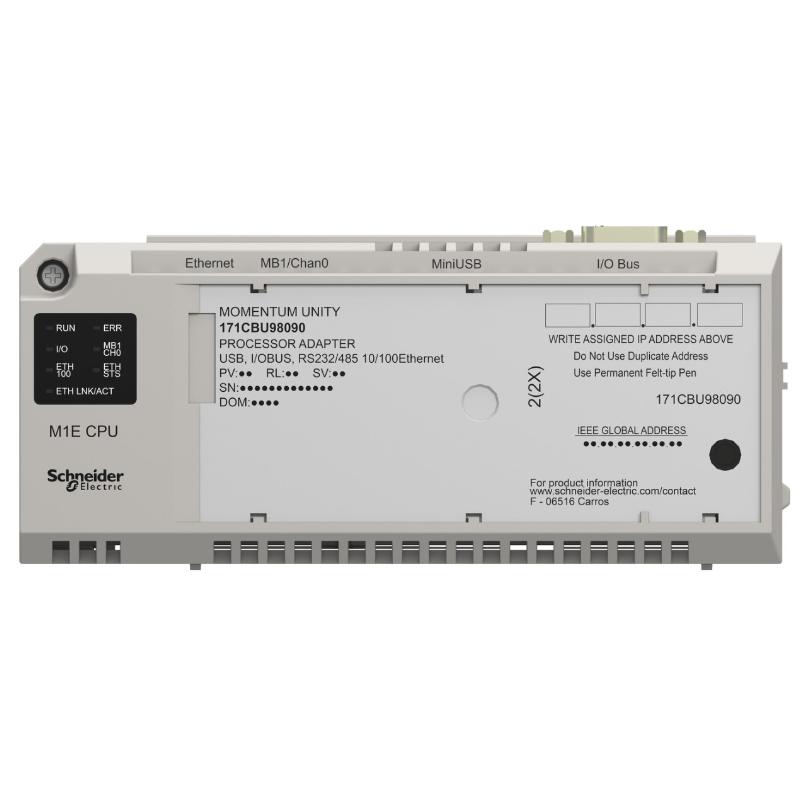
- Schneider
- 171CBU98090
- Unity M1E Processor
- France
- 60.6 x 144 x 53.47 mm
- 0.163 kg
- Xiamen, China
- New & In Stock
- T/T, PayPal, Western Union
- 1 Year
- 1-3 Working Days
- DHL, UPS, TNT, FedEx and EMS.
- 24-Hour Service
- COO
- 89
Our advantage

Global Logistics
We have a 10-year logistics and express cooperation agreement, so our products can be shipped to any place in the world.

Brand new and original
Our products are imported in bulk from the place of origin. Because of the cooperative relationship, our products are all original and 100% new.

24-hour service
We provide 7*24 hours service to our customers. We will be there whenever you need us.

Price advantage
All our products are priced very favorably because we have our own warehouse and supply.
| Company Information | |||
| [email protected] | |||
| Mobile | +8615980777398 | ||
| +8615980777398 | |||
| 15980777398 |
Product Overview
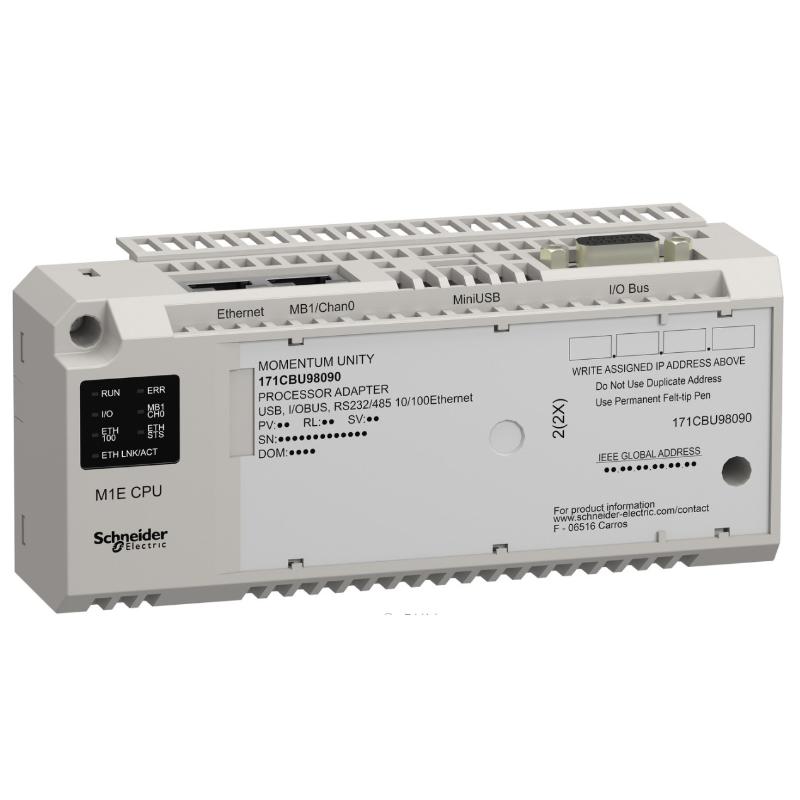
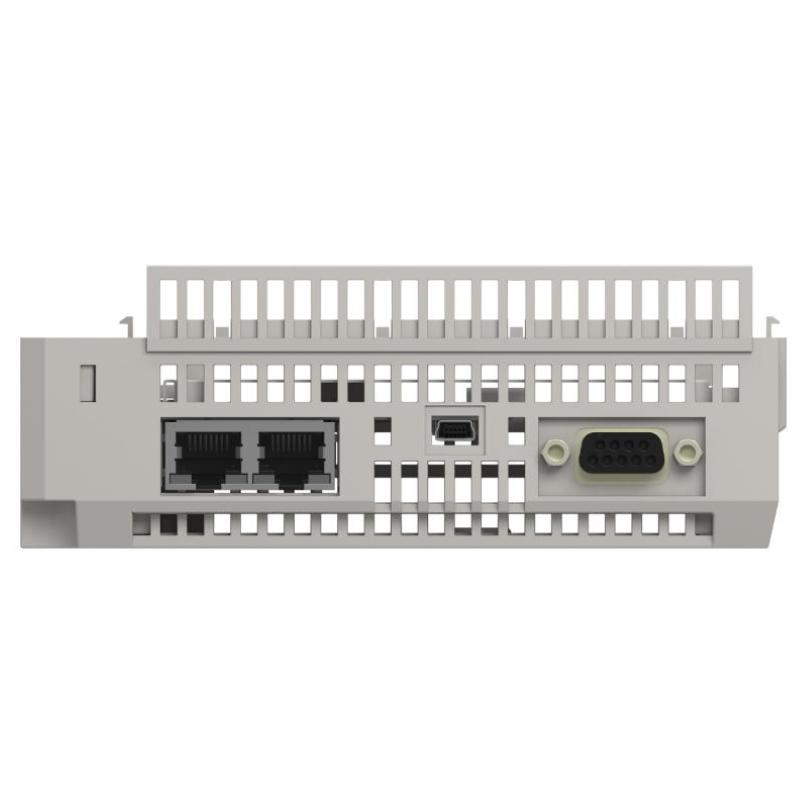
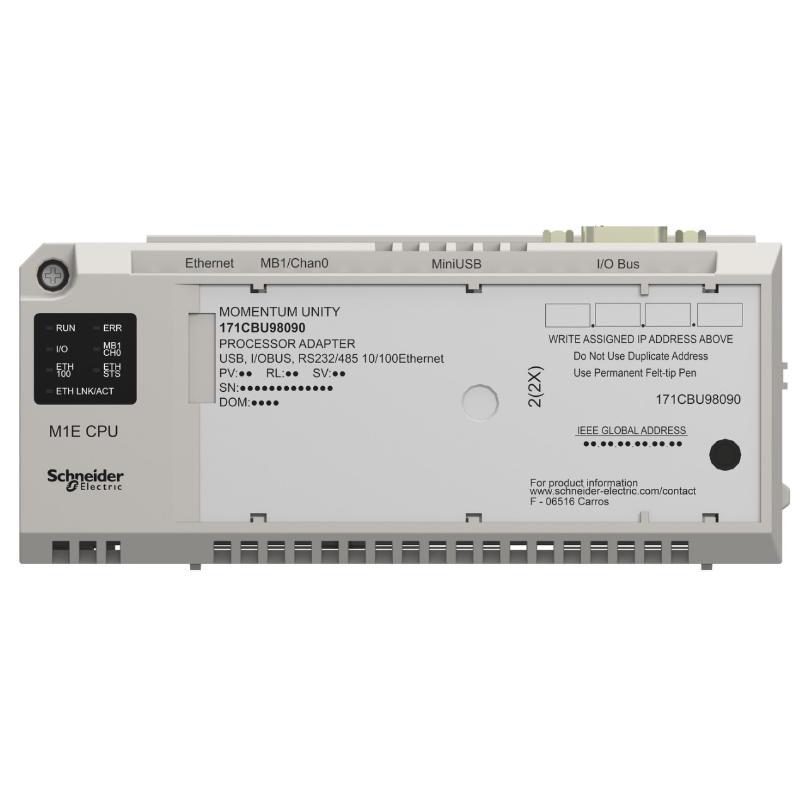
The Schneider 171CBU98090 is a Unity M1E Processor designed for use in industrial automation and control applications. As a processor within the Schneider automation environment, it provides computing and control capabilities required for executing automation tasks and coordinating data exchange with associated system components.
Processors are central elements in industrial control systems because they execute the control logic that determines how inputs are interpreted and how outputs are controlled. A reliable processor must work continuously with I/O modules, communication interfaces, programming software, and other automation equipment to maintain stable operation of the overall control system.
The 171CBU98090 is identified as a Unity M1E Processor. Its compact form factor makes it suitable for installations where control hardware must be integrated into a limited cabinet or equipment space.
The specified dimensions of the Schneider 171CBU98090 are 60.6 × 144 × 53.47 mm, with a specified weight of 0.163 kg. These specifications are important when planning mounting space, replacement work, cabinet layout, transportation, and spare-parts inventory.
In a complete automation system, the processor should not be considered as an isolated component. Its actual function depends on the surrounding controller architecture, I/O equipment, communication interfaces, software configuration, and field devices.
Technical Specifications
| Parameter | Details |
|---|---|
| Manufacturer | Schneider Electric |
| Model | 171CBU98090 |
| Product Type | Unity M1E Processor |
| Processor Category | Industrial Automation Processor |
| Primary Function | Control processing and automation logic execution |
| System Role | Control processor |
| Application | Industrial automation and control systems |
| Dimensions | 60.6 × 144 × 53.47 mm |
| Weight | 0.163 kg |
| Installation | Industrial control system / cabinet installation |
| Control Function | Execution of programmed automation logic |
| System Integration | PLC, I/O and industrial communication architecture |
| Product Family | Unity automation environment |
| Typical Use | Industrial machine and process control |
| Maintenance Use | Controller replacement, system service and troubleshooting |
What Is the Schneider 171CBU98090?
The Schneider 171CBU98090 is a Unity M1E Processor used as a processing component in an industrial automation system.
The processor is responsible for executing the control logic configured for the automation application. It works with input and output equipment to monitor the process and generate appropriate control commands.
For example, sensors may provide temperature, pressure, position, level, or status information to the control system. The processor evaluates this information according to the programmed control logic and determines what actions should be performed by connected output devices.
The processor can therefore be considered the decision-making element of the control architecture.
A simplified control sequence is:
Field Inputs → I/O System → 171CBU98090 Processor → Control Logic → Output System → Field Equipment
Communication components can also provide data exchange between the processor and other automation equipment, operator interfaces, supervisory systems, or distributed devices, depending on the overall system architecture.
Function and Working Principle
The fundamental function of an industrial processor is to execute a programmed sequence of control operations.
During normal operation, the processor repeatedly performs control tasks. A simplified control cycle can be described as follows:
- Read available input information.
- Process the input values according to the configured application logic.
- Execute mathematical, logical, timing, and sequencing operations.
- Determine the required output states.
- Update connected output devices.
- Exchange required data with communication devices.
- Repeat the control cycle continuously.
This continuous processing allows the automation system to respond to changing field conditions.
For example, in a manufacturing machine, sensors may detect whether a workpiece is correctly positioned. The processor can evaluate the sensor status and execute the programmed sequence. If the required conditions are satisfied, an output command can be generated to start the next machine operation.
The exact behavior depends on the application program configured for the specific installation.
Role in Industrial Control Systems
The processor is one of the most important elements of an industrial automation architecture because it coordinates control logic between field inputs and outputs.
A typical system may contain:
- Industrial processor
- Digital input modules
- Digital output modules
- Analog input modules
- Analog output modules
- Communication modules
- Remote I/O equipment
- Operator interfaces
- Industrial networks
- Field sensors
- Actuators and motor-control equipment
The processor works with these components to create a complete control system.
When an input changes, the corresponding information becomes available to the control program. The processor then determines the required response. The resulting output information is transmitted to the appropriate I/O equipment, which controls the field device.
This architecture allows complex industrial processes to be automated with repeatable and predictable control sequences.
Unity M1E Processor in Automation Applications
The term Unity M1E Processor identifies the 171CBU98090 as a processor associated with Schneider’s Unity automation environment.
In an established industrial installation, maintaining compatibility between the processor, application program, I/O configuration, communication interfaces, and engineering environment is particularly important.
A processor replacement is therefore more than a simple mechanical component exchange. The replacement procedure may involve reviewing the existing control configuration, hardware arrangement, application program, communication settings, and retained operating parameters.
Before replacing a processor, engineers should document the current system configuration and confirm that the replacement hardware is appropriate for the installed application.
Industrial Applications
The Schneider 171CBU98090 can be applied to industrial automation systems where programmable control processing is required.
Typical application areas may include:
- Factory automation
- Machine control
- Manufacturing systems
- Material handling
- Packaging equipment
- Production lines
- Process automation
- Industrial equipment control
- Distributed automation
- Building and facility automation applications
- Legacy automation system maintenance
The processor can be used in applications where inputs must be evaluated continuously and outputs must be controlled according to a programmed sequence.
In machine automation, for example, the processor can coordinate sensors, motors, valves, switches, and operator commands. In process applications, it can execute sequences involving measurements, setpoints, alarms, interlocks, and control outputs.
Compatible System Components
The 171CBU98090 normally operates as part of a complete automation architecture rather than as a standalone device. The associated components depend on the system configuration.
| Component | Type | Typical Function |
|---|---|---|
| 171CBU98090 | Unity M1E Processor | Executes automation control logic |
| Digital Input Modules | I/O Module | Acquires discrete field signals |
| Digital Output Modules | I/O Module | Controls discrete field devices |
| Analog Input Modules | I/O Module | Measures analog process signals |
| Analog Output Modules | I/O Module | Generates analog control signals |
| Communication Modules | Network Interface | Provides industrial communication |
| Remote I/O | Distributed I/O | Connects remote field signals |
| HMI | Operator Interface | Provides monitoring and operator control |
| Engineering Computer | Programming Equipment | Program development and diagnostics |
| Power Supply | System Power Equipment | Provides electrical power to control hardware |
| Field Sensors | Input Devices | Measure process conditions |
| Actuators | Output Devices | Perform physical control actions |
The exact combination should always be determined from the installed control-system design.
Installation and System Integration
Correct installation of a processor is important because the processor is responsible for executing the application logic that controls the connected equipment.
A general replacement or installation sequence includes:
- Place the machine or process in a safe maintenance condition.
- Follow the site’s approved electrical isolation procedure.
- Record the existing processor and system configuration.
- Verify the complete 171CBU98090 model number.
- Inspect the replacement processor for physical damage.
- Verify the mounting location and available space.
- Check associated power and communication connections.
- Install the processor correctly.
- Reconnect the required system connections.
- Verify the physical installation.
- Restore system power according to the approved procedure.
- Check processor status.
- Verify communication with connected modules.
- Load or verify the appropriate control configuration.
- Check I/O operation.
- Test communication functions.
- Verify alarms and interlocks.
- Perform a controlled functional test.
The exact procedure depends on the installed system and maintenance requirements. A processor should not be replaced solely by matching its external dimensions.
System Integration Considerations
Successful integration requires compatibility between the processor and the rest of the automation architecture.
Important areas to consider include:
- Processor hardware compatibility
- Application program compatibility
- I/O configuration
- Communication configuration
- Power requirements
- Mounting arrangement
- System addressing
- Operator interface configuration
- Remote I/O configuration
- Application-specific interlocks
When replacing an existing processor, engineers should preserve a documented copy of the original control-system configuration whenever possible.
This is especially important for older systems because the installed processor may contain an application configuration that is not easily reconstructed from field wiring alone.
Maintenance and Troubleshooting
Processor-related faults can produce a wide range of symptoms. A system may stop completely, lose communication, report I/O errors, or behave unexpectedly.
However, not every control-system fault indicates processor hardware failure. A structured diagnostic procedure should be used to distinguish processor problems from power, I/O, communication, or application issues.
| Observed Condition | Possible Area to Check |
|---|---|
| Processor does not start | Power supply, connections, installation and processor hardware |
| Processor status indicates a fault | Hardware status, application configuration and diagnostics |
| I/O modules unavailable | I/O connections, communication path or configuration |
| Communication failure | Communication module, network cable, configuration or remote device |
| Machine stops unexpectedly | Processor status, application logic, I/O and safety conditions |
| Incorrect output behavior | Application program, input status, I/O configuration or output hardware |
| Intermittent system faults | Power stability, connectors, environmental conditions or communication |
| System operates after restart but fails later | Intermittent hardware, power, communication or environmental issue |
A practical diagnostic sequence is:
Power Supply → Processor Status → Application Configuration → I/O Status → Communication → Field Devices
This method helps prevent unnecessary replacement of the processor when the actual fault exists elsewhere in the control system.
Common Causes of Processor-Related Problems
Several conditions can produce symptoms that appear to be processor failures.
- Unstable control-system power
- Loose electrical connections
- Improper installation
- Incorrect application configuration
- Communication network problems
- I/O module faults
- Remote I/O communication problems
- Excessive environmental temperature
- Electrical interference
- Incorrect replacement hardware
- Damaged connectors
- Application logic errors
For this reason, troubleshooting should begin with observable system conditions rather than immediately assuming that the processor itself has failed.
Replacement Considerations
When replacing a Schneider 171CBU98090, technicians should verify the complete part number and the architecture of the existing automation system.
Important replacement criteria include:
- Exact processor model
- Unity system compatibility
- Application program requirements
- I/O configuration
- Communication architecture
- Power requirements
- Physical mounting requirements
- Available cabinet space
- System configuration and addressing
The specified dimensions of the 171CBU98090 are 60.6 × 144 × 53.47 mm, and its specified weight is 0.163 kg.
The compact dimensions can be useful when evaluating replacement space inside a control cabinet. Nevertheless, physical dimensions should always be considered together with mounting and connection requirements.
Recommended Alternative Models
When evaluating replacement or modernization options, engineers may consider other processors and controller products within the Schneider automation ecosystem. These products should not be treated as automatic drop-in replacements because hardware architecture, programming environment, I/O compatibility, communication interfaces, and application requirements can differ.
| Model / Product | Type | Key Feature | Application |
|---|---|---|---|
| 171CBU98090 | Unity M1E Processor | Industrial control processing | Existing compatible automation systems |
| Modicon Unity Processors | PLC Processor | Programmable control | Industrial automation |
| Modicon Premium Processors | PLC CPU | Advanced control processing | Machine and process control |
| Modicon Quantum Processors | PLC Processor | High-capacity control architecture | Process and large automation systems |
| Modicon M340 Processors | PLC Processor | Compact programmable control | Industrial machine control |
| Modicon M580 Processors | PLC Processor | Modern Ethernet-based automation | Advanced industrial control |
| Modicon Remote I/O Controllers | I/O Controller | Distributed control interface | Remote automation systems |
| Industrial Automation CPUs | Control Processor | Centralized application processing | PLC and control applications |
Replacement recommendation: If the objective is to maintain an existing system, the original 171CBU98090 should be considered first. If the objective is modernization, a different Schneider processor may be appropriate, but the complete application, I/O, network, software, and system architecture should be evaluated before selecting an alternative.
Key Advantages
- Designed as a dedicated industrial automation processor
- Supports programmed control logic execution
- Suitable for distributed automation architectures
- Can coordinate data between I/O and control equipment
- Supports integration with associated communication components
- Compact physical dimensions
- Specified weight of only 0.163 kg
- Suitable for machine and process automation applications
- Useful for maintenance and replacement of established systems
- Can serve as a central processing element in compatible control architectures
Technical FAQs
What is the Schneider 171CBU98090?
The Schneider 171CBU98090 is a Unity M1E Processor used for control processing in compatible industrial automation systems.
What is the main function of the 171CBU98090?
Its primary function is to execute programmed automation logic and coordinate control operations with associated I/O and communication components.
Is the 171CBU98090 a communication adapter?
No. It is identified as a Unity M1E Processor. Communication functionality may be provided through associated interfaces and network components within the complete automation system.
What are the dimensions of the 171CBU98090?
The specified dimensions are 60.6 × 144 × 53.47 mm.
How much does the 171CBU98090 weigh?
The specified weight is 0.163 kg.
What equipment works with the 171CBU98090?
Depending on the specific system architecture, associated equipment can include I/O modules, communication modules, remote I/O equipment, operator interfaces, engineering systems, power supplies, sensors, and actuators.
Can the 171CBU98090 be replaced by another PLC processor?
Not automatically. A replacement processor must be compatible with the installed control architecture, application program, I/O configuration, communication system, and other system requirements.
What can cause a processor-related system fault?
Possible causes include unstable power, loose connections, configuration problems, communication faults, I/O problems, environmental conditions, application errors, or processor hardware failure.
How should a 171CBU98090 fault be diagnosed?
Start by checking power and processor status, then examine application configuration, I/O status, communication systems, and field devices. This helps determine whether the processor is actually responsible for the fault.
Why is processor configuration important during replacement?
The processor is responsible for executing the control application. If the required application configuration is not correctly restored, the replacement hardware may not operate the machine or process as intended.
What should be checked before ordering a replacement?
Verify the complete 171CBU98090 model number, system architecture, application requirements, I/O configuration, communication interfaces, mounting arrangement, and physical dimensions.
Conclusion
The Schneider 171CBU98090 Unity M1E Processor is an industrial automation processor designed to execute programmed control logic and coordinate operations within a compatible Schneider control architecture.
As a processing component, it works together with I/O modules, communication interfaces, remote devices, operator interfaces, and field equipment. Its role is fundamentally different from that of a simple communication cable or network adapter because the processor provides the computing capability required to execute the control application.
The specified dimensions of the 171CBU98090 are 60.6 × 144 × 53.47 mm, and the specified weight is 0.163 kg. These characteristics make the processor suitable for compact industrial automation installations where cabinet space and equipment weight are important considerations.
For maintenance engineers, system integrators, and industrial automation specialists, correct model identification and system compatibility are essential when replacing a processor. The hardware should be evaluated together with the application program, I/O architecture, communication configuration, power system, and field equipment.
When correctly integrated into a compatible automation system, the Schneider 171CBU98090 provides the processing foundation required for reliable programmable control, making it a valuable component for maintaining established industrial automation and control applications.