

ProductPRODUCT
Featured products
Contact Us
- Honeywell
- 900C75S-0560-00
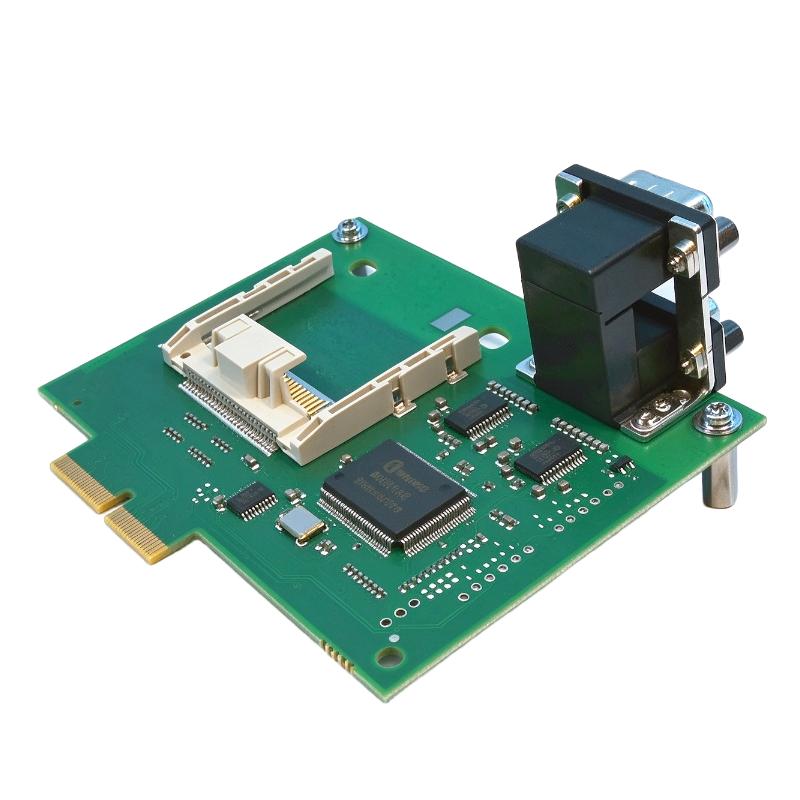
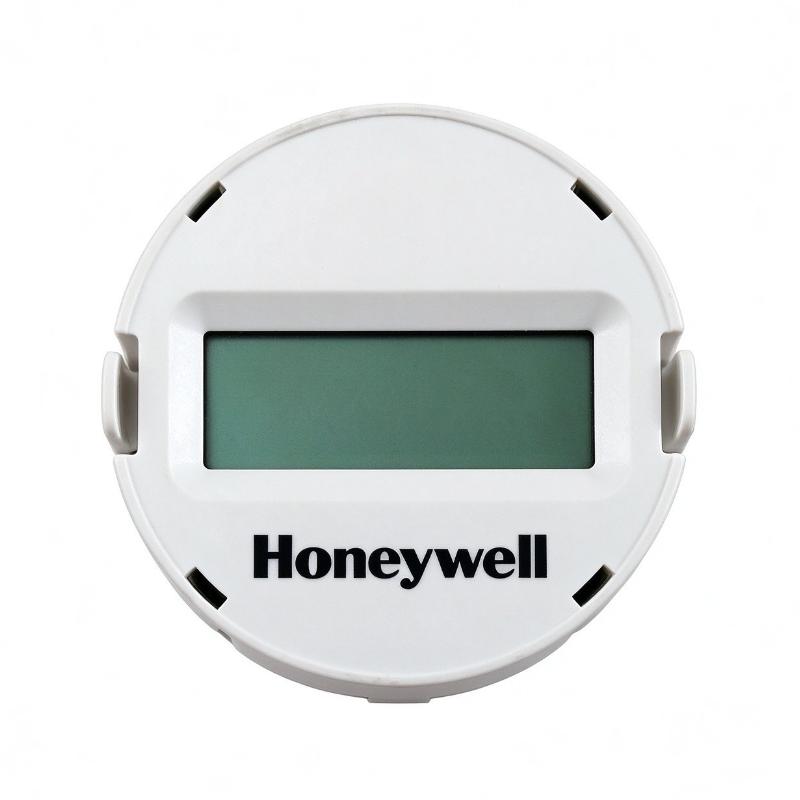
- Redundant Controller CPU
- USA
- 137 × 38.1 × 151.7 mm
- 0.4 kg
- Xiamen, China
- New & In Stock
- T/T, PayPal, Western Union
- 1 Year
- 1-3 Working Days
- DHL, UPS, TNT, FedEx and EMS.
- 24-Hour Service
- COO
- 5
Our advantage

Global Logistics
We have a 10-year logistics and express cooperation agreement, so our products can be shipped to any place in the world.

Brand new and original
Our products are imported in bulk from the place of origin. Because of the cooperative relationship, our products are all original and 100% new.

24-hour service
We provide 7*24 hours service to our customers. We will be there whenever you need us.

Price advantage
All our products are priced very favorably because we have our own warehouse and supply.
| Company Information | |||
| [email protected] | |||
| Mobile | +8615980777398 | ||
| +8615980777398 | |||
| 15980777398 |
Product Overview
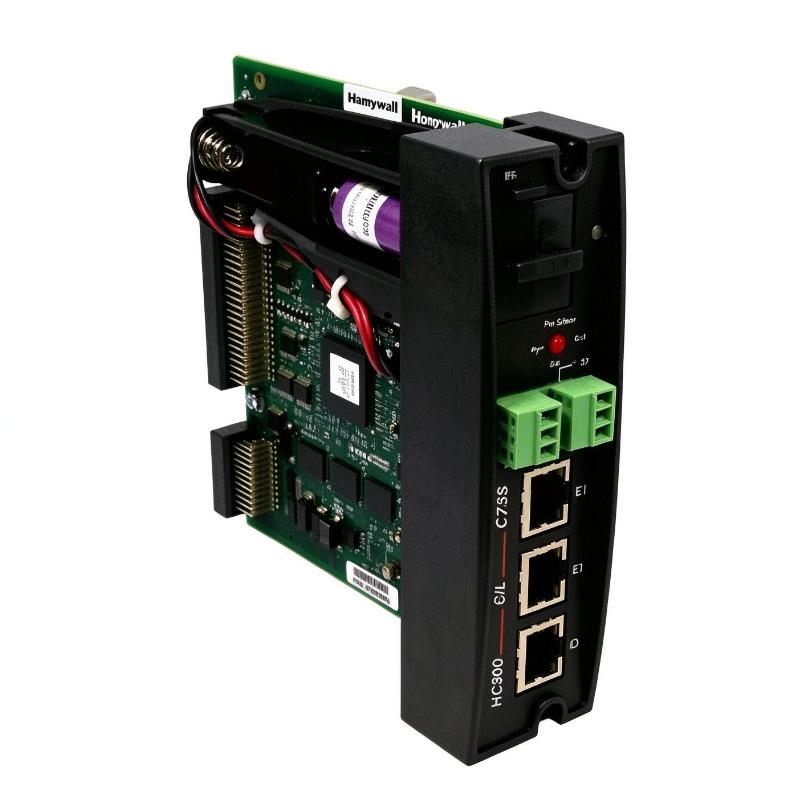
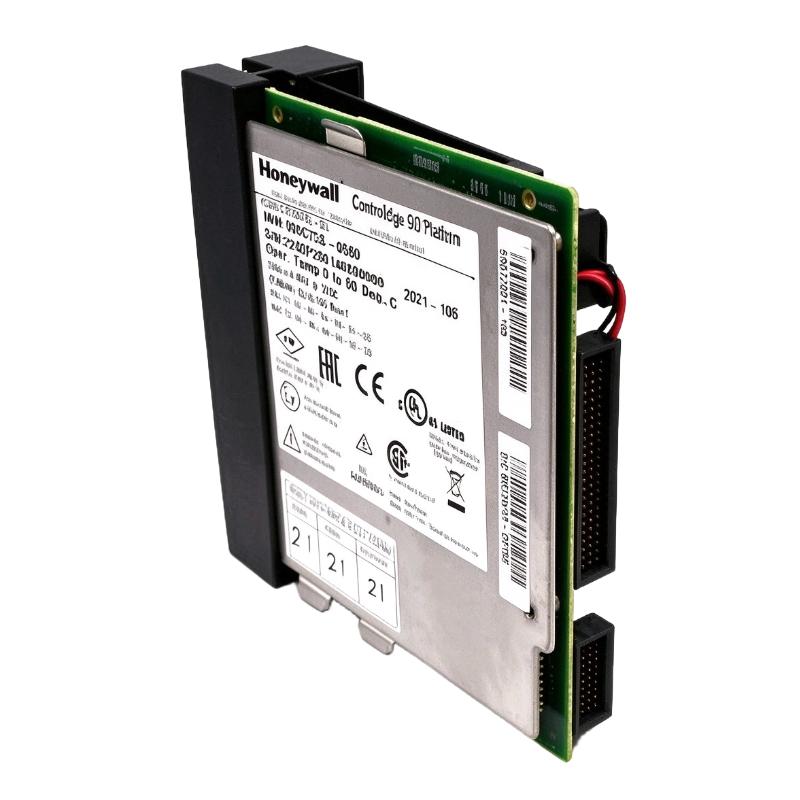
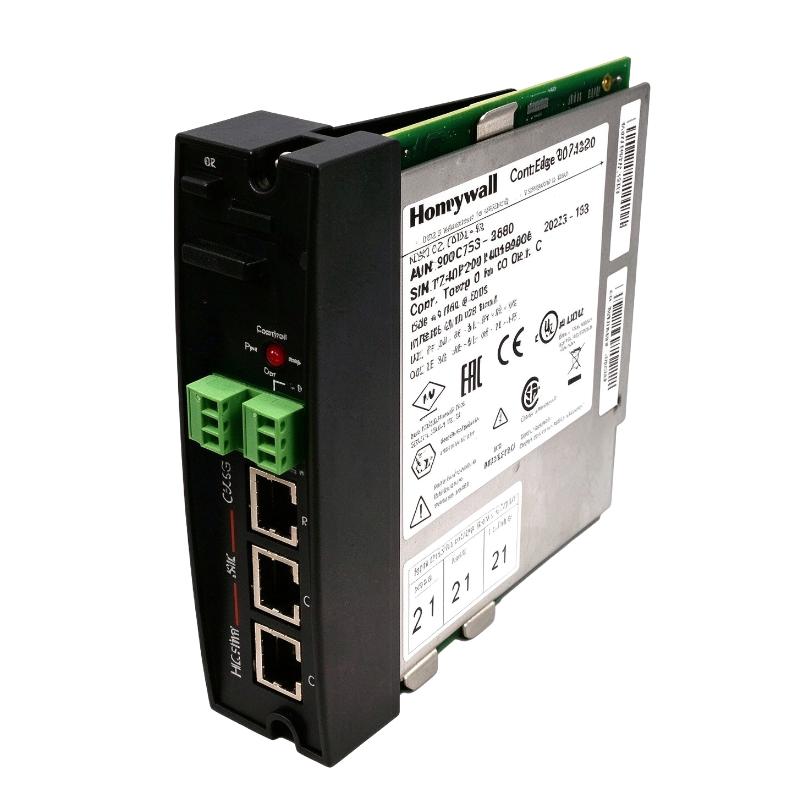
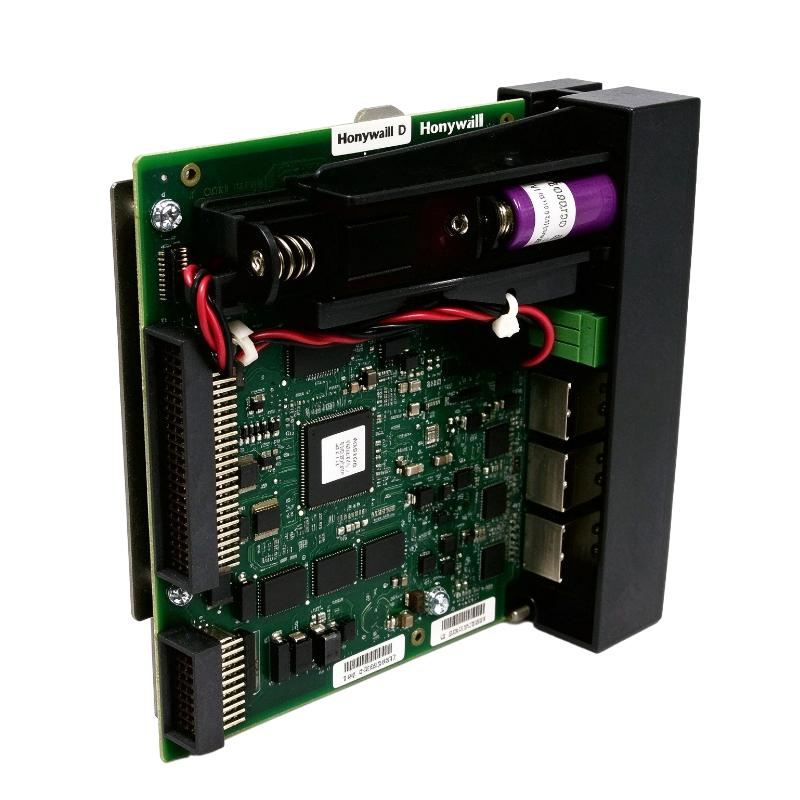
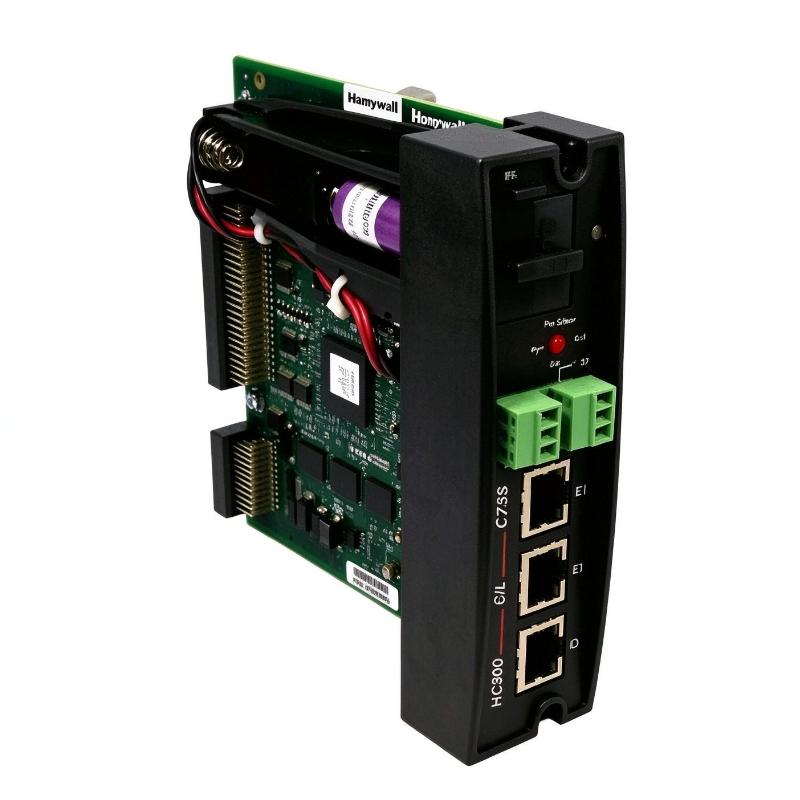
The Honeywell 900C75S-0560-00 ControlEdge HC900 Redundant Controller CPU is a high-capacity controller module used in Honeywell ControlEdge HC900 process and safety control systems. Based on the C75S controller platform, it supports redundant controller configurations in which two CPUs operate together to maintain process control availability if the active controller encounters a fault.
Unlike a conventional standalone PLC CPU, the C75S operates as part of a hot-standby control arrangement. One controller functions as the Lead CPU and performs the active control tasks, while the second operates as the Reserve CPU. The Lead controller continuously updates the Reserve controller with the information required to assume control when a transfer becomes necessary.
This arrangement is particularly valuable in process industries where an unexpected interruption in controller operation can affect production, equipment protection, or process continuity. Typical installations include oil and gas processing facilities, chemical plants, power generation systems, and other continuous-operation environments.
The 900C75S-0560-00 is intended for applications requiring a redundant control architecture rather than simply additional processing capacity. Two C75S CPUs are installed in a redundant controller rack, with a Redundancy Switch Module (RSM) positioned between them in a single-rack arrangement. Each CPU has its own power supply, allowing the system to maintain separate controller power arrangements.
A typical application can be found in a chemical processing plant where several process units operate continuously. The Lead CPU executes control strategies, processes incoming field information, and exchanges data with supervisory systems. Meanwhile, the Reserve CPU receives updated operating information. If the Lead CPU fails, the Reserve CPU can take over the control role without requiring a complete manual restart of the control system.
The C75S platform also supports substantial I/O expansion. A system can accommodate up to 12 I/O racks, with the controller communicating with remote I/O through Ethernet connections. This allows the controller rack to be installed separately from field I/O equipment, which is useful in large industrial installations where process signals are distributed across different equipment areas.
Another important characteristic is its capacity for complex control strategies. The C75 controller platform supports up to 15,000 function blocks, making it suitable for applications involving multiple PID loops, sequencing operations, process interlocks, and other control functions.
The 900C75S-0560-00 should be distinguished from the standard C75 controller. The C75S belongs to the redundant and safety-oriented controller family, and its selection must account for the corresponding system architecture, compatible I/O scanners, and required redundancy components.
For industrial installations where controller availability and continuity of process execution are important, the 900C75S-0560-00 provides the CPU foundation for a redundant ControlEdge HC900 control system.
Technical Specifications
| Parameter | Specification |
|---|---|
| Manufacturer | Honeywell |
| Model | 900C75S-0560-00 |
| Product Type | ControlEdge HC900 Redundant Controller CPU |
| Product Family | ControlEdge HC900 |
| Controller Type | C75S Redundant Controller |
| Controller Architecture | Hot-Standby Redundancy |
| CPU Configuration | Lead / Reserve |
| Redundant CPU Arrangement | Two C75S CPUs |
| Redundancy Interface | Redundancy Switch Module (RSM) |
| Maximum Function Blocks | 15,000 |
| Maximum I/O Racks | 12 |
| Remote I/O Communication | Ethernet 100 Base-T |
| Extended Communication | Fiber Optic Through External Media Converter |
| Host Communication | Dual Ethernet Networks |
| Supported Control Functions | PID, On/Off, Cascade, Ratio, Three-Position Step |
| Configuration Software | ControlEdge HC900 Designer |
| Controller Power Supply | Independent Power Supply for Each CPU |
| Dimensions | 137 × 38.1 × 151.7 mm |
| Weight | 0.4 kg |
Product Features
- C75S Redundant Controller Architecture: Supports dual-CPU operation with Lead and Reserve controller roles.
- Hot-Standby Operation: Continuously updates the Reserve CPU with information required for controller takeover.
- Automatic Controller Transfer: Supports transfer of control following failure of the active CPU.
- Manual Failover: Allows operators to initiate a controller role change through the Redundancy Switch Module.
- High Function Block Capacity: Supports up to 15,000 function blocks for complex process control strategies.
- Distributed I/O Expansion: Supports communication with up to 12 I/O racks.
- Dual Ethernet Communication: Provides two Ethernet ports for host communication.
- Remote I/O Connectivity: Supports Ethernet-based communication with physically separated I/O racks.
- Independent CPU Power: Uses separate power supplies for the redundant controllers.
- Integrated Diagnostics: Provides redundancy status and controller diagnostic information for system monitoring.
Working Principle
The 900C75S-0560-00 operates through a Lead/Reserve controller arrangement. Both CPUs participate in the redundant control architecture, but only the Lead CPU performs the active control and host communication functions during normal operation.
The basic control arrangement follows this structure:
Field Instruments → Remote I/O Racks → C75S Lead CPU → Control Outputs
C75S Lead CPU ↔ Redundancy Synchronization ↔ C75S Reserve CPU
C75S Controller → Ethernet Network → Supervisory System
Lead CPU Operation
After the redundant controller system powers up, the first available C75S CPU assumes the Lead role. This controller executes the configured control strategies and handles communication exchanges with connected host systems.
It processes information received from remote I/O racks, executes control algorithms, and generates the corresponding output commands.
For example, in a process cooling system, the Lead CPU may continuously monitor temperature and pressure inputs, execute PID control calculations, and regulate cooling equipment according to the configured operating strategy.
Reserve CPU Synchronization
The second C75S operates as the Reserve controller.
During normal operation, the Lead CPU updates the Reserve CPU every scan cycle with the information required to maintain synchronization. This includes the control information needed for the Reserve CPU to assume the Lead role if necessary.
The Reserve CPU therefore does not need to reconstruct the entire control strategy from the beginning following a controller transfer.
This synchronization is particularly important in continuous process applications where restarting the controller could interrupt operating sequences or affect process conditions.
Controller Failover
When the Lead CPU experiences a qualifying failure, the Reserve CPU can assume the Lead role.
The controller arrangement also supports manual role changes through the keyed switch on the Redundancy Switch Module. Other supported transfer methods include a redundancy status function block input and an instruction from the host communication system.
The transfer process allows the control system to continue operating without requiring the entire controller architecture to be replaced or restarted.
The exact transfer behavior depends on the system configuration and the condition that triggers the changeover.
Redundancy Switch Module Operation
In a single-rack redundant arrangement, the Redundancy Switch Module is installed between the two C75S CPUs.
It provides the interface between the Lead and Reserve controllers and includes status indicators for identifying their operating roles.
Its keyed switch allows authorized personnel to change the controller operating mode or initiate a manual failover.
The RSM is therefore an essential component of the redundant controller rack rather than an ordinary I/O module.
Remote I/O Communication
The C75S controller communicates with remote I/O racks through Ethernet 100 Base-T connections.
Each redundant CPU has its own physical Ethernet communication link to the I/O system. When multiple I/O racks are installed, Ethernet switches are used to connect the corresponding scanner modules.
For installations requiring greater communication distances, fiber-optic connections can be used with external media converters.
This architecture allows field signals to be collected near the process equipment while the redundant controller rack remains in a separate control room or equipment area.
Control Strategy Execution
The C75S platform executes configured control strategies through the ControlEdge HC900 Designer software environment.
Its control capabilities include PID, on/off, cascade, ratio, and three-position step control.
In a typical process application, the controller receives analog measurements from transmitters, evaluates operating conditions, and generates control commands for valves, pumps, and other field equipment.
The Lead CPU handles these operations during normal operation, while the Reserve CPU maintains the synchronized information required for takeover.
Role in the ControlEdge HC900 Control Architecture
The Honeywell 900C75S-0560-00 serves as the central processing component in a redundant ControlEdge HC900 control system. It manages process logic, communicates with distributed I/O equipment, and participates in the Lead/Reserve controller arrangement.
A typical redundant system architecture follows this structure:
C75S CPU-A ↔ Redundancy Switch Module ↔ C75S CPU-B
C75S Controllers → Ethernet Network → Remote I/O Scanners → I/O Modules → Field Instruments and Actuators
| System Component | Function |
|---|---|
| Honeywell 900C75S-0560-00 | Executes process control strategies and supports redundant CPU operation |
| Second C75S CPU | Provides the Reserve controller function |
| Redundancy Switch Module | Manages Lead/Reserve controller status and manual failover |
| 900PS1 Power Supply | Supplies power to the redundant controller arrangement |
| 900S75S Scanner | Provides communication between the redundant controller and compatible remote I/O racks |
| Remote I/O Rack | Houses distributed input and output modules |
| Ethernet Switch | Connects controller communication links with multiple I/O scanners |
| ControlEdge HC900 Designer | Configures controller logic and monitors system operation |
| Process Transmitters | Provide pressure, temperature, flow, and other process measurements |
| Analog Input Modules | Acquire analog field signals |
| Analog Output Modules | Generate analog control signals for field devices |
| Digital Input Modules | Acquire discrete equipment status and process signals |
| Digital Output Modules | Control discrete field equipment |
| Experion System | Provides supervisory monitoring and process operation interfaces |
In a typical continuous manufacturing installation, two C75S CPUs operate in a dedicated redundant controller rack. Each CPU has an independent power supply and its own communication connection to the remote I/O system.
The Lead CPU executes the control strategy and communicates with the supervisory system. The Reserve CPU remains synchronized and ready to take over if the active controller becomes unavailable.
This architecture separates the controller redundancy arrangement from the distributed I/O installation, allowing the system to support large process facilities with multiple remote equipment areas.
Industrial Applications
| Application | Typical Use |
|---|---|
| Oil and Gas Processing | Maintaining continuous control of pressure, temperature, and flow operations |
| Petrochemical Plants | Executing process control strategies with redundant CPU availability |
| Chemical Manufacturing | Managing continuous production sequences and process interlocks |
| Power Generation | Supporting control operations in auxiliary and balance-of-plant systems |
| Refinery Operations | Coordinating distributed process equipment and control loops |
| Natural Gas Processing | Controlling gas treatment, compression, and separation processes |
| Water Treatment | Managing pumping, filtration, and chemical dosing operations |
| Industrial Boilers | Executing temperature, pressure, and combustion-related control strategies |
| Pharmaceutical Manufacturing | Supporting automated process control installations |
| Continuous Production Lines | Reducing controller-related interruptions in long-running industrial processes |
Installation and Maintenance
- Verify the CPU Model: Confirm that the replacement is Honeywell 900C75S-0560-00 and that the existing system requires a C75S redundant controller rather than a standard C75 CPU.
- Check Redundant System Compatibility: Verify the installed controller rack, Redundancy Switch Module, power supplies, and compatible scanner configuration before replacement.
- Inspect the CPU Module: Examine the module housing, electrical contacts, connectors, and front-panel indicators for visible damage.
- Prepare the Redundant Controller Rack: Identify the Lead and Reserve CPU positions and document the existing controller operating status before maintenance.
- Back Up the Control Configuration: Preserve the current controller configuration and relevant control strategy information using the appropriate ControlEdge HC900 Designer software procedure.
- Check Power Supply Arrangements: Verify that each redundant CPU has the required independent power supply and that the power connections are correctly installed.
- Inspect the Redundancy Switch Module: Check the RSM connections, keyed switch, and Lead/Reserve status indicators before commissioning or replacing a controller.
- Install the CPU Module: Follow the manufacturer’s installation procedure for the controller rack and ensure that the module is correctly seated in its designated position.
- Verify Ethernet Connections: Check the controller-to-I/O communication links and confirm that the required Ethernet switches and scanner connections are correctly arranged.
- Check Controller Synchronization: After installation, verify that the Lead and Reserve CPUs establish the expected redundant operating relationship and that synchronization status is normal.
- Perform Failover Testing: Conduct the prescribed redundancy transfer test under an approved maintenance procedure. Confirm that the Reserve CPU can assume the Lead role and that process communication is maintained.
- Document System Operation: Record the installed CPU identification, controller roles, power supply status, communication checks, and redundancy test results.
Compatible System Components
| Component | Function |
|---|---|
| Honeywell 900C75S-0560-00 | ControlEdge HC900 C75S Redundant Controller CPU |
| Honeywell 900C75-0560 | ControlEdge HC900 C75 Controller CPU |
| Honeywell 900C70-0460 | ControlEdge HC900 C70 Controller CPU |
| Honeywell 900S75S-0460 | ControlEdge HC900 Redundant Scanner Module |
| Honeywell 900S50S-0460 | ControlEdge HC900 Redundant Scanner Module |
| Honeywell 900PS1 | ControlEdge HC900 Controller Power Supply |
| Honeywell Redundancy Switch Module | Provides Lead/Reserve controller management |
| Honeywell 900A01-0202 | Universal Analog Input Module |
| Honeywell 900A16-0103 | 16-Channel Analog Input Module |
| Honeywell 900B01-0301 | 4-Channel Analog Output Module |
| Honeywell 900B08-0202 | 8-Channel Analog Output Module |
| Honeywell 900G03-0202 | 16-Channel AC Digital Input Module |
| Honeywell 900G32-0301 | 32-Channel DC Digital Input Module |
| Honeywell ControlEdge HC900 Designer | Controller configuration and programming software |
| Honeywell Experion System | Supervisory process monitoring and control platform |
Recommended Related Models
| Model | Product Type | Typical Application |
|---|---|---|
| Honeywell 900C75-0560 | ControlEdge HC900 C75 Controller CPU | High-capacity process control applications |
| Honeywell 900C70-0460 | ControlEdge HC900 C70 Controller CPU | Large-scale distributed process control |
| Honeywell 900S75S-0460 | ControlEdge HC900 Redundant Scanner Module | Remote I/O communication in redundant systems |
| Honeywell 900PS1 | ControlEdge HC900 Power Supply | Controller rack power supply |
| Honeywell 900U02-0100 | ControlEdge HC900 Universal SIL I/O Module | Safety-related universal I/O applications |
| Honeywell 900A16-0103 | ControlEdge HC900 16-Channel Analog Input Module | High-level analog signal acquisition |
Key Advantages
- Supports Lead/Reserve redundant controller operation.
- Maintains synchronized control information between two C75S CPUs.
- Supports automatic and manual controller role transfers.
- Provides a capacity of up to 15,000 function blocks.
- Supports communication with up to 12 I/O racks.
- Provides independent Ethernet communication links for redundant CPUs.
- Supports distributed process control across multiple equipment areas.
- Integrates with ControlEdge HC900 Designer for configuration and diagnostics.
Technical FAQs
What is the difference between the 900C75S-0560-00 and the 900C75-0560?
Both belong to the ControlEdge HC900 C75 controller family, but the C75S is the redundant and safety-oriented controller variant. The 900C75S supports the Lead/Reserve architecture used in redundant installations, whereas the standard 900C75 is intended for its corresponding non-S redundant controller configuration. They should not be treated as automatically interchangeable because the associated scanner and system architecture must also be compatible.
How many CPUs are required for a redundant C75S controller system?
A complete redundant controller arrangement uses two C75S CPUs. One operates as the Lead controller and the other as the Reserve controller. In a single-rack arrangement, a Redundancy Switch Module is installed between the two CPUs to provide the redundancy interface and manual operating controls.
What happens when the Lead CPU fails?
When the Lead CPU experiences a qualifying failure, the Reserve CPU can assume the Lead role. Because the active controller updates the Reserve controller every scan cycle, the Reserve CPU already maintains the information needed to continue the control strategy. This reduces the disruption associated with losing the active controller.
Can the 900C75S-0560-00 communicate with remote I/O racks?
Yes. The C75S architecture supports remote I/O communication through Ethernet 100 Base-T connections. Each redundant CPU has its own physical communication link to the I/O system. Multiple remote racks can be connected through Ethernet switches, while fiber-optic connections with external media converters can be used for longer distances.