Product Overview
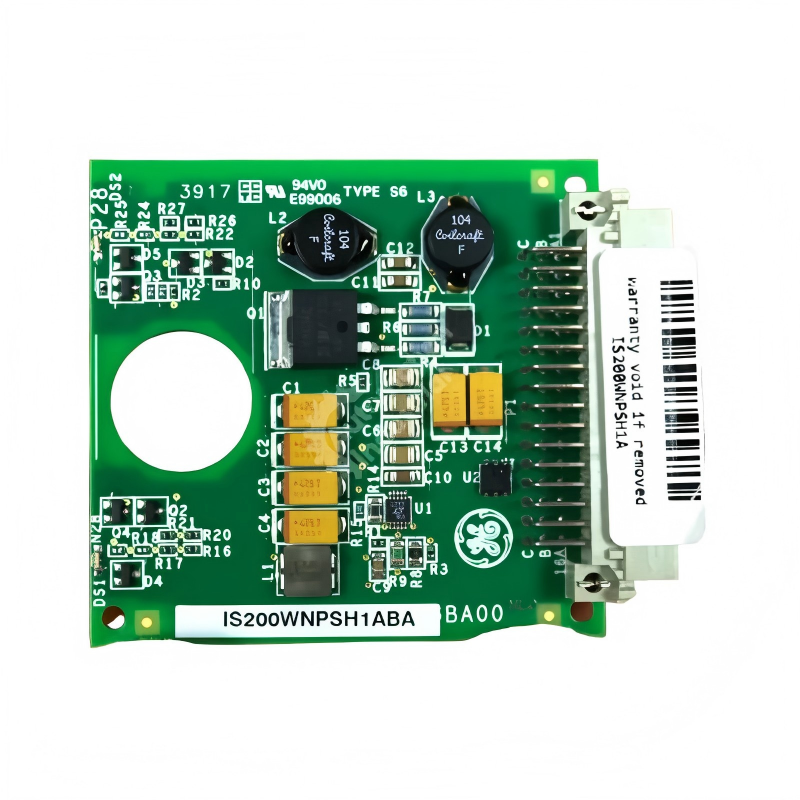
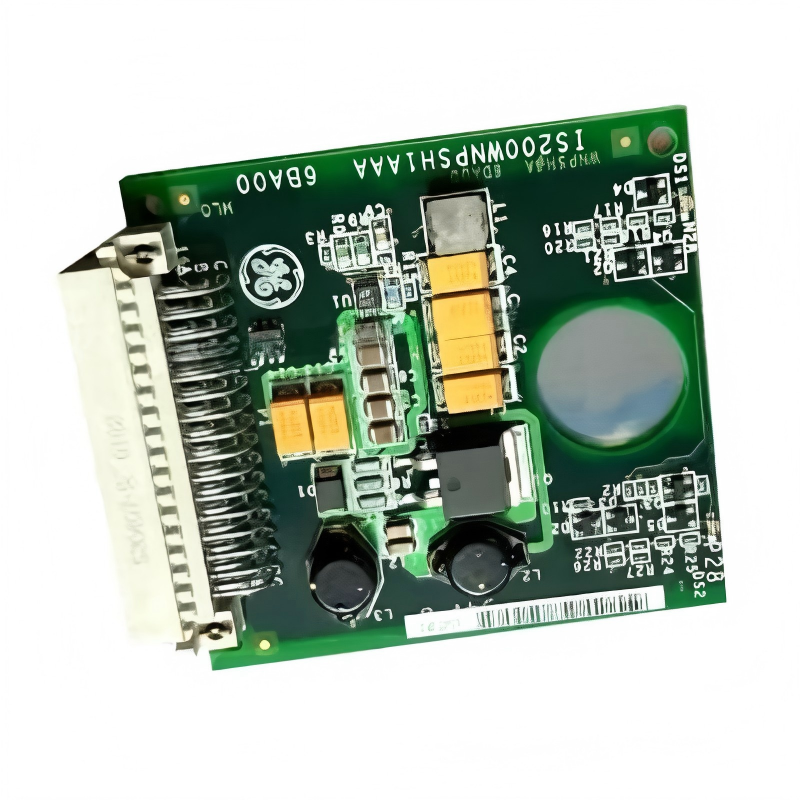
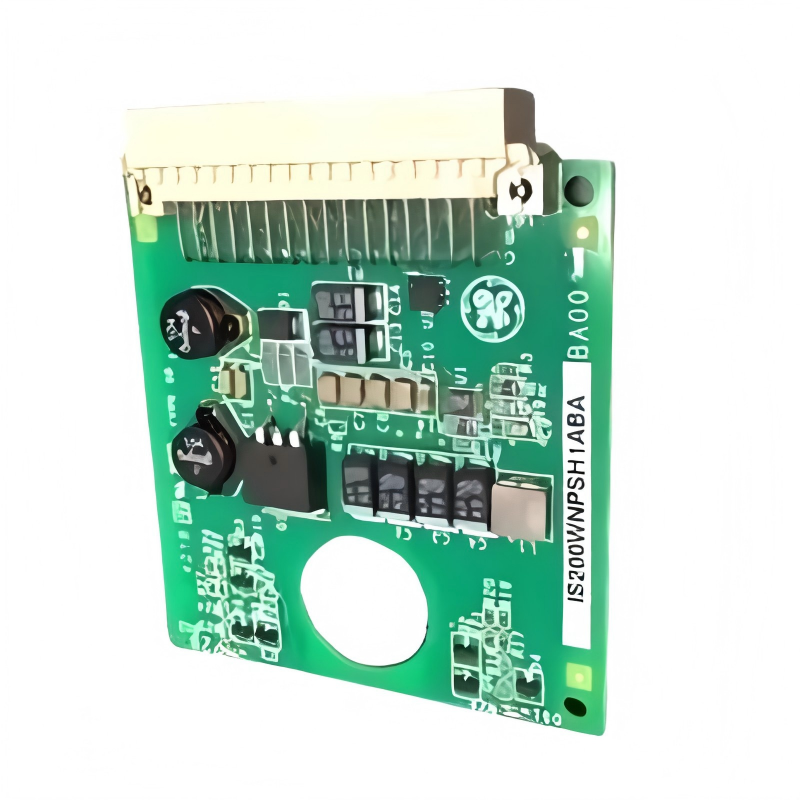
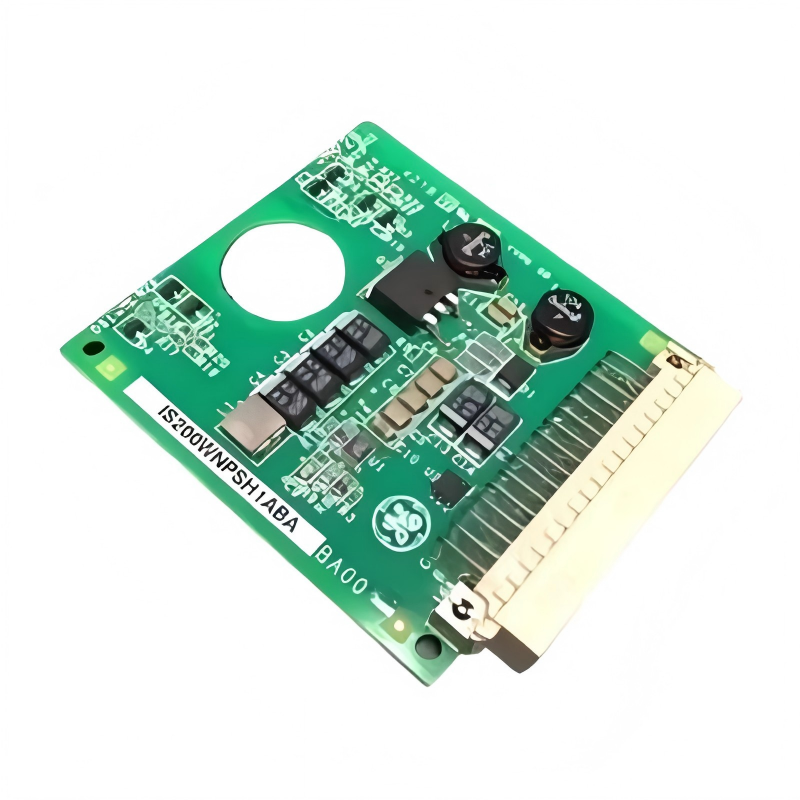
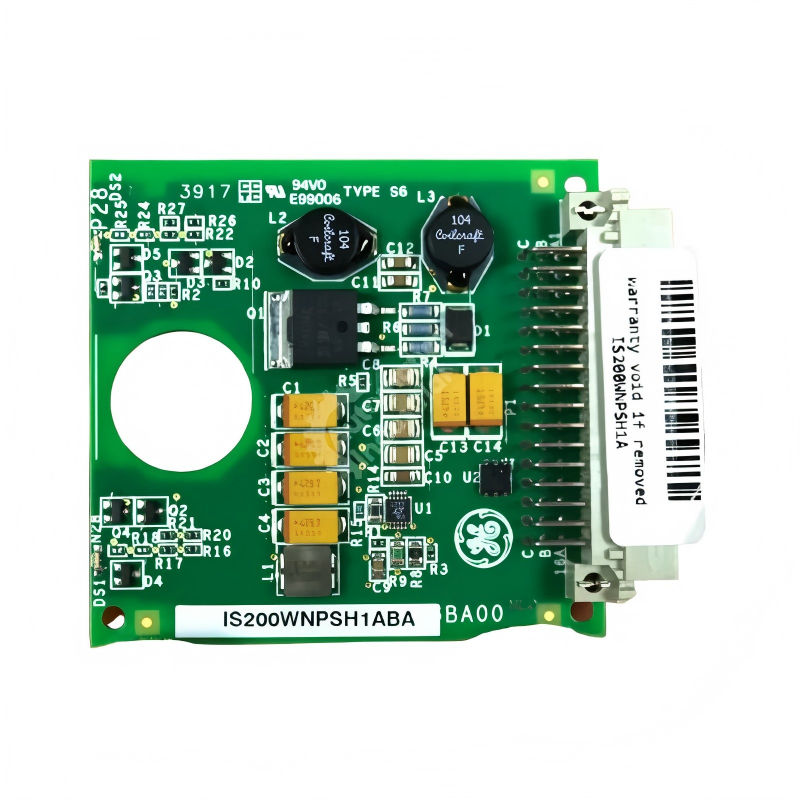
The GE IS200WNPSH1A is a Power Daughter Card designed for use within GE Mark VI and related turbine control systems. It functions as a supporting power interface board that assists in power distribution, regulation, and signal conditioning for associated control modules.
This card is commonly deployed in gas turbine, steam turbine, and industrial power generation applications, where reliable power management is essential for stable control system operation.
Technical Specifications
| Parameter |
Details |
| Manufacturer |
GE |
| Model |
IS200WNPSH1A |
| Product Type |
Power Daughter Card |
| Series |
Mark VI Control System |
| Function |
Power distribution and conditioning |
| Mounting Method |
Board-mounted daughter card |
| Interface Type |
Multi-pin board connectors |
| Dimensions |
123 × 129 × 30 mm |
| Weight |
0.45 kg |
| Operating Environment |
Industrial control cabinets |
| Application |
Turbine control and power management systems |
Function and Working Principle
The IS200WNPSH1A serves as a dedicated power-support module within the control system architecture.
Working Principle
- Receives power from the host control board or power supply section.
- Distributes regulated power to designated circuits and subsystems.
- Assists with voltage conditioning and power stabilization.
- Supports reliable operation of connected control and monitoring electronics.
- Helps protect sensitive control circuitry from power fluctuations.
The module contributes to maintaining stable electrical performance throughout the control system.
Key Features
- Dedicated power management daughter card
- Supports Mark VI control system architecture
- Compact board-level design
- Reliable power distribution functionality
- Industrial-grade construction
- High operational stability
- Designed for continuous-duty applications
- Easy integration with compatible control boards
Industrial Applications
- Gas turbine control systems
- Steam turbine automation
- Power generation facilities
- Combined-cycle power plants
- Industrial energy management systems
- Turbine auxiliary control equipment
- Critical process control installations
Installation Overview
- Installed directly onto a compatible host board
- Connected through integrated board connectors
- Mounted inside turbine control cabinets
- Requires proper grounding and environmental protection
- Should be installed according to system maintenance procedures
Compatible Systems
- GE Mark VI control systems
- Turbine control platforms
- Power management subsystems
- Industrial automation control cabinets
- Related GE control hardware assemblies
Alternative Models
| Model |
Description |
| IS200WNPSH1A |
Power Daughter Card (this model) |
| IS200 series power cards |
Related power interface modules |
| Mark VI power support boards |
System-specific power management modules |
| Mark VIe power modules |
Newer generation power control solutions |
| Auxiliary power interface cards |
Similar board-level power modules |
Key Advantages
- Reliable power distribution capability
- Supports stable control system operation
- Compact and lightweight design
- Seamless integration within Mark VI systems
- Industrial-grade durability
- Suitable for critical turbine applications
- Helps improve overall system reliability
Technical FAQs
What is the primary function of the IS200WNPSH1A?
It provides power distribution and conditioning support for associated control system electronics.
Which systems commonly use this module?
GE Mark VI turbine control systems and related industrial power management platforms.
Is this a standalone controller?
No, it functions as a daughter card that operates with a host control board.
Where is it installed?
Inside turbine control cabinets as part of the control system assembly.
What industries typically use this card?
Power generation, turbine automation, and industrial process control applications.
Conclusion
The GE IS200WNPSH1A Power Daughter Card is an important component within GE Mark VI control systems, providing power distribution, conditioning, and operational stability for critical turbine control applications. Its compact design, reliability, and integration capabilities make it a valuable part of industrial power generation and automation environments.