Product Overview
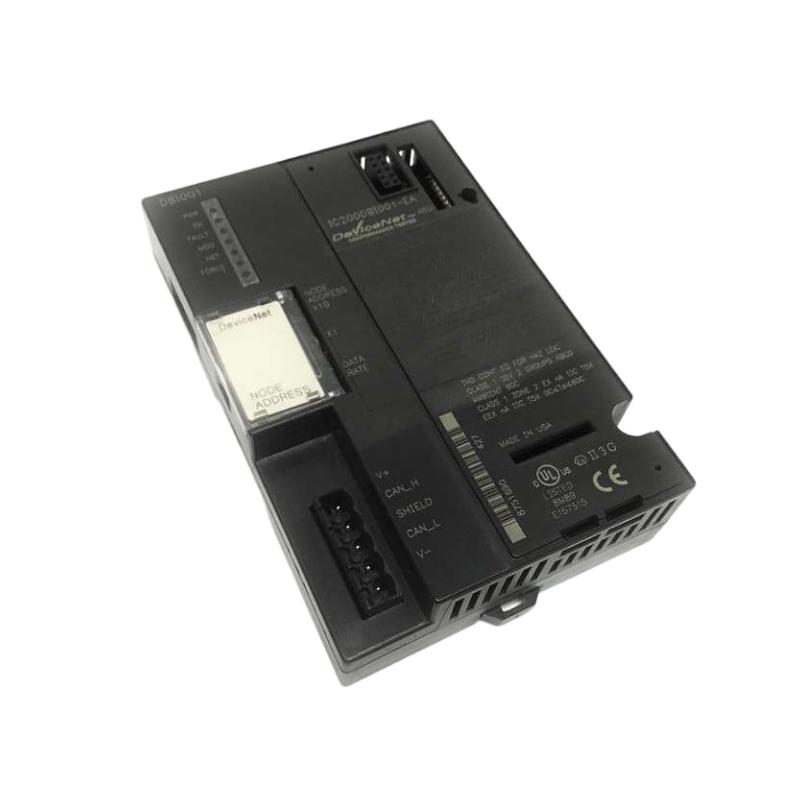
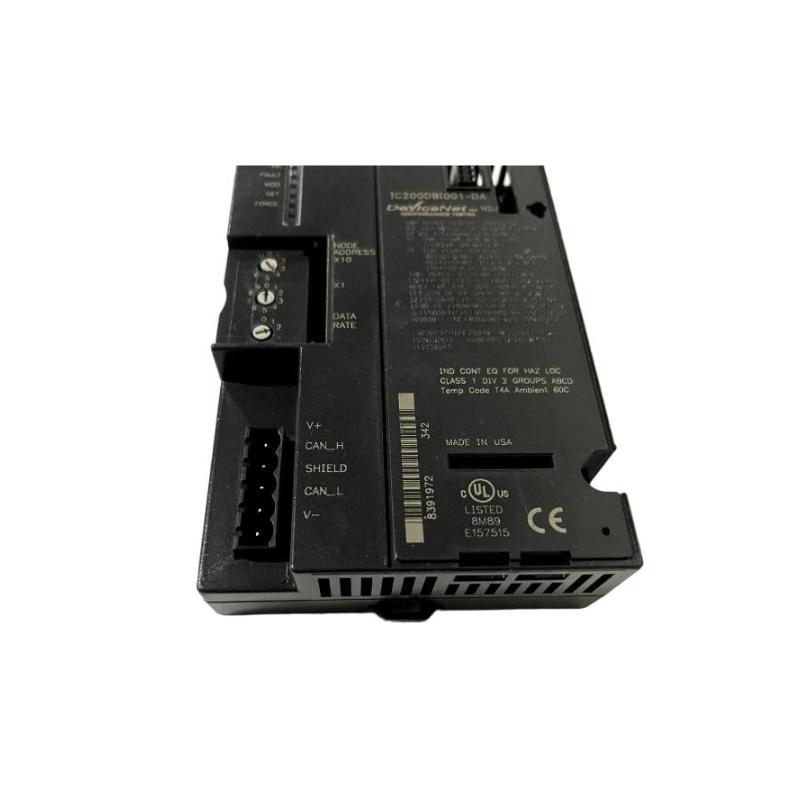
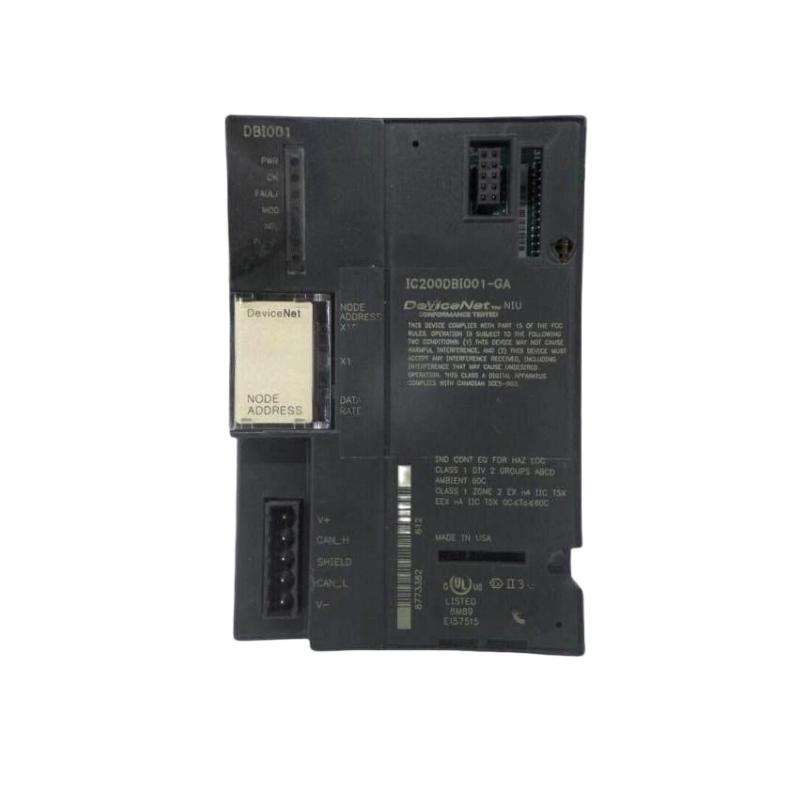
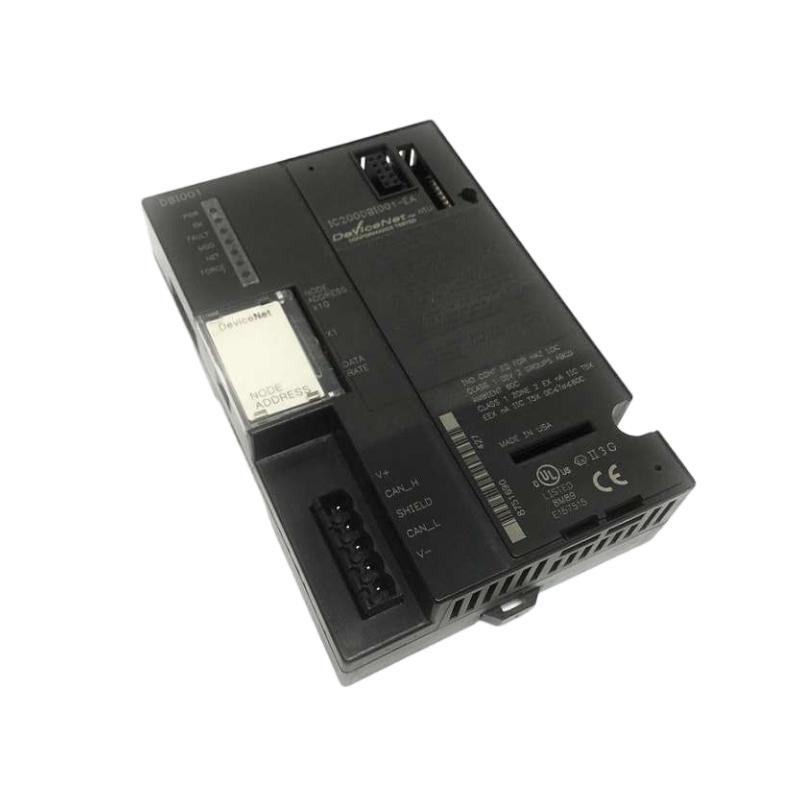
The GE IC200DBI001 VersaMax DeviceNet Network Interface Communication Card is a communication component designed to connect a GE VersaMax automation system with a DeviceNet industrial network. It provides an interface between the VersaMax control architecture and compatible DeviceNet devices, allowing control-system data to be exchanged across the network.
In a modern industrial automation system, communication between controllers, I/O devices, motor-control equipment, sensors and other intelligent field devices is essential. The IC200DBI001 provides the communication interface required to integrate VersaMax-based control hardware into a DeviceNet network architecture.
Unlike a VersaMax CPU module, the IC200DBI001 does not serve as the primary PLC processing unit. Its main role is network communication. Similarly, it is different from an I/O carrier or terminal base because it is designed to exchange control and diagnostic information through a DeviceNet network rather than provide direct field-wiring termination.
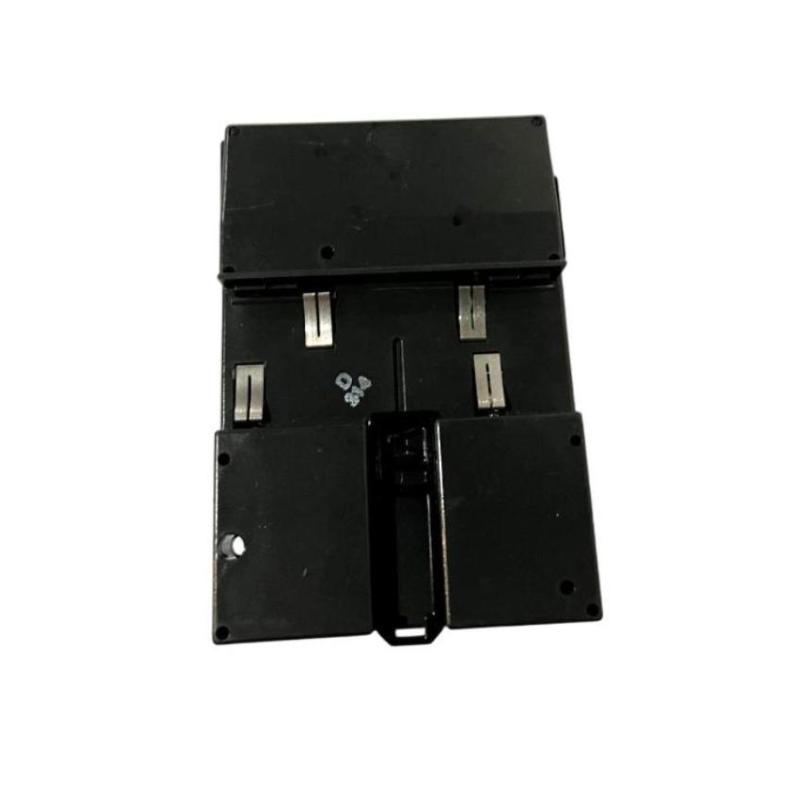
The specified dimensions of the IC200DBI001 are 133.4 × 69.1 × 85.9 mm, with a weight of approximately 0.29 kg. Its compact industrial design allows it to be integrated into control cabinets and modular automation systems where DeviceNet connectivity is required.
Technical Specifications
| Parameter |
Details |
| Manufacturer |
GE / GE Fanuc |
| Product Series |
VersaMax |
| Model |
IC200DBI001 |
| Product Type |
DeviceNet Network Interface Communication Card |
| Communication Network |
DeviceNet |
| Main Function |
VersaMax-to-DeviceNet network communication |
| Application |
Industrial automation and distributed I/O |
| Dimensions |
133.4 × 69.1 × 85.9 mm |
| Weight |
0.29 kg |
| Installation |
VersaMax modular control system |
| Network Function |
DeviceNet communication interface |
| System Architecture |
Modular PLC / distributed I/O |
| Communication Role |
Network data exchange |
| Connected Devices |
Compatible DeviceNet nodes |
| Application Type |
Machine and process automation |
| Maintenance |
Modular communication-card replacement |
| Environment |
Industrial control cabinet |
| Mounting |
System-dependent VersaMax installation |
Function and Working Principle
The primary function of the IC200DBI001 is to provide a DeviceNet communication interface for a VersaMax automation system.
Instead of processing field signals directly like an I/O module, the communication card transfers data between the VersaMax control system and devices connected to the DeviceNet network.
A simplified architecture can be represented as:
VersaMax Controller → IC200DBI001 → DeviceNet Network → Remote Devices
The remote devices may include compatible:
- I/O modules
- Sensors
- Actuators
- Motor-control equipment
- Drives
- Starters
- Operator-interface equipment
- Other intelligent DeviceNet nodes
Network Data Exchange
The IC200DBI001 allows control-system information to be exchanged over the DeviceNet network.
For example, a DeviceNet device may provide status information to the VersaMax controller:
Field Device → DeviceNet → IC200DBI001 → VersaMax Control System
Conversely, the controller can send commands toward a networked device:
VersaMax Control System → IC200DBI001 → DeviceNet → Remote Device
This two-way data exchange allows distributed equipment to participate in a coordinated automation process.
Distributed Automation
One of the main advantages of a network interface is that not every device needs to be connected directly to the controller through individual point-to-point wiring.
Instead, compatible devices can communicate through the DeviceNet network.
This can help organize:
- Machine control
- Remote I/O
- Device diagnostics
- Equipment status
- Control commands
- Networked field devices
The exact network architecture depends on the complete DeviceNet installation.
Role in Industrial Control Systems
The IC200DBI001 functions as a communication bridge between a VersaMax control system and a DeviceNet network.
A typical architecture may be represented as:
PLC / VersaMax Controller → IC200DBI001 → DeviceNet Network → Distributed Devices
The CPU remains responsible for executing the control program, while the communication interface handles network data exchange.
For example:
Motor Controller → DeviceNet → IC200DBI001 → VersaMax CPU
The motor-control status can then become part of the PLC control strategy.
Likewise:
VersaMax CPU → IC200DBI001 → DeviceNet → Motor Controller
The controller can transmit commands or configuration-related information through the network architecture.
This separation between control processing and network communication allows the automation system to remain modular.
Industrial Applications
The GE IC200DBI001 can be used in VersaMax automation systems where DeviceNet communication is required.
Typical applications include:
- Factory automation
- Machine control
- Packaging machinery
- Conveyor systems
- Assembly equipment
- Material handling
- Manufacturing lines
- Motor-control systems
- Distributed I/O
- Production automation
- Process monitoring
- OEM machinery
- Industrial equipment
- Automated material-transfer systems
It is especially useful when multiple intelligent field devices need to exchange information with a VersaMax-based control system through a DeviceNet network.
DeviceNet Communication in Industrial Automation
DeviceNet is commonly associated with industrial device-level communication, where controllers exchange information with distributed field devices.
A DeviceNet-based architecture can reduce the need for large quantities of individual point-to-point wiring by allowing multiple compatible devices to communicate over a shared network.
A simplified machine architecture might contain:
Controller
↓
DeviceNet Network Interface
↓
DeviceNet Network
↓
Remote I/O / Motor Control / Sensors / Actuators
This architecture can make it easier to organize distributed devices within a machine.
The IC200DBI001 serves as the interface between the VersaMax control environment and this network structure.
Network Data and Diagnostics
Communication interfaces are important not only for transmitting control information but also for monitoring device status.
Depending on the overall system configuration, networked devices may provide information such as:
- Device status
- Input conditions
- Output status
- Motor status
- Fault information
- Diagnostic information
- Operating conditions
This information can be used by the PLC application to make control decisions or initiate maintenance procedures.
For example, if a networked motor controller reports a fault, the PLC can use that information to stop a machine sequence, activate an alarm or initiate a predefined recovery procedure.
Installation and System Integration
Proper installation of the IC200DBI001 is important for reliable DeviceNet communication.
Mechanical Installation
The communication card should be installed in the appropriate VersaMax system configuration.
Before installation, verify:
- Correct model
- Compatible VersaMax architecture
- Correct mounting position
- Cabinet clearance
- DeviceNet network requirements
- Accessibility for maintenance
The specified dimensions are 133.4 × 69.1 × 85.9 mm, which should be considered when designing the control-panel layout.
DeviceNet Network Connection
The network connection should follow the electrical design of the DeviceNet installation.
Check:
- Correct network wiring
- Correct network topology
- Proper cable selection
- Correct node configuration
- Appropriate termination
- Correct power arrangement
- Secure connections
Network wiring errors can cause intermittent communication or complete loss of network connectivity.
Node Configuration
Each DeviceNet installation should be configured according to the network architecture.
Important parameters can include:
- Node addressing
- Communication configuration
- Device identity
- Data mapping
- Network settings
- Device configuration
The exact configuration depends on the connected DeviceNet devices and control-system requirements.
Commissioning
A practical commissioning sequence is:
- Inspect the communication card.
- Verify the VersaMax installation.
- Check DeviceNet wiring.
- Verify node configuration.
- Energize the system.
- Check communication status.
- Verify networked devices.
- Confirm data exchange.
- Test control commands.
- Monitor the network during machine operation.
Compatible System Components
The IC200DBI001 is normally used as part of a complete VersaMax and DeviceNet automation architecture.
| Component |
Function |
| VersaMax CPU Module |
Executes PLC control logic |
| IC200DBI001 |
Provides DeviceNet network communication |
| VersaMax I/O Modules |
Process local I/O signals |
| DeviceNet I/O Devices |
Provide distributed field I/O |
| DeviceNet Motor Controllers |
Provide networked motor control |
| DeviceNet Sensors |
Provide machine/process information |
| DeviceNet Actuators |
Perform distributed control functions |
| DeviceNet Network Cabling |
Provides network communication path |
| Network Termination Components |
Support proper network operation |
| VersaMax Power Module |
Supports system power requirements |
| Industrial Control Cabinet |
Houses automation components |
The exact component combination depends on the machine design and DeviceNet network requirements.
IC200DBI001 vs. VersaMax CPU Modules
The IC200DBI001 and VersaMax CPU modules perform different functions.
| Feature |
IC200DBI001 |
IC200CPU001 / IC200CPU002 |
| Product Type |
DeviceNet Communication Card |
CPU Module |
| Main Function |
Network communication |
PLC processing |
| Executes Application Program |
No |
Yes |
| DeviceNet Interface |
Yes |
System-dependent architecture |
| Main Role |
Data exchange |
Control logic |
| I/O Coordination |
Through communication |
Direct system control |
| Network Function |
Primary function |
Supporting control architecture |
| Typical Application |
Device-level networking |
Machine/process control |
This distinction is important when selecting replacement parts.
A communication-card failure and a CPU failure can produce different symptoms, so the complete control system should be diagnosed before replacement.
DeviceNet Communication Troubleshooting
When a VersaMax system loses communication with DeviceNet equipment, troubleshooting should proceed systematically.
A practical diagnostic sequence is:
Power → Communication Card → Network Wiring → Node Configuration → Device Status → PLC Configuration
Check Power
Verify that the communication card and DeviceNet network have the required electrical power.
Inspect Network Wiring
Check for:
- Loose connections
- Damaged cables
- Incorrect wiring
- Poor connections
- Incorrect termination
- Excessive cable length
- Electrical interference
Check Node Configuration
Verify that each device has the correct network configuration.
A duplicated or incorrect node address can prevent normal communication.
Check Device Status
Inspect the status of connected DeviceNet nodes.
If only one device is unavailable, the problem may be local to that device or its wiring.
If multiple devices are unavailable simultaneously, the fault may be associated with the network infrastructure or communication interface.
Check PLC Configuration
The VersaMax controller configuration should correspond to the installed DeviceNet architecture.
Incorrect data mapping or configuration can result in communication that appears physically active but does not produce the expected control behavior.
Recommended Alternative Models
Depending on the required communication architecture, controller configuration and network technology, the following models may be considered.
| Recommended Model |
Type |
Key Feature |
Application |
| IC200DBI001 |
DeviceNet Network Interface |
DeviceNet connectivity |
VersaMax DeviceNet systems |
| IC200BEM002 |
VersaMax Network Interface |
Distributed network communication |
VersaMax automation |
| IC200BEM103 |
Network Interface Module |
Industrial communication |
Distributed control |
| IC200CPU001 |
VersaMax CPU Module |
Central PLC processing |
Machine control |
| IC200CPU002 |
VersaMax CPU Module |
PLC control processing |
Automation systems |
| IC200CPWR102 |
VersaMax Power Module |
System power support |
VersaMax control systems |
| IC200CHS025 |
Compact I/O Carrier |
Spring-loaded I/O interface |
Local I/O |
| IC200CHS122 |
Fuse-Type Expansion Terminal |
Expansion I/O interface |
Distributed I/O systems |
Communication interfaces should be selected according to the required network protocol. A DeviceNet interface should not be replaced by another communication module simply because the physical dimensions appear similar.
Key Advantages
- Designed for GE VersaMax automation systems
- Provides DeviceNet network connectivity
- Supports communication with compatible distributed devices
- Enables networked I/O architecture
- Supports industrial device-level communication
- Reduces dependence on individual point-to-point connections
- Supports distributed machine-control architectures
- Facilitates networked device diagnostics
- Suitable for motor-control and I/O applications
- Compact industrial design
- Suitable for OEM automation systems
- Supports modular VersaMax architecture
- Dimensions of approximately 133.4 × 69.1 × 85.9 mm
- Weight of approximately 0.29 kg
Technical FAQs
What is GE IC200DBI001?
The GE IC200DBI001 is a VersaMax DeviceNet Network Interface Communication Card designed to connect a compatible VersaMax automation system with a DeviceNet industrial network.
What is the main function of IC200DBI001?
Its primary function is to provide communication between the VersaMax control system and compatible DeviceNet network devices.
What are the dimensions of IC200DBI001?
The specified dimensions are 133.4 × 69.1 × 85.9 mm.
What is the weight of IC200DBI001?
The specified weight is approximately 0.29 kg.
Is IC200DBI001 a CPU module?
No. It is a DeviceNet communication interface. A VersaMax CPU module is responsible for executing the PLC application program.
What devices can communicate through IC200DBI001?
Depending on the system configuration, it can communicate with compatible DeviceNet devices such as distributed I/O, motor-control equipment, sensors, actuators and other networked industrial devices.
Why is a DeviceNet communication interface needed?
It provides the communication path required for a VersaMax control system to exchange data with compatible DeviceNet devices.
What should be checked when DeviceNet communication fails?
Technicians should check power, network wiring, node configuration, termination, device status and PLC communication configuration.
Can IC200CPU002 replace IC200DBI001?
No. IC200CPU002 is a CPU module, while IC200DBI001 is a DeviceNet communication interface. They perform different functions within the automation system.
Can IC200DBI001 be used without a VersaMax control system?
Its intended role is as part of a VersaMax-based DeviceNet communication architecture. The complete system configuration and compatible components should be verified before installation.
Conclusion
The GE IC200DBI001 VersaMax DeviceNet Network Interface Communication Card is a communication component designed to connect VersaMax industrial automation systems with compatible DeviceNet networks. Its primary function is to provide reliable data exchange between the VersaMax control architecture and distributed DeviceNet devices.
With specified dimensions of 133.4 × 69.1 × 85.9 mm and a weight of approximately 0.29 kg, the IC200DBI001 provides a compact communication solution for industrial control cabinets and distributed automation systems.
By enabling DeviceNet connectivity, the communication card allows networked I/O, motor-control equipment, sensors, actuators and other compatible devices to participate in a coordinated control architecture. This can simplify distributed machine design while providing access to device status and diagnostic information.
For replacement and system-integration projects, engineers should verify the DeviceNet network architecture, node configuration, wiring, communication requirements, VersaMax CPU configuration and connected devices before installation. When DeviceNet connectivity is required within a VersaMax automation system, the GE IC200DBI001 serves as the communication interface that links the PLC architecture with the device-level network.