Product Overview
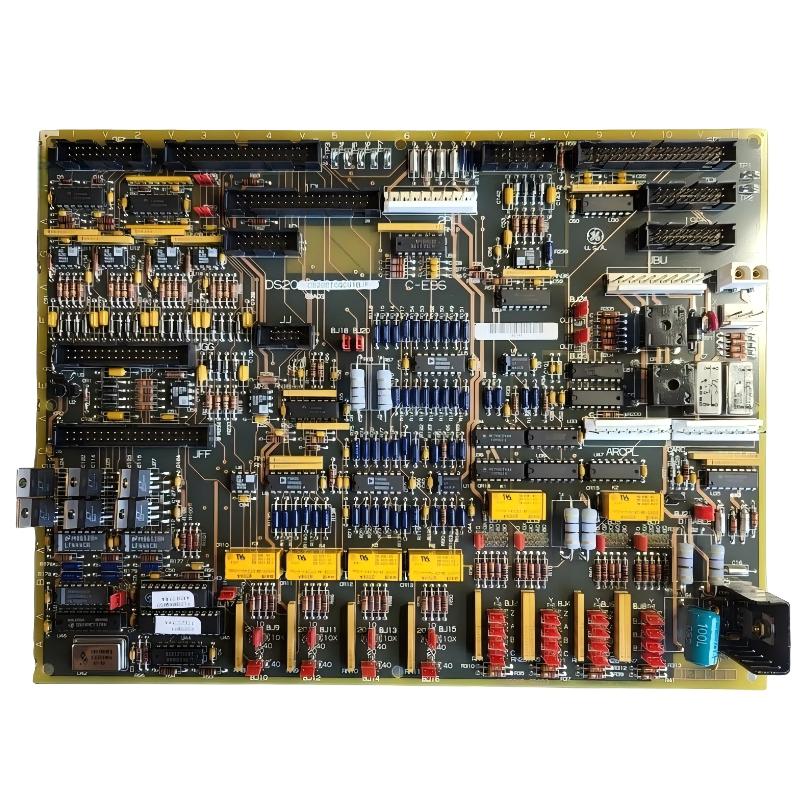
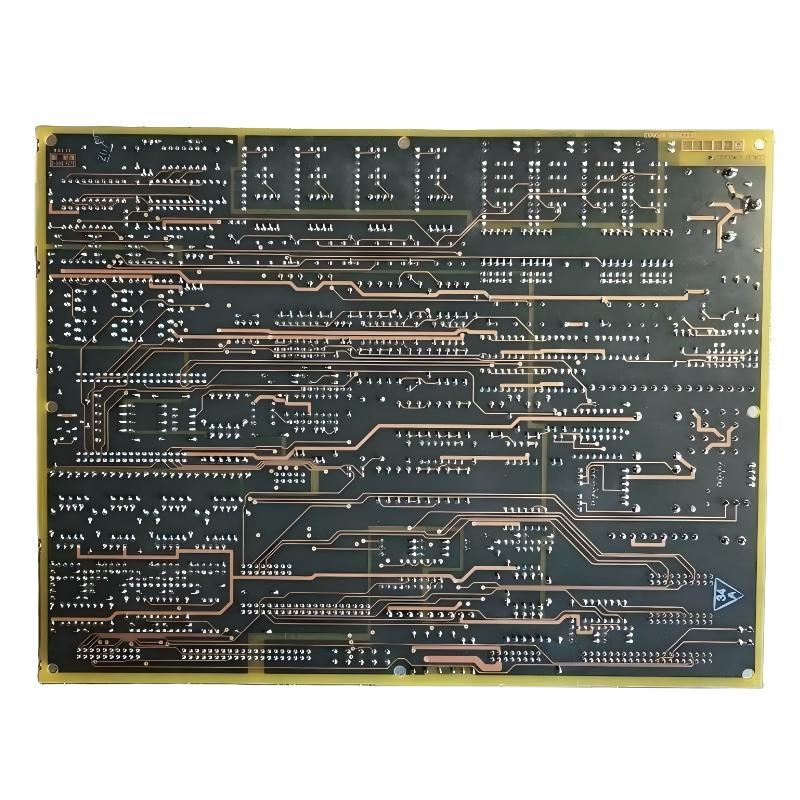
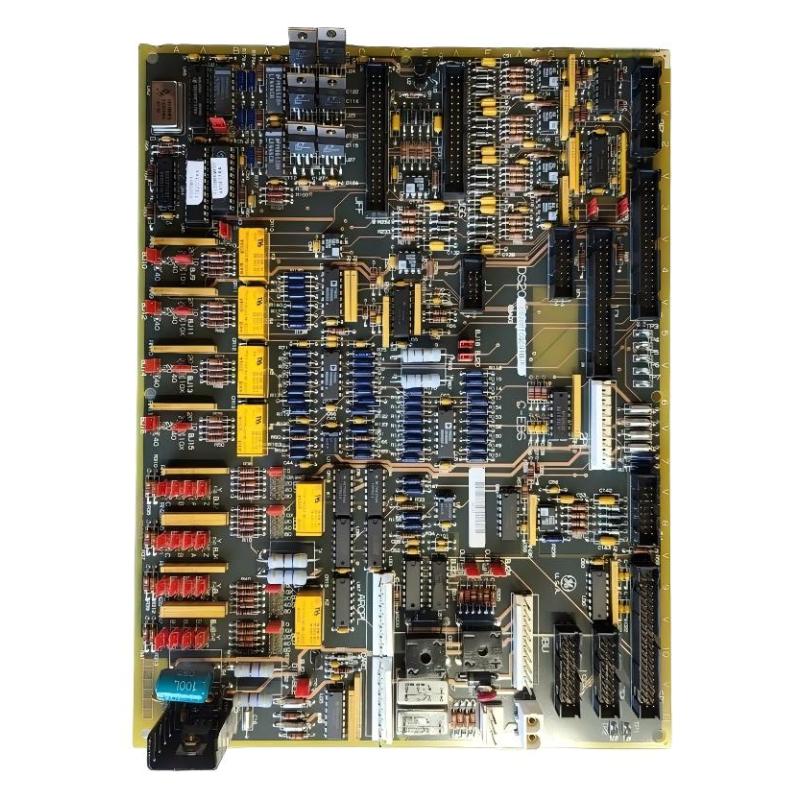
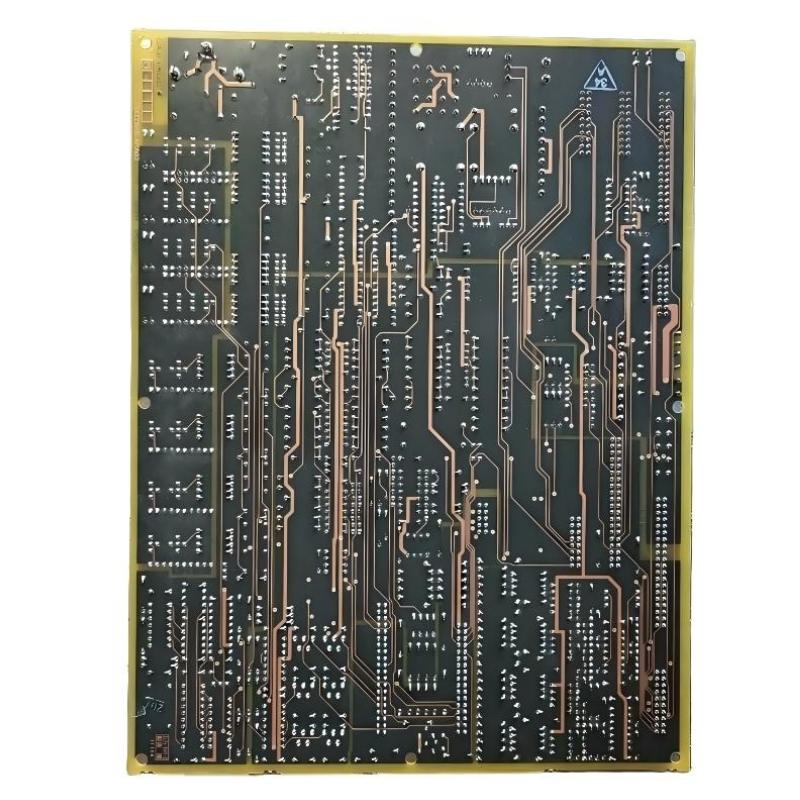
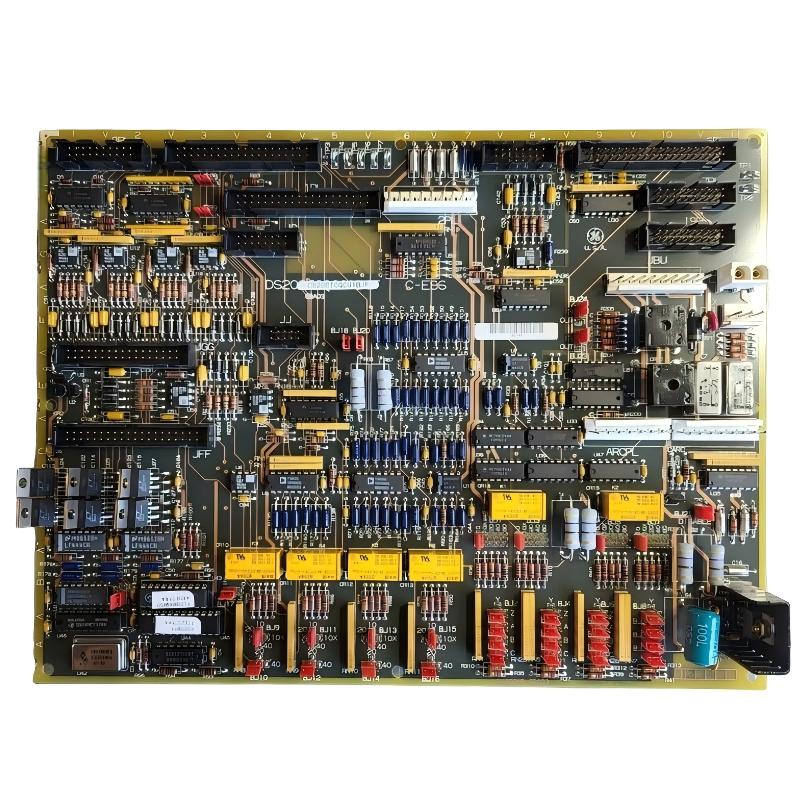
The GE DS200TCQCG1BJF MARK V RST Overflow Plate is a specialized interface and signal-processing board used within the GE Mark V Speedtronic turbine control system. It belongs to the DS200 series and the TCQC family, supporting the RST architecture used for turbine control, monitoring, and protection.
The board is designed to operate as part of an integrated Mark V control cabinet rather than as an independent PLC or controller. It works together with I/O boards, terminal boards, control processors, RST control cores, and field instrumentation to support the movement and organization of turbine-related signals.
In a complex turbine installation, numerous measurements must be acquired from field devices and delivered to the appropriate control-processing hardware. The DS200TCQCG1BJF provides interface capability within this I/O architecture, helping the Mark V system accommodate the required signal paths.
The exact function of an installed TCQC board depends on the turbine configuration, associated terminal boards, connected I/O hardware, and board revision. Therefore, the complete part number should always be checked when selecting a replacement.
The specified dimensions of the DS200TCQCG1BJF are 330 × 280 × 25 mm, with a specified weight of 0.363 kg.
Technical Specifications
| Parameter |
Details |
| Manufacturer |
GE |
| Model |
DS200TCQCG1BJF |
| Product Series |
Mark V DS200 |
| Product Type |
RST Overflow Plate |
| Functional Acronym |
TCQC |
| Control System |
GE Mark V Speedtronic |
| System Architecture |
RST |
| Main Function |
RST I/O interface and overflow function |
| Dimensions |
330 × 280 × 25 mm |
| Weight |
0.363 kg |
| Board Type |
Industrial turbine-control PCB |
| Installation |
Mark V control cabinet |
| Application |
Turbine control and monitoring |
| Typical Equipment |
Gas turbines, steam turbines and industrial turbine systems |
| Interface |
Mark V internal I/O architecture |
| Application Category |
I/O expansion and signal interfacing |
| Operating Environment |
Industrial control environment |
Function and Working Principle
The primary role of the DS200TCQCG1BJF is to provide additional interface capability within the RST I/O architecture of the Mark V turbine control system.
A turbine control installation continuously receives signals from numerous field devices. Depending on the turbine design, these devices can include pressure transmitters, temperature sensors, speed pickups, position feedback devices, vibration sensors, and other process instrumentation.
These field signals are connected through the appropriate terminal and I/O hardware before being transferred to the control-processing architecture.
A simplified signal path can be represented as:
Field Instrumentation → Terminal Interface → I/O Hardware → TCQC Interface → RST Control Architecture
The exact signal path depends on the individual Mark V configuration.
The DS200TCQCG1BJF is therefore not intended to function as a standalone controller. Instead, it supports the internal organization and transfer of I/O information within the turbine control architecture.
The board works together with associated Mark V components to provide the interface capacity required by the particular turbine application. Its operation should consequently be evaluated in relation to the complete system rather than in isolation.
Role in Industrial Control Systems
The DS200TCQCG1BJF has a supporting role within the GE Mark V RST control architecture.
The Mark V system uses multiple control and I/O components to provide turbine control, monitoring, and protection. The RST architecture relies on appropriate signal interfaces so that information from field equipment can reach the control processors.
The TCQC family forms part of this interface structure.
The DS200TCQCG1BJF may be integrated with:
- TCQA analog I/O boards
- TCQB extended analog I/O boards
- Mark V I/O cores
- RST control cores
- Terminal boards
- Turbine control processor boards
- Power supply boards
- Generator interface equipment
- Turbine protection circuits
- Field sensors
- Process transmitters
The board does not normally execute the primary turbine-control algorithm. Instead, it participates in the signal-interface architecture that allows the processors to receive the necessary operating information.
This makes the board particularly important in systems where a large number of I/O channels must be organized within a redundant turbine-control architecture.
Industrial Applications
The GE DS200TCQCG1BJF is primarily associated with GE Mark V Speedtronic turbine control systems.
Typical applications include:
- Gas turbine control
- Steam turbine control
- Combined-cycle power generation
- Turbine generator systems
- Industrial turbine packages
- Mechanical-drive turbine systems
- Compressor-drive turbines
- Power-generation automation
- Turbine monitoring
- Legacy GE Speedtronic installations
- Industrial process systems using turbine equipment
Turbine automation requires continuous monitoring of many operating parameters.
Temperature sensors provide thermal information, pressure transmitters monitor process conditions, position sensors provide actuator feedback, and speed and vibration instrumentation provide information about rotating equipment.
The Mark V system combines these signals with its control logic and protection functions. The DS200TCQCG1BJF can form part of the internal interface architecture supporting these operations.
Installation and System Integration
Proper installation is important because the DS200TCQCG1BJF is connected to other critical Mark V components.
Before removing an existing board, maintenance personnel should document its installation configuration carefully.
Recommended installation steps include:
- Follow the approved turbine shutdown procedure.
- Isolate the relevant control-system power.
- Confirm the complete DS200TCQCG1BJF part number.
- Record the board revision information.
- Document connector locations.
- Identify all associated ribbon cables.
- Record the original cable orientation.
- Inspect the replacement board for physical damage.
- Check connectors and pins for contamination or damage.
- Install the board in the designated cabinet location.
- Reconnect cables according to the original configuration.
- Verify the associated I/O boards.
- Check terminal-board connections.
- Restore power according to the approved procedure.
- Check Mark V diagnostic indications.
- Verify communication with associated I/O hardware.
- Confirm expected signal values.
- Complete system diagnostics before returning the turbine to service.
The PCB should be handled using appropriate electrostatic-discharge precautions.
Ribbon cables should be disconnected and reconnected using the connector body rather than pulling directly on the cable. Incorrect cable placement can result in missing signals or unexpected system alarms.
A replacement board should also be checked for revision compatibility. Similar-looking DS200 boards are not necessarily functionally interchangeable.
Compatible System Components
The DS200TCQCG1BJF is normally integrated into a larger Mark V control-system configuration.
| Component |
Function |
| TCQA Analog I/O Board |
Processes and conditions analog turbine signals |
| TCQB Extended Analog I/O Board |
Provides additional analog I/O capability |
| Mark V I/O Core |
Interfaces field signals with control electronics |
| RST Control Cores |
Provide redundant control processing |
| Terminal Boards |
Connect field sensors and transmitters |
| Control Processor Boards |
Execute turbine-control logic |
| Power Supply Boards |
Provide power to control electronics |
| Generator Interface Hardware |
Handles generator-related measurements |
| Pressure Transmitters |
Provide pressure information |
| Temperature Sensors |
Provide temperature measurements |
| Position Sensors |
Monitor valve and actuator position |
| Vibration Sensors |
Monitor rotating machinery |
The actual component combination depends on the turbine model and Mark V cabinet design.
For this reason, compatibility should be confirmed from the complete system configuration rather than by comparing only dimensions or board family names.
Recommended Alternative Models
The following related models may be considered when evaluating GE Mark V RST I/O hardware:
| Model |
Type |
Key Feature |
Application |
| DS200TCQCG1BJF |
RST Overflow Plate |
TCQC interface configuration |
Mark V turbine control |
| DS200TCQCG1BFE |
RST Overflow Plate |
Related TCQC configuration |
Mark V RST systems |
| DS200TCQCG1BGF |
RST Overflow Plate |
Related TCQC interface |
Mark V turbine systems |
| DS200TCQBG1BCB |
Analog I/O Expansion Board |
Extended RST analog I/O |
Mark V I/O expansion |
| DS200TCQAG1BHF |
RST Analog I/O Board |
Analog signal interface |
Mark V analog I/O |
These models are related to the Mark V I/O architecture, but they should not automatically be considered direct replacements.
Different board revisions can have different connectors, signal assignments, hardware configurations, and application-specific functions.
When selecting an alternative, engineers should verify the complete part number and the actual Mark V system configuration.
Key Advantages
The GE DS200TCQCG1BJF offers several advantages for legacy turbine-control applications:
- Supports the GE Mark V RST architecture
- Provides additional I/O interface capability
- Supports complex turbine signal configurations
- Integrates with Mark V I/O cores
- Works alongside TCQA and TCQB hardware
- Supports redundant turbine-control architectures
- Helps organize internal signal paths
- Supports turbine monitoring and control
- Suitable for legacy GE Speedtronic systems
- Provides a practical maintenance solution for existing installations
- Compact 25 mm board thickness
- Supports continued operation of established control infrastructure
Its principal value is maintaining the established Mark V I/O architecture without requiring replacement of the complete turbine control platform.
Technical FAQs
What is GE DS200TCQCG1BJF?
The GE DS200TCQCG1BJF is a MARK V RST Overflow Plate belonging to the TCQC family of GE DS200 turbine-control hardware.
What is the main function of DS200TCQCG1BJF?
Its main function is to support additional signal-interface and overflow capability within the Mark V RST I/O architecture.
What are the dimensions of DS200TCQCG1BJF?
The specified dimensions are 330 × 280 × 25 mm.
What is the weight of DS200TCQCG1BJF?
The specified weight is 0.363 kg.
What does TCQC mean?
TCQC identifies a GE Mark V board family associated with RST I/O interface and overflow functions.
Is DS200TCQCG1BJF a processor board?
No. It is an I/O/interface board. Dedicated Mark V processor hardware performs the primary turbine-control logic.
What components work with DS200TCQCG1BJF?
It can operate within a system containing TCQA analog I/O boards, TCQB expansion boards, terminal boards, Mark V I/O cores, RST control cores, processor boards, power supplies, and field instrumentation.
Can DS200TCQCG1BFE replace DS200TCQCG1BJF?
Not automatically. Both belong to the TCQC family, but their hardware revisions and configurations may differ. Compatibility should be verified before installation.
What should be checked before replacing DS200TCQCG1BJF?
The complete board number, revision, connector configuration, associated I/O boards, terminal interfaces, signal assignments, and Mark V cabinet architecture should be checked.
Is DS200TCQCG1BJF suitable for general PLC applications?
No. It is specifically associated with the GE Mark V turbine-control architecture and is primarily intended for compatible Mark V installations.
Conclusion
The GE DS200TCQCG1BJF MARK V RST Overflow Plate is a specialized interface component designed for GE Mark V Speedtronic turbine control systems.
Its primary role is to support the RST I/O and signal-interface architecture, allowing the turbine control system to accommodate extensive field instrumentation and associated control signals.
The specified dimensions are 330 × 280 × 25 mm, with a weight of 0.363 kg.
The board works as part of an integrated Mark V system alongside TCQA analog I/O boards, TCQB expansion boards, terminal boards, I/O cores, RST control cores, processor boards, and turbine instrumentation.
For maintenance engineers, system integrators, and procurement teams, accurate identification of the DS200TCQCG1BJF is essential. Related TCQC boards may have similar functions or physical characteristics but different hardware revisions and system assignments.
When correctly matched with the existing Mark V configuration, the DS200TCQCG1BJF provides a practical solution for maintaining the I/O interface capabilities and long-term reliability of legacy GE turbine control systems.