Product Overview
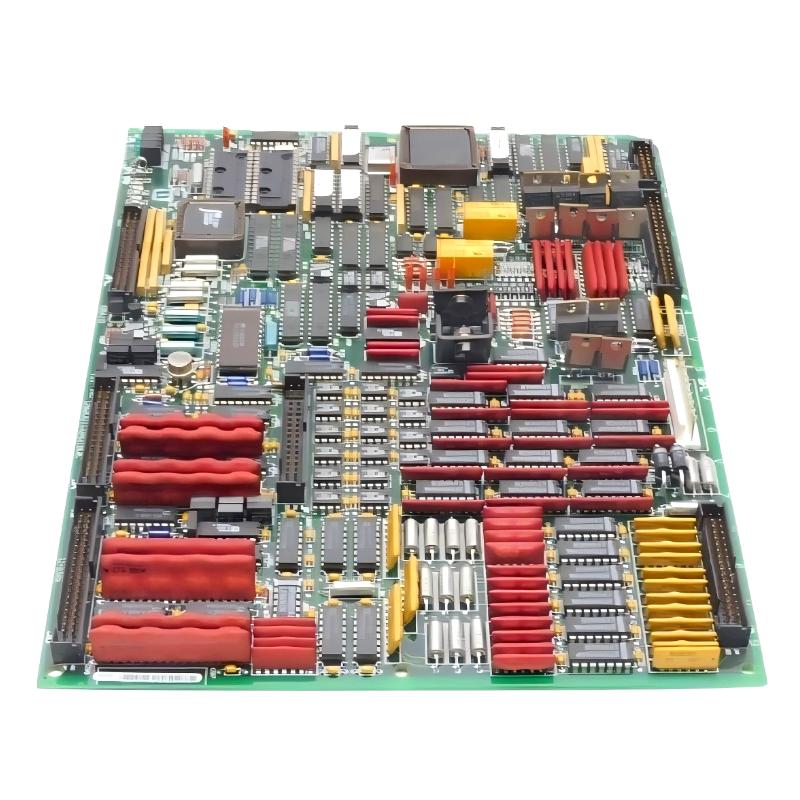
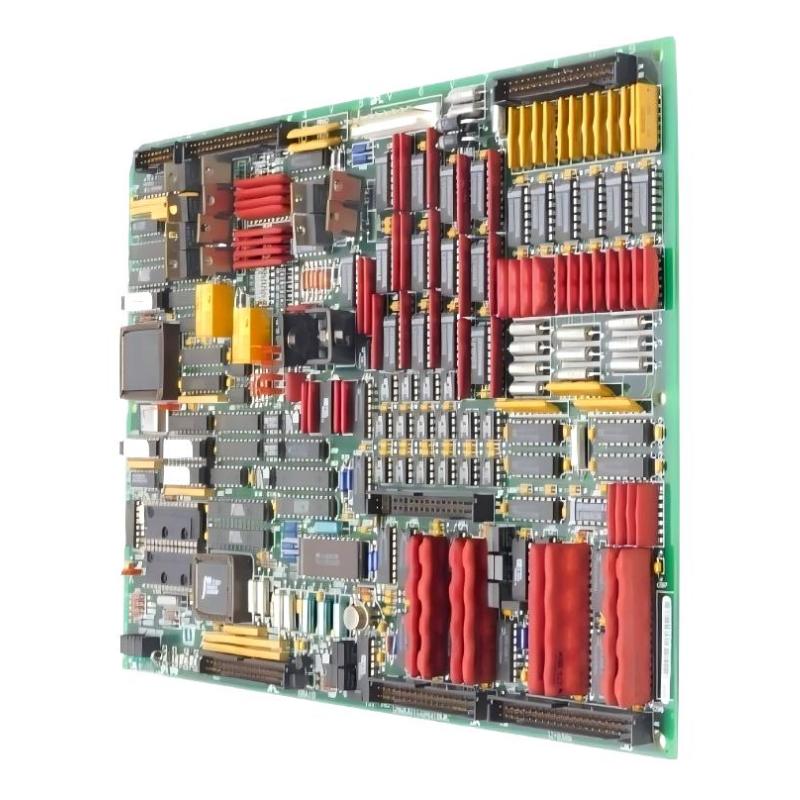
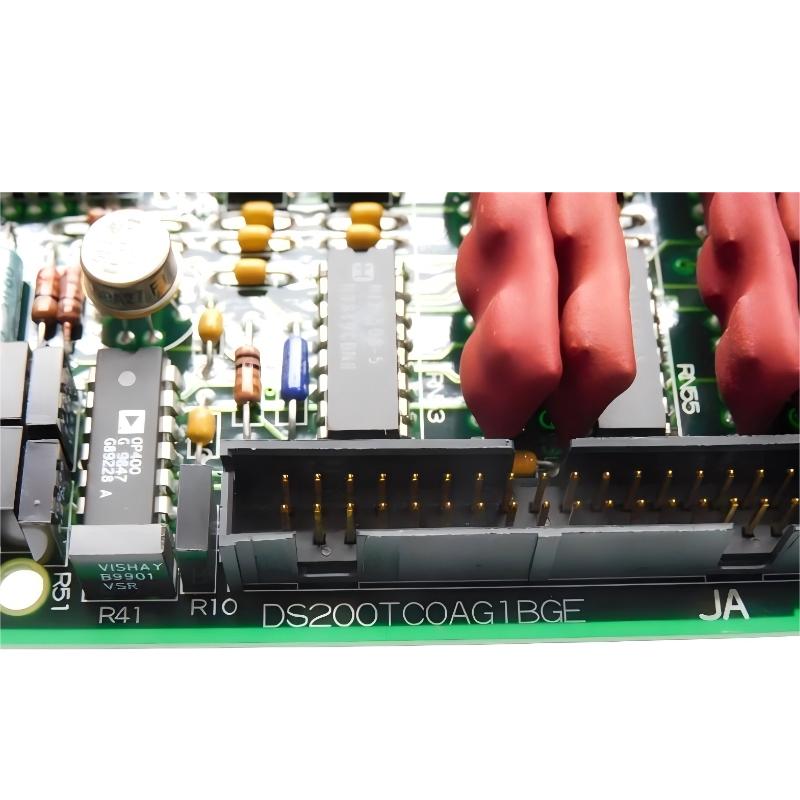
The GE DS200TCQAG1BGE MARK V RST Analog I/O Board is an analog input/output interface board designed for the GE Mark V Speedtronic turbine control system. The board is part of the DS200 family and provides an important interface between field-level analog signals and the turbine control processing architecture.
The DS200TCQAG1BGE is more specifically identified as a TCQA Analog Input I/O Board. It is designed to scale, condition, process, and interface a variety of analog signals used by the Mark V control system. These signals can include measurements associated with turbine operating conditions, valve position, temperature, vibration, pressure, generator and line monitoring, and other process parameters.
The board works within the RST architecture, where multiple control cores and associated I/O hardware cooperate to provide reliable turbine control and monitoring.
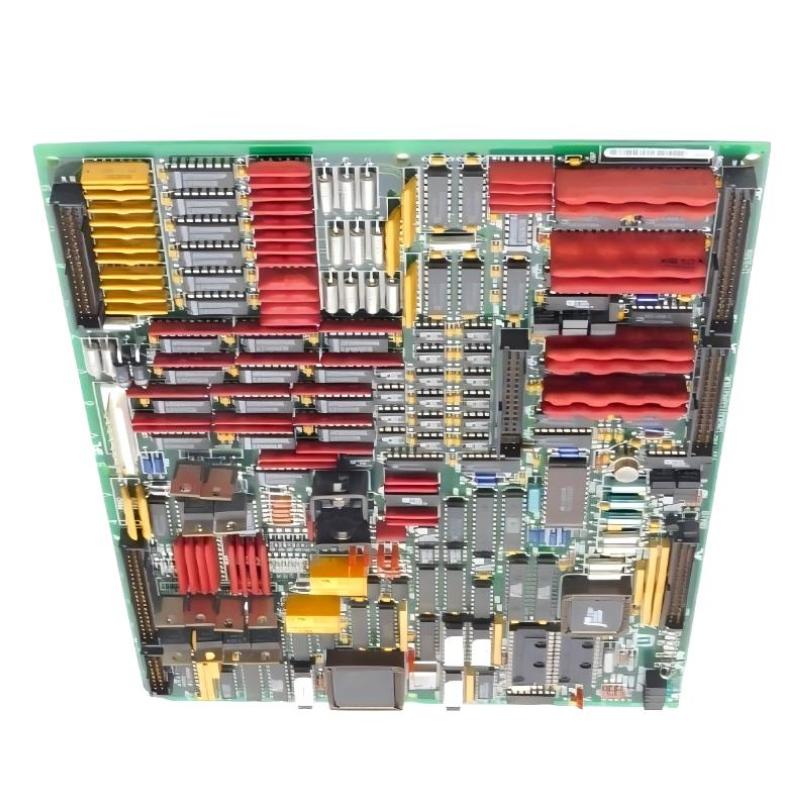
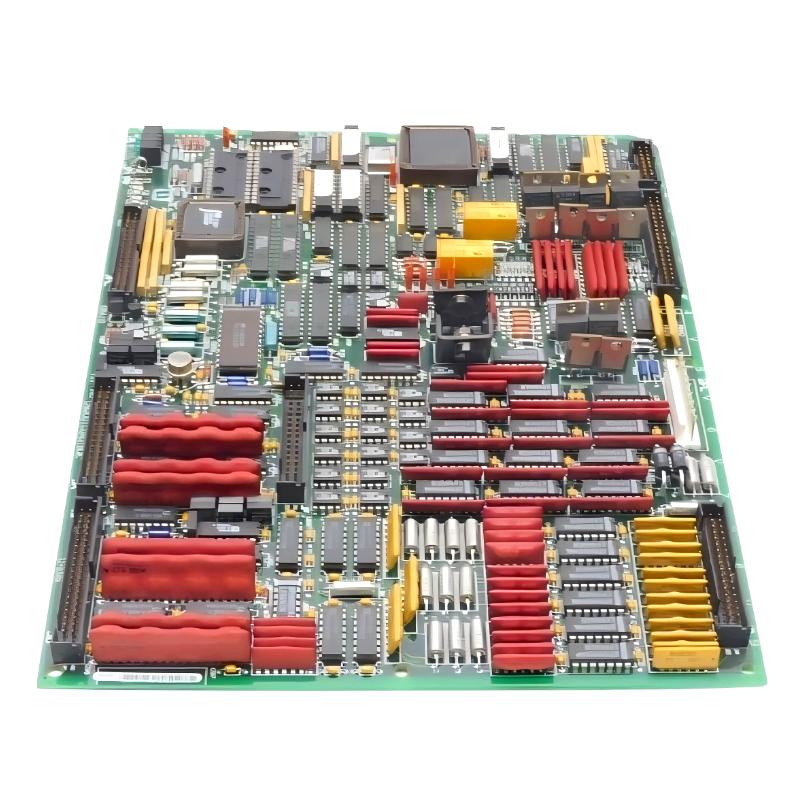
The DS200TCQAG1BGE includes multiple ribbon-cable connectors, jumpers, and diagnostic LEDs. These hardware features allow it to communicate with other Mark V boards and provide local status information for maintenance personnel.
With specified dimensions of 330 × 280 × 25 mm and a weight of 0.45 kg, the board is designed for installation within an industrial GE Mark V control cabinet.
Technical Specifications
| Parameter |
Details |
| Manufacturer |
GE |
| Model |
DS200TCQAG1BGE |
| Product Series |
Mark V DS200 |
| Product Type |
RST Analog I/O Board |
| Functional Acronym |
TCQA |
| Functional Description |
Analog Input I/O Board |
| Control System |
GE Mark V Speedtronic |
| System Architecture |
RST |
| Dimensions |
330 × 280 × 25 mm |
| Weight |
0.45 kg |
| PCB Type |
Industrial analog I/O board |
| Functional Revision |
B |
| Secondary Functional Revision |
G |
| Artwork Revision |
E |
| 34-Pin Connectors |
4 |
| 40-Pin Connectors |
2 |
| Jumpers |
6 |
| Diagnostic LEDs |
6 |
| Installation |
Mark V control cabinet |
| Application |
Turbine control and monitoring |
| Typical Equipment |
Gas turbines and steam turbines |
Function and Working Principle
The primary function of the DS200TCQAG1BGE is to provide analog signal conditioning and I/O interfacing within the GE Mark V turbine control system.
Modern turbine control systems receive a large number of continuously changing signals. These signals originate from sensors, transmitters, valve-position devices, vibration monitoring circuits, and generator instrumentation.
The TCQA board processes these signals so they can be used by the Mark V control architecture.
A simplified signal path is:
Field Sensor / Transmitter → Terminal Board → DS200TCQAG1BGE → Mark V Processing → Control / Monitoring Function
The board can handle different types of analog information, including signal categories associated with:
- 4–20 mA inputs
- 4–20 mA outputs
- Thermocouple signals
- LVDT-related signals
- Vibration inputs
- Pulse-rate inputs
- Voltage signals
- Generator and line signals
- Servo-related signals
The board performs signal scaling and conditioning so that the control system can interpret the incoming information correctly.
For example, an analog pressure signal from a turbine process transmitter may not be directly suitable for the processor. The signal must first pass through the appropriate interface and conditioning circuits. The TCQA board performs part of this process before the information is made available to the control architecture.
The board therefore acts as an important bridge between physical turbine measurements and digital control-system processing.
Role in Industrial Control Systems
The DS200TCQAG1BGE occupies the analog signal-processing and interface layer of the Mark V architecture.
The RST Mark V system uses multiple control cores and associated I/O hardware to improve system availability and control reliability. The TCQA board supports this architecture by handling analog information associated with the turbine and its auxiliary equipment.
The board can work with:
- Mark V I/O cores
- RST control processors
- Terminal boards
- STCA boards
- TCQC boards
- Turbine sensors
- LVDT devices
- Thermocouples
- Pressure transmitters
- Vibration monitoring circuits
- Generator and line measurement circuits
The board’s six diagnostic LEDs provide useful local status information. During maintenance, these indicators can help technicians determine whether the board is operating normally or whether additional investigation is required.
The multiple ribbon-cable connectors also provide communication paths between the TCQA board and other control-system boards.
Because the board handles many different signal types, an abnormal analog reading does not necessarily mean that the TCQA board itself has failed. Field wiring, terminal boards, sensors, grounding, connectors, and other associated components should also be checked during troubleshooting.
Industrial Applications
The GE DS200TCQAG1BGE is primarily associated with GE Mark V turbine control applications.
Typical applications include:
- Gas turbine control
- Steam turbine control
- Power generation
- Combined-cycle power plants
- Turbine generator systems
- Industrial turbine packages
- Mechanical-drive turbines
- Compressor-drive turbine systems
- Generator monitoring
- Legacy GE Speedtronic installations
The board is particularly important in systems where multiple analog process parameters must be monitored continuously.
Turbine control depends heavily on accurate measurement. Temperature, pressure, valve position, vibration, generator conditions, and other parameters can change rapidly during startup, shutdown, load changes, and abnormal operating conditions.
By providing analog signal conditioning and interfacing, the DS200TCQAG1BGE helps the Mark V control system obtain the information required for these operations.
Installation and System Integration
Installation of the DS200TCQAG1BGE requires careful handling because it contains multiple ribbon-cable connectors and jumpers.
Before replacing the board, maintenance personnel should document the original configuration.
Recommended installation practices include:
- Follow the approved Mark V shutdown and electrical isolation procedure.
- Record the complete DS200TCQAG1BGE part number and revision.
- Photograph or document every ribbon-cable connection.
- Record jumper positions before removing the original board.
- Label connectors where necessary.
- Inspect the replacement PCB for physical damage.
- Install the board in the correct Mark V cabinet position.
- Reconnect the ribbon cables to their original positions.
- Verify all jumper settings.
- Confirm that connectors are fully seated.
- Restore system power according to the approved procedure.
- Check the board’s diagnostic LEDs.
- Verify analog signal values.
- Compare critical measurements with field instrumentation.
- Complete system diagnostics before returning the turbine to normal operation.
Ribbon cables should be handled carefully. They should not be pulled by the cable itself because excessive force can damage the conductors or connector interface.
When troubleshooting an analog signal, engineers should check the entire signal path rather than replacing the TCQA board immediately.
Compatible System Components
The DS200TCQAG1BGE works with a range of Mark V control-system components.
| Component |
Function |
| Mark V I/O Cores |
Provide field signal interface and processing |
| RST Control Processors |
Execute turbine control logic |
| Terminal Boards |
Connect field instrumentation |
| STCA Boards |
Interface selected analog and control signals |
| TCQC Boards |
Handle associated generator and line signal functions |
| LVDT Devices |
Provide position feedback |
| Thermocouples |
Measure temperature |
| Pressure Transmitters |
Provide process pressure measurements |
| Vibration Sensors |
Monitor turbine mechanical conditions |
| Generator Instrumentation |
Provides electrical operating measurements |
| Ribbon Cable Assemblies |
Transfer signals between Mark V boards |
The exact combination depends on the turbine model and control-panel configuration.
Because the TCQA board handles many signal categories, the connected terminal boards and field devices must be matched correctly to the Mark V system design.
Recommended Alternative Models
The following models may be considered when evaluating related GE Mark V analog I/O hardware:
| Model |
Type |
Key Feature |
Application |
| DS200TCQAG1BGE |
RST Analog I/O Board |
B/G/E revision configuration |
Mark V turbine control |
| DS200TCQAG1BEC |
RST Analog I/O Board |
Related TCQA revision |
Mark V analog I/O |
| DS200TCQAG1B |
Analog I/O Board |
Base B revision |
Legacy Mark V systems |
| DS200TCQAG1BHF |
Analog I/O Board |
Related TCQA configuration |
Turbine control applications |
| DS200TCQAG2B |
RST Analog I/O Card |
Related TCQA family |
Mark V analog I/O |
These models belong to the same general TCQA/analog I/O family but should not automatically be considered direct replacements.
Different revisions may have different hardware configurations, signal assignments, connector arrangements, and system requirements. Before replacement, the exact board number and Mark V system configuration should be verified.
For a direct replacement application, matching the complete DS200TCQAG1BGE identification is the preferred approach.
Key Advantages
The GE DS200TCQAG1BGE provides several important advantages for Mark V turbine control systems:
- Provides RST analog I/O functionality
- Supports multiple analog signal types
- Conditions and scales field-level analog signals
- Supports 4–20 mA signal interfaces
- Supports thermocouple-related signal processing
- Supports LVDT-related inputs
- Supports vibration-related inputs
- Interfaces generator and line signals
- Provides six diagnostic LEDs
- Includes multiple ribbon-cable interfaces
- Supports six configurable jumper positions
- Integrates with Mark V RST architecture
- Suitable for legacy turbine control maintenance
Its ability to handle several different categories of analog signals makes the TCQA board an important part of the Mark V measurement and control system.
Technical FAQs
What is GE DS200TCQAG1BGE?
The GE DS200TCQAG1BGE is an RST Analog I/O Board used in the GE Mark V Speedtronic turbine control system.
What is the main function of DS200TCQAG1BGE?
Its main function is to interface, scale, and condition analog signals used by the Mark V turbine control system.
What are the dimensions of DS200TCQAG1BGE?
The specified dimensions are 330 × 280 × 25 mm.
What is the weight of DS200TCQAG1BGE?
The specified weight is 0.45 kg.
How many connectors does DS200TCQAG1BGE have?
The board has four 34-pin connectors and two 40-pin connectors.
How many diagnostic LEDs are installed?
The DS200TCQAG1BGE has six diagnostic LEDs.
How many jumpers are included?
The board includes six jumpers for configuration and system interfacing.
What types of signals can the TCQA board handle?
Depending on the Mark V configuration, it can handle signal types associated with 4–20 mA inputs and outputs, thermocouples, LVDT devices, vibration, pulse-rate inputs, voltage signals, and generator/line measurements.
Is DS200TCQAG1BGE a processor board?
No. It is an analog I/O and signal-conditioning board. The main turbine control processing is performed by dedicated Mark V processor hardware.
Can DS200TCQAG1BEC replace DS200TCQAG1BGE?
Not automatically. Both belong to the TCQA analog I/O family, but their hardware revisions and system configurations can differ. Compatibility should be verified before installation.
What should be checked before replacing DS200TCQAG1BGE?
The complete board number, revision, connector arrangement, jumper positions, terminal-board configuration, signal assignments, and Mark V cabinet architecture should all be checked.
Conclusion
The GE DS200TCQAG1BGE MARK V RST Analog I/O Board is an important analog signal interface component used within GE Mark V turbine control systems. Its primary role is to scale, condition, and interface a wide range of analog signals between field instrumentation and the Mark V control architecture.
The board supports signal categories including 4–20 mA, thermocouple, LVDT, vibration, pulse, voltage, and generator/line-related signals, depending on the specific system configuration. Its four 34-pin connectors, two 40-pin connectors, six jumpers, and six diagnostic LEDs provide the interfaces and local status information required for integration and maintenance.
With specified dimensions of 330 × 280 × 25 mm and a weight of 0.45 kg, the board is designed for installation in an industrial Mark V control cabinet.
For maintenance engineers and system integrators, accurate identification of the DS200TCQAG1BGE is essential. Related TCQA boards may look similar but can have different revisions and signal configurations.
When correctly matched with the appropriate terminal boards, sensors, processors, and RST control architecture, the DS200TCQAG1BGE provides a reliable analog I/O solution for maintaining the measurement, monitoring, and control functions of legacy GE turbine automation systems.