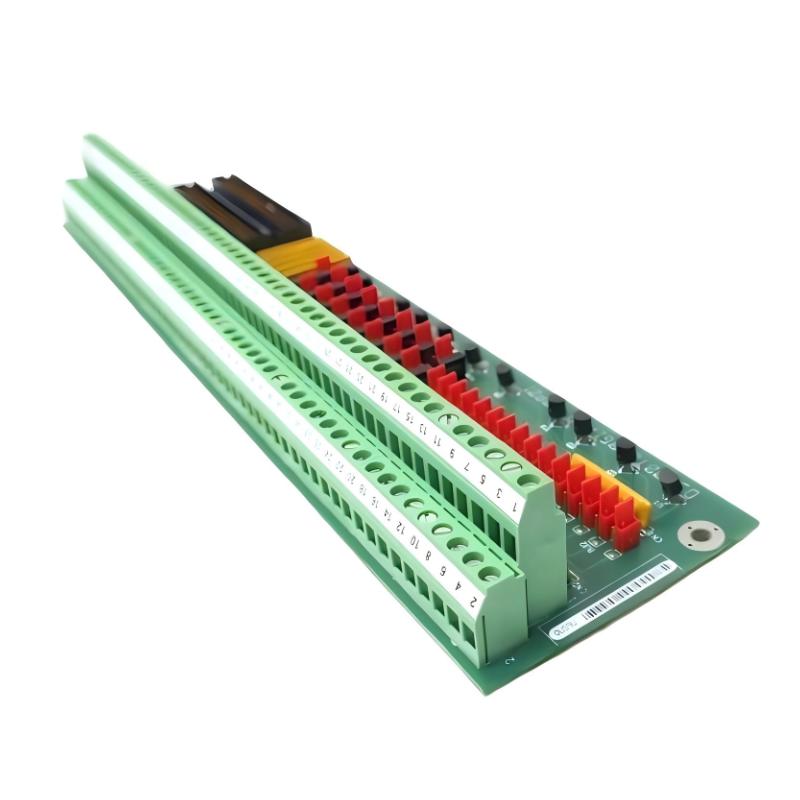
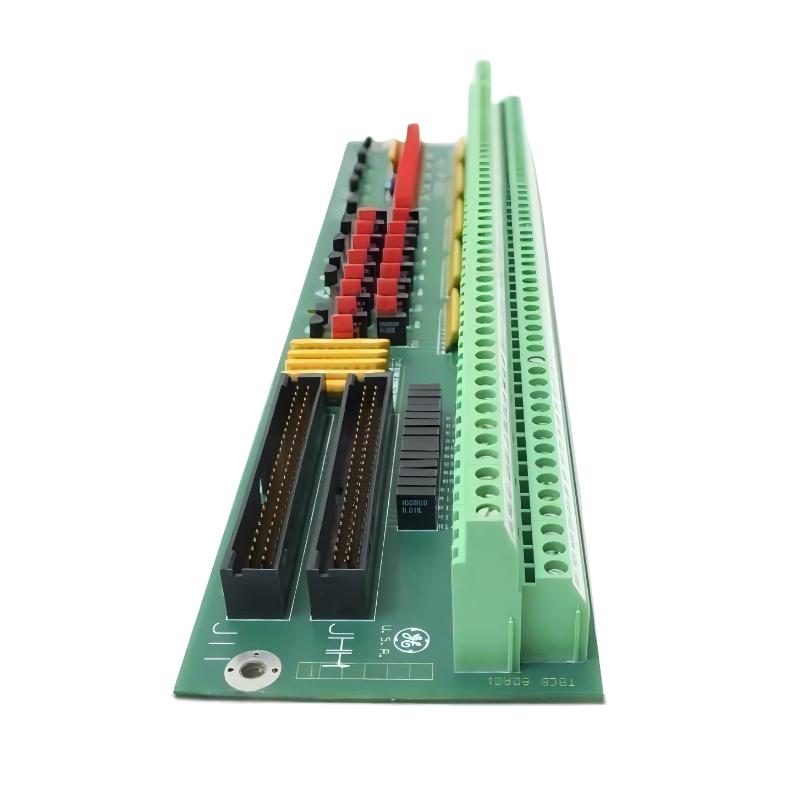
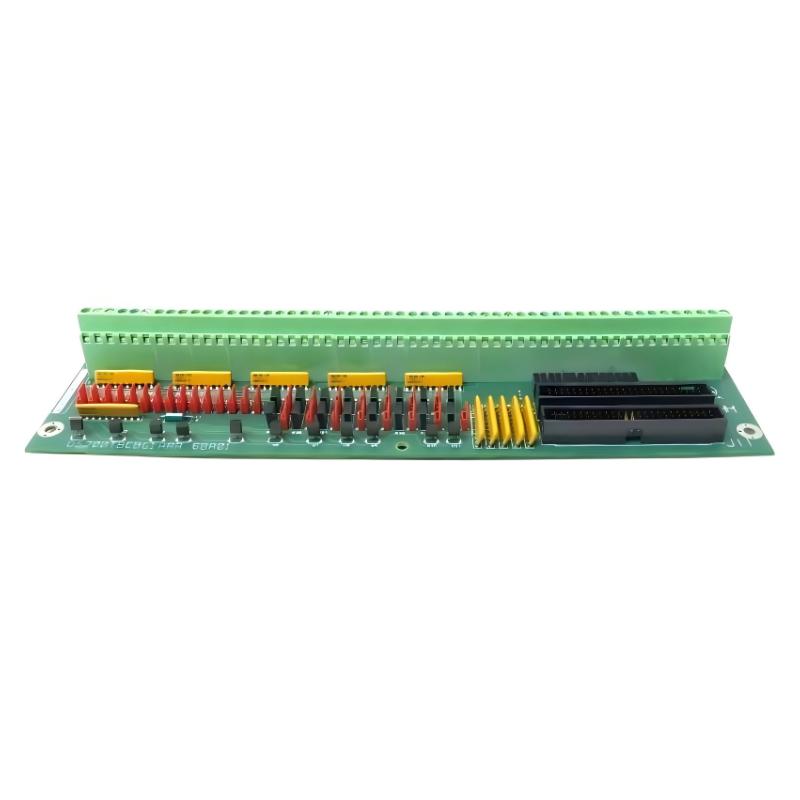
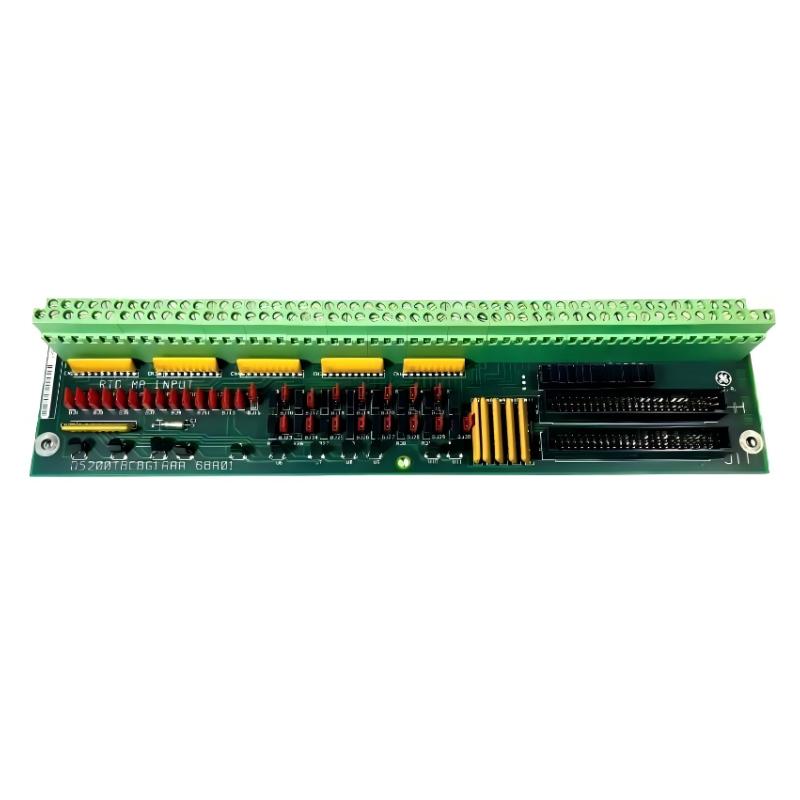
• GE DS200TBCBG1AAA RTD Input Terminal Module
  • GE DS200TBCBG1AAA RTD Input Terminal Module
  • GE DS200TBCBG1AAA RTD Input Terminal Module
  • GE DS200TBCBG1AAA RTD Input Terminal Module
Product Overview The GE DS200TBCBG1AAA RTD Input Terminal Module is an industrial temperature-input interface component designed to provide organized connections between RTD temperature sensors……
GE DS200TBCBG1AAA RTD Input Terminal Module
  • GE
  • DS200TBCBG1AAA
  • RTD Input Terminal Module
  • USA
  • 230 × 180 × 25 mm
  • 0.6 kg
  • Xiamen, China
  • New & In Stock
  • T/T, PayPal, Western Union
  • 1 Year
  • 1-3 Working Days
  • DHL, UPS, TNT, FedEx and EMS.
  • 24-Hour Service
  • COO
  • 2

Our advantage

GE DS200TBCBG1AAA RTD Input Terminal Module

Global Logistics

We have a 10-year logistics and express cooperation agreement, so our products can be shipped to any place in the world.

GE DS200TBCBG1AAA RTD Input Terminal Module

Brand new and original

Our products are imported in bulk from the place of origin. Because of the cooperative relationship, our products are all original and 100% new.

GE DS200TBCBG1AAA RTD Input Terminal Module

24-hour service

We provide 7*24 hours service to our customers. We will be there whenever you need us.

GE DS200TBCBG1AAA RTD Input Terminal Module

Price advantage

All our products are priced very favorably because we have our own warehouse and supply.


Company Information
E-mail [email protected]
Mobile +8615980777398
Whatsapp +8615980777398
WeChat 15980777398

Product Overview

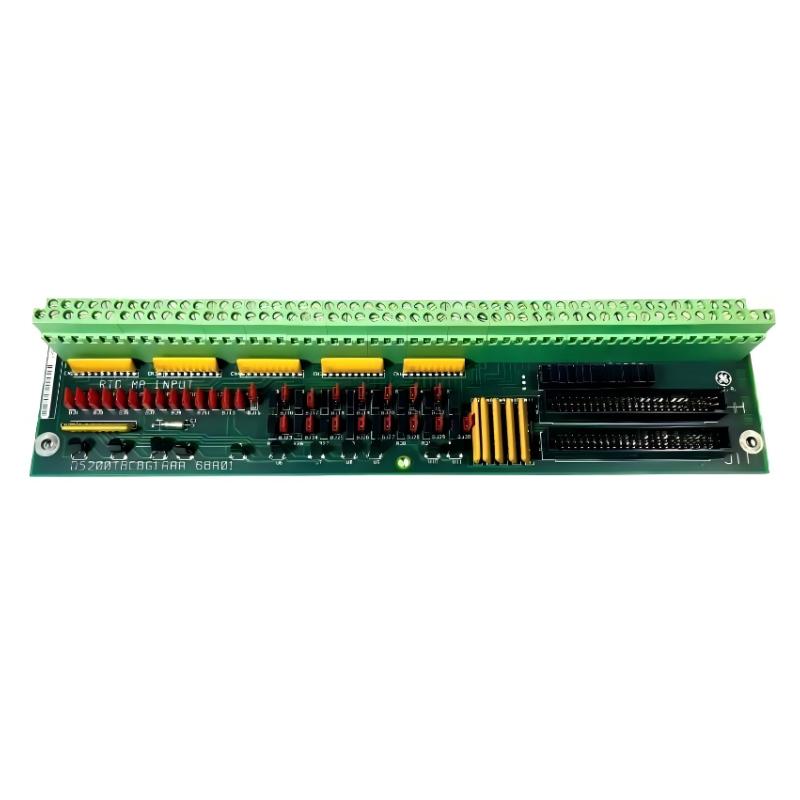
The GE DS200TBCBG1AAA RTD Input Terminal Module is an industrial temperature-input interface component designed to provide organized connections between RTD temperature sensors and compatible GE control-system input circuitry.

RTD sensors are widely used in industrial automation because they provide accurate temperature measurements for motors, generators, turbines, bearings, process equipment, heat exchangers, and other critical assets. The terminal module provides a structured interface for these sensor circuits, helping simplify field wiring, inspection, maintenance, and temperature-signal troubleshooting.

The DS200TBCBG1AAA has stated dimensions of 230 × 180 × 25 mm and a weight of 0.6 kg. Its relatively flat form factor allows it to be integrated into industrial control cabinets and terminal assemblies.


Technical Specifications

Parameter Details
Manufacturer GE
Model DS200TBCBG1AAA
Product Type RTD Input Terminal Module
Series GE Industrial Control
Main Function RTD Temperature Signal Termination
Input Type RTD
Application Temperature Monitoring and Industrial Automation
Installation Control Cabinet / Terminal Assembly
Interface Function RTD Sensor and I/O Interface
Dimensions 230 × 180 × 25 mm
Weight 0.6 kg

Function and Working Principle

The DS200TBCBG1AAA provides a connection interface between RTD sensors installed in the field and the associated temperature-monitoring circuitry.

A simplified signal path is:

RTD Sensor → Field Wiring → DS200TBCBG1AAA → Temperature Input Circuit → Controller

The RTD sensor changes its electrical resistance according to temperature. The associated input electronics measure this resistance and convert it into temperature information for the control system.

The terminal module provides an organized termination point for these sensor circuits.


RTD Temperature Measurement

RTD stands for Resistance Temperature Detector.

The operating principle is based on the relationship between electrical resistance and temperature.

As temperature changes:

Temperature Change → RTD Resistance Change → Input Circuit Measurement → Temperature Value

Common RTD configurations include:

  • 2-wire
  • 3-wire
  • 4-wire

The exact wiring arrangement depends on the sensor and the associated control-system configuration.

Correct wiring is especially important because lead resistance can influence measurement accuracy.


Main Features

RTD Input Interface

The DS200TBCBG1AAA is designed to organize connections for RTD temperature signals.

Typical applications include monitoring:

  • Motor temperature
  • Generator temperature
  • Bearing temperature
  • Winding temperature
  • Process temperature
  • Equipment housing temperature
  • Heat-exchanger temperature

Organized Field Wiring

The terminal module provides a structured connection point for multiple sensor circuits.

Benefits include:

  • Easier channel identification
  • Simplified maintenance
  • Cleaner cabinet wiring
  • Faster troubleshooting
  • Reduced wiring errors

Compact Industrial Form Factor

The stated dimensions are:

230 × 180 × 25 mm

The stated weight is:

0.6 kg

This provides a relatively compact solution for temperature-input installations in industrial control cabinets.


Industrial Applications

The GE DS200TBCBG1AAA can be used in compatible temperature-monitoring and industrial automation applications, including:

  • Gas turbine systems
  • Steam turbine systems
  • Generator monitoring
  • Motor-control systems
  • Power-generation equipment
  • Process automation
  • Industrial heating systems
  • Manufacturing equipment
  • Rotating machinery

RTD inputs are particularly valuable where temperature monitoring is required for equipment protection and predictive maintenance.


Installation Guide

Step 1 – Verify Compatibility

Before installation:

  • Confirm the complete model number.
  • Verify the RTD input configuration.
  • Check the terminal arrangement.
  • Confirm sensor wiring requirements.
  • Inspect the replacement module for damage.

Step 2 – Shut Down and Isolate the System

Before servicing the terminal module:

  • Shut down the applicable equipment.
  • Isolate electrical power.
  • Follow lockout/tagout procedures.
  • Verify that circuits are safe.
  • Apply appropriate ESD protection.

If the RTDs are installed on rotating or high-temperature equipment, allow the equipment to reach a safe maintenance condition before working on the associated wiring.


Step 3 – Document Existing RTD Wiring

Before removing the existing module:

  • Label each RTD circuit.
  • Record terminal numbers.
  • Identify sensor locations.
  • Document 2-wire, 3-wire, or 4-wire arrangements.
  • Record polarity and lead configuration where applicable.

This step is critical because incorrect RTD wiring can result in inaccurate temperature measurements.


Step 4 – Remove the Existing Module

Carefully:

  1. Disconnect the RTD wiring.
  2. Confirm that each circuit is properly identified.
  3. Remove mounting hardware.
  4. Remove the existing terminal module.
  5. Inspect the surrounding wiring and mounting area.

Step 5 – Install the DS200TBCBG1AAA

Install the module by:

  • Aligning mounting points.
  • Securing the terminal module.
  • Reconnecting RTD wiring.
  • Verifying each channel.
  • Checking terminal tightness.
  • Maintaining proper cable routing.

Do not rely solely on wire color when reconnecting sensor circuits. Terminal identification and documented wiring should be used.


RTD Wiring Verification

After installation, verify the sensor configuration.

2-Wire RTD

A 2-wire configuration is simple but includes lead resistance in the measurement.

3-Wire RTD

A 3-wire arrangement is commonly used to compensate for lead resistance and improve measurement accuracy.

4-Wire RTD

A 4-wire configuration can provide more accurate resistance measurement by separating excitation and measurement paths.

The terminal arrangement must match the control-system design.


Commissioning and Testing

After installation, perform a structured temperature-input test.

Verify:

  • RTD channel identification
  • Sensor continuity
  • Correct wiring
  • Stable resistance measurement
  • Correct temperature display
  • Alarm functionality
  • Controller response

If possible, compare the displayed temperature against an independent calibrated measurement.


Common Failure Symptoms

Symptom Possible Cause
RTD input unavailable Open sensor circuit
Temperature reading too high Wiring or sensor problem
Temperature reading too low Wiring or sensor problem
Unstable temperature Loose terminal connection
Incorrect channel Wiring misassignment
RTD alarm Sensor or input circuit problem
Multiple temperature channels lost Common wiring or input issue

Troubleshooting Guide

RTD Input Shows Open Circuit

If the controller reports an open RTD:

  • Inspect the sensor wiring.
  • Check terminal connections.
  • Measure circuit continuity.
  • Inspect the RTD sensor.
  • Check for broken conductors.
  • Verify the associated input channel.

An open circuit can occur in the sensor, field wiring, terminal connection, or input circuitry.


Temperature Reading Is Incorrect

If the measured temperature appears incorrect:

  • Verify RTD type.
  • Confirm wiring configuration.
  • Check sensor resistance.
  • Verify terminal assignments.
  • Inspect lead connections.
  • Check input-channel configuration.

Incorrect RTD wiring can produce significant measurement errors.


Unstable Temperature Signal

An unstable reading may be caused by:

  • Loose terminal connections
  • Damaged sensor wiring
  • Electrical interference
  • Poor shielding
  • Vibration
  • Sensor deterioration
  • Intermittent connections

Inspect the entire signal path rather than replacing the terminal module immediately.


Multiple RTD Channels Fail

If several RTD channels stop working simultaneously:

  1. Check common wiring.
  2. Inspect terminal connections.
  3. Check input-system power.
  4. Review controller diagnostics.
  5. Inspect associated I/O circuitry.
  6. Determine whether the problem affects the entire module or only selected channels.

Multiple simultaneous failures often indicate a common issue rather than several independent sensor failures.


Physical Inspection

Inspect the DS200TBCBG1AAA for:

  • Damaged terminals
  • Loose terminal screws
  • Cracks
  • Corrosion
  • Discoloration
  • Broken connector components
  • Mechanical deformation
  • Contamination

Particular attention should be given to terminal connections because loose connections can cause intermittent temperature readings.


Preventive Maintenance

Recommended maintenance includes:

  • Periodic terminal inspection
  • RTD wiring inspection
  • Sensor resistance checks
  • Terminal-tightness verification
  • Cabinet cleaning
  • Corrosion inspection
  • Cable-routing inspection
  • Temperature trend monitoring

Monitoring temperature trends can also help identify sensor degradation before a complete failure occurs.


RTD Signal Accuracy Considerations

RTD measurement accuracy depends on more than the terminal module.

Important factors include:

  • Sensor quality
  • Sensor type
  • Lead resistance
  • Wiring configuration
  • Cable length
  • Electrical interference
  • Terminal integrity
  • Input-channel configuration
  • Calibration

For critical temperature measurements, the complete measurement chain should be evaluated.


System Integration

The DS200TBCBG1AAA operates as part of a larger temperature-monitoring architecture.

Component Typical Function
RTD Sensor Detects temperature
Field Wiring Transmits RTD resistance signal
RTD Terminal Module Provides sensor termination
Temperature Input Circuit Measures RTD resistance
Control Processor Processes temperature information
Operator Interface Displays temperature
Alarm System Provides temperature warnings

Correct integration of every component is required for reliable temperature monitoring.


Key Advantages

  • Designed for RTD input applications
  • Provides organized temperature-sensor termination
  • Supports industrial temperature monitoring
  • Simplifies RTD wiring maintenance
  • Facilitates channel identification
  • Suitable for control cabinet installation
  • Dimensions: 230 × 180 × 25 mm
  • Weight: 0.6 kg
  • Suitable for demanding industrial automation environments

Technical FAQs

What is the GE DS200TBCBG1AAA?

The GE DS200TBCBG1AAA is an RTD Input Terminal Module designed to provide an organized connection interface between RTD temperature sensors and compatible GE control-system input circuitry.

What does RTD mean?

RTD stands for Resistance Temperature Detector. It measures temperature by detecting changes in electrical resistance.

What is the main purpose of the terminal module?

The terminal module provides a structured termination point for RTD sensor wiring and helps connect field temperature signals to the associated input circuitry.

What RTD wiring configurations may be used?

Common RTD configurations include 2-wire, 3-wire, and 4-wire arrangements. The correct configuration depends on the sensor and control-system design.

What are the dimensions?

The stated dimensions are 230 × 180 × 25 mm.

What is the weight?

The stated weight is 0.6 kg.

Why can incorrect RTD wiring cause inaccurate readings?

RTDs measure resistance, so lead resistance and wiring configuration can influence the measured value. Incorrect connections can therefore result in inaccurate temperature calculations.

What causes an RTD input to show an open circuit?

Possible causes include a broken sensor, damaged field wiring, loose terminal connections, connector problems, or an input-circuit fault.


Conclusion

The GE DS200TBCBG1AAA RTD Input Terminal Module is an important interface component for industrial temperature-monitoring systems. It provides an organized termination point for RTD sensor wiring and supports the connection between field temperature sensors and compatible control-system input circuitry.

With stated dimensions of 230 × 180 × 25 mm and a weight of 0.6 kg, the module provides a practical solution for industrial control cabinets where multiple temperature signals must be securely terminated and maintained.

For industrial automation and maintenance professionals, accurate RTD wiring, secure terminal connections, proper sensor configuration, and regular inspection are essential for maintaining reliable temperature measurement and protecting critical industrial equipment.


Related Products

Get the latest price? We will reply as soon as possible (within 12 hours)

No:77501