Product Overview
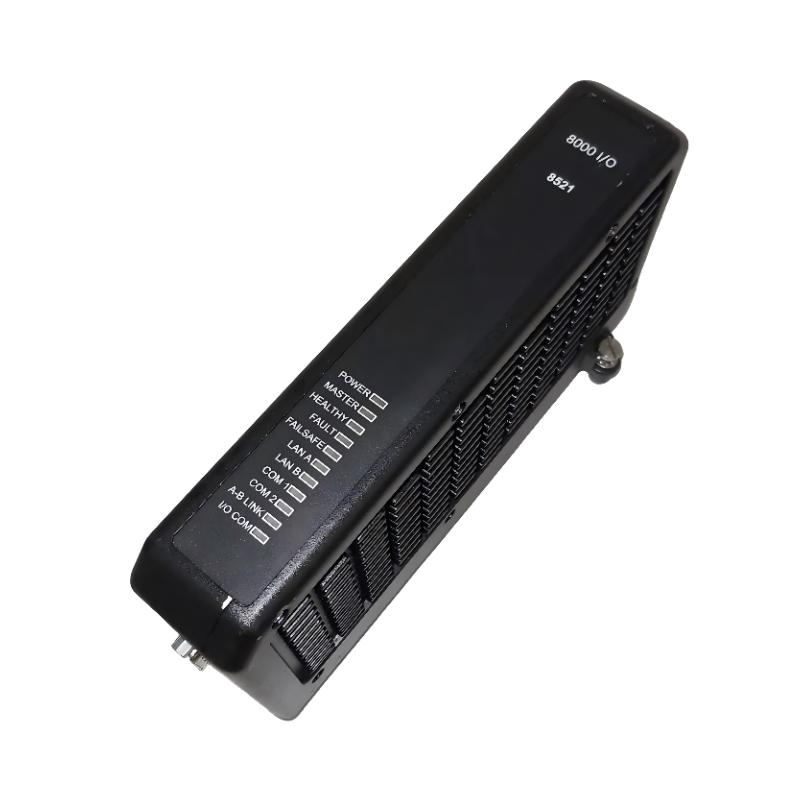
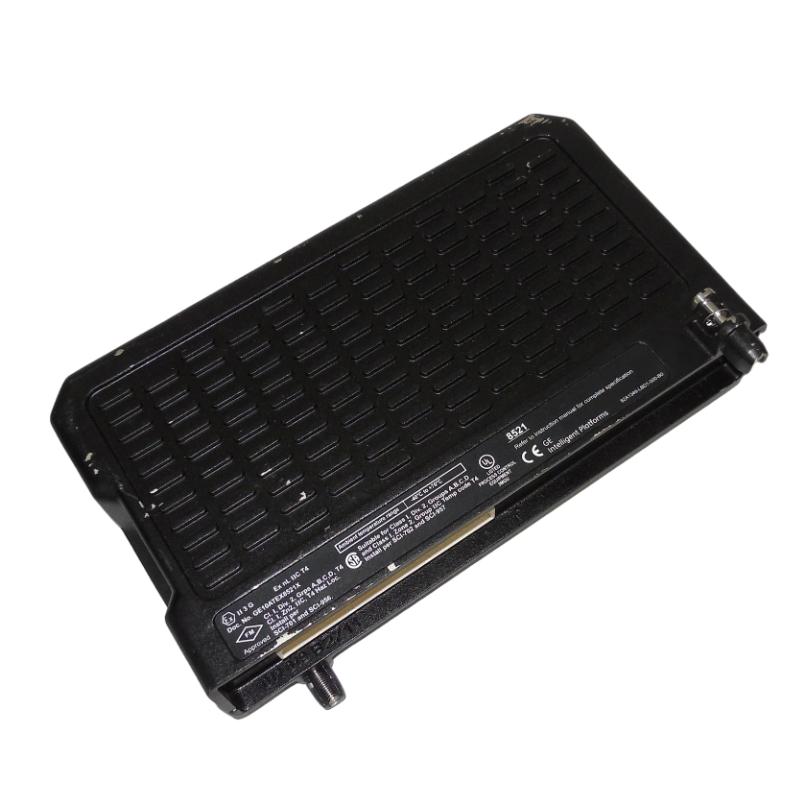
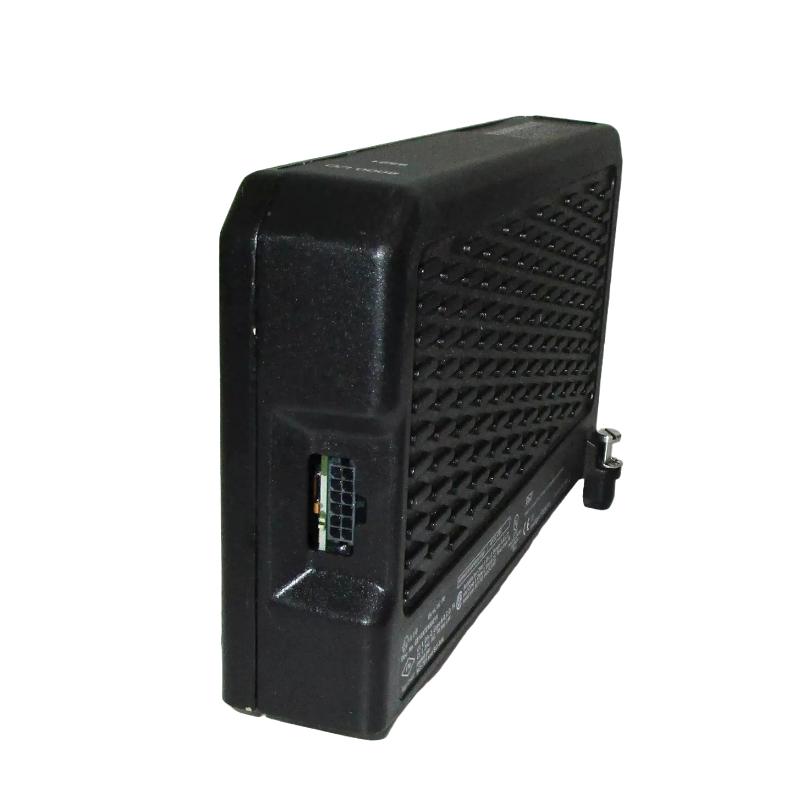
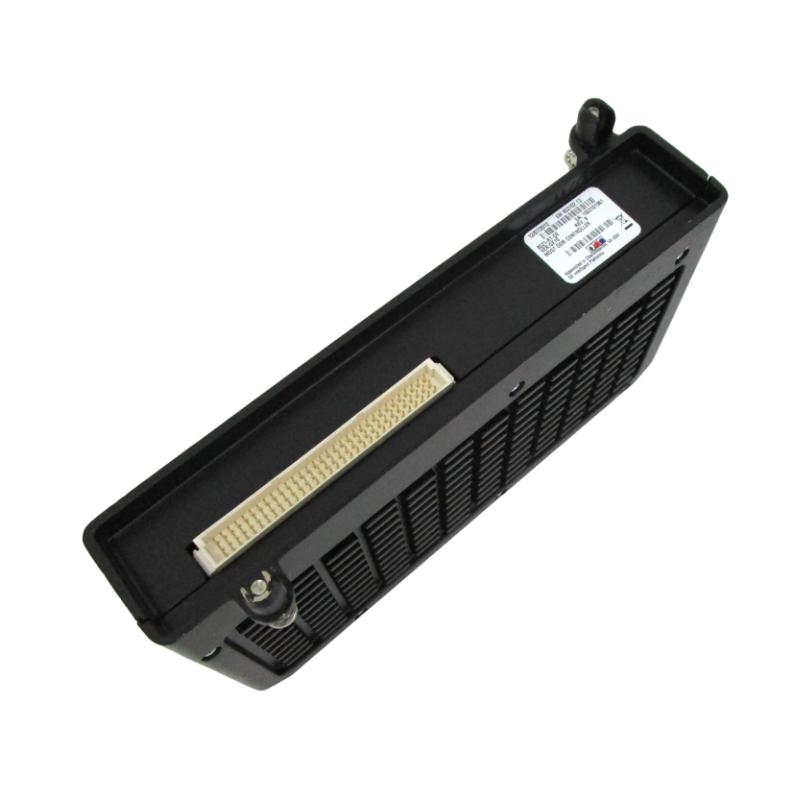
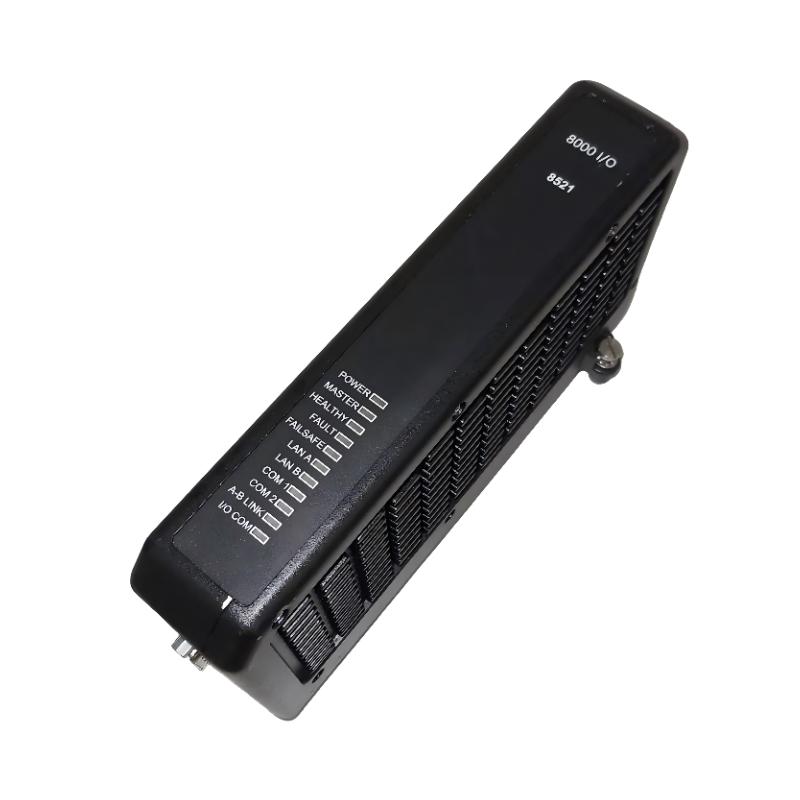
In modern industrial automation and remote monitoring systems, reliable data acquisition, communication, and autonomous control are essential for efficient operation. The GE 8521-RT-DE PAC8000 RTU Controller is designed as a powerful remote terminal unit (RTU) for industrial applications, providing local control, remote data processing, and communication capabilities for distributed automation systems.
As a core controller within remote automation architectures, the 8521-RT-DE enables field equipment monitoring and control without requiring constant interaction with a central control system. It collects information from connected devices, executes programmed logic, and communicates operational data through industrial networks.
The controller is widely used in applications where remote operation, high reliability, and continuous system availability are required. Its compact industrial design allows integration into control cabinets, remote stations, and distributed infrastructure systems.
Technical Specifications
| Parameter |
Details |
| Manufacturer |
GE (General Electric) |
| Model |
8521-RT-DE |
| Product Type |
PAC8000 RTU Controller |
| Controller Function |
Remote monitoring and control |
| System Platform |
GE PAC8000 Series |
| Dimensions |
232 × 69 × 138 mm |
| Weight |
1.35 kg |
| Installation |
Control cabinet / DIN rail mounting |
| Application |
Remote automation and industrial control |
| Communication Function |
Industrial network communication |
| Processing Function |
Local control logic execution |
| System Role |
Remote control and data acquisition unit |
| Operating Environment |
Industrial-grade environment |
| Design Type |
Modular industrial controller |
| Reliability |
Designed for continuous operation |
Function and Working Principle
The GE 8521-RT-DE operates as an intelligent remote control unit that connects field devices with supervisory control systems.
The controller collects data from connected sensors, I/O modules, and industrial equipment. After processing the received information, it can execute programmed control logic locally or transmit operational data to higher-level systems.
The RTU controller performs several important functions:
- Field data acquisition
- Local automation control
- Remote equipment monitoring
- Industrial communication management
- Alarm and event processing
- System status reporting
Unlike traditional control systems that rely entirely on centralized processing, an RTU controller can perform local decision-making at remote locations. This improves system response speed and reduces dependency on continuous communication with the main control center.
Role in Industrial Control Systems
The GE 8521-RT-DE plays a critical role in distributed automation architectures by acting as the connection point between field equipment and supervisory systems.
It commonly works together with:
- GE PAC8000 I/O modules
- Industrial communication networks
- Remote sensors and transmitters
- Field control devices
- SCADA systems
- Central monitoring platforms
In a typical remote automation application, field devices collect operational information such as equipment status, process values, and alarm conditions. The 8521-RT-DE processes this information locally and communicates with the control center, allowing operators to monitor and manage remote assets efficiently.
Industrial Applications
The GE 8521-RT-DE PAC8000 RTU Controller is commonly used in industries requiring reliable remote control and monitoring.
Power and Energy Systems
Applications include:
- Substation automation
- Power distribution monitoring
- Remote equipment control
- Energy management systems
Water and Wastewater Treatment
Used for:
- Pump station monitoring
- Remote facility control
- Process data collection
- Equipment status management
Oil and Gas Industry
Applied in:
- Pipeline monitoring systems
- Remote production facilities
- Field equipment control
- Distributed monitoring stations
Industrial Infrastructure
Supports:
- Transportation systems
- Remote industrial facilities
- Utility automation projects
Its ability to operate independently makes it suitable for geographically distributed applications where reliable communication and local control are required.
Installation and System Integration
Proper installation and configuration are essential for stable operation of the GE 8521-RT-DE controller.
Typical installation requirements include:
- Mounted inside industrial control cabinets
- Connected with compatible I/O modules
- Integrated with communication networks
- Configured with application-specific control logic
- Tested during commissioning
During system integration, engineers should verify:
- Power supply connection
- Network communication settings
- I/O configuration
- Controller programming
- Field device communication
Correct setup ensures reliable remote operation and improves overall system availability.
Compatible System Components
The GE 8521-RT-DE typically works together with the following components:
| Component |
Function |
| GE PAC8000 I/O Modules |
Expand field signal acquisition and control capability |
| Digital Input Modules |
Collect equipment status signals |
| Digital Output Modules |
Control external devices |
| Analog Input Modules |
Acquire process measurement data |
| Industrial Communication Modules |
Connect remote systems and networks |
| SCADA Systems |
Provide centralized monitoring and operation |
| Field Sensors and Actuators |
Interface with industrial equipment |
Together, these components create a complete remote automation and control solution.
Recommended Alternative Models
Depending on application requirements, the following models may be considered:
| Model |
Type |
Key Feature |
Application |
| GE 8521-RT-DE |
PAC8000 RTU Controller |
Integrated remote control capability |
Remote automation systems |
| GE PAC8000 RTU Series |
Remote Terminal Units |
Flexible industrial communication |
Utility and infrastructure projects |
| GE 8520 Series Controllers |
Industrial Controllers |
Compact automation control |
Distributed applications |
| GE PAC8000 Controllers |
Programmable Automation Controllers |
Advanced control functions |
Industrial automation systems |
| GE Remote Control Units |
RTU Solutions |
Remote monitoring capability |
Field automation projects |
Key Advantages
- Provides reliable remote terminal control capability
- Supports local automation logic execution
- Enables efficient remote monitoring and management
- Compact design for industrial cabinet installation
- Supports distributed automation architectures
- Improves system response and operational efficiency
- Suitable for long-term industrial operation
Technical FAQs
What is the main function of the GE 8521-RT-DE?
The GE 8521-RT-DE is a PAC8000 RTU Controller designed for remote monitoring, data acquisition, and local industrial control applications.
What is the difference between an RTU and a traditional controller?
An RTU is optimized for remote locations, providing local processing and communication functions for distributed automation systems.
Where is the GE 8521-RT-DE commonly used?
It is commonly used in power systems, water treatment, oil and gas, utilities, and remote industrial facilities.
Can the controller work with I/O modules?
Yes. The controller can integrate with compatible PAC8000 I/O modules to expand monitoring and control capabilities.
Why are RTU controllers important in industrial automation?
RTU controllers enable reliable remote operation, allowing organizations to monitor and control distributed assets efficiently.
Conclusion
The GE 8521-RT-DE PAC8000 RTU Controller is a reliable industrial automation solution designed for remote monitoring, data processing, and distributed control applications.
With its compact structure, powerful control capability, and integration with PAC8000 automation systems, it provides an effective solution for managing remote industrial equipment and infrastructure.
For engineers, system integrators, and automation professionals, the GE 8521-RT-DE helps improve operational reliability, communication efficiency, and overall control system performance.