

ProductPRODUCT
Featured products
Contact Us
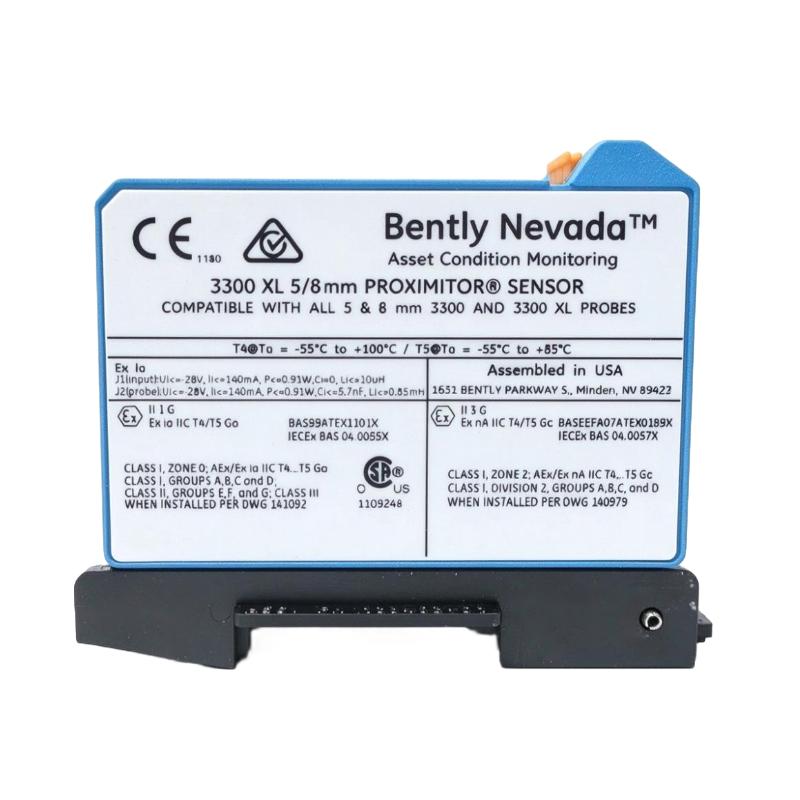
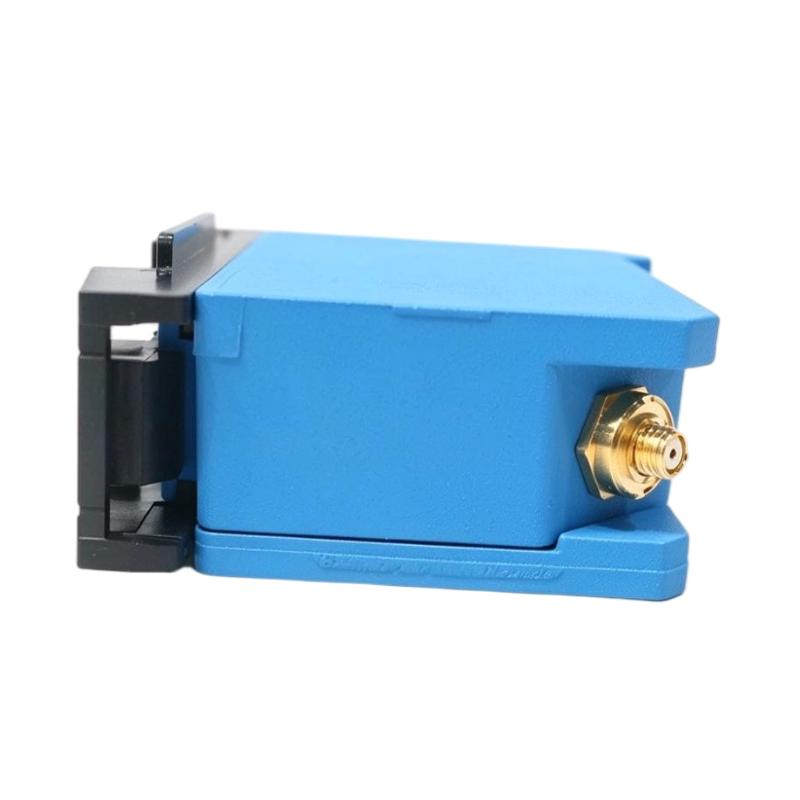
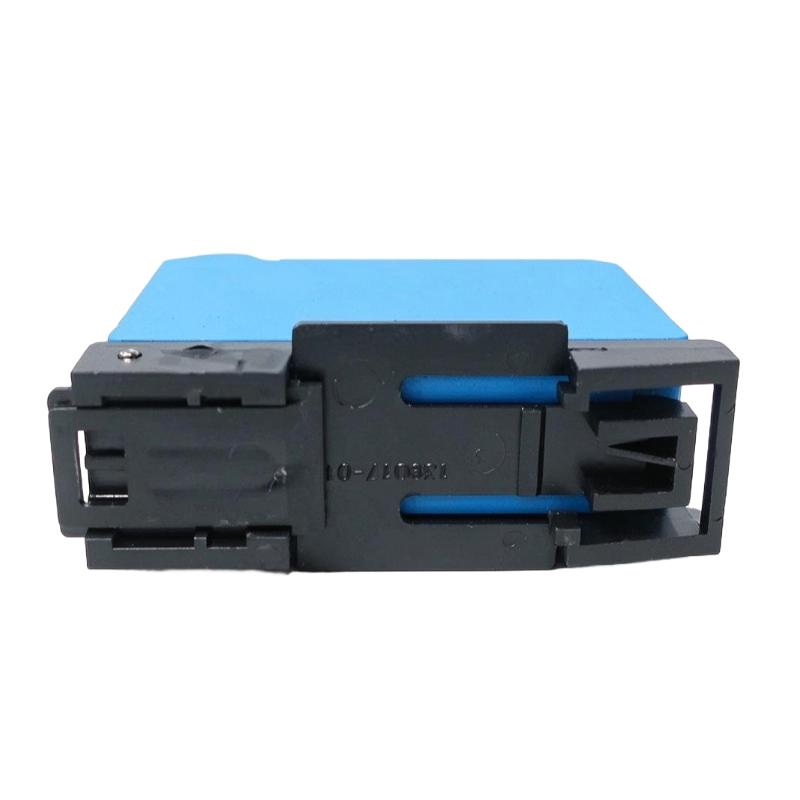
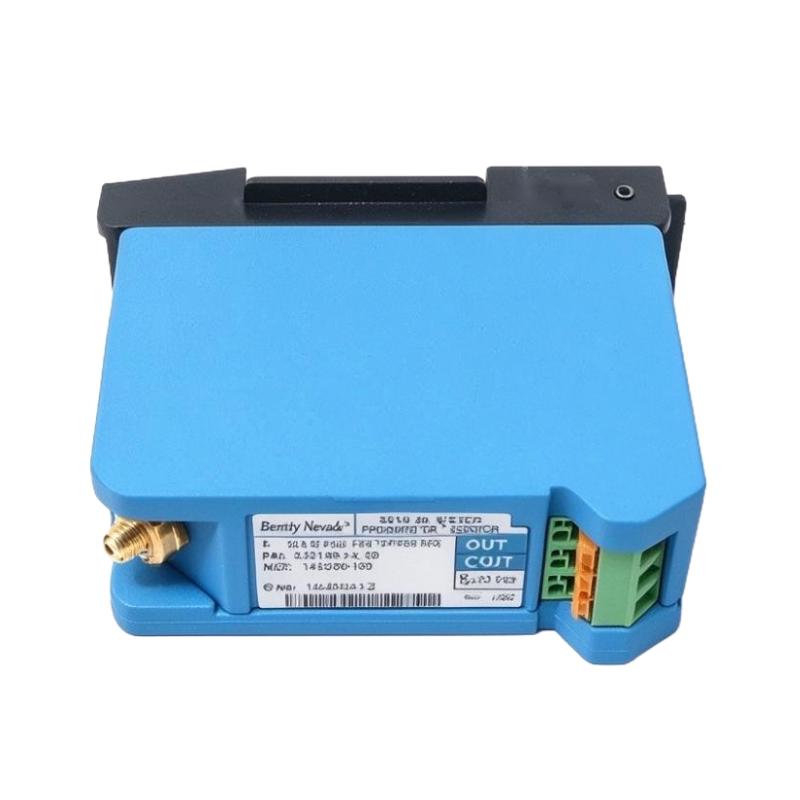
- Bently Nevada
- 330180-X1-05 145004-06
- 3300 XL Proximitor Sensor
- USA
- 81.3 × 35.1 × 63.5 mm
- 0.246 kg
- Xiamen, China
- New & In Stock
- T/T, PayPal, Western Union
- 1 Year
- 1-3 Working Days
- DHL, UPS, TNT, FedEx and EMS.
- 24-Hour Service
- COO
- 4
Our advantage

Global Logistics
We have a 10-year logistics and express cooperation agreement, so our products can be shipped to any place in the world.

Brand new and original
Our products are imported in bulk from the place of origin. Because of the cooperative relationship, our products are all original and 100% new.

24-hour service
We provide 7*24 hours service to our customers. We will be there whenever you need us.

Price advantage
All our products are priced very favorably because we have our own warehouse and supply.
| Company Information | |||
| [email protected] | |||
| Mobile | +8615980777398 | ||
| +8615980777398 | |||
| 15980777398 |
Product Overview
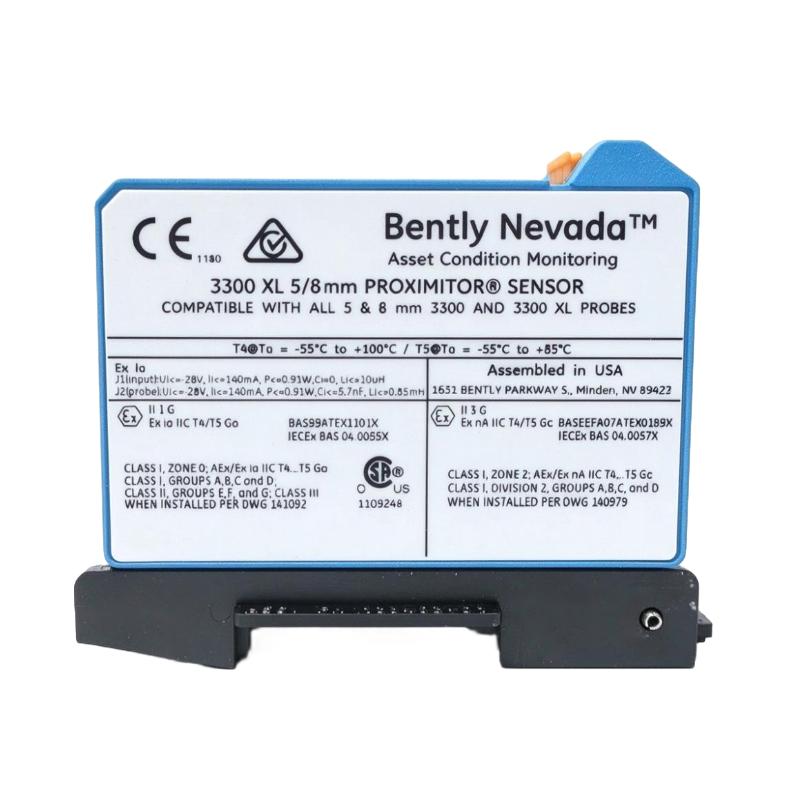
The Bently Nevada 330180-X1-05 145004-06 is a 3300 XL Proximitor Sensor used in eddy-current proximity measurement systems for monitoring the condition of rotating machinery. It operates with a compatible proximity probe and extension cable to measure the distance between the probe tip and a conductive target, typically a rotating machine shaft.
In a compressor or turbine installation, the sensor forms part of the measurement chain between the shaft-mounted sensing position and the machinery monitoring rack. As the shaft moves during operation, the distance between the probe tip and the shaft surface changes. The Proximitor Sensor converts this variation into an electrical output that can be interpreted as shaft vibration or displacement information.
For example, on a centrifugal compressor, proximity probes are commonly installed near the radial bearings to monitor shaft vibration. Additional probes may be positioned at the thrust bearing to monitor axial shaft movement. The resulting signals are sent to the machinery monitoring system, allowing maintenance engineers to identify changes in shaft behavior and investigate abnormal operating conditions.
The 330180-X1-05 belongs to the Bently Nevada 3300 XL proximity transducer product family. Its application is not limited to one type of rotating machine; it can be used in compatible monitoring arrangements for compressors, steam turbines, gas turbines, pumps, and other industrial equipment.
When replacing an installed sensor, the complete identification 330180-X1-05 145004-06 should be checked against the existing transducer arrangement. Probe compatibility, extension cable length, mounting configuration, and calibration requirements all need to match the intended measurement system.
Technical Specifications
| Parameter | Specification |
|---|---|
| Manufacturer | Bently Nevada |
| Model | 330180-X1-05 |
| Modification Number | 145004-06 |
| Product Series | 3300 XL |
| Product Type | Proximitor Sensor |
| Measurement Technology | Eddy Current |
| Measurement Principle | Non-contacting proximity measurement |
| Compatible Transducer System | 3300 XL 8 mm |
| Nominal Linear Range | 2 mm (80 mils) |
| Incremental Scale Factor | 7.87 V/mm (200 mV/mil) |
| Recommended Probe Gap | 1.27 mm (50 mils) |
| Output at Recommended Gap | Approximately -9 V DC |
| Output Voltage Range | Approximately -1 to -17 V DC |
| Supply Voltage | -17.5 to -26 V DC |
| Maximum Supply Current | 12 mA |
| Output Resistance | 50 Ω |
| Frequency Response | 0 to 10 kHz |
| Operating Temperature | -52°C to +100°C |
| Storage Temperature | -52°C to +105°C |
| Dimensions | 81.3 × 35.1 × 63.5 mm |
| Weight | 0.246 kg |
Product Features
- 3300 XL Proximitor Sensor for eddy-current proximity measurement applications.
- Processes signals from compatible non-contacting proximity probes.
- Converts probe responses into proportional electrical output signals.
- Supports shaft vibration and relative shaft displacement monitoring.
- Suitable for radial vibration and axial position measurement arrangements.
- Supports proximity-based speed and Keyphasor measurement applications when correctly configured.
- Nominal scale factor of 7.87 V/mm (200 mV/mil) for the standard 3300 XL 8 mm system.
- 2 mm (80 mils) nominal linear measurement range.
- High resistance to radio-frequency and electromagnetic interference.
- SpringLoc terminal connections for field wiring.
- Gold-plated ClickLoc connectors for the transducer connection.
- Suitable for integration into compatible Bently Nevada machinery monitoring installations.
Product Working Principle
The 330180-X1-05 works as the signal-conditioning component in an eddy-current proximity transducer system. It does not directly contact the rotating shaft. Instead, it processes the electrical response generated by a compatible proximity probe positioned near the machine surface.
The measurement arrangement follows this sequence:
Rotating Shaft → Proximity Probe → Extension Cable → 330180-X1-05 Proximitor Sensor → Machinery Monitoring System
The proximity probe generates an electromagnetic field around its sensing tip. When the probe is positioned near a conductive target, such as a steel shaft, eddy currents develop within the target material. The distance between the probe and the shaft affects the characteristics of this electromagnetic field.
The Proximitor Sensor processes the resulting signal and produces a DC voltage proportional to the probe-to-target distance within the specified linear measurement range.
In a typical vibration monitoring installation, the probe is adjusted to an appropriate operating gap. As the shaft rotates, its movement changes the probe gap, causing the output voltage to fluctuate accordingly. The monitoring system uses these variations to calculate shaft vibration.
The same measurement principle can also be used for static shaft position monitoring. For example, axial probes installed near a turbine thrust bearing can detect changes in shaft position relative to the bearing housing.
This makes the sensor useful for several different monitoring tasks:
- Radial Vibration: Measures dynamic shaft movement near radial bearings.
- Axial Position: Tracks shaft movement along its longitudinal axis.
- Shaft Displacement: Monitors changes in the relative position between the shaft and probe.
- Rotational Speed: Supports speed measurement using a suitable target arrangement.
- Keyphasor Reference: Provides proximity-based reference signals for rotational vibration analysis.
The monitoring rack receives the conditioned signal and processes it according to the configured measurement channel, alarm limits, and machinery protection requirements.
Role in Bently Nevada 3300 XL Machinery Monitoring Architecture
The 330180-X1-05 145004-06 occupies the signal-conditioning position within a Bently Nevada proximity measurement arrangement.
In an industrial installation, the proximity probe is mounted close to the rotating shaft, while the Proximitor Sensor is installed at a suitable location for electrical connection and maintenance access. The conditioned output is then connected to the appropriate monitoring input.
Proximity Probe → Extension Cable → Proximitor Sensor → Monitoring Module → Machinery Protection System
| System Component | Function |
|---|---|
| 3300 XL 8 mm Proximity Probe | Detects changes in the distance between the probe tip and rotating shaft |
| 3300 XL Extension Cable | Connects the probe to the Proximitor Sensor |
| 330180-X1-05 Proximitor Sensor | Processes the probe signal and generates a proportional voltage output |
| 3500/40M Proximitor Monitor | Processes compatible proximity measurement channels |
| 3500/42M Proximitor Seismic Monitor | Supports configured proximity and seismic monitoring applications |
| 3500 Rack | Provides the hardware platform for machinery monitoring and protection |
| 3500/25 Keyphasor Module | Processes rotational reference signals |
| System 1 Software | Supports machinery condition analysis and diagnostic evaluation |
| Machinery Protection System | Uses measurement data for alarms and equipment protection functions |
The actual monitoring configuration depends on the selected rack modules, transducer type, channel settings, and machinery measurement requirements.
Industrial Applications
The 330180-X1-05 is used in rotating machinery installations where continuous shaft vibration or displacement information is required.
| Industrial Application | Typical Monitoring Purpose |
|---|---|
| Centrifugal Compressors | Monitoring radial shaft vibration and displacement |
| Steam Turbines | Measuring shaft vibration and axial position |
| Gas Turbines | Monitoring rotating shaft movement and operating conditions |
| Industrial Pumps | Detecting changes in shaft vibration near bearing assemblies |
| Power Generation Plants | Supporting turbine shaft monitoring and machinery protection |
| Petrochemical Facilities | Monitoring critical rotating equipment |
| Refinery Compressor Trains | Tracking shaft vibration during continuous operation |
| Industrial Motors | Measuring shaft movement in compatible installations |
| Turboexpanders | Monitoring shaft displacement and vibration |
| Process Gas Compression | Supporting machinery condition monitoring |
Installation and Maintenance
- Verify the Complete Model Reference: Confirm the 330180-X1-05 model and 145004-06 modification number against the existing installation before replacement.
- Check Transducer Compatibility: Verify that the installed proximity probe and extension cable are compatible with the 3300 XL 8 mm measurement system.
- Inspect the Mounting Arrangement: Check the sensor mounting configuration and available installation space before fitting the replacement unit.
- Verify the Power Supply: Confirm that the negative DC supply voltage meets the specified operating requirements.
- Inspect Probe Connections: Examine the probe connectors for contamination, corrosion, damaged contacts, or mechanical wear.
- Check Extension Cable Condition: Inspect the cable for damaged insulation, crushed sections, loose connections, or signs of electrical interference.
- Confirm Total System Length: Check that the probe and extension cable combination matches the required transducer system length.
- Inspect Terminal Connections: Verify that the SpringLoc terminals are properly connected and that field wiring is correctly identified.
- Set the Probe Gap: Adjust the probe-to-shaft distance according to the applicable transducer system specifications and measurement requirements.
- Check the Output Voltage: Measure the Proximitor Sensor output and compare it with the expected value for the actual probe gap.
- Verify Monitoring Channel Settings: Confirm the transducer configuration, measurement units, channel assignments, and alarm limits in the monitoring rack.
- Record Commissioning Information: Document the sensor model, modification number, probe identification, cable arrangement, initial gap voltage, and monitoring channel details.
If a monitoring channel produces an unexpected reading, inspect the entire transducer circuit before replacing the sensor. A damaged probe, incorrect cable configuration, unstable power supply, or improperly adjusted gap can produce symptoms similar to a faulty Proximitor Sensor.
Compatible System Components
| Component | Function |
|---|---|
| 3300 XL 8 mm Proximity Probe | Detects shaft movement through eddy-current measurement |
| 3300 XL Extension Cable | Connects the proximity probe to the Proximitor Sensor |
| 3300 XL 8 mm Transducer System | Complete proximity measurement arrangement |
| 3300 XL Proximitor Sensor | Conditions the proximity probe signal |
| 3500/40M Proximitor Monitor | Processes compatible proximity input signals |
| 3500/42M Proximitor Seismic Monitor | Supports proximity and seismic monitoring |
| 3500/25 Keyphasor Module | Provides rotational reference information |
| 3500 Rack | Houses machinery monitoring and protection modules |
| Negative DC Power Supply | Supplies the required power to the transducer system |
| System 1 Software | Supports machinery diagnostics and condition analysis |
Recommended Related Models
| Model / Product Family | Product Type | Typical Application |
|---|---|---|
| Bently Nevada 330180 | 3300 XL Proximitor Sensor | Signal conditioning for 3300 XL proximity systems |
| Bently Nevada 330101 | 3300 XL 8 mm Proximity Probe | Shaft vibration and displacement measurement |
| Bently Nevada 330130 | 3300 XL Extension Cable | Probe-to-sensor signal connection |
| Bently Nevada 3500/40M | Proximitor Monitor | Processing proximity measurement signals |
| Bently Nevada 3500/42M | Proximitor Seismic Monitor | Machinery vibration and displacement monitoring |
| Bently Nevada 3500/25 | Keyphasor Module | Rotational reference signal processing |
Key Advantages
- Supports non-contacting shaft vibration and position measurements.
- Converts proximity probe responses into proportional voltage signals.
- Suitable for continuous monitoring of critical rotating machinery.
- Supports static and dynamic displacement measurement applications.
- High resistance to electromagnetic and radio-frequency interference.
- SpringLoc terminal connections simplify field wiring.
- Integrates with compatible Bently Nevada 3300 XL and 3500 monitoring arrangements.
- Suitable for compressor, turbine, and pump monitoring installations.
Technical FAQs
1. What is the difference between a Proximitor Sensor and a proximity probe?
The proximity probe is the sensing element installed near the rotating shaft. It generates an electromagnetic field and responds to changes in the distance between its tip and the conductive target. The Proximitor Sensor processes this response and converts it into an electrical output that can be used by the machinery monitoring system.
2. Why is the probe gap important when installing the 330180-X1-05?
The probe gap determines the operating point of the transducer system. If the gap is outside the specified linear range, the output may no longer accurately represent shaft movement. For the standard 3300 XL 8 mm system, the recommended vibration gap is approximately 1.27 mm (50 mils), corresponding to an output of approximately -9 V DC.
3. Can the 330180-X1-05 measure both shaft vibration and axial displacement?
Yes. The sensor can support both applications when connected to an appropriately positioned proximity probe and configured monitoring channel. Radial probes are generally used to measure shaft vibration, while axial probes are installed near the thrust bearing to monitor movement along the shaft axis.
4. What should be checked when replacing a 330180-X1-05?
The complete model and modification reference should be checked first. Engineers should also verify the probe type, extension cable, total system length, mounting configuration, calibration requirements, power supply, and monitoring channel settings. Matching these details helps prevent measurement errors after replacement.