

ProductPRODUCT
Featured products
Contact Us
- Allen Bradley
- 1747-L533
- SLC 5/03 Processor
- USA
- 144.5 × 34.6 × 130.18 mm
- 0.25 kg
- Xiamen, China
- New & In Stock
- T/T, PayPal, Western Union
- 1 Year
- 1-3 Working Days
- DHL, UPS, TNT, FedEx and EMS.
- 24-Hour Service
- COO
- 1
Our advantage

Global Logistics
We have a 10-year logistics and express cooperation agreement, so our products can be shipped to any place in the world.

Brand new and original
Our products are imported in bulk from the place of origin. Because of the cooperative relationship, our products are all original and 100% new.

24-hour service
We provide 7*24 hours service to our customers. We will be there whenever you need us.

Price advantage
All our products are priced very favorably because we have our own warehouse and supply.
| Company Information | |||
| [email protected] | |||
| Mobile | +8615980777398 | ||
| +8615980777398 | |||
| 15980777398 |
Product Overview
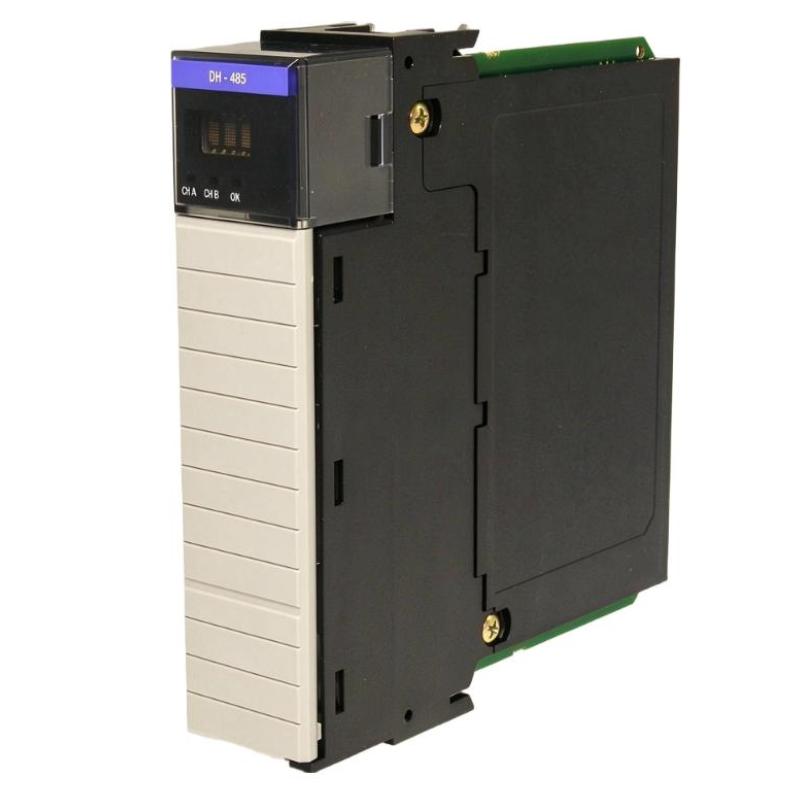
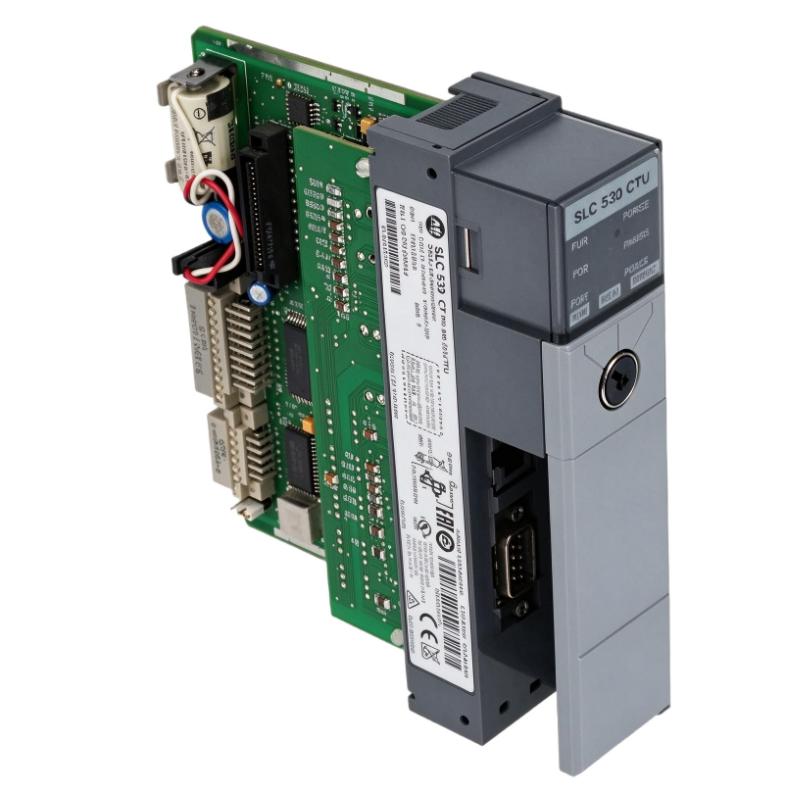
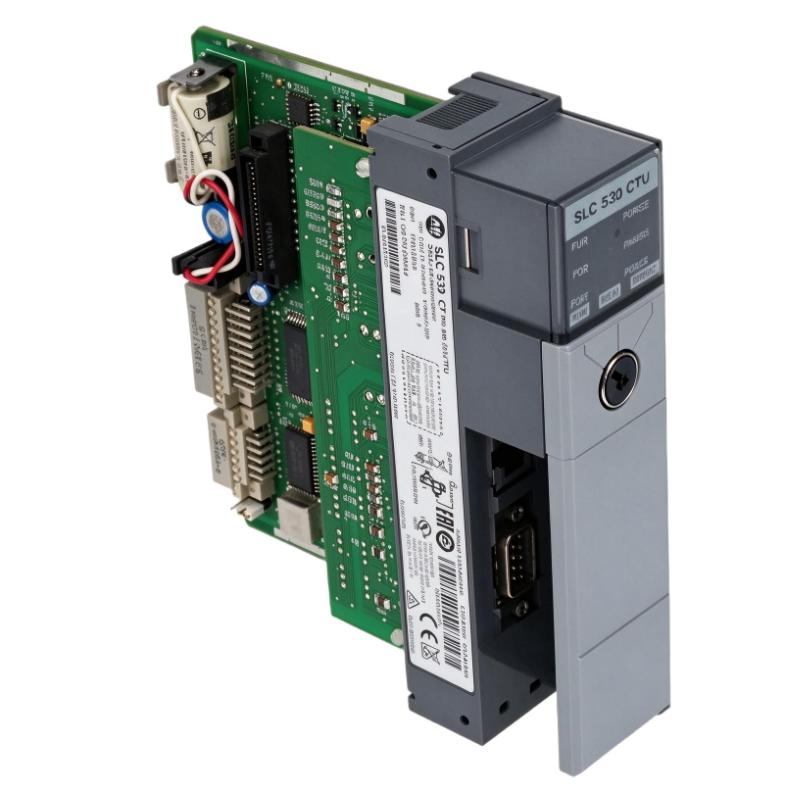
The Allen-Bradley 1747-L533 SLC 5/03 Processor is a central processing unit designed for the SLC 500 modular programmable logic controller platform from Rockwell Automation. It executes user-defined control programs, processes input and output information, manages communication with other automation devices, and coordinates industrial machine operations.
As part of the SLC 5/03 processor family, the 1747-L533 provides 32K words of user memory for storing control logic and application data. Its processing capabilities make it suitable for a range of industrial automation tasks, including machine sequencing, equipment monitoring, production-line control, and process coordination.
The processor provides two onboard communication interfaces: DH-485 and RS-232. These interfaces allow it to exchange information with compatible programming devices, operator interfaces, and other industrial control equipment. The RS-232 channel supports configurable communication modes, while DH-485 provides connectivity within compatible Allen-Bradley control networks.
The 1747-L533 is designed for installation in an SLC 500 1746 chassis. It works with compatible power supplies and digital or analog I/O modules to form a complete modular PLC system. This architecture allows users to configure the controller according to the number and type of field devices required by their applications.
The processor is particularly relevant to facilities maintaining established SLC 500 installations. When replacing an existing controller, engineers should verify the processor series, firmware, communication configuration, memory requirements, and application program compatibility.
The 1747-L533 has been discontinued by Rockwell Automation. It remains an important spare-part identification for industrial maintenance projects involving legacy SLC 500 control systems.
Technical Specifications
| Parameter | Specification |
|---|---|
| Brand | Allen-Bradley |
| Manufacturer | Rockwell Automation |
| Model | 1747-L533 |
| Product Series | SLC 500 |
| Processor Type | SLC 5/03 |
| Product Type | Programmable Logic Controller Processor |
| Memory Capacity | 32K words |
| Programming Software | RSLogix 500 |
| Communication Ports | DH-485 and RS-232 |
| Programming Instructions | 107 |
| Maximum Local Chassis | 3 |
| Maximum Local I/O Slots | 30 |
| Maximum Discrete I/O Capacity | 4,096 inputs and 4,096 outputs |
| Maximum Analog I/O | 480 |
| Memory Backup | Flash memory and battery-backed RAM |
| Backplane Current at 5 V DC | 500 mA |
| Backplane Current at 24 V DC | 175 mA |
| Typical Program Scan Time | 1 ms/K instruction |
| Typical Bit Execution Time | 0.44 μs |
| Operating Temperature | 0 to 60°C |
| Storage Temperature | -40 to 85°C |
| Dimensions | 144.5 × 34.6 × 130.18 mm |
| Weight | 0.25 kg |
| Compatible Chassis | Allen-Bradley 1746 SLC chassis |
| Product Lifecycle | Discontinued |
The dimensions and weight are the supplied product-listing specifications. Verify the physical unit and revision before installation or shipping.
Function and Working Principle
The 1747-L533 functions as the central processing component of an SLC 500 modular PLC system. It receives information from input modules, executes the stored control program, and updates output commands according to the programmed logic.
1. PLC Program Execution
The processor executes ladder logic and other supported SLC 500 instructions to control industrial equipment.
During operation, it evaluates input conditions, processes internal data, performs calculations, and determines the appropriate output states. This allows a single controller to coordinate multiple machine functions.
Typical control tasks include:
- Motor start and stop sequencing.
- Conveyor operation.
- Pump and fan control.
- Equipment interlocking.
- Alarm and fault handling.
- Production process sequencing.
- Monitoring of digital and analog signals.
The processor’s 32K memory capacity provides storage for application programs and associated data.
2. Input and Output Processing
The 1747-L533 communicates with compatible 1746 I/O modules through the SLC 500 chassis backplane.
Input modules collect information from field devices such as proximity sensors, limit switches, pressure transmitters, and temperature sensors. The processor evaluates these signals according to the application program.
Output modules then receive commands from the processor to operate equipment such as contactors, relays, indicator lamps, solenoid valves, and other actuators.
This centralized control structure allows different machine functions to operate according to one coordinated program.
3. Communication Management
The processor includes DH-485 and RS-232 communication ports.
DH-485 supports communication with compatible Allen-Bradley devices within an appropriate network configuration. RS-232 provides a serial communication interface for programming, monitoring, and communication with supported equipment.
Depending on the selected communication mode and connected devices, the RS-232 channel can support DF1 and other supported serial communication configurations.
These interfaces are particularly useful in legacy installations where existing operator interfaces, programming equipment, or supervisory systems depend on serial communication.
4. Memory Management and Program Retention
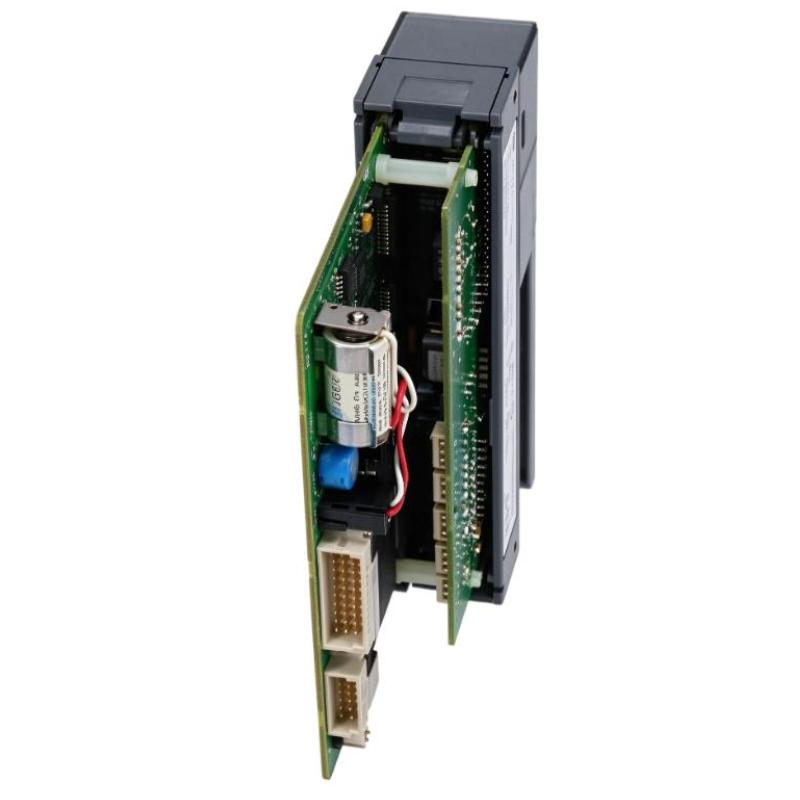
The 1747-L533 uses flash memory and battery-backed RAM as part of its program and data retention arrangement.
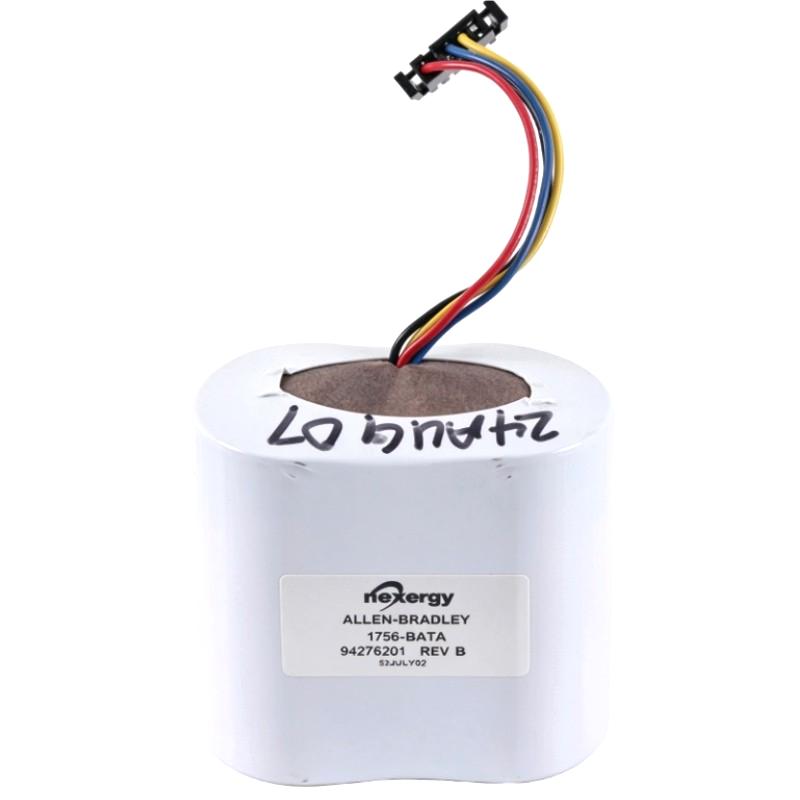
The memory configuration supports the storage of control logic and operating information. Battery condition should be monitored because battery-backed memory depends on the proper operation of the backup system.
For long-term maintenance, engineers should maintain independent backups of PLC programs and important configuration information.
5. Diagnostic and Status Monitoring
The processor provides status indicators that help maintenance personnel identify operating conditions.
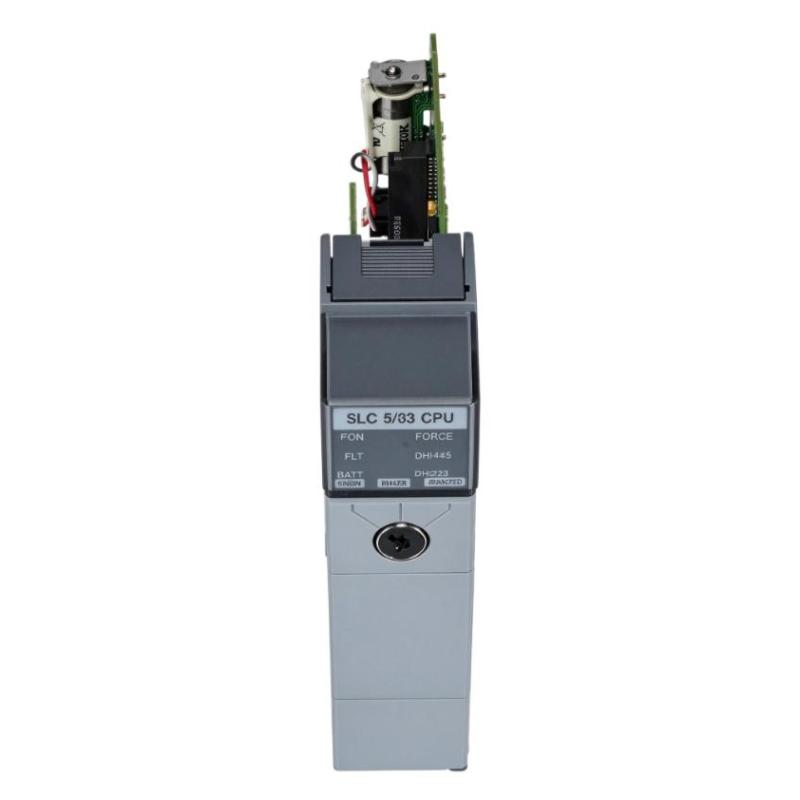
Typical indicators include RUN, FLT, and BATT. These provide useful information about processor operation, faults, and battery status.
When an abnormal condition occurs, technicians can use the processor indicators together with programming software and system diagnostics to investigate the problem.
Role in Industrial Control Systems
The 1747-L533 is the central controller in an SLC 500 modular automation system. It coordinates field signals, executes application logic, and communicates with other control equipment.
PLC-Based Machine Control
In manufacturing machinery, the processor can coordinate motors, sensors, actuators, and safety-related interlocks through the appropriate system architecture.
For example, a packaging machine may use input signals to detect product position, control conveyor movement, and activate pneumatic devices according to a programmed sequence.
The processor evaluates the conditions and updates outputs to keep the machine operating according to the intended process.
Integration with SLC 500 I/O Modules
The 1747-L533 operates with compatible 1746-series I/O modules installed in an SLC chassis.
Different modules can be selected for digital inputs, digital outputs, analog inputs, and analog outputs. This modular arrangement allows the system to support different field signal types without replacing the processor for every application change.
Operator Interface Communication
An operator interface can communicate with the processor through supported communication arrangements.
Operators may use an HMI to monitor machine status, view alarms, enter operating values, and issue authorized commands. The exact interface and communication configuration depend on the installed hardware and application design.
Supervisory System Connectivity
In established automation installations, the processor can exchange information with supervisory systems through compatible serial interfaces or suitable communication gateways.
This can support production monitoring, operating data collection, and centralized equipment supervision.
The communication path must be designed around the processor’s actual onboard interfaces and any additional modules or gateways installed in the system.
Industrial Applications
The Allen-Bradley 1747-L533 is suitable for maintaining and operating a variety of modular PLC-based industrial control systems.
1. Manufacturing Production Lines
Production lines require coordinated control of motors, sensors, conveyors, and processing equipment.
The 1747-L533 can execute machine sequences, monitor equipment conditions, and coordinate output commands according to production requirements.
2. Conveyor and Material Handling Systems
Conveyor systems use sensors and motor-control equipment to transport materials between production stations.
The processor can manage start and stop sequences, detect product positions, coordinate conveyor sections, and respond to configured fault conditions.
3. Pumping and Fluid Handling Equipment
Industrial pumping systems often require automatic operation based on pressure, level, or flow conditions.
With compatible analog and digital I/O modules, the SLC 5/03 controller can process field signals and coordinate pump operation according to programmed control logic.
4. Packaging Machinery
Packaging equipment relies on timing, product detection, actuator control, and machine sequencing.
The processor can coordinate different operating stages, including product feeding, positioning, filling, sealing, and discharge, depending on the connected equipment and application program.
5. Water and Wastewater Treatment
Water treatment installations use PLC systems to monitor pumps, valves, tanks, and process instruments.
The 1747-L533 can support control sequences and equipment monitoring when configured with suitable I/O modules and communication equipment.
6. Industrial Utility Systems
Compressed-air systems, ventilation equipment, auxiliary pumps, and other plant utilities may use SLC 500 controllers for automatic operation.
The processor can coordinate operating sequences and respond to equipment status signals to support reliable utility-system management.
Installation and System Integration
Correct installation is essential for reliable processor operation and stable communication with the rest of the SLC 500 system.
1. Chassis Compatibility
The 1747-L533 is designed for an Allen-Bradley 1746 SLC chassis.
Before installation, confirm the chassis type, available slot arrangement, power supply capacity, and compatibility of the installed I/O modules.
The processor should be mounted according to the manufacturer’s installation instructions. Ensure that it is fully seated and securely connected to the backplane.
2. Power Supply Requirements
The processor receives power through the SLC chassis backplane.
Its specified backplane current requirements are:
- 500 mA at 5 V DC.
- 175 mA at 24 V DC.
The selected chassis power supply must have sufficient capacity for the processor and all installed modules. Engineers should calculate the total backplane load rather than considering the processor independently.
3. Communication Wiring
The processor provides DH-485 and RS-232 communication interfaces.
Use the appropriate cables and connectors for the selected communication method. Check port configuration, baud rate, node addressing, and other communication parameters when connecting programming equipment or external devices.
Incorrect communication settings can prevent successful programming or data exchange.
4. Programming and Configuration
The 1747-L533 is programmed using RSLogix 500.
Before modifying an existing controller, obtain a backup of the current application program whenever possible. Verify the processor catalog number, firmware revision, communication settings, and application configuration.
After loading or modifying a program, perform appropriate testing before returning the machine to normal operation.
5. Battery and Memory Maintenance
The battery condition should be checked during scheduled maintenance.
A low or disconnected battery may affect battery-backed memory retention, depending on the system’s operating condition and backup arrangement.
Maintain a verified external copy of the PLC program and document any parameter changes.
6. Commissioning and Operational Testing
After installation, verify that the processor starts correctly and that the RUN, FLT, and BATT indicators show the expected conditions.
Test communication with the programming device, confirm I/O module operation, and check the machine’s control sequence.
All interlocks, emergency stop circuits, and other safety-related functions must be tested according to the machine’s safety design. A standard PLC processor should not be assumed to provide safety-rated control functions.
Compatible System Components
The 1747-L533 is designed to operate within a modular SLC 500 control system.
| Component | Function | Integration Considerations |
|---|---|---|
| 1746 SLC chassis | Houses the processor and I/O modules | Confirm chassis and slot compatibility |
| 1746 power supply | Supplies backplane power | Calculate the complete system current load |
| 1746 digital input modules | Receive field switching signals | Match input voltage and signal type |
| 1746 digital output modules | Control external devices | Verify output type and load ratings |
| 1746 analog input modules | Acquire analog process signals | Confirm signal ranges and channel requirements |
| 1746 analog output modules | Provide analog control signals | Match connected equipment requirements |
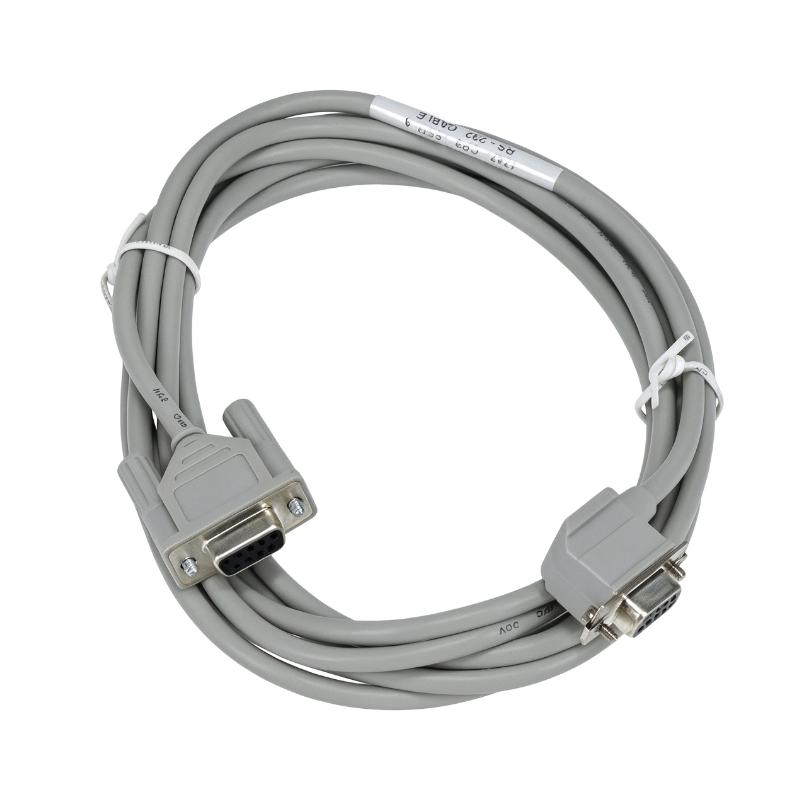
| RS-232 communication cable | Supports serial communication | Confirm cable and communication configuration |
| DH-485 network components | Provide network connectivity | Verify supported devices and network topology |
| HMI terminal | Provides operator monitoring and control | Confirm communication compatibility |
| RSLogix 500 software | Used for programming and troubleshooting | Match project configuration and processor firmware |
The components listed above are examples of equipment used in SLC 500 installations. Their compatibility must be checked against the specific chassis, firmware, wiring, and application requirements.
Alternative Models and Replacement Considerations
The 1747-L533 belongs to a discontinued controller family. Replacement decisions should account for the existing program, I/O architecture, communication requirements, and overall system condition.
| Alternative Model or Platform | Main Difference | Replacement Considerations |
|---|---|---|
| Allen-Bradley 1747-L531 | SLC 5/03 processor with 8K memory | Lower memory capacity; verify program requirements |
| Allen-Bradley 1747-L532 | SLC 5/03 processor with 16K memory | Lower memory capacity than the L533 |
| Allen-Bradley 1747-L543 | SLC 5/04 processor with DH+ communication | Different processor and communication architecture |
| Allen-Bradley 1747-L553 | SLC 5/05 processor with Ethernet communication | Different network capabilities and system configuration |
| Rockwell Automation 5380 controller family | Modern controller platform | Requires engineering migration and system redesign |
The Rockwell Automation 5380 family is identified as an engineering replacement direction for the discontinued 1747-L533. It should not be treated as a direct plug-in replacement.
Before selecting an alternative, review the following:
- Existing SLC 500 chassis and I/O arrangement.
- PLC program size and instruction compatibility.
- Communication requirements.
- HMI and supervisory system connections.
- Existing field wiring and terminal assignments.
- Required scan performance.
- Safety and machine interlocking arrangements.
- Engineering software and commissioning requirements.
For facilities that must maintain an existing SLC 500 system, an exact 1747-L533 replacement may reduce the scope of hardware modifications, although processor revision and program compatibility must still be checked.
Key Advantages
32K User Memory
The 32K memory capacity provides storage for industrial control programs and application data, supporting a wide range of SLC 500 machine-control tasks.
Dual Communication Interfaces
The onboard DH-485 and RS-232 interfaces provide communication options for compatible programming devices, operator interfaces, and industrial control equipment.
Modular System Architecture
The processor works with compatible 1746 I/O modules, allowing the control system to be configured around the required field signals and equipment.
Established Programming Environment
RSLogix 500 provides the programming environment used for developing, monitoring, and maintaining SLC 500 applications.
Flexible I/O Expansion
The SLC 500 architecture supports multiple local chassis and a range of digital and analog I/O modules, subject to system capacity and configuration limits.
Industrial Diagnostic Functions
Status indicators help maintenance personnel identify processor operating conditions and investigate faults.
Suitable for Legacy System Maintenance
The 1747-L533 remains relevant to facilities that operate established SLC 500 installations and require compatible replacement processors or spare parts.
Technical FAQs
1. What is the Allen-Bradley 1747-L533?
The 1747-L533 is an SLC 5/03 processor from the Allen-Bradley SLC 500 PLC family. It executes control programs and manages communication and I/O operations within a modular SLC system.
2. How much memory does the 1747-L533 have?
It provides 32K words of user memory for control programs and associated data.
3. Which communication ports are available?
The processor has two onboard communication interfaces: DH-485 and RS-232. The supported communication mode depends on the connected equipment and configuration.
4. Which programming software is used?
The 1747-L533 is programmed using RSLogix 500, the software environment designed for SLC 500 controllers.
5. Which chassis is compatible with this processor?
It is designed for the Allen-Bradley 1746 SLC chassis family. The exact chassis and power supply arrangement should be checked before installation.
6. How many I/O slots can the processor support?
The processor supports up to three local chassis and a maximum of 30 local I/O slots, subject to the system configuration and power supply capacity.
7. Does the 1747-L533 support analog I/O?
Yes. It can work with compatible 1746 analog input and output modules. The maximum analog I/O capacity depends on the system configuration.
8. Is the 1747-L533 discontinued?
Yes. Rockwell Automation announced the discontinuation of the SLC 5/03 32K Controller effective March 31, 2024. Availability is therefore generally associated with existing inventory and the industrial spare-parts market.
9. Can the 1747-L533 be replaced by a 5380 controller?
A 5380 controller may be considered as part of an engineering migration. However, it is not a direct plug-in replacement. The chassis, I/O, program, communication architecture, and field wiring may require changes.
10. What should be checked before purchasing a replacement?
Confirm the complete catalog number, processor series, hardware revision, physical condition, memory configuration, communication ports, and battery condition. For used equipment, request functional test information and verify that the unit is suitable for the intended SLC 500 installation.
Procurement and Maintenance Recommendations
When purchasing the Allen-Bradley 1747-L533, begin by confirming the complete catalog number and comparing it with the processor currently installed in the control system.
Check the processor’s physical condition, communication ports, terminal connections, status indicators, and hardware revision. For used or refurbished units, request clear photographs and available testing records.
Since the processor is discontinued, verify availability and warranty conditions before placing an order. If the controller is part of a critical production system, maintaining a tested spare processor and a verified program backup can help reduce recovery time after an equipment failure.
During maintenance, monitor battery status, inspect the chassis and backplane connections, and verify that the power supply can support the complete installed module configuration.
Keep a copy of the PLC application program, communication settings, and system documentation in a secure location. Any processor replacement or program modification should be followed by appropriate testing of I/O operation, machine sequences, alarms, and interlocks.
Conclusion
The Allen-Bradley 1747-L533 SLC 5/03 Processor is a 32K modular PLC controller designed for the SLC 500 automation platform. With DH-485 and RS-232 communication interfaces, support for compatible 1746 I/O modules, and an established RSLogix 500 programming environment, it remains a relevant component for maintaining legacy industrial control systems.
Although the model has been discontinued, accurate identification and careful compatibility checks can help maintenance teams source suitable replacement equipment. Before purchasing or installing a unit, verify its hardware revision, communication configuration, memory requirements, and compatibility with the existing SLC 500 chassis.