
NewsNEWCENTER
Featured products
Contact Us
Allen-Bradley 1715-TADIF16 Redundant I/O Terminal Assembly Installation Guide
2026-07-20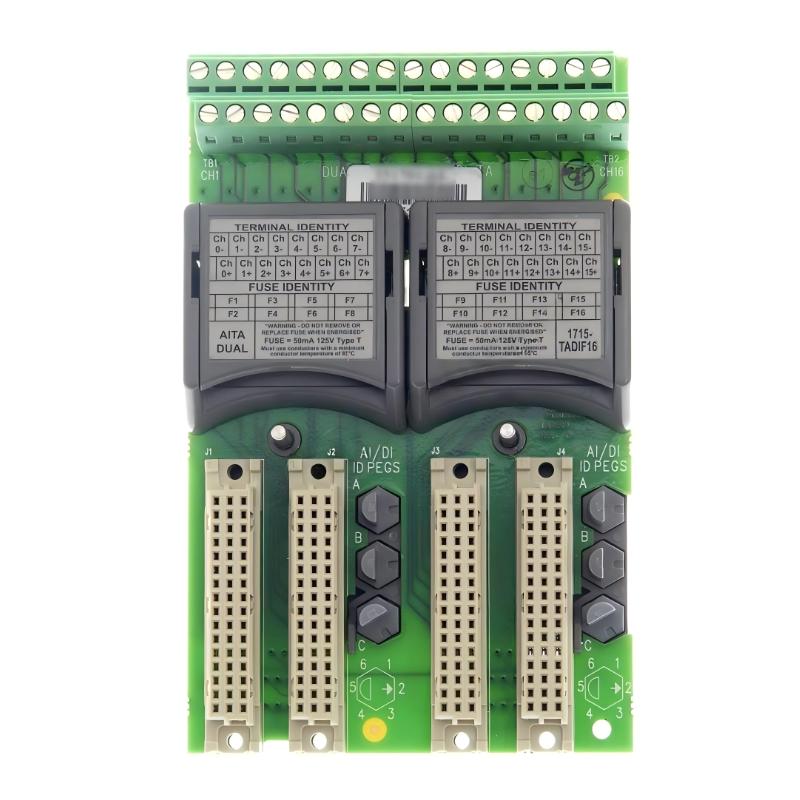
Table of Contents
- 1715-TADIF16 Redundant I/O Terminal Assembly Overview
- Redundant I/O Terminal Assembly Industrial Application
- Installation Preparation and System Planning
- 1715-TADIF16 Hardware Installation Procedure
- Field Signal Wiring and Terminal Connection Setup
- Redundant I/O System Configuration
- Startup and Commissioning Process
- Field Installation Experience and Common Issues
- FAQs on 1715-TADIF16 Installation
- Engineering Summary
1715-TADIF16 Redundant I/O Terminal Assembly Overview
The Allen-Bradley 1715-TADIF16 Redundant I/O Terminal Assembly Installation Guide explains the engineering steps required for installing, wiring, configuring, and commissioning the terminal assembly in high-availability industrial control systems.
The 1715-TADIF16 is a redundant I/O terminal assembly designed for connecting field signals with redundant I/O modules. It provides a reliable interface between field devices and the control system, helping maintain stable signal transmission in critical automation applications.
Correct installation of the terminal assembly is essential because wiring quality, terminal connection, and signal integrity directly affect I/O system reliability.
Redundant I/O Terminal Assembly Industrial Application
The Allen-Bradley 1715-TADIF16 Redundant I/O Terminal Assembly is commonly used in industrial environments requiring reliable signal connection and continuous operation.
- Process automation systems
- Oil and gas control applications
- Power generation systems
- Chemical processing equipment
- High-availability manufacturing systems
In redundant I/O architectures, terminal assemblies provide stable field wiring connections and help reduce downtime caused by signal connection failures.
Installation Preparation and System Planning
Before installing the 1715-TADIF16 terminal assembly, engineers should complete the following preparation steps:
- Confirm I/O system design requirements
- Verify compatible redundant I/O modules
- Review field wiring drawings
- Check cabinet installation position
- Prepare signal identification labels
- Confirm grounding and shielding methods
Proper preparation helps avoid wiring mistakes and improves the efficiency of system commissioning.
1715-TADIF16 Hardware Installation Procedure
The physical installation of the redundant I/O terminal assembly should ensure secure mounting and reliable electrical connection.
- Select the correct installation position inside the cabinet
- Install the terminal assembly securely
- Check mechanical fixing condition
- Verify connection points
- Confirm cabinet environmental conditions
A stable mechanical installation helps prevent loose connections and intermittent field signal problems.
Field Signal Wiring and Terminal Connection Setup
The wiring process is a key part of the 1715-TADIF16 Installation Guide because signal quality depends on correct terminal connection.
- Connect field devices according to wiring drawings
- Verify terminal identification
- Check signal polarity
- Confirm cable shielding connection
- Inspect terminal tightening condition
- Verify grounding arrangement
1715_TERMINAL_INSTALL_CHECK

MODEL = 1715-TADIF16
CHECK = FIELD_WIRING
CHECK = TERMINAL_CONNECTION
CHECK = SIGNAL_POLARITY
CHECK = SHIELDING
During one industrial installation project, engineers detected unstable input signals after startup. Inspection showed that one field signal cable terminal was not properly tightened. After correcting the connection, the I/O signal returned to normal.
Redundant I/O System Configuration
After completing terminal wiring, engineers should configure the redundant I/O system according to application requirements.
- Verify I/O channel assignment
- Check module communication status
- Confirm signal mapping
- Verify redundancy configuration
- Save system configuration information
Correct configuration ensures that field signals are accurately transmitted to the control system.
Startup and Commissioning Process
A complete commissioning procedure includes:
- Inspect all terminal wiring
- Apply system power
- Check I/O module status
- Test field signal input
- Verify communication operation
- Confirm redundant I/O performance
- Record commissioning data
During commissioning, engineers should verify every field signal channel to ensure reliable operation before production startup.
Field Installation Experience and Common Issues
Common installation issues found with redundant I/O terminal assemblies include:
- Incorrect field wiring
- Loose terminal connections
- Signal polarity errors
- Poor cable shielding
- Incorrect channel identification
Following professional wiring practices can significantly improve signal reliability and reduce future troubleshooting requirements.
FAQs on 1715-TADIF16 Installation
What is the function of the 1715-TADIF16?
The 1715-TADIF16 provides a terminal connection interface between field devices and redundant I/O modules.
Why is terminal wiring quality important?
Poor wiring can cause unstable signals, communication problems, and incorrect process data.
What should be checked before system startup?
Engineers should verify terminal connections, field wiring, signal mapping, communication status, and redundancy operation.
Engineering Summary
The Allen-Bradley 1715-TADIF16 Redundant I/O Terminal Assembly Installation process requires careful attention to field wiring, terminal connection quality, signal verification, and system commissioning. Proper installation ensures reliable signal transmission and supports stable operation of high-availability industrial automation systems.