
NewsNEWCENTER
Featured products
Contact Us
Allen-Bradley 1440-TB-H Direct Vibration Terminal Installation Guide
2026-07-08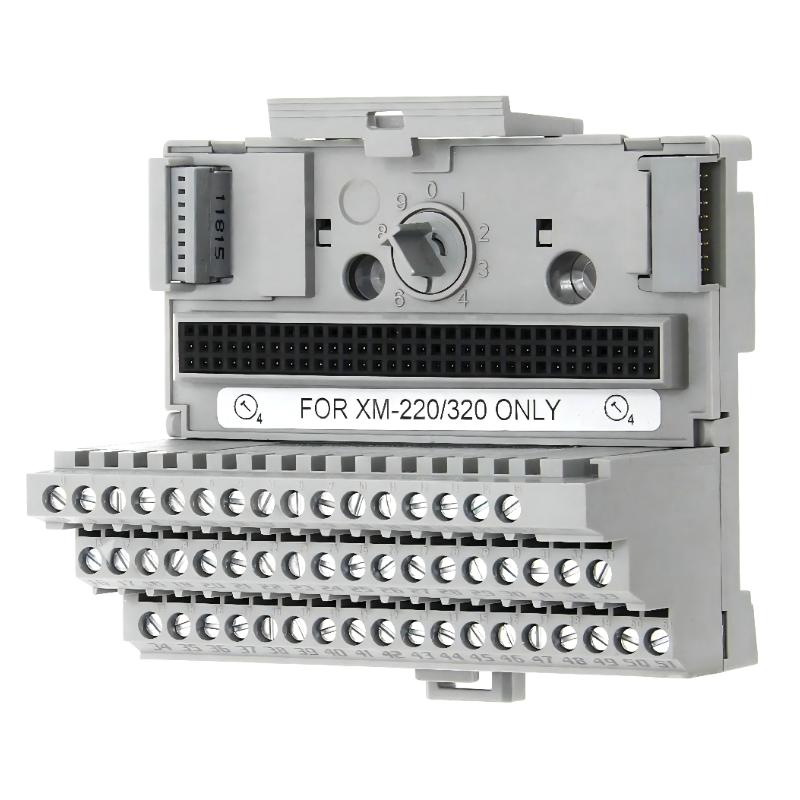
Table of Contents
- Installation Overview of 1440-TB-H Direct Vibration Terminal
- Role of 1440-TB-H in XM Condition Monitoring System
- Pre-Installation Inspection and Signal Planning
- Mechanical Installation and Terminal Arrangement
- Direct Vibration Sensor Wiring Configuration
- Signal Shielding and Grounding Setup
- Commissioning and Signal Validation Procedure
- FAQs on 1440-TB-H Installation
- Engineering Summary
Installation Overview of 1440-TB-H Direct Vibration Terminal
The Allen-Bradley 1440-TB-H direct vibration terminal is designed for XM condition monitoring applications where vibration sensors require a dedicated field connection interface. Proper installation ensures reliable transmission of vibration signals from sensors to the XM monitoring module.
During an Installation Guide process, engineers must focus on sensor wiring accuracy, grounding quality, and signal integrity because vibration measurement signals are sensitive to electrical interference.
Role of 1440-TB-H in XM Condition Monitoring System
The 1440-TB-H acts as a direct connection interface between vibration sensors and the PLC-based monitoring architecture. Its main functions include:
- Providing organized vibration sensor termination
- Maintaining stable signal transmission paths
- Supporting reliable XM module configuration
- Simplifying field maintenance and Fault Diagnosis
Pre-Installation Inspection and Signal Planning
Before installation, technicians should complete the following preparation work:
- Confirm sensor type and wiring requirements
- Verify XM module compatibility
- Inspect terminal condition and mounting accessories
- Prepare shielded vibration signal cables
- Review system configuration drawings
In one field installation case, engineers discovered incorrect sensor cable routing near a motor drive cabinet. After relocating the cable path, electrical noise was significantly reduced before commissioning.
Mechanical Installation and Terminal Arrangement
- Install the terminal interface according to cabinet layout requirements
- Ensure stable mechanical fixing before wiring
- Maintain clear access for inspection and maintenance
- Arrange wiring channels to prevent cable stress
A stable mechanical installation prevents vibration-induced movement that may affect long-term signal reliability.
Direct Vibration Sensor Wiring Configuration
The wiring stage is critical for 1440-TB-H Setup and Commissioning. Incorrect connections can create unstable vibration measurements.
- Identify sensor signal, common, and shield connections correctly
- Maintain consistent wire identification
- Secure all terminal connections properly
- Avoid parallel routing with high-voltage conductors
TB_H_SETUP /MODEL=1440-TB-H /SENSOR_WIRING_CHECK /SIGNAL_VERIFY /CHANNEL_MAPPING
Signal Shielding and Grounding Setup
- Use proper shielded cable for vibration measurement circuits
- Maintain a controlled grounding reference
- Avoid multiple grounding points creating loops
- Separate measurement signals from switching power circuits
During one commissioning project, correcting improper shield grounding reduced unstable vibration noise from frequent spikes to a stable baseline trend.
Commissioning and Signal Validation Procedure
- Verify sensor wiring continuity
- Check vibration signal response in XM software
- Confirm correct channel assignment
- Monitor vibration trend during equipment startup
- Record initial operating baseline
After commissioning, engineers should compare vibration values against expected machine operating conditions to confirm correct Sensor and PLC Controller system behavior.
FAQs on 1440-TB-H Installation
Why is correct wiring important for direct vibration terminals?
Because vibration signals are low-level measurements and incorrect connections can introduce noise or signal loss.
Can poor grounding affect vibration monitoring accuracy?
Yes. Grounding problems can create electrical interference that appears as abnormal vibration data.
What should be checked before system startup?
Sensor wiring, terminal connections, shield grounding, and XM system configuration should all be verified.
Engineering Summary
The Allen-Bradley 1440-TB-H direct vibration terminal is an important interface component for XM condition monitoring applications. Successful Installation Guide execution requires correct sensor wiring, stable mechanical mounting, proper shielding, and careful commissioning. Field experience shows that signal quality depends heavily on installation discipline and system configuration accuracy.