

ProductPRODUCT
Featured products
Contact Us
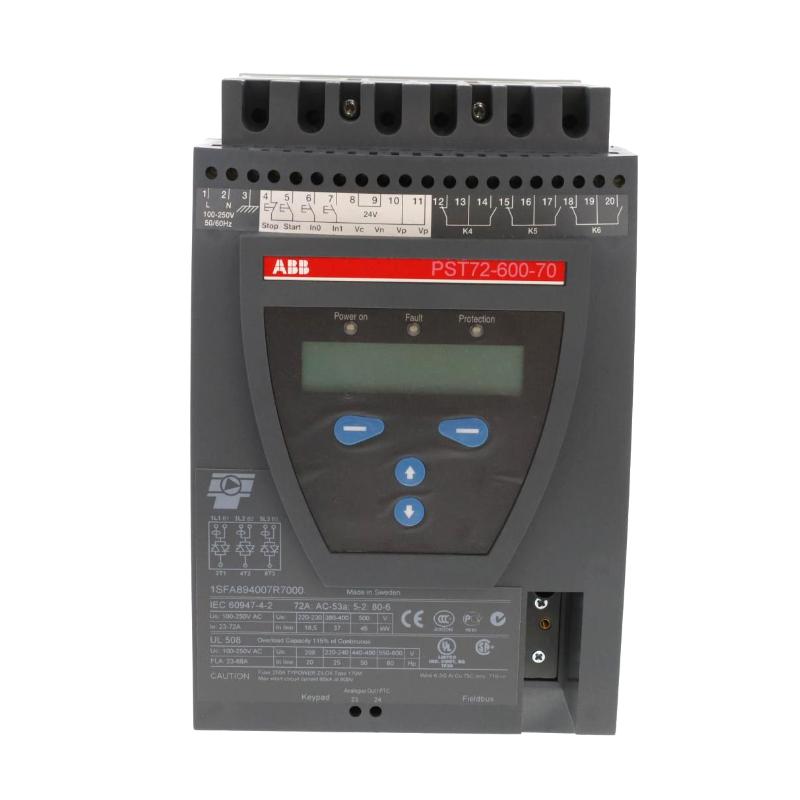
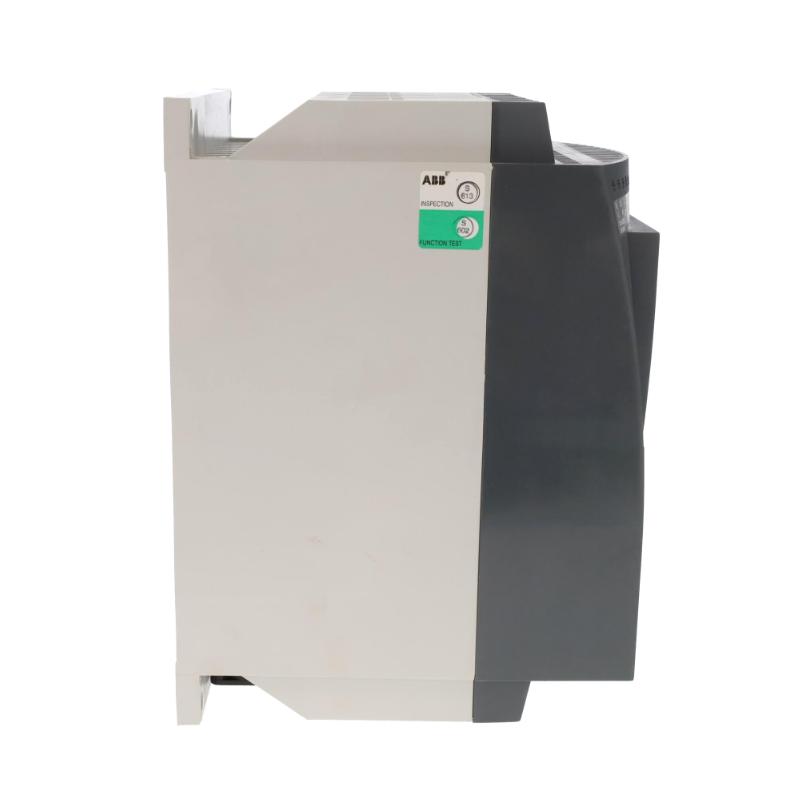
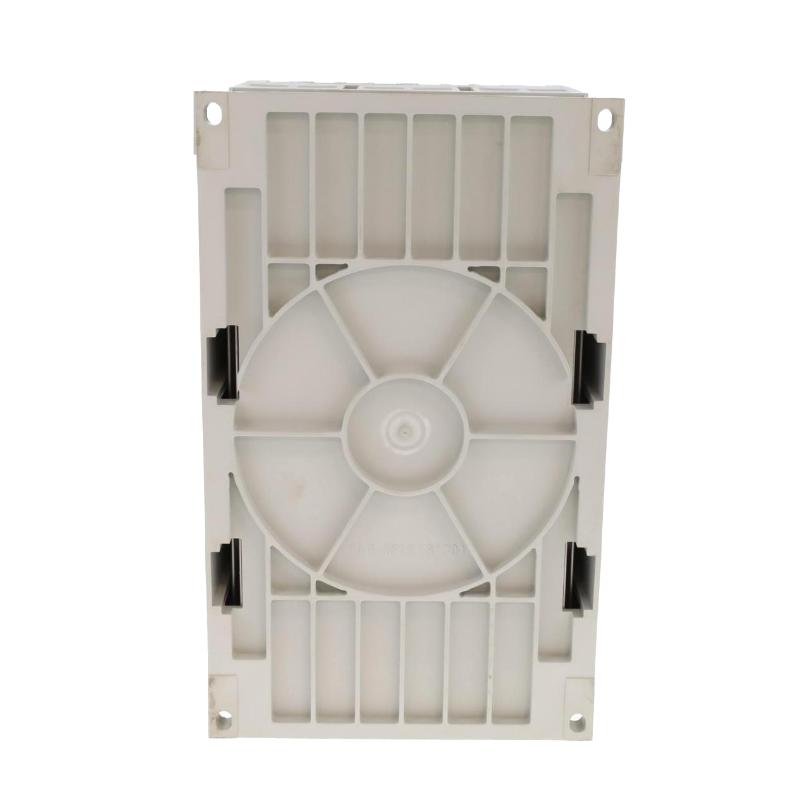
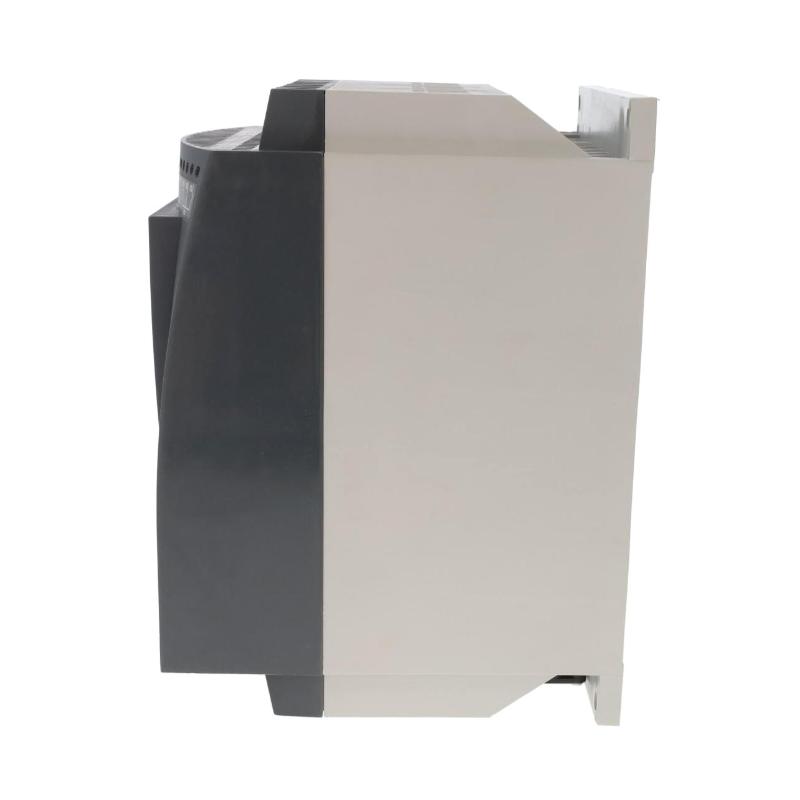
- ABB
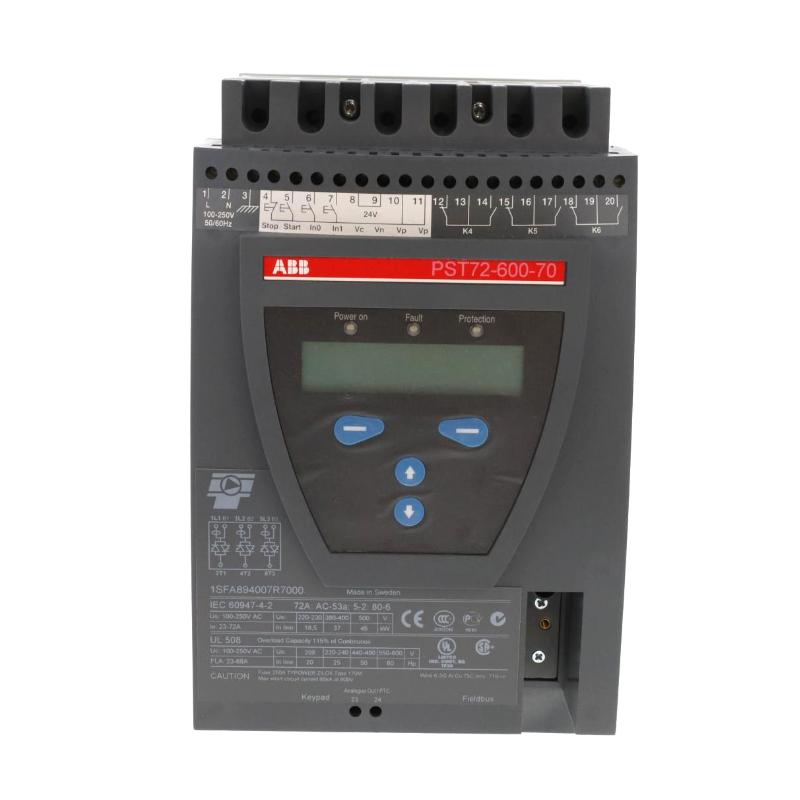
- PST72-600-70 1SFA894007R7000
- Soft Starter
- Sweden (SE)
- 260 x 160 x 196 mm
- 5 kg
- Xiamen, China
- New & In Stock
- T/T, PayPal, Western Union
- 1 Year
- 1-3 Working Days
- DHL, UPS, TNT, FedEx and EMS.
- 24-Hour Service
- COO
- 3
Our advantage

Global Logistics
We have a 10-year logistics and express cooperation agreement, so our products can be shipped to any place in the world.

Brand new and original
Our products are imported in bulk from the place of origin. Because of the cooperative relationship, our products are all original and 100% new.

24-hour service
We provide 7*24 hours service to our customers. We will be there whenever you need us.

Price advantage
All our products are priced very favorably because we have our own warehouse and supply.
| Company Information | |||
| [email protected] | |||
| Mobile | +8615980777398 | ||
| +8615980777398 | |||
| 15980777398 |
Product Overview
The ABB PST72-600-70 1SFA894007R7000 Soft Starter is an advanced motor-starting device designed to provide controlled acceleration and deceleration for three-phase AC motors. Part of ABB’s PST series, it helps reduce the electrical and mechanical stresses associated with direct-on-line motor starting.
When a conventional motor starter switches a motor directly onto the power supply, the motor can draw a high starting current and produce sudden mechanical torque. These effects may cause voltage disturbances, equipment vibration, belt tension changes, and unnecessary stress on mechanical components.
The PST72-600-70 addresses these challenges by gradually controlling the voltage supplied to the motor during startup. It can also provide controlled stopping, helping machinery slow down more smoothly when the application requires it.
With a main-circuit operating voltage range of 208–600 V AC and a control supply range of 100–250 V AC, this model is designed for industrial motor-control systems operating across a range of supply conditions. Its PST72 model designation corresponds to the 72-class product family, while the applicable motor current and power ratings must be selected according to ABB’s technical tables and the installation method.
The PST72-600-70 is suitable for industrial applications such as pumps, fans, compressors, conveyors, and other motor-driven equipment. It provides a practical solution where controlled motor starting and stopping are required without the full variable-speed functionality of a frequency converter.
Technical Specifications
| Parameter | Specification |
|---|---|
| Brand | ABB |
| Product Model | PST72-600-70 |
| Order Number | 1SFA894007R7000 |
| Product Type | Advanced Soft Starter |
| Product Series | PST |
| Main Circuit Operating Voltage | 208–600 V AC |
| Control Supply Voltage | 100–250 V AC |
| Main Circuit Frequency | 50/60 Hz |
| Control Supply Frequency | 50/60 Hz |
| Starting Method | Soft start |
| Stopping Method | Controlled soft stop |
| Starting Class | Class 10 configuration |
| Motor Application | Three-phase AC motors |
| Rated Motor Power at 400 V | Approximately 59 kW, according to ABB selection data |
| Connection Method | In-line installation; verify application wiring |
| Dimensions | 260 × 160 × 196 mm |
| Weight | 5 kg |
| Main Terminal Protection | IP10 |
| Mounting | Industrial control-panel installation |
Note: The actual permissible motor current and power depend on operating voltage, starting class, ambient temperature, installation method, and starting frequency. Always use the ABB selection tables for final sizing.
Function and Working Principle
The PST72-600-70 controls motor starting and stopping by regulating the voltage applied to the motor. Unlike a standard contactor, which switches the supply directly, a soft starter gradually increases the motor voltage during acceleration.
1. Controlled Motor Starting
During startup, the soft starter initially supplies a reduced voltage to the motor. It then increases the voltage progressively according to the configured starting parameters.
This helps reduce the sudden current demand associated with direct-on-line starting. It can also reduce mechanical shock in the driven equipment.
The starting voltage and ramp settings should be selected according to the motor characteristics and load requirements.
2. Controlled Stopping
The PST72-600-70 supports controlled stopping for applications where an abrupt stop may cause mechanical or process problems.
For example, in a pumping system, sudden motor stopping can contribute to pressure fluctuations or water hammer. A controlled stopping sequence can help reduce these effects when correctly configured for the hydraulic system.
3. Current and Motor Starting Management
The soft starter helps manage the current drawn during motor acceleration. Reducing excessive starting current can help limit voltage disturbances in the electrical distribution system.
The actual starting current depends on the motor, load, selected starting parameters, and supply conditions. A soft starter does not eliminate starting current or provide the same control behavior as a variable frequency drive.
4. Motor and Equipment Protection
The PST series provides motor-control and protective functions intended to support reliable operation. Depending on the model configuration and parameter settings, relevant protection and monitoring functions may include overload-related protection, phase monitoring, and operating-condition supervision.
Protection settings must be coordinated with the motor nameplate, upstream protective devices, and applicable electrical standards.
5. Reduced Mechanical Stress
Gradual acceleration can reduce sudden torque changes in mechanical systems. This is particularly useful for equipment with belts, couplings, gearboxes, pumps, and other components that may be affected by abrupt motor starts.
The resulting reduction in mechanical shock can support more stable machine operation and help reduce maintenance requirements.
Role in Industrial Automation Systems
The PST72-600-70 normally operates as part of a motor-control circuit. It receives control power and start/stop commands while managing the power supplied to the connected motor.
Integration with PLC Systems
A programmable logic controller can coordinate the soft starter with sensors, process equipment, and other motor-control devices.
For example, a PLC may issue a start command when a tank level reaches a configured threshold. The soft starter then manages the motor’s acceleration according to its settings.
Status signals and fault information can also be incorporated into the PLC control strategy when the required interfaces are available.
Integration with HMI Systems
A human-machine interface can provide operators with a central location for monitoring motor operation and process conditions.
Depending on the control architecture and available communication options, operating commands and status information may be handled through a PLC or other suitable control equipment.
Coordination with Electrical Protection
The soft starter must be installed with appropriately selected upstream circuit protection and motor protection arrangements.
Circuit breakers, fuses, contactors, overload protection, and isolation devices should be selected according to the manufacturer’s application instructions and local electrical requirements.
Industrial Applications
The ABB PST72-600-70 is designed for industrial motor-starting applications where smooth acceleration and controlled stopping are important.
1. Pumping Systems
Pumps are frequently started and stopped in water treatment, industrial processing, and utility systems.
A soft starter can help reduce starting current and mechanical shock. Controlled stopping may also help limit pressure fluctuations in suitable pumping installations.
2. Industrial Fans
Large ventilation and process fans can experience substantial mechanical stress during startup.
The PST72-600-70 can provide a gradual starting sequence, helping reduce sudden torque changes and supporting smoother equipment operation.
3. Air Compressors
Industrial compressors often require reliable motor starting under demanding operating conditions.
A soft starter can help manage the initial acceleration of compatible compressor motors. The compressor’s unloading arrangement, starting torque, and duty cycle must be considered during selection.
4. Conveyor Systems
Conveyors transport materials through production facilities, warehouses, and processing plants.
Controlled motor acceleration can help reduce sudden belt movement and mechanical stress. This can be useful for systems involving long conveyor belts, loaded sections, or mechanical transmission components.
5. Industrial Processing Equipment
Mixers, agitators, and other motor-driven processing machines may benefit from smoother starting.
The soft starter can reduce abrupt mechanical movement during acceleration, provided that the motor and load are compatible with the selected starting method.
6. General Manufacturing Machinery
The PST72-600-70 can be used in suitable manufacturing equipment where a fixed operating speed is acceptable but direct-on-line starting creates excessive mechanical or electrical stress.
If the application requires continuous speed adjustment during normal operation, a variable frequency drive may be more appropriate.
Installation and System Integration
Correct installation is essential for safe operation and reliable motor starting.
1. Verify Main Circuit Voltage
Before installation, confirm that the supply voltage falls within the specified 208–600 V AC operating range.
The motor voltage, current, and power rating must also be checked. The soft starter should be selected according to the motor’s actual electrical requirements rather than its power rating alone.
2. Check the Control Supply
The PST72-600-70 uses a control supply voltage within the 100–250 V AC range.
Confirm the available control voltage and frequency before connecting the control circuit. Incorrect control power can prevent the device from operating properly.
3. Panel Mounting and Ventilation
The supplied dimensions are 260 × 160 × 196 mm. Allow additional space for power cables, control wiring, ventilation, and maintenance access.
Soft starters generate heat during operation, particularly during repeated or prolonged starting cycles. The control cabinet must provide adequate heat dissipation and comply with the manufacturer’s installation requirements.
4. Power Wiring
Connect the main supply and motor conductors according to the wiring diagram for the selected installation method.
Use appropriately rated cables, terminals, protective devices, and grounding conductors. Keep power and sensitive control wiring arranged according to applicable electrical installation practices.
5. Configure Starting Parameters
Set the starting voltage, acceleration time, stopping parameters, and protection settings according to the motor and driven equipment.
Incorrect settings may cause extended starting times, excessive motor heating, nuisance trips, or insufficient starting torque.
6. Commissioning and Functional Testing
After installation, inspect the wiring, verify the control supply, and confirm that the motor can operate safely.
Test the start and stop commands, acceleration behavior, stopping sequence, fault response, and any PLC interlocks. Record the final parameter settings for future maintenance.
Compatible System Components
The PST72-600-70 is typically installed with other electrical and automation components.
| Component | Function | Integration Considerations |
|---|---|---|
| Three-phase AC motor | Converts electrical energy into mechanical power | Match motor voltage, current, power, and starting requirements |
| PLC | Coordinates motor operation and process logic | Confirm available control signals and required interlocks |
| HMI | Provides operator monitoring and control | Integration depends on the control architecture |
| Circuit breaker | Provides upstream electrical protection | Select according to manufacturer recommendations |
| Main contactor | Provides switching and isolation functions | Follow the recommended soft-starter circuit arrangement |
| Motor protection equipment | Protects the motor against abnormal conditions | Coordinate settings with motor nameplate data |
| Control transformer or supply | Provides the required control voltage | Confirm the 100–250 V AC control supply requirement |
| Electrical control cabinet | Houses the soft starter and related equipment | Provide sufficient ventilation and installation clearance |
| Three-phase power distribution system | Supplies the motor-control circuit | Verify voltage, frequency, and fault-current conditions |
The listed components are examples of equipment used in a complete motor-control installation. They are not necessarily included with the soft starter.
Alternative Models and Replacement Considerations
When replacing the PST72-600-70, the new device should be selected according to motor current, voltage, starting duty, and control requirements.
| Alternative Product | Replacement Considerations |
|---|---|
| ABB PST60 series | Lower-rated option for applications with compatible motor requirements |
| ABB PST85 series | Higher-rated PST family option, subject to current and duty verification |
| ABB PST series models | May provide similar control functions but require exact rating and configuration comparison |
| ABB PSE series | Alternative soft-starter family for applications meeting its specifications |
| ABB PSS series | Another soft-starter family that may be considered after checking motor and system requirements |
A replacement should be evaluated against:
- Main circuit operating voltage.
- Motor rated current and power.
- Starting class and duty cycle.
- Required starting torque.
- Number of starts per hour.
- Control supply voltage.
- In-line or inside-delta connection.
- Protection and monitoring requirements.
- Mounting dimensions and ventilation.
- Control wiring and PLC integration.
A soft starter with a similar model number or power rating is not automatically a direct replacement. Always confirm the complete product specifications before installation.
Key Advantages
Smooth Motor Acceleration
The PST72-600-70 gradually increases motor voltage during startup, helping reduce abrupt acceleration and mechanical shock.
Reduced Starting Current
Controlled starting can help limit the current demand compared with direct-on-line starting, depending on motor and application conditions.
Controlled Stopping
The soft-stopping function can help reduce abrupt stopping effects in suitable applications, particularly in pumping and material-handling systems.
Flexible Supply Compatibility
The main circuit supports an operating voltage range of 208–600 V AC, while the control supply accepts 100–250 V AC.
Industrial Motor-Control Design
The PST series is designed for industrial applications involving pumps, fans, compressors, conveyors, and other motor-driven equipment.
Simplified Motor Starting
For applications that do not require continuous speed variation, a soft starter can provide controlled motor starting without the additional speed-control functions of a frequency converter.
Technical FAQs
1. What is the ABB PST72-600-70?
It is an advanced soft starter designed to control the starting and stopping of compatible three-phase AC motors.
2. What is the order number of this model?
The ABB order number is 1SFA894007R7000.
3. What is the main circuit voltage range?
The rated operational voltage range is 208–600 V AC. The actual supply must be verified against the product documentation and motor-control design.
4. What control supply voltage does it require?
The control supply voltage range is 100–250 V AC at 50/60 Hz.
5. What is the purpose of this soft starter?
It gradually increases motor voltage during startup and can provide controlled stopping. This helps reduce starting stress and abrupt mechanical movement.
6. Can the PST72-600-70 be used with a PLC?
Yes. It can be incorporated into a PLC-based motor-control system using the appropriate control signals and system configuration. Confirm the available interfaces before designing the wiring.
7. Is it a variable frequency drive?
No. A soft starter primarily controls motor acceleration and deceleration. It does not provide the same continuous motor-speed adjustment as a variable frequency drive.
8. What applications are suitable for this model?
Typical applications include compatible pumps, fans, compressors, conveyors, and general industrial machinery requiring controlled motor starting.
9. What should be checked before replacing an existing PST72-600-70?
Check the order number, operating voltage, motor current, starting duty, control supply, connection method, wiring, and mounting requirements.
10. What are the dimensions and weight?
The supplied dimensions are 260 × 160 × 196 mm, and the listed weight is 5 kg.
Procurement and Maintenance Recommendations
When purchasing the ABB PST72-600-70, confirm both the product model and order number. The full designation PST72-600-70 / 1SFA894007R7000 should be compared with the identification label on the existing device.
For replacement projects, verify the motor’s rated current, operating voltage, starting requirements, and number of starts per hour. These factors are important for selecting the correct soft-starter rating.
For used or surplus equipment, request clear photographs of the nameplate, terminals, and enclosure. Confirm the product’s condition, available test information, and whether accessories are included.
During routine maintenance, inspect electrical connections, terminal tightness, ventilation openings, cabinet temperature, and signs of overheating. Maintenance work should be performed by qualified personnel after the equipment has been safely isolated.
Keep a record of the soft-starter settings and the motor information. This documentation can simplify future troubleshooting and replacement work.
Conclusion
The ABB PST72-600-70 1SFA894007R7000 is an advanced soft starter designed for controlled starting and stopping of industrial three-phase AC motors. With a 208–600 V AC main-circuit operating range and a 100–250 V AC control supply, it can be used in a range of industrial motor-control installations.
Its controlled starting and stopping functions make it suitable for compatible pumps, fans, compressors, conveyors, and manufacturing equipment. Correct motor selection, parameter configuration, electrical protection, and installation practices are essential for reliable operation.